



Bristol Myers buys Nvidia's latest AI computing system for drug research
 Tweet
Tweet Share
Share E-mail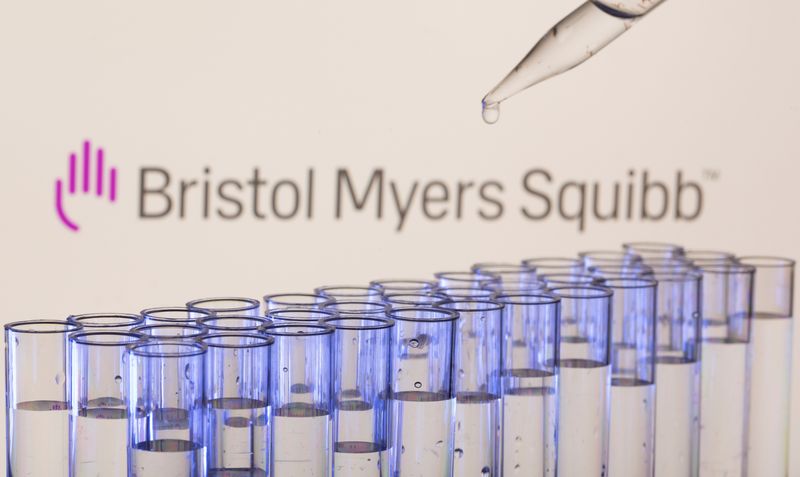
Test tubes are seen in front of a displayed Bristol Myers Squibb logo in this illustration taken, May 21, 2021. REUTERS/Dado Ruvic/Illustration
By Michael Erman
NEW YORK, July 20 (Reuters) - Bristol Myers Squibb said on Monday it is buying the latest-generation computing system from chip company Nvidia to support its use of artificial intelligence across its drug discovery and development operations.
The drugmaker said it will be the first life sciences company to buy an Nvidia DGX SuperPOD based on its Vera Rubin systems. The chipmaker unveiled its Vera Rubin architecture earlier this year as the successor to its current generation of AI computing systems.
Financial terms of the Bristol Myers investment were not disclosed. It builds on a smaller SuperPOD system the drugmaker bought from Nvidia, which is around two or three generations behind Vera Rubin, BMS executives said in an interview.
Pharmaceutical companies are increasingly investing in AI infrastructure to try to identify drug targets faster and improve the odds that experimental drugs succeed in clinical trials.
Robert Plenge, chief research officer at Bristol Myers, said the new capabilities would allow the company to cycle through many more potential drug candidates early in the drug development cycle.
"Maybe before we could do 10 and now we can do dozens," he said.
Plenge also said that the company is already using AI tools to cut the time to make medicines to test in trials by 20% to 30%. That could even reach 50% in coming years, he said.
He said one experimental sickle cell disease treatment currently in early clinical development by the company would likely not have been discovered if not for AI-enabled research.
Greg Meyers, the company's chief digital and technology officer, said the investment was driven in part by rapidly growing computing demands as Bristol deploys larger AI models across its research organization. It uses AI in all of its small-molecule and most of its large-molecule programs.
He also said the new system will be more energy efficient.
"When you host these things, you have to pay an electric bill," Meyers said. "Think of it as 10 times more compute capacity per watt spent ... Electricity is not getting cheaper."
(Reporting by Michael Erman; editing by David Gaffen)
Serious News for Serious Traders! Try StreetInsider.com Premium Free!
You May Also Be Interested In
- White House accuses Moonshot of violating US export controls using Nvidia hardware
- ServiceNow rallies after Q2 beat, lifts annual outlook on AI demand
- Galaxy Digital plans $3.5B junk bond sale for AI data center
Create E-mail Alert Related Categories
General News, ReutersSign up for StreetInsider Free!
Receive full access to all new and archived articles, unlimited portfolio tracking, e-mail alerts, custom newswires and RSS feeds - and more!
