




Form 8-K GENOCEA BIOSCIENCES, For: Nov 05

FREE Breaking News Alerts from StreetInsider.com!
StreetInsider.com Top Tickers, 10/9/2026
- Wall Street posts weekly gains with earnings, inflation data on tap
- Oil prices settle higher as more production shut ahead of hurricane
- Apple cuts iPhone 18 Pro orders due to soft demand, Nikkei Asia reports
- UBS flags level in gold prices where dip buyers will likely emerge
- Telecom stocks tumble on SpaceX spectrum acquisition news
 Tweet
Tweet Share
Share E-mail
UNITED STATES
SECURITIES AND EXCHANGE COMMISSION
Washington, D.C. 20549
FORM 8-K
CURRENT REPORT
Pursuant to Section 13 or 15(d) of the Securities Exchange Act of 1934
Date of Report (Date of earliest event reported): November 5, 2015
GENOCEA BIOSCIENCES, INC.
(Exact name of registrant as specified in its charter)
Delaware | 001-36289 | 51-0596811 | ||
(State or other jurisdiction of incorporation) | (Commission File Number) | (IRS Employer Identification No.) | ||
Cambridge Discovery Park 100 Acorn Park Drive, 5th Floor Cambridge, MA | 02140 | |
(Address of principal executive offices) | (Zip Code) | |
(Registrant’s telephone number, including area code): (617) 876-8191
Not Applicable
(Former name or former address, if changed since last report)
Check the appropriate box below if the Form 8-K filing is intended to simultaneously satisfy the filing obligation of the registrant under any of the following provisions:
o Written communications pursuant to Rule 425 under the Securities Act (17 CFR 230.425)
o Soliciting material pursuant to Rule 14a-12 under the Exchange Act (17 CFR 240.14a-12)
o Pre-commencement communications pursuant to Rule 14d-2(b) under the Exchange Act (17 CFR 240.14d-2(b))
o Pre-commencement communications pursuant to Rule 13e-4(c) under the Exchange Act (17 CFR 240.13e-4(c))
Item 2.02 Results of Operations and Financial Condition.
On November 5, 2015, Genocea Biosciences, Inc. announced its financial results for the third quarter ended September 30, 2015. A full text of the press release issued in connection with the announcement is furnished as Exhibit 99.1 to this Current Report on Form 8-K.
The information contained in this Item, including Exhibit 99.1 attached hereto, is being furnished and shall not be deemed “filed” for any purpose, and shall not be deemed incorporated by reference in any filing under the Securities Act of 1933, as amended, or the Securities Exchange Act of 1934, as amended, except as expressly set forth by specific reference in such filing.
Item 7.01 | Regulation FD Disclosure |
Beginning on November 5, 2015, Genocea Biosciences, Inc. intends to use the presentation furnished herewith, or portions thereof, in one or more meetings with investors and analysts. The presentation will also be available online at http://ir.genocea.com/events.com as of November 5, 2015. A copy of the presentation is furnished as Exhibit 99.2 and is incorporated herein by reference.
The information contained in this Item, including Exhibit 99.2 attached hereto, is being furnished and shall not be deemed “filed” for any purpose, and shall not be deemed incorporated by reference in any filing under the Securities Act of 1933, as amended, or the Securities Exchange Act of 1934, as amended, regardless of any general incorporation language in any such filing.
Item 9.01 Financial Statements and Exhibits.
(d) Exhibits
99.1 | Press Release issued by Genocea Biosciences, Inc. on November 5, 2015 |
99.2 | Management Presentation issued by Genocea Biosciences, Inc. on November 5, 2015 |
2
SIGNATURES
Pursuant to the requirements of the Securities Exchange Act of 1934, the registrant has duly caused this report to be signed on its behalf by the undersigned hereunto duly authorized.
GENOCEA BIOSCIENCES, INC. | ||
By: | /s/ JONATHAN POOLE | |
Jonathan Poole | ||
Chief Financial Officer | ||
Date: November 5, 2015
3
EXHIBIT INDEX
Exhibit No. | Description | |
99.1 | Press Release issued by Genocea Biosciences, Inc. on November 5, 2015 | |
99.2 | Management Presentation issued by Genocea Biosciences, Inc. on November 5, 2015 | |
4
Exhibit 99.1

Genocea Reports Third Quarter 2015 Financial Results
- Company Reports Recent Milestones and Announces Expansion of ATLASTM Technology into Immuno-Oncology -
- Conference Call and Webcast Scheduled for 9:00 a.m. ET Today -
CAMBRIDGE, MA, November 5, 2015 - Genocea Biosciences, Inc. (NASDAQ: GNCA), a biopharmaceutical company developing T cell-directed vaccines and immunotherapies, today reported recent corporate highlights and financial results for the third quarter ended September 30, 2015.
“In early October, we reported positive six-month durability data for GEN-003 which further support its potential to serve as a cornerstone therapy for genital herpes infections with convenient, long-term disease control. We look forward to reporting 12-month data from this ongoing trial in the first quarter of 2016 and to our end of Phase 2 meeting with the FDA later next year,” said Chip Clark, president and chief executive officer of Genocea. “Additionally, we are excited to report several recent milestones as part of the expansion of our ATLAS technology into oncology, following encouraging data from our ongoing collaboration with the Dana-Farber Cancer Institute. Having demonstrated its power in infectious disease, we believe that ATLAS is positioned to enable smarter identification of cancer vaccine antigens and smarter immuno-oncology response profiling to optimize patient care.”
Business Highlights and Anticipated Milestones
GEN-003 - Immunotherapy for treatment of genital herpes in Phase 2 development. Greater than $1 billion potential revenue opportunity in the U.S.
• | Reported positive results six months after dosing from ongoing Phase 2 dose optimization trial |
• | 12-month data expected in the first quarter of 2016 |
• | End of Phase 2 meeting with U.S. Food and Drug Administration expected in late 2016 |
On October 7, 2015, Genocea reported positive results from a planned interim analysis of data collected six months after dosing from its ongoing Phase 2 dose optimization trial evaluating GEN-003 for the treatment of genital herpes. At its best performing dose of 60 µg per protein / 75 µg of Matrix-M2TM adjuvant, GEN-003 demonstrated a statistically significant 58 percent reduction from baseline in the viral shedding rate (p<0.0001), the primary endpoint of the study and a measure of anti-viral activity.
In a planned secondary analysis to assess the impact on genital lesion rates, GEN-003 demonstrated sustained and statistically significant reductions from baseline in five of six dose groups ranging from 43 to 69 percent. In addition, the proportion of patients receiving GEN-003 who were lesion-free at six months after dosing ranged from approximately 30 to 50 percent, similar to results reported in Phase 3 clinical trials with oral antiviral therapies. A further secondary analysis measuring the time to first recurrence after completion of dosing showed a range of 152 days to greater than 180 days among dose groups. The Phase 2 trial continues to show that GEN-003 is safe and well tolerated by patients, with no serious adverse events related to the vaccine.
GEN-004 - Vaccine for the prevention of infections by all serotypes of pneumococcus.
• | Reported top-line results from Phase 2a clinical trial in October |
• | Development suspended pending review of potential paths forward |
On October 19, 2015, Genocea reported that top-line results from a Phase 2a clinical trial for GEN-004 showed consistent reductions versus placebo in the pre-specified endpoints of the rate and density of colonization, but
1
neither of the endpoints achieved statistical significance. GEN-004 was safe and well tolerated by patients. Genocea has suspended development in GEN-004 pending further review of the data and expert consultation.
ATLAS technology platform - Expansion into immuno-oncology
• | Results from Dana-Farber collaboration to be presented at SITC on November 6; collaboration ongoing |
• | New collaboration with Memorial Sloan Kettering Cancer Center announced today |
• | ATLAS’s ability to identify T cell antigens may unlock new cancer vaccines |
• | Immunotherapy program initiated targeting Epstein-Barr Virus |
Genocea was founded to create T cell-directed immunotherapies and vaccines using ATLAS, a unique platform for profiling large and diverse patient populations to find the T cell antigens driving protective responses. The Company believes that data reported to date for GEN-003 represents the first evidence of efficacy by an immunotherapy built around new T cell targets for an infectious disease. Building on the success of ATLAS in genital herpes, Genocea initiated a research collaboration with Dana-Farber in 2014 to apply ATLAS in immuno-oncology. This collaboration centered on the potential of ATLAS to identify patterns of T cell response in cancer patients receiving checkpoint inhibitor therapy.
ATLAS makes no assumptions about which cancer antigens are meaningful and which are not. It instead takes a panoramic view of a large, diverse population of human subjects and reveals clinically relevant T cell antigens of protective responses. In contrast to other high-throughput predictive tools currently being applied in oncology drug discovery, Genocea believes that ATLAS has a number of critical benefits, including that it potentially:
• | Can find antigens to which patients are actually responding; |
• | Can distinguish between clinically relevant and immuno-dominant responses; |
• | Can identify separately targets of CD4+ and CD8+ T cells; |
• | Is not HLA-limited. |
These benefits may enable smarter identification of cancer antigens for cancer vaccines and smarter identification of patients best suited to immuno-oncology therapy or therapy combinations.
Dana-Farber Collaboration
In this pilot study, funded by the Ludwig Trust, Genocea partnered with Darren Higgins, Ph.D., professor of microbiology and immunobiology at Harvard Medical School and F. Stephen Hodi, Jr., M.D., director of the Melanoma Center at Dana-Farber Cancer Institute, to conduct a retrospective analysis of 10 checkpoint inhibitor (CPI) treated patients’ T cell responses to 23 known tumor-associated antigens. By analyzing the immune responses of both responders and non-responders to CPI therapy, ATLAS successfully identified the cancer antigens to which either (or both) CD4+ or CD8+ T cells became activated. Although this research was not powered to draw firm conclusions, the analysis of T cell responses in patients receiving CPI therapy revealed a pattern indicating a greater breadth of T cell activation for responders than non-responders. The study also revealed preliminary evidence that different characteristics of T cell responses emerge when comparing patients who respond and those who do not. Some T cell responses did not correspond with improved patient outcomes, and may be classified as “decoys,” further validating the ability of ATLAS to distinguish clinically relevant targets of T cell responses. This analysis will be presented as a late-breaker at the Society for Immunotherapy of Cancer’s (SITC) 30th Anniversary Annual Meeting & Associated Programs in National Harbor, Maryland. The poster, #342, entitled Immunoprofiling of T cell responses in melanoma patients undergoing CPI therapy, will be presented on Saturday, November 7, 2015 between 12.30 - 2:00p.m. ET.
The collaboration with Dana-Farber is ongoing as Genocea continues to analyze more blood samples to characterize T cell response profiles that may be prognostic of CPI efficacy, and to identify T cell antigens that may be included in novel immunotherapies.
2
Memorial Sloan Kettering Cancer Center Collaboration
The Company today announced a collaboration with Memorial Sloan Kettering Cancer Center to screen the T cell responses of melanoma and non-small cell lung cancer patients treated with checkpoint inhibitors against the complete repertoire of patient-specific putative cancer neoantigens.
The goals of the collaboration are to identify signatures of T cell response in cancer patients associated with response or non-response to CPI therapy and to discover new T cell cancer vaccine antigens. ATLAS will be used in conjunction with Memorial Sloan Kettering’s patient-specific cancer neoantigen sequences and blood samples from the same cancer patients. This new collaborative work will be led by investigators Timothy A. Chan, M.D., Ph.D., Vice Chair, Department of Radiation Oncology, and Jedd D. Wolchok, M.D., Ph.D., Chief of Melanoma and Immunotherapeutics Service, Department of Medicine and Ludwig Center.
Epstein-Barr Virus Immunotherapy Program Initiated
Genocea has commenced a new program focused on Epstein-Barr Virus (EBV). EBV infection has been linked to cancers with high unmet needs such as non-Hodgkin’s lymphoma, nasopharyngeal carcinoma and gastric carcinoma. We believe the ATLAS platform is highly suited to the creation of a new immunotherapy for EBV given that T cell responses are understood to be crucial for protection against EBV. Furthermore, EBV is part of the herpesvirus family, in which Genocea has deep experience through its development of GEN-003.
Completed $50 million public offering in August 2015.
• | Funding expected to be sufficient to complete GEN-003 Phase 2 program |
• | Strengthened balance sheet provides foundation for ongoing business development activities |
In August 2015, Genocea closed a public offering of 3,850,000 shares of common stock. Gross and net proceeds to Genocea from this offering were approximately $50 million and $47 million, respectively.
Third Quarter 2015 Financial Results & Financial Guidance
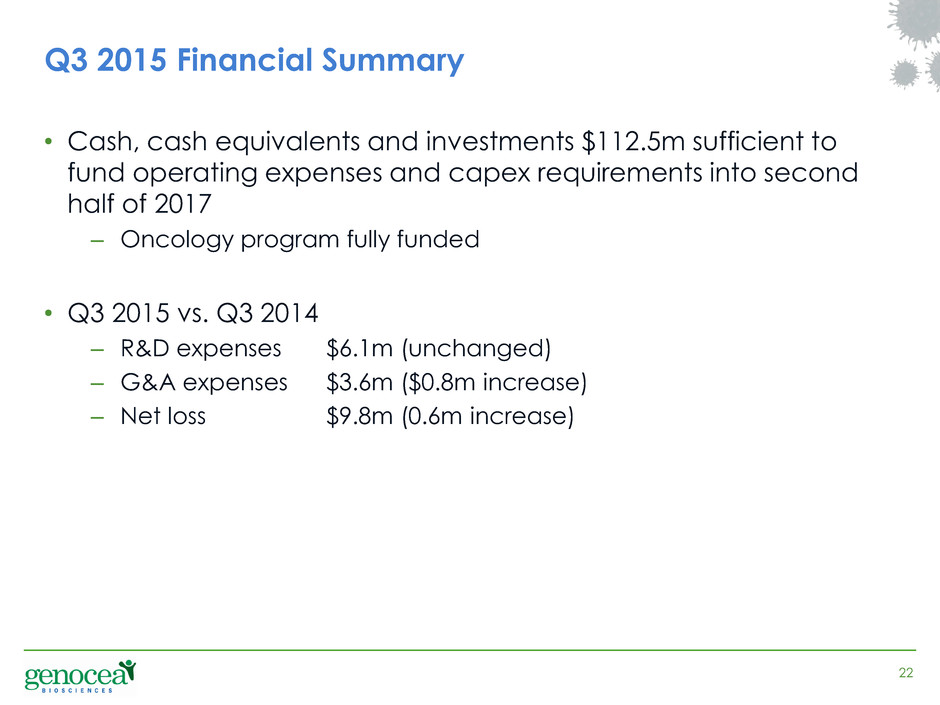
• | Cash Position: Cash, cash equivalents and investments as of September 30, 2015 were $112.5 million, compared to $74.6 million as of June 30, 2015. Genocea expects that these funds will be sufficient to fund its operating expenses and capital expenditure requirements into the second half of 2017. |
• | Research and Development (R&D) Expenses: R&D expenses for the quarter ended September 30, 2015 were unchanged at $6.1 million compared to the same period in 2014, reflecting higher personnel costs and increased lab-related costs offset by reductions in manufacturing and licensing fees related to the commencement of GEN-003 and GEN-004 clinical trials. We continue to make investments in Genocea’s preclinical pipeline, which offset lower R&D expense for our GEN-003 and GEN-004 programs on a quarter over quarter basis. |
• | General and Administrative (G&A) Expenses: G&A expenses for the quarter ended September 30, 2015 were $3.6 million, compared to $2.8 million for the same period in 2014. The increase reflects higher personnel costs and depreciation expense, both of which support Genocea’s expanding R&D operations and the demands of operating as a public company. |
• | Net Loss: Net loss was $9.8 million for the third quarter of 2015, compared to a net loss of $9.2 million for the same period in 2014. |
Conference Call
Genocea will host a conference call and webcast today at 9:00 a.m. ET. The conference call may be accessed by dialing (844) 826-0619 for domestic participants and (315) 625-6883 for international callers and referencing the conference ID number 60192429. A live webcast of the conference call will be available online from the investor relations section of the Company's website at http://ir.genocea.com. A webcast replay of the conference call will be available on the Genocea website beginning approximately two hours after the event, and will be archived for 30 days.
3
About Genocea
Genocea is harnessing the power of T cell immunity to develop life-changing vaccines and immunotherapies. T cells are increasingly recognized as a critical element of protective immune responses to a wide range of diseases, but traditional discovery methods have proven unable to identify the targets of such protective immune response. Using ATLAS, its proprietary technology platform, Genocea identifies these targets to potentially enable the rapid development of medicines to address critical patient needs. Genocea's pipeline of novel clinical stage T cell-enabled product candidates includes GEN-003 for genital herpes, GEN-004 for the prevention of infection by all serotypes of pneumococcus, and earlier-stage programs in chlamydia, genital herpes prophylaxis, malaria and cancer immunotherapy. For more information, please visit the company's website at www.genocea.com.
Forward Looking Statements
Statements herein relating to future business performance, conditions or strategies and other financial and business matters, including expectations regarding clinical developments, are forward-looking statements within the meaning of the Private Securities Litigation Reform Act. Genocea cautions that these forward-looking statements are subject to numerous assumptions, risks and uncertainties, which change over time. Factors that may cause actual results to differ materially from the results discussed in the forward-looking statements or historical experience include risks and uncertainties, including Genocea’s ability to progress any product candidates in preclinical or clinical trials; the ability of ATLAS to identify promising product candidates in oncology; the scope, rate and progress of its preclinical studies and clinical trials and other research and development activities; anticipated clinical trial results; current results may not be predictive of future results; even if the data from preclinical studies or clinical trials is positive, regulatory authorities may require additional studies for approval and the product may not prove to be safe and efficacious; Genocea’s ability to enter into future collaborations with industry partners and the government and the terms, timing and success of any such collaboration; risks associated with the manufacture and supply of clinical and commercial product; the cost of filing, prosecuting, defending and enforcing any patent claims and other intellectual property rights; Genocea’s ability to obtain rights to technology; competition for clinical resources and patient enrollment from drug candidates in development by other companies with greater resources and visibility; the rate of cash utilized by Genocea in its business and the period for which existing cash will be able to fund such operation; Genocea’s ability to obtain adequate financing in the future through product licensing, co-promotional arrangements, public or private equity or debt financing or otherwise; general business conditions; competition; business abilities and judgment of personnel; the availability of qualified personnel and other factors set forth under “Risk Factors” in Genocea’s Annual Report on Form 10-K for the fiscal year ended December 31, 2014 and other filings with the Securities and Exchange Commission (the “SEC”). Further information on the factors and risks that could affect Genocea’s business, financial conditions and results of operations is contained in Genocea’s filings with the SEC, which are available at www.sec.gov. These forward-looking statements speak only as of the date of this press release and Genocea assumes no duty to update forward-looking statements.
For media: | For investors: | |
Megan Lustig | Jonathan Poole | |
Spectrum Science Communications | Genocea Biosciences | |
O: 202-955-6222 | O: 617-876-8191 | |
4
GENOCEA BIOSCIENCES, INC.
CONDENSED BALANCE SHEETS (UNAUDITED)
(In thousands)
September 30, | December 31, | ||||||
2015 | 2014* | ||||||
Cash, cash equivalents and investments | $ | 112,545 | $ | 47,079 | |||
Other assets | 5,335 | 3,253 | |||||
Total assets | $ | 117,880 | $ | 50,332 | |||
Debt, current and long-term | $ | 11,658 | $ | 11,389 | |||
Accounts payable | 1,731 | 2,692 | |||||
Accrued expenses | 4,928 | 2,486 | |||||
Other liabilities | 678 | 1,258 | |||||
Total liabilities | 18,995 | 17,825 | |||||
Stockholders' equity | 98,885 | 32,507 | |||||
Total liabilities and stockholders’ equity | $ | 117,880 | $ | 50,332 | |||
* Includes $99 thousand in deferred financing costs reclassified from Other assets to Debt upon the adoption of a recently issued accounting pronouncement during the second quarter of 2015, which required retrospective application.
5
GENOCEA BIOSCIENCES, INC.
CONDENSED STATEMENTS OF OPERATIONS (UNAUDITED)
(In thousands, except per share amounts)
Three months ended September 30, | Nine months ended September 30, | ||||||||||||||
2015 | 2014 | 2015 | 2014 | ||||||||||||
Grant revenue | $ | 213 | $ | — | $ | 449 | $ | — | |||||||
Operating expenses: | |||||||||||||||
Research and development | 6,058 | 6,115 | 21,536 | 15,073 | |||||||||||
General and administrative | 3,645 | 2,843 | 10,206 | 7,167 | |||||||||||
Total operating expenses | 9,703 | 8,958 | 31,742 | 22,240 | |||||||||||
Loss from operations | (9,490 | ) | (8,958 | ) | (31,293 | ) | (22,240 | ) | |||||||
Other expense, net | (281 | ) | (213 | ) | (876 | ) | (1,406 | ) | |||||||
Net loss | $ | (9,771 | ) | $ | (9,171 | ) | $ | (32,169 | ) | $ | (23,646 | ) | |||
Accretion of redeemable convertible preferred stock to redemption value | — | — | — | (180 | ) | ||||||||||
Net loss attributable to common stockholders | $ | (9,771 | ) | $ | (9,171 | ) | $ | (32,169 | ) | $ | (23,826 | ) | |||
Net loss per share attributable to common stockholders - basic and diluted | $ | (0.37 | ) | $ | (0.53 | ) | $ | (1.38 | ) | $ | (1.6 | ) | |||
Weighted-average number of common shares used in net loss per share attributable to common stockholders - basic and diluted | 26,610 | 17,465 | 23,228 | 14,918 | |||||||||||
.
6
Q3 2015 Earnings Call November 5, 2015 1 Creating and advancing life- changing vaccines and immunotherapies Exhibit 99.2
This presentation contains “forward-looking” statements that are within the meaning of federal securities laws and are based on our management’s beliefs and assumptions and on information currently available to management. Forward-looking statements include information concerning our possible or assumed future results of operations, business strategies, financing plans, competitive position, industry environment, potential growth opportunities, potential market opportunities and the effects of competition. Forward-looking statements include all statements that are not historical facts and can be identified by terms such as “anticipates,” “believes,” “could,” “seeks,” “estimates,” “intends,” “may,” “plans,” “potential,” “predicts,” “projects,” “should,” “will,” “would” or similar expressions and the negatives of those terms. Forward- looking statements represent our management’s beliefs and assumptions only as of the date of this presentation. Our operations involve risks and uncertainties, many of which are outside our control, and any one of which, or combination of which, could materially affect our results of operations and whether the forward-looking statements ultimately prove to be correct. Factors that may materially affect our results of operations include, among other things, those listed in our Annual Report on Form 10-K and other filings with the Securities and Exchange Commission (“SEC”). Except as required by law, we assume no obligation to update these forward-looking statements publicly, or to update the reasons actual results could differ materially from those anticipated in the forward-looking statements, even if new information becomes available in the future. You may get copies of our Annual Report on Form 10-K, Quarterly Report on Form 10-Q and our other SEC filings for free by visiting EDGAR on the SEC website at http://www.sec.gov. 2 Safe Harbor Statement
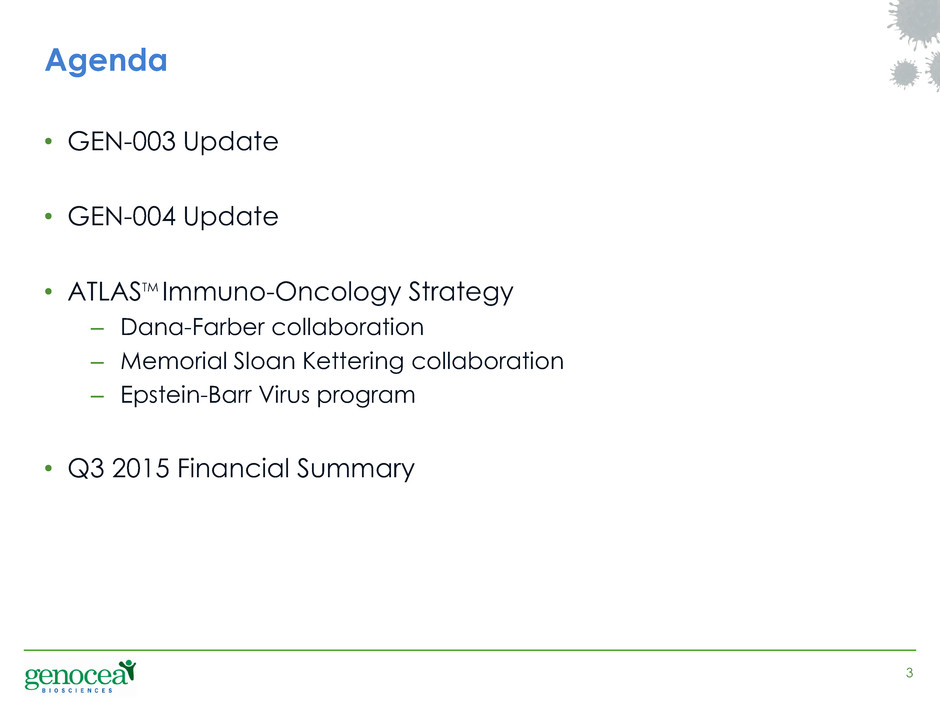
• GEN-003 Update • GEN-004 Update • ATLASTM Immuno-Oncology Strategy – Dana-Farber collaboration – Memorial Sloan Kettering collaboration – Epstein-Barr Virus program • Q3 2015 Financial Summary 3 Agenda
GEN-003 Update 4
• Improved impact on viral activity vs. Phase 1/2a • Durable clinical efficacy demonstrated across potential Phase 3 endpoints • Clear path to FDA end of Phase 2 meeting in Q4 2016 5 6-Month Phase 2 Efficacy Data Strengthens GEN-003 Value Proposition for Treatment of Genital Herpes
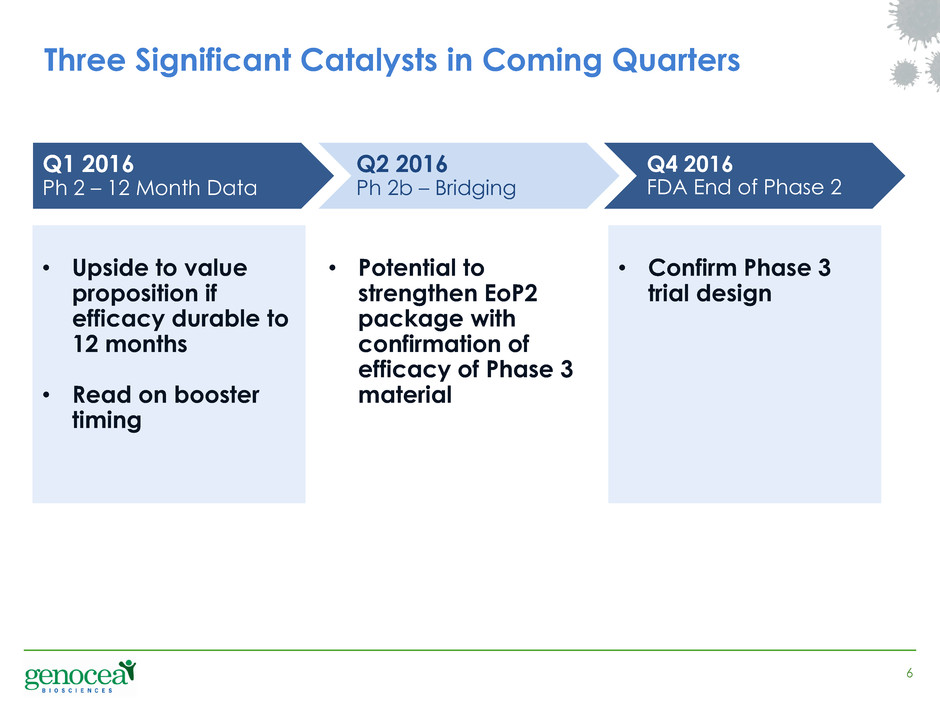
6 Three Significant Catalysts in Coming Quarters Q1 2016 Ph 2 – 12 Month Data Q4 2016 FDA End of Phase 2 Q2 2016 Ph 2b – Bridging • Potential to strengthen EoP2 package with confirmation of efficacy of Phase 3 material • Confirm Phase 3 trial design • Upside to value proposition if efficacy durable to 12 months • Read on booster timing
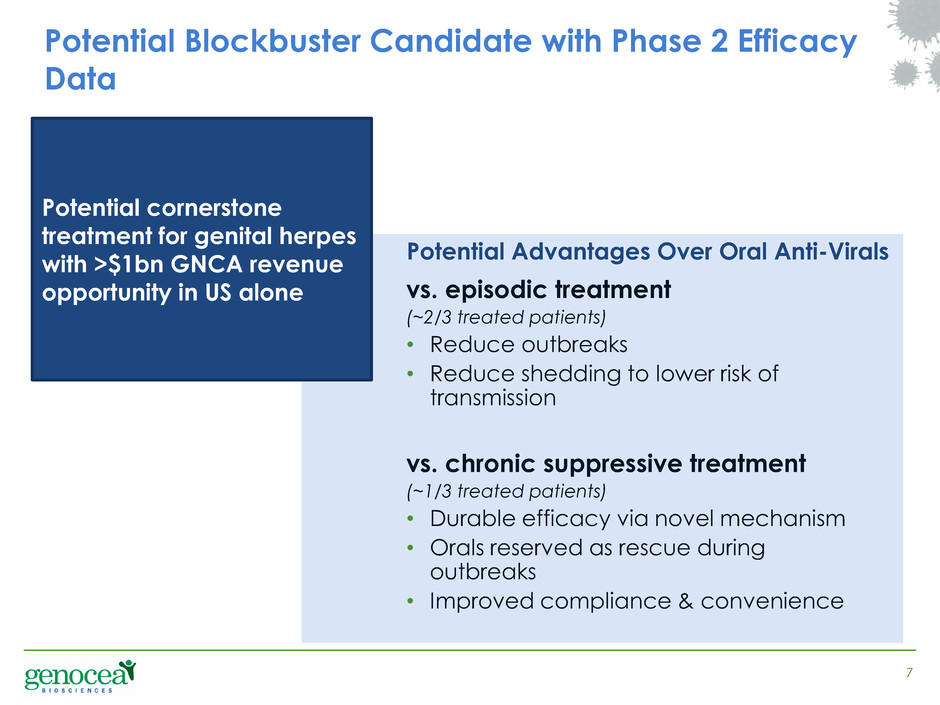
7 Potential Blockbuster Candidate with Phase 2 Efficacy Data vs. episodic treatment (~2/3 treated patients) • Reduce outbreaks • Reduce shedding to lower risk of transmission vs. chronic suppressive treatment (~1/3 treated patients) • Durable efficacy via novel mechanism • Orals reserved as rescue during outbreaks • Improved compliance & convenience Potential cornerstone treatment for genital herpes with >$1bn GNCA revenue opportunity in US alone Potential Advantages Over Oral Anti-Virals
GEN-004 Update 8
• Consistent reductions versus placebo in colonization rate and density but no statistical significance • Path to further development may require investigation of dose, adjuvant or trial population • Development suspended pending further review of data and expert consultation 9 GEN-004 Phase 2a Challenge Study Results
ATLASTM: Enabling New Immuno-oncology Therapies 10
• New therapies unleash T cells, but poor understanding of what T cells are targeting for efficacy • Breakthrough treatment advances, but with limitations: – Still not effective for many patients – Early signals of activity not always reliable – Significant toxicity • Potential targets of T cell response (T cell antigens) – Tumor-associated antigens (aberrantly-expressed self antigens): many identified; protective efficacy unproven – Neoantigens: patient-specific, predicted to be immunogenic1 11 Immuno-Oncology Transforming Cancer Treatment; Major Unmet Needs Remain 1 Gubin, Schreiber et al, Nature, vol 515, Nov 2015
• Finding the right T cell antigens may matter in cancer and infectious disease • GEN-003 efficacy reflects the power of the right T cell antigen • 2014 Dana-Farber collaboration established to apply ATLAS to cancer 12 Pursuing Immuno-Oncology Applications for ATLAS, a Natural Extension of Infectious Disease Expertise ATLAS may inform • T cell signatures of response and non- response • Cancer vaccine targets
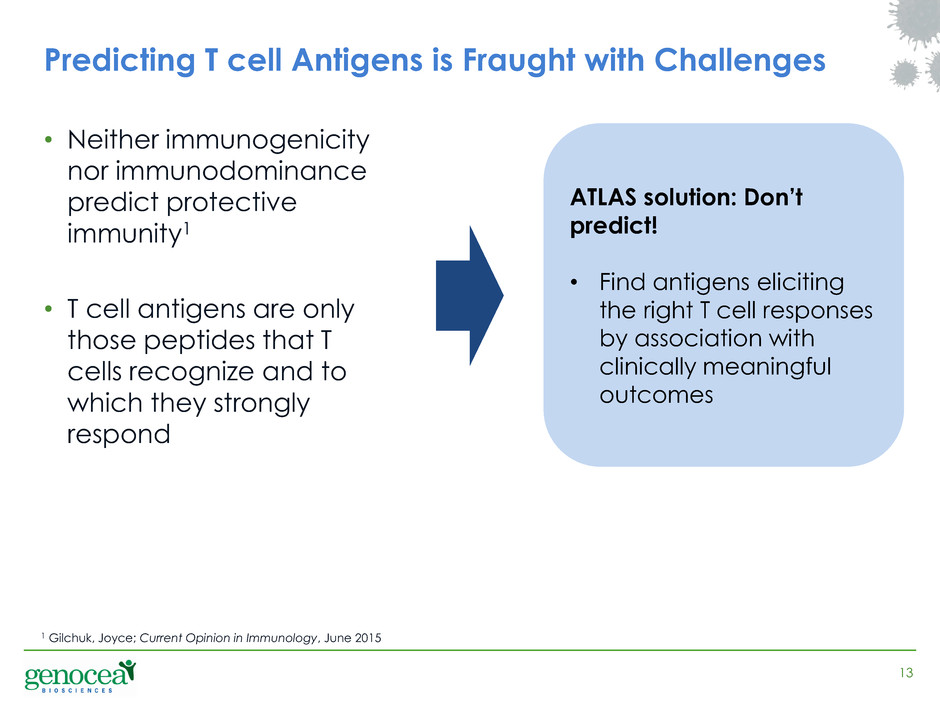
• Neither immunogenicity nor immunodominance predict protective immunity1 • T cell antigens are only those peptides that T cells recognize and to which they strongly respond 13 Predicting T cell Antigens is Fraught with Challenges 1 Gilchuk, Joyce; Current Opinion in Immunology, June 2015 ATLAS solution: Don’t predict! • Find antigens eliciting the right T cell responses by association with clinically meaningful outcomes
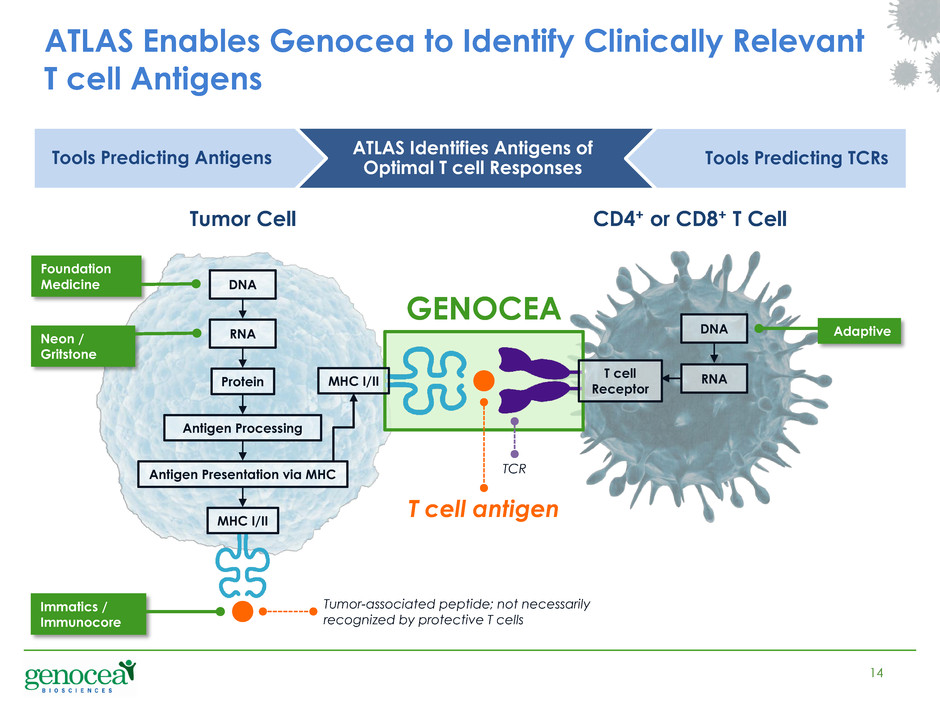
ATLAS Enables Genocea to Identify Clinically Relevant T cell Antigens 14 RNANeon / Gritstone DNA Foundation Medicine Antigen Processing Antigen Presentation via MHC Protein Immatics / Immunocore DNA ATLAS Identifies Antigens of Optimal T cell Responses Tools Predicting Antigens Tools Predicting TCRs GENOCEA RNA T cell antigen TCR CD4+ or CD8+ T CellTumor Cell Tumor-associated peptide; not necessarily recognized by protective T cells Adaptive MHC I/II MHC I/II T cell Receptor
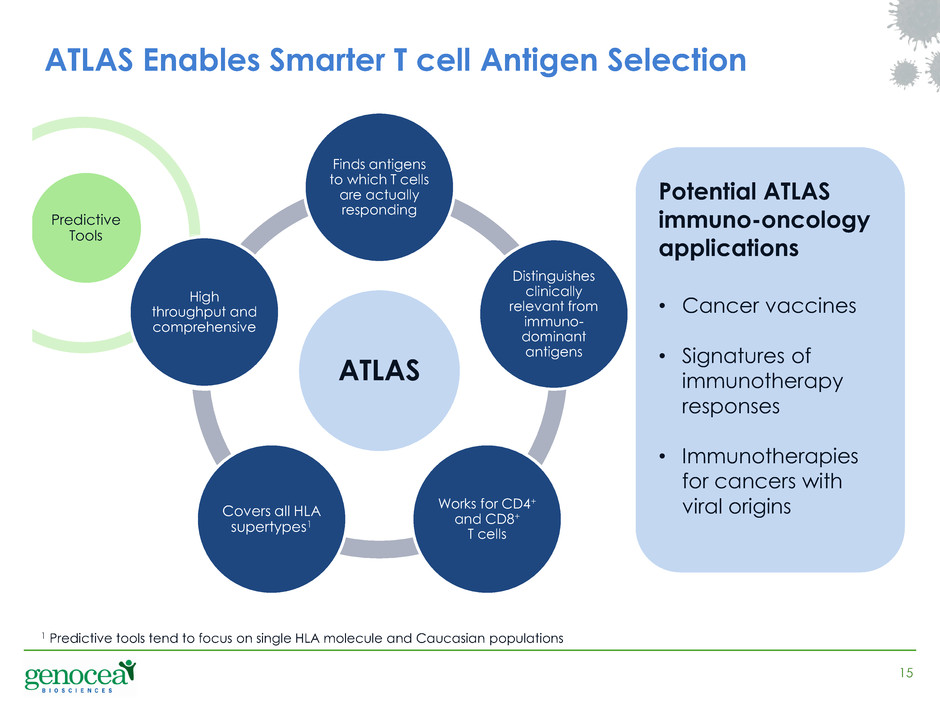
ATLAS Finds antigens to which T cells are actually responding Distinguishes clinically relevant from immuno- dominant antigens Works for CD4+ and CD8+ T cells Covers all HLA supertypes1 High throughput and comprehensive 15 ATLAS Enables Smarter T cell Antigen Selection Predictive Tools i t r t r si Potential ATLAS immuno-oncology applications • Cancer vaccines • Signatures of immunotherapy responses • Immunotherapies for cancers with viral origins 1 Predictive tools tend to focus on single HLA molecule and Caucasian populations
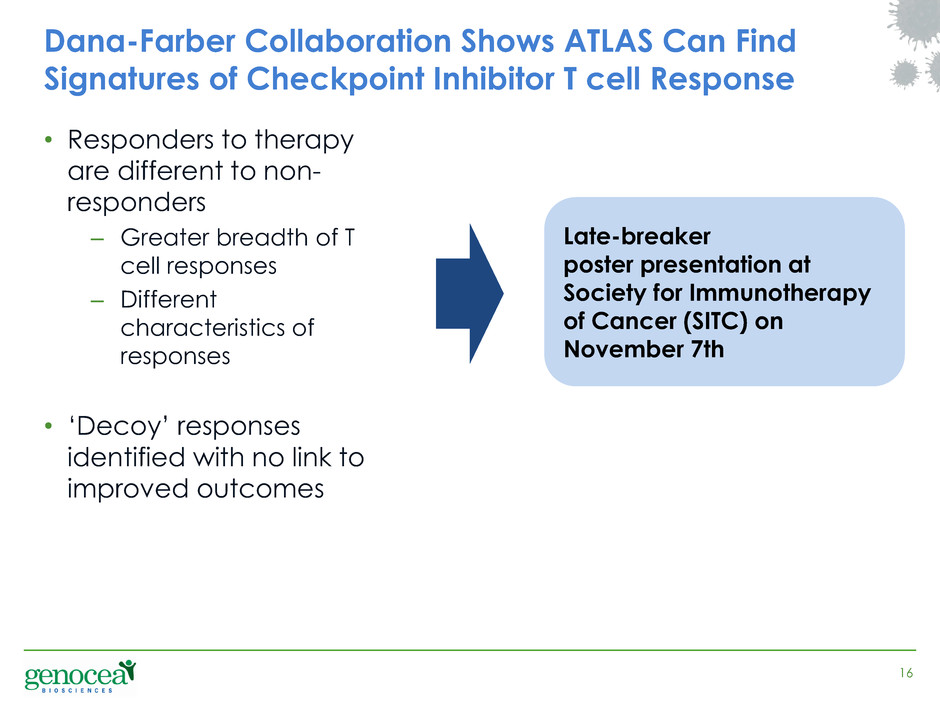
• Responders to therapy are different to non- responders – Greater breadth of T cell responses – Different characteristics of responses • ‘Decoy’ responses identified with no link to improved outcomes 16 Dana-Farber Collaboration Shows ATLAS Can Find Signatures of Checkpoint Inhibitor T cell Response Late-breaker poster presentation at Society for Immunotherapy of Cancer (SITC) on November 7th
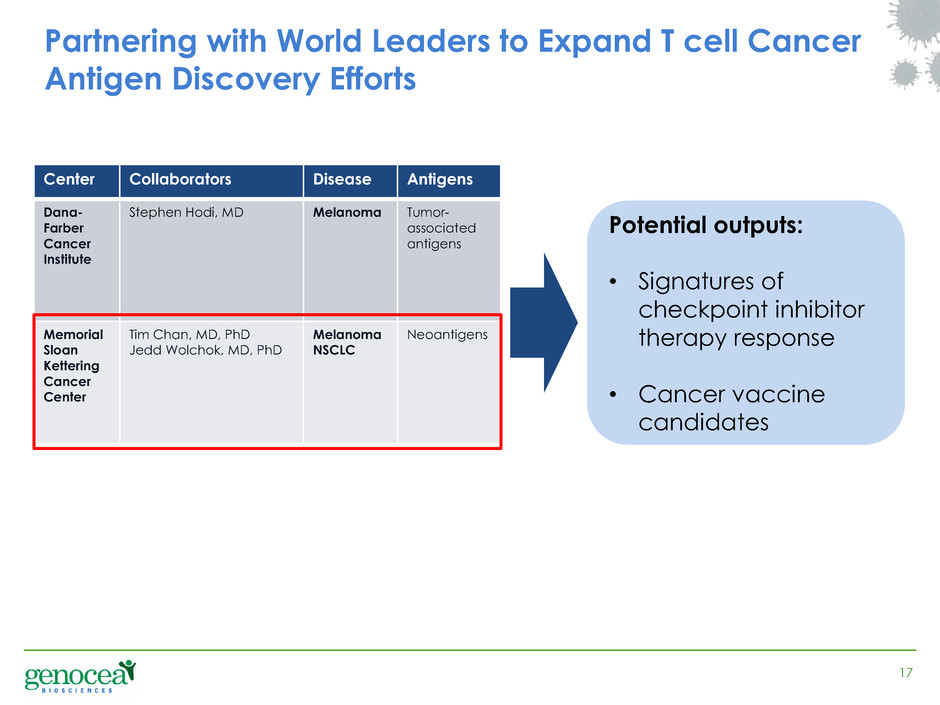
17 Partnering with World Leaders to Expand T cell Cancer Antigen Discovery Efforts Center Collaborators Disease Antigens Dana- Farber Cancer Institute Stephen Hodi, MD Melanoma Tumor- associated antigens Memorial Sloan Kettering Cancer Center Tim Chan, MD, PhD Jedd Wolchok, MD, PhD Melanoma NSCLC Neoantigens Potential outputs: • Signatures of checkpoint inhibitor therapy response • Cancer vaccine candidates
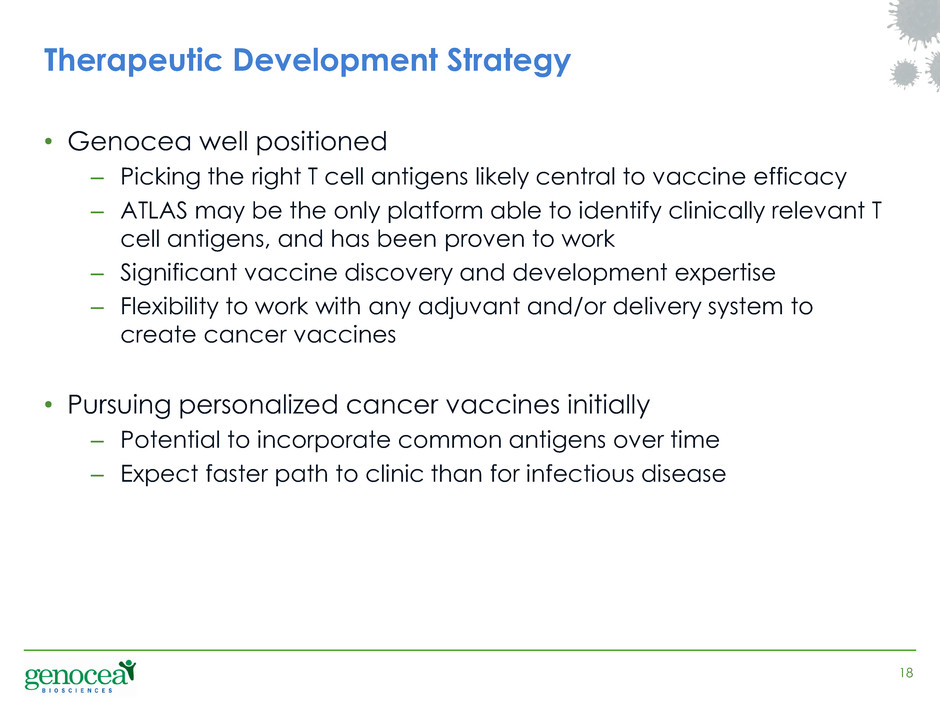
• Genocea well positioned – Picking the right T cell antigens likely central to vaccine efficacy – ATLAS may be the only platform able to identify clinically relevant T cell antigens, and has been proven to work – Significant vaccine discovery and development expertise – Flexibility to work with any adjuvant and/or delivery system to create cancer vaccines • Pursuing personalized cancer vaccines initially – Potential to incorporate common antigens over time – Expect faster path to clinic than for infectious disease 18 Therapeutic Development Strategy
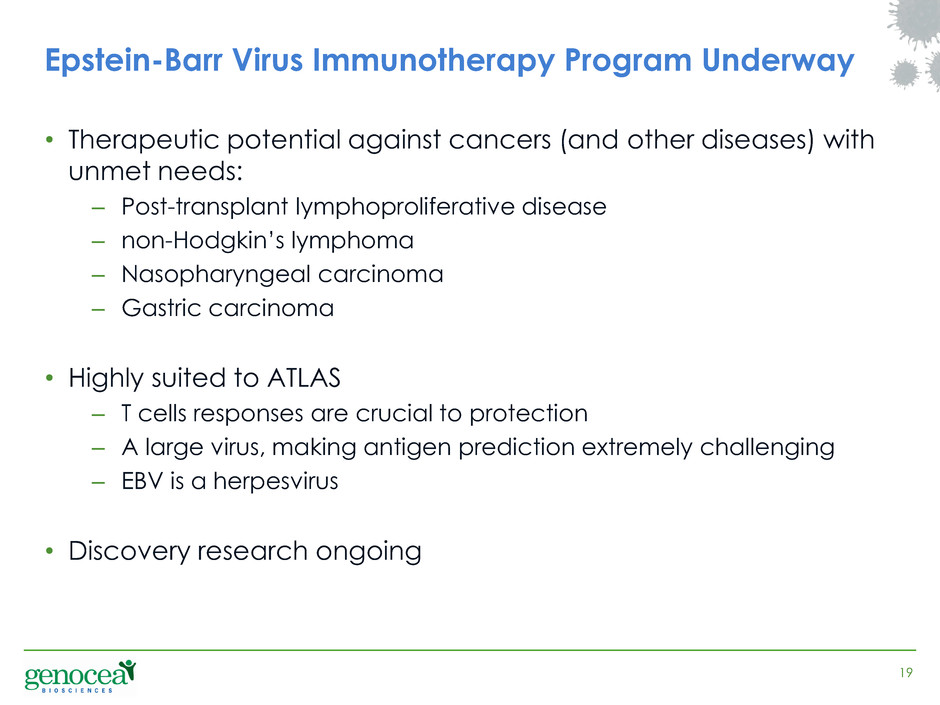
• Therapeutic potential against cancers (and other diseases) with unmet needs: – Post-transplant lymphoproliferative disease – non-Hodgkin’s lymphoma – Nasopharyngeal carcinoma – Gastric carcinoma • Highly suited to ATLAS – T cells responses are crucial to protection – A large virus, making antigen prediction extremely challenging – EBV is a herpesvirus • Discovery research ongoing 19 Epstein-Barr Virus Immunotherapy Program Underway
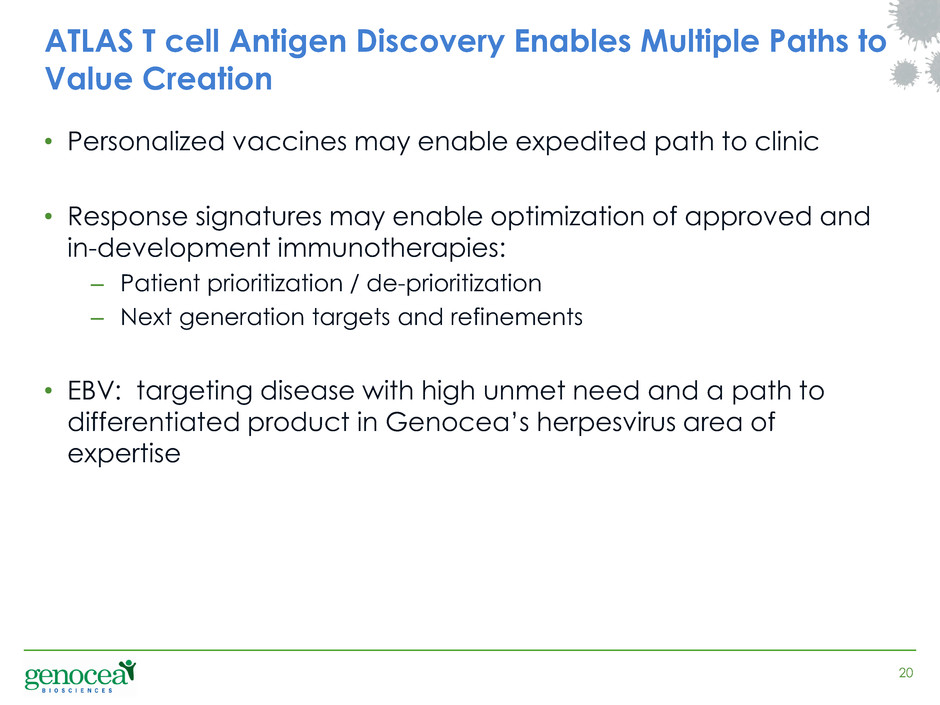
• Personalized vaccines may enable expedited path to clinic • Response signatures may enable optimization of approved and in-development immunotherapies: – Patient prioritization / de-prioritization – Next generation targets and refinements • EBV: targeting disease with high unmet need and a path to differentiated product in Genocea’s herpesvirus area of expertise 20 ATLAS T cell Antigen Discovery Enables Multiple Paths to Value Creation
Q3 2015 Financial Summary 21
• Cash, cash equivalents and investments $112.5m sufficient to fund operating expenses and capex requirements into second half of 2017 – Oncology program fully funded • Q3 2015 vs. Q3 2014 – R&D expenses $6.1m (unchanged) – G&A expenses $3.6m ($0.8m increase) – Net loss $9.8m (0.6m increase) 22 Q3 2015 Financial Summary
Closing Remarks Q&A 23
Serious News for Serious Traders! Try StreetInsider.com Premium Free!
You May Also Be Interested In
- MEGAN FOX BECOMES CO-OWNER OF SUBS.COM AND LAUNCHES OFFICIAL PAGE
- XRP Price Prediction: $1.50 Gives Way as AlphaPepe Offers a Presale Entry With Ex-Shibarium Talent Behind It
- Edge Total Intelligence Announces Amended and Restated Q2 2026 Financial Statements and MD&A
Create E-mail Alert Related Categories
SEC FilingsSign up for StreetInsider Free!
Receive full access to all new and archived articles, unlimited portfolio tracking, e-mail alerts, custom newswires and RSS feeds - and more!
