



Form 8-K Fibrocell Science, Inc. For: Mar 10
 Tweet
Tweet Share
Share E-mail
UNITED STATES
SECURITIES AND EXCHANGE COMMISSION
Washington, D.C. 20549
______________________________________________________________________________________________________
FORM 8-K
______________________________________________________________________________________________________
CURRENT REPORT
Pursuant to Section 13 or 15(d) of the
Securities Exchange Act of 1934
Date of Report (Date of earliest event reported): March 10, 2016
______________________________________________________________________________________________________

FIBROCELL SCIENCE, INC.
(Exact Name of Registrant as Specified in its Charter)
______________________________________________________________________________________________________
DELAWARE | 001-31564 | 87-0458888 |
(State or Other Jurisdiction of Incorporation or Organization) | (Commission File No.) | (I.R.S. Employer Identification No.) |
405 EAGLEVIEW BLVD., EXTON, PA 19341
(Address of principal executive offices and zip code)
(484) 713-6000
(Registrant’s telephone number, including area code)
(Former name or former address, if changed from last report)
______________________________________________________________________________________________________
Check the appropriate box below if the Form 8-K filing is intended to simultaneously satisfy the filing obligation of the registrant under any of the following provisions (see General Instruction A.2. below):
q | Written communications pursuant to Rule 425 under the Securities Act (17 CFR 230.425) |
q | Soliciting material pursuant to Rule 14a-12 under the Exchange Act (17 CFR 240.14a-12) |
q | Pre-commencement communications pursuant to Rule 14d-2(b) under the Exchange Act (17 CFR 240.14d-2(b)) |
q | Pre-commencement communications pursuant to Rule 13e-4(c) under the Exchange Act (17 CFR 240.13e-14(c)) |
Item 2.02 Results of Operations and Financial Condition.
On March 10, 2016, Fibrocell Science, Inc. ("Fibrocell") issued a press release announcing financial and operating results for the fourth quarter and year ended December 31, 2015. A copy of this press release is furnished herewith as Exhibit 99.1 and incorporated by reference herein.
Item 7.01 Regulation FD Disclosure.
On March 10, 2016, Fibrocell posted an updated corporate presentation on its website, www.fibrocell.com. A copy of this presentation is furnished herewith as Exhibit 99.2 and incorporated by reference herein.
Item 9.01 Financial Statements and Exhibits.
(d) Exhibits
Exhibit No. | Description | |
99.1 | Press Release dated March 10, 2016 | |
99.2 | Corporate Presentation dated March 10, 2016 | |
SIGNATURES
Pursuant to the requirements of the Securities Exchange Act of 1934, the registrant has duly caused this report to be signed on its behalf by the undersigned, hereunto duly authorized.
Fibrocell Science, Inc. | ||
By: | /s/ Keith A. Goldan | |
Keith A. Goldan | ||
SVP and Chief Financial Officer | ||
Date: March 10, 2016
EXHIBIT INDEX
Exhibit No. | Description | |
99.1 | Press Release dated March 10, 2016 | |
99.2 | Corporate Presentation dated March 10, 2016 | |
Exhibit 99.1 Fibrocell Reports Fourth Quarter and Full Year 2015 Financial Results and Operational Highlights - Company to Host Conference Call and Webcast, Today at 8:30 a.m. EST - EXTON, PA – March 10, 2016 – Fibrocell Science, Inc. (NASDAQ: FCSC), an autologous cell and gene therapy company focused on developing transformational therapies for diseases affecting the skin, connective tissue and joints, today reported financial results for the fourth quarter and year ended December 31, 2015 and operational highlights. Fibrocell will host a conference call and webcast today at 8:30 a.m. EST. “Fibrocell’s progress across our pipeline of personalized biologics was significant in 2015, and positions us well to extend this momentum into 2016 and beyond,” said David Pernock, Chairman and Chief Executive Officer. “In the first half of 2016 we plan to achieve several major milestones including initiating human clinical trials for FCX-007, our gene-therapy product candidate for the treatment of recessive dystrophic epidermolysis bullosa, as well as reporting Phase II clinical data for azficel-T for the treatment of vocal cord scarring resulting in chronic or severe dysphonia. In addition, we expect to continue pre-clinical studies for FCX-013, our gene-therapy product candidate for the treatment of linear scleroderma.” Mr. Pernock continued, “The recent expansion of our collaboration with Intrexon for the development of genetically-modified fibroblasts to treat chronic inflammatory and degenerative diseases of the joint, including arthritis and related conditions, has the potential to further demonstrate the power of our combined technology platforms and enable us to contend for leadership in a prominent therapeutic category.” Recent Operational Highlights and Upcoming Milestones • Fibrocell completed patient dosing in its Phase II clinical trial of azficel-T for the treatment of vocal cord scarring resulting in chronic or severe dysphonia. The study is a double-blind, randomized, placebo-controlled trial designed to test the safety and efficacy of azficel-T in subjects with chronic or severe dysphonia caused by idiopathic vocal cord scarring or atrophy. Fibrocell expects to report primary endpoint results in the second quarter of 2016. • Fibrocell initiated the toxicology study previously requested by the U.S. Food and Drug Administration (FDA) related to the Company’s Investigational New Drug (IND) application for FCX-007, its gene-therapy product candidate for the treatment of recessive dystrophic epidermolysis bullosa. In this study, FCX-007 was injected in non-grafted SCID (severe combined immunodeficiency) mice. Fibrocell expects to amend its IND to include data from this toxicology study later this month and, subject to FDA approval, initiate a Phase I/II clinical trial in the second quarter of 2016. FCX-007 is being developed in collaboration with Intrexon Corporation (NYSE: XON), a leader in synthetic biology. • Fibrocell successfully completed a proof-of-concept study for FCX-013, the Company’s gene- therapy product candidate for the treatment of linear scleroderma, to determine its potential to reduce dermal thickness in fibrotic tissue. In this study, FCX-013 was evaluated in a bleomycin-induced scleroderma model, utilizing SCID mice. Data from the study
demonstrated that FCX-013 reduced the dermal thickness of fibrotic tissue to levels similar to that of the non-treated control and further reduced the thickness of the sub-dermal muscle layer. Fibrocell is advancing FCX-013 into pre-clinical dose-ranging and toxicology/biodistribution studies for product optimization and expects to submit an IND application to the FDA in 2017. FCX-013 is also being developed in collaboration with Intrexon. • In December 2015, Fibrocell and Intrexon entered into a new collaboration agreement for the development of genetically-modified fibroblasts to treat chronic inflammatory and degenerative diseases of the joint, including arthritis and related conditions. Through the collaboration, Fibrocell’s proprietary autologous fibroblast platform will be combined with Intrexon’s cellular engineering capabilities to generate cell-based therapeutics that have been modified to express one or more proteins at sites of joint inflammation. This approach has the potential to overcome the limitations of existing treatments for chronic inflammatory and degenerative diseases of the joint. Financial Results for the Three Months Ended December 31, 2015 and 2014 For the three months ended December 31, 2015, Fibrocell reported a diluted net loss of $0.40 per share, compared to a diluted net loss of $0.09 per share for the same period in 2014. Revenues for each of the fourth quarters of 2015 and 2014 were insignificant to our operations. Fibrocell used $7.6 million in cash for operations during the fourth quarter of 2015, as compared to $6.8 million used in the fourth quarter of 2014. Research and development expenses for the quarter ended December 31, 2015 were approximately $14.0 million, as compared to $3.8 million for the same period in 2014. The $10.2 million increase was due primarily to a $10.0 million upfront license fee for the new exclusive channel collaboration with Intrexon and additional spending to advance our current development programs. Selling, general and administrative expenses remained consistent at $2.2 million and $2.0 million for the quarter ended December 31, 2015 and 2014, respectively. Financial Results for the Twelve Months Ended December 31, 2015 and 2014 For the twelve months ended December 31, 2015, Fibrocell reported diluted net loss of $0.85 per share, compared to diluted net loss of $0.70 per share for the same period in 2014. Total revenue was $0.5 million and $0.2 million for the twelve months ended December 31, 2015 and 2014, respectively. This increase was primarily due to collaboration revenue received in 2015 related to a research and development agreement that we have with a third party to investigate potential new non-pharmaceutical applications for our conditioned fibroblast media technology. An immaterial amount of collaboration revenue was recognized in the same period in 2014. Total research and development expenses increased $8.2 million to approximately $26.0 million for the twelve months ended December 31, 2015 as compared to $17.7 million for the same period in 2014. The increase is due primarily to the $10.0 million upfront license fee discussed above and additional spending to advance our current development programs. This was offset by $5.2 million of stock issuance costs in 2014 related to our Ehlers-Danlos Syndrome program, incurred in connection with the second amendment to a previous exclusive channel collaboration agreement with Intrexon.
Selling, general and administrative expenses increased by approximately $1.2 million to $11.3 million for the twelve months ended December 31, 2015 as compared to $10.1 million for the same period in 2014. The increase was due to higher professional fees related to legal costs and higher compensation and related expenses related to stock-based compensation and salaries. As of December 31, 2015, the Company had cash and cash equivalents of $29.3 million and working capital of $15.6 million. The Company believes that its cash and cash equivalents at December 31, 2015 will be sufficient to fund operations into the fourth quarter of 2016. Additional capital will be needed by the Company to fund operations beyond that point. Conference Call and Webcast To participate on the live call, please dial 855-877-0343 (domestic) or +1-678-509-8772 (international), and provide the conference code 47056115 five to ten minutes before the start of the call. The conference call will also be webcast live under the investor relations section of Fibrocell's website at www.fibrocell.com/investors/events and will be archived there for 30 days following the call. Please visit Fibrocell's website several minutes prior to the start of the broadcast to ensure adequate time for any software download that may be necessary. About Fibrocell Fibrocell is an autologous cell and gene therapy company translating personalized biologics into medical breakthroughs. Fibrocell’s most advanced product candidate, azficel-T, uses its proprietary autologous fibroblast technology and is in a Phase II clinical trial for the treatment of vocal cord scarring resulting in chronic or severe dysphonia. In collaboration with Intrexon Corporation (NYSE: XON), a leader in synthetic biology, Fibrocell is also developing gene therapies for diseases affecting the skin, connective tissue and joints using genetically-modified autologous fibroblasts. Fibrocell is in pre-clinical development of FCX-007, its orphan gene-therapy product candidate for the treatment of recessive dystrophic epidermolysis bullosa (RDEB). Fibrocell is also in pre-clinical development of FCX-013, its gene-therapy product candidate for the treatment of linear scleroderma. In addition, Fibrocell and Intrexon are in collaboration to develop a gene therapy for the treatment of arthritis. For more information, visit www.fibrocell.com. Trademarks Fibrocell, Fibrocell Science and LAVIV® are trademarks of Fibrocell Science, Inc. and/or its affiliates. All other names may be trademarks of their respective owners. Forward-Looking Statements This press release contains, and our officers and representatives may from time to time make, statements that are “forward-looking statements” within the meaning of the safe harbor provisions of the U.S. Private Securities Litigation Reform Act of 1995. All statements that are not historical facts are hereby identified as forward-looking statements for this purpose and include, among others, statements relating to: our plans to address the FDA’s feedback relating to our IND for FCX-007; the initiation, design, completion and reporting of results from pre-clinical and clinical studies and the timing thereof; the timing of regulatory submissions and actions; the potential advantages of our product candidates; and other statements regarding our future operations, financial performance and financial position, prospects, strategies and objectives and other future events.
Forward-looking statements are based upon management’s current expectations and assumptions and are subject to a number of known and unknown risks, uncertainties and other factors that could cause actual results and events to differ materially and adversely from those indicated herein including, among others: our ability to successfully complete the additional toxicology study requested by the FDA and to adequately address the FDA’s other feedback relating to our IND for FCX-007; the outcome of the FDA’s review of our amended IND for FCX-007 and approval to commence the Phase I/II clinical trial; varying interpretation of pre-clinical and clinical data and the risk that results seen in pre-clinical studies may not be replicated in humans; uncertainties relating to the initiation and completion of clinical trials and whether clinical trial results will validate and support the safety and efficacy of our product candidates; our ability to maintain our collaboration with Intrexon; and the risks, uncertainties and other factors discussed under the caption “Item 1A. Risk Factors” in our most recent Form 10-K and Form 10-Q filings. As a result, you are cautioned not to place undue reliance on any forward-looking statements. Additionally, the forward-looking statements contained in this press release represent our views only as of the date of this release. While we may update certain forward-looking statements from time to time, we specifically disclaim any obligation to do so even if new information becomes available. # # # Investor Relations Contact: John Woolford Westwicke Partners 443.213.0506 [email protected] Media Relations Contact: Michael Parks 484.356.7105 [email protected]
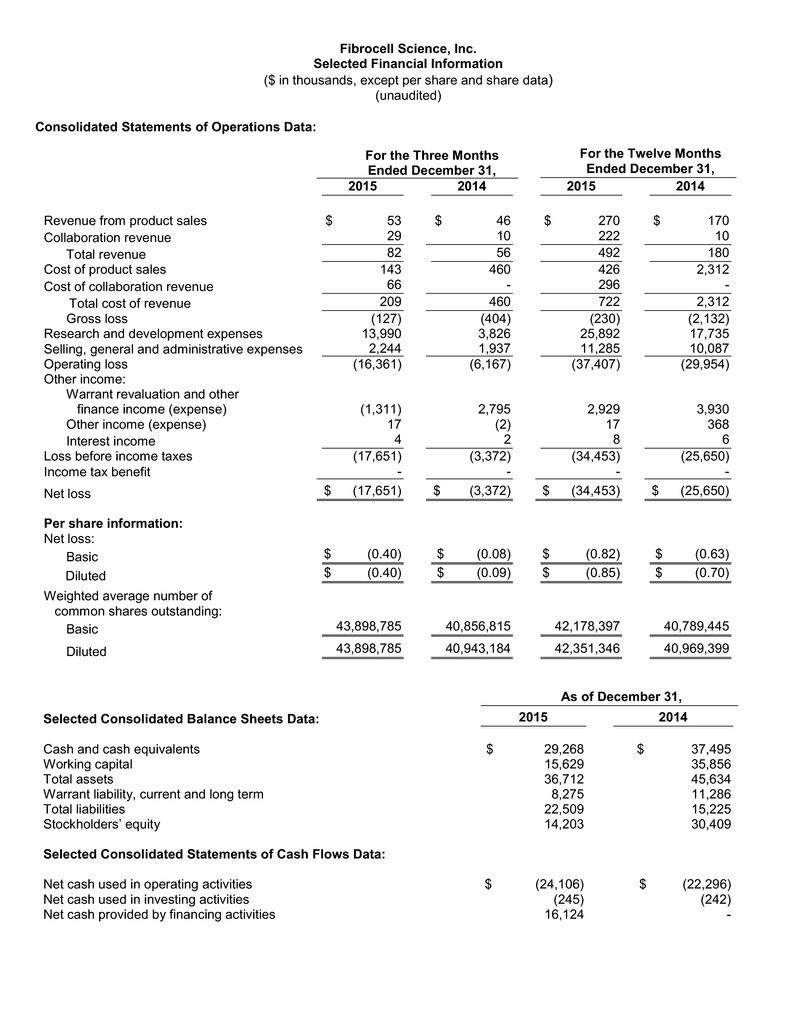
Fibrocell Science, Inc. Selected Financial Information ($ in thousands, except per share and share data) (unaudited) Consolidated Statements of Operations Data: For the Three Months Ended December 31, For the Twelve Months Ended December 31, 2015 2014 2015 2014 Revenue from product sales $ 53 $ 46 $ 270 $ 170 Collaboration revenue 29 10 222 10 Total revenue 82 56 492 180 Cost of product sales 143 460 426 2,312 Cost of collaboration revenue 66 - 296 - Total cost of revenue 209 460 722 2,312 Gross loss (127) (404) (230) (2,132) Research and development expenses 13,990 3,826 25,892 17,735 Selling, general and administrative expenses 2,244 1,937 11,285 10,087 Operating loss (16,361) (6,167) (37,407) (29,954) Other income: Warrant revaluation and other finance income (expense) (1,311) 2,795 2,929 3,930 Other income (expense) 17 (2) 17 368 Interest income 4 2 8 6 Loss before income taxes (17,651) (3,372) (34,453) (25,650) Income tax benefit - - - - Net loss $ (17,651) $ (3,372) $ (34,453) $ (25,650) Per share information: Net loss: Basic $ (0.40) $ (0.08) $ (0.82) $ (0.63) Diluted $ (0.40) $ (0.09) $ (0.85) $ (0.70) Weighted average number of common shares outstanding: Basic 43,898,785 40,856,815 42,178,397 40,789,445 Diluted 43,898,785 40,943,184 42,351,346 40,969,399 As of December 31, Selected Consolidated Balance Sheets Data: 2015 2014 Cash and cash equivalents $ 29,268 $ 37,495 Working capital 15,629 35,856 Total assets 36,712 45,634 Warrant liability, current and long term 8,275 11,286 Total liabilities 22,509 15,225 Stockholders’ equity 14,203 30,409 Selected Consolidated Statements of Cash Flows Data: Net cash used in operating activities $ (24,106) $ (22,296) Net cash used in investing activities (245) (242) Net cash provided by financing activities 16,124 -
Corporate Presentation March 10, 2016
This presentation and our accompanying remarks contain “forward-looking statements” within the meaning of the U.S. Private Securities Litigation Reform Act of 1995. All statements that are not historical facts are hereby identified as forward- looking statements for this purpose and include, among others, statements relating to: the potential advantages of our product candidates; the initiation, design and timing of pre-clinical studies and clinical trials and activities and the reporting of the results thereof; the timing of regulatory submissions and actions; anticipated milestones; and all other statements relating to our future operations, future financial performance, future financial condition, prospects or other future events. Forward-looking statements are based upon our current expectations and assumptions and are subject to a number of known and unknown risks, uncertainties and other factors that could cause actual results to differ materially and adversely from those expressed or implied by such statements. Factors that could cause or contribute to such differences include, among others: our ability to successfully complete the additional toxicology study requested by the FDA and to adequately address the FDA’s other feedback relating to our IND for FCX-007; the outcome of the FDA’s review of our IND for FCX-007 and approval to commence our proposed Phase I/II clinical trial; varying interpretation of clinical and pre-clinical data; the risk that results seen in pre-clinical studies may not be replicated in humans; uncertainties relating to the initiation and completion of clinical trials and whether the results will validate and support the safety and efficacy of our product candidates; our ability to maintain our collaboration with Intrexon; and the other factors discussed under the caption “Item 1A. Risk Factors” in our most recent annual report on Form 10-K which is available through the “Investors—SEC Filings” page of our website at www.fibrocell.com. As a result, you should not place undue reliance on forward-looking statements. The forward-looking statements made in connection with this presentation represent our views only as of the date of this presentation (or any earlier date indicated in such statement). While we may update certain forward-looking statements from time to time, we specifically disclaim any obligation to do so, even if new information becomes available in the future. 2 Forward-Looking Statements
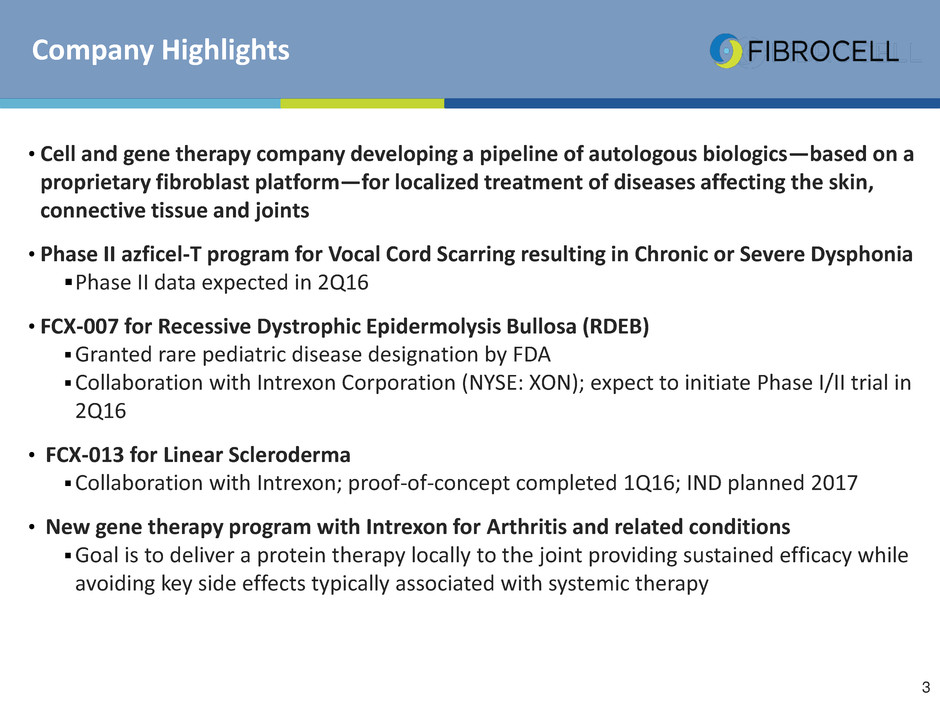
Company Highlights • Cell and gene therapy company developing a pipeline of autologous biologics—based on a proprietary fibroblast platform—for localized treatment of diseases affecting the skin, connective tissue and joints • Phase II azficel-T program for Vocal Cord Scarring resulting in Chronic or Severe Dysphonia Phase II data expected in 2Q16 • FCX-007 for Recessive Dystrophic Epidermolysis Bullosa (RDEB) Granted rare pediatric disease designation by FDA Collaboration with Intrexon Corporation (NYSE: XON); expect to initiate Phase I/II trial in 2Q16 • FCX-013 for Linear Scleroderma Collaboration with Intrexon; proof-of-concept completed 1Q16; IND planned 2017 • New gene therapy program with Intrexon for Arthritis and related conditions Goal is to deliver a protein therapy locally to the joint providing sustained efficacy while avoiding key side effects typically associated with systemic therapy 3
Autologous Fibroblasts as a Platform for Therapy • Fibroblasts repair tissue infrastructure by producing extracellular matrix proteins including collagen and growth factors •Most common cell in skin and connective tissue •Key advantages of our autologous fibroblast platform for creating cell and gene therapies: Localized administration which avoids the side effects typically associated with systemic therapy Reduced rejection concerns because autologous fibroblasts are compatible with the unique biology of each patient Fibroblasts are genetically-modified ex vivo to enable testing for safety and confirmation of protein expression prior to administration, and Expertise in manufacturing fibroblasts •We are using our proprietary technology to create personalized biologics 4
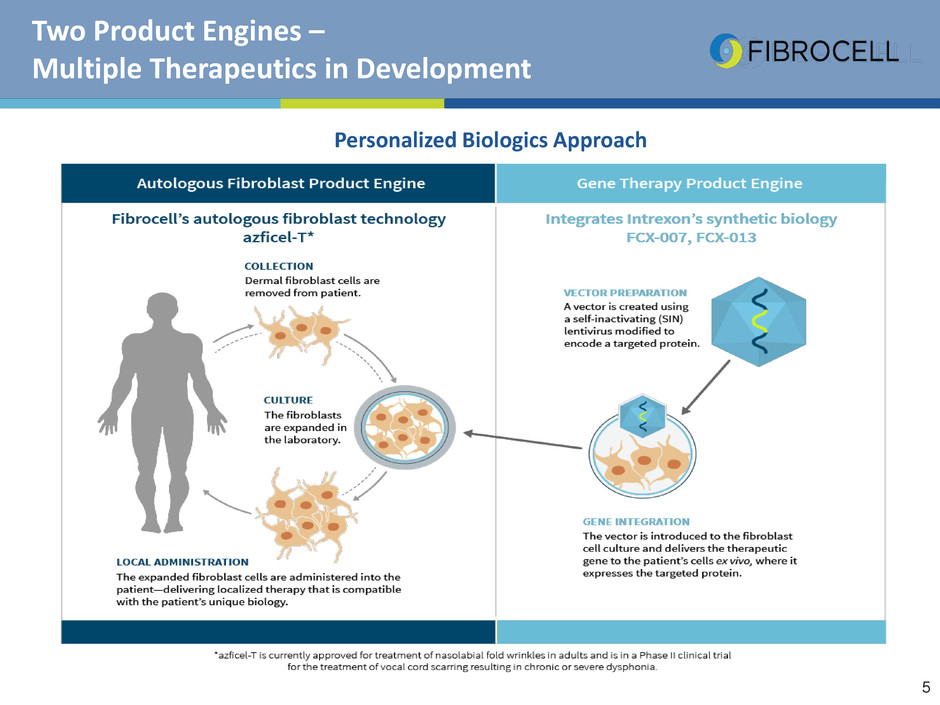
Two Product Engines – Multiple Therapeutics in Development 5 Personalized Biologics Approach
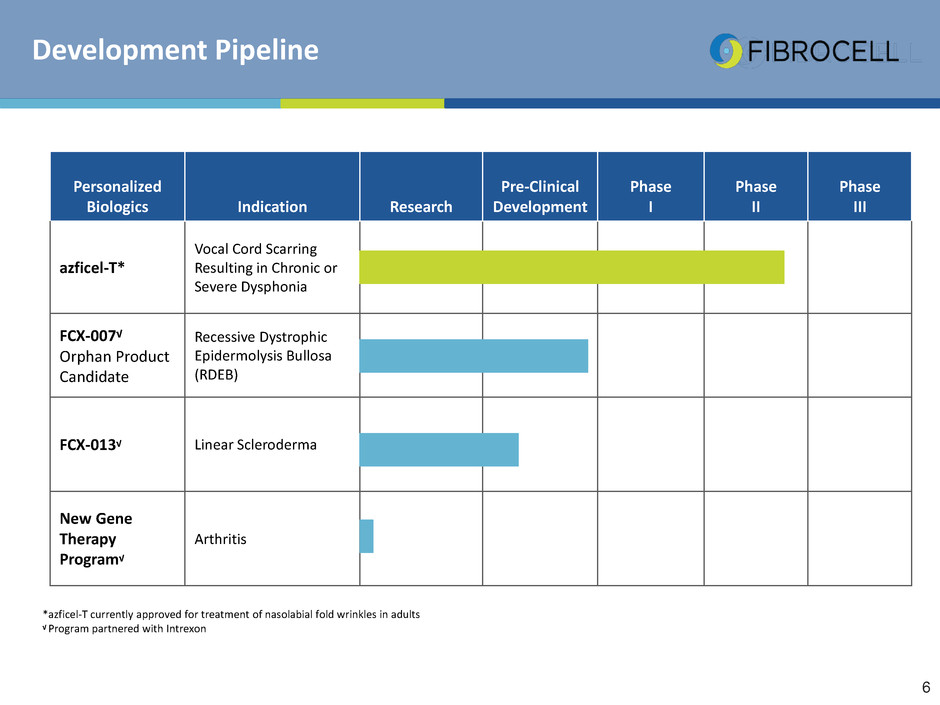
Development Pipeline 6 Personalized Biologics Indication Research Pre-Clinical Development Phase I Phase II Phase III azficel-T* Vocal Cord Scarring Resulting in Chronic or Severe Dysphonia FCX-007√ Orphan Product Candidate Recessive Dystrophic Epidermolysis Bullosa (RDEB) FCX-013√ Linear Scleroderma New Gene Therapy Program√ Arthritis *azficel-T currently approved for treatment of nasolabial fold wrinkles in adults √ Program partnered with Intrexon
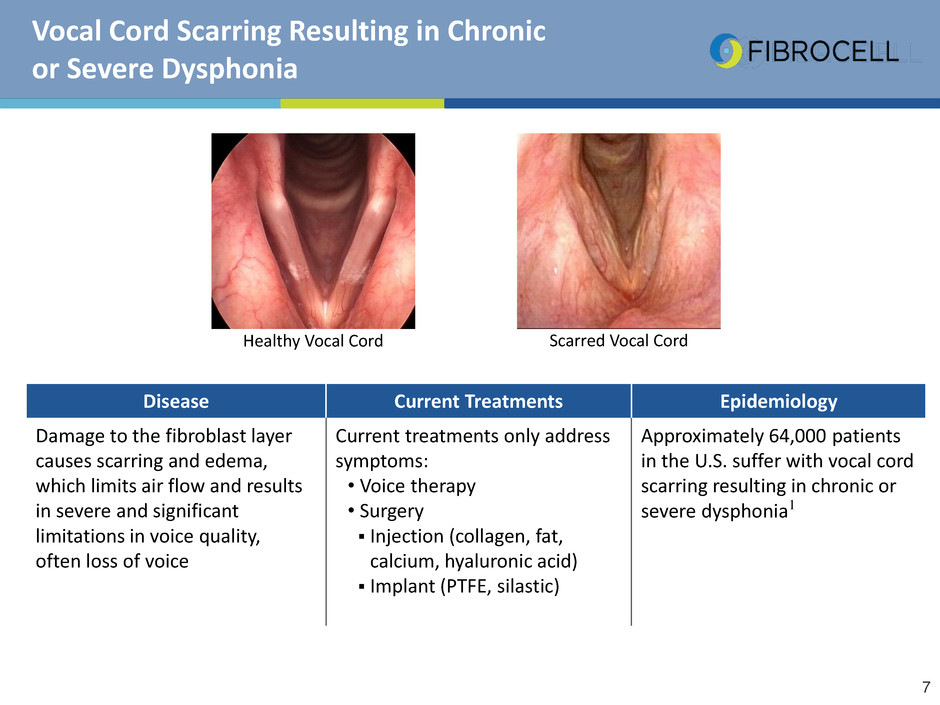
Vocal Cord Scarring Resulting in Chronic or Severe Dysphonia 7 Disease Current Treatments Epidemiology Damage to the fibroblast layer causes scarring and edema, which limits air flow and results in severe and significant limitations in voice quality, often loss of voice Current treatments only address symptoms: • Voice therapy • Surgery Injection (collagen, fat, calcium, hyaluronic acid) Implant (PTFE, silastic) Approximately 64,000 patients in the U.S. suffer with vocal cord scarring resulting in chronic or severe dysphonia1 Healthy Vocal Cord Scarred Vocal Cord
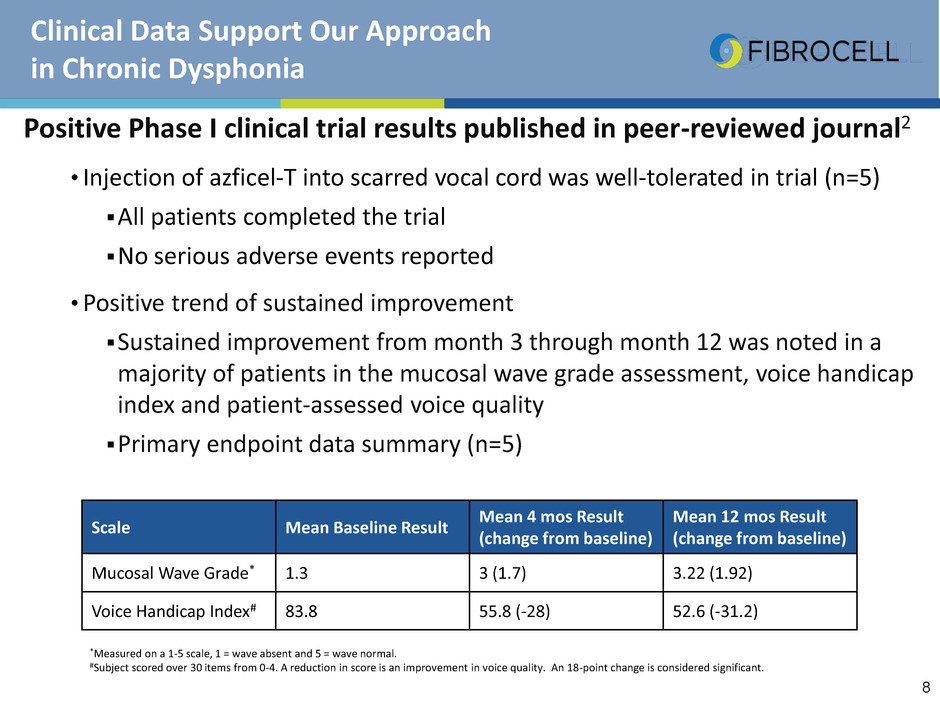
Clinical Data Support Our Approach in Chronic Dysphonia Positive Phase I clinical trial results published in peer-reviewed journal2 • Injection of azficel-T into scarred vocal cord was well-tolerated in trial (n=5) All patients completed the trial No serious adverse events reported •Positive trend of sustained improvement Sustained improvement from month 3 through month 12 was noted in a majority of patients in the mucosal wave grade assessment, voice handicap index and patient-assessed voice quality Primary endpoint data summary (n=5) 8 Scale Mean Baseline Result Mean 4 mos Result (change from baseline) Mean 12 mos Result (change from baseline) Mucosal Wave Grade* 1.3 3 (1.7) 3.22 (1.92) Voice Handicap Index# 83.8 55.8 (-28) 52.6 (-31.2) *Measured on a 1-5 scale, 1 = wave absent and 5 = wave normal. #Subject scored over 30 items from 0-4. A reduction in score is an improvement in voice quality. An 18-point change is considered significant.
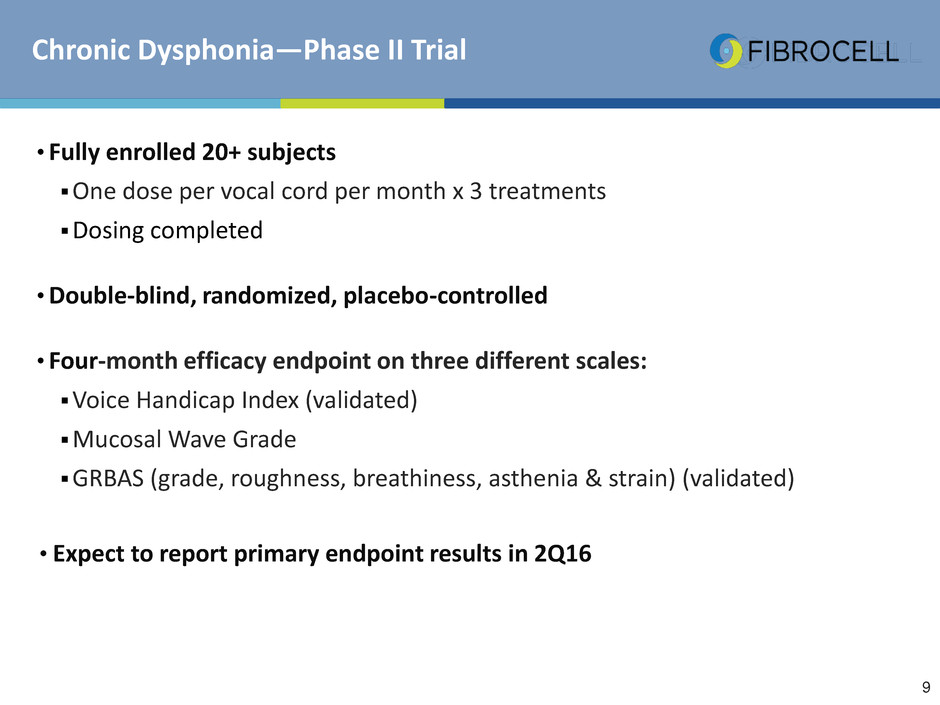
Chronic Dysphonia—Phase II Trial 9 • Fully enrolled 20+ subjects One dose per vocal cord per month x 3 treatments Dosing completed •Double-blind, randomized, placebo-controlled • Four-month efficacy endpoint on three different scales: Voice Handicap Index (validated) Mucosal Wave Grade GRBAS (grade, roughness, breathiness, asthenia & strain) (validated) • Expect to report primary endpoint results in 2Q16
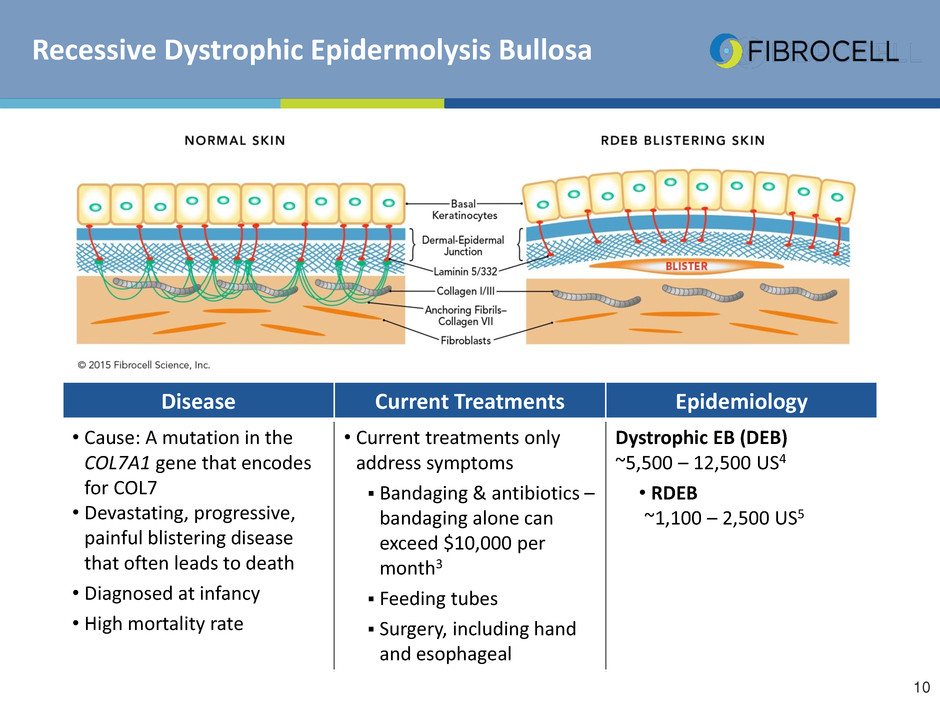
Recessive Dystrophic Epidermolysis Bullosa 10 Disease Current Treatments Epidemiology • Cause: A mutation in the COL7A1 gene that encodes for COL7 • Devastating, progressive, painful blistering disease that often leads to death • Diagnosed at infancy • High mortality rate • Current treatments only address symptoms Bandaging & antibiotics – bandaging alone can exceed $10,000 per month3 Feeding tubes Surgery, including hand and esophageal Dystrophic EB (DEB) ~5,500 – 12,500 US4 • RDEB ~1,100 – 2,500 US5
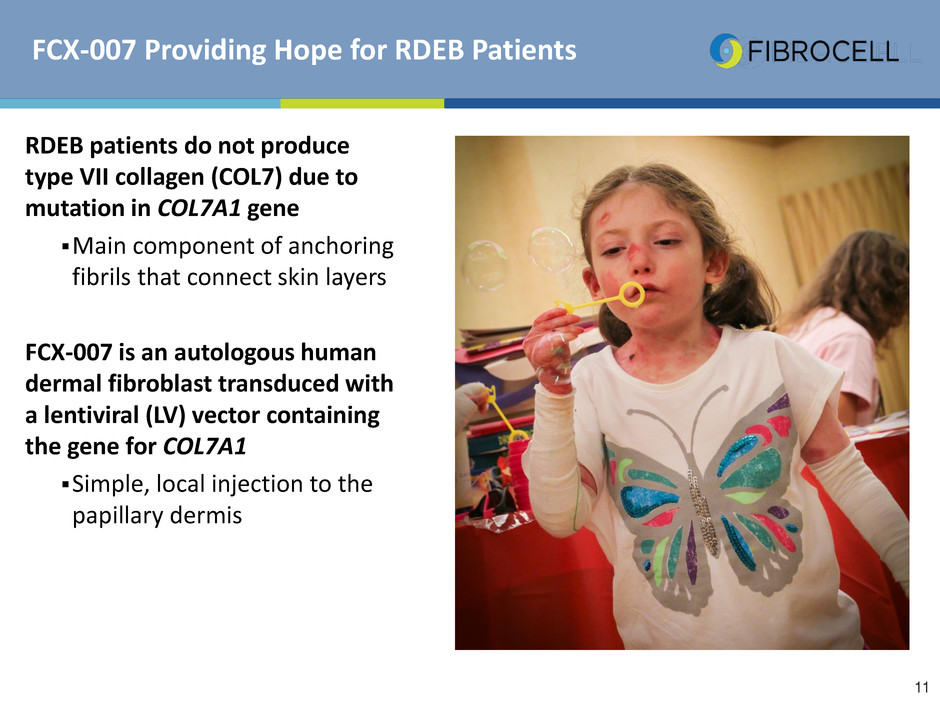
FCX-007 Providing Hope for RDEB Patients 11 RDEB patients do not produce type VII collagen (COL7) due to mutation in COL7A1 gene Main component of anchoring fibrils that connect skin layers FCX-007 is an autologous human dermal fibroblast transduced with a lentiviral (LV) vector containing the gene for COL7A1 Simple, local injection to the papillary dermis
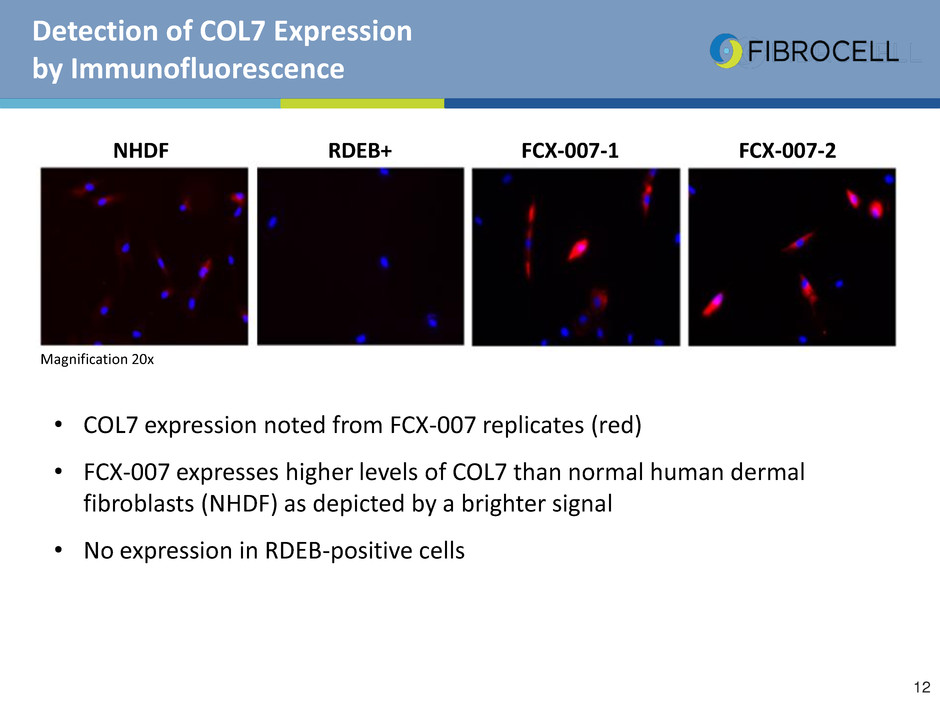
12 Detection of COL7 Expression by Immunofluorescence • COL7 expression noted from FCX-007 replicates (red) • FCX-007 expresses higher levels of COL7 than normal human dermal fibroblasts (NHDF) as depicted by a brighter signal • No expression in RDEB-positive cells NHDF RDEB+ FCX-007-1 FCX-007-2 Magnification 20x
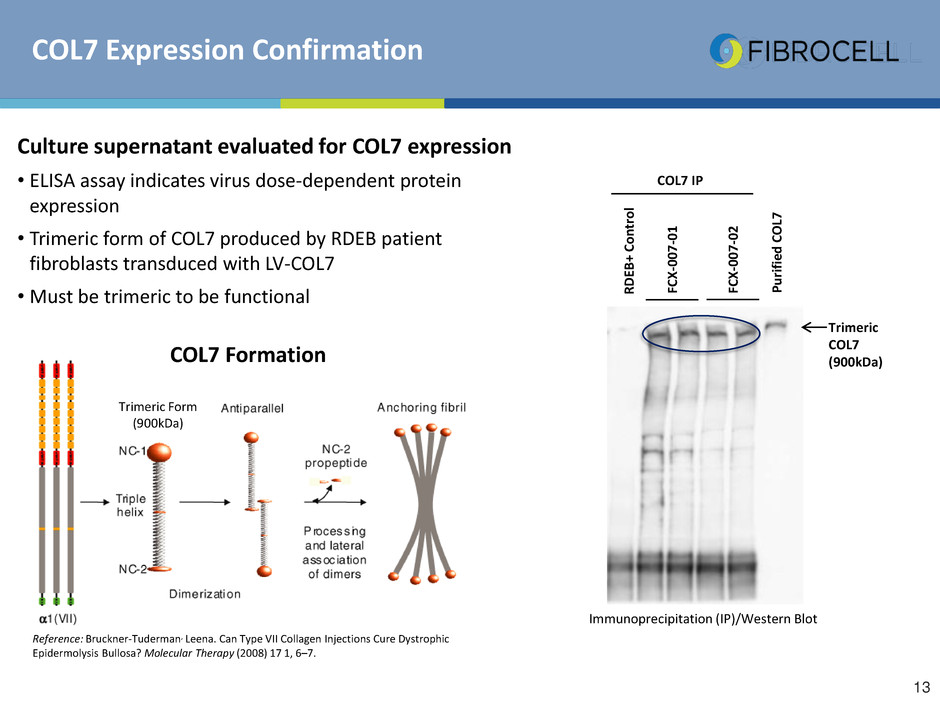
COL7 Expression Confirmation 13 Culture supernatant evaluated for COL7 expression • ELISA assay indicates virus dose-dependent protein expression • Trimeric form of COL7 produced by RDEB patient fibroblasts transduced with LV-COL7 •Must be trimeric to be functional Reference: Bruckner-Tuderman, Leena. Can Type VII Collagen Injections Cure Dystrophic Epidermolysis Bullosa? Molecular Therapy (2008) 17 1, 6–7. RDE B + C o n tr o l P u ri fi e d C OL 7 FC X -0 0 7 -0 1 FC X -0 0 7 -0 2 Trimeric COL7 (900kDa) COL7 IP Immunoprecipitation (IP)/Western Blot COL7 Formation Trimeric Form (900kDa)
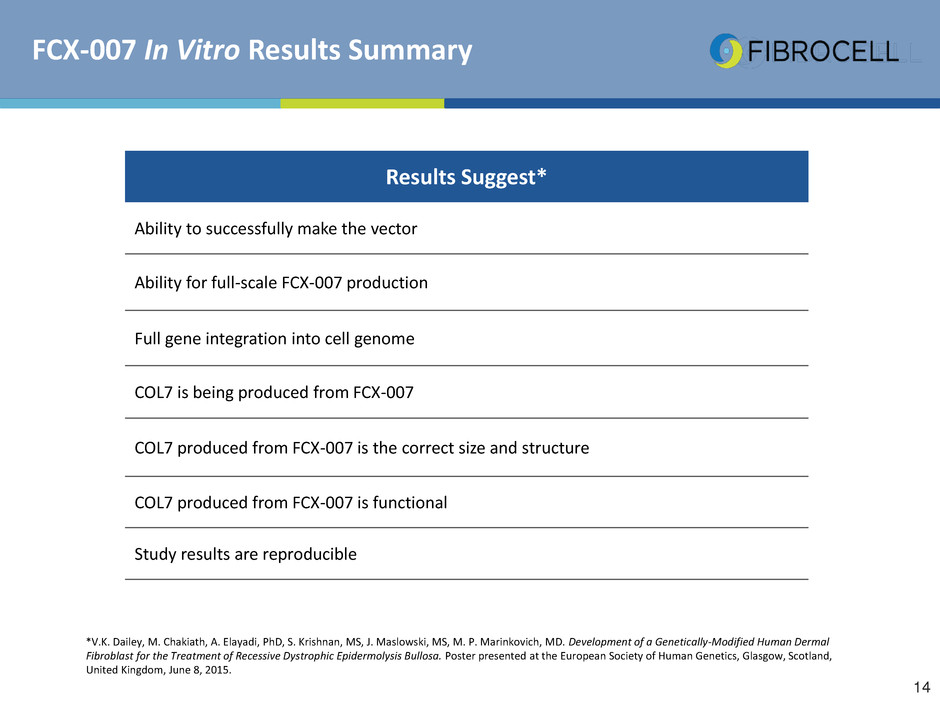
FCX-007 In Vitro Results Summary 14 Results Suggest* Ability to successfully make the vector Ability for full-scale FCX-007 production Full gene integration into cell genome COL7 is being produced from FCX-007 COL7 produced from FCX-007 is the correct size and structure COL7 produced from FCX-007 is functional Study results are reproducible *V.K. Dailey, M. Chakiath, A. Elayadi, PhD, S. Krishnan, MS, J. Maslowski, MS, M. P. Marinkovich, MD. Development of a Genetically-Modified Human Dermal Fibroblast for the Treatment of Recessive Dystrophic Epidermolysis Bullosa. Poster presented at the European Society of Human Genetics, Glasgow, Scotland, United Kingdom, June 8, 2015.
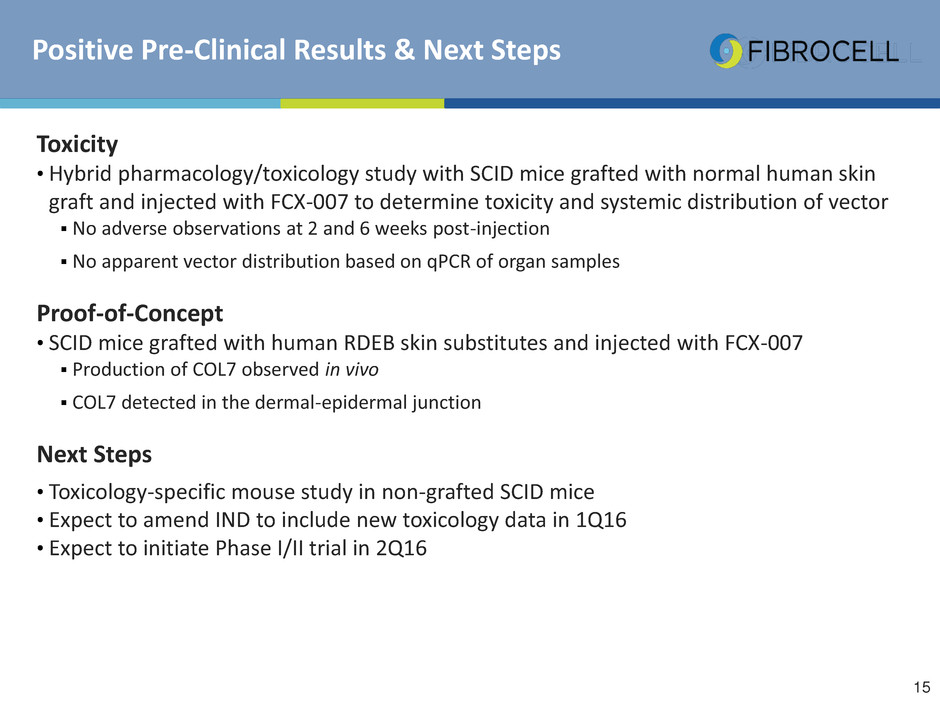
Positive Pre-Clinical Results & Next Steps Toxicity • Hybrid pharmacology/toxicology study with SCID mice grafted with normal human skin graft and injected with FCX-007 to determine toxicity and systemic distribution of vector No adverse observations at 2 and 6 weeks post-injection No apparent vector distribution based on qPCR of organ samples Proof-of-Concept • SCID mice grafted with human RDEB skin substitutes and injected with FCX-007 Production of COL7 observed in vivo COL7 detected in the dermal-epidermal junction Next Steps • Toxicology-specific mouse study in non-grafted SCID mice • Expect to amend IND to include new toxicology data in 1Q16 • Expect to initiate Phase I/II trial in 2Q16 15
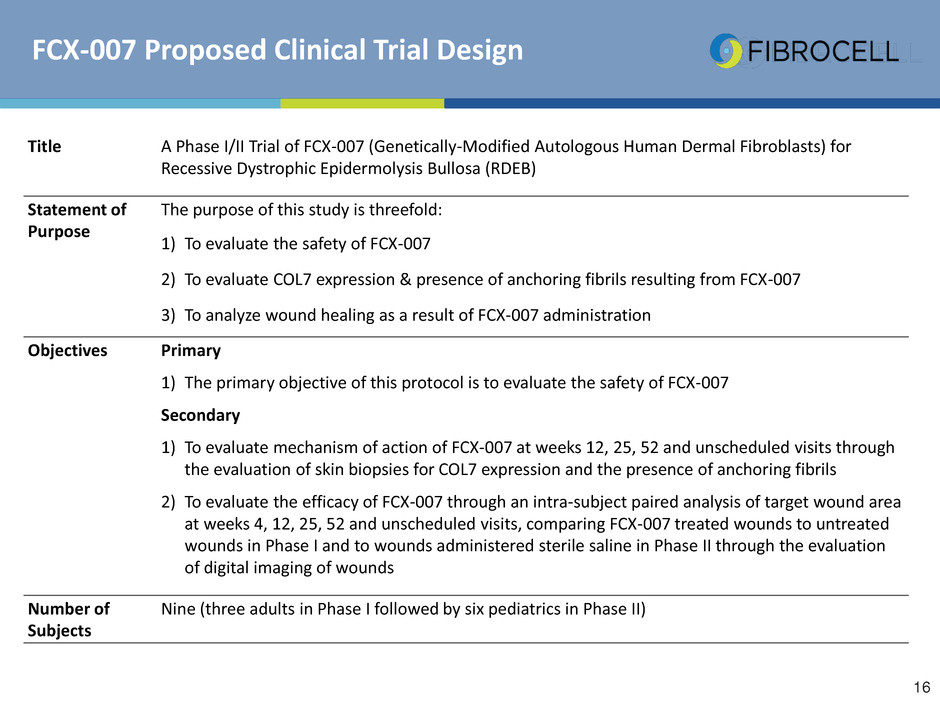
FCX-007 Proposed Clinical Trial Design 16 Title A Phase I/II Trial of FCX-007 (Genetically-Modified Autologous Human Dermal Fibroblasts) for Recessive Dystrophic Epidermolysis Bullosa (RDEB) Statement of Purpose The purpose of this study is threefold: 1) To evaluate the safety of FCX-007 2) To evaluate COL7 expression & presence of anchoring fibrils resulting from FCX-007 3) To analyze wound healing as a result of FCX-007 administration Objectives Primary 1) The primary objective of this protocol is to evaluate the safety of FCX-007 Secondary 1) To evaluate mechanism of action of FCX-007 at weeks 12, 25, 52 and unscheduled visits through the evaluation of skin biopsies for COL7 expression and the presence of anchoring fibrils 2) To evaluate the efficacy of FCX-007 through an intra-subject paired analysis of target wound area at weeks 4, 12, 25, 52 and unscheduled visits, comparing FCX-007 treated wounds to untreated wounds in Phase I and to wounds administered sterile saline in Phase II through the evaluation of digital imaging of wounds Number of Subjects Nine (three adults in Phase I followed by six pediatrics in Phase II)
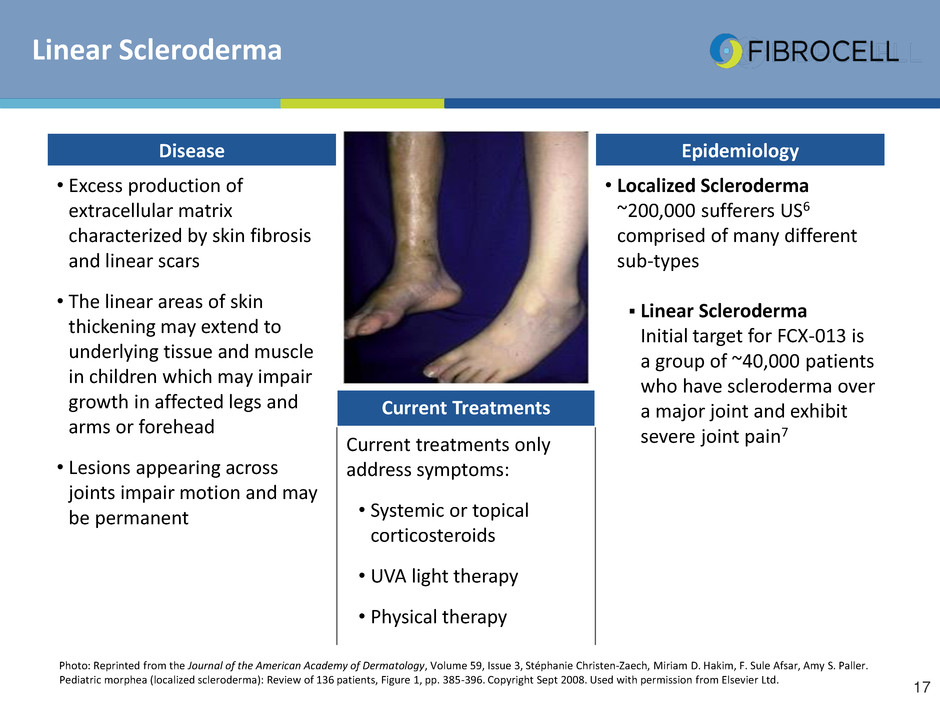
Linear Scleroderma 17 Disease Epidemiology • Excess production of extracellular matrix characterized by skin fibrosis and linear scars • The linear areas of skin thickening may extend to underlying tissue and muscle in children which may impair growth in affected legs and arms or forehead • Lesions appearing across joints impair motion and may be permanent • Localized Scleroderma ~200,000 sufferers US6 comprised of many different sub-types Linear Scleroderma Initial target for FCX-013 is a group of ~40,000 patients who have scleroderma over a major joint and exhibit severe joint pain7 Current Treatments Current treatments only address symptoms: • Systemic or topical corticosteroids • UVA light therapy • Physical therapy Photo: Reprinted from the Journal of the American Academy of Dermatology, Volume 59, Issue 3, Stéphanie Christen-Zaech, Miriam D. Hakim, F. Sule Afsar, Amy S. Paller. Pediatric morphea (localized scleroderma): Review of 136 patients, Figure 1, pp. 385-396. Copyright Sept 2008. Used with permission from Elsevier Ltd.
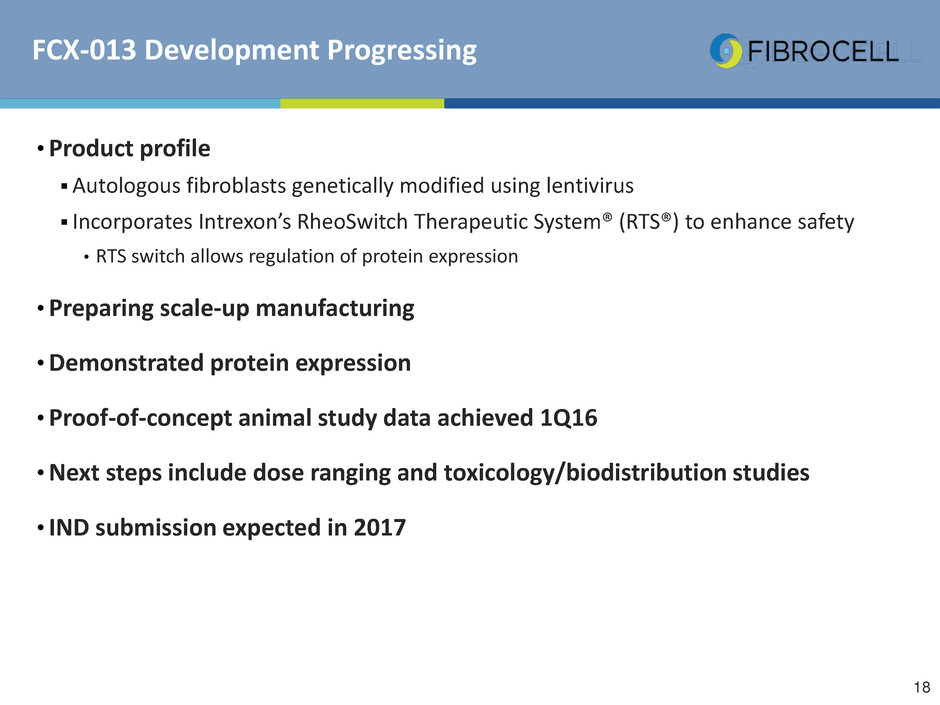
FCX-013 Development Progressing 18 •Product profile Autologous fibroblasts genetically modified using lentivirus Incorporates Intrexon’s RheoSwitch Therapeutic System® (RTS®) to enhance safety • RTS switch allows regulation of protein expression •Preparing scale-up manufacturing •Demonstrated protein expression •Proof-of-concept animal study data achieved 1Q16 •Next steps include dose ranging and toxicology/biodistribution studies •IND submission expected in 2017
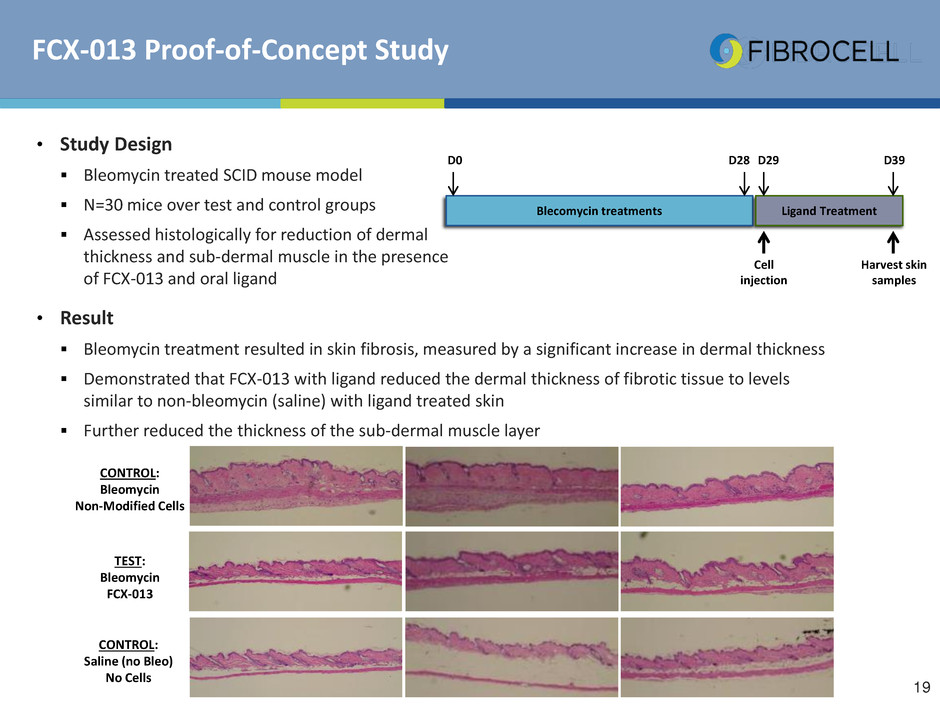
FCX-013 Proof-of-Concept Study 19 • Study Design Bleomycin treated SCID mouse model N=30 mice over test and control groups Assessed histologically for reduction of dermal thickness and sub-dermal muscle in the presence of FCX-013 and oral ligand • Result Bleomycin treatment resulted in skin fibrosis, measured by a significant increase in dermal thickness Demonstrated that FCX-013 with ligand reduced the dermal thickness of fibrotic tissue to levels similar to non-bleomycin (saline) with ligand treated skin Further reduced the thickness of the sub-dermal muscle layer Blecomycin treatments Ligand Treatment D0 D28 D29 D39 Cell injection Harvest skin samples CONTROL: Saline (no Bleo) No Cells TEST: Bleomycin FCX-013 CONTROL: Bleomycin Non-Modified Cells
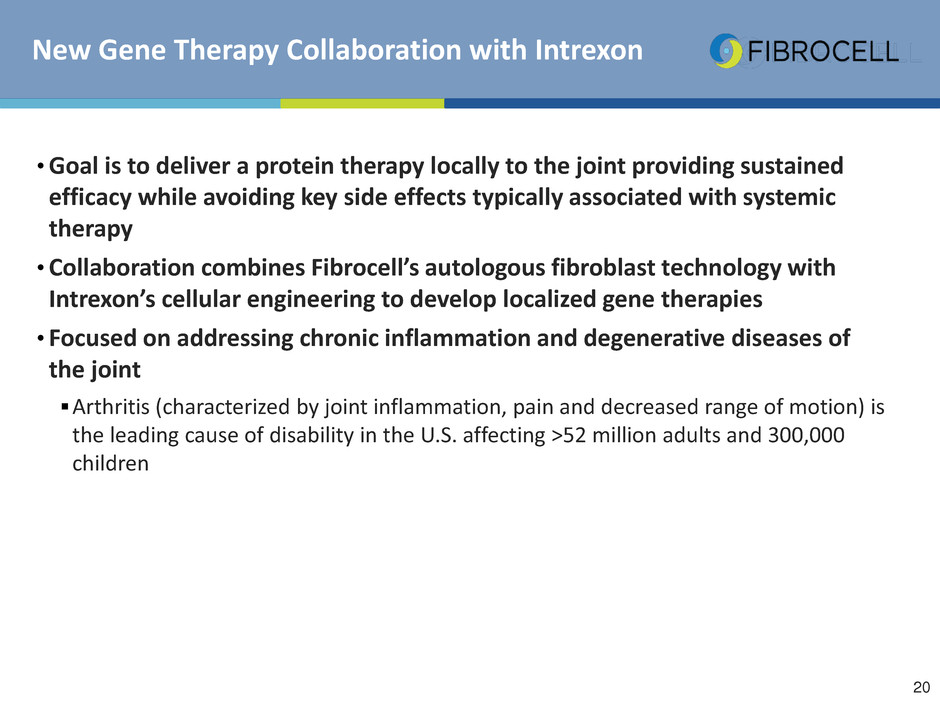
New Gene Therapy Collaboration with Intrexon 20 •Goal is to deliver a protein therapy locally to the joint providing sustained efficacy while avoiding key side effects typically associated with systemic therapy •Collaboration combines Fibrocell’s autologous fibroblast technology with Intrexon’s cellular engineering to develop localized gene therapies • Focused on addressing chronic inflammation and degenerative diseases of the joint Arthritis (characterized by joint inflammation, pain and decreased range of motion) is the leading cause of disability in the U.S. affecting >52 million adults and 300,000 children
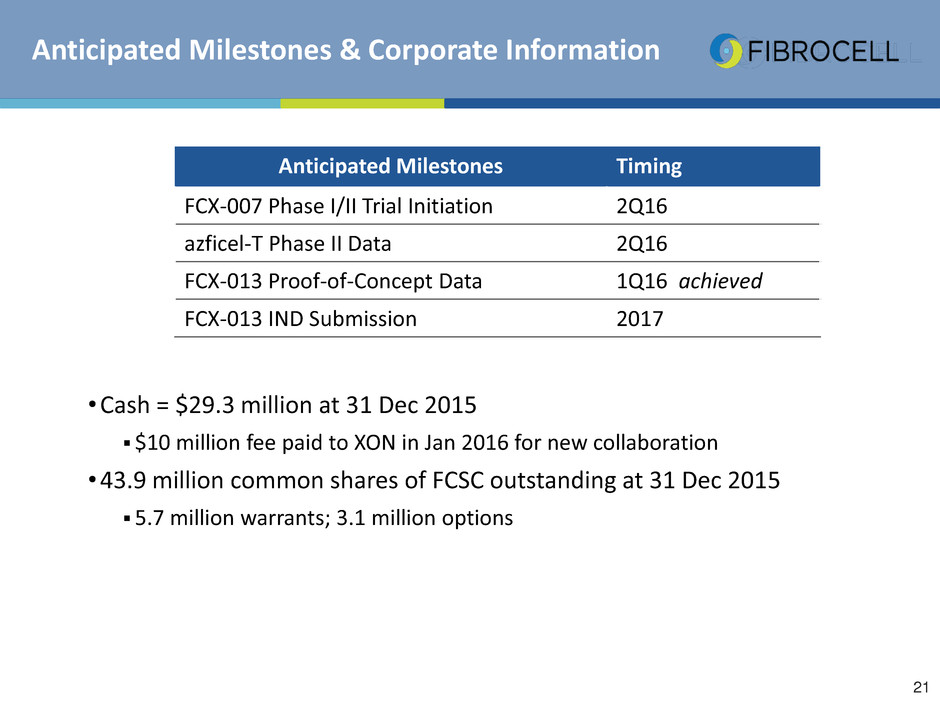
Anticipated Milestones & Corporate Information 21 •Cash = $29.3 million at 31 Dec 2015 $10 million fee paid to XON in Jan 2016 for new collaboration •43.9 million common shares of FCSC outstanding at 31 Dec 2015 5.7 million warrants; 3.1 million options Anticipated Milestones Timing FCX-007 Phase I/II Trial Initiation 2Q16 azficel-T Phase II Data 2Q16 FCX-013 Proof-of-Concept Data 1Q16 achieved FCX-013 IND Submission 2017
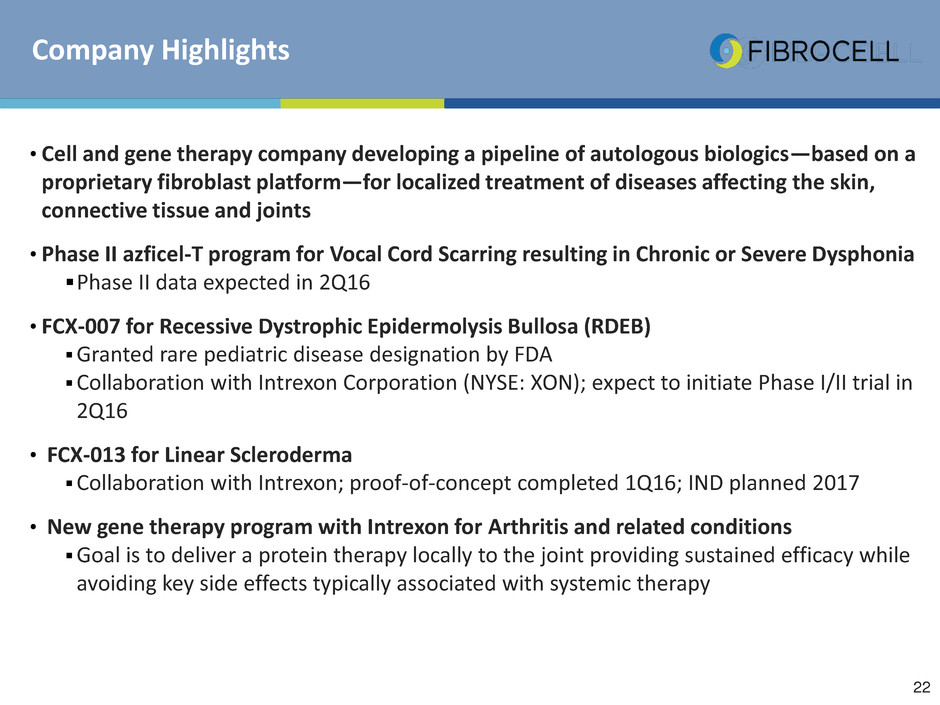
Company Highlights • Cell and gene therapy company developing a pipeline of autologous biologics—based on a proprietary fibroblast platform—for localized treatment of diseases affecting the skin, connective tissue and joints • Phase II azficel-T program for Vocal Cord Scarring resulting in Chronic or Severe Dysphonia Phase II data expected in 2Q16 • FCX-007 for Recessive Dystrophic Epidermolysis Bullosa (RDEB) Granted rare pediatric disease designation by FDA Collaboration with Intrexon Corporation (NYSE: XON); expect to initiate Phase I/II trial in 2Q16 • FCX-013 for Linear Scleroderma Collaboration with Intrexon; proof-of-concept completed 1Q16; IND planned 2017 • New gene therapy program with Intrexon for Arthritis and related conditions Goal is to deliver a protein therapy locally to the joint providing sustained efficacy while avoiding key side effects typically associated with systemic therapy 22
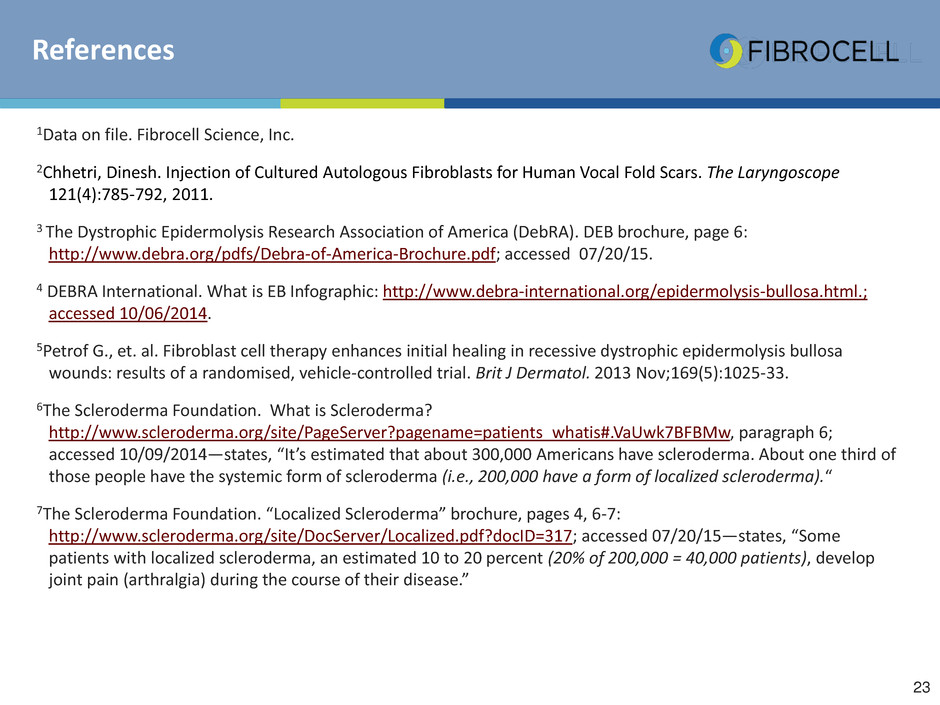
References 1Data on file. Fibrocell Science, Inc. 2Chhetri, Dinesh. Injection of Cultured Autologous Fibroblasts for Human Vocal Fold Scars. The Laryngoscope 121(4):785-792, 2011. 3 The Dystrophic Epidermolysis Research Association of America (DebRA). DEB brochure, page 6: http://www.debra.org/pdfs/Debra-of-America-Brochure.pdf; accessed 07/20/15. 4 DEBRA International. What is EB Infographic: http://www.debra-international.org/epidermolysis-bullosa.html.; accessed 10/06/2014. 5Petrof G., et. al. Fibroblast cell therapy enhances initial healing in recessive dystrophic epidermolysis bullosa wounds: results of a randomised, vehicle-controlled trial. Brit J Dermatol. 2013 Nov;169(5):1025-33. 6The Scleroderma Foundation. What is Scleroderma? http://www.scleroderma.org/site/PageServer?pagename=patients_whatis#.VaUwk7BFBMw, paragraph 6; accessed 10/09/2014—states, “It’s estimated that about 300,000 Americans have scleroderma. About one third of those people have the systemic form of scleroderma (i.e., 200,000 have a form of localized scleroderma).“ 7The Scleroderma Foundation. “Localized Scleroderma” brochure, pages 4, 6-7: http://www.scleroderma.org/site/DocServer/Localized.pdf?docID=317; accessed 07/20/15—states, “Some patients with localized scleroderma, an estimated 10 to 20 percent (20% of 200,000 = 40,000 patients), develop joint pain (arthralgia) during the course of their disease.” 23
Serious News for Serious Traders! Try StreetInsider.com Premium Free!
You May Also Be Interested In
- New Memecoin News: MemeToro’s Automated BNB Chain Memecoin Deployment Explained
- Rocket Lab Satellite Platforms Built for MDA Space Successfully Reach Orbit, Supporting Globalstar Direct-to-Device Communications Services
- Altcoin Season Index Watch: Chainlink and Monero Run While the Large Caps Cool
Create E-mail Alert Related Categories
SEC FilingsSign up for StreetInsider Free!
Receive full access to all new and archived articles, unlimited portfolio tracking, e-mail alerts, custom newswires and RSS feeds - and more!
