




Form 8-K Asterias Biotherapeutics For: May 08

FREE Breaking News Alerts from StreetInsider.com!
StreetInsider.com Top Tickers, 10/24/2026
- Wall Street closes lower to end rocky week
- Meta's capital-raising plans expose a major weakness in the AI boom
- Oil prices jump $3 on Houthi attacks, oil spill, highest settlement since April
- BofA flags further downside risk for stocks, yields and dollar
- SpaceX cell-site ambitions lift tower stocks and weigh on carriers
 Tweet
Tweet Share
Share E-mail
UNITED STATES
SECURITIES AND EXCHANGE COMMISSION
Washington, D.C. 20549
FORM 8-K
CURRENT REPORT
Pursuant to Section 13 or 15(d) of the Securities Exchange Act of 1934
Date of Report (date of earliest event reported): May 8, 2015
Asterias Biotherapeutics, Inc.
(Exact name of registrant as specified in its charter)
|
Delaware
|
000-55046
|
46-1047971
|
|
(State or other jurisdiction of incorporation)
|
(Commission File Number)
|
(IRS Employer Identification No.)
|
230 Constitution Drive
Menlo Park, California 94025
(Address of principal executive offices)
(650) 433-2900
(Registrant's telephone number, including area code)
Check the appropriate box below if the Form 8-K filing is intended to simultaneously satisfy the filing obligation of the registrant under any of the following provisions:
| ☐ | Written communications pursuant to Rule 425 under the Securities Act (17 CFR 230.425) |
| ☐ | Soliciting material pursuant to Rule 14a-12 under the Exchange Act (17 CFR 240.14a-12) |
| ☐ | Pre-commencement communications pursuant to Rule 14d-2(b) under the Exchange Act (17 CFR 240.14d-2(b)) |
| ☐ | Pre-commencement communications pursuant to Rule 13e-4(c) under the Exchange Act (17 CFR 240.13e-4(c)) |
Statements made in this Report that are not historical facts may constitute forward-looking statements that are subject to risks and uncertainties that could cause actual results to differ materially from those discussed. Such risks and uncertainties include but are not limited to those discussed in this report and in Asterias Biotherapeutics, Inc.'s other reports filed with the Securities and Exchange Commission. Words such as “expects,” “may,” “will,” “anticipates,” “intends,” “plans,” “believes,” “seeks,” “estimates,” and similar expressions identify forward-looking statements.
This Report and any accompanying exhibits shall be deemed “furnished” and not “filed” under the Securities Exchange Act of 1934, as amended.
Item 7.01. Regulation FD.
Asterias Biotherapeutics, Inc. (the "Company"), a biotechnology company focused on the emerging field of regenerative medicine, will hold an Investor Day at 9:30 AM ET on May 8, 2015. Copies of the presentation materials are attached as Exhibit 99.1 hereto.
Pursuant to General Instruction B.2 of Form 8-K, the information in this Item 7.01 of this Current Report on Form 8-K and Exhibits 99.1, 99.2 and 99.3 hereto are being furnished and shall not be deemed “filed” for the purposes of Section 18 of the Securities Exchange Act of 1934 or otherwise be subject to the liabilities of that section, nor is it incorporated by reference into any filing of Asterias Biotherapeutics, Inc. under the Securities Act of 1933 or the Securities Exchange Act of 1934, whether made before or after the date hereof, regardless of any general incorporation language in such filing.
Item 9.01. Financial Statements and Exhibits.
(d) Exhibits
|
No.
|
Description
|
|
|
Slide Presentation dated May 8, 2015.
|
||
|
Slide Presentation dated May 8, 2015.
|
||
|
Slide Presentation dated May 8, 2015.
|
SIGNATURES
Pursuant to the requirements of the Securities Exchange Act of 1934, the registrant has duly caused this report to be signed on its behalf by the undersigned hereunto duly authorized.
|
ASTERIAS BIOTHERAPEUTICS, INC.
|
||
|
Date: May 8, 2015
|
By:
|
/s/ Robert W. Peabody
|
|
Chief Financial Officer
|
||
Exhibit 99.1
AST-OPC1 Development Program for Spinal Cord Injury Asterias Biotherapeutics Inc. NYSE MKT: ASTInvestor DayMay 8, 2015 *
Forward Looking Statements Statements pertaining to future financial and/or operating results, future growth in research, technology, clinical development, and potential opportunities for Asterias, along with other statements about the future expectations, beliefs, goals, plans, or prospects expressed by management constitute forward-looking statements. Any statements that are not historical fact (including, but not limited to statements that contain words such as “will,” “believes,” “plans,” “anticipates,” “expects,” “estimates”) should also be considered to be forward-looking statements. Forward-looking statements involve risks and uncertainties, including, without limitation, risks inherent in the development and/or commercialization of potential products, uncertainty in the results of clinical trials or regulatory approvals, need and ability to obtain future capital, and maintenance of intellectual property rights. Actual results may differ materially from the results anticipated in these forward-looking statements and as such should be evaluated together with the many uncertainties that affect the businesses of Asterias, particularly those mentioned in the cautionary statements found in Asterias’ Registration Statement on Form S-3 and Prospectus, as well as its other periodic reports, filed with the Securities and Exchange Commission. Asterias disclaims any intent or obligation to update these forward-looking statements. *
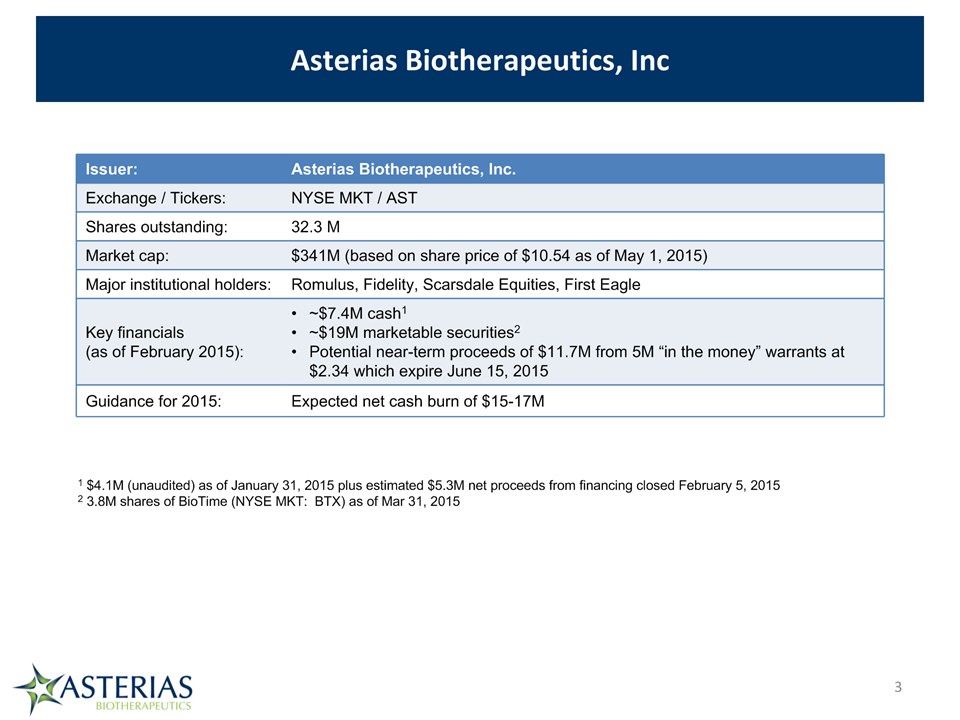
* Asterias Biotherapeutics, Inc Issuer: Asterias Biotherapeutics, Inc. Exchange / Tickers: NYSE MKT / AST Shares outstanding: 32.3 M Market cap: $341M (based on share price of $10.54 as of May 1, 2015) Major institutional holders: Romulus, Fidelity, Scarsdale Equities, First Eagle Key financials (as of February 2015): ~$7.4M cash1~$19M marketable securities2Potential near-term proceeds of $11.7M from 5M “in the money” warrants at $2.34 which expire June 15, 2015 Guidance for 2015: Expected net cash burn of $15-17M 1 $4.1M (unaudited) as of January 31, 2015 plus estimated $5.3M net proceeds from financing closed February 5, 20152 3.8M shares of BioTime (NYSE MKT: BTX) as of Mar 31, 2015
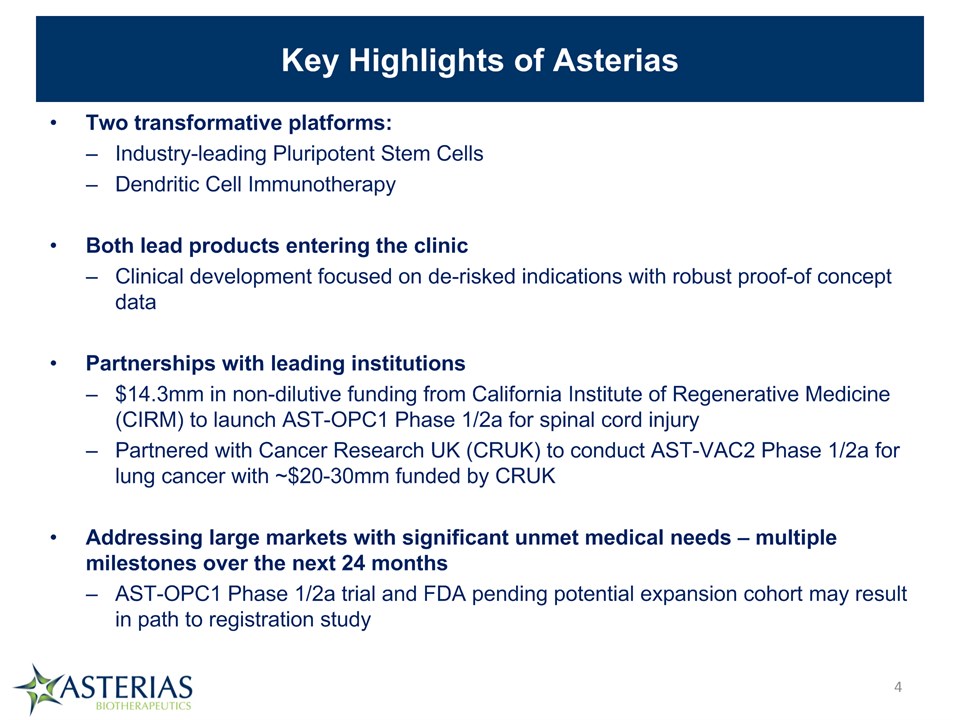
Two transformative platforms: Industry-leading Pluripotent Stem Cells Dendritic Cell ImmunotherapyBoth lead products entering the clinicClinical development focused on de-risked indications with robust proof-of concept dataPartnerships with leading institutions $14.3mm in non-dilutive funding from California Institute of Regenerative Medicine (CIRM) to launch AST-OPC1 Phase 1/2a for spinal cord injuryPartnered with Cancer Research UK (CRUK) to conduct AST-VAC2 Phase 1/2a for lung cancer with ~$20-30mm funded by CRUKAddressing large markets with significant unmet medical needs – multiple milestones over the next 24 monthsAST-OPC1 Phase 1/2a trial and FDA pending potential expansion cohort may result in path to registration study * Key Highlights of Asterias
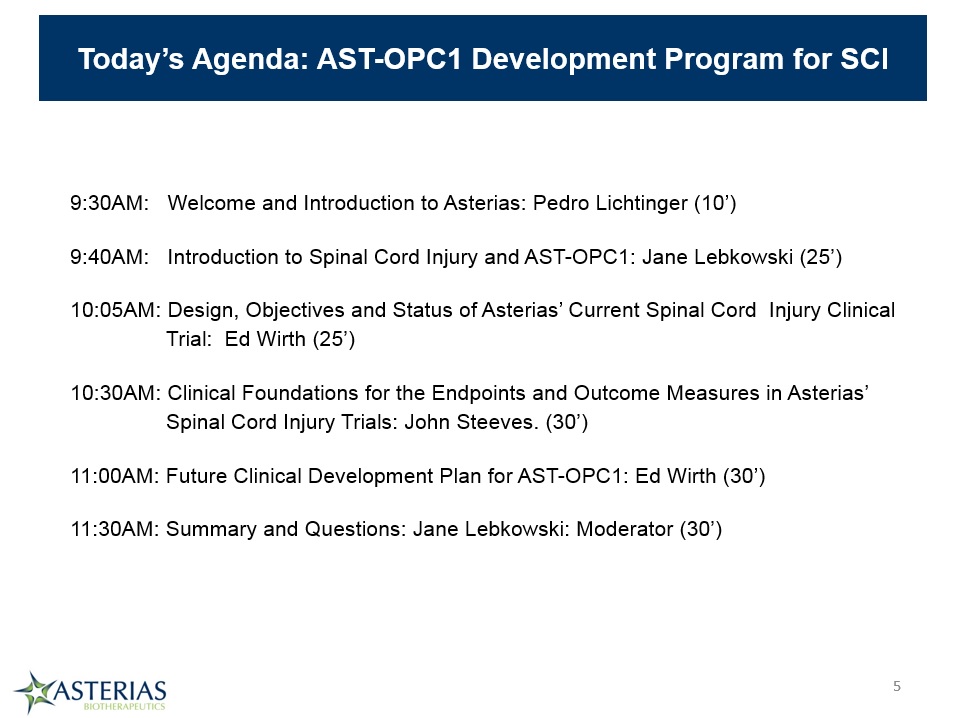
* Today’s Agenda: AST-OPC1 Development Program for SCI 9:30AM: Welcome and Introduction to Asterias: Pedro Lichtinger (10’)9:40AM: Introduction to Spinal Cord Injury and AST-OPC1: Jane Lebkowski (25’) 10:05AM: Design, Objectives and Status of Asterias’ Current Spinal Cord Injury Clinical Trial: Ed Wirth (25’) 10:30AM: Clinical Foundations for the Endpoints and Outcome Measures in Asterias’ Spinal Cord Injury Trials: John Steeves. (30’) 11:00AM: Future Clinical Development Plan for AST-OPC1: Ed Wirth (30’)11:30AM: Summary and Questions: Jane Lebkowski: Moderator (30’)
Introduction to Spinal Cord Injury and AST-OPC1 Jane Lebkowski Ph.D. President of R&D Investor DayMay 8, 2015 *
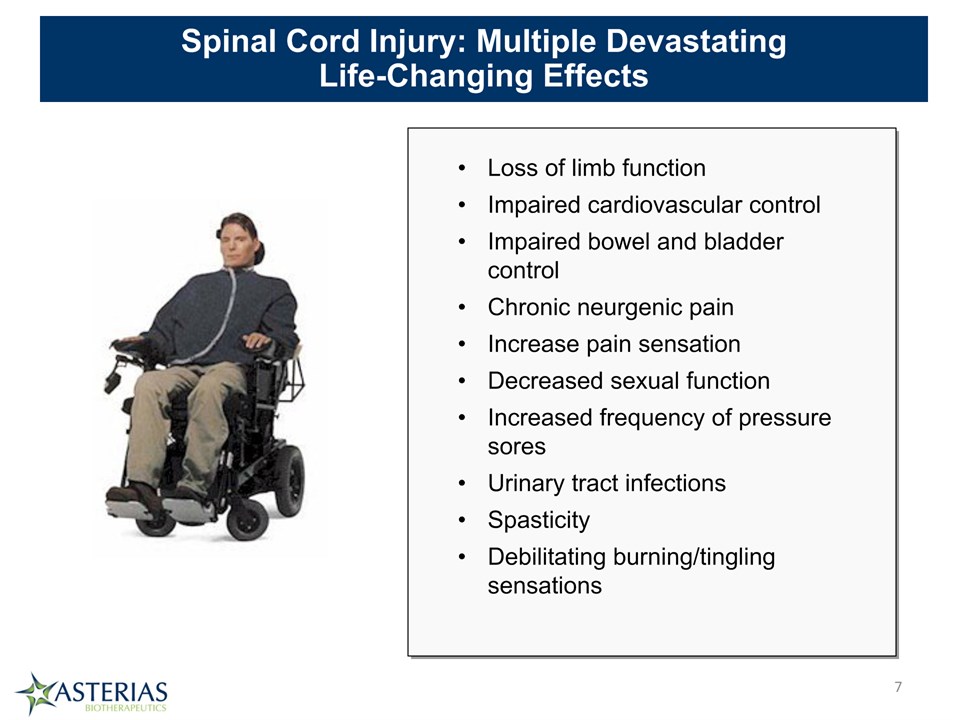
* Spinal Cord Injury: Multiple Devastating Life-Changing Effects Loss of limb functionImpaired cardiovascular controlImpaired bowel and bladder controlChronic neurgenic painIncrease pain sensationDecreased sexual functionIncreased frequency of pressure soresUrinary tract infections SpasticityDebilitating burning/tingling sensations
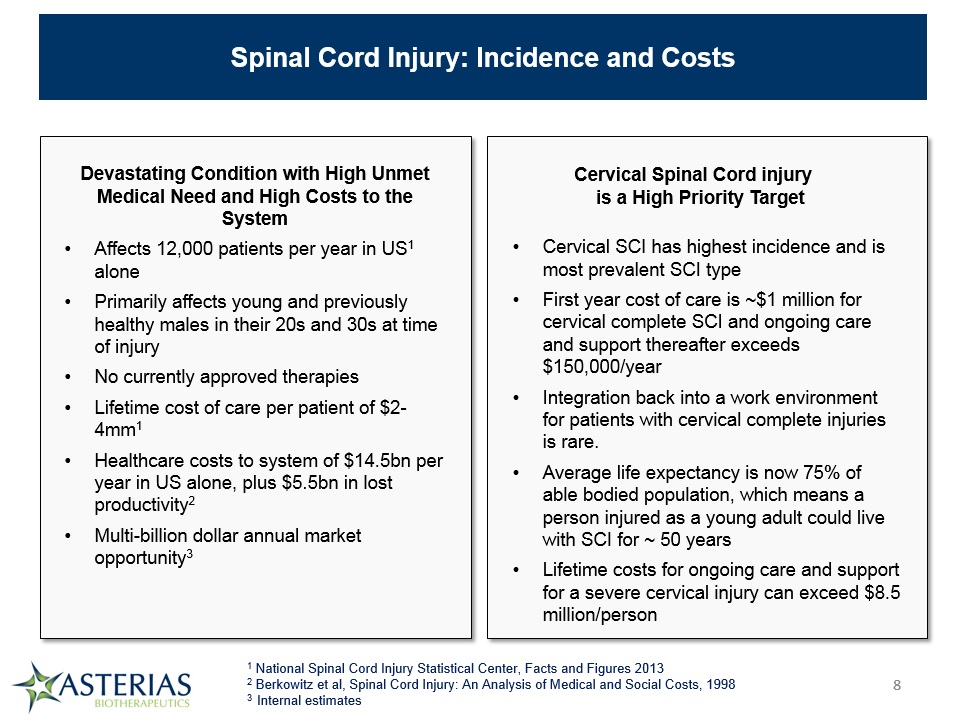
Spinal Cord Injury: Incidence and Costs Devastating Condition with High Unmet Medical Need and High Costs to the SystemAffects 12,000 patients per year in US1 alonePrimarily affects young and previously healthy males in their 20s and 30s at time of injuryNo currently approved therapiesLifetime cost of care per patient of $2-4mm1Healthcare costs to system of $14.5bn per year in US alone, plus $5.5bn in lost productivity2Multi-billion dollar annual market opportunity3 * 1 National Spinal Cord Injury Statistical Center, Facts and Figures 20132 Berkowitz et al, Spinal Cord Injury: An Analysis of Medical and Social Costs, 19983 Internal estimates Cervical SCI has highest incidence and is most prevalent SCI typeFirst year cost of care is ~$1 million for cervical complete SCI and ongoing care and support thereafter exceeds $150,000/yearIntegration back into a work environment for patients with cervical complete injuries is rare. Average life expectancy is now 75% of able bodied population, which means a person injured as a young adult could live with SCI for ~ 50 years Lifetime costs for ongoing care and support for a severe cervical injury can exceed $8.5 million/person Cervical Spinal Cord injury is a High Priority Target
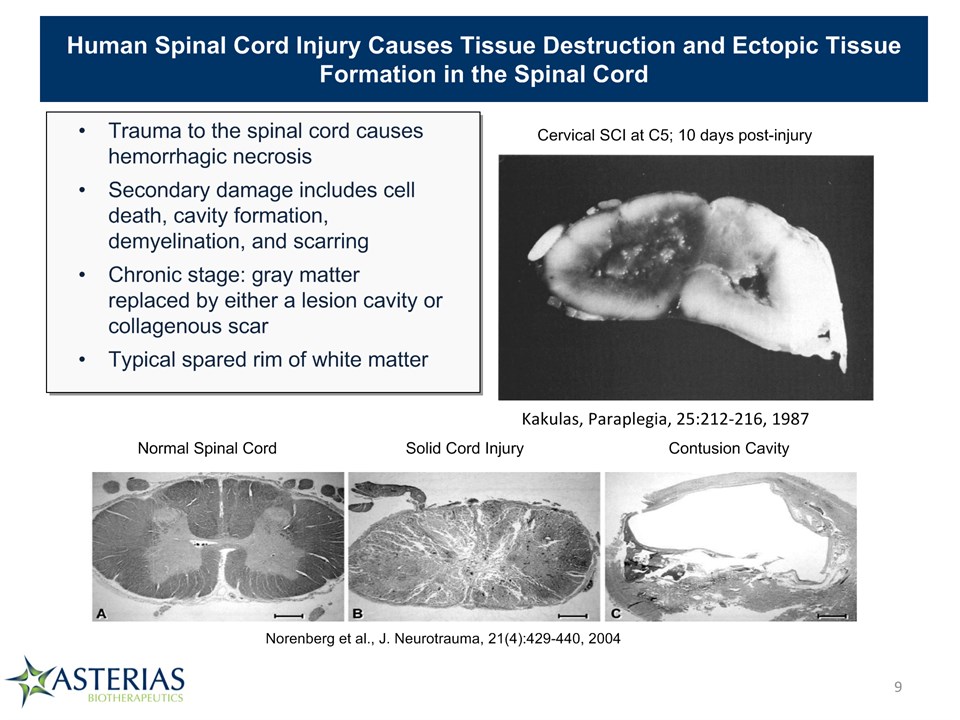
Human Spinal Cord Injury Causes Tissue Destruction and Ectopic Tissue Formation in the Spinal Cord Trauma to the spinal cord causes hemorrhagic necrosisSecondary damage includes cell death, cavity formation, demyelination, and scarringChronic stage: gray matter replaced by either a lesion cavity or collagenous scarTypical spared rim of white matter Kakulas, Paraplegia, 25:212-216, 1987 Cervical SCI at C5; 10 days post-injury Normal Spinal Cord Solid Cord Injury Contusion Cavity Norenberg et al., J. Neurotrauma, 21(4):429-440, 2004 *
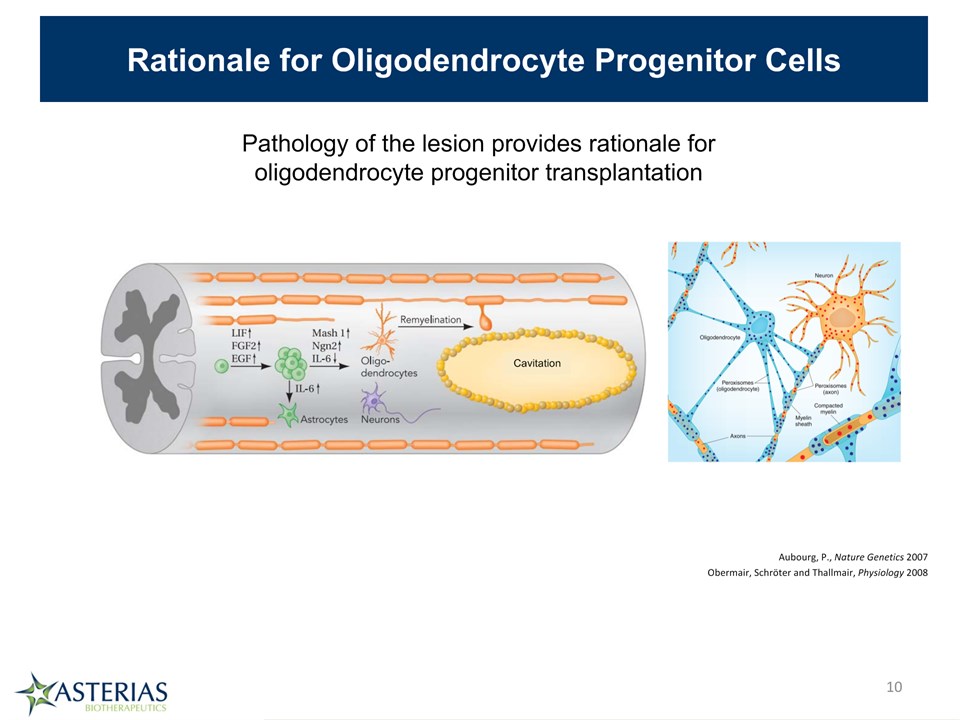
* Rationale for Oligodendrocyte Progenitor Cells Cavitation Aubourg, P., Nature Genetics 2007 Obermair, Schröter and Thallmair, Physiology 2008 Pathology of the lesion provides rationale for oligodendrocyte progenitor transplantation
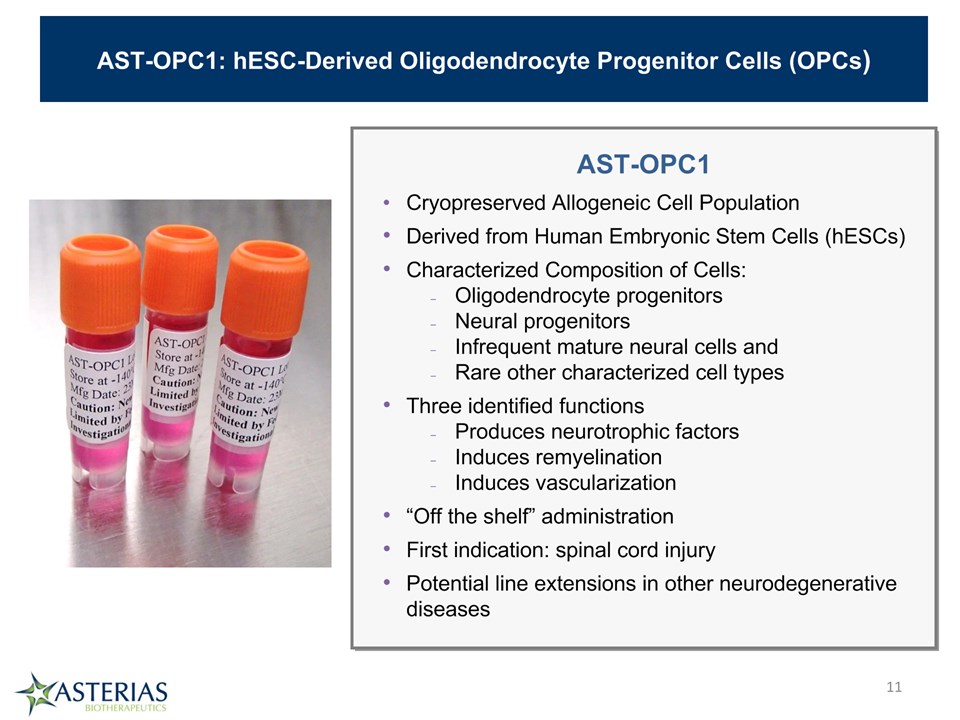
AST-OPC1: hESC-Derived Oligodendrocyte Progenitor Cells (OPCs) Cryopreserved Allogeneic Cell PopulationDerived from Human Embryonic Stem Cells (hESCs)Characterized Composition of Cells:Oligodendrocyte progenitorsNeural progenitorsInfrequent mature neural cells and Rare other characterized cell typesThree identified functionsProduces neurotrophic factorsInduces remyelinationInduces vascularization“Off the shelf” administrationFirst indication: spinal cord injuryPotential line extensions in other neurodegenerative diseases AST-OPC1 *
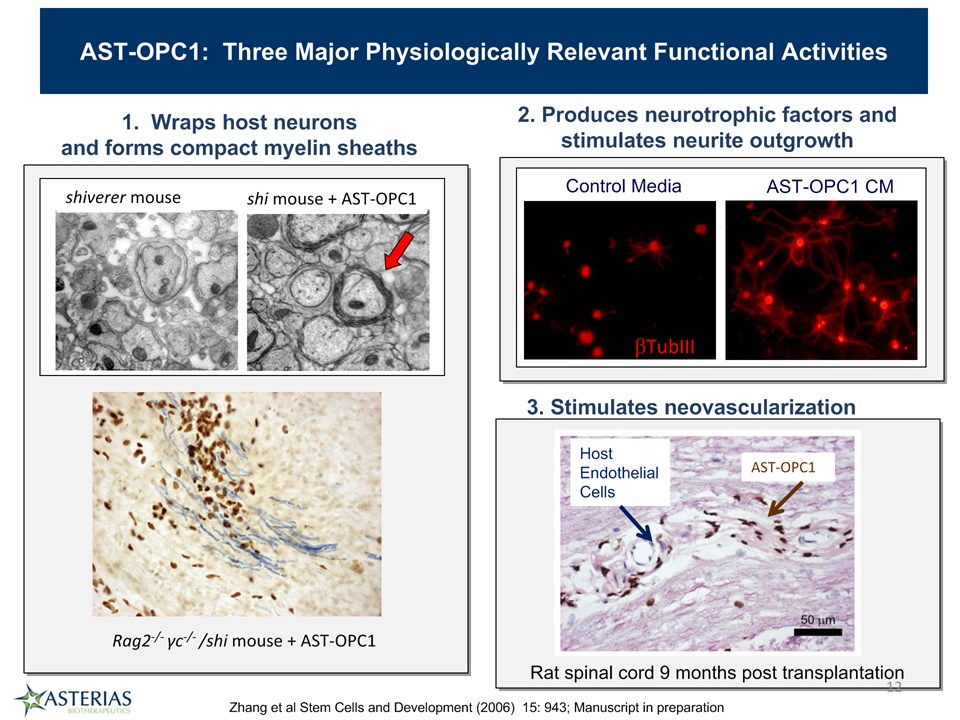
AST-OPC1: Three Major Physiologically Relevant Functional Activities 2. Produces neurotrophic factors and stimulates neurite outgrowth Promote increased neurite outgrowth 1. Wraps host neuronsand forms compact myelin sheaths Host Endothelial Cells AST-OPC1 Rat spinal cord 9 months post transplantation Rag2-/- γc-/- /shi mouse + AST-OPC1 TubIII * Zhang et al Stem Cells and Development (2006) 15: 943; Manuscript in preparation 3. Stimulates neovascularization
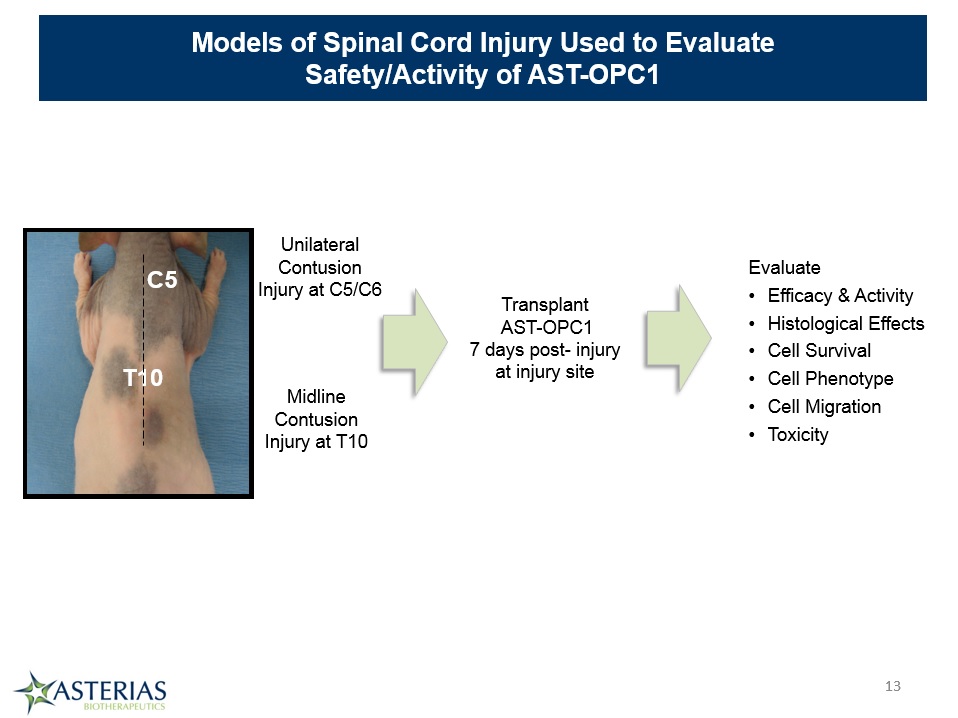
Models of Spinal Cord Injury Used to Evaluate Safety/Activity of AST-OPC1 MidlineContusion Injury at T10 Unilateral ContusionInjury at C5/C6 Thoracic Injury Cervical Injury Transplant AST-OPC1 7 days post- injury at injury site EvaluateEfficacy & ActivityHistological EffectsCell SurvivalCell PhenotypeCell MigrationToxicity T10 C5 *
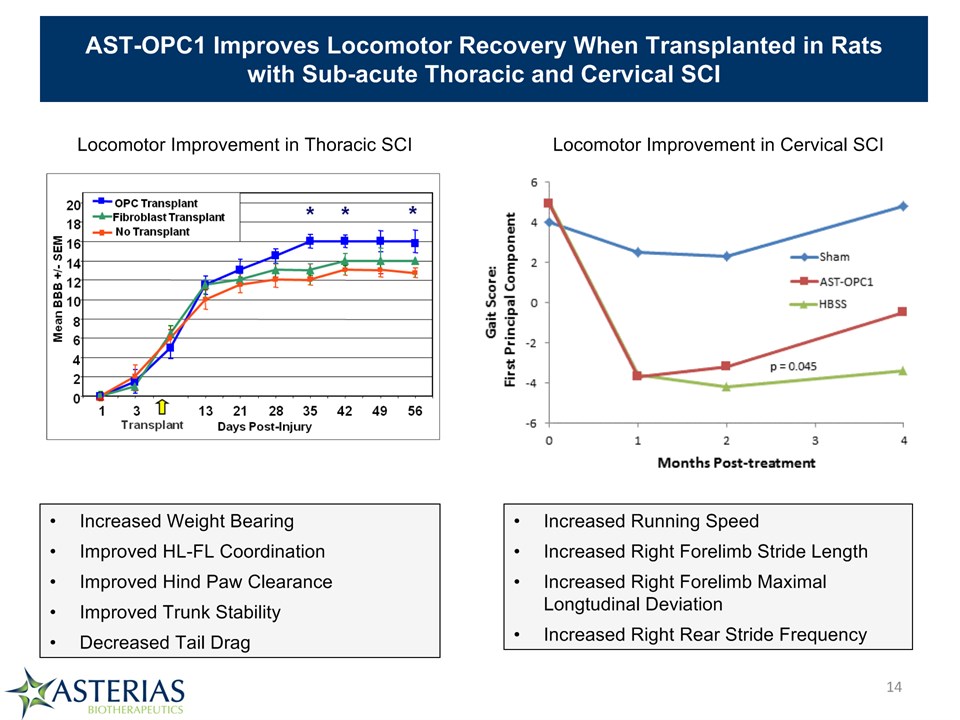
AST-OPC1 Improves Locomotor Recovery When Transplanted in Rats with Sub-acute Thoracic and Cervical SCI Locomotor Improvement in Thoracic SCI Locomotor Improvement in Cervical SCI Increased Running SpeedIncreased Right Forelimb Stride LengthIncreased Right Forelimb Maximal Longtudinal DeviationIncreased Right Rear Stride Frequency Increased Weight BearingImproved HL-FL Coordination Improved Hind Paw Clearance Improved Trunk StabilityDecreased Tail Drag *
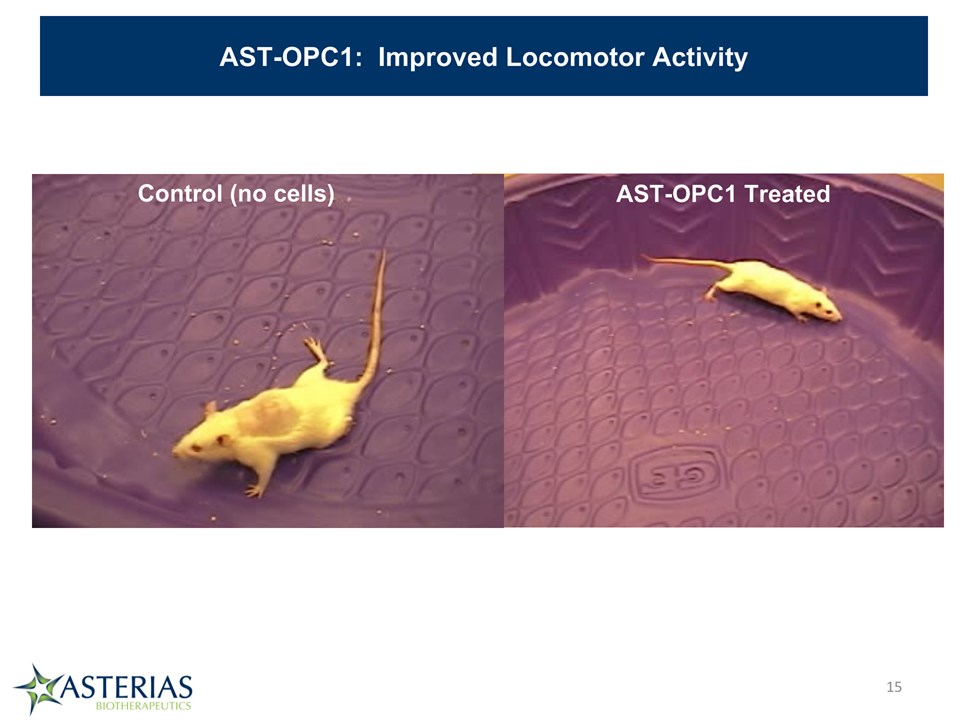
AST-OPC1: Improved Locomotor Activity * Control (no cells) AST-OPC1 Treated
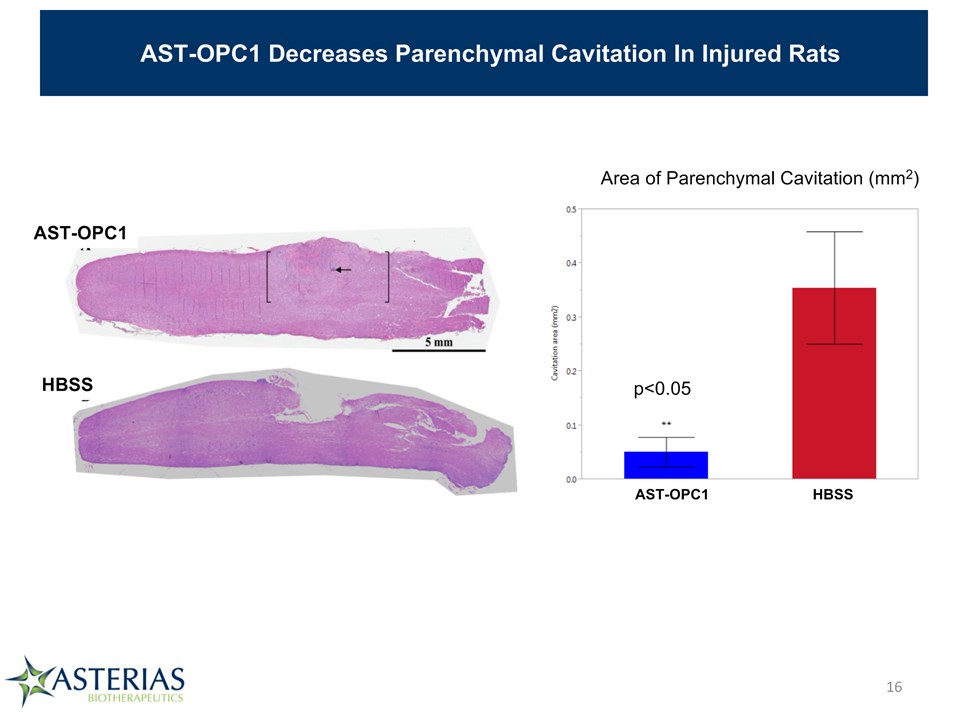
AST-OPC1 Decreases Parenchymal Cavitation In Injured Rats AST-OPC1 HBSS Area of Parenchymal Cavitation (mm2) p<0.05 AST-OPC1 HBSS *
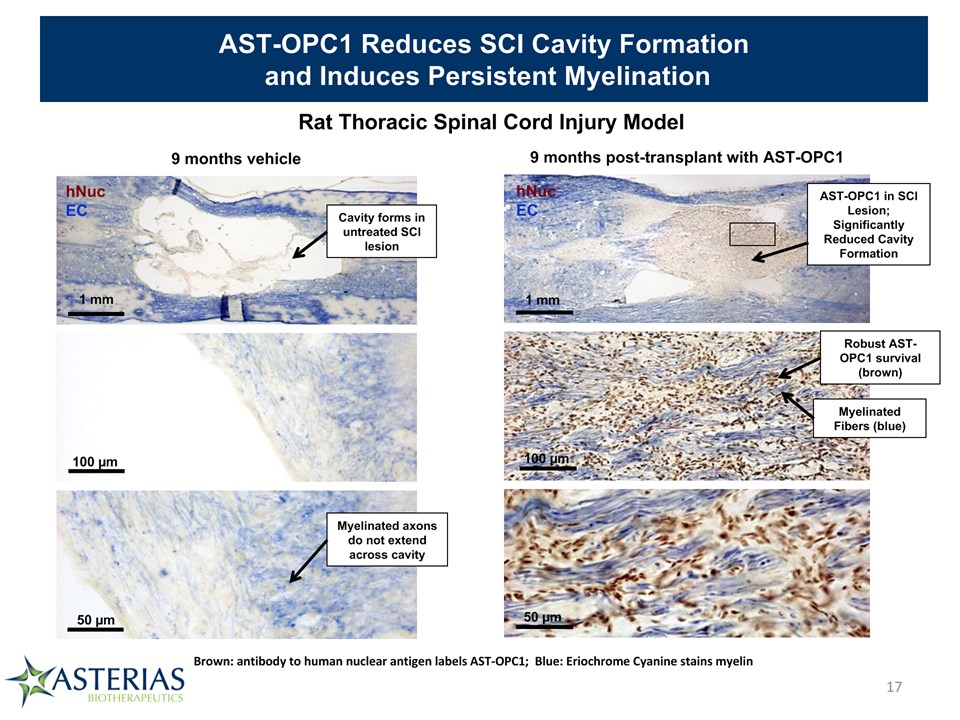
AST-OPC1 Reduces SCI Cavity Formation and Induces Persistent Myelination Brown: antibody to human nuclear antigen labels AST-OPC1; Blue: Eriochrome Cyanine stains myelin hNucEC 1 mm 100 µm 50 µm AST-OPC1 in SCI Lesion; Significantly Reduced Cavity Formation Robust AST-OPC1 survival (brown) Myelinated Fibers (blue) Rat Thoracic Spinal Cord Injury Model hNucEC 1 mm 100 µm 50 µm Cavity forms in untreated SCI lesion Myelinated axons do not extend across cavity *
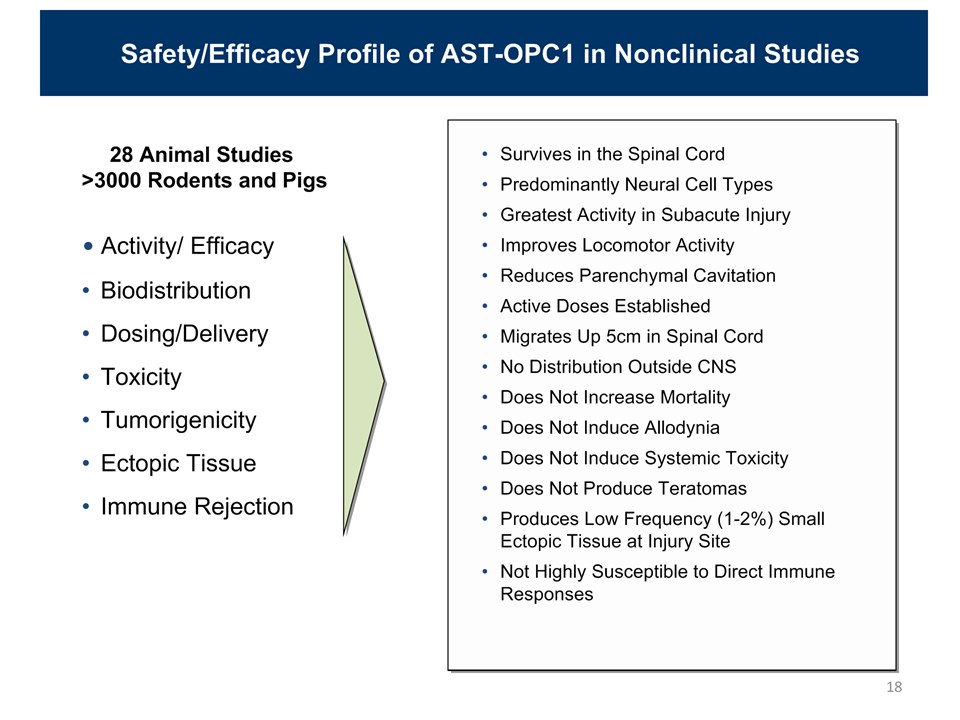
Activity/ Efficacy Biodistribution Dosing/Delivery Toxicity Tumorigenicity Ectopic Tissue Immune Rejection Survives in the Spinal CordPredominantly Neural Cell TypesGreatest Activity in Subacute InjuryImproves Locomotor ActivityReduces Parenchymal CavitationActive Doses EstablishedMigrates Up 5cm in Spinal CordNo Distribution Outside CNSDoes Not Increase MortalityDoes Not Induce AllodyniaDoes Not Induce Systemic ToxicityDoes Not Produce TeratomasProduces Low Frequency (1-2%) Small Ectopic Tissue at Injury Site Not Highly Susceptible to Direct Immune Responses 28 Animal Studies >3000 Rodents and Pigs Safety/Efficacy Profile of AST-OPC1 in Nonclinical Studies *
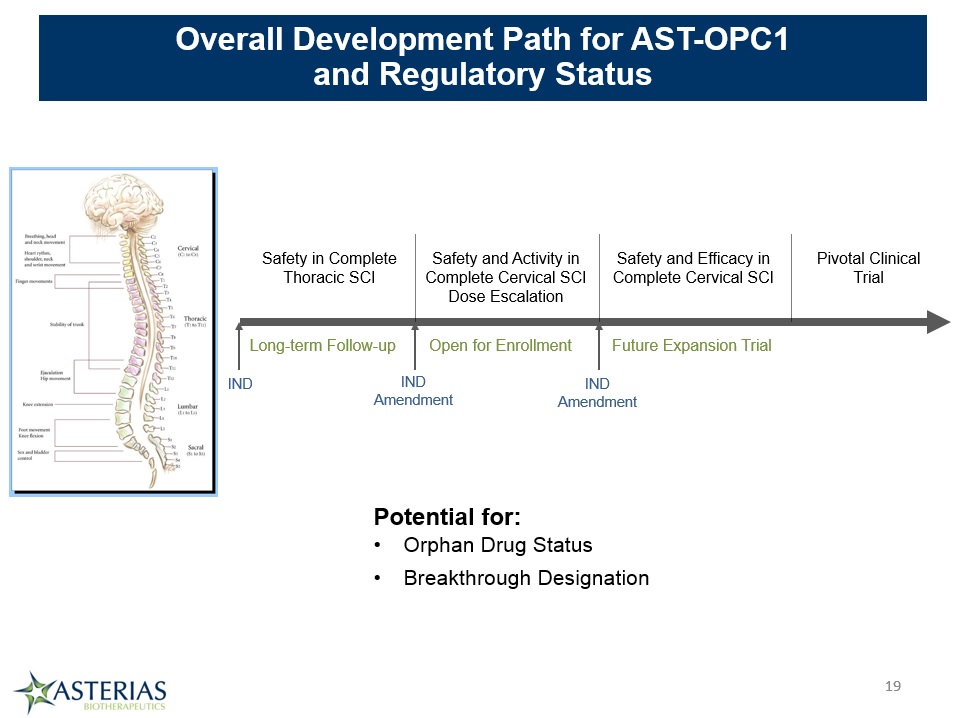
* Overall Development Path for AST-OPC1 and Regulatory Status IND Potential for:Orphan Drug StatusBreakthrough Designation Safety in Complete Thoracic SCI Safety and Activity in Complete Cervical SCI Dose Escalation Safety and Efficacy in Complete Cervical SCI Pivotal Clinical Trial INDAmendment Long-term Follow-up Open for Enrollment Future Expansion Trial INDAmendment
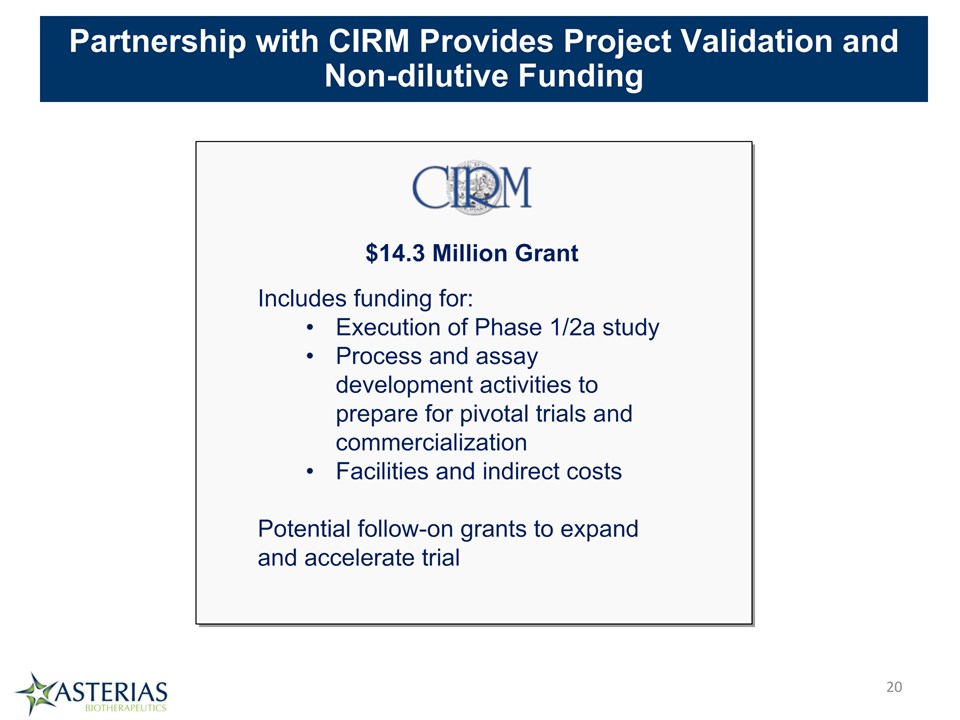
* Partnership with CIRM Provides Project Validation and Non-dilutive Funding $14.3 Million Grant Includes funding for:Execution of Phase 1/2a studyProcess and assay development activities to prepare for pivotal trials and commercializationFacilities and indirect costsPotential follow-on grants to expand and accelerate trial
Exhibit 99.2
Design, Objectives, and Status ofAsterias’ Current Spinal Cord InjuryClinical Trial Edward Wirth, III, M.D., Ph.D. Chief Medical Officer Investor DayMay 8, 2015 *
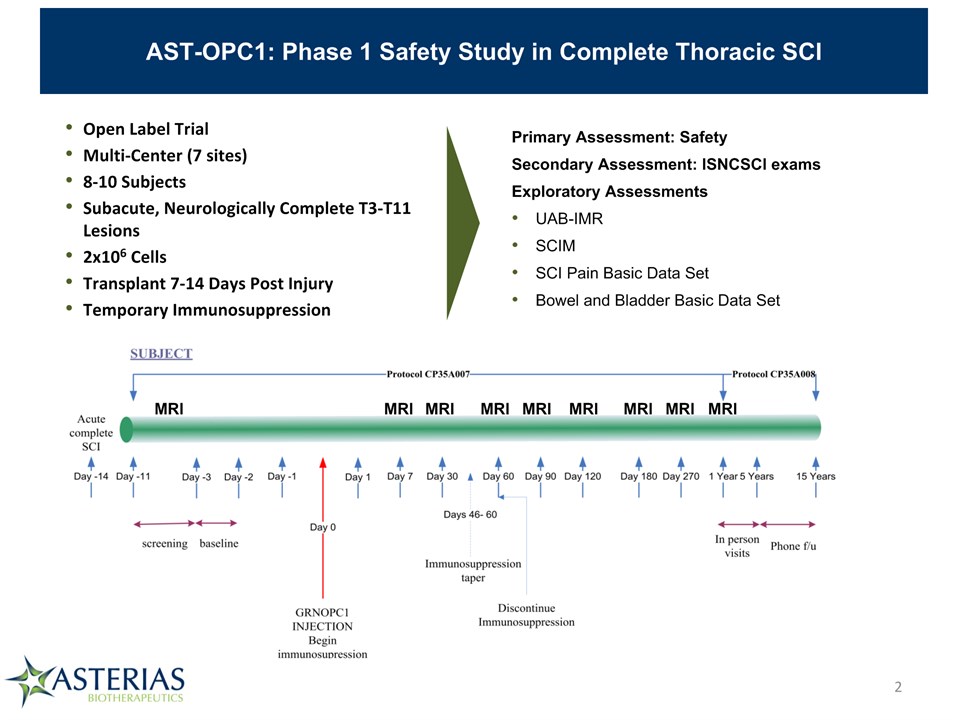
AST-OPC1: Phase 1 Safety Study in Complete Thoracic SCI * MRI MRI MRI MRI MRI MRI MRI MRI MRI MRI Primary Assessment: SafetySecondary Assessment: ISNCSCI examsExploratory AssessmentsUAB-IMRSCIMSCI Pain Basic Data SetBowel and Bladder Basic Data Set Open Label TrialMulti-Center (7 sites)8-10 SubjectsSubacute, Neurologically Complete T3-T11 Lesions2x106 CellsTransplant 7-14 Days Post InjuryTemporary Immunosuppression
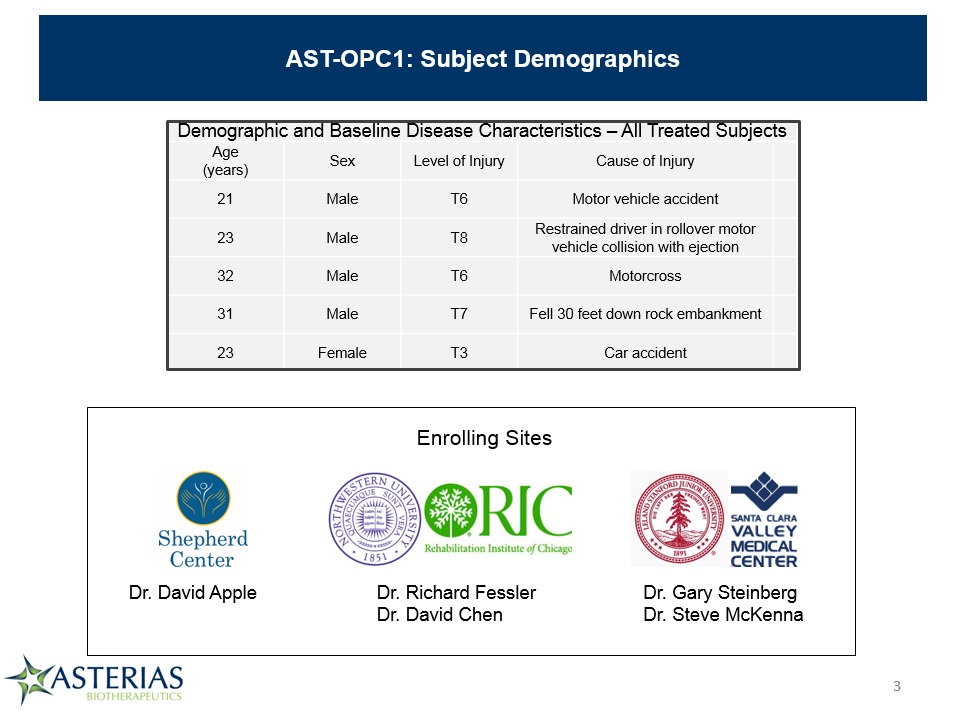
AST-OPC1: Subject Demographics Demographic and Baseline Disease Characteristics – All Treated Subjects Demographic and Baseline Disease Characteristics – All Treated Subjects Demographic and Baseline Disease Characteristics – All Treated Subjects Demographic and Baseline Disease Characteristics – All Treated Subjects Demographic and Baseline Disease Characteristics – All Treated Subjects Age(years) Sex Level of Injury Cause of Injury 21 Male T6 Motor vehicle accident 23 Male T8 Restrained driver in rollover motor vehicle collision with ejection 32 Male T6 Motorcross 31 Male T7 Fell 30 feet down rock embankment 23 Female T3 Car accident Dr. David Apple Dr. Gary SteinbergDr. Steve McKenna Dr. Richard FesslerDr. David Chen Enrolling Sites *
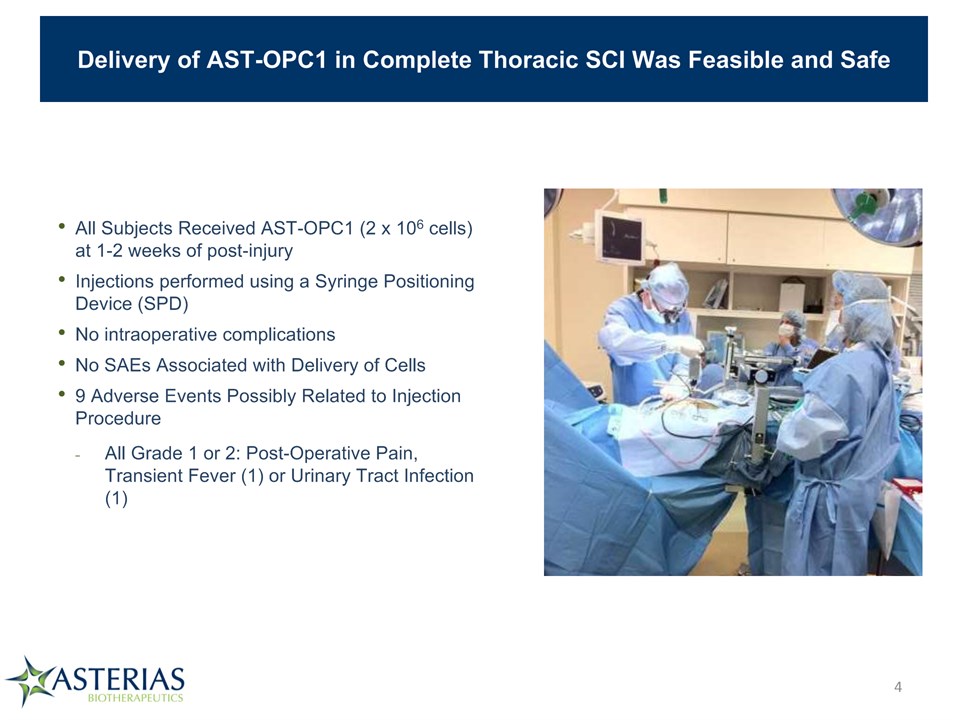
Delivery of AST-OPC1 in Complete Thoracic SCI Was Feasible and Safe * All Subjects Received AST-OPC1 (2 x 10⁶ cells) at 1-2 weeks of post-injuryInjections performed using a Syringe Positioning Device (SPD)No intraoperative complicationsNo SAEs Associated with Delivery of Cells9 Adverse Events Possibly Related to Injection Procedure All Grade 1 or 2: Post-Operative Pain, Transient Fever (1) or Urinary Tract Infection (1)
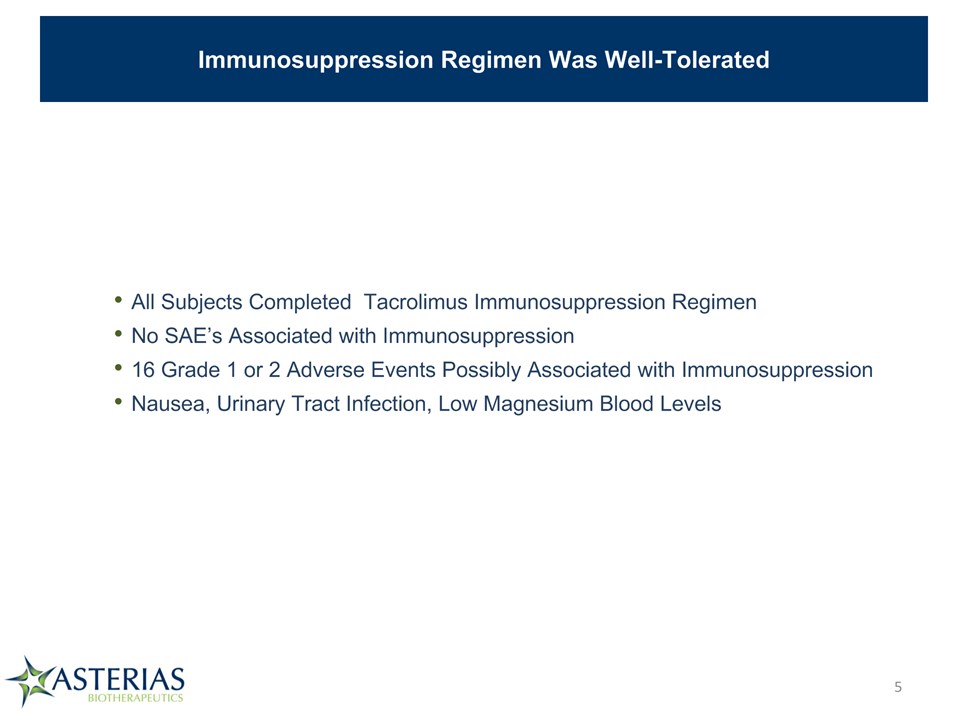
Immunosuppression Regimen Was Well-Tolerated All Subjects Completed Tacrolimus Immunosuppression RegimenNo SAE’s Associated with Immunosuppression16 Grade 1 or 2 Adverse Events Possibly Associated with ImmunosuppressionNausea, Urinary Tract Infection, Low Magnesium Blood Levels *
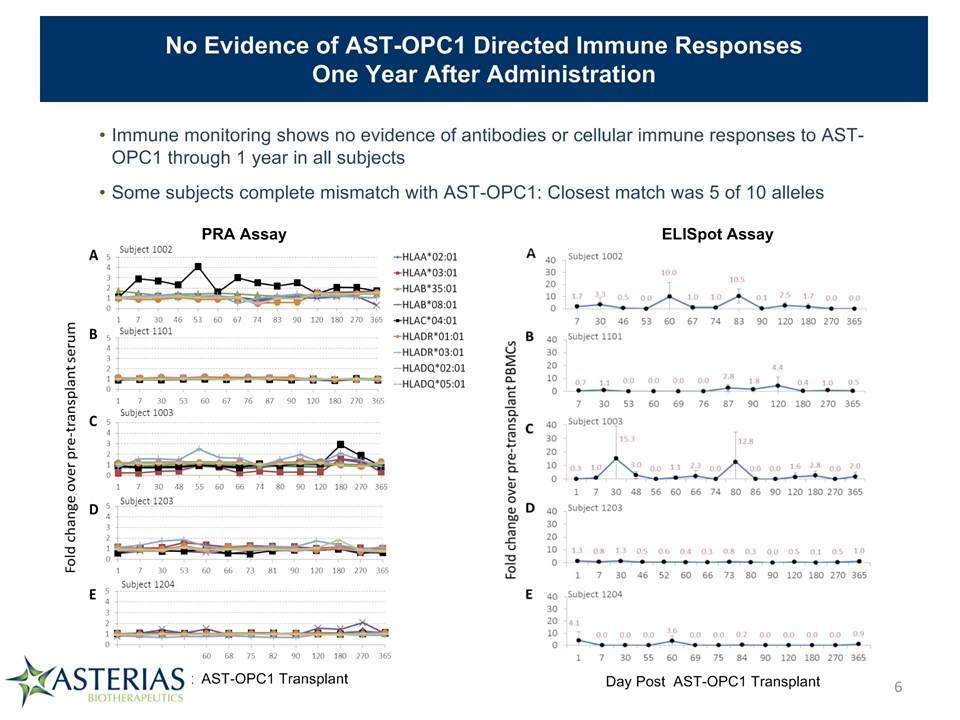
No Evidence of AST-OPC1 Directed Immune Responses One Year After Administration Immune monitoring shows no evidence of antibodies or cellular immune responses to AST-OPC1 through 1 year in all subjects Some subjects complete mismatch with AST-OPC1: Closest match was 5 of 10 alleles PRA Assay ELISpot Assay Day Post AST-OPC1 Transplant Day Post AST-OPC1 Transplant *
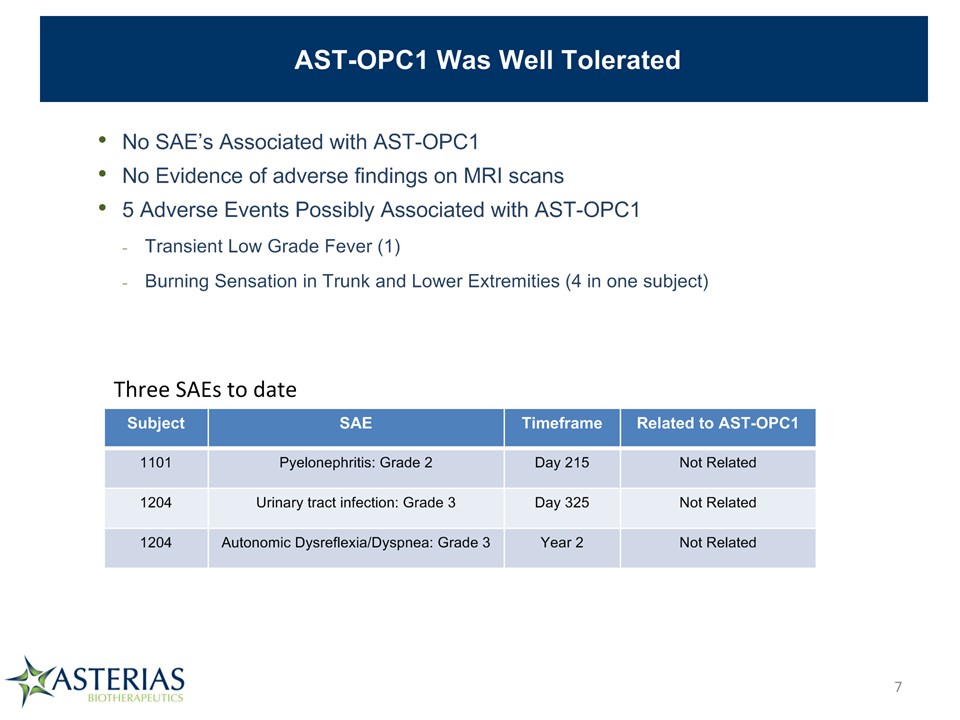
AST-OPC1 Was Well Tolerated No SAE’s Associated with AST-OPC1No Evidence of adverse findings on MRI scans5 Adverse Events Possibly Associated with AST-OPC1Transient Low Grade Fever (1)Burning Sensation in Trunk and Lower Extremities (4 in one subject) Subject SAE Timeframe Related to AST-OPC1 1101 Pyelonephritis: Grade 2 Day 215 Not Related 1204 Urinary tract infection: Grade 3 Day 325 Not Related 1204 Autonomic Dysreflexia/Dyspnea: Grade 3 Year 2 Not Related * Three SAEs to date
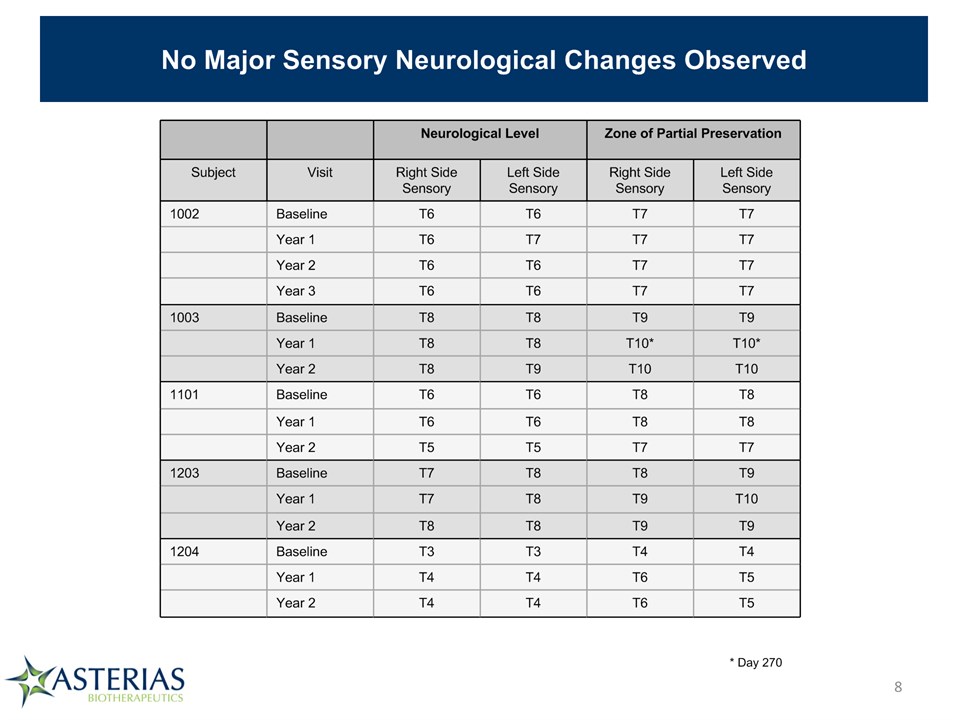
No Major Sensory Neurological Changes Observed Neurological Level Neurological Level Zone of Partial Preservation Zone of Partial Preservation Subject Visit Right Side Sensory Left Side Sensory Right Side Sensory Left Side Sensory 1002 Baseline T6 T6 T7 T7 Year 1 T6 T7 T7 T7 Year 2 T6 T6 T7 T7 Year 3 T6 T6 T7 T7 1003 Baseline T8 T8 T9 T9 Year 1 T8 T8 T10* T10* Year 2 T8 T9 T10 T10 1101 Baseline T6 T6 T8 T8 Year 1 T6 T6 T8 T8 Year 2 T5 T5 T7 T7 1203 Baseline T7 T8 T8 T9 Year 1 T7 T8 T9 T10 Year 2 T8 T8 T9 T9 1204 Baseline T3 T3 T4 T4 Year 1 T4 T4 T6 T5 Year 2 T4 T4 T6 T5 * Day 270 *
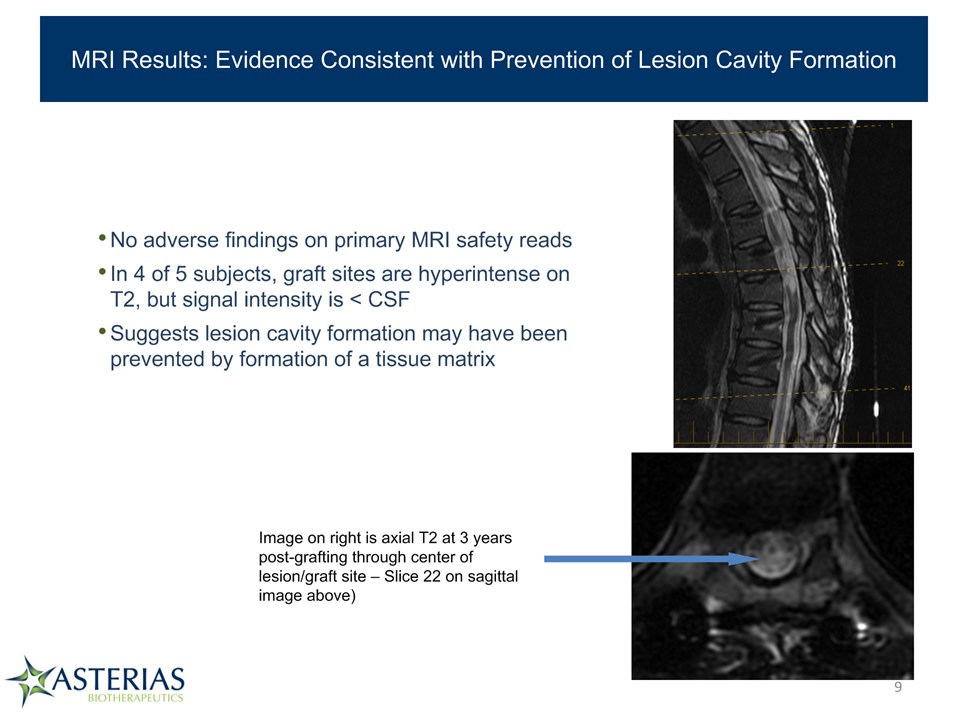
MRI Results: Evidence Consistent with Prevention of Lesion Cavity Formation No adverse findings on primary MRI safety readsIn 4 of 5 subjects, graft sites are hyperintense on T2, but signal intensity is < CSFSuggests lesion cavity formation may have been prevented by formation of a tissue matrix Image on right is axial T2 at 3 years post-grafting through center of lesion/graft site – Slice 22 on sagittal image above) *
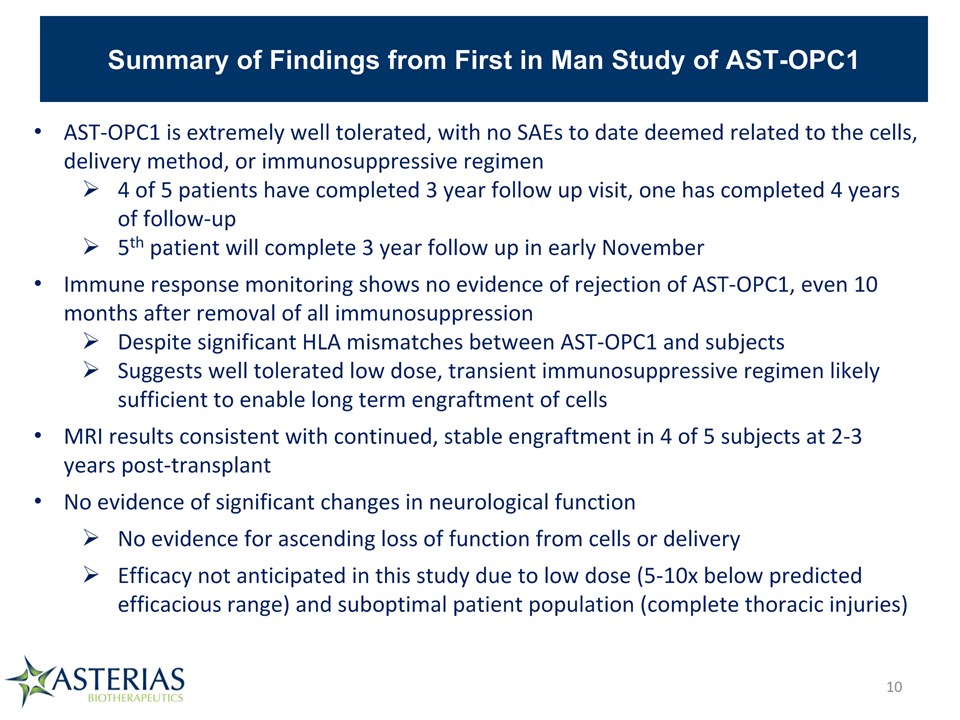
Summary of Findings from First in Man Study of AST-OPC1 AST-OPC1 is extremely well tolerated, with no SAEs to date deemed related to the cells, delivery method, or immunosuppressive regimen4 of 5 patients have completed 3 year follow up visit, one has completed 4 years of follow-up5th patient will complete 3 year follow up in early NovemberImmune response monitoring shows no evidence of rejection of AST-OPC1, even 10 months after removal of all immunosuppressionDespite significant HLA mismatches between AST-OPC1 and subjectsSuggests well tolerated low dose, transient immunosuppressive regimen likely sufficient to enable long term engraftment of cellsMRI results consistent with continued, stable engraftment in 4 of 5 subjects at 2-3 years post-transplantNo evidence of significant changes in neurological functionNo evidence for ascending loss of function from cells or deliveryEfficacy not anticipated in this study due to low dose (5-10x below predicted efficacious range) and suboptimal patient population (complete thoracic injuries) *
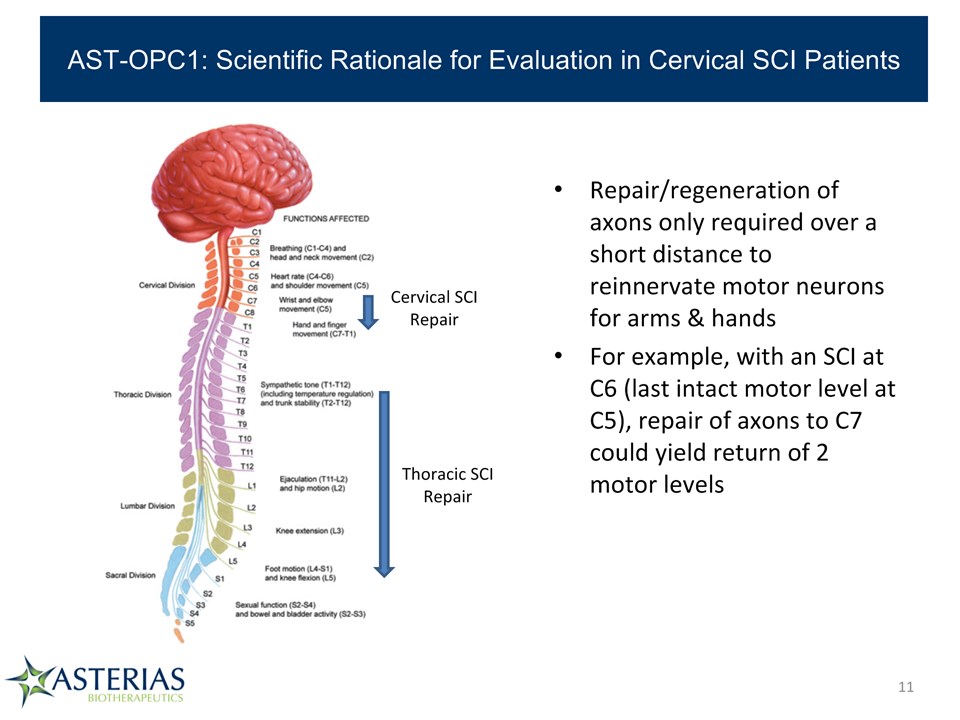
AST-OPC1: Scientific Rationale for Evaluation in Cervical SCI Patients Repair/regeneration of axons only required over a short distance to reinnervate motor neurons for arms & handsFor example, with an SCI at C6 (last intact motor level at C5), repair of axons to C7 could yield return of 2 motor levels Cervical SCIRepair Thoracic SCIRepair *
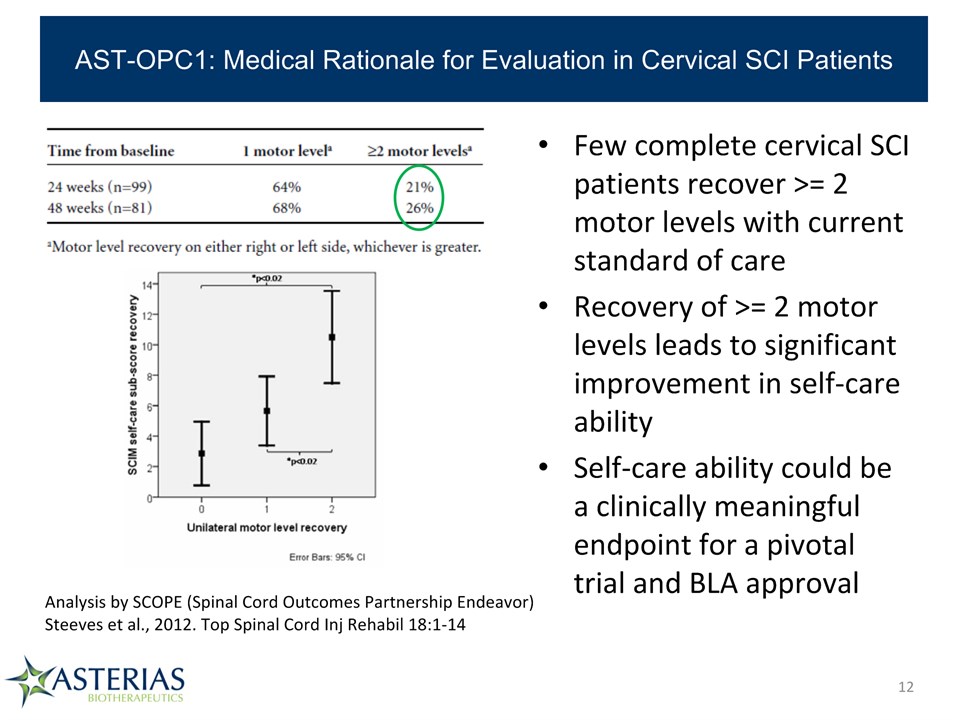
AST-OPC1: Medical Rationale for Evaluation in Cervical SCI Patients Few complete cervical SCI patients recover >= 2 motor levels with current standard of careRecovery of >= 2 motor levels leads to significant improvement in self-care abilitySelf-care ability could be a clinically meaningful endpoint for a pivotal trial and BLA approval Analysis by SCOPE (Spinal Cord Outcomes Partnership Endeavor)Steeves et al., 2012. Top Spinal Cord Inj Rehabil 18:1-14 *
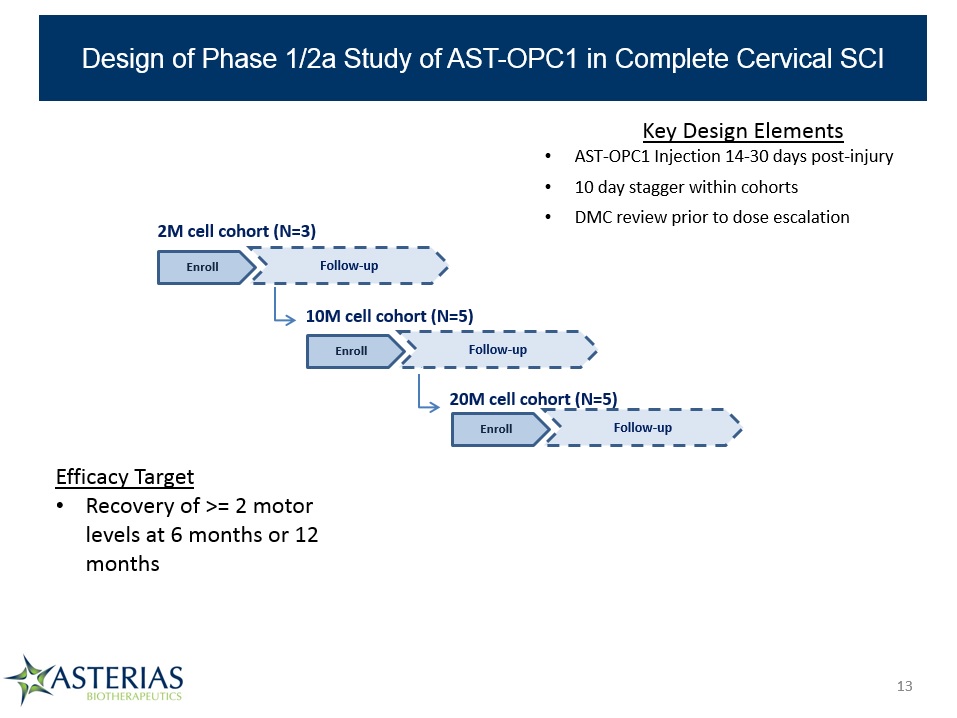
Design of Phase 1/2a Study of AST-OPC1 in Complete Cervical SCI 6m efficacy data 10M cell cohort (N=5) 20M cell cohort (N=5) 2M cell cohort (N=3) Key Design ElementsAST-OPC1 Injection 14-30 days post-injury10 day stagger within cohortsDMC review prior to dose escalation Efficacy TargetRecovery of >= 2 motor levels at 6 months or 12 months *
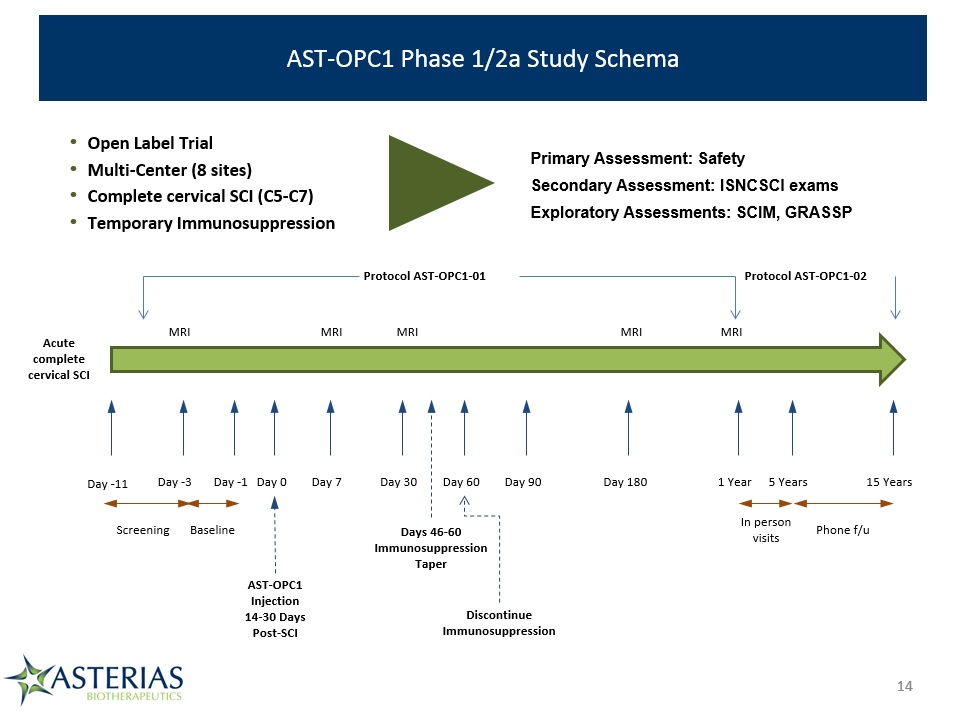
AST-OPC1 Phase 1/2a Study Schema * Acute completecervical SCI Protocol AST-OPC1-01 Protocol AST-OPC1-02 Day 0 Day 7 Day 30 Day 60 Day 90 Day 180 1 Year 5 Years 15 Years In personvisits Phone f/u DiscontinueImmunosuppression Days 46-60ImmunosuppressionTaper AST-OPC1Injection14-30 DaysPost-SCI Day -1 Screening Baseline Day -3 Day -11 MRI MRI MRI MRI MRI Primary Assessment: SafetySecondary Assessment: ISNCSCI examsExploratory Assessments: SCIM, GRASSP Open Label TrialMulti-Center (8 sites)Complete cervical SCI (C5-C7)Temporary Immunosuppression
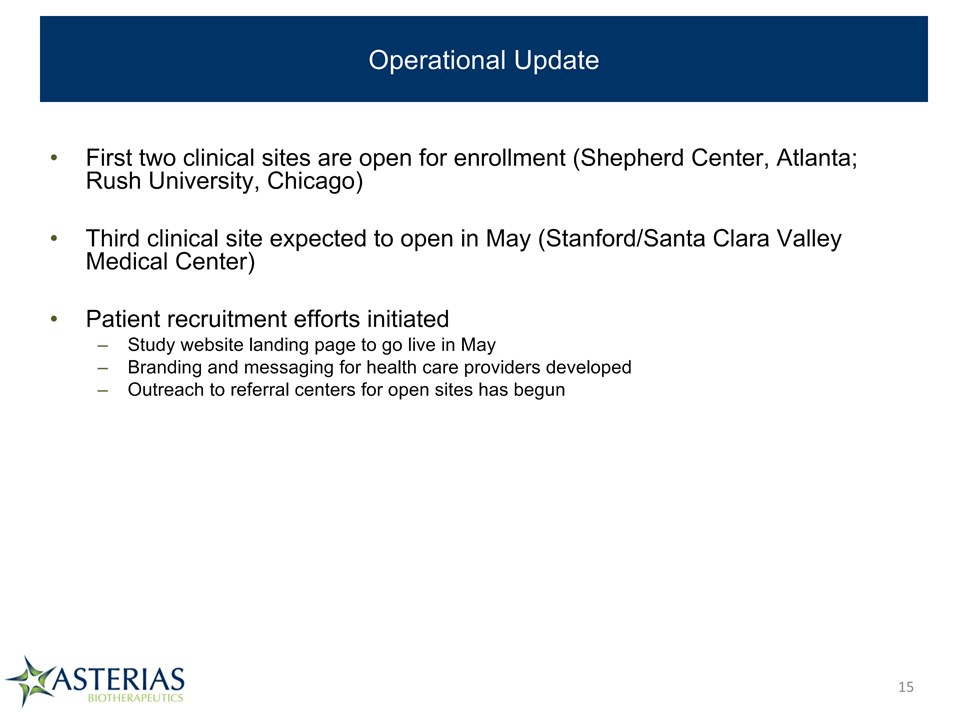
Operational Update First two clinical sites are open for enrollment (Shepherd Center, Atlanta; Rush University, Chicago)Third clinical site expected to open in May (Stanford/Santa Clara Valley Medical Center)Patient recruitment efforts initiatedStudy website landing page to go live in MayBranding and messaging for health care providers developedOutreach to referral centers for open sites has begun *
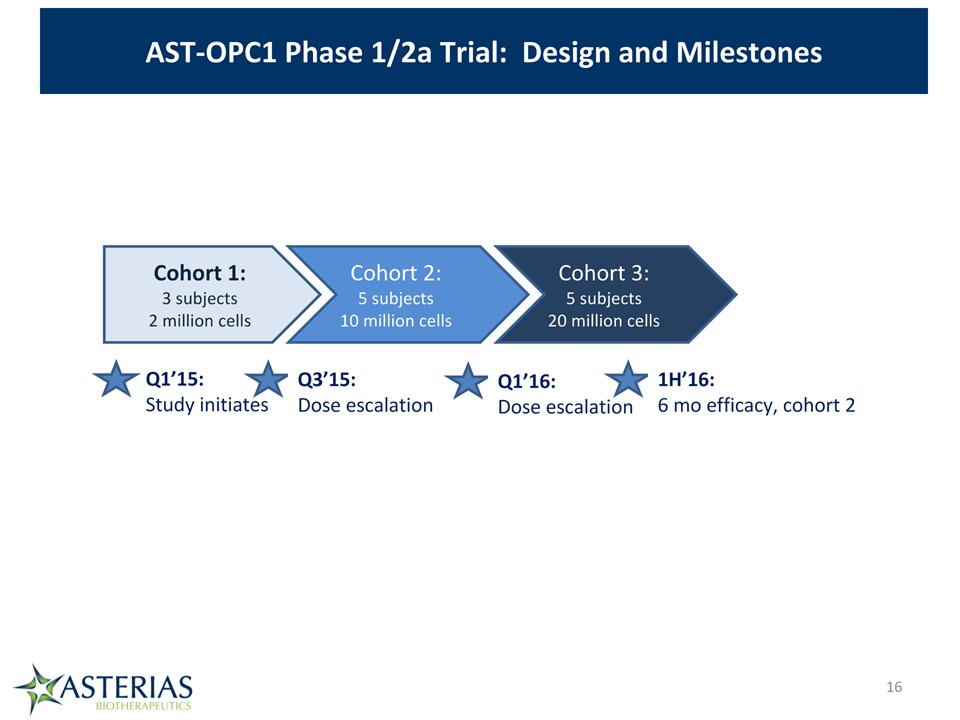
AST-OPC1 Phase 1/2a Trial: Design and Milestones * Cohort 1:3 subjects2 million cells Cohort 2:5 subjects10 million cells Cohort 3:5 subjects20 million cells Q1’15: Study initiates Q3’15: Dose escalation Q1’16: Dose escalation 1H’16: 6 mo efficacy, cohort 2

Exhibit 99.3
Future Clinical Development Plan forAST-OPC1 Edward Wirth, III, M.D., Ph.D. Chief Medical Officer Investor DayMay 8, 2015 *
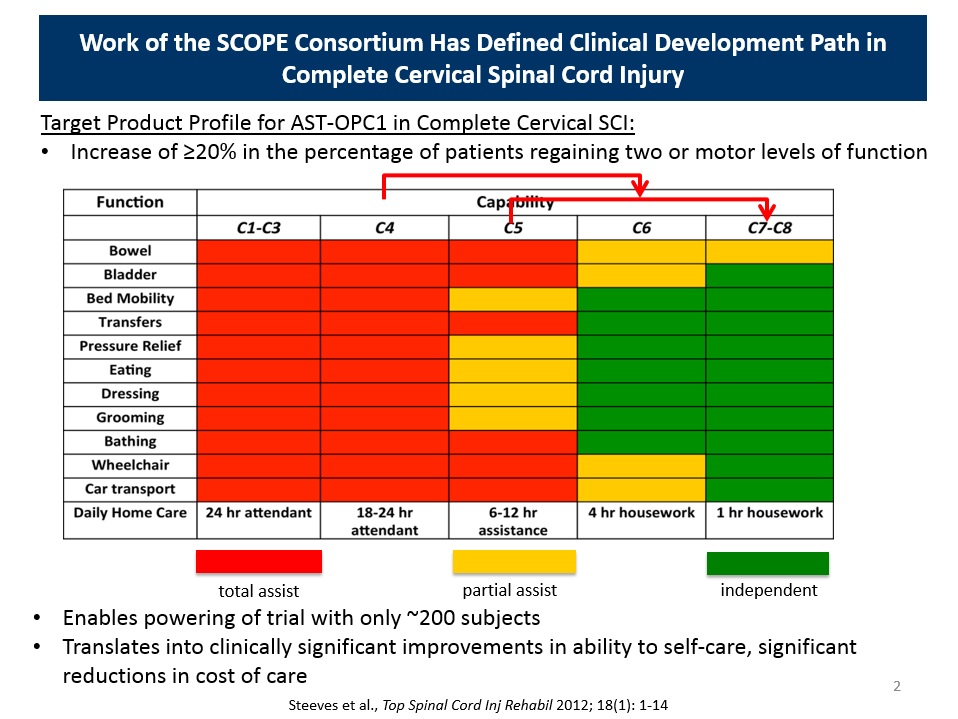
Work of the SCOPE Consortium Has Defined Clinical Development Path in Complete Cervical Spinal Cord Injury * Target Product Profile for AST-OPC1 in Complete Cervical SCI: Increase of ≥20% in the percentage of patients regaining two or motor levels of function Enables powering of trial with only ~200 subjectsTranslates into clinically significant improvements in ability to self-care, significant reductions in cost of care Steeves et al., Top Spinal Cord Inj Rehabil 2012; 18(1): 1-14
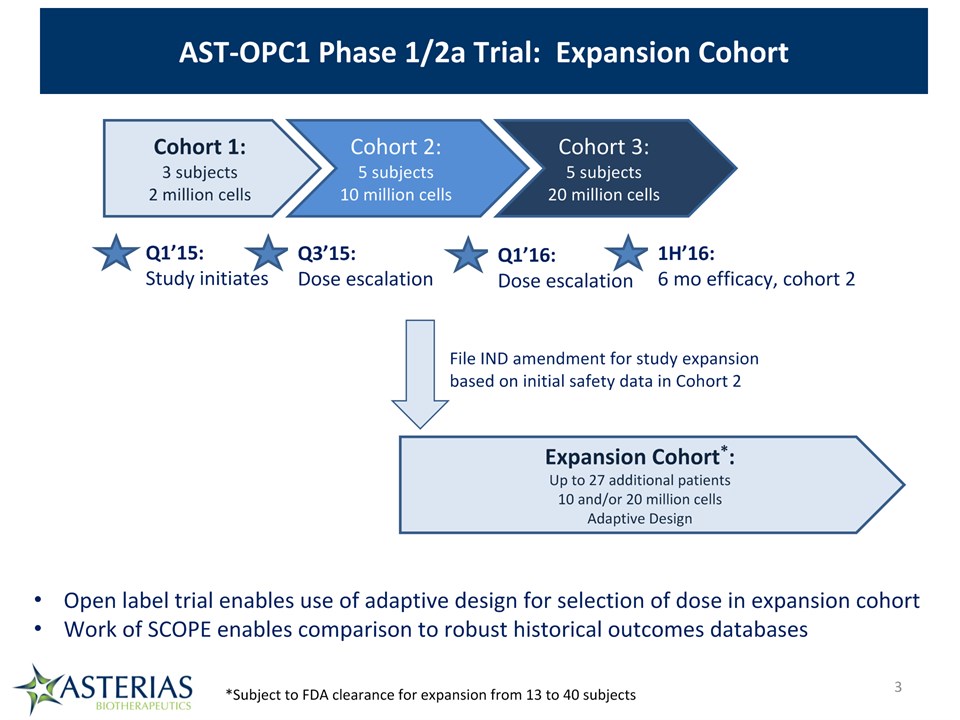
AST-OPC1 Phase 1/2a Trial: Expansion Cohort * Cohort 1:3 subjects2 million cells Cohort 2:5 subjects10 million cells Cohort 3:5 subjects20 million cells Expansion Cohort*:Up to 27 additional patients10 and/or 20 million cellsAdaptive Design File IND amendment for study expansion based on initial safety data in Cohort 2 Q1’15: Study initiates Q3’15: Dose escalation Q1’16: Dose escalation 1H’16: 6 mo efficacy, cohort 2 Open label trial enables use of adaptive design for selection of dose in expansion cohortWork of SCOPE enables comparison to robust historical outcomes databases *Subject to FDA clearance for expansion from 13 to 40 subjects
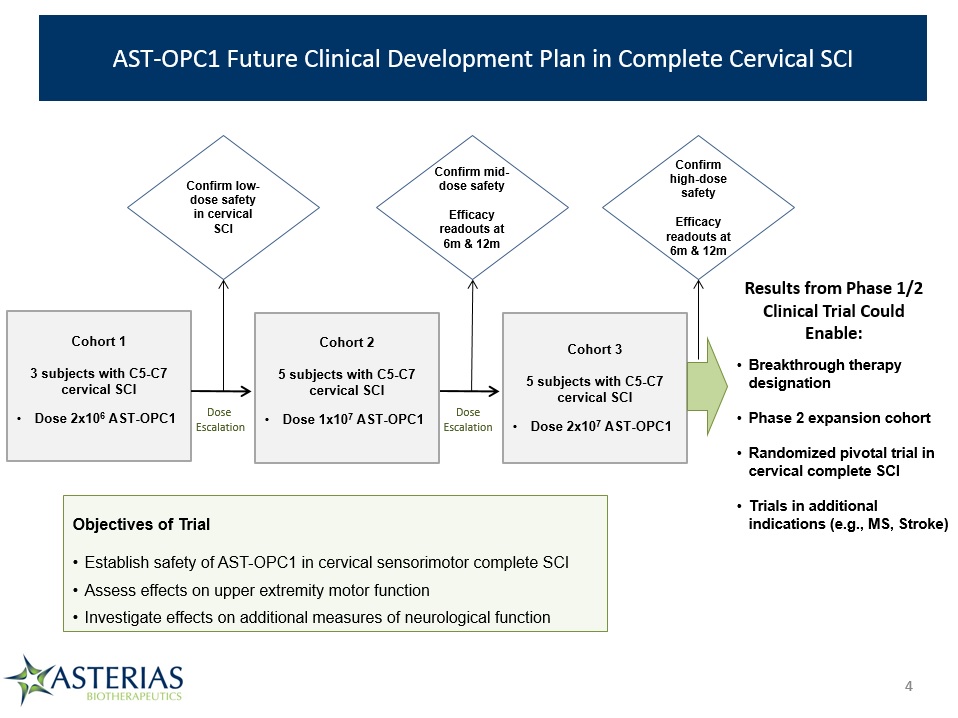
AST-OPC1 Future Clinical Development Plan in Complete Cervical SCI * Cohort 13 subjects with C5-C7 cervical SCI Dose 2x10⁶ AST-OPC1 Objectives of TrialEstablish safety of AST-OPC1 in cervical sensorimotor complete SCIAssess effects on upper extremity motor functionInvestigate effects on additional measures of neurological function Cohort 25 subjects with C5-C7 cervical SCIDose 1x10⁷ AST-OPC1 Cohort 35 subjects with C5-C7 cervical SCIDose 2x10⁷ AST-OPC1 Dose Escalation Dose Escalation Breakthrough therapy designationPhase 2 expansion cohortRandomized pivotal trial in cervical complete SCITrials in additional indications (e.g., MS, Stroke) Results from Phase 1/2 Clinical Trial Could Enable: Confirm low-dose safety in cervical SCI Confirm mid-dose safetyEfficacy readouts at 6m & 12m Confirm high-dose safetyEfficacy readouts at 6m & 12m
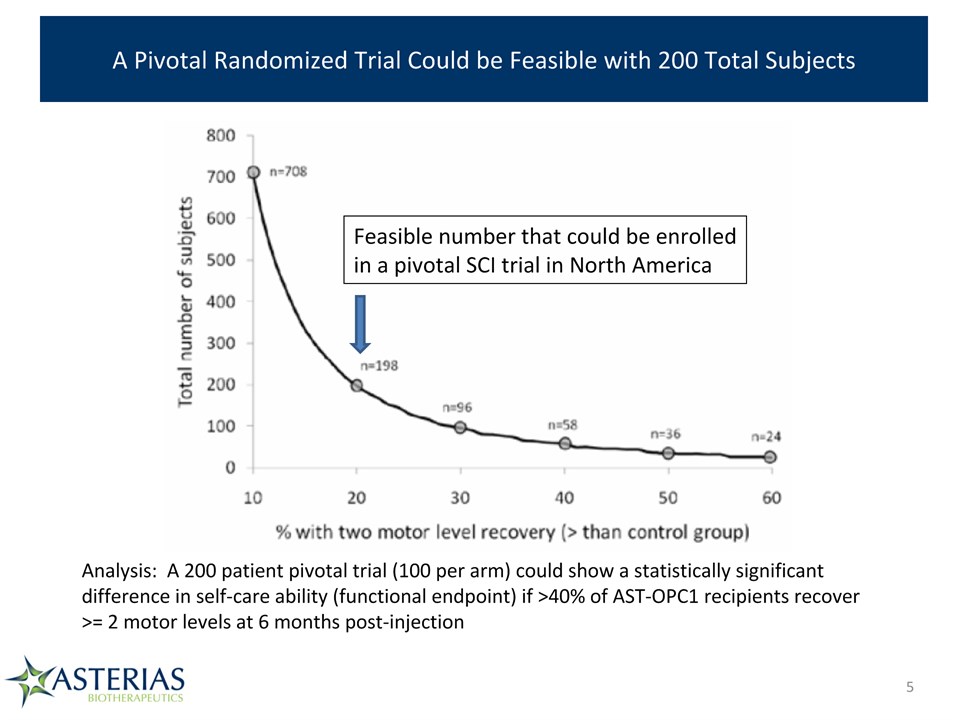
A Pivotal Randomized Trial Could be Feasible with 200 Total Subjects * Feasible number that could be enrolledin a pivotal SCI trial in North America Analysis: A 200 patient pivotal trial (100 per arm) could show a statistically significant difference in self-care ability (functional endpoint) if >40% of AST-OPC1 recipients recover>= 2 motor levels at 6 months post-injection
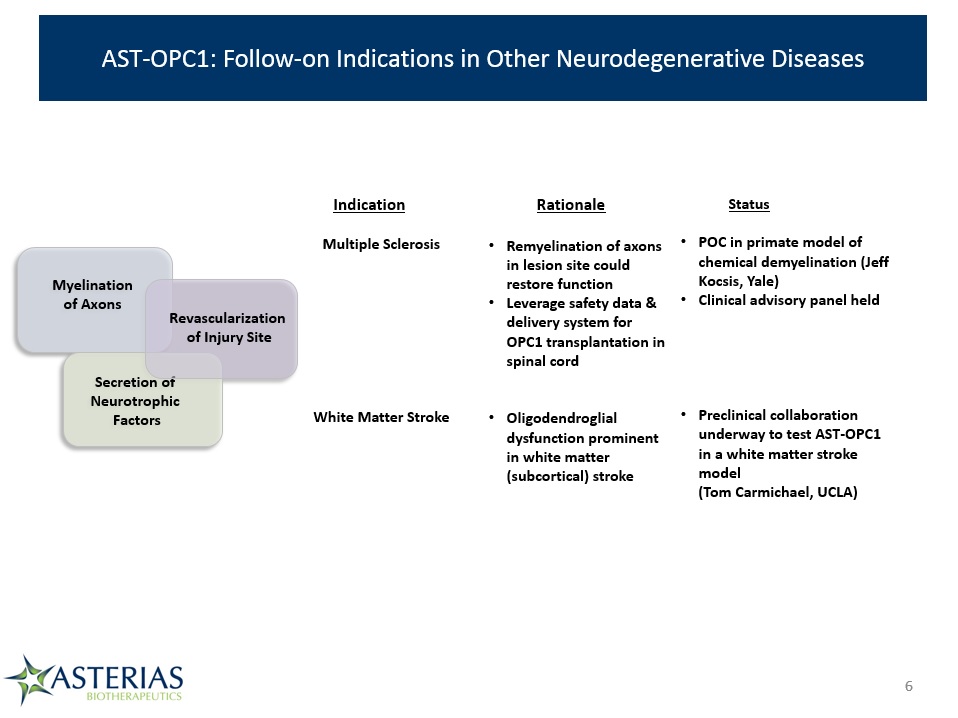
AST-OPC1: Follow-on Indications in Other Neurodegenerative Diseases Revascularization of Injury Site Indication Multiple SclerosisWhite Matter Stroke RationaleRemyelination of axons in lesion site could restore function Leverage safety data & delivery system for OPC1 transplantation in spinal cordOligodendroglial dysfunction prominent in white matter (subcortical) stroke StatusPOC in primate model of chemical demyelination (Jeff Kocsis, Yale)Clinical advisory panel heldPreclinical collaboration underway to test AST-OPC1 in a white matter stroke model(Tom Carmichael, UCLA) *
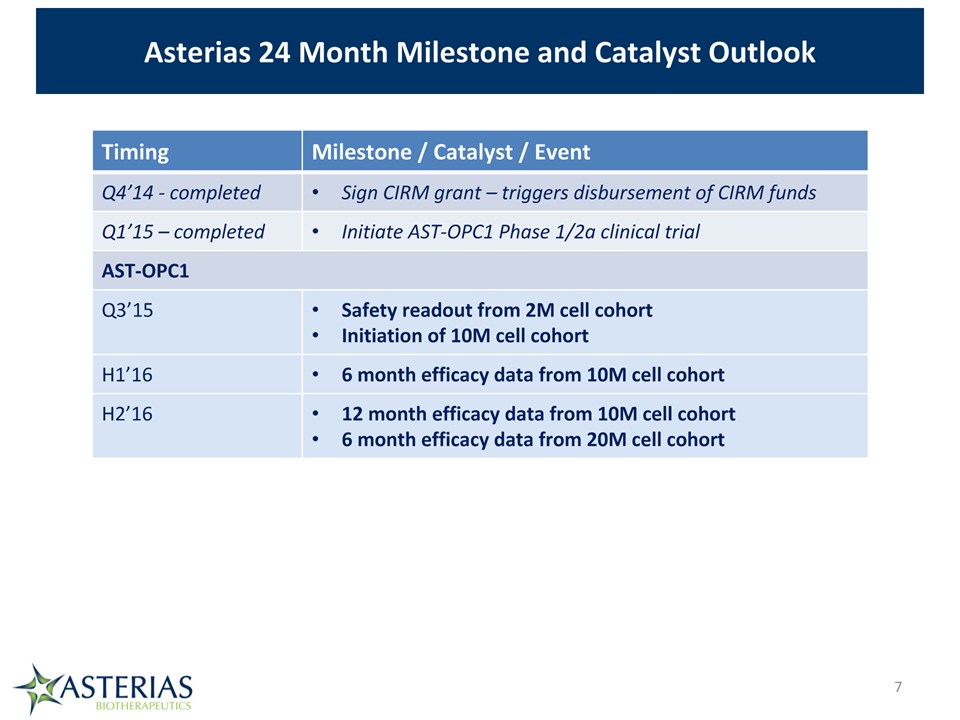
* Asterias Milestones and Newsflow Next 24 Months Asterias 24 Month Milestone and Catalyst Outlook Timing Milestone / Catalyst / Event Q4’14 - completed Sign CIRM grant – triggers disbursement of CIRM funds Q1’15 – completed Initiate AST-OPC1 Phase 1/2a clinical trial AST-OPC1 AST-OPC1 Q3’15 Safety readout from 2M cell cohortInitiation of 10M cell cohort H1’16 6 month efficacy data from 10M cell cohort H2’16 12 month efficacy data from 10M cell cohort6 month efficacy data from 20M cell cohort
Serious News for Serious Traders! Try StreetInsider.com Premium Free!
You May Also Be Interested In
- Online Cricket ID App Publishes Overview of Changing Digital Cricket Information Needs Among Indian Fans
- AI-119 Vulcan Force Solution Targets California's May 2027 Frontier AI Deadline (Veterans First for America)
- Axon Announces Body 5: Next-Generation Camera Built for the AI Era
Create E-mail Alert Related Categories
SEC FilingsSign up for StreetInsider Free!
Receive full access to all new and archived articles, unlimited portfolio tracking, e-mail alerts, custom newswires and RSS feeds - and more!
