



Form 485BPOS CYBER HORNET TRUST
 Tweet
Tweet Share
Share E-mail
As filed with the Securities and Exchange Commission
on
Securities Act Registration No. 333-129930
Investment Company Act Reg. No. 811-21836
UNITED STATES
SECURITIES AND EXCHANGE COMMISSION
WASHINGTON, DC 20549
FORM
| REGISTRATION STATEMENT UNDER THE SECURITIES ACT OF 1933 | ☒ | |
| Pre-Effective Amendment No. | ☐ | |
| Post-Effective Amendment No. 78 | ☒ | |
| and/or | ||
| REGISTRATION STATEMENT UNDER THE INVESTMENT COMPANY ACT OF 1940 | ☒ | |
| Amendment No. 82 | ☐ | |
(Check appropriate box or boxes.)
(Exact Name of Registrant as Specified in Charter)
200 Central Avenue, Suite 800
St. Petersburg, FL 33701
(Address of Principal Executive Offices) (Zip Code)
Registrant's Telephone Number, including Area Code: (727) 502-0808
| Michael G. Willis |
| 200 Central Avenue, Suite 800 |
| St. Petersburg, FL 33701 |
(Name and Address of Agent for Service)
With Copies To:
| Bo J. Howell |
| FinTech Law, LLC |
| 6224 Turpin Hills Drive |
| Cincinnati, Ohio 45244 |
Approximate Date of Proposed Public Offering: Immediately following effectiveness of this post-effective amendment.
It is proposed that this filing will become effective (check appropriate box)
| ☐ | immediately upon filing pursuant to paragraph (b) |
| ☒ | On January 29, 2026 pursuant to paragraph (b) |
| ☐ | 60 days after filing pursuant to paragraph (a)(1) |
| ☐ | on (date) pursuant to paragraph (a)(1) |
| ☐ | 75 days after filing pursuant to paragraph (a)(2) |
| ☐ | on (date) pursuant to paragraph (a)(2) of rule 485. |
If appropriate, check the following box:
| ☐ | This post-effective amendment designates a new effective date for a previously filed post-effective amendment. |
| CYBER HORNET S&P 500® and Bitcoin 75/25 Strategy ETF | BBB |
| CYBER HORNET S&P 500® and Ethereum 75/25 Strategy ETF | EEE |
| CYBER HORNET S&P 500® and Solana 75/25 Strategy ETF | SSS |
| CYBER HORNET S&P 500® and XRP 75/25 Strategy ETF | XXX |
Prospectus
The shares of each Fund are not individually redeemable by the Fund but are traded on the NASDAQ in individual share lots.
THE SEC HAS NOT APPROVED OR DISAPPROVED THESE SECURITIES OR PASSED UPON THE ACCURACY OR ADEQUACY OF THIS PROSPECTUS. ANY REPRESENTATION TO THE CONTRARY IS A CRIMINAL OFFENSE.
An investment in the Fund is not a bank deposit and is not insured by the Federal Deposit Insurance Corporation or any other government agency. An investment in the Fund involves investment risks, and you may lose money in the Fund.
CYBER HORNET S&P 500® and Bitcoin 75/25 Strategy ETF
CYBER HORNET S&P 500® and Ethereum 75/25 Strategy ETF
CYBER HORNET S&P 500® and Solana 75/25 Strategy ETF
CYBER HORNET S&P 500® and XRP 75/25 Strategy ETF
each, a series of CYBER HORNET TRUST
TABLE OF CONTENTS
About this Prospectus
This prospectus has been arranged into different sections so that you can easily review this important information. For detailed information about the Fund, please see:
CYBER HORNET S&P 500® AND BITCOIN 75/25 STRATEGY ETF SUMMARY
The Fund seeks to replicate, before fees and expenses, the total return of the S&P 500® and S&P Bitcoin 75/25 Blend Index (the “Index”), an index by Standard & Poor’s.
The following table describes the expenses and fees that you may pay if you buy, hold, and sell shares of the Fund. You may pay other fees, such as brokerage commissions and other fees to financial intermediaries, which are not reflected in the tables and examples below.
| Shareholder Fees | |
| (fees paid directly from your investment) | None |
| Annual Fund Operating Expenses | |
| (expenses that you pay each year as a percentage of the value of your investment) |
| Management Fees1 | |
| Distribution (12b-1) Fees | |
| Other Expenses | |
| Total Annual Fund Operating Expenses |
| 1 |
This Example is intended to help you compare the costs of investing in the Fund with the costs of investing in other funds.
The Example assumes that you invest $10,000 in the Fund for the time periods indicated and then redeem all of your shares at the end of those periods. Expenses assuming no redemption are also shown. The Example also assumes that your investment has a 5% return each year and that the Fund’s operating expenses (excluding any sales loads on reinvested dividends, fee waivers and/or expense reimbursements) shown in the table above remain the same. The expenses used to calculate the Fund’s Example do not include fee waivers or expense reimbursements. Although your actual costs and returns may be higher or lower, based on these assumptions your costs would be:
| 1 Year | 3 Years | 5 Years | 10 Years |
| $ |
$ |
$ |
$ |
The
Fund pays transaction costs, such as commissions, when it buys and sells securities (or “turns over” its portfolio).
A higher portfolio turnover rate may indicate higher transaction costs and may result in higher taxes when Fund shares are held
in a taxable account. These costs, which are not reflected in annual fund operating expenses or in the example, affect the Fund’s
performance. During the Fund’s most recent fiscal period ended March 31, 2025, the Fund’s portfolio turnover was
3
The Fund seeks to replicate, before fees and expenses, the total return of the S&P 500® and S&P Bitcoin 75/25 Blend Index (the “Index”). The Index measures the weighted return performance of a multi-asset strategy comprising a 75% weight in the S&P 500® Index and a 25% weight in the S&P Bitcoin Index. Accordingly, in seeking to track the Index, the Fund will invest approximately 75% of its assets in a portfolio of common stocks that are included in the S&P 500® Index and will invest directly in Bitcoin so that the total value of the Bitcoin to which the Fund has economic exposure is approximately 25% of the assets of the Fund. S&P Dow Jones Indices LLC (“S&P DJI” or the “Index Provider”) compiles, maintains, and calculates the Index and each of the S&P 500® Index and the S&P Bitcoin Futures Index. The Index is rebalanced monthly and accordingly the Fund seeks to maintain the 75%/25% allocations by also rebalancing these allocations monthly. However, price fluctuations in the underlying assets and other factors, such as the Fund’s cash position, may cause these allocations to vary at any time. The Adviser reserves the right to rebalance the Fund’s allocations more frequently than monthly in periods of significant price volatility or less frequently than monthly to save on trading costs or during periods of low volatility. The Adviser may rebalance the Fund’s allocations on any day of the month. Such rebalancing decisions are made solely to reduce tracking error and enhance after-fee performance relative to the Index.
U.S. Large-Cap
The Fund attempts to replicate this portion of its portfolio by investing in a portfolio of the common stocks included in the S&P 500® Index, holding each stock in proportion similar to its weighting in the S&P 500® Index. The Fund may hold more or fewer stocks than the index at any given time. The Fund may sell investments represented in the S&P 500® Index in anticipation of their removal from the S&P 500® Index or buy investments not yet represented in the Index in anticipation of their addition to it. The Fund may also invest in securities of other investment companies, such as certain ETFs,to implement its investment strategy.
Bitcoin
Under normal conditions, the Fund will invest in Bitcoin so that the total value of Bitcoin to which the Fund has economic exposure is approximately 25% of the assets of the Fund. The Fund will invest directly in Bitcoin through a subsidiary company organized under the laws of the Cayman Islands (the “Subsidiary”). The Fund may also gain exposure to Bitcoin by investing in Bitcoin futures contracts, and in shares of other exchange-traded funds (“ETFs”) and exchange-traded products (“ETPs”) which provide exposure to Bitcoin (collectively, the “Bitcoin ETPs”), although the Fund expects that its futures and ETP exposure will generally be less than 10% of its assets, Such exposure seeks to track, before fees and expenses, the performance of the S&P Bitcoin Futures Index. The S&P Bitcoin Index is designed to track the performance the digital asset Bitcoin. However, changes in the relative value of the Fund’s assets between the monthly rebalance could cause the Fund’s investments in Bitcoin, Bitcoin futures positions, and Bitcoin ETPs to represent greater than 25% of the Fund’s assets.
The Fund will generally purchase and sell Bitcoin on exchanges such as BitGo or Coinbase, neither of which is registered as a national securities exchange with the SEC. The price of Bitcoin on these exchanges and over-the-counter markets has a limited history, is volatile, and is subject to the influence of many factors, including operational interruptions.
Bitcoin held directly by the Fund is maintained at a qualified custodian. The custodian uses “cold storage” security measures for storing the private keys necessary to access the Fund’s Bitcoin offline in a manner that is not connected to the internet. This is designed to protect cryptocurrencies from hacking or other cybersecurity threats.
The ownership of Bitcoin is determined by participants in a decentralized, peer-to-peer network that connects computers that run publicly accessible, or “open source,” software, commonly referred to as the “Bitcoin Protocol.” The value of Bitcoin is determined, in part, by the supply of, and demand for, Bitcoin in the markets created to facilitate the trading of Bitcoin. Ownership and the ability to transfer or take other actions with respect to Bitcoin is protected through public-key cryptography. The supply of Bitcoin is determined by the Bitcoin Protocol which limits both the total amount of Bitcoin that will be produced to 21 million and the rate at which it is released into the network.
4
When the Fund invests in Bitcoin futures contracts, the Fund must sell its futures contracts as they near expiration and replace them with new futures contracts with a later expiration date. The Adviser anticipates that this “roll” of the futures contracts will normally occur shortly before the expiration of the current month contract in the last week of the month. However, such timing may change due to market conditions. Futures contracts with a longer term to expiration may be priced higher than futures contracts with a shorter term to expiration (e.g. trading at “contango”). Bitcoin futures have historically experienced extended periods of contango. Contango in the Bitcoin futures market may have a significant adverse impact on the performance of the Fund and may cause it to significantly deviate from the performance of the Index. The Fund will only invest in Bitcoin futures contracts that are traded on a futures exchange regulated by the Commodity Futures Trading Commission (“CFTC”). The Fund (or the Subsidiary, as applicable) also invests in short-term U.S. government securities intended to serve as margin or collateral for futures positions.
The Fund may invest in Bitcoin ETPs that invest directly in, provide exposure to, replicate the performance of, or have trading and/or price performance characteristics similar to Bitcoin.
PRINCIPAL RISKS
The following describes the principal risks of investing in the Fund, which could affect the Fund’s net asset value and total return. Other circumstances (including additional risks not described here) could prevent the Fund from achieving its investment objective. These risks are presented in an order that reflects the Adviser’s assessment of relative importance, but this assessment could change over time as the Fund’s portfolio changes or in light of changes in the market or the economic environment, among other things. The Fund is not required to and will not update this Prospectus solely because the Adviser’s assessment of the relative importance of the principal risks of investing in the Fund changes.
Bitcoin, Bitcoin futures contracts, and Bitcoin ETPs are relatively new investments. They are subject to unique and substantial risks, and historically, have been subject to significant price volatility. The value of an investment in the Fund could decline significantly and without warning. You should be prepared to lose the entirety of the Bitcoin component of your investment in the Fund. The performance of Bitcoin futures contracts and Bitcoin ETPs, and therefore the performance of the Fund may differ significantly from the performance of Bitcoin.
Equity Risk – The values of equity securities may decline due to general market conditions which are not specifically related to a particular company, such as real or perceived adverse economic conditions, changes in the general outlook for corporate earnings, changes in interest or currency rates, or adverse investor sentiment generally. The prices of equity securities fluctuate, and sometimes widely, in response to activities specific to the security issuer. Equity securities generally have greater price volatility than fixed-income securities. Returns from large-capitalization stocks may trail returns from the overall stock market. Large-cap stocks tend to go through cycles of performing better or worse than other segments of the stock market or the stock market in general. These periods have, in the past, lasted several years.
Bitcoin Risk – The Bitcoin network has a limited history relative to traditional commodities and currencies. There is no assurance that use or acceptance of Bitcoin will continue to grow. A contraction in use or adoption of Bitcoin may result in increased volatility or a reduction in the price of Bitcoin, which would likely have an adverse impact on the value of the Shares. Sales of newly created or “mined” Bitcoin may cause the price of Bitcoin to decline, which could negatively affect an investment in the Shares. Bitcoin trading prices experience high levels of volatility, and in some cases such volatility has been sudden and extreme. Because of such volatility, Shareholders could lose all or substantially all of the Bitcoin component of their investment in the Fund in a very short time, even in the course of one day. Shareholders who invest in the Fund should actively monitor their investments. The Bitcoin network could cease to be a focal point for developer activity, and there is no assurance that the most active developers who participate in monitoring and upgrading the software protocols on which the Bitcoin network is based will continue to do so in the future, which could damage the network or reduce Bitcoin’s competitiveness with competing digital assets or blockchain protocols. Disruptions at Bitcoin spot markets and in the Bitcoin futures markets could adversely affect the availability or price of Bitcoin.
From time to time, developers may suggest changes to the bitcoin software. If a sufficient number of users and miners elect not to adopt the changes, a new digital asset, operating on the earlier version of the bitcoin software, may be created. This is often referred to as a “fork.” Bitcoin has been forked numerous times to launch new digital assets. Additional hard forks of the Bitcoin blockchain could impact demand for bitcoin or other digital assets and could adversely impact the Fund’s Bitcoin futures. A fork in the Bitcoin network could adversely affect the market for Bitcoin futures in which the Fund invests and, therefore, an investment in the Fund.
5
Bitcoin exchanges and other trading venues on which bitcoin trades are relatively new and, in most cases, largely unregulated and may therefore be more exposed to fraud and failure than established, regulated exchanges for securities and derivatives. Bitcoin exchanges have in the past, and may in the future, stop operating or permanently shut down due to fraud, cybersecurity issues, manipulation, technical glitches, hackers or malware, which may also affect the price of bitcoin and thus the Fund’s indirect investment in bitcoin. All networked systems are vulnerable to various kinds of attacks. As with any computer network, the Bitcoin network contains certain flaws. For example, the Bitcoin network is currently vulnerable to a “51% attack” where, if a mining pool were to gain control of more than 50% of the “hash” rate, or the amount of computing and process power being contributed to the network through mining, a malicious actor would be able to gain full control of the network and the ability to manipulate the blockchain. A significant portion of bitcoin may be held by a small number of holders sometimes referred to as “whales.” These holders have the ability to manipulate the price of bitcoin. As a digital asset, bitcoin is subject to cybersecurity risks, including the risk that malicious actors will exploit flaws in its code or structure that will allow them to, among other things, steal bitcoin held by others, control the blockchain, steal personally identifying information, or issue significant amounts of bitcoin in contravention of the Bitcoin protocols.
The occurrence of any of these events is likely to have a significant adverse impact on the price and liquidity of bitcoin and Bitcoin Futures and therefore the value of an investment in the Fund. Additionally, the Bitcoin network’s functionality relies on the Internet. A significant disruption of Internet connectivity affecting large numbers of users or geographic areas could impede the functionality of the Bitcoin network. Any technical disruptions or regulatory limitations that affect Internet access may have an adverse effect on the Bitcoin network, the price of bitcoin and Bitcoin Futures, and the value of an investment in the Fund.
Rebalancing Costs and Tax Risk. The Fund is subject to the risk of rebalancing to track the Index that may result in significant transaction costs and tax consequences for shareholders. The Fund seeks to maintain a 75% allocation to the S&P 500 Index and a 25% allocation to the S&P Cryptocurrency Top 10 Index. The Fund rebalances these allocations monthly and may rebalance more frequently during periods of significant market volatility. When cryptocurrency prices rise or fall relative to equity prices between rebalancing dates, the Fund must sell appreciated assets and purchase depreciated assets to restore the target allocation of 75% to 25% in equity and cryptocurrency, respectively. These transactions generate transaction costs and may result in the realization of capital gains that will be distributed to shareholders.
Risks Related to the Regulation of Cryptocurrency. Any final determination by a court that a cryptocurrency is a “security” or “commodity” may adversely affect the value of the cryptocurrency and the value of the Fund’s shares, and, if the cryptocurrency is not, or cannot, be registered as a security, result in a potential termination of the Fund.
Depending on its characteristics, a cryptocurrency may be considered a “security” under the federal securities laws. The test for determining whether a particular cryptocurrency is a “security” is complex and challenging to apply, and the outcome is difficult to predict. If an appropriate court determines that the relevant cryptocurrency is a security, the Adviser would not intend to permit the Fund to continue holding its investments in a way that would violate the federal securities laws (and therefore, if necessary, would either dissolve the Fund or potentially seek to operate the Fund in a manner that complies with the federal securities laws).
Cryptocurrency Market Volatility Risk. The prices of cryptocurrencies have historically been highly volatile. The value of the Fund’s exposure to a cryptocurrency – and therefore the value of an investment in the Fund – could decline significantly and without warning, including to zero. If you are not prepared to accept significant and unexpected changes in the value of the Fund and the possibility that you could lose your entire investment in the cryptocurrency component of the Fund, you should not invest in it.
Cryptocurrency Futures Contracts Risk – The market for cryptocurrency futures contracts may be less developed, potentially less liquid, and more volatile than more established futures markets. While the cryptocurrency futures contracts market has grown substantially since cryptocurrency futures contracts commenced trading, there can be no assurance that this growth will continue. The price for cryptocurrency futures contracts is based on many factors, including the supply and demand for cryptocurrency futures contracts. Market conditions and expectations, position limits, collateral requirements, and other factors can each impact the supply and demand for cryptocurrency futures contracts. At times, increased demand paired with supply constraints and other factors have caused cryptocurrency futures contracts to trade at a significant discount or premium to the “spot” price of the relevant cryptocurrency. Additional demand, including demand resulting from the purchase, or anticipated purchase, of cryptocurrency futures contracts by the Fund or other entities, may increase that premium, perhaps significantly. It is impossible to predict whether or how long such conditions will continue. To the extent the Fund purchases futures contracts at a premium and the premium declines, the value of an investment in the Fund also should be expected to decline.
6
Market conditions and expectations, position limits, collateral requirements, and other factors may also limit the Fund’s ability to achieve its desired exposure to cryptocurrency futures contracts. If the Fund cannot achieve such exposure, it may not meet its investment objective, and its returns may be different from the index or lower than expected. Additionally, collateral requirements may require the Fund to liquidate its position, potentially incurring losses and expenses, when it otherwise would not do so. Investing in derivatives like cryptocurrency futures contracts may be considered aggressive and expose the Fund to significant risks. These risks include counterparty risk and liquidity risk. The performance of cryptocurrency futures contracts and the relevant cryptocurrency may differ and may not be correlated with each other, over short or long periods, and may cause cryptocurrency futures to underperform the spot price of the relevant cryptocurrency.
Cryptocurrency Futures Capacity Risk – If the Fund’s ability to obtain exposure to cryptocurrency futures contracts consistent with its investment objective is disrupted for any reason including, for example, limited liquidity in the cryptocurrency futures market, a disruption to the cryptocurrency futures market, or as a result of margin requirements or position limits imposed by the Fund’s futures commission merchants (“FCMs”), the CME, or the CFTC, the Fund may not be able to achieve its investment objective and may experience significant losses. Margin levels for cryptocurrency futures contracts are substantially higher than the margin requirements for more established futures contracts. Margin requirements are subject to change and may be raised in the future by the exchanges on which they trade and the FCMs. High margin requirements could prevent the Fund from obtaining its desired exposure to cryptocurrency futures and may adversely affect the Fund’s ability to achieve its investment objective. Any disruption in the Fund’s ability to get exposure to cryptocurrency futures contracts will cause the Fund’s performance to deviate from the performance of the relevant cryptocurrency, cryptocurrency futures, or the Index.
Cost of Futures Investment Risk – When a cryptocurrency futures contract is nearing expiration, the Fund will typically “roll” the futures contract, which means it will generally sell such a contract and use the proceeds to buy a cryptocurrency futures contract with a later expiration date. The price difference between the expiring contract and longer-dated contract associated with rolling cryptocurrency futures may be substantially higher than the price difference associated with rolling other futures contracts. Additionally, the returns of cryptocurrency futures may differ from those of the relevant cryptocurrency. These differences in returns can arise due to several factors, including the costs associated with futures investments, such as “rolling,” supply and demand dynamics, interest rates, and market expectations.
Cryptocurrency ETP Investing Risk. Issuer-specific attributes related to ETPs in which the Fund may invest may cause an investment held by the Fund to be more volatile than the market generally. The value of an individual security or asset, or a particular type of security or asset, may be more volatile than the market as a whole and perform differently from the value of the market as a whole. When the Fund invests in ETPs, it will incur costs related to such funds, including management fees and expenses borne by shareholders of such ETPs. The value of shares in an ETP may not replicate the performance of the relevant cryptocurrency, and, therefore, the Fund’s investments in the ETPs will not perform the same as the Fund’s direct investments in the relevant cryptocurrency.
Leverage Risk. Leverage risk is created when an investment, which includes, for example, an investment in a derivative contract, exposes the Fund to a level of risk that exceeds the amount invested. Changes in the value of such an investment magnify the Fund’s risk of loss and potential for gain. Investments can have these same results if their returns are based on a multiple of a specified index, security, or other benchmark.
Investment in the Subsidiary Risk – The Fund is exposed to the risks of the Subsidiary’s investments, which are exposed to the risks of investing in Bitcoin futures contracts. The Fund will also incur the expenses of the Subsidiary. Although the Subsidiary is not registered under the 1940 Act, it will provide investors with the same protections the Fund provides.
Tracking Error Risk – Various factors may impede the Fund's ability to track the Index or achieve a high degree of correlation with the Index. Factors contributing to tracking error include:
| ● | Fees and Expenses: The Fund has operating and other expenses, while the Index does not. The Fund's expense ratio reduces net asset value, while the Index reflects gross performance without deductions for fees or expenses. |
7
| ● | Transaction Costs: Buying and selling cryptocurrencies and Cryptocurrency-Related Products involve bid-ask spreads, market impact costs, trading fees, and blockchain network transaction fees that reduce the Fund's returns but are not reflected in Index performance. |
| ● | Cash Drag: The Fund may not be fully invested at times, generally due to cash flows into or out of the Fund, rebalancing activities, or excess cash held for various reasons. Cash positions create performance drag when cryptocurrency prices appreciate and may provide relative benefit when prices depreciate. |
Rebalancing and Reallocation Timing: The Fund cannot instantaneously adjust holdings when rebalancing or reallocation events occur. Settlement of cryptocurrency transactions requires blockchain confirmations, custody transfers, and operational processes that create timing lags. During these lags, the Fund's composition may differ from the target portfolio.
Investment in Investment Companies Risk – Investing in other investment companies, including money market funds, ETFs, and ETPs, subjects the Fund to the fees and expenses of, as well as risks affecting, the investment company, including the possibility that the value of the underlying securities held by the investment company could decrease.
Trading Halt Risk – An exchange or market may issue trading halts on specific securities, contracts, or instruments, or may close early or late, which will affect the Fund’s ability to buy or sell certain securities. In such circumstances, the Fund may be unable to rebalance its portfolio, may be unable to accurately price its investments or may incur substantial trading losses.
Exchange-Traded Fund (ETF) Risks –
Absence of an Active Market: Although the Fund’s shares are approved for listing on the NASDAQ (the “Exchange”), there can be no assurance that an active trading market will develop and be maintained for Fund shares. There can also be no assurance that the Fund will grow to or maintain an economically viable size, in this case it may experience greater tracking error to its Index than it otherwise would at higher asset levels or may ultimately liquidate.
Authorized Participants (“APs”), Market Makers, and Liquidity Providers Concentration: The Fund has a limited number of financial institutions that may act as APs. In addition, there may be a limited number of market makers and/or liquidity providers in the marketplace. To the extent either of the following events occur, Shares may trade at a material discount to net asset value (“NAV”) and possibly face delisting: (i) APs exit the business or otherwise become unable to process creation and/or redemption orders and no other APs step forward to perform these services, or (ii) market makers and/or liquidity providers exit the business or significantly reduce their business activities and no other entities step forward to perform their functions.
Cash Transaction Risk. The Fund intends to affect some portion of redemptions for cash, rather than in-kind, because of the nature of the Fund’s investments. The Fund may be required to sell portfolio securities to obtain the cash needed to distribute redemption proceeds, which involves transaction costs that the Fund may not have incurred had it effected redemptions entirely in kind. These costs may include brokerage costs and/or taxable gains or losses, which may be imposed on the Fund and decrease the Fund’s NAV. If the Fund recognizes gain on these sales, this generally will cause the Fund to recognize gain it might not otherwise have recognized if it were to distribute all of its portfolio securities in-kind, or to recognize such gain sooner than would otherwise be required. This may decrease the tax efficiency of the Fund compared to ETFs that utilize a complete in-kind redemption process.
8
Trading Issues: Trading in Fund shares may be halted due to market conditions or for reasons that make trading in shares inadvisable in the view of the Exchange. There can be no assurance that the requirements of the Exchange necessary to maintain the listing of any Fund will continue to be met or will remain unchanged, or that the shares will trade with any volume. Further, secondary markets may be subject to erratic trading activity, wide bid/ask spreads, and extended trade settlement periods in times of market stress because market makers and APs may step away from making a market in Fund shares and in executing creation and redemption orders, which could cause a material deviation in the Fund’s market price from its NAV.
Passive Investment Risk. The Fund is not actively managed and therefore would not sell an equity security, futures contract or other investment due to current or projected underperformance of a security, industry, sector, or asset class. Unlike with an actively managed fund, the Adviser does not use techniques or defensive strategies designed to lessen the effects of market volatility or to reduce the impact of periods of market decline. This means that, based on market and economic conditions, the Fund’s performance could be lower than other types of funds that may actively shift their portfolio assets to take advantage of market opportunities or to lessen the impact of a market decline.
All
investments carry some degree of risk that will affect the value of the Fund, its investment performance and the price of its
shares.
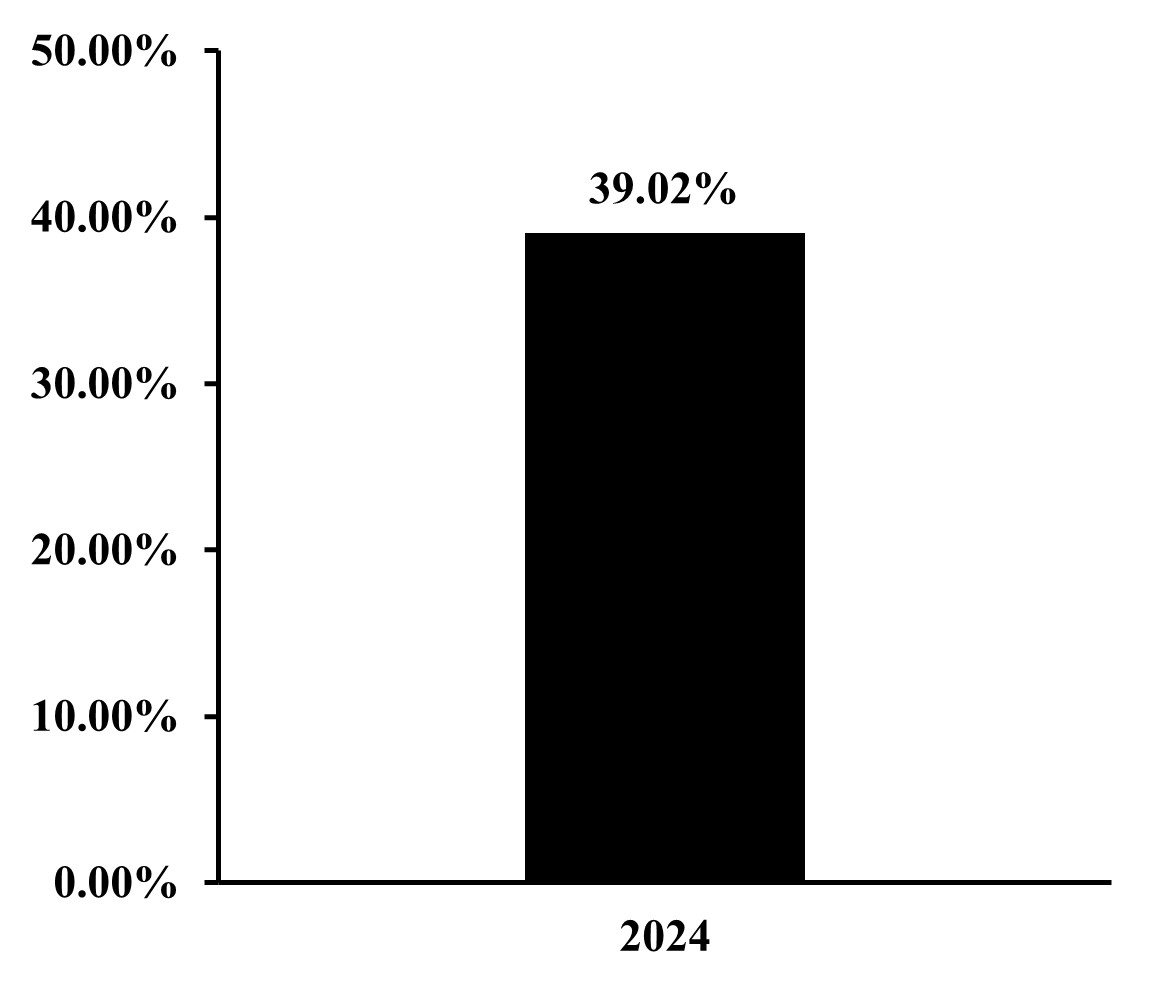
9
During
the period shown in the bar chart, the
| 1 Year | Since Inception ( | |
| CYBER HORNET S&P 500® AND BITCOIN 75/25 STRATEGY ETF | ||
| Return Before Taxes | ||
| Return After Taxes on Distributions | ||
| Return After Taxes on Distributions and Sale of Fund Shares | ||
S&P 500 TR |
||
S&P 500 and S&P Bitcoin Futures 75/25 Blend Index (reflects no deduction for fees, expenses or taxes) |
||
FUND MANAGEMENT
INVESTMENT ADVISER
CYBER HORNET ETFs, LLC (formerly known as “ONEFUND, LLC”) serves as the investment adviser to the Fund.
PORTFOLIO MANAGER
Michael G. Willis, portfolio manager of the Adviser, has managed the Fund since its inception in December 2023.
PURCHASE AND SALE OF FUND SHARES
Individual shares may only be purchased and sold through a broker-dealer on a national securities exchange. You can buy and sell individual shares of the Fund any day the Nasdaq Stock Market (“NASDAQ”) is open for business, like any publicly traded security. The Fund’s shares are listed on the Nasdaq Stock Market exchange. The price of the Fund’s shares is based on market price, and because exchange-traded fund shares trade at market prices rather than NAV, shares may trade at a price greater than NAV (premium) or less than NAV (discount). The Fund issues and redeems shares continuously, at NAV, only in blocks of 25,000 shares (“Creation Units”), which may be partially in-kind for securities included in the Index and partially in cash, and only Authorized Participants (typically, broker-dealers) may purchase or redeem Creation Units. Except when aggregated in Creation Units, the Fund’s shares are not redeemable securities.
TAX INFORMATION
For U.S. federal income tax purposes, the Fund’s distributions are taxable. They will be taxed as ordinary income or capital gains, unless you invest through a tax-advantaged arrangement, such as a 401(k) plan or an individual retirement account. Such tax-advantaged arrangements are subject to special tax rules upon withdrawal of monies from those arrangements.
PAYMENTS TO BROKER-DEALERS AND OTHER FINANCIAL INTERMEDIARIES
If you purchase the Fund through a broker-dealer or other financial intermediary (such as a bank), the Adviser or its affiliates may pay the intermediary to sell Fund shares and related services. These payments may create a conflict of interest by influencing the broker-dealer or other intermediary and your salesperson to recommend the Fund over another investment. Ask your salesperson or visit your financial intermediary’s website for more information.
10
CYBER HORNET S&P 500® AND ETHEREUM 75/25 STRATEGY ETF SUMMARY
The CYBER HORNET S&P 500® and Ethereum 75/25 Strategy ETF (the “Fund”) seeks to replicate, before fees and expenses, the total return of the S&P 500® and S&P Ethereum 75/25 Blend Index (the “Index”), an index by Standard & Poor’s.
The following table describes the expenses and fees that you may pay if you buy, hold, and sell shares of the Fund. You may pay other fees, such as brokerage commissions and other fees to financial intermediaries, which are not reflected in the tables and examples below.
| Shareholder Fees | |
| (fees paid directly from your investment) | None |
| Annual Fund Operating Expenses | |
| (expenses that you pay each year as a percentage of the value of your investment) |
| Management Fees1 | |
| Distribution (12b-1) Fees | |
| Other Expenses | |
| Total Annual Fund Operating Expenses |
| 1 |
This Example is intended to help you compare the costs of investing in the Fund with the costs of investing in other funds.
The Example assumes that you invest $10,000 in the Fund for the time periods indicated and then redeem all of your shares at the end of those periods. Expenses assuming no redemption are also shown. The Example also assumes that your investment has a 5% return each year and that the Fund’s operating expenses (excluding any sales loads on reinvested dividends, fee waivers, and/or expense reimbursements) shown in the table above remain the same. The expenses used to calculate the Fund’s Example do not include fee waivers or expense reimbursements. Although your actual costs and returns may be higher or lower, based on these assumptions, your costs would be:
| 1 Year | 3 Years |
| $ |
$ |
The Fund pays transaction costs, such as commissions, when it buys and sells securities (or “turns over” its portfolio). A higher portfolio turnover rate may indicate higher transaction costs and may result in higher taxes when Fund shares are held in a taxable account. These costs, which are not reflected in annual fund operating expenses or the example, affect the Fund’s performance. Because the Fund is newly organized, portfolio turnover information is unavailable.
11
The Fund seeks to replicate, before fees and expenses, the total return of the S&P 500® and S&P Ethereum 75/25 Blend Index (the “Index”). The Index measures the weighted return performance of a multi-asset strategy comprising two underlying indexes, a 75% weight in the S&P 500® Index and a 25% weight in the S&P Ethereum Index. Accordingly, in seeking to track the Index, the Fund will invest approximately 75% of its assets in a portfolio of common stocks that are included in the S&P 500® Index and will invest directly in Ether, so that the total value of the Ether to which the Fund has economic exposure is approximately 25% of the assets of the Fund. S&P Dow Jones Indices LLC (“S&P DJI” or the “Index Provider”) compiles, maintains, and calculates the Index and each of the S&P 500® Index and the S&P Ethereum Index. The Index is rebalanced monthly, and accordingly, the Fund seeks to maintain the 75%/25% allocations by also rebalancing these allocations monthly. However, price fluctuations in the underlying assets and other factors, such as the Fund’s cash position, may cause these allocations to vary at any time. The Adviser reserves the right to rebalance the Fund’s allocations more frequently than monthly in periods of significant price volatility or less frequently than monthly to save on trading costs or during periods of low volatility. The Adviser may rebalance the Fund’s allocations on any day of the month. Such rebalancing decisions are made solely to reduce tracking error and enhance after-fee performance relative to the Index.
U.S. Large-Cap
The Fund attempts to replicate this portion of its portfolio by investing in a portfolio of the common stocks included in the S&P 500 Index, holding each stock in proportion similar to its weighting in the S&P 500 Index. The Fund may hold more or fewer stocks than the index at any given time. The Fund may sell investments represented in the S&P 500 Index in anticipation of their removal from the S&P 500 Index or buy investments not yet represented in the index in anticipation of their addition to it. The Fund may also invest in securities of other investment companies, such as certain ETFs, to implement its investment strategy.
Ether
Under normal conditions, the Fund will invest in Ether so that the total value of the Ether to which the Fund has economic exposure is approximately 25% of the Fund’s assets. The Fund will invest directly in Ether through a wholly-owned subsidiary company, Cyber Hornet EEE, organized under the laws of the Cayman Islands (the “Subsidiary”). The Fund may also gain exposure to Ether by investing in Ether futures contracts, and in shares of other exchange-traded funds (“ETFs”) and exchange-traded products (“ETPs”) which provide exposure to Ether (collectively, “Ethereum ETPs” and, together with the Ether futures contracts, “Cryptocurrency-Related Products”), although the Fund expects that its futures and ETP exposure will generally be less than 10% of its assets. Such exposure seeks to track, before fees and expenses, the performance of the S&P Ethereum Index. The S&P Ethereum Index is designed to track the performance of the digital asset Ethereum. However, changes in the relative value of the Fund’s assets between the monthly rebalance could cause the Fund’s investment in Ether, Ether futures positions, and Ethereum ETPs to represent greater than 25% of the Fund’s assets.
The Fund will generally purchase and sell Ether on exchanges such as BitGo or Coinbase, neither of which is registered as a national securities exchange with the SEC. The price of Ether on these exchanges and over-the-counter markets has a limited history, is volatile, and is subject to the influence of many factors, including operational interruptions.
Ether held directly by the Fund is maintained at a qualified custodian. The custodian uses "cold storage" security measures for storing the private keys necessary to access the Fund's Ether offline in a manner that is not connected to the internet. This is designed to protect cryptocurrencies from hacking or other cybersecurity threats.
The value of Ether is not backed by any government, corporation, or other identified body. Instead, its value is determined in part by the supply and demand in markets created to facilitate the trading of Ether. Ownership and transaction records for Ether are protected through public-key cryptography. The Ethereum Protocol determines the supply of Ether. No single entity owns or operates the Ethereum Network.
12
When the Fund invests in Ether futures contracts, the Fund must sell its futures contracts as they near expiration and replace them with new futures contracts with a later expiration date. The Adviser anticipates that this “roll” of the futures contracts will normally occur shortly before the expiration of the current month contract in the last week of the month. However, such timing may change due to market conditions. Futures contracts with a longer term to expiration may be priced higher than futures contracts with a shorter term to expiration (e.g., trading at “contango”). Ether futures have historically experienced extended periods of contango. Contango in the Ether futures market may have a significant adverse impact on the performance of the Fund and may cause it to significantly deviate from the performance of the Index. The Fund will only invest in Ether futures contracts that are traded on a futures exchange regulated by the Commodity Futures Trading Commission (“CFTC”). The Fund (or the Subsidiary, as applicable) also invests in short-term U.S. government securities intended to serve as margin or collateral for futures positions.
The Fund may invest in Ethereum ETPs that invest directly in, provide exposure to, replicate the performance of, or have trading and/or price performance characteristics similar to Ether.
PRINCIPAL RISKS
The following describes the principal risks of investing in the Fund, which could affect the Fund’s net asset value and total return. Other circumstances (including additional risks not described here) could prevent the Fund from achieving its investment objective. These risks are presented in an order that reflects the Adviser’s assessment of relative importance, but this assessment could change over time as the Fund’s portfolio changes or in light of changes in the market or the economic environment, among other things. The Fund is not required to and will not update this Prospectus solely because the Adviser’s assessment of the relative importance of the principal risks of investing in the Fund changes.
Ether, Ether futures contracts, and Ethereum ETPs are relatively new investments. They are subject to unique and substantial risks and have historically been subject to significant price volatility. The value of an investment in the Fund could decline significantly and without warning. You should be prepared to lose the entirety of the Ether component of your investment in the Fund. The performance of Ether futures contracts and Ethereum ETPs, and therefore the performance of the Fund, may differ significantly from the performance of Ether.
Equity Risk – The values of equity securities may decline due to general market conditions not specifically related to a particular company, such as real or perceived adverse economic conditions, changes in the general outlook for corporate earnings, changes in interest or currency rates, or adverse investor sentiment. The prices of equity securities fluctuate, sometimes widely, in response to activities specific to the security issuer. Equity securities generally have greater price volatility than fixed-income securities. Returns from large-capitalization stocks may trail returns from the overall stock market. Large-cap stocks tend to go through cycles of performing better or worse than other segments of the stock market or the stock market in general. These periods have, in the past, lasted several years.
Ether Risk: Ether is a relatively new innovation with unique and substantial risks. The market for Ether is subject to rapid price swings, changes, and uncertainty. A significant portion of the demand for Ether may result from speculation. Such speculation regarding the potential future appreciation of the price of Ether may artificially inflate or deflate the price of Ether and increase volatility. The further development of the Ethereum Network and the acceptance and use of Ether are subject to various factors that are difficult to evaluate. The slowing, stopping, or reversing of the development of the Ethereum Network or the acceptance of Ether may adversely affect Ether's price and liquidity. Ether is subject to the risk of fraud, theft, manipulation, security failures, and operational or other problems that impact Ether trading platforms.
Ether generally trades on trading platforms that support trading in various crypto assets, and such platforms may be unregulated or operating out of compliance with applicable regulations. Ether and Ether trading venues are mainly unregulated, unlike the exchanges for more traditional assets such as equity securities and futures contracts. Crypto asset trading platforms where Ether is traded may become subject to regulatory authorities' enforcement actions. Realizing any of these risks could result in a decline in the acceptance of Ether and, consequently, a reduction in the value of Ether, Ether futures, and the Fund.
Rebalancing Costs and Tax Risk. The Fund is subject to the risk of rebalancing to track the Index that may result in significant transaction costs and tax consequences for shareholders. The Fund seeks to track the Index, which allocates 75% to the S&P 500 Index and 25% to the S&P Ethereum Index. The Fund rebalances these allocations monthly and may rebalance more frequently during periods of significant market volatility. When cryptocurrency prices rise or fall relative to equity prices between rebalancing dates, the Fund must sell appreciated assets and purchase depreciated assets to restore the target allocation of 75% to 25% in equity and cryptocurrency, respectively. These transactions generate transaction costs and may result in the realization of capital gains that will be distributed to shareholders.
13
Risks Related to the Regulation of Cryptocurrency. Any final determination by a court that a cryptocurrency is a “security” or “commodity” may adversely affect the value of the cryptocurrency and the value of the Fund’s shares, and, if the cryptocurrency is not, or cannot, be registered as a security, result in a potential termination of the Fund.
Depending on its characteristics, a cryptocurrency may be considered a “security” under the federal securities laws. The test for determining whether a particular cryptocurrency is a “security” is complex and challenging to apply, and the outcome is difficult to predict. If an appropriate court determines that the relevant cryptocurrency is a security, the Adviser would not intend to permit the Fund to continue holding its investments in a way that would violate the federal securities laws (and therefore, if necessary, would either dissolve the Fund or potentially seek to operate the Fund in a manner that complies with the federal securities laws).
Cryptocurrency Market Volatility Risk. The prices of cryptocurrencies have historically been highly volatile. The value of the Fund’s exposure to a cryptocurrency – and therefore the value of an investment in the Fund – could decline significantly and without warning, including to zero. If you are not prepared to accept significant and unexpected changes in the value of the Fund and the possibility that you could lose your entire investment in the cryptocurrency component of the Fund, you should not invest in it.
Cryptocurrency Futures Contracts Risk – The market for cryptocurrency futures contracts may be less developed, potentially less liquid, and more volatile than more established futures markets. While the cryptocurrency futures contracts market has grown substantially since cryptocurrency futures contracts commenced trading, there can be no assurance that this growth will continue. The price for cryptocurrency futures contracts is based on many factors, including the supply and demand for cryptocurrency futures contracts. Market conditions and expectations, position limits, collateral requirements, and other factors can each impact the supply and demand for cryptocurrency futures contracts. At times, increased demand paired with supply constraints and other factors have caused cryptocurrency futures contracts to trade at a significant discount or premium to the “spot” price of the relevant cryptocurrency. Additional demand, including demand resulting from the purchase, or anticipated purchase, of cryptocurrency futures contracts by the Fund or other entities, may increase that premium, perhaps significantly. It is impossible to predict whether or how long such conditions will continue. To the extent the Fund purchases futures contracts at a premium and the premium declines, the value of an investment in the Fund also should be expected to decline.
Market conditions and expectations, position limits, collateral requirements, and other factors may also limit the Fund’s ability to achieve its desired exposure to cryptocurrency futures contracts. If the Fund cannot achieve such exposure, it may not meet its investment objective, and its returns may be different from the index or lower than expected. Additionally, collateral requirements may require the Fund to liquidate its position, potentially incurring losses and expenses, when it otherwise would not do so. Investing in derivatives like cryptocurrency futures contracts may be considered aggressive and expose the Fund to significant risks. These risks include counterparty risk and liquidity risk. The performance of cryptocurrency futures contracts and the relevant cryptocurrency may differ and may not be correlated with each other, over short or long periods, and may cause cryptocurrency futures to underperform the spot price of the relevant cryptocurrency.
Cryptocurrency Futures Capacity Risk – If the Fund’s ability to obtain exposure to cryptocurrency futures contracts consistent with its investment objective is disrupted for any reason including, for example, limited liquidity in the cryptocurrency futures market, a disruption to the cryptocurrency futures market, or as a result of margin requirements or position limits imposed by the Fund’s futures commission merchants (“FCMs”), the CME, or the CFTC, the Fund may not be able to achieve its investment objective and may experience significant losses. Margin levels for cryptocurrency futures contracts are substantially higher than the margin requirements for more established futures contracts. Margin requirements are subject to change and may be raised in the future by the exchanges on which they trade and the FCMs. High margin requirements could prevent the Fund from obtaining its desired exposure to cryptocurrency futures and may adversely affect the Fund’s ability to achieve its investment objective. Any disruption in the Fund’s ability to get exposure to cryptocurrency futures contracts will cause the Fund’s performance to deviate from the performance of the relevant cryptocurrency, cryptocurrency futures, or the Index.
14
Cost of Futures Investment Risk – When a cryptocurrency futures contract is nearing expiration, the Fund will typically “roll” the futures contract, which means it will generally sell such a contract and use the proceeds to buy a cryptocurrency futures contract with a later expiration date. The price difference between the expiring contract and longer-dated contract associated with rolling cryptocurrency futures may be substantially higher than the price difference associated with rolling other futures contracts. Additionally, the returns of cryptocurrency futures may differ from those of the relevant cryptocurrency. These differences in returns can arise due to several factors, including the costs associated with futures investments, such as “rolling,” supply and demand dynamics, interest rates, and market expectations.
Cryptocurrency ETP Investing Risk. Issuer-specific attributes related to ETPs in which the Fund may invest may cause an investment held by the Fund to be more volatile than the market generally. The value of an individual security or asset, or a particular type of security or asset, may be more volatile than the market as a whole and perform differently from the value of the market as a whole. When the Fund invests in ETPs, it will incur costs related to such funds, including management fees and expenses borne by shareholders of such ETPs. The value of shares in an ETP may not replicate the performance of the relevant cryptocurrency, and, therefore, the Fund’s investments in the ETPs will not perform the same as the Fund’s direct investments in the relevant cryptocurrency.
Leverage Risk. Leverage risk is created when an investment, which includes, for example, an investment in a derivative contract, exposes the Fund to a level of risk that exceeds the amount invested. Changes in the value of such an investment magnify the Fund’s risk of loss and potential for gain. Investments can have these same results if their returns are based on a multiple of a specified index, security, or other benchmark.
Investment in the Subsidiary Risk – The Fund is exposed to the risks of the Subsidiary’s investments, which are exposed to the risks of investing in Ether and Ether futures contracts. The Fund will also incur the expenses of the Subsidiary. Although the Subsidiary is not registered under the 1940 Act, it will provide investors with the same protections the Fund provides.
Tracking Error Risk – Various factors may impede the Fund's ability to track the Index or achieve a high degree of correlation with the Index. Factors contributing to tracking error include:
| ● | Fees and Expenses: The Fund has operating and other expenses, while the Index does not. The Fund's expense ratio reduces net asset value, while the Index reflects gross performance without deductions for fees or expenses. |
| ● | Transaction Costs: Buying and selling cryptocurrencies and Cryptocurrency-Related Products involve bid-ask spreads, market impact costs, trading fees, and blockchain network transaction fees that reduce the Fund's returns but are not reflected in Index performance. |
| ● | Cash Drag: The Fund may not be fully invested at times, generally due to cash flows into or out of the Fund, rebalancing activities, or excess cash held for various reasons. Cash positions create performance drag when cryptocurrency prices appreciate and may provide relative benefit when prices depreciate. |
| ● | Rebalancing and Reallocation Timing: The Fund cannot instantaneously adjust holdings when rebalancing or reallocation events occur. Settlement of cryptocurrency transactions requires blockchain confirmations, custody transfers, and operational processes that create timing lags. During these lags, the Fund's composition may differ from the target portfolio. |
Investment in Investment Companies Risk—Investing in other investment companies, including money market funds, ETFs, and ETPs, subjects the Fund to the fees and expenses of, as well as risks affecting, the investment company, including the possibility that the value of the underlying securities held by the investment company could decrease.
Trading Halt Risk—An exchange or market may issue trading halts on specific securities, contracts, or instruments or may close early or late, which will affect the Fund's ability to buy or sell certain securities. In such circumstances, the Fund may be unable to rebalance its portfolio, may be unable to accurately price its investments, or may incur substantial trading losses.
15
ETF Risks
Absence of an Active Market: Although the Fund’s shares are approved for listing on the NASDAQ (the “Exchange”), there can be no assurance that an active trading market will develop and be maintained for Fund shares. There can also be no assurance that the Fund will grow to or maintain an economically viable size; in this case, it may experience greater tracking error to its Index than it otherwise would at higher asset levels or may ultimately liquidate.
Authorized Participants (“APs”), Market Makers, and Liquidity Providers Concentration: The Fund has a limited number of financial institutions that may act as APs. In addition, there may be a limited number of market makers and/or liquidity providers in the marketplace. To the extent either of the following events occur, Shares may trade at a material discount to net asset value (“NAV”) and possibly face delisting: (i) APs exit the business or otherwise become unable to process creation and/or redemption orders and no other APs step forward to perform these services, or (ii) market makers and/or liquidity providers exit the business or significantly reduce their business activities and no other entities step forward to perform their functions.
Cash Transaction Risk. The Fund intends to affect some portion of redemptions for cash, rather than in-kind, because of the nature of the Fund’s investments. The Fund may be required to sell portfolio securities to obtain the cash needed to distribute redemption proceeds, which involves transaction costs that the Fund may not have incurred had it effected redemptions entirely in kind. These costs may include brokerage costs and/or taxable gains or losses, which may be imposed on the Fund and decrease the Fund’s NAV. If the Fund recognizes gain on these sales, this generally will cause the Fund to recognize gain it might not otherwise have recognized if it were to distribute all of its portfolio securities in-kind, or to recognize such gain sooner than would otherwise be required. This may decrease the Fund's tax efficiency compared to ETFs that utilize a complete in-kind redemption process.
Trading Issues: Trading in Fund shares may be halted due to market conditions or for reasons that make trading in shares inadvisable in the view of the Exchange. There can be no assurance that the requirements of the Exchange necessary to maintain the listing of any Fund will continue to be met or will remain unchanged, or that the shares will trade with any volume. Further, secondary markets may be subject to erratic trading activity, wide bid/ask spreads, and extended trade settlement periods in times of market stress because market makers and APs may step away from making a market in Fund shares and in executing creation and redemption orders, which could cause a material deviation in the Fund’s market price from its NAV.
New Fund Risk. The Fund was recently organized with limited operating history. As a result, prospective investors have a limited track record or history on which to base their investment decisions. There can be no assurance that the Fund will grow to or maintain an economically viable size.
Passive Investment Risk. The Fund is not actively managed and therefore would not sell an equity security, futures contract, or other investment due to current or projected underperformance of a security, industry, sector, or asset class. Unlike an actively managed fund, the Adviser does not use techniques or defensive strategies designed to lessen the effects of market volatility or reduce the impact of periods of market decline. This means that, based on market and economic conditions, the Fund’s performance could be lower than other types of funds that may actively shift their portfolio assets to take advantage of market opportunities or to lessen the impact of a market decline.
All
investments carry some risk that will affect the value of the Fund, its investment performance, and the price of its shares.
16
FUND MANAGEMENT INVESTMENT ADVISER
CYBER HORNET ETFs, LLC serves as the investment adviser to the Fund.
PORTFOLIO MANAGER
Michael G. Willis, portfolio manager of the Adviser, has managed the Fund since its inception.
PURCHASE AND SALE OF FUND SHARES
Individual shares may only be purchased and sold through a broker-dealer on a national securities exchange. You can buy and sell individual shares of the Fund any day the Nasdaq Stock Market (“NASDAQ”) is open for business, like any publicly traded security. The Fund’s shares are listed on the Nasdaq Stock Market exchange. The price of the Fund’s shares is based on market price, and because exchange-traded fund shares trade at market prices rather than NAV, shares may trade at a price greater than NAV (premium) or less than NAV (discount). The Fund issues and redeems shares continuously, at NAV, only in blocks of 25,000 shares (“Creation Units”), which may be partially in-kind for securities included in the Index and partially in cash, and only Authorized Participants (typically, broker-dealers) may purchase or redeem Creation Units. Except when aggregated in Creation Units, the Fund’s shares are not redeemable securities.
TAX INFORMATION
For U.S. federal income tax purposes, the Fund’s distributions are taxable. They will be taxed as ordinary income or capital gains, unless you invest through a tax-advantaged arrangement, such as a 401(k) plan or an individual retirement account. Such tax-advantaged arrangements are subject to special tax rules upon withdrawal of monies from those arrangements.
PAYMENTS TO BROKER-DEALERS AND OTHER FINANCIAL INTERMEDIARIES
If you purchase the Fund through a broker-dealer or other financial intermediary (such as a bank), the Adviser or its affiliates may pay the intermediary to sell Fund shares and related services. These payments may create a conflict of interest by influencing the broker-dealer or other intermediary and your salesperson to recommend the Fund over another investment. Ask your salesperson or visit your financial intermediary’s website for more information.
17
CYBER HORNET S&P 500® AND SOLANA 75/25 STRATEGY ETF SUMMARY
The CYBER HORNET S&P 500® and Solana 75/25 Strategy ETF (the “Fund”) seeks to replicate, before fees and expenses, the total return of the S&P 500® and S&P Solana Reference Price 75/25 Blend Index (the “Index”), an index by Standard & Poor’s.
The following table describes the expenses and fees that you may pay if you buy, hold, and sell shares of the Fund. You may pay other fees, such as brokerage commissions and other fees to financial intermediaries, which are not reflected in the tables and examples below.
| Shareholder Fees | |
| (fees paid directly from your investment) | None |
| Annual Fund Operating Expenses | |
| (expenses that you pay each year as a percentage of the value of your investment) |
| Management Fees1 | |
| Distribution (12b-1) Fees | |
| Other Expenses | |
| Total Annual Fund Operating Expenses |
| 1 |
This Example is intended to help you compare the costs of investing in the Fund with the costs of investing in other funds.
The Example assumes that you invest $10,000 in the Fund for the time periods indicated and then redeem all of your shares at the end of those periods. Expenses assuming no redemption are also shown. The Example also assumes that your investment has a 5% return each year and that the Fund’s operating expenses (excluding any sales loads on reinvested dividends, fee waivers, and/or expense reimbursements) shown in the table above remain the same. The expenses used to calculate the Fund’s Example do not include fee waivers or expense reimbursements. Although your actual costs and returns may be higher or lower, based on these assumptions, your costs would be:
| 1 Year | 3 Years |
| $ |
$ |
The Fund pays transaction costs, such as commissions, when it buys and sells securities (or “turns over” its portfolio). A higher portfolio turnover rate may indicate higher transaction costs and may result in higher taxes when Fund shares are held in a taxable account. These costs, which are not reflected in annual fund operating expenses or the example, affect the Fund’s performance. Because the Fund is newly organized, portfolio turnover information is unavailable.
18
The Fund seeks to replicate, before fees and expenses, the total return of the S&P 500® and S&P Solana Reference Price 75/25 Blend Index (the “Index”). The Index measures the weighted return performance of a multi-asset strategy comprising a 75% weight in the S&P 500® Index and a 25% weight in the S&P Solana Reference Price Index. Accordingly, in seeking to track the Index, the Fund will invest approximately 75% of its assets in a portfolio of common stocks that are included in the S&P 500® Index and will invest directly in Solana (SOL) so that the total value of the Solana (SOL) to which the Fund has economic exposure is approximately 25% of the assets of the Fund. S&P Dow Jones Indices LLC (“S&P DJI” or the “Index Provider”) compiles, maintains, and calculates the Index and each of the S&P 500® Index and the S&P Solana Reference Price Index. The Index is rebalanced monthly, and accordingly, the Fund seeks to maintain the 75%/25% allocations by also rebalancing these allocations monthly. However, price fluctuations in the underlying assets and other factors, such as the Fund’s cash position, may cause these allocations to vary at any time. The Adviser reserves the right to rebalance the Fund’s allocations more frequently than monthly in periods of significant price volatility or less frequently than monthly to save on trading costs or during periods of low volatility. The Adviser may rebalance the Fund’s allocations on any day of the month. Such rebalancing decisions are made solely to reduce tracking error and enhance after-fee performance relative to the Index.
U.S. Large-Cap
The Fund attempts to replicate this portion of its portfolio by investing in a portfolio of the common stocks included in the S&P 500 Index, holding each stock in a similar proportion as its weighting in the S&P 500 Index. The Fund may hold more or fewer stocks than the index at any given time. The Fund may sell investments represented in the S&P 500 Index in anticipation of their removal from the S&P 500 Index or buy investments not yet represented in the index in anticipation of their addition to it. The Fund may also invest in securities of other investment companies, such as certain ETFs, to implement its investment strategy.
Solana
Under normal conditions, the Fund will invest in Solana (SOL) so that the total value of the Solana (SOL) to which the Fund has economic exposure is approximately 25% of the Fund’s assets. The Fund will invest directly in Solana (SOL) and Solana futures contracts through a wholly-owned subsidiary company, Cyber Hornet SSS, organized under the laws of the Cayman Islands (the “Subsidiary”). The Fund may also gain exposure to Solana by investing in Solana futures contracts, and in shares of other exchange-traded funds (“ETFs”) and exchange-traded products (“ETPs”) which provide exposure to Solana (SOL) (collectively “Solana ETPs” and together with the Solana futures contracts, “Cryptocurrency-Related Products”), although the Fund expects that its futures and ETP exposure will generally be less than 10% of its assets. Such exposure seeks to track, before fees and expenses, the performance of the S&P Solana Reference Price Index. The S&P Solana Reference Price Index tracks the performance of the digital asset Solana. However, changes in the relative value of the Fund’s assets between the monthly rebalance could cause the Fund’s investment in Solana (SOL), Solana futures, and Solana ETPs to represent greater than 25% of the Fund’s assets.
The Fund will generally purchase and sell Solana (SOL) on exchanges such as BitGo and Coinbase, neither of which is registered as a national securities exchange with the SEC. The price of Solana (SOL) on these exchanges and over-the-counter markets has a limited history, is volatile, and is subject to the influence of many factors, including operational interruptions.
Solana held directly by the Fund are maintained at a qualified custodian. The custodian uses "cold storage" security measures for storing the private keys necessary to access the Fund's Solana offline in a manner that is not connected to the internet. This is designed to protect cryptocurrencies from hacking or other cybersecurity threats.
When the Fund invests in Solana futures contracts, the Fund must sell its futures contracts as they near expiration and replace them with new futures contracts with a later expiration date. The Adviser anticipates that this “roll” of the futures contracts will normally occur shortly before the expiration of the current month contract in the last week of the month. However, such timing may change due to market conditions. Futures contracts with a longer term to expiration may be priced higher than futures contracts with a shorter term to expiration (e.g. trading at “contango”). Solana futures have historically experienced extended periods of contango. Contango in the Solana futures market may have a significant adverse impact on the performance of the Fund and may cause it to significantly deviate from the performance of the Index. The Fund will only invest in Solana futures contracts that are traded on a futures exchange regulated by the Commodity Futures Trading Commission (“CFTC”). The Fund (or the Subsidiary, as applicable) also invests in short-term U.S. government securities intended to serve as margin or collateral for futures positions.
19
The Fund may invest in Solana ETPs that invest directly in, provide exposure to, replicate the performance of, or have trading and/or price performance characteristics similar to Solana (SOL).
PRINCIPAL RISKS
The following describes the principal risks of investing in the Fund, which could affect the Fund’s net asset value and total return. Other circumstances (including additional risks not described here) could prevent the Fund from achieving its investment objective. These risks are presented in an order that reflects the Adviser’s assessment of relative importance, but this assessment could change over time as the Fund’s portfolio changes or in light of changes in the market or the economic environment, among other things. The Fund is not required to and will not update this Prospectus solely because the Adviser’s assessment of the relative importance of the principal risks of investing in the Fund changes.
Solana (SOL), Solana futures contracts, and Solana ETPs are relatively new investments. They are subject to unique and substantial risks and have historically been subject to significant price volatility. The value of an investment in the Fund could decline significantly and without warning. You should be prepared to lose the entirety of the Solana component of your investment in the Fund. The performance of Solana futures contracts and Solana ETPs, and therefore the performance of the Fund, may differ significantly from that of Solana (SOL).
Equity Risk – The values of equity securities may decline due to general market conditions that are not specifically related to a particular company, such as real or perceived adverse economic conditions, changes in the general outlook for corporate earnings, changes in interest or currency rates, or adverse investor sentiment generally. The prices of equity securities fluctuate, and sometimes widely fluctuate, in response to activities specific to the issuer of the security. Equity securities generally have greater price volatility than fixed-income securities.
Solana (SOL) Risk. The Fund is subject to the risks of investing in Solana (SOL) directly and indirectly through its investments in the ETPs that obtain exposure to Solana (SOL) and other assets that provide exposure to Solana (SOL). The market price for Solana (SOL) is extremely volatile and will likely continue to be volatile. Solana (SOL) is the native token for the Solana Network and is used for transaction fees and governance on the Solana Network. Accordingly, Solana (SOL)'s value largely depends on the acceptability and usage levels of the Solana Network and its applications by users. Factors contributing to the volatility of the price of Solana (SOL) include, but are not limited to, the maintenance and development of the open-source software protocol of the Solana Network, forks in the Solana Network, speculation and consumer preferences and perceptions of Solana (SOL) specifically and digital assets generally, investment and trading activities of large investors that invest directly or indirectly in Solana (SOL), and the fees associated with processing a transaction on the Solana Network, the speed at which transactions are processed and settled on the Solana Network. The price of Solana (SOL) is also affected by interruptions in service from closures or failures of major digital asset trading platforms, cloud services, and network latency.
Rebalancing Costs and Tax Risk. The Fund is subject to the risk of rebalancing to track the Index that may result in significant transaction costs and tax consequences for shareholders. The Fund seeks to maintain a 75% allocation to the S&P 500 Index and a 25% allocation to the S&P Cryptocurrency Top 10 Index. The Fund rebalances these allocations monthly and may rebalance more frequently during periods of significant market volatility. When cryptocurrency prices rise or fall relative to equity prices between rebalancing dates, the Fund must sell appreciated assets and purchase depreciated assets to restore the target allocation of 75% to 25% in equity and cryptocurrency, respectively. These transactions generate transaction costs and may result in the realization of capital gains that will be distributed to shareholders.
Risks Related to the Regulation of Cryptocurrency. Any final determination by a court that a cryptocurrency is a “security” or “commodity” may adversely affect the value of the cryptocurrency and the value of the Fund’s shares, and, if the cryptocurrency is not, or cannot, be registered as a security, result in a potential termination of the Fund.
20
Depending on its characteristics, a cryptocurrency may be considered a “security” under the federal securities laws. The test for determining whether a particular cryptocurrency is a “security” is complex and difficult to apply, and the outcome is difficult to predict. If an appropriate court determines that the relevant cryptocurrency is a security, the Adviser would not intend to permit the Fund to continue holding its investments in a way that would violate the federal securities laws (and therefore, if necessary, would either dissolve the Fund or potentially seek to operate the Fund in a manner that complies with the federal securities laws).
Cryptocurrency Market Volatility Risk. The prices of cryptocurrencies have historically been highly volatile. The value of the Fund’s exposure to a cryptocurrency – and therefore the value of an investment in the Fund – could decline significantly and without warning, including to zero. If you are not prepared to accept significant and unexpected changes in the value of the Fund and the possibility that you could lose your entire investment in the cryptocurrency component of the Fund, you should not invest in it.
Cryptocurrency Futures Contracts Risk – The market for cryptocurrency futures contracts may be less developed, and potentially less liquid and more volatile, than more established futures markets. While the cryptocurrency futures contracts market has grown substantially since cryptocurrency futures contracts commenced trading, there can be no assurance that this growth will continue. The price for cryptocurrency futures contracts is based on many factors, including the supply of and the demand for cryptocurrency futures contracts. Market conditions and expectations, position limits, collateral requirements, and other factors can each impact the supply of and demand for cryptocurrency futures contracts. At times, increased demand paired with supply constraints and other factors have caused cryptocurrency futures contracts to trade at a significant discount or premium to the “spot” price of the relevant cryptocurrency. Additional demand, including demand resulting from the purchase, or anticipated purchase, of cryptocurrency futures contracts by the Fund or other entities, may increase that premium, perhaps significantly. It is impossible to predict whether or how long such conditions will continue. To the extent the Fund purchases futures contracts at a premium and the premium declines, the value of an investment in the Fund also should be expected to decline.
Market conditions and expectations, position limits, collateral requirements, and other factors may also limit the Fund’s ability to achieve its desired exposure to cryptocurrency futures contracts. If the Fund cannot achieve such exposure, it may not meet its investment objective, and its returns may be different from those of the index or lower than expected. Additionally, collateral requirements may require the Fund to liquidate its position, potentially incurring losses and expenses, when it otherwise would not do so. Investing in derivatives like cryptocurrency futures contracts may be considered aggressive and expose the Fund to significant risks. These risks include counterparty risk and liquidity risk. The performance of cryptocurrency futures contracts and the relevant cryptocurrency may differ and may not be correlated with each other, over short or long periods, and may cause cryptocurrency futures to underperform the spot price of the relevant cryptocurrency.
Cryptocurrency Futures Capacity Risk – If the Fund’s ability to obtain exposure to cryptocurrency futures contracts consistent with its investment objective is disrupted for any reason including, for example, limited liquidity in the cryptocurrency futures market, a disruption to the cryptocurrency futures market, or as a result of margin requirements or position limits imposed by the Fund’s futures commission merchants (“FCMs”), the CME, or the CFTC, the Fund may not be able to achieve its investment objective and may experience significant losses. Margin levels for cryptocurrency futures contracts are substantially higher than the margin requirements for more established futures contracts. Margin requirements are subject to change and may be raised in the future by the exchanges on which they trade and the FCMs. High margin requirements could prevent the Fund from obtaining its desired exposure to cryptocurrency futures and may adversely affect the Fund’s ability to achieve its investment objective. Any disruption in the Fund’s ability to obtain exposure to cryptocurrency futures contracts will cause the Fund’s performance to deviate from the performance of the relevant cryptocurrency, cryptocurrency futures, or the Index.
Cost of Futures Investment Risk – When a cryptocurrency futures contract is nearing expiration, the Fund will typically “roll” the futures contract, which means it will generally sell such a contract and use the proceeds to buy a cryptocurrency futures contract with a later expiration date. The price difference between the expiring contract and longer-dated contract associated with rolling cryptocurrency futures may be substantially higher than the price difference associated with rolling other futures contracts. Additionally, the returns of cryptocurrency futures may differ from the returns of the relevant cryptocurrency. These differences in returns can arise due to several factors, including the costs associated with futures investments, such as “rolling,” supply and demand dynamics, interest rates, and market expectations.
21
Cryptocurrency ETP Investing Risk. Issuer-specific attributes related to ETPs in which the Fund may invest may cause an investment held by the Fund to be more volatile than the market generally. The value of an individual security or asset, or a particular type of security or asset, may be more volatile than the market as a whole and perform differently from the value of the market as a whole. When the Fund invests in ETPs, it will incur costs related to such funds, including management fees and expenses borne by shareholders of such ETPs. The value of shares in an ETP may not replicate the performance of the relevant cryptocurrency, and, therefore, the Fund’s investments in the ETPs will not perform the same as the Fund’s direct investments in the relevant cryptocurrency.
Leverage Risk. Leverage risk is created when an investment, which includes, for example, an investment in a derivative contract, exposes the Fund to a level of risk that exceeds the amount invested. Changes in the value of such an investment magnify the Fund’s risk of loss and potential for gain. Investments can have these same results if their returns are based on a multiple of a specified index, security, or other benchmark.
Investment in the Subsidiary Risk – The Fund is exposed to the risks of the Subsidiary’s investments, which are exposed to the risks of investing in Solana (SOL) and Solana futures contracts. The Fund will also incur the expenses of the Subsidiary. Although the Subsidiary is not registered under the 1940 Act, it will provide investors with the same protections the Fund provides.
Tracking Error Risk – Various factors may impede the Fund's ability to track the Index or achieve a high degree of correlation with the Index. Factors contributing to tracking error include:
| ● | Fees and Expenses: The Fund has operating and other expenses, while the Index does not. The Fund's expense ratio reduces net asset value, while the Index reflects gross performance without deductions for fees or expenses. |
| ● | Transaction Costs: Buying and selling cryptocurrencies and Cryptocurrency-Related Products involve bid-ask spreads, market impact costs, trading fees, and blockchain network transaction fees that reduce the Fund's returns but are not reflected in Index performance. |
| ● | Cash Drag: The Fund may not be fully invested at times, generally due to cash flows into or out of the Fund, rebalancing activities, or excess cash held for various reasons. Cash positions create performance drag when cryptocurrency prices appreciate and may provide relative benefit when prices depreciate. |
| ● | Rebalancing and Reallocation Timing: The Fund cannot instantaneously adjust holdings when rebalancing or reallocation events occur. Settlement of cryptocurrency transactions requires blockchain confirmations, custody transfers, and operational processes that create timing lags. During these lags, the Fund's composition may differ from the target portfolio. |
Investment in Investment Companies Risk – Investing in other investment companies, including money market funds and exchange-traded funds, subjects the Fund to the fees and expenses of, as well as those risks affecting, the investment company, including the possibility that the value of the underlying securities held by the investment company could decrease.
Trading Halt Risk – An exchange or market may issue trading halts on specific securities, contracts, or instruments, or may close early or late, which will affect the ability of the Fund to buy or sell certain securities. In such circumstances, the Fund may be unable to rebalance its portfolio, may be unable to accurately price its investments or may incur substantial trading losses.
ETF Risks
Absence of an Active Market: Although the Fund’s shares are approved for listing on the NASDAQ (the “Exchange”), there can be no assurance that an active trading market will develop and be maintained for Fund shares. There can also be no assurance that the Fund will grow to or maintain an economically viable size, in which case the Fund may experience greater tracking error to its Index than it otherwise would at higher asset levels or may ultimately liquidate.
Authorized Participants (“APs”), Market Makers, and Liquidity Providers Concentration: The Fund has a limited number of financial institutions that may act as APs. In addition, there may be a limited number of market makers and/or liquidity providers in the marketplace. To the extent either of the following events occur, Shares may trade at a material discount to net asset value (“NAV”) and possibly face delisting: (i) APs exit the business or otherwise become unable to process creation and/or redemption orders and no other APs step forward to perform these services, or (ii) market makers and/or liquidity providers exit the business or significantly reduce their business activities and no other entities step forward to perform their functions.
22
Cash Transaction Risk. The Fund intends to affect some portion of redemptions for cash, rather than in-kind, because of the nature of the Fund’s investments. The Fund may be required to sell portfolio securities to obtain the cash needed to distribute redemption proceeds, which involves transaction costs that the Fund may not have incurred had it effected redemptions entirely in kind. These costs may include brokerage costs and/or taxable gains or losses, which may be imposed on the Fund and decrease the Fund’s NAV. If the Fund recognizes gain on these sales, this generally will cause the Fund to recognize gain it might not otherwise have recognized if it were to distribute all of its portfolio securities in-kind, or to recognize such gain sooner than would otherwise be required. This may decrease the Fund's tax efficiency compared to ETFs that utilize a complete in-kind redemption process.
Trading Issues: Trading in Fund shares may be halted due to market conditions or for reasons that make trading in shares inadvisable in the view of the Exchange. There can be no assurance that the requirements of the Exchange necessary to maintain the listing of any Fund will continue to be met or will remain unchanged or that the shares will trade with any volume. Further, secondary markets may be subject to erratic trading activity, wide bid/ask spreads, and extended trade settlement periods in times of market stress because market makers and APs may step away from making a market in Fund shares and in executing creation and redemption orders, which could cause a material deviation in the Fund’s market price from its NAV.
New Fund Risk. The Fund was recently organized with limited operating history. As a result, prospective investors have a limited track record or history on which to base their investment decision. There can be no assurance that the Fund will grow to or maintain an economically viable size.
Passive Investment Risk. The Fund is not actively managed and therefore would not sell an equity security, futures contract, or other investment due to current or projected underperformance of a security, industry, sector, or asset class. Unlike an actively managed fund, the Adviser does not use techniques or defensive strategies designed to lessen the effects of market volatility or reduce the impact of periods of market decline. This means that, based on market and economic conditions, the Fund’s performance could be lower than other types of funds that may actively shift their portfolio assets to take advantage of market opportunities or to lessen the impact of a market decline.
All
investments carry some risk that will affect the value of the Fund, its investment performance, and the price of its shares.
23
FUND MANAGEMENT INVESTMENT ADVISER
CYBER HORNET ETFs, LLC serves as the investment adviser to the Fund.
PORTFOLIO MANAGER
Michael G. Willis, portfolio manager of the Adviser, has managed the Fund since its inception.
PURCHASE AND SALE OF FUND SHARES
Individual shares may only be purchased and sold on a national securities exchange through a broker-dealer. You can purchase and sell individual shares of the Fund on any day the Nasdaq Stock Market (“NASDAQ”) is open for business, like any publicly traded security. The Fund’s shares are listed on the Nasdaq Stock Market exchange. The price of the Fund’s shares is based on market price, and because exchange-traded fund shares trade at market prices rather than NAV, shares may trade at a price greater than NAV (premium) or less than NAV (discount). The Fund issues and redeems shares continuously, at NAV, only in blocks of 25,000 shares (“Creation Units”), which may be partially in-kind for securities included in the Index and partially in cash, and only Authorized Participants (typically, broker-dealers) may purchase or redeem Creation Units. Except when aggregated in Creation Units, the Fund’s shares are not redeemable securities.
TAX INFORMATION
For U.S. federal income tax purposes, the Fund’s distributions are taxable and will be taxed as ordinary income or capital gains, unless you invest through a tax-advantaged arrangement, such as a 401(k) plan or an individual retirement account. Such tax-advantaged arrangements are subject to special tax rules upon withdrawal of monies from those arrangements.
PAYMENTS TO BROKER-DEALERS AND OTHER FINANCIAL INTERMEDIARIES
If you purchase the Fund through a broker-dealer or other financial intermediary (such as a bank), the Adviser or its affiliates may pay the intermediary to sell Fund shares and related services. These payments may create a conflict of interest by influencing the broker-dealer or other intermediary and your salesperson to recommend the Fund over another investment. Ask your salesperson or visit your financial intermediary’s website for more information.
24
CYBER HORNET S&P 500® AND XRP 75/25 STRATEGY ETF SUMMARY
The CYBER HORNET S&P 500® and XRP 75/25 Strategy ETF (the “Fund”) seeks to replicate, before fees and expenses, the total return of the S&P 500® and S&P XRP Reference Price 75/25 Blend Index (the “Index”), an index by Standard & Poor’s.
The following table describes the expenses and fees that you may pay if you buy, hold, and sell shares of the Fund. You may pay other fees, such as brokerage commissions and other fees to financial intermediaries, which are not reflected in the tables and examples below.
| Shareholder Fees | |
| (fees paid directly from your investment) | None |
| Annual Fund Operating Expenses | |
| (expenses that you pay each year as a percentage of the value of your investment) |
| Management Fees1 | |
| Distribution (12b-1) Fees | |
| Other Expenses | |
| Total Annual Fund Operating Expenses |
| 1 |
This Example is intended to help you compare the costs of investing in the Fund with the costs of investing in other funds.
The Example assumes that you invest $10,000 in the Fund for the time periods indicated and then redeem all of your shares at the end of those periods. Expenses assuming no redemption are also shown. The Example also assumes that your investment has a 5% return each year and that the Fund’s operating expenses (excluding any sales loads on reinvested dividends, fee waivers, and/or expense reimbursements) shown in the table above remain the same. The expenses used to calculate the Fund’s Example do not include fee waivers or expense reimbursements. Although your actual costs and returns may be higher or lower, based on these assumptions, your costs would be:
| 1 Year | 3 Years |
| $ |
$ |
The Fund pays transaction costs, such as commissions, when it buys and sells securities (or “turns over” its portfolio). A higher portfolio turnover rate may indicate higher transaction costs and may result in higher taxes when Fund shares are held in a taxable account. These costs, which are not reflected in annual fund operating expenses or in the example, affect the Fund’s performance. Because the Fund is newly organized, portfolio turnover information is unavailable.
25
The Fund seeks to replicate, before fees and expenses, the total return of the S&P 500® and S&P XRP Reference Price 75/25 Blend Index (the “Index”). The Index measures the weighted return performance of a multi-asset strategy comprising a 75% weight in the S&P 500® Index and a 25% weight in the S&P XRP Reference Price Index. Accordingly, in seeking to track the Index, the Fund will invest approximately 75% of its assets in a portfolio of common stocks that are included in the S&P 500® Index and will invest directly in XRP, so that the total value of the XRP to which the Fund has economic exposure is approximately 25% of the assets of the Fund. S&P Dow Jones Indices LLC (“S&P DJI” or the “Index Provider”) compiles, maintains, and calculates the Index and each of the S&P 500® Index and the S&P XRP Reference Price Index. The Index is rebalanced monthly, and accordingly, the Fund seeks to maintain the 75%/25% allocations by also rebalancing these allocations monthly. However, price fluctuations in the underlying assets and other factors, such as the Fund’s cash position, may cause these allocations to vary at any time. The Adviser reserves the right to rebalance the Fund’s allocations more frequently than monthly in periods of significant price volatility or less frequently than monthly to save on trading costs or during periods of low volatility. The Adviser may rebalance the Fund’s allocations on any day of the month. Such rebalancing decisions are made solely to reduce tracking error and enhance after-fee performance relative to the Index.
U.S. Large-Cap
The Fund attempts to replicate this portion of its portfolio by investing in a portfolio of the common stocks included in the S&P 500 Index, holding each stock in a similar proportion as its weighting in the S&P 500 Index. The Fund may hold more or fewer stocks than the index at any given time. The Fund may sell investments represented in the S&P 500 Index in anticipation of their removal from the S&P 500 Index or buy investments not yet represented in the index in anticipation of their addition to it. The Fund may also invest in securities of other investment companies, such as certain ETFs, to implement its investment strategy.
XRP
Under normal conditions, the Fund will invest in XRP so that the total value of the XRP to which the Fund has economic exposure is approximately 25% of the Fund’s assets. The Fund will invest directly in XRP and in XRP futures contracts through a wholly-owned subsidiary company, Cyber Hornet XRP, organized under the laws of the Cayman Islands (the “Subsidiary”). The Fund may also gain exposure to XRP by investing in XRP futures contracts, and in shares of other exchange-traded funds (“ETFs”) and exchange-traded products (“ETPs”) which provide exposure to XRP (collectively “XRP ETPs” and, together with the XRP futures contracts, “Cryptocurrency-Related Products”), although the Fund expects that its futures and ETP exposure will generally be less than 10% of its assets. Such exposure seeks to track, before fees and expenses, the performance of the S&P XRP Reference Price Index. The S&P XRP Reference Price Index is designed to track the performance of the digital asset XRP by Ripple Labs. However, changes in the relative value of the Fund’s assets between the monthly rebalance could cause the Fund’s investment in XRP, XRP futures contracts, and XRP ETPs to represent greater than 25% of the Fund’s assets.
The Fund will generally purchase and sell XRP on exchanges such as BitGo and Coinbase, neither of which is registered as a national securities exchange with the SEC. The price of XRP on these exchanges and over-the-counter markets has a limited history, is volatile, and is subject to the influence of many factors, including operational interruptions.
XRP held directly by the Fund are maintained at a qualified custodian. The custodian uses "cold storage" security measures for storing the private keys necessary to access the Fund's XRP offline in a manner that is not connected to the internet. This is designed to protect cryptocurrencies from hacking or other cybersecurity threats.
The value of XRP is not backed by any government, corporation, or other identified body. Instead, its value is partly determined by the supply and demand in markets created to facilitate trading of XRP. Ownership and transaction records for XRP are protected through public-key cryptography. The XRP protocol determines the supply of XRP. No single entity owns or operates the XRP Ledger.
26
When the Fund invests in XRP futures contracts, the Fund must sell its futures contracts as they near expiration and replace them with new futures contracts with a later expiration date. The Adviser anticipates that this “roll” of the futures contracts will normally occur shortly before the expiration of the current month contract in the last week of the month. However, such timing may change due to market conditions. Futures contracts with a longer term to expiration may be priced higher than futures contracts with a shorter term to expiration (e.g. trading at “contango”). XRP futures have historically experienced extended periods of contango. Contango in the XRP futures market may have a significant adverse impact on the performance of the Fund and may cause it to significantly deviate from the performance of the Index. The Fund will only invest in XRP futures contracts that are traded on a futures exchange regulated by the Commodity Futures Trading Commission (“CFTC”). The Fund (or the Subsidiary, as applicable) also invests in short-term U.S. government securities intended to serve as margin or collateral for futures positions.
The Fund may invest in XRP ETPs that invest directly in, provide exposure to, replicate the performance of, or have trading and/or price performance characteristics similar to XRP.
PRINCIPAL RISKS
The following describes the principal risks of investing in the Fund, which could affect the Fund’s net asset value and total return. Other circumstances (including additional risks not described here) could prevent the Fund from achieving its investment objective. These risks are presented in an order that reflects the Adviser’s assessment of relative importance, but this assessment could change over time as the Fund’s portfolio changes or in light of changes in the market or the economic environment, among other things. The Fund is not required to and will not update this Prospectus solely because the Adviser’s assessment of the relative importance of the principal risks of investing in the Fund changes.
XRP, XRP futures contracts, and XRP ETPs are relatively new investments. They are subject to unique and substantial risks and have historically been subject to significant price volatility. The value of an investment in the Fund could decline significantly and without warning. You should be prepared to lose the entirety of the XRP component of your investment in the Fund. The performance of XRP futures contracts and XRP ETPs, and therefore the performance of the Fund, may differ significantly from the performance of XRP.
Equity Risk – The values of equity securities may decline due to general market conditions not specifically related to a particular company, such as real or perceived adverse economic conditions, changes in the general outlook for corporate earnings, changes in interest or currency rates, or adverse investor sentiment generally. The prices of equity securities fluctuate, and sometimes widely fluctuate, in response to activities specific to the security issuer. Equity securities generally have greater price volatility than fixed-income securities. Returns from large-capitalization stocks may trail returns from the overall stock market. Large-cap stocks tend to go through cycles of performing better or worse than other segments of the stock market or the stock market in general. These periods have, in the past, lasted several years.
XRP Risk – XRP is a relatively new innovation with unique and substantial risks. The markets for XRP may be less liquid and more volatile than other markets for more established products. Executing an XRP trade at a specific price may be difficult when there is a relatively small volume of buy and sell orders in the XRP market. A market disruption can also make it more difficult to liquidate a position or find a suitable counterparty at a reasonable cost. Unlike other digital assets such as Bitcoin or Ether, XRP was not mined gradually over time. Instead, all 100 billion XRP tokens were created at the time of the XRP Ledger’s launch in 2012. This means that every XRP token that exists today, or will ever exist, was generated from the outset of the XRP Ledger. As a result, the supply of XRP cannot be adjusted in response to economic conditions. For instance, there is no ability for the supply of XRP to be increased to meet rising demand, which could lead to price volatility. In addition, unlike blockchains that utilize “proof-of-work” or “proof-of-stake” where miners or stakers are rewarded with newly minted coins or tokens, XRP validators are not incentivized by block rewards since there is no new issuance of XRP.
The market for XRP is subject to rapid price swings, changes, and uncertainty. A significant portion of the demand for XRP may result from speculation. The value of XRP has been, and may continue to be, substantially dependent on speculation. Such speculation regarding the potential future appreciation of the price of XRP may artificially inflate or deflate the price of XRP and increase volatility.
The further development of the XRP Ledger and the acceptance and use of XRP may be subject to various factors that are difficult to evaluate. The slowing, stopping, or reversing of the development of the XRP Ledger or the acceptance of XRP may adversely affect the price and liquidity of XRP.
27
A network of independent validator nodes validate transactions on the XRP Ledger, a distributed ledger upon which XRP transactions are processed and settled. These nodes do not mine new blocks but instead participate in a consensus process to ensure transactions are valid and correctly ordered on the ledger. Any node can act as a validator, but for practical purposes, the XRP Ledger depends on a trusted set of validators known as the Unique Node List (the “UNL”). Each node maintains a UNL, a list of other validators that the node trusts. For the consensus process to work, there must be some overlap in the UNLs across different nodes.
A small number of holders holds a significant portion of XRP, sometimes called “whales”. Transactions by these holders may influence the price of XRP, and these holders may be able to manipulate the price of XRP. For example, of the 100 billion XRP generated by the XRP Ledger’s code, the founders of Ripple Labs Inc., a corporation incorporated and existing under the laws of Delaware (“Ripple Labs”), retained 20 billion XRP, and the remaining 80 billion XRP were initially allocated to Ripple Labs.
Rebalancing Costs and Tax Risk. The Fund is subject to the risk of rebalancing to track the Index that may result in significant transaction costs and tax consequences for shareholders. The Fund seeks to maintain a 75% allocation to the S&P 500 Index and a 25% allocation to the S&P Cryptocurrency Top 10 Index. The Fund rebalances these allocations monthly and may rebalance more frequently during periods of significant market volatility. When cryptocurrency prices rise or fall relative to equity prices between rebalancing dates, the Fund must sell appreciated assets and purchase depreciated assets to restore the target allocation of 75% to 25% in equity and cryptocurrency, respectively. These transactions generate transaction costs and may result in the realization of capital gains that will be distributed to shareholders.
Risks Related to the Regulation of Cryptocurrency. Any final determination by a court that a cryptocurrency is a “security” or “commodity” may adversely affect the value of the cryptocurrency and the value of the Fund’s shares, and, if the cryptocurrency is not, or cannot, be registered as a security, result in a potential termination of the Fund.
Depending on its characteristics, a cryptocurrency may be considered a “security” under the federal securities laws. The test for determining whether a particular cryptocurrency is a “security” is complex and challenging to apply, and the outcome is difficult to predict. If an appropriate court determines that the relevant cryptocurrency is a security, the Adviser would not intend to permit the Fund to continue holding its investments in a way that would violate the federal securities laws (and therefore, if necessary, would either dissolve the Fund or potentially seek to operate the Fund in a manner that complies with the federal securities laws).
Cryptocurrency Market Volatility Risk. The prices of cryptocurrencies have historically been highly volatile. The value of the Fund’s exposure to a cryptocurrency – and therefore the value of an investment in the Fund – could decline significantly and without warning, including to zero. If you are not prepared to accept significant and unexpected changes in the value of the Fund and the possibility that you could lose your entire investment in the cryptocurrency component of the Fund, you should not invest in it.
Cryptocurrency Futures Contracts Risk – The market for cryptocurrency futures contracts may be less developed, and potentially less liquid and more volatile, than more established futures markets. While the cryptocurrency futures contracts market has grown substantially since cryptocurrency futures contracts commenced trading, there can be no assurance that this growth will continue. The price for cryptocurrency futures contracts is based on many factors, including the supply of and the demand for cryptocurrency futures contracts. Market conditions and expectations, position limits, collateral requirements, and other factors can each impact the supply of and demand for cryptocurrency futures contracts. At times, increased demand paired with supply constraints and other factors have caused cryptocurrency futures contracts to trade at a significant discount or premium to the “spot” price of the relevant cryptocurrency. Additional demand, including demand resulting from the purchase, or anticipated purchase, of cryptocurrency futures contracts by the Fund or other entities, may increase that premium, perhaps significantly. It is impossible to predict whether or how long such conditions will continue. To the extent the Fund purchases futures contracts at a premium and the premium declines, the value of an investment in the Fund also should be expected to decline.
Market conditions and expectations, position limits, collateral requirements, and other factors may also limit the Fund’s ability to achieve its desired exposure to cryptocurrency futures contracts. If the Fund cannot achieve such exposure, it may not meet its investment objective, and its returns may be different from those of the index or lower than expected. Additionally, collateral requirements may require the Fund to liquidate its position, potentially incurring losses and expenses, when it otherwise would not do so. Investing in derivatives like cryptocurrency futures contracts may be considered aggressive and expose the Fund to significant risks. These risks include counterparty risk and liquidity risk. The performance of cryptocurrency futures contracts and the relevant cryptocurrency may differ and may not be correlated with each other, over short or long periods, and may cause cryptocurrency futures to underperform the spot price of the relevant cryptocurrency.
28
Cryptocurrency Futures Capacity Risk – If the Fund’s ability to obtain exposure to cryptocurrency futures contracts consistent with its investment objective is disrupted for any reason including, for example, limited liquidity in the cryptocurrency futures market, a disruption to the cryptocurrency futures market, or as a result of margin requirements or position limits imposed by the Fund’s futures commission merchants (“FCMs”), the CME, or the CFTC, the Fund may not be able to achieve its investment objective and may experience significant losses. Margin levels for cryptocurrency futures contracts are substantially higher than the margin requirements for more established futures contracts. Margin requirements are subject to change and may be raised in the future by the exchanges on which they trade and the FCMs. High margin requirements could prevent the Fund from obtaining its desired exposure to cryptocurrency futures and may adversely affect the Fund’s ability to achieve its investment objective. Any disruption in the Fund’s ability to obtain exposure to cryptocurrency futures contracts will cause the Fund’s performance to deviate from the performance of the relevant cryptocurrency, cryptocurrency futures, or the Index.
Cost of Futures Investment Risk – When a cryptocurrency futures contract is nearing expiration, the Fund will typically “roll” the futures contract, which means it will generally sell such a contract and use the proceeds to buy a cryptocurrency futures contract with a later expiration date. The price difference between the expiring contract and longer-dated contract associated with rolling cryptocurrency futures may be substantially higher than the price difference associated with rolling other futures contracts. Additionally, the returns of cryptocurrency futures may differ from the returns of the relevant cryptocurrency. These differences in returns can arise due to several factors, including the costs associated with futures investments, such as “rolling,” supply and demand dynamics, interest rates, and market expectations.
Cryptocurrency ETP Investing Risk. Issuer-specific attributes related to ETPs in which the Fund may invest may cause an investment held by the Fund to be more volatile than the market generally. The value of an individual security or asset, or a particular type of security or asset, may be more volatile than the market as a whole and perform differently from the value of the market as a whole. When the Fund invests in ETPs, it will incur costs related to such funds, including management fees and expenses borne by shareholders of such ETPs. The value of shares in an ETP may not replicate the performance of the relevant cryptocurrency, and, therefore, the Fund’s investments in the ETPs will not perform the same as the Fund’s direct investments in the relevant cryptocurrency.
Leverage Risk. Leverage risk is created when an investment, which includes, for example, an investment in a derivative contract, exposes the Fund to a level of risk that exceeds the amount invested. Changes in the value of such an investment magnify the Fund’s risk of loss and potential for gain. Investments can have these same results if their returns are based on a multiple of a specified index, security, or other benchmark.
Investment in the Subsidiary Risk – The Fund is exposed to the risks of the Subsidiary’s investments, which are exposed to the risks of investing in Ether and Ether futures contracts. The Fund will also incur the expenses of the Subsidiary. Although the Subsidiary is not registered under the 1940 Act, it will provide investors with the same protections the Fund provides.
Tracking Error Risk – Various factors may impede the Fund's ability to track the Index or achieve a high degree of correlation with the Index. Factors contributing to tracking error include:
| ● | Fees and Expenses: The Fund has operating and other expenses, while the Index does not. The Fund's expense ratio reduces net asset value, while the Index reflects gross performance without deductions for fees or expenses. |
| ● | Transaction Costs: Buying and selling cryptocurrencies and Cryptocurrency-Related Products involve bid-ask spreads, market impact costs, trading fees, and blockchain network transaction fees that reduce the Fund's returns but are not reflected in Index performance. |
| ● | Cash Drag: The Fund may not be fully invested at times, generally due to cash flows into or out of the Fund, rebalancing activities, or excess cash held for various reasons. Cash positions create performance drag when cryptocurrency prices appreciate and may provide relative benefit when prices depreciate. |
29
| ● | Rebalancing and Reallocation Timing: The Fund cannot instantaneously adjust holdings when rebalancing or reallocation events occur. Settlement of cryptocurrency transactions requires blockchain confirmations, custody transfers, and operational processes that create timing lags. During these lags, the Fund's composition may differ from the target portfolio. |
Investment in Investment Companies Risk – Investing in other investment companies, including money market funds and exchange-traded funds, subjects the Fund to the fees and expenses of, as well as those risks affecting, the investment company, including the possibility that the value of the underlying securities held by the investment company could decrease.
Trading Halt Risk – An exchange or market may issue trading halts on specific securities, contracts, or instruments, or may close early or late, which will affect the ability of the Fund to buy or sell certain securities. In such circumstances, the Fund may be unable to rebalance its portfolio, may be unable to accurately price its investments or may incur substantial trading losses.
ETF Risks
Absence of an Active Market: Although the Fund’s shares are approved for listing on the NASDAQ (the “Exchange”), there can be no assurance that an active trading market will develop and be maintained for Fund shares. There can also be no assurance that the Fund will grow to or maintain an economically viable size, in which case the Fund may experience greater tracking error to its Index than it otherwise would at higher asset levels or may ultimately liquidate.
Authorized Participants (“APs”), Market Makers, and Liquidity Providers Concentration: The Fund has a limited number of financial institutions that may act as APs. In addition, there may be a limited number of market makers and/or liquidity providers in the marketplace. To the extent either of the following events occur, Shares may trade at a material discount to net asset value (“NAV”) and possibly face delisting: (i) APs exit the business or otherwise become unable to process creation and/or redemption orders and no other APs step forward to perform these services, or (ii) market makers and/or liquidity providers exit the business or significantly reduce their business activities and no other entities step forward to perform their functions.
Cash Transaction Risk. The Fund intends to affect some portion of redemptions for cash, rather than in-kind, because of the nature of the Fund’s investments. The Fund may be required to sell portfolio securities to obtain the cash needed to distribute redemption proceeds, which involves transaction costs that the Fund may not have incurred had it effected redemptions entirely in kind. These costs may include brokerage costs and/or taxable gains or losses, which may be imposed on the Fund and decrease the Fund’s NAV. If the Fund recognizes gain on these sales, this generally will cause the Fund to recognize gain it might not otherwise have recognized if it were to distribute all of its portfolio securities in-kind, or to recognize such gain sooner than would otherwise be required. This may decrease the Fund's tax efficiency compared to ETFs that utilize a complete in-kind redemption process.
Trading Issues: Trading in Fund shares may be halted due to market conditions or for reasons that make trading in shares inadvisable in the view of the Exchange. There can be no assurance that the requirements of the Exchange necessary to maintain the listing of any Fund will continue to be met or will remain unchanged or that the shares will trade with any volume. Further, secondary markets may be subject to erratic trading activity, wide bid/ask spreads, and extended trade settlement periods in times of market stress because market makers and APs may step away from making a market in Fund shares and in executing creation and redemption orders, which could cause a material deviation in the Fund’s market price from its NAV.
30
New Fund Risk. The Fund was recently organized with limited operating history. As a result, prospective investors have a limited track record or history on which to base their investment decision. There can be no assurance that the Fund will grow to or maintain an economically viable size.
Passive Investment Risk. The Fund is not actively managed and therefore would not sell an equity security, futures contract, or other investment due to current or projected underperformance of a security, industry, sector, or asset class. Unlike an actively managed fund, the Adviser does not use techniques or defensive strategies designed to lessen the effects of market volatility or reduce the impact of periods of market decline. This means that, based on market and economic conditions, the Fund’s performance could be lower than other types of funds that may actively shift their portfolio assets to take advantage of market opportunities or to lessen the impact of a market decline.
All
investments carry some risk that will affect the value of the Fund, its investment performance, and the price of its shares.
FUND MANAGEMENT INVESTMENT ADVISER
CYBER HORNET ETFs, LLC serves as the investment adviser to the Fund.
PORTFOLIO MANAGER
Michael G. Willis, portfolio manager of the Adviser, has managed the Fund since its inception.
PURCHASE AND SALE OF FUND SHARES
Individual shares may only be purchased and sold on a national securities exchange through a broker-dealer. You can purchase and sell individual shares of the Fund on any day the Nasdaq Stock Market (“NASDAQ”) is open for business, like any publicly traded security. The Fund’s shares are listed on the Nasdaq Stock Market exchange. The price of the Fund’s shares is based on market price, and because exchange-traded fund shares trade at market prices rather than NAV, shares may trade at a price greater than NAV (premium) or less than NAV (discount). The Fund issues and redeems shares continuously, at NAV, only in blocks of 25,000 shares (“Creation Units”), which may be partially in-kind for securities included in the Index and partially in cash, and only Authorized Participants (typically, broker-dealers) may purchase or redeem Creation Units. Except when aggregated in Creation Units, the Fund’s shares are not redeemable securities.
TAX INFORMATION
For U.S. federal income tax purposes, the Fund’s distributions are taxable and will be taxed as ordinary income or capital gains, unless you invest through a tax-advantaged arrangement, such as a 401(k) plan or an individual retirement account. Such tax-advantaged arrangements are subject to special tax rules upon withdrawal of monies from those arrangements.
PAYMENTS TO BROKER-DEALERS AND OTHER FINANCIAL INTERMEDIARIES
If you purchase the Fund through a broker-dealer or other financial intermediary (such as a bank), the Adviser or its affiliates may pay the intermediary to sell Fund shares and related services. These payments may create a conflict of interest by influencing the broker-dealer or other intermediary and your salesperson to recommend the Fund over another investment. Ask your salesperson or visit your financial intermediary’s website for more information.
31
ADDITIONAL INFORMATION ABOUT EACH FUND’S INVESTMENT OBJECTIVE AND STRATEGIES
This section provides additional information about each Fund’s investment objective and principal investment strategies.
Investment Objectives
| Fund | Investment Objective |
| CYBER HORNET S&P 500® and Bitcoin 75/25 Strategy ETF (the “Bitcoin Fund”) | The Bitcoin Fund seeks to replicate, before fees and expenses, the total return of the S&P 500® and S&P Bitcoin 75/25 Blend Index. |
| CYBER HORNET S&P 500® and Ethereum 75/25 Strategy ETF (the “Ethereum Fund”) | The Ethereum Fund seeks to replicate, before fees and expenses, the total return of the S&P 500® and S&P Ethereum 75/25 Blend Index. |
| CYBER HORNET S&P 500® and Solana 75/25 Strategy ETF (the “Solana Fund”) | The Solana Fund seeks to replicate, before fees and expenses, the total return of the S&P 500® and S&P Solana Reference Price 75/25 Blend Index. |
| CYBER HORNET S&P 500® and XRP 75/25 Strategy ETF (the “XRP Fund”) | The XRP Fund seeks to replicate, before fees and expenses, the total return of the S&P 500® and S&P XRP Reference Price 75/25 Blend Index. |
While there is no assurance that each Fund will achieve its investment objective, it endeavors to do so by following the strategies and policies described in this Prospectus.
The Funds’ Board of Trustees (the “Board”) may change a Fund’s investment objective or a Fund’s principal investment strategies without a shareholder vote; however, a Fund will provide 60 days' advance notice to shareholders before implementing a change in a Fund’s investment objective.
Principal Investment Strategies
Bitcoin Fund
The Fund seeks to replicate, before fees and expenses, the total return of the S&P 500® and S&P Bitcoin 75/25 Blend Index (the “Index”). The Index measures the weighted return performance of a multi-asset strategy comprising a 75% weight in the S&P 500® Index and a 25% weight in the S&P Bitcoin Index. Accordingly, in seeking to track the Index, the Fund will invest approximately 75% of its assets in a portfolio of common stocks that are included in the S&P 500® Index and will invest directly in Bitcoin so that the total value of the Bitcoin to which the Fund has economic exposure is approximately 25% of the assets of the Fund. S&P Dow Jones Indices LLC (“S&P DJI” or the “Index Provider”) compiles, maintains, and calculates the Index and each of the S&P 500® Index and the S&P Bitcoin Futures Index. The Index is rebalanced monthly and accordingly the Fund seeks to maintain the 75%/25% allocations by also rebalancing these allocations monthly. However, price fluctuations in the underlying assets and other factors, such as the Fund’s cash position, may cause these allocations to vary at any time. The Adviser reserves the right to rebalance the Fund’s allocations more frequently than monthly in periods of significant price volatility or less frequently than monthly to save on trading costs or during periods of low volatility. The Adviser may rebalance the Fund’s allocations on any day of the month. Such rebalancing decisions are made solely to reduce tracking error and enhance after-fee performance relative to the Index.
Bitcoin
Under normal conditions, the Fund will invest in Bitcoin so that the total value of Bitcoin to which the Fund has economic exposure is approximately 25% of the assets of the Fund. The Fund will invest directly in Bitcoin through a subsidiary company organized under the laws of the Cayman Islands (the “Subsidiary”). The Fund may also gain exposure to Bitcoin by investing in Bitcoin futures contracts, and in shares of other exchange-traded funds (“ETFs”) and exchange-traded products (“ETPs”) which provide exposure to Bitcoin (collectively, the “Bitcoin ETPs”), although the Fund expects that its futures and ETP exposure will generally be less than 10% of its assets, Such exposure seeks to track, before fees and expenses, the performance of the S&P Bitcoin Futures Index. The S&P Bitcoin Index is designed to track the performance the digital asset Bitcoin. However, changes in the relative value of the Fund’s assets between the monthly rebalance could cause the Fund’s investments in Bitcoin, Bitcoin futures positions, and Bitcoin ETPs to represent greater than 25% of the Fund’s assets.
32
The Fund will generally purchase and sell Bitcoin on exchanges such as BitGo or Coinbase, neither of which is registered as a national securities exchange with the SEC. The price of Bitcoin on these exchanges and over-the-counter markets has a limited history, is volatile, and is subject to the influence of many factors, including operational interruptions.
Bitcoin held directly by the Fund is maintained at a qualified custodian. The custodian uses “cold storage” security measures for storing the private keys necessary to access the Fund’s Bitcoin offline in a manner that is not connected to the internet. This is designed to protect cryptocurrencies from hacking or other cybersecurity threats.
The ownership of Bitcoin is determined by participants in a decentralized, peer-to-peer network that connects computers that run publicly accessible, or “open source,” software, commonly referred to as the “Bitcoin Protocol.” The value of Bitcoin is determined, in part, by the supply of, and demand for, Bitcoin in the markets created to facilitate the trading of Bitcoin. Ownership and the ability to transfer or take other actions with respect to Bitcoin is protected through public-key cryptography. The supply of Bitcoin is determined by the Bitcoin Protocol which limits both the total amount of Bitcoin that will be produced to 21 million and the rate at which it is released into the network.
When the Fund invests in Bitcoin futures contracts, the Fund must sell its futures contracts as they near expiration and replace them with new futures contracts with a later expiration date. The Adviser anticipates that this “roll” of the futures contracts will normally occur shortly before the expiration of the current month contract in the last week of the month. However, such timing may change due to market conditions. Futures contracts with a longer term to expiration may be priced higher than futures contracts with a shorter term to expiration (e.g. trading at “contango”). Bitcoin futures have historically experienced extended periods of contango. Contango in the Bitcoin futures market may have a significant adverse impact on the performance of the Fund and may cause it to significantly deviate from the performance of the Index. The Fund will only invest in Bitcoin futures contracts that are traded on a futures exchange regulated by the Commodity Futures Trading Commission (“CFTC”). The Fund (or the Subsidiary, as applicable) also invests in short-term U.S. government securities intended to serve as margin or collateral for futures positions.
The Fund may invest in Bitcoin ETPs that invest directly in, provide exposure to, replicate the performance of, or have trading and/or price performance characteristics similar to Bitcoin.
More information about Bitcoin is available in the SAI under “BITCOIN, THE BITCOIN NETWORK, AND THE BITCOIN PROTOCOL.”
Ethereum Fund
The Ethereum Fund seeks to replicate, before fees and expenses, the total return of the S&P 500® and S&P Ethereum 75/25 Blend Index (the “Ethereum Index”). The Ethereum Index measures the weighted return performance of a multi-asset strategy comprising a 75% weight in the S&P 500® Index and a 25% weight in the S&P Ethereum Index. Accordingly, in seeking to track the Index, the Fund will invest approximately 75% of its assets in a portfolio of common stocks that are included in the S&P 500® Index and will invest directly in Ether so that the total value of the Ether to which the Fund has economic exposure is approximately 25% of the assets of the Fund. S&P Dow Jones Indices LLC (“S&P DJI” or the “Index Provider”) compiles, maintains, and calculates the Ethereum Index and each of the S&P 500® Index and the S&P Ethereum Index. The Ethereum Index is rebalanced monthly, and accordingly, the Fund seeks to maintain the 75%/25% allocations by also rebalancing these allocations monthly. However, price fluctuations in the underlying assets and other factors, such as the Fund’s cash position, may cause these allocations to vary at any time. The Adviser reserves the right to rebalance the Fund’s allocations more frequently than monthly in periods of significant price volatility or less frequently than monthly to save on trading costs or during periods of low volatility. The Adviser may rebalance the Fund’s allocations on any day of the month. Such rebalancing decisions are made solely to reduce tracking error and enhance after-fee performance relative to the Index.
33
Ether
Under normal conditions, the Fund will invest in Ether so that the total value of the Ethereum to which the Fund has economic exposure is approximately 25% of the assets of the Fund. The Fund will invest directly in Ether and in Ether futures contracts through a wholly-owned subsidiary company, Cyber Hornet EEE, organized under the laws of the Cayman Islands (the “Subsidiary”). The Fund may also gain exposure to Ethereum by investing in Ether futures contracts, and in shares of other exchange-traded funds (“ETFs”) and exchange-traded products (“ETPs”) which provide exposure to Ether (collectively, “Ethereum ETPs” and, together with the Ether futures contracts, “Cryptocurrency-Related Products”), although the Fund expects that its futures and ETP exposure will generally be less than 10% of its assets. Such exposure seeks to track, before fees and expenses, the performance of the S&P Ethereum Index. The S&P Ethereum Index is designed to track the performance of the digital asset Ethereum. However, changes in the relative value of the Fund’s assets between the monthly rebalance could cause the Fund’s investment in Ether, Ether futures positions, and Ethereum ETPs to represent greater than 25% of the Fund’s assets.
The Fund will generally purchase and sell Ether on exchanges such as BitGo and Coinbase, neither registered as a national securities exchange with the SEC. Ether is a cryptocurrency introduced in 2015 and quickly developed its online community, reaching a peak market capitalization of over US$570 billion on November 9, 2021. As of May 20, 2025, Ether's market capitalization was $302.2 billion. The ownership and operation of Ether is determined by participants in an online, peer-to-peer network called the “Ethereum Network.” The Ethereum Network is a recent technological innovation, and the Ether that is created, transferred, used, and stored by entities and individuals has certain features associated with several types of assets, most notably commodities and currencies. The price of Ether on these exchanges and over-the-counter markets has a limited history, is volatile, and is subject to the influence of many factors, including operational interruptions.
The value of Ether is not backed by any government, corporation, or other identified body. Instead, its value is determined in part by the supply and demand in markets created to facilitate the trading of Ether. Ownership and transaction records for Ether are protected through public-key cryptography. The Ethereum Protocol determines the supply of Ether. No single entity owns or operates the Ethereum Network.
When the Fund invests in Ether futures contracts, the Fund must sell its futures contracts as they near expiration and replace them with new futures contracts with a later expiration date. The Adviser anticipates that this “roll” of the futures contracts will normally occur shortly before the expiration of the current month contract in the last week of the month. However, such timing may change due to market conditions. Futures contracts with a longer term to expiration may be priced higher than futures contracts with a shorter term to expiration (e.g. trading at “contango”). Ether futures have historically experienced extended periods of contango. Contango in the Ether futures market may have a significant adverse impact on the performance of the Fund and may cause it to significantly deviate from the performance of the Index. The Fund will only invest in Ether futures contracts that are traded on a futures exchange regulated by the Commodity Futures Trading Commission (“CFTC”). The Fund (or the Subsidiary, as applicable) also invests in short-term U.S. government securities intended to serve as margin or collateral for futures positions.
The Fund may invest in Ethereum ETPs, which invest directly in, provide exposure to, replicate the performance of, or have trading and/or price performance characteristics similar to Ether.
More information about Ether is available in the SAI under “ETHER, THE ETHEREUM NETWORK, AND THE ETHEREUM PROTOCOL.”
Solana Fund
The Solana Fund seeks to replicate, before fees and expenses, the total return of the S&P 500® and S&P Solana Reference Price 75/25 Blend Index (the “Solana Index”). The Solana Index measures the weighted return performance of a multi-asset strategy comprising a 75% weight in the S&P 500® Index and a 25% weight in the S&P Solana Reference Price Index. Accordingly, in seeking to track the Solana Index, the Fund will invest approximately 75% of its assets in a portfolio of common stocks that are included in the S&P 500® Index and will invest directly in Solana (SOL) so that the total value of the Solana (SOL) to which the Fund has economic exposure is approximately 25% of the assets of the Fund. S&P DJI compiles, maintains, and calculates the Solana Index and each of the S&P 500® Index and the S&P Solana Reference Price Index. The Solana Index is rebalanced monthly, and accordingly, the Fund seeks to maintain the 75%/25% allocations by also rebalancing these allocations monthly. However, price fluctuations in the underlying assets and other factors, such as the Fund’s cash position, may cause these allocations to vary at any time. The Adviser reserves the right to rebalance the Fund’s allocations more frequently than monthly in periods of significant price volatility or less frequently than monthly to save on trading costs or during periods of low volatility. The Adviser may rebalance the Fund’s allocations on any day of the month. Such rebalancing decisions are made solely to reduce tracking error and enhance after-fee performance relative to the Index.
34
Solana
Under normal conditions, the Fund will invest in Solana (SOL) so that the total value of the Solana (SOL) to which the Fund has economic exposure is approximately 25% of the Fund’s assets. The Fund will invest directly in Solana (SOL) and Solana futures contracts through a wholly-owned subsidiary company, Cyber Hornet SSS, organized under the laws of the Cayman Islands (the “Subsidiary”). The Fund may also gain exposure to Solana by investing in Solana futures contracts, and in shares of other ETFs and ETPs which provide exposure to Solana (SOL) (collectively, “Solana ETPs” and, together with the Solana futures contracts, “Cryptocurrency-Related Products”), although the Fund expects that its futures and ETP exposure will generally be less than 10% of its assets. Such exposure seeks to track, before fees and expenses, the performance of the S&P Solana Reference Price Index. The S&P Solana Reference Price Index tracks the performance of the digital asset Solana. However, changes in the relative value of the Fund’s assets between the monthly rebalance could cause the Fund’s investment in Solana (SOL), Solana futures, and Solana ETPs to represent greater than 25% of the Fund’s assets.
The Solana Fund will generally purchase and sell Solana (SOL) on exchanges such as BitGo and Coinbase, neither of which is registered as a national securities exchange with the SEC. The price of Solana (SOL) on these exchanges and over-the-counter markets has a limited history, is volatile, and is subject to the influence of many factors, including operational interruptions. Solana (SOL) is a cryptocurrency that is created and transmitted through the operations of the peer-to-peer Solana Network, a decentralized network of computers that operates on cryptographic protocols. No single entity owns or operates the Solana Network, the infrastructure of which is collectively maintained by a decentralized user base. The Solana Network allows people to exchange tokens of value, called SOL, which are recorded on a public transaction ledger known as a blockchain. Solana (SOL) can be used to pay for goods and services, including computational power on the Solana Network, or it can be converted to fiat currencies, such as the U.S. dollar, at rates determined on digital asset exchanges or in individual end-user-to-end-user transactions under a barter system. Furthermore, the Solana Network was designed to allow users to write and implement smart contracts — that is, general-purpose code that executes on every computer in the network and can instruct the transmission of information and value based on a sophisticated set of logical conditions.
The Solana Protocol introduced the Proof-of-History (“PoH”) timestamping mechanism. PoH automatically orders on-chain transactions by creating a historical record proving an event has occurred at a specific time. PoH is intended to provide a transaction processing speed and capacity advantage over other blockchain networks like Bitcoin and Ethereum, which rely on sequential production of blocks and can lead to delays caused by validator confirmations. In addition to the PoH mechanism described above, the Solana Network uses a delegated proof-of-stake consensus mechanism to incentivize Solana (SOL) holders to validate transactions. As of early 2025, approximately 490 million Solana (SOL) tokens are in circulation, with a total supply of around 594 million Solana (SOL). Solana (SOL) has no fixed maximum supply, which operates on an inflationary model.
When the Fund invests in Solana futures contracts, the Fund must sell its futures contracts as they near expiration and replace them with new futures contracts with a later expiration date. The Adviser anticipates that this “roll” of the futures contracts will normally occur shortly before the expiration of the current month contract in the last week of the month. However, such timing may change due to market conditions. Futures contracts with a longer term to expiration may be priced higher than futures contracts with a shorter term to expiration (e.g. trading at “contango”). Solana futures have historically experienced extended periods of contango. Contango in the Solana futures market may have a significant adverse impact on the performance of the Fund and may cause it to significantly deviate from the performance of the Index. The Fund will only invest in Solana futures contracts that are traded on a futures exchange regulated by the Commodity Futures Trading Commission (“CFTC”). The Fund (or the Subsidiary, as applicable) also invests in short-term U.S. government securities intended to serve as margin or collateral for futures positions.
The Fund may invest in Solana ETPs that invest directly in, provide exposure to, replicate the performance of, or have trading and/or price performance characteristics similar to Solana (SOL).
More information regarding Solana is available in the SAI under “Solana (SOL), THE SOLANA NETWORK, AND THE SOLANA PROTOCOL.”
35
XRP Fund
Before fees and expenses, the XRP Fund seeks to replicate the total return of the S&P 500® and S&P XRP Reference Price 75/25 Blend Index (the “XRP Index”). The XRP Index measures the weighted return performance of a multi-asset strategy comprising a 75% weight in the S&P 500® Index and a 25% weight in the S&P XRP Reference Price Index. Accordingly, in seeking to track the XRP Index, the Fund will invest approximately 75% of its assets in a portfolio of common stocks that are included in the S&P 500® Index and will invest directly in XRP, XRP futures contracts, and in shares of other ETFs and ETPs which provide exposure to XRP (collectively, “XRP ETPs”), so that the total value of the XRP to which the Fund has economic exposure is approximately 25% of the assets of the Fund. S&P DJI compiles, maintains, and calculates the XRP Index and each of the S&P 500® Index and the S&P XRP Reference Price Index. The XRP Index is rebalanced monthly, and accordingly, the Fund seeks to maintain the 75%/25% allocations by also rebalancing these allocations monthly. However, price fluctuations in the underlying assets and other factors, such as the Fund’s cash position, may cause these allocations to vary at any time. The Adviser reserves the right to rebalance the Fund’s allocations more frequently than monthly in periods of significant price volatility or less frequently than monthly to save on trading costs or during periods of low volatility. The Adviser may rebalance the Fund’s allocations on any day of the month. Such rebalancing decisions are made solely to reduce tracking error and enhance after-fee performance relative to the Index.
XRP
Under normal conditions, the Fund will invest in XRP so that the total value of the XRP to which the Fund has economic exposure is approximately 25% of the Fund’s assets. The Fund will invest directly in XRP and in XRP futures contracts through a wholly-owned subsidiary company, Cyber Hornet XRP, organized under the laws of the Cayman Islands (the “Subsidiary”). Such exposure seeks to track, before fees and expenses, the performance of the S&P XRP Reference Price Index. The S&P XRP Reference Price Index is designed to track the performance of the digital asset XRP by Ripple Labs. However, changes in the relative value of the Fund’s assets between the monthly rebalance could cause the Fund’s investment in XRP, XRP futures contracts, and XRP ETPs to represent greater than 25% of the Fund’s assets.
The XRP Fund will generally purchase and sell XRP on exchanges such as BitGo and Coinbase, neither of which is registered as a national securities exchange with the SEC. The ownership and operation of XRP is determined by participants in an online, peer-to-peer network, sometimes called the “XRP Ledger”. The XRP Ledger connects computers that run publicly accessible, or “open source,” software that follows the rules and procedures governing the XRP Ledger. This is commonly referred to as the XRPL protocol. XRP may be used to pay for goods and services, stored for future use, or converted to a government-issued currency. As of the date of this Prospectus, the adoption of XRP for these purposes has been limited, and XRP is not widely accepted as a means of payment.
The value of XRP is not backed by any government, corporation, or other identified body. Instead, its value is partly determined by the supply and demand in markets created to facilitate the trading of XRP. The price of XRP on these exchanges and over-the-counter markets has a limited history, is volatile, and is subject to the influence of many factors, including operational interruptions. Ownership and transaction records for XRP are protected through public-key cryptography. The XRP protocol determines the supply of XRP. No single entity owns or operates the XRP Ledger. The XRP Ledger is collectively maintained by (1) a decentralized group of participants who run computer software that results in the recording and validation of transactions (commonly referred to as “validators”), (2) developers who propose improvements to the XRP protocol and the software that enforces the protocol and (3) users who choose which version of the XRP software to run. From time to time, the developers suggest changes to the XRP software. If a sufficient number of users and validators elect not to adopt the changes, a new digital asset may be created, operating on the earlier version of the XRP software. This is often referred to as a “fork.” The value of the Fund may reflect the impact of these forks.
When the Fund invests in XRP futures contracts, the Fund must sell its futures contracts as they near expiration and replace them with new futures contracts with a later expiration date. The Adviser anticipates that this “roll” of the futures contracts will normally occur shortly before the expiration of the current month contract in the last week of the month. However, such timing may change due to market conditions. Futures contracts with a longer term to expiration may be priced higher than futures contracts with a shorter term to expiration (e.g. trading at “contango”). XRP futures have historically experienced extended periods of contango. Contango in the XRP futures market may have a significant adverse impact on the performance of the Fund and may cause it to significantly deviate from the performance of the Index. The Fund will only invest in XRP futures contracts that are traded on a futures exchange regulated by the Commodity Futures Trading Commission (“CFTC”). The Fund (or the Subsidiary, as applicable) also invests in short-term U.S. government securities intended to serve as margin or collateral for futures positions.
36
The Fund may invest in XRP ETPs that invest directly in, provide exposure to, replicate the performance of, or have trading and/or price performance characteristics similar to XRP.
More information regarding XRP is available in the SAI under “XRP, THE XRP LEDGER, AND THE XRP PROTOCOL.”
Information Applicable to All Funds
U.S. Large-Cap
Under normal conditions, the Fund invests approximately 75% of its assets in the common stock of companies included in the S&P 500® Index, a widely recognized benchmark of U.S. stock market performance. The index is made up of the 500 largest (by market capitalization) publicly traded U.S. companies.
The S&P 500® Index includes 500 leading U.S. companies. Created in 1957, the S&P 500® Index is widely regarded as a gauge of large-cap U.S. equities. The S&P 500® Index is a float market capitalization-weighted index, meaning components are weighted according to the total market value of their outstanding shares available in the public markets. As of June 30, 2025, the minimum threshold for adding a company to the S&P 500® Index was a market capitalization of $22.7 billion or higher, and the average market capitalization of the 500 companies was $109 billion.
Each Fund attempts to replicate this portion of its portfolio by investing in a portfolio of common stocks included in the S&P 500 Index, holding each stock in a similar proportion as its weighting in the S&P 500 Index. The Fund may hold more or fewer stocks than the index at any given time. The Fund may sell investments represented in the S&P 500 Index in anticipation of their removal from the Index or buy investments not yet represented in the index in anticipation of their addition to it. Each Fund may also invest in securities of other investment companies, such as certain ETFs, to implement its investment strategy. To protect shareholders from third-party default risk, each Fund will not engage in securities lending of its portfolio securities to outside broker/dealers, banks, or other institutional borrowers. The benefit to shareholders of a Fund is that the Fund maintains custody, at its primary custodian, of its portfolio of assets at all times.
Cryptocurrency
Each Fund (through its Subsidiary) will execute purchases and sales of cryptocurrencies on digital asset trading platforms, in over-the-counter markets, and through direct bilateral transactions. Currently, the Funds primarily use the following platforms:
BitGo. BitGo, Inc. (“BitGo”). BitGo operates a U.S.-based cryptocurrency exchange platform. BitGo is registered as a money services business with the Financial Crimes Enforcement Network (FinCEN) and is licensed as a money transmitter in most U.S. states.
Coinbase. Coinbase Global, Inc. operates a U.S.-based cryptocurrency exchange platform. Coinbase is registered as a money services business with the Financial Crimes Enforcement Network (FinCEN) and is licensed as a money transmitter in most U.S. states.
These platforms are not registered as national securities exchanges with the SEC and, therefore, may not provide the same regulatory protections as trading on a registered securities exchange. The Funds may utilize additional platforms or trading venues as determined appropriate by the Adviser.
The Adviser selects cryptocurrency trading platforms based on the following criteria:
| 1. | Regulatory Compliance: The platform must comply with applicable laws and regulations, including anti-money laundering (AML) and know-your-customer (KYC) requirements |
| 2. | Operational Reliability: The platform must demonstrate stable technology infrastructure, operational history, and business continuity measures |
37
| 3. | Liquidity: The platform must provide sufficient trading volume and liquidity for the cryptocurrencies in the Index |
| 4. | Transparent Pricing: The platform must publish real-time price information and maintain transparent order execution processes |
| 5. | Security Measures: The platform must implement robust cybersecurity protocols and maintain appropriate insurance coverage |
| 6. | Transaction Costs: The platform's fee structure must be competitive and economically reasonable for a Fund's operations. |
Over-the-Counter (OTC) Transactions. A Fund may also execute cryptocurrency transactions in the OTC market, which consists of bilateral transactions between institutional market participants. OTC transactions are generally negotiated directly between parties and may involve larger quantities of cryptocurrencies than exchange-based transactions. OTC transactions may offer price advantages for large trades but do not provide the transparency or standardized execution processes of exchange-based trading.
Custody of Cryptocurrencies. Each Fund holds cryptocurrency with a qualified custodian, as defined by the Investment Company Act of 1940 (the “1940 Act”). The custodian maintains each Fund’s cryptocurrencies in segregated custody accounts (the “Vault Accounts”) using “cold storage” security measures. Cold storage refers to a safeguarding method by which the private keys associated with a Fund’s cryptocurrencies are generated and stored offline using computers or devices that are not connected to the internet. This offline storage method is designed to protect the private keys from unauthorized access, hacking, or other cybersecurity threats.
The custodian maintains the following security measures for the Vault Accounts:
| ● | Air-Gapped Systems: Private keys are stored on systems with no internet connectivity |
| ● | Multi-Signature Authorization: Multiple independent signatures are required to authorize cryptocurrency transfers |
| ● | Geographic Distribution: Backup keys are stored in multiple secure locations |
| ● | Physical Security: Storage facilities maintain bank-grade physical security measures |
| ● | Cybersecurity Protocols: Comprehensive policies and procedures to prevent unauthorized access |
The value of most cryptocurrencies is not backed by any government, corporation, or other identified body. Instead, each cryptocurrency’s value is determined in part by the supply and demand in markets created to facilitate the trading of that cryptocurrency. Ownership and transaction records for each cryptocurrency are protected through public-key cryptography. Each cryptocurrency has a protocol that determines its supply. However, there are some backed by corporations or other identified bodies, such as non-profit organizations or decentralized autonomous organizations. Each Fund values its cryptocurrency holdings daily using aggregated transaction prices from multiple cryptocurrency trading platforms during a specified observation window. If this pricing source is unavailable or the Adviser determines it does not accurately reflect cryptocurrency values, the Adviser may fair value the cryptocurrencies using alternative pricing sources or methodologies in accordance with the Fund’s valuation procedures.
Cryptocurrency Futures
Each Fund may invest in its relevant cryptocurrency futures contracts to gain exposure to the cryptocurrency in its index. Cryptocurrency futures contracts are standardized cash-settled contracts traded on commodity exchanges registered with the Commodity Futures Trading Commission (the “CFTC”). Domestic futures exchanges have established accountability levels (“accountability levels”) on futures contracts traded on U.S.-based futures exchanges. The accountability levels establish a threshold above which the exchange may exercise greater scrutiny and control over a Fund’s positions.
The value of cryptocurrency futures is determined by reference to a specific reference rate, which is designed to indicate the cryptocurrency's price across certain cash cryptocurrency exchanges. Each Fund seeks to invest in cash-settled, front-month cryptocurrency futures. Front-month cryptocurrency futures contracts are those contracts that have the shortest time to maturity. Each Fund expects to invest in the cryptocurrency futures through its Subsidiary. The Subsidiaries and the Funds will have the same investment adviser. Each Subsidiary will follow the same general investment policies and restrictions as its Fund. Except as noted herein, references to a Fund’s investment strategies and risks include those of its Subsidiary. Each Fund complies with the provisions of the 1940 Act governing investment policies and capital structure and leverage on an aggregate basis with its Subsidiary. Furthermore, the Adviser complies with the provisions of the 1940 Act relating to investment advisory contracts as it relates to its advisory agreement with the Subsidiary. Each Subsidiary also complies with the provisions of the 1940 Act relating to affiliated transactions and custody. Because each Fund intends to qualify for treatment as a Regulated Investment Company (“RIC”) under Subchapter M of the Internal Revenue Code (the “Code”), the size of each Fund’s investment in its Subsidiary generally may not exceed 25% of the Fund’s total assets by value at each fiscal quarter end. The custodian for each Fund and its Subsidiary is U.S. Bank National Association.
38
Futures Contracts
A futures contract is a standardized contract traded on, or subject to the rules of, an exchange to buy or sell a specified type and quantity of a particular underlying asset at a designated price. Futures contracts are traded on a wide variety of underlying assets, including cryptocurrency, bonds, interest rates, agricultural products, stock indexes, currencies, digital assets, energy, metals, economic indicators, and statistical measures. The contract unit (i.e., the total amount of the underlying asset referenced in each futures contract) and calendar term of futures contracts on a particular underlying asset are identical and are not subject to any negotiation, other than with respect to price and the number of contracts traded between the buyer and seller. Futures contracts expire on a designated date, referred to as the “expiration date.”
The Fund generally deposits cash (also known as “margin”) with an FCM for its open positions in futures contracts. The margin requirements or position limits may be based on the notional exposure (i.e., the total dollar value of exposure the Fund has to the asset that underlies the futures contract) of the futures contracts or the number of futures contracts purchased. The FCM, in turn, generally transfers such deposits to the clearing house to protect the clearing house against non-payment by the Fund. “Variation Margin” is the amount of cash that each party agrees to pay to or receive from the other to reflect the daily fluctuation in the value of the futures contract. The clearing house becomes substituted for each counterparty to a futures contract and, in effect, guarantees performance. In addition, the FCM may require the Fund to deposit additional collateral in excess of the clearing house’s requirements for the FCM’s own protection. Margin requirements for cryptocurrency futures are substantially higher than margin requirements for many other types of futures contracts.
Rolling of the Cryptocurrency Futures
Futures contracts expire on a designated date, referred to as the “expiration date.” The Fund generally seeks to invest in “front month” cryptocurrency futures contracts. “Front month” contracts are the monthly contracts with the nearest expiration date. Cryptocurrency futures are cash settled on their expiration date unless they are “rolled” prior to expiration. Each Fund normally intends to “roll” its cryptocurrency futures prior to expiration. Typically, a Fund will roll to the next “nearby” cryptocurrency futures. The “nearby” contracts are those contracts with the next closest expiration date.
To seek to track the respective cryptocurrency index by investing in cryptocurrency futures contracts, a Fund must sell its futures contracts as they near expiration and replace them with new futures contracts with a later expiration date. The Adviser anticipates that this “roll” of the futures contracts will normally occur shortly before the expiration of the current month contract in the last week of the month. However, such timing may change due to market conditions. Futures contracts with a longer term to expiration may be priced higher than futures contracts with a shorter term to expiration (e.g., trading at “contango”). Cryptocurrency futures have historically experienced extended periods of contango. Contango in the cryptocurrency futures market may have a significant adverse impact on the performance of a Fund and may cause it to deviate significantly from the performance of its Index.
Investment in Cryptocurrency ETPs
In addition to holding cryptocurrencies directly and through cryptocurrency futures contracts, the Fund may invest in shares of other Cryptocurrency ETPs that provide exposure to one or more of the top 10 cryptocurrencies in the Index. The Fund may invest in the following types of Cryptocurrency ETPs:
| 1. | Spot Cryptocurrency ETFs. These are commodity funds with shares registered under the Securities Act of 1933 (the “1933 Act”) or registered investment companies under the 1940 Act that hold cryptocurrencies directly. Spot cryptocurrency ETFs provide exposure to the price movements of the underlying cryptocurrency without using derivatives. Characteristics of these investments include direct ownership of cryptocurrencies, daily NAV calculation and disclosure, creation/redemption mechanism similar to traditional ETFs, and may hold cryptocurrencies through qualified custodians |
39
| 2. | Cryptocurrency Futures ETFs. These are registered investment companies (typically organized as commodity pools) that gain cryptocurrency exposure primarily through futures contracts traded on regulated exchanges such as the Chicago Mercantile Exchange. Their characteristics include use of cryptocurrency futures contracts, subject to CFTC regulation and position limits, exposure to roll costs when futures are in contango or backwardation, may use a subsidiary structure for tax efficiency, and daily NAV calculation and disclosure. |
| 3. | Multi-Asset Cryptocurrency ETPs. These products provide exposure to a basket of cryptocurrencies, either through direct holdings, futures contracts, or a combination of both. They are characterized by diversified cryptocurrency exposure, may track a cryptocurrency index, rebalancing according to index methodology or fund rules, and various regulatory structures depending on investment approach |
The Adviser selects Cryptocurrency ETPs for investment based on the following criteria: cryptocurrency coverage, regulatory status and compliance, liquidity and trading characteristics, tracking accuracy, expense ratios and costs, and other factors.
Investment in the Subsidiary
Each Fund will invest directly in cryptocurrency and in cryptocurrency futures contracts through a subsidiary company organized under the laws of the Cayman Islands (each, a “Subsidiary” and, together, the “Subsidiaries”). Accordingly, shareholders of each Fund will receive exposure to the relevant cryptocurrency through the Fund’s interest in its Subsidiary. To implement each Fund’s investment strategy and to comply with certain diversification tests imposed on RICs under the Code, each Fund seeks to limit its investments in its Subsidiary to 25% of the Fund’s total assets at the end of each quarter. More information regarding the Subsidiaries is available under “DISTRIBUTIONS AND TAX MATTERS — Fund Investments” of the SAI. The Funds do not intend to create or acquire primary control of any entity, other than each Fund’s Subsidiary, which primarily engages in investment activities.
In addition to its investment in cryptocurrency futures contracts, each Fund (or its Subsidiary, as applicable) will invest in high-quality securities designed to satisfy the “margin” requirements applicable to a Fund’s investments in futures contracts. Such high-quality investments may include: (1) U.S. Government securities; (2) money market funds; and/or (3) short-term corporate debt securities, such as commercial paper. Such high-quality securities may be posted with a Fund’s futures commission merchant to satisfy the Fund’s obligations under the applicable futures contracts.
Each Fund may invest its cash balances in traditional short-term investments such as money market funds, repurchase agreements, or other short-term, high-quality, fixed-income securities issued by banks, corporations, and the U.S. government.
Each Fund will invest, via its Subsidiary, at least 80% of its net assets and borrowings for investment purposes in investments that seek to track the performance of the respective Index under normal circumstances. A Fund will notify shareholders of any changes in its investment policies that would enable the Fund to normally invest less than 80% of its net assets (plus any borrowings for investment purposes) in investments that seek to track the performance of the Index.
Commodity Pool Operation Information
In connection with the management of the Funds, the Adviser has registered as a “commodity pool operator” (“CPO”) under the Commodity Exchange Act and the rules of the CFTC and is subject to CFTC regulation with respect to the Funds. The CFTC has adopted rules regarding the disclosure, reporting, and recordkeeping requirements that apply to a Fund due to the Adviser’s registration as a CPO. Generally, these rules allow for substituted compliance with CFTC disclosure and shareholder reporting requirements, based on the Adviser’s compliance with comparable SEC requirements. This means that most of the CFTC’s disclosure and shareholder reporting requirements applicable to the Adviser as each Fund’s CPO, the Adviser’s compliance with SEC disclosure and shareholder reporting requirements will be deemed to fulfill the Adviser’s CFTC compliance obligations. The CFTC has neither reviewed nor approved the Funds, their investment strategies, or this prospectus.
40
Securities of Other Investment Companies (including ETFs)
Each Fund may invest its assets in securities of other investment companies, including ETFs and money market funds, as an efficient means of implementing its investment strategies, managing its uninvested cash and/or other investment reasons consistent with the Fund’s investment objective. These other investment companies, except for the Subsidiary, are managed independently of the Funds and incur additional fees and/or expenses which would be borne indirectly by a Fund in connection with any such investment.
ADDITIONAL INFORMATION ABOUT RISKS
Principal Risk Factors
An investment in a Fund is subject to investment risks, including the possible loss of the principal amount invested. Each Fund’s performance per share will change daily based on many factors, including fluctuation in interest rates, the quality of the instruments in a Fund’s investment portfolio, national and international economic conditions, and general market conditions. You may lose money on your investment in a Fund, or a Fund could underperform other investment companies.
The following factors can significantly affect a Fund’s performance.
Cryptocurrencies and cryptocurrency futures contracts are relatively new investments. They are subject to unique and substantial risks and have historically been subject to significant price volatility. The value of an investment in a Fund could decline significantly and without warning. You should be prepared to lose the entirety of the cryptocurrency component of your investment in a Fund. The performance of cryptocurrency futures contracts and, therefore, the performance of a Fund may differ significantly from the performance of the cryptocurrency.
Bitcoin Fund
Bitcoin Risk – The Bitcoin network has a limited history relative to traditional commodities and currencies. There is no assurance that use or acceptance of Bitcoin will continue to grow. A contraction in use or adoption of Bitcoin may result in increased volatility or a reduction in the price of Bitcoin, which would likely have an adverse impact on the value of the Shares. Sales of newly created or “mined” Bitcoin may cause the price of Bitcoin to decline, which could negatively affect an investment in the Shares. Bitcoin trading prices experience high levels of volatility, and in some cases such volatility has been sudden and extreme. Because of such volatility, Shareholders could lose all or substantially all of the Bitcoin component of their investment in the Fund in a very short time, even in the course of one day. Shareholders who invest in the Fund should actively monitor their investments. The Bitcoin network could cease to be a focal point for developer activity, and there is no assurance that the most active developers who participate in monitoring and upgrading the software protocols on which the Bitcoin network is based will continue to do so in the future, which could damage the network or reduce Bitcoin’s competitiveness with competing digital assets or blockchain protocols. Disruptions at Bitcoin spot markets and in the Bitcoin futures markets could adversely affect the availability or price of Bitcoin.
From time to time, developers may suggest changes to the bitcoin software. If a sufficient number of users and miners elect not to adopt the changes, a new digital asset, operating on the earlier version of the bitcoin software, may be created. This is often referred to as a “fork.” Bitcoin has been forked numerous times to launch new digital assets. Additional hard forks of the Bitcoin blockchain could impact demand for bitcoin or other digital assets and could adversely impact the Fund’s Bitcoin futures. A fork in the Bitcoin network could adversely affect the market for Bitcoin futures in which the Fund invests and, therefore, an investment in the Fund.
Bitcoin exchanges and other trading venues on which bitcoin trades are relatively new and, in most cases, largely unregulated and may therefore be more exposed to fraud and failure than established, regulated exchanges for securities and derivatives. Bitcoin exchanges have in the past, and may in the future, stop operating or permanently shut down due to fraud, cybersecurity issues, manipulation, technical glitches, hackers or malware, which may also affect the price of bitcoin and thus the Fund’s indirect investment in bitcoin. All networked systems are vulnerable to various kinds of attacks. As with any computer network, the Bitcoin network contains certain flaws. For example, the Bitcoin network is currently vulnerable to a “51% attack” where, if a mining pool were to gain control of more than 50% of the “hash” rate, or the amount of computing and process power being contributed to the network through mining, a malicious actor would be able to gain full control of the network and the ability to manipulate the blockchain. A significant portion of bitcoin may be held by a small number of holders sometimes referred to as “whales.” These holders have the ability to manipulate the price of bitcoin. As a digital asset, bitcoin is subject to cybersecurity risks, including the risk that malicious actors will exploit flaws in its code or structure that will allow them to, among other things, steal bitcoin held by others, control the blockchain, steal personally identifying information, or issue significant amounts of bitcoin in contravention of the Bitcoin protocols.
41
The occurrence of any of these events is likely to have a significant adverse impact on the price and liquidity of bitcoin and Bitcoin Futures and therefore the value of an investment in the Fund. Additionally, the Bitcoin network’s functionality relies on the Internet. A significant disruption of Internet connectivity affecting large numbers of users or geographic areas could impede the functionality of the Bitcoin network. Any technical disruptions or regulatory limitations that affect Internet access may have an adverse effect on the Bitcoin network, the price of bitcoin and Bitcoin Futures, and the value of an investment in the Fund.
Ethereum Fund
Ether Risk: Ether is a relatively new innovation with unique and substantial risks. The market for Ether is subject to rapid price swings, changes, and uncertainty. A significant portion of the demand for Ether may result from speculation. Consequently, the value of Ether has been, and may continue to be, substantially dependent on speculation. Such speculation regarding the potential future appreciation of the price of Ether may artificially inflate or deflate the price of Ether and increase volatility. The further development of the Ethereum Network and the acceptance and use of Ether are subject to various factors that are difficult to evaluate. The slowing, stopping, or reversing of the development of the Ethereum Network or the acceptance of Ether may adversely affect Ether’s price and liquidity. Ether is subject to the risk of fraud, theft, manipulation, security failures, and operational or other problems that impact Ether trading venues. Additionally, if one or a coordinated group of validators were to gain control of 33% or more of staked Ether, they could execute extensive attacks, manipulate transactions, and fraudulently obtain Ether. If such a validator or group of validators would gain control of one-third of staked Ether, they could halt payments. A significant portion of Ether is held by a small number of holders, sometimes called “whales”. Transactions by these holders may influence the price of Ether, and these holders may be able to manipulate the price of Ether.
Unlike the exchanges for more traditional assets, such as equity securities and futures contracts, Ether and Ether trading venues are largely unregulated and may operate out of compliance with applicable regulations. As a result of the lack of regulation, individuals or groups may engage in fraud or market manipulation (including using social media to promote Ether in a way that artificially increases the price of Ether). Investors may be more exposed to the risk of theft, fraud, and market manipulation than in more traditional asset classes. Over the past several years, several Ether trading venues have been closed due to fraud, failure, or security breaches. Investors in Ether may have little or no recourse should such theft, fraud, or manipulation occur, and could suffer significant losses.
Legal or regulatory changes may negatively impact the Ethereum Network's operation or restrict Ether's use. For example, if Ether is deemed a security under the federal securities laws, it is possible that certain trading venues would no longer facilitate trading in Ether, Ether futures could become significantly more volatile or completely halted, and the value of an investment in the Fund could decline significantly and without warning, including to zero.
In addition, digital asset trading venues and other participants may have significant exposure to other digital assets. Instability in those instruments' price, availability, or legal or regulatory status may adversely impact the operation of the digital asset trading venues and the Ethereum Network. As a result, events that are not necessarily related to the security or utility of Ether can nonetheless cause a significant decline in the price of Ether (e.g., the collapse of TerraUSD in May 2022 and FTX Trading Ltd. in November 2022).
Realizing any of these risks could result in a decline in Ether's acceptance and consequently a reduction in the value of Ether, Ether futures, and the Fund.
42
Finally, the creation of a “fork” (as described above) or a substantial giveaway of Ether (sometimes referred to as an “air drop”) may result in significant and unexpected declines in the value of Ether, Ether futures, and the Fund. A fork may be intentional, such as the ’Merge.’ The ’Merge’ refers to protocol changes altering the method of validating transactions.
Solana Fund
Solana (SOL) Risk. The Fund is subject to the risks of investing in Solana (SOL) directly and indirectly through its investments in the ETFs that obtain exposure to Solana (SOL) and other assets that provide exposure to Solana (SOL). The market price for Solana (SOL) is highly volatile and will likely continue to be volatile. SOL is the native token for the Solana Network and is used for transaction fees and governance purposes. Accordingly, Solana (SOL)’s value primarily depends on the acceptability and usage levels of the Solana Network and its applications by users. Factors contributing to the volatility of the price of Solana (SOL) include, but are not limited to, the maintenance and development of the open-source software protocol of the Solana Network, forks in the Solana Network, speculation and consumer preferences and perceptions of Solana (SOL) specifically and digital assets generally, investment and trading activities of large investors that invest directly or indirectly in Solana (SOL), and the fees associated with processing a transaction on the Solana Network, the speed at which transactions are processed and settled on the Solana Network. The price of Solana (SOL) is also affected by interruptions in service from closures or failures of major Digital Asset Trading Platforms, cloud services, and network latency. As with other digital assets and cryptocurrencies, the price of Solana (SOL) can also be impacted by malicious actors (e.g., hackers and fraudsters). The perception of the Solana Network will also affect its usage and the price of Solana (SOL). The Solana Network’s perception can be affected by any number of factors, including, but not limited to, changes in the governance of the network, loss of faith in certain important developers or developers, inability to scale efficiently, and falling out of favor generally. The price of Solana (SOL) may also fluctuate in the same direction as the broader cryptocurrency market or a subset of the cryptocurrency market, such as Meme Coins.
Solana (SOL) is a relatively new innovation subject to unique and substantial risks. The markets for Solana (SOL) may be less liquid and more volatile than other markets for more established products. It may be challenging to execute a Solana (SOL) trade at a specific price when there is a relatively small volume of buy and sell orders in the Solana (SOL) market. A market disruption can also make it more difficult to liquidate a position or find a suitable counterparty at a reasonable cost.
The market for Solana (SOL) is subject to rapid price swings, changes, and uncertainty. A significant portion of the demand for Solana (SOL) may result from speculation. Consequently, the value of Solana (SOL) has been, and may continue to be, substantially dependent on speculation. Such speculation regarding the potential future appreciation of the price of Solana (SOL) may artificially inflate or deflate the price of Solana (SOL) and increase volatility. The further development of the Solana network and the acceptance and use of Solana (SOL) are subject to various factors that are difficult to evaluate. The slowing, stopping, or reversing of the development of the Solana network or the acceptance of Solana (SOL) may adversely affect the price and liquidity of Solana (SOL). Solana (SOL) is subject to the risk of fraud, theft, manipulation, security failures, and operational or other problems that impact Solana (SOL) trading venues.
Additionally, if one or a coordinated group of validators were to gain control of a significant proportion of staked Solana (SOL), they could (depending on the proportion of control gained) impede, reverse, or prevent transaction confirmation, cause a fork in the blockchain, manipulate the blockchain, or double-spend Solana (SOL).
A small number of holders, sometimes referred to as “whales,” hold a significant portion of Solana (SOL). Transactions by these holders may influence the price of Solana (SOL), and these holders may be able to manipulate the price of Solana (SOL).
The Solana network has reportedly suffered multiple network outages including those arising from bugs (e.g., bugs in the propagation mechanism in 2020 and 2022, bugs leading to duplicate blocks in 2022, and bugs in the client soft- ware in 2024), security vulnerabilities (e.g., vulnerability in the client software in 2024), and denial of service and bot attacks (e.g., bot spamming and flooding in 2022, and a DDOS attack in 2021). The development of the Solana network is ongoing, and future disruptions, outages, bugs, or other problems could have a material adverse effect on the value and volatility of Solana (SOL), Solana (SOL) futures, and an investment in the Fund. Similarly, the client software implementation and wallets used by users and validators to access the Solana network or Solana (SOL) could suffer future disruptions, bugs, or other problems that could adversely affect the value of Solana (SOL), Solana (SOL) futures, and an investment in the Fund.
43
Unlike the exchanges for more traditional assets, such as equity securities and futures contracts, Solana (SOL) and Solana (SOL) trading venues are largely unregulated and may operate out of compliance with applicable regulations. As a result of the lack of regulation, individuals or groups may engage in fraud or market manipulation (including using social media to promote Solana (SOL) in a way that artificially increases the price of Solana (SOL)). Investors may be more exposed to the risk of theft, fraud, market manipulation, and operational failures than in more traditional asset classes. Over the past several years, several Solana (SOL) trading venues have been closed due to fraud, failure, or security breaches. Investors in Solana (SOL) may have little or no recourse should such theft, fraud, or manipulation occur, and could suffer significant losses.
Legal or regulatory changes may negatively impact the operation of the Solana network or restrict the use of Solana (SOL). For example, if Solana (SOL) were determined or were expected to be determined to be offered and sold as a security under the federal securities laws, it is possible certain trading venues would no longer facilitate trading in Solana (SOL), trading in Solana (SOL) futures may become significantly more volatile and/or completely halted, and the value of an investment in the Fund could decline significantly and without warning, including to zero.
The realization of any of these risks could result in a decline in the acceptance of Solana (SOL) and, consequently, a reduction in the value of Solana (SOL), Solana (SOL) futures, and the Fund.
XRP Fund
XRP Risk. Cryptocurrencies, such as XRP, operate without a central authority or banks and are not backed by any government. Cryptocurrencies are often called “virtual assets” or “digital assets” and operate as decentralized, peer-to-peer financial trading platforms and value storage used like money. A cryptocurrency is also not a legal tender. Investments linked to XRP can be highly volatile compared to investments in traditional securities, and the Fund may experience sudden and significant losses. The markets for XRP and XRP-related investments may become illiquid. These markets may fluctuate widely based on various factors, including changes in overall market movements, political and economic events, wars, acts of terrorism, natural disasters (including disease, epidemics, and pandemics), and changes in interest rates or inflation rates. An investor should be prepared to lose the full principal value of their investment suddenly and without warning. Several factors affect the price and market for XRP:
New Technology. XRP is a relatively new technological innovation with a limited operating history. Its history of existence and operations is limited. There is a limited established performance record for the price of XRP, which, in turn, provides a limited basis for evaluating an investment in XRP.
Supply and Demand of XRP. Unlike other digital assets such as Bitcoin or Ether, XRP was not mined gradually over time. Instead, all 100 billion XRP tokens were created at the time of the XRP Ledger’s launch in 2012. This means that every XRP token that exists today, or will ever exist, was generated from the outset of the XRP Ledger. As a result, the supply of XRP cannot be adjusted in response to economic conditions. For instance, there is no ability for the supply of XRP to be increased to meet rising demand, which could lead to price volatility. In addition, unlike blockchains that utilize “proof-of-work” or “proof-of-stake” where miners or stakers are rewarded with newly minted coins or tokens, XRP validators are not incentivized by block rewards since there is no new issuance of XRP.
Additionally, the fixed supply of XRP, combined with the burning of XRP (permanently destroyed) as transaction fees, could create deflationary pressure over time. A small amount of XRP is burned with every transaction to prevent spam on the network. While the amount of XRP burned per transaction is minuscule, the total supply of XRP will slowly decrease over time. This could lead to a deflationary environment where the decreasing supply drives up the price of XRP, making it less practical as a medium of exchange. Additionally, as the total supply of XRP slowly shrinks due to burning, liquidity could become an issue in the distant future, potentially making it harder for businesses and users to access sufficient XRP for their transactions.
The fixed supply of XRP could also contribute to price volatility, especially if demand fluctuates significantly. Since the supply of XRP is fixed, any significant surge in demand can result in large price spikes. For example, during periods of high market activity or speculation, the price of XRP could rapidly increase due to the inability to expand supply to match demand. This volatility could make XRP less predictable for businesses that rely on it for payments. Digital assets with a flexible supply, such as stablecoins, can adjust to maintain a stable value. XRP, however, could experience price swings that make it less attractive for everyday transactions or long-term financial planning.
44
The fixed supply of XRP may also not scale well with rapidly expanding use cases. To the extent that more businesses, financial institutions, and payment providers adopt XRP for cross-border transactions and other use cases, there is a risk that the fixed supply may not meet such growing demand, leading to supply shortages and further price volatility. In the case of massive adoption, the scarcity of XRP could raise its value too much, making it less appealing for day-to-day transactions or use as a liquidity bridge in cross-border payments, as businesses might prefer a more stable and widely available currency.
Ripple Labs holds a significant portion (approximately 41-45 billion XRP as of June 2025) of the XRP supply, which has led to concerns about centralization. Despite escrow mechanisms that gradually release XRP into the market, Ripple Labs retains control over a significant portion of XRP, which can impact market dynamics (e.g., supply and demand and volatility) if large amounts are sold. The concentration of XRP in the hands of Ripple Labs and early stakeholders could affect the market’s confidence in XRP as a decentralized asset.
Adoption and Use of XRP. The continued adoption of XRP will require growth in its usage as a means of exchange and payment. Even if growth in XRP adoption continues in the near or medium-term, there is no assurance that XRP usage will continue to grow over the long-term. A contraction in the use of XRP may result in a lack of liquidity, increased volatility in the price of XRP, and a reduction in the price of XRP.
Largely Unregulated Marketplace. Digital asset markets, including spot markets for XRP, are growing rapidly. The spot markets through which XRP and other digital assets trade are new and, in some cases, may be subject to but not comply with their relevant jurisdiction’s regulations. These markets are local, national, and international and include a broadening range of digital assets and participants. Significant trading may occur on systems and platforms with minimum predictability. Spot markets may impose daily, weekly, monthly, or customer-specific transaction or withdrawal limits or suspend withdrawals entirely, rendering the exchange of XRP for fiat currency difficult or impossible.
Digital asset exchanges do not appear to be subject to, or may not comply with, regulation similarly to other regulated trading platforms, such as national securities exchanges or designated contract markets. Many digital asset exchanges are unlicensed and unregulated, operate without extensive supervision by governmental authorities, and do not provide the public with significant information regarding their ownership structure, management team, corporate practices, cybersecurity, and regulatory compliance. In particular, those outside the United States may be subject to significantly less stringent regulatory and compliance requirements in their local jurisdictions.
As a result, trading activity on or reported by these digital asset exchanges is generally significantly less regulated than trading in regulated U.S. securities and commodities markets. It may reflect behavior that would be prohibited in regulated U.S. trading venues. Furthermore, many spot markets lack certain safeguards put in place by more traditional exchanges to enhance the stability of trading on the exchange and prevent flash crashes, such as limit-down circuit breakers. As a result, the prices of digital assets such as XRP on digital asset exchanges may be subject to larger and/or more frequent sudden declines than assets traded on more traditional exchanges. Tools to detect and deter fraudulent or manipulative trading activities (such as market manipulation, front-running of trades, and wash-trading) may not be available to or employed by digital asset exchanges or may not exist at all. As a result, the marketplace may lose confidence in, or may experience problems relating to, these venues.
The closure or temporary shutdown of XRP exchanges due to fraud, business failure, hackers or malware, or government-mandated regulation may reduce confidence in the XRP Ledger. It can slow down the mass adoption of XRP. Further, spot market failures or those of any other major component of the overall XRP ecosystem can hurt XRP markets and the price of XRP. It could therefore hurt the performance of the Fund. Furthermore, the closure or temporary shutdown of an XRP spot market may impact the Fund’s ability to determine the value of its XRP holdings or allow the Fund’s Authorized Participants to arbitrage the Shares effectively.
Cybersecurity. As a digital asset, XRP is subject to the risk that malicious actors will exploit flaws in its code or structure that will allow them to, among other things, steal XRP held by others, control the blockchain, or steal personally identifying information. The occurrence of any of these events is likely to significantly impact the price and liquidity of XRP and any XRP-related investments and, therefore, the value of an investment in the Fund. Additionally, the XRP Ledger’s functionality relies on the Internet. A significant disruption of Internet connectivity affecting large numbers of users or geographic areas could impede the functionality of the XRP Ledger. Any technical disruptions or regulatory limitations that affect Internet access may hurt the XRP Ledger, the price of XRP, and the value of an investment in the Fund. Finally, crypto asset platforms may stop operating or permanently shut down due to fraud, technical glitches, hackers, or malware.
45
Forks. XRP, like many other digital assets, is an open-source project. The infrastructure and ecosystem that powers the XRP Ledger are developed by different parties, including affiliated and non-affiliated engineers, developers, validators, platform developers, evangelists, marketers, exchange operators, and other companies based around a service regarding XRP. Each of these parties may have different motivations, drivers, philosophies, and incentives.
As a result, any individual can propose refinements or improvements to the XRP Ledger’s source code through one or more software upgrades that could alter the protocols governing the XRP Ledger and the properties of XRP. When a modification is proposed and a substantial majority of users and validators consent to the modification, the change is implemented, and the XRP Ledger remains uninterrupted. However, a “hard fork” occurs if less than a substantial majority of users and validators consent to the proposed modification, and the modification is not compatible with the software before its modification. In other words, two incompatible networks would then exist: (1) one network running the pre-modified software and (2) another network running the modified software. The effect of such a fork would be the existence of two versions of XRP running in parallel, and the creation of a new digital asset that lacks interchangeability with its predecessor. This is in contrast to a “soft fork,” or a proposed modification to the software governing the network that results in a post-update network that is compatible with the network as it existed before the update, because it restricts the network operations that can be performed after the update.
Forks may have a detrimental effect on the value of XRP. Forks can also introduce new security risks.
Risks Applicable to All Funds
Equity Risk – The values of equity securities may decline due to general market conditions not specifically related to a particular company, such as real or perceived adverse economic conditions, changes in the general outlook for corporate earnings, changes in interest or currency rates, or adverse investor sentiment. The prices of equity securities fluctuate, and sometimes widely fluctuate, in response to activities specific to the security issuer. They may also decline due to factors that affect a particular industry or industries, such as labor shortages or increased production costs, such as labor shortages, increased production costs, and competitive conditions within an industry. Equity securities generally have greater price volatility than fixed-income securities. Returns from large-capitalization stocks may trail returns from the overall stock market. Large-cap stocks tend to go through cycles of performing better or worse than other segments of the stock market or the stock market in general. These periods have, in the past, lasted several years.
Rebalancing Costs and Tax Risk. Each Fund is subject to the risk of rebalancing that may result in significant transaction costs and tax consequences for shareholders. Each Fund seeks to maintain a 75% allocation to the S&P 500 Index and a 25% allocation to its respective cryptocurrency index. Each Fund rebalances these allocations monthly and may rebalance more frequently during periods of significant market volatility. When cryptocurrency prices rise or fall relative to equity prices between rebalancing dates, a Fund must sell appreciated assets and purchase depreciated assets to restore the target 75%/25% allocation. These transactions generate transaction costs and may result in the realization of capital gains that will be distributed to shareholders.
Monthly rebalancing transactions result in several costs and risks:
| ● | Transaction Costs: A Fund will incur brokerage commissions, bid-ask spreads, and other transaction costs each time it rebalances. For the equity component, these costs are generally modest. For the cryptocurrency component, transaction costs may be more substantial due to wider bid-ask spreads and exchange fees on cryptocurrency trading platforms. |
| ● | Market Impact Costs: Rebalancing large positions may move market prices, particularly for the smaller and less liquid cryptocurrencies. A Fund may receive worse prices when selling or buying in substantial size. |
| ● | Tax Inefficiency: Frequent rebalancing will cause a Fund to realize capital gains regularly. Because each Fund must rebalance monthly regardless of the holding period of its investments, a significant portion of the gains realized may be short-term capital gains, which are taxed to shareholders at ordinary income tax rates (currently up to 37% for individuals, plus the 3.8% Medicare surtax on net investment income). This tax treatment is less favorable than long-term capital gains treatment (maximum 20% plus the 3.8% surtax). |
46
| ● | Performance Drag: The cumulative effect of transaction costs and realized gains taxes can create meaningful performance drag relative to the Index, which does not incur these costs. |
The tax consequences of a Fund’s rebalancing may be particularly significant for shareholders who hold Fund shares in taxable accounts. Shareholders should consult their tax advisors regarding the potential tax consequences of investing in the Funds.
Risks Related to the Regulation of Cryptocurrency. Any final determination by a court that a cryptocurrency or digital asset is a “security” or “commodity” may adversely affect the value of the cryptocurrency and the value of a Fund’s shares, and, if the cryptocurrency is not, or cannot, be registered as a security, result in a potential termination of the Fund.
Depending on its characteristics, a cryptocurrency may be considered a “security” under the federal securities laws. The test for determining whether a particular digital asset is a “security” is complex and difficult to apply, and the outcome is difficult to predict. Public, though non-binding, statements by senior officials at the SEC have indicated that the SEC did not consider Bitcoin or Ether to be securities, and does not currently consider Bitcoin to be a security. The SEC staff has also provided informal assurances via a no-action letter to a handful of promoters that their digital assets are not securities. The SEC staff’s guidance regarding whether a cryptocurrency is or is not a security is not determinative or binding, and a court may come to a different conclusion.
On the other hand, the SEC has brought enforcement actions against the issuers and promoters of several cryptocurrencies because the cryptocurrencies in question are securities. More recently, the SEC has also brought enforcement actions against various cryptocurrency trading platforms for allegedly operating unregistered securities exchanges because certain cryptocurrencies traded on their platforms are securities. For example, in June 2023, the SEC brought a complaint against Coinbase (the “Coinbase Complaint”) alleging violations of various securities laws. In February 2025, the SEC withdrew the Coinbase Complaint.
Whether a cryptocurrency is a security under the federal securities laws depends on whether it is included in the lists of instruments defining “security” in the Securities Act of 1933 (the “1933 Act”), the Securities Exchange Act of 1934 (the “1934 Act”), and the 1940 Act. Cryptocurrencies do not appear on any of these lists. However, each list includes the terms “investment contract,” “note,” and “transferable share,” and the SEC has typically analyzed whether a particular cryptocurrency is a security by reference to whether it meets the tests developed by the federal courts interpreting these terms, known as the Howey and Reves tests, respectively. For many cryptocurrencies, whether or not the Howey or Reves tests are met is difficult to resolve, and substantial legal arguments can often be made in favor of and against a particular cryptocurrency qualifying as a security under one or both tests. Adding to the complexity, the courts, the SEC, and the SEC staff have indicated that the security status of a particular instrument, such as a cryptocurrency, can change over time as the relevant facts evolve.
As part of determining whether a cryptocurrency is a security for purposes of the federal securities laws, each Fund takes into account many factors, including the various definitions of “security” under the federal securities laws and federal court decisions interpreting elements of these definitions, such as the U.S. Supreme Court’s decisions in the Howey and Reves cases, as well as reports, orders, press releases, public statements and speeches by the SEC, its commissioners and its staff providing guidance on when a cryptocurrency may be a security for purposes of the federal securities laws. Through this process, and the recent listing of CFTC-regulated futures contracts, a reasonable argument exists that the cryptocurrencies are not a security for purposes of the 1933 and 1934 Acts, in light of the uncertainties inherent in the Howey and Reves tests.
If an appropriate court determines that a cryptocurrency is a security, the Adviser would not intend to permit a Fund to continue holding its investments in a way that would violate the federal securities laws (and therefore, if necessary, would either dissolve the Fund or potentially seek to operate the Fund in a manner that complies with the federal securities laws).
Cryptocurrency Market Volatility Risk. The prices of cryptocurrencies have historically been highly volatile. The value of a Fund’s exposure to a cryptocurrency – and therefore the value of an investment in the Fund – could decline significantly and without warning, including to zero. If you are not prepared to accept significant and unexpected changes in the value of a Fund and the possibility that you could lose your entire investment in the cryptocurrency component of the Fund, you should not invest in the Fund.
47
Cryptocurrency trading prices have experienced significant volatility in recent periods and may continue to do so. For instance, there were steep increases in the value of certain cryptocurrencies in 2021, and multiple market observers asserted that cryptocurrencies were experiencing a “bubble.” These increases were followed by steep drawdowns throughout 2022 in cryptocurrency trading prices. These episodes of rapid price appreciation followed by steep drawdowns have occurred multiple times throughout various cryptocurrencies’ history, including in 2017-2018 and 2021-2022. From 2023 through 2024, cryptocurrency prices have continued to exhibit extreme volatility, which may persist.
Cryptocurrency Futures Contracts Risk – The market for cryptocurrency futures contracts may be less developed, potentially less liquid, and more volatile than more established futures markets. While the cryptocurrency futures contracts market has grown substantially since cryptocurrency futures contracts commenced trading, there can be no assurance that this growth will continue. The price for cryptocurrency futures contracts is based on many factors, including the supply of and the demand for cryptocurrency futures contracts. Market conditions and expectations, position limits, collateral requirements, and other factors can each impact the supply of and demand for cryptocurrency futures contracts. At times, increased demand paired with supply constraints and other factors have caused cryptocurrency futures contracts to trade at a significant discount or premium to the “spot” price of the relevant cryptocurrency. Additional demand, including demand resulting from the purchase, or anticipated purchase, of cryptocurrency futures contracts by a Fund or other entities, may increase that premium, perhaps significantly. It is impossible to predict whether or how long such conditions will continue. To the extent a Fund purchases futures contracts at a premium and the premium declines, the value of an investment in the Fund also should be expected to decline.
Market conditions and expectations, position limits, collateral requirements, and other factors may also limit a Fund’s ability to achieve its desired exposure to cryptocurrency futures contracts. If a Fund achieve such exposure, it may not meet its investment objective, and its returns may be different from those of the relevant Index or lower than expected. Additionally, collateral requirements may require a Fund to liquidate its position, potentially incurring losses and expenses, when it otherwise would not do so. Investing in derivatives like cryptocurrency futures contracts may be considered aggressive and expose a Fund to significant risks. These risks include counterparty risk and liquidity risk. The performance of cryptocurrency futures contracts and the relevant cryptocurrency may differ and may not be correlated with each other, over short or long periods, and may cause cryptocurrency futures to underperform the spot price of the relevant cryptocurrency. Both contango and backwardation may limit or prevent a Fund from achieving its investment objective.
Cryptocurrency Futures Capacity Risk – If a Fund’s ability to obtain exposure to cryptocurrency futures contracts consistent with its investment objective is disrupted for any reason including, for example, limited liquidity in the cryptocurrency futures market, a disruption to the cryptocurrency futures market, or as a result of margin requirements or position limits imposed by a Fund’s FCMs, the CME, or the CFTC, the Fund may not be able to achieve its investment objective and may experience significant losses. Margin levels for cryptocurrency futures contracts are substantially higher than the margin requirements for more established futures contracts. Margin requirements are subject to change and may be raised in the future by the exchanges on which they trade or by the FCMs. High margin requirements could prevent a Fund from obtaining its desired exposure to cryptocurrency futures and may adversely affect the Fund's ability to achieve its investment objective. Any disruption in a Fund’s ability to obtain exposure to cryptocurrency futures contracts will cause the Fund’s performance to deviate from the performance of cryptocurrency, cryptocurrency futures, or the relevant Index.
Cost of Futures Investment Risk – When a cryptocurrency futures contract is nearing expiration, the Fund will typically “roll” the futures contract, which means it will generally sell such a contract and use the proceeds to buy a cryptocurrency futures contract with a later expiration date. When rolling futures contracts that are in contango, the Fund would sell a lower-priced, expiring contract and purchase a higher-priced, longer-dated contract. The price difference between the expiring contract and longer-dated contract associated with rolling cryptocurrency futures may be substantially higher than the price difference associated with rolling other futures contracts. Cryptocurrency futures have historically experienced extended periods of contango. Contango in the cryptocurrency futures market may have a significant adverse impact on the performance of a Fund. It may cause cryptocurrency futures to underperform the spot price of the relevant cryptocurrency. Conversely, futures contracts with a longer term to expiration may be priced lower than futures contracts with a shorter term (e.g., a relationship called backwardation). When rolling futures contracts in backwardation, a Fund will sell the expiring contract at a relatively higher price and buy a longer-dated contract at a relatively lower price. Both contango and backwardation may limit or prevent a Fund from achieving its investment objective.
Cryptocurrency ETP Investing Risk. Issuer-specific attributes related to ETPs in which the Fund may invest may cause an investment held by the Fund to be more volatile than the market generally. The value of an individual security or asset, or a particular type of security or asset, may be more volatile than the market as a whole and perform differently from the value of the market as a whole. When the Fund invests in ETPs, it will incur costs related to such funds, including management fees and expenses borne by shareholders of such ETPs. The value of shares in an ETP may not replicate the performance of the relevant cryptocurrency and, therefore, the Fund’s investments in the ETPs will not perform the same as the Fund’s direct investments in the relevant cryptocurrency.
48
Leverage Risk—Leverage risk is created when an investment, such as a derivative contract, exposes the Fund to a level of risk that exceeds the amount invested. Changes in the value of such an investment magnify the Fund’s risk of loss and potential for gain. Investments can have the same results if their returns are based on a multiple of a specified index, security, or other benchmark.
Investment in the Subsidiary Risk – Each Fund currently invests in a Subsidiary to gain exposure to cryptocurrency. Each Subsidiary is not a registered investment company under the 1940 Act. Because the Subsidiaries are not directly subject to all of the investment protections of the 1940 Act, the Funds may not have all of the protections offered to shareholders of registered investment companies. While each Subsidiary has its own board of directors that is responsible for overseeing the operations of the Subsidiary, the Funds’ Board has oversight responsibility for the investment activities of each Fund, including its investment in a Subsidiary. Each Fund is exposed to the risks of its Subsidiary’s investments, which are exposed to the risks of investing in the cryptocurrency and cryptocurrency futures contracts market. Each Subsidiary is also subject to these risks. Each Fund will also incur the expenses of its Subsidiary. Changes in the laws of the United States and/or the Cayman Islands, under which the Funds and the Subsidiaries, respectively, are organized, could result in the inability of the Funds, the Subsidiaries, or both, to operate as intended, and could negatively affect the Funds and their shareholders. The character, timing, or amount that a Fund will pay in taxes may be affected by the Fund’s investment in the Subsidiary. Future or new legislation, Treasury regulations and/or guidance issued by the Internal Revenue Service may also affect whether income derived from a Fund’s investments in the Subsidiary are considered qualifying income and therefore whether the Fund qualifies to be treated as a RIC under Subchapter M of the Code.
Tracking Error Risk – Various factors may impede a Fund’s ability to track the relevant Index or achieve a high degree of correlation with the Index. For example, each Fund has operating and other expenses, while each Index does not. A Fund may not be fully invested at times, generally as a result of cash flows into or out of the Fund or excess cash held by the Fund for various reasons, which could create “cash drag”. As a result, a Fund may underperform the Index to some degree over time. A Fund’s short-term investments held to secure its futures contracts may contribute to cash drag to the extent that the rate of return of such investments is below that of the implied risk-free rate embedded in the futures contract’s price. In addition, roll costs (e.g. contango) in the cryptocurrency futures contracts may cause a Fund to underperform the relevant Index. Changes in securities or futures markets, changes in the composition of an Index, timing of purchases and sales of securities and commodities underlying an Index, timing of purchases and sales of Fund shares, rounding of share prices, regulatory developments, portfolio turnover, timing of the payment of Fund expenses, and timing of reimbursement of Fund expenses by the Adviser may all contribute to tracking error and/or affect the correlation between a Fund and an Index, thereby adversely impacting the Fund’s performance. There can be no guarantee that a Fund will achieve a high degree of correlation. Failure to achieve a high degree of correlation may prevent a Fund from achieving its investment objective.
Investment in Investment Companies Risk – Investing in other investment companies, including money market funds ETFs, and ETPs subjects a Fund to the fees and expenses of, as well as those risks affecting, the investment company, including the possibility that the value of the underlying securities held by the investment company could decrease.
Trading Halt Risk – An exchange or market may issue trading halts on specific securities, contracts, or instruments, or may close early or late, which will affect the ability of a Fund to buy or sell certain securities. In such circumstances, a Fund may be unable to rebalance its portfolio, may be unable to accurately price its investments or may incur substantial trading losses.
ETF Risks
Absence of an Active Market: Although each Fund’s shares are approved for listing on the Exchange, there can be no assurance that an active trading market will develop and be maintained for Fund shares. There can be no assurance that a Fund will grow to or maintain an economically viable size, in which case the Fund may experience greater tracking error to its Index than it otherwise would at higher asset levels or the Fund may ultimately liquidate.
49
Authorized Participants (“APs”), Market Makers, and Liquidity Providers Concentration: Each Fund has a limited number of financial institutions that may act as APs. In addition, there may be a limited number of market makers and/or liquidity providers in the marketplace. To the extent either of the following events occur, Shares may trade at a material discount to net asset value (“NAV”) and possibly face delisting: (i) APs exit the business or otherwise become unable to process creation and/or redemption orders and no other APs step forward to perform these services, or (ii) market makers and/or liquidity providers exit the business or significantly reduce their business activities and no other entities step forward to perform their functions.
Cash Transaction Risk. Each Fund currently intends to affect some portion of redemptions for cash, rather than in-kind, because of the nature of the Fund’s investments. A Fund may be required to sell portfolio securities to obtain the cash needed to distribute redemption proceeds, which involves transaction costs that the Fund may not have incurred had it effected redemptions entirely in kind. These costs may include brokerage costs and/or taxable gains or losses, which may be imposed on a Fund and decrease the Fund’s NAV. If a Fund recognizes gain on these sales, this generally will cause the Fund to recognize gain it might not otherwise have recognized if it were to distribute all of its portfolio securities in-kind, or to recognize such gain sooner than would otherwise be required. This may decrease the Fund’s tax efficiency compared to ETFs that utilize a complete in-kind redemption process.
Costs of Buying or Selling Shares: Investors buying or selling Fund shares in the secondary market will pay brokerage commissions or other charges imposed by brokers, as determined by that broker. Brokerage commissions are often a fixed amount and may be a significant proportional cost for investors seeking to buy or sell relatively small amounts of shares.
Fluctuation of NAV: The NAV of Fund shares will generally fluctuate with changes in the market value of a Fund’s investments. The market prices of shares will generally fluctuate according to changes in a Fund’s NAV and supply and demand of shares on the Exchange. Whether Fund shares will trade below, at, or above their NAV cannot be predicted. During periods of unusual volatility or market disruptions, market prices of Fund shares may deviate significantly from the market value of a Fund’s investment holdings or the NAV of Fund shares. As a result, investors in a Fund may pay significantly more or receive significantly less for Fund shares than the value of the Fund’s underlying investments or the NAV of Fund shares.
Trading Issues – Although Fund shares are listed for trading on the Exchange, there can be no assurance that an active trading market for such shares will develop or be maintained. Trading in Fund shares may be halted due to market conditions or for reasons that make trading in shares inadvisable in the view of the Exchange. There can be no assurance that the requirements of the Exchange necessary to maintain the listing of any Fund will continue to be met or will remain unchanged, or that the shares will trade with any volume. Further, secondary markets may be subject to erratic trading activity, wide bid/ask spreads, and extended trade settlement periods in times of market stress because market makers and APs may step away from making a market in Fund shares and in executing creation and redemption orders, which could cause a material deviation in the Fund’s market price from its NAV.
New Fund Risk. The Fund was recently organized with limited operating history. As a result, prospective investors have a limited track record or history on which to base their investment decision. There can be no assurance that the Fund will grow to or maintain an economically viable size.
Passive Investment Risk – The Funds are not actively managed and therefore would not sell an equity security, futures contract, or other investment due to current or projected underperformance of a security, industry, sector, or asset class. Unlike an actively managed fund, the Adviser does not use techniques or defensive strategies designed to lessen the effects of market volatility or reduce the impact of periods of market decline. This means that, based on market and economic conditions, a Fund’s performance could be lower than other types of funds that may actively shift their portfolio assets to take advantage of market opportunities or to lessen the impact of a market decline.
Additional Information Concerning each Fund’s Investment Strategies and Risks
Investment Limitations
Except for the illiquid investment restrictions set forth in the SAI, limitations on Fund investments listed in this Prospectus will typically apply at the time of investment. Each Fund would not violate these limitations unless an excess or deficiency occurs or exists immediately after and as a result of an investment. Unless otherwise indicated, references to assets in the percentage limitations on a Fund’s investments refer to total assets.
50
Portfolio Turnover
Each Fund generally intends to purchase securities as long-term investments; however, short-term trading may occur. This means that a Fund may buy a security and sell that security a short period after its purchase, and realize gains or losses, if the portfolio manager believes that the sale is in the Fund's best interest. This activity will increase a Fund’s portfolio turnover rate and generate higher transaction costs due to commissions and other expenses, which could reduce the Fund’s investment performance. In addition, short-term trading may increase the amount of taxable distributions to shareholders, which would reduce the after-tax returns of a Fund, and in particular may generate short-term capital gains that, when distributed to shareholders, are taxed at ordinary U.S. federal income tax rates.
Cybersecurity Risk – In connection with the increased use of technologies such as the Internet and the dependence on computer systems to perform necessary business functions, the Funds’ service providers may be susceptible to operational, information security, and related risks due to the possibility of cyber-attacks or other incidents. Cyber incidents may result from deliberate attacks or unintentional events. Cyber-attacks include, but are not limited to, infection by computer viruses or other malicious software code, gaining unauthorized access to systems, networks, or devices that are used to service the Funds’ operations through hacking or other means for misappropriating assets or sensitive information, corrupting data, or causing operational disruption. Cyber-attacks may also be carried out in a manner that does not require gaining unauthorized access, such as causing denial-of-service attacks (which can make a website unavailable) on the Funds’ website. In addition, authorized persons could inadvertently or intentionally release confidential or proprietary information stored on the Funds’ systems.
Tax Risk – Each Fund intends to elect and to qualify each year to be treated as a RIC under Subchapter M of the Code. As a RIC, each Fund will not be subject to U.S. federal income tax on the portion of its net investment income and net capital gain that it distributes to Shareholders, provided that it satisfies certain requirements of the Code. If a Fund does not qualify as a RIC for any taxable year and certain relief provisions are not available, the Fund’s taxable income will be subject to tax at the Fund level and to a further tax at the shareholder level when such income is distributed.
Because gains from the sale of cryptocurrency futures contracts produces non-qualifying income for purposes of qualifying as a RIC, each Fund makes its investments in cryptocurrency futures contracts through its Subsidiary.
Each Fund intends to cause its Subsidiary to make distributions that would allow the Fund to make timely distributions to its shareholders. Each Fund generally will be required to include in its own taxable income the income of the Subsidiary for a tax year as so-called “subpart F income” of a “controlled foreign corporation”, regardless of whether the Fund receives a distribution of the Subsidiary’s income in that tax year, and this income would nevertheless be subject to the distribution requirement for the Fund’s qualification as a RIC and would be taken into account for purposes of the 4% excise tax applicable to RICs that do not satisfy certain distribution requirements. To comply with the asset diversification test applicable to a RIC, each Fund will limit its investments in the Subsidiary to 25% of the Fund’s total assets by value at the end of each quarter. The investment strategy of each Fund may cause the Fund to hold more than 25% of the Fund’s total assets by value in investments in the Subsidiary, the majority of the time. Each Fund intends to manage the exposure to the Subsidiary so that the Fund’s investments in the Subsidiary do not exceed 25% of the total assets at the end of any quarter. A RIC that satisfies the 25% test at the end of a quarter will not lose its status as a RIC in a later quarter because of changes in the value of its investments unless the failure exists immediately after the acquisition of any security or other property and is wholly or partly the result of such acquisition. If a Fund’s investments in its Subsidiary were to exceed 25% of the Fund’s total assets value at the end of a tax quarter due in whole or in part to the acquisition of any security or other property during such quarter and such excess exists immediately after such acquisition, the Fund, generally, has a grace period of thirty-days after the end of such quarter to cure such lack of compliance. If a Fund fails to cure promptly, it may no longer be eligible to be treated as a RIC.
Each Fund intends to treat any income it may derive from its investment in its Subsidiary attributable to the sale of cryptocurrency futures contracts received by the Subsidiary as “qualifying income” under the provisions of the Code applicable to RICs. The tax treatment of income from a Subsidiary is not certain under current law, and may be adversely affected by changes in legislation, regulations, or other legally binding authority. If the income of a Fund derived from its investment in its Subsidiary were not “qualifying income”, the Fund could lose its status as a RIC.
51
If, in any year, a Fund were to fail to qualify for the special tax treatment accorded a RIC and its shareholders and were ineligible to or were not to cure such failure, the Fund would be taxed in the same manner as an ordinary corporation subject to U.S. federal income tax on all its income at the fund level. The resulting taxes could substantially reduce a Fund’s net assets and the amount of income available for distribution. In addition, to requalify for taxation as a RIC, a Fund could be required to recognize unrealized gains, pay substantial taxes and interest, and make certain distributions.
PORTFOLIO HOLDINGS
Portfolio Holdings
A description of the Funds’ policies and procedures concerning the disclosure of the Funds’ portfolio securities is available in the SAI and on the Funds’ website at www.CyberHornetETFs.com. To request a copy of the SAI, please refer to the back cover of this Prospectus.
ADDITIONAL INFORMATION ABOUT MANAGEMENT
The Investment Adviser
CYBER HORNET ETFs, LLC, located at 200 Central Avenue, Suite #800, St. Petersburg, Florida 33701, is the Fund's investment adviser (the “Adviser”). The Adviser commenced operations in 2004 and is registered as an investment adviser with the SEC.
The Adviser makes daily investment decisions and continuously reviews and administers each Fund’s investment program. For the investment advisory services provided by the Adviser, the Adviser is entitled to receive advisory fees from each Fund at the annual rate of 0.95% of each Fund’s daily net assets pursuant to an advisory agreement between the Funds and the Adviser (the “Advisory Agreement”).
The Adviser’s unitary management fee is designed to pay each Fund’s expenses and to compensate the Adviser for providing services for the Funds. Out of the unitary management fee, the Adviser pays substantially all expenses of each Fund, including the costs of transfer agency, custody, fund administration, legal, audit, and other services. The Adviser, and not each Fund’s shareholders, would benefit from any reduction in fees paid for third-party services, including reductions based on increases in net assets.
Under the Advisory Agreement, the Adviser has agreed to pay each Fund’s operating expenses, with certain exceptions, in return for a “unitary fee” exclusive of expenses incurred pursuant to each Fund’s 12b-1 Distribution Plan adopted pursuant to Rule 12b-1 under the 1940 Act, if any; costs of borrowings (including interest charges and dividend expenses on securities sold short); taxes or governmental fees; acquired fund fees and expenses, if any; brokerage commissions and other expenses of executing portfolio transactions; costs of holding shareholder meetings, including proxy costs; fees and expenses associated with each Fund’s securities lending program, if any; fees of disinterested Trustees and fees of independent counsel to the disinterested Trustees; and litigation and potential litigation and other extraordinary expenses not incurred in the ordinary course of each Fund’s business. The Adviser will bear all organizational and offering costs for the Funds, which are not subject to reimbursement.
The initial term of the Advisory Agreement is two years, and the Board may thereafter extend the Advisory Agreement for additional one-year terms. The Advisory Agreement may be terminated immediately by vote of the shareholders of a Fund, or upon 60 days’ notice by the Board or the Adviser. A discussion regarding the basis on which the Board of Trustees approved the Advisory Agreement will be available in the Funds’ (other than the Bitcoin Fund) initial Form N-CSR filing with the SEC. A discussion regarding the basis on which the Board of Trustees approved the Advisory Agreement for the Bitcoin Fund is available in the Fund’s filing on Form N-CSR for the fiscal year ended March 31, 2025.
Portfolio Manager
Michael G. Willis is the Manager and lead portfolio manager of the Adviser. As the portfolio manager for the Funds, Mr. Willis is responsible for the day-to-day management of each Fund’s portfolio.
Mr. Willis has been a Portfolio Manager for the Adviser since 2004 and President of CYBER HORNET ETFs, LLC, since 2006.
52
The SAI includes additional information about the portfolio manager’s compensation, other accounts managed by the portfolio manager, and ownership of securities in the Fund.
The Indices
The Indices are products of S&P Dow Jones Indices LLC or its affiliates (“SPDJI”), and have been licensed for use by the Adviser. S&P® is a registered trademark of S&P Global, Inc. or its affiliates (“S&P”); Dow Jones® is a registered trademark of Dow Jones Trademark Holdings LLC (“Dow Jones”); these trademarks have been licensed for use by SPDJI and sublicensed for certain purposes by the Adviser. The Fund is not sponsored, endorsed, sold, or promoted by SPDJI, Dow Jones, S&P, their respective affiliates, or CME, and none of such parties make any representation regarding the advisability of investing in such product(s) nor do they have any liability for any errors, omissions, or interruptions of the Indices.”
The Fund is not sponsored, endorsed, sold, or promoted by SPDJI, Dow Jones, S&P, CME, or any of their respective affiliates (collectively, “S&P Dow Jones Indices”) or CME. Neither S&P Dow Jones Indices nor CME makes any representation or warranty, express or implied, to the owners of the Fund or any member of the public regarding the advisability of investing in securities generally or in the Fund particularly or the ability of the Indices to track general market performance. The past performance of an index is not an indication of or guarantee of future results. S&P Dow Jones Indices’ and CME's only relationship to the Adviser with respect to the Indices is the licensing of the Index and certain trademarks, service marks, and/or trade names of S&P Dow Jones Indices and/or its licensors. The Indices are determined, composed, and calculated by S&P Dow Jones Indices or CME without regard to the Adviser or CME. S&P Dow Jones Indices and CME have no obligation to take the needs of the Adviser or the owners of the Fund into consideration in determining, composing, or calculating the Indices. Neither S&P Dow Jones Indices nor CME is responsible for and has not participated in the determination of the prices, and amount of the Fund, or the timing of the issuance or sale of the Fund, or in the determination or calculation of the equation by which the Fund is to be converted into cash, surrendered or redeemed, as the case may be. S&P Dow Jones Indices and CME have no obligation or liability in connection with the administration, marketing, or trading of the Fund. There is no assurance that investment products based on the Indices will accurately track index performance or provide positive investment returns. S&P Dow Jones Indices LLC is not an investment adviser, commodity trading advisor, commodity pool operator, broker-dealer, fiduciary, “promoter” (as defined in the Investment Company Act of 1940, as amended), “expert” as enumerated within 15 U.S.C. § 77k(a), or tax advisor. Inclusion of a security, commodity, cryptocurrency, or other asset within an index is not a recommendation by S&P Dow Jones Indices to buy, sell, or hold such security, commodity, cryptocurrency, or other asset, nor is it considered to be investment advice or commodity trading advice.
NEITHER S&P DOW JONES INDICES NOR THIRD PARTY LICENSOR GUARANTEES THE ADEQUACY, ACCURACY, TIMELINESS, AND/OR THE COMPLETENESS OF THE INDICES OR ANY DATA RELATED THERETO OR ANY COMMUNICATION, INCLUDING BUT NOT LIMITED TO, ORAL OR WRITTEN COMMUNICATION (INCLUDING ELECTRONIC COMMUNICATIONS) WITH RESPECT THERETO. S&P DOW JONES INDICES AND CME SHALL NOT BE SUBJECT TO ANY DAMAGES OR LIABILITY FOR ANY ERRORS, OMISSIONS, OR DELAYS THEREIN. S&P DOW JONES INDICES AND CME MAKE NO EXPRESS OR IMPLIED WARRANTIES, AND EXPRESSLY DISCLAIM ALL WARRANTIES, OF MERCHANTABILITY OR FITNESS FOR A PARTICULAR PURPOSE OR USE, OR AS TO RESULTS TO BE OBTAINED BY THE ADVISER, OWNERS OF THE FUND, OR ANY OTHER PERSON OR ENTITY FROM THE USE OF THE INDICES OR WITH RESPECT TO ANY DATA RELATED THERETO. WITHOUT LIMITING ANY OF THE FOREGOING, IN NO EVENT WHATSOEVER SHALL S&P DOW JONES INDICES OR CME BE LIABLE FOR ANY INDIRECT, SPECIAL, INCIDENTAL, PUNITIVE, OR CONSEQUENTIAL DAMAGES INCLUDING BUT NOT LIMITED TO, LOSS OF PROFITS, TRADING LOSSES, LOST TIME OR GOODWILL, EVEN IF THEY HAVE BEEN ADVISED OF THE POSSIBILITY OF SUCH DAMAGES, WHETHER IN CONTRACT, TORT, STRICT LIABILITY, OR OTHERWISE. S&P DOW JONES INDICES HAS NOT REVIEWED, PREPARED, AND/OR CERTIFIED ANY PORTION OF, NOR DOES S&P DOW JONES INDICES HAVE ANY CONTROL OVER, THE LICENSEE PRODUCT REGISTRATION STATEMENT, PROSPECTUS, OR OTHER OFFERING MATERIALS. THERE ARE NO THIRD-PARTY BENEFICIARIES OF ANY AGREEMENTS OR ARRANGEMENTS BETWEEN S&P DOW JONES INDICES AND THE ADVISER, OTHER THAN THE LICENSORS OF S&P DOW JONES INDICES.
The Distributor and Administrator
Foreside Fund Services, LLC, a wholly owned subsidiary of Foreside Financial Group, LLC (doing business as ACA Group) (the “Distributor”), distributes the Funds. The Funds’ distributor is located at 190 Middle Street, Suite 301, Portland, Maine 04101.
53
U.S. Bancorp Fund Services, LLC, doing business as U.S. Bank Global Fund Services (“Fund Services”), is located at 615 East Michigan Street, Milwaukee, Wisconsin 53202. It acts as the administrator to the Funds (the “Administrator”) and fund accountant.
The SAI has more detailed information about the Adviser, Distributor, Administrator, and other service providers.
SHAREHOLDER INFORMATION
Pricing of Fund Shares
Fund shares are listed for secondary trading on the Exchange. The shares will trade on the Exchange at prices that may differ to varying degrees from their daily NAV. The Exchange is generally open Monday through Friday and is closed on weekends and the following holidays: New Year’s Day, Martin Luther King, Jr. Day, Presidents’ Day, Good Friday, Memorial Day, Juneteenth National Independence Day, Independence Day, Labor Day, Thanksgiving Day, and Christmas Day.
NAV per share for each Fund is computed by dividing the value of the net assets of the Fund (i.e., the value of its total assets less total liabilities) by its total number of shares outstanding. Expenses and fees, including management and distribution fees, are accrued daily. NAV is determined each business day, normally as of the close of regular trading of the Exchange (ordinarily 4:00 p.m., Eastern time).
When determining NAV, the value of each Fund’s portfolio securities is based on market prices of the securities, which generally means a valuation obtained from an exchange or other market (or based on a price quotation or other equivalent indication of the value supplied by an exchange or other market) or a valuation obtained from an independent pricing service. If a security’s market price is not readily available or does not otherwise accurately reflect the fair value of the security, the security will be valued at fair value estimates under guidelines established by the Trust and the Adviser.
Consistent with Rule 2a-5 under the 1940 Act, the Trust and the Adviser have adopted procedures and methodologies wherein the Adviser, serving as the Funds’ Valuation Designee (as defined in Rule 2a-5), determines the fair value of Fund investments whose market prices are not “readily available” or are deemed to be unreliable. For example, such circumstances may arise when (i) an investment has been delisted or has had its trading halted or suspended; (ii) an investment’s primary pricing source is unable or unwilling to provide a price; (iii) an investment’s primary trading market is closed during regular market hours; or (iv) an investment’s value is materially affected by events occurring after the close of the investment’s primary trading market. Generally, when fair valuing an investment, the Valuation Designee will take into account all reasonably available information that may be relevant to a particular valuation including, but not limited to, fundamental analytical data regarding the issuer, information relating to the issuer’s business, recent trades or offers of the investment, general and/or specific market conditions, and the specific facts giving rise to the need to fair value the investment. Fair value determinations are made in good faith and per the Adviser’s fair value methodologies, subject to oversight by the Board. Due to the subjective and variable nature of fair value pricing, there can be no assurance that the Adviser will be able to obtain the fair value assigned to the investment upon the sale of such investment. In addition, fair value pricing could result in a difference between the prices used to calculate each Fund’s NAV and the prices used by each Fund’s Index. This may result in a difference between a Fund’s performance and the performance of the Fund’s Index.
Equity securities listed on a North American, Central American, South American, or Caribbean securities exchange are generally valued at the last sale price on the exchange on which the security is principally traded. Other foreign equity securities are fair valued using quotations from an independent pricing service. The value of securities listed on the NASDAQ Stock Market, Inc. is generally the NASDAQ official closing price.
Fixed income securities with a remaining maturity of 61 days or more are valued using prices supplied by an approved independent third party, affiliated pricing services, or broker/dealers. Those prices are determined using a variety of inputs and factors as more fully described in the Statement of Additional Information. Generally, short-term securities that mature in 60 days or less are valued at amortized cost if their maturity at acquisition was 60 days or less, or by amortizing their value on the 61st day before maturity, if their maturity when acquired by a Fund was more than 60 days.
Assets and liabilities initially expressed in foreign currencies are converted into U.S. dollars at the prevailing market rates from an approved independent pricing service as of 4:00 p.m. ET.
54
Information regarding how often shares of a Fund trade on the Exchange at a price above (i.e., at a premium) or below (i.e., at a discount) the NAV of the Fund can be found on the Funds’ website at www.CyberHornetETFs.com
Buying and Selling a Fund
You will pay or receive the market price when you buy or sell a Fund’s shares on the secondary market. You may incur customary brokerage commissions and charges and may pay some or all of the spread between the bid and the offered price in the secondary market on each leg of a round-trip (purchase and sale) transaction.
Dividends and Distributions
Fund Distributions. Each Fund intends to pay out dividends, if any, quarterly and distribute any net realized capital gains to its shareholders annually.
Dividend Reinvestment Service. Brokers may make available to their customers who own a Fund’s shares the DTC book-entry dividend reinvestment service. If this service is available and used, dividend distributions of income and capital gains will automatically be reinvested in additional whole shares of a Fund. Without this service, investors would receive their distributions in cash. Investors are encouraged to use the dividend reinvestment service to achieve the maximum total return on their investments. To determine whether the dividend reinvestment service is available and whether there is a commission or other charge for using this service, consult your broker. Brokers may require a Fund’s shareholders to adhere to specific procedures and timetables. If this service is available and used, dividend distributions of both income and realized gains will be automatically reinvested in additional whole shares of a Fund purchased in the secondary market.
Frequent Purchases and Redemptions of Fund Shares
Unlike frequent trading of shares of a traditional open-end mutual fund’s (i.e., not exchange-traded) shares, frequent trading of Fund shares on the secondary market does not disrupt portfolio management, increase the Fund’s trading costs, lead to realization of capitalization gains, or otherwise harm the Fund’s shareholders because these trades do not involve the Fund directly. Certain institutional investors are authorized to purchase and redeem each Fund’s shares directly with the Fund. Because these trades are effected in-kind (i.e., for securities, and not for cash), they do not cause any harmful effects noted above that may result from frequent cash trades. Moreover, each Fund imposes transaction fees on in-kind purchases and redemptions of Creation Units to cover the custodial and other costs incurred by the Funds in effecting in-kind trades. These fees increase if an investor substitutes cash in part or whole for Creation Units, reflecting that a Fund’s trading costs increase in those circumstances. For these reasons, the Board has determined that it is unnecessary to adopt policies and procedures to detect and deter frequent trading and market-timing in shares of the Funds.
Website Disclosures
The following information about the Funds is available on the Funds’ website, www.CyberHornetETFs.com, which is publicly available and free of charge:
| ● | Complete portfolio holdings, including for each security, the ticker symbol, CUSIP, description, and the quantity and weight of each security in each Fund; |
| ● | The current NAV per share, market price, and premium/discount of each Fund as of the end of the prior business day; |
| ● | A table showing the number of days that each Fund’s shares traded at a premium or discount during the most recently completed fiscal year and quarter (or for the life of the fund for new funds); |
| ● | A chart showing each Fund’s premiums or discounts for the most recently completed calendar year and calendar quarter (or for the life of the Fund for any new Funds); |
| ● | The median bid/ask spread for each Fund on a rolling 30-day basis; and |
| ● | If the premium or discount is greater than 2% for more than seven consecutive trading days, a statement that the premium/discount was greater than 2% and a discussion of the factors reasonably believed to have materially contributed to this premium/discount. |
55
Federal Income Taxes
The following describes the material U.S. federal income tax consequences of owning and distributing Fund shares and purchasing and redeeming Creation Units. The following information is a general summary of U.S. federal income tax consequences of investments in a Fund, but it does not describe all of the U.S. federal income tax considerations that may be relevant to a decision of whether to invest in a Fund. Except where otherwise noted, this discussion does not describe tax considerations applicable to investors in a Fund subject to special tax rules, such as:
| ● | financial institutions and insurance companies; |
| ● | regulated investment companies and real estate investment trusts; |
| ● | dealers in securities or traders in securities that use a market-to-market method of tax accounting; |
● investors holding their shares as a part of a larger integrated transaction, or as part of a straddle, conversion transaction, or entering into a constructive sale of shares;
● entities classified for income tax purposes as partnerships or S corporations or that are otherwise flow-through entities for tax purposes, or that invest through such an entity;
● investors whose investment in the shares is made by or through a tax-exempt entity or tax-advantaged retirement account; or
| ● | investors subject to either the U.S. alternative minimum tax or the U.S. corporate minimum tax. |
This discussion applies only to beneficial owners of shares for federal income tax purposes who hold their shares as capital assets. It is based upon the Code, administrative guidance thereunder, and judicial decisions as of the date hereof, all of which are subject to change, possibly with retroactive effect.
All persons considering the purchase of shares should consult with their tax advisers regarding the U.S. federal, foreign, state, and local tax consequences of the purchase, ownership, and disposition of shares in a Fund. This discussion below addresses the U.S. federal income tax consequences of an investment in a Fund only for U.S. persons (except where otherwise specifically noted).
Taxation of a Fund
Each Fund intends to meet all requirements under Subchapter M of the Code necessary to qualify for treatment as a RIC and thus does not expect to pay any U.S. federal income tax on income and capital gains distributed to shareholders. Each Fund also intends to distribute its net investment income and any net capital gains (in excess of any capital loss carryovers) so that the Fund is not subject to U.S. federal income tax in general. If a Fund does not meet certain distribution requirements, that Fund may be subject to significant excise taxes. This discussion assumes that each Fund will qualify as a RIC and satisfy these distribution requirements. There can be no guarantee that these assumptions will be correct.
There is no assurance that the Internal Revenue Service (“IRS”) will not challenge a Fund’s status as a RIC, or that, if it were to do so, it would not prevail. If a Fund failed to qualify as a RIC in any year, then it would be subject to federal income tax on its net income and capital gains at regular corporate income tax rates (without a deduction for distributions to shareholders). When distributed, that income would also be taxable to shareholders as a dividend to the extent attributable to a Fund’s earnings and profits. If a Fund failed to qualify as a RIC and become subject to federal income tax, any shareholder would be subject to diminished investment returns.
Taxation of U.S. Shareholders
The discussion in this section addresses the U.S. federal income tax consequences of an investment in a Fund only for U.S. persons (except where otherwise specifically noted). It does not address any foreign, state, or local tax consequences.
56
For purposes of this discussion, U.S. persons are:
| (i) | U.S. citizens or residents; |
| (ii) | U.S. corporations; |
| (iii) | an estate whose income is subjected to U.S. federal income taxation regardless of its source; or |
| (iv) | a trust, if a court within the United States can exercise primary supervision over its administration and one or more U.S. persons have the authority to control all of its substantial decisions, or if the trust has a valid election in effect under applicable Treasury regulations to be treated as a U.S. person. |
Taxation of Fund Distributions
Distributions of net investment income and net capital gain will be reinvested in shares of a Fund unless you elect to receive cash. Dividends from net investment income (including any excess of net short-term capital gain over net long- term capital loss) are taxable to investors as ordinary income or qualified dividend income, while distributions of net capital gain (the excess of net long-term capital gain over net short- term capital loss) are generally taxable as long-term capital gain, regardless of your holding period for the shares. Any dividends or capital gain distributions you receive from a Fund will normally be taxable to you when made, irrespective of whether you reinvest dividends or capital gain distributions or receive them in cash (unless you hold shares in a qualified tax-advantaged plan or account or are otherwise not subject to federal income tax).
A Fund may realize long-term capital gains when it sells or redeems a security it has owned for over a year, or from transactions in section 1256 contracts (as discussed below).
Section 1256 contracts owned by a Fund, including certain option transactions and certain futures transactions, generally will be treated for income tax purposes as if sold for their fair market values (i.e., “marked to market”) on an annual basis, and resulting gains or losses generally are treated as sixty percent long-term capital gains or losses and forty percent short-term capital gains or losses.
If a dividend or distribution is made shortly after you purchase shares of a Fund, while in effect a return of capital to you, the dividend or distribution is still taxable. An investor can avoid this result by investing soon after a Fund has paid dividends.
Under current law, the maximum long-term capital gain rate applicable to individuals is 20%, in addition to the 3.8% surtax on net investment income described under “Surtax on Net Investment Income” below.
Each Fund expects that, due to its investment objectives and strategies, its distributions will primarily consist of short-term capital gains, taxable as ordinary income. A portion of the ordinary income dividends paid to you by a Fund may be qualified dividends eligible for taxation to non-corporate shareholders at long-term capital gain rates, so long as certain holding periods are met. Certain dividends or distributions declared in October, November, or December will be taxed to shareholders as if received in December if paid during the following January. Each year, the Funds will inform you of the amount and type of your distributions. Corporate shareholders may be able to take a 50% dividends- received deduction for a portion of the dividends received by a Fund; to the extent the Fund receives such dividends from a domestic corporation and to the extent a portion of interest paid or accrued on certain high yield discount obligations owned by the Fund are treated as dividends, provided certain holding period and other requirements are satisfied.
Sale of Exchange-Listed Shares
Your sale of exchange-listed Fund shares may cause you to recognize capital gain or loss for federal tax purposes. A capital gain or loss on your investment is the difference between the cost of your shares, including any sales charges, and the amount you receive when you sell them. Any capital gain or loss recognized upon the sale of shares of a Fund is generally treated as long-term capital gain or loss if the shares have been held for more than one year and as a short-term capital gain or loss if the shares have been held for one year or less. In certain circumstances, loss realized upon a sale of Fund shares held for six months or less will be treated as long-term capital loss. Short-term capital gains are taxed at ordinary income tax rates.
Any loss realized on a disposition of shares of a Fund may be disallowed under “wash sale” rules to the extent that the shares disposed of are replaced with other substantially identical shares of the Fund within a period of 61 days beginning 30 days before the shares are disposed of, such as pursuant to a dividend reinvestment in shares of the Fund.
57
Purchase and Redemption of Creation Units
An AP who purchases Creation Units in return for securities and any cash component generally will recognize a gain or a loss on the exchange equal to the difference between the market value of the Creation Units at the time of the exchange and the sum of the exchanger’s aggregate adjusted tax basis in the securities surrendered plus any cash component that it pays. Persons exchanging equity securities for Creation Units should consult their tax advisor concerning the character and tax treatment of any resulting gain or loss.
An AP who redeems Creation Units for securities of a Fund will generally recognize a gain or loss equal to the difference between the sum of the aggregate market value of the securities received plus the amount of any cash received and the exchanger’s adjusted tax basis in the Creation Units. The IRS, however, may assert that a loss realized upon an exchange of securities for Creation Units cannot be deducted currently under the rules governing “wash sales” or for other reasons. Persons exchanging securities should consult their tax advisor regarding whether wash sale rules apply and when a loss might be deductible.
Any capital gain or loss realized upon redemption of Creation Units is generally treated as long-term capital gain or loss if the Creation Units have been held for more than one year and as short-term capital gain or loss if the Creation Units have been held for one year or less.
See “DISTRIBUTIONS AND FEDERAL INCOME TAX MATTERS – Cost Basis Reporting” in the SAI for a description of the requirement regarding basis determination methods applicable to share redemptions and a Fund’s obligation to report basis information to the Service.
Investment in the Subsidiary
Each Fund will gain exposure to cryptocurrency futures contracts by investing in its Subsidiary.
A foreign corporation, such as a Subsidiary, is generally not subject to U.S. federal income taxation on its business income unless it is engaged in, or deemed involved in, a U.S. trade or business. It is expected that each Subsidiary will conduct its activities to satisfy the requirements of a safe-harbor set forth in the Code, under which the Subsidiary may engage in certain commodity-related investments without being treated as engaged in a U.S. trade or business. However, if a Subsidiary’s activities were determined not to be of a type described in the safe harbor, its activities may be subject to U.S. federal income taxation.
A foreign corporation, such as the Subsidiaries, that does not conduct a U.S. trade or business is subject to a U.S. withholding tax at a flat 30% rate (or lower treaty rate) on certain U.S. source gross income. No tax treaty is in force between the United States and the Cayman Islands that would reduce the 30% rate of withholding tax. However, the Subsidiaries are not expected to derive income subject to U.S. withholding taxes.
Each Subsidiary will be treated as a controlled foreign corporation (a “CFC”) for U.S. federal income tax purposes. As a result, each Fund must include substantially all of the Subsidiary’s “subpart F” income in gross income for such purposes when the Subsidiary recognizes that income, whether or not the Subsidiary distributes such income to such Fund. All or substantially all of each Subsidiary’s income is expected to be subpart F income. Each Fund’s tax basis in its Subsidiary will be increased due to the Fund’s recognition of the Subsidiary’s subpart F income. Under Treasury Regulations, subpart F income from the subsidiary should be qualifying income for a Fund as a RIC if either (i) the Subsidiary distributes such income to the Fund in the year in which it is included in income; or (ii) such income is derived with respect to the Fund’s business of investing in stock, securities, or currencies.
Surtax On Net Investment Income
A surtax of 3.8% applies to the net investment income of an individual taxpayer who recognizes adjusted gross income in excess of a threshold amount for a year. Net investment income will include, among other types of income, ordinary income, dividend income, and capital gains derived from investments in a Fund, including capital gains derived from the sale of shares of the Fund. For information regarding the surtax on net investment income, see the SAI under “DISTRIBUTIONS AND FEDERAL INCOME TAX MATTERS - Surtax on Net Investment Income.”
58
Backup Withholding
Each Fund is also required in certain circumstances to apply backup withholding on taxable dividends, redemption proceeds and certain other payments that are paid to any shareholder who (i) has failed to provide a correct taxpayer identification number or (ii) is identified by the IRS as otherwise subject to backup withholding, or (iii) has failed to certify that the shareholder is a U.S. person not subject to backup withholding. The backup withholding tax rate is currently 24%. Any amounts withheld may be credited against your U.S. federal income tax liability. To avoid backup withholding, provide your correct Tax Identification Number (Social Security Number for most individual investors) on your account application.
Foreign Shareholders
This section applies only to Foreign Shareholders. A “Foreign Shareholder” is a foreign beneficial owner of shares of a Fund that, for U.S. income tax purposes, is a nonresident alien individual, a foreign corporation, a foreign trust, or a foreign estate. This section does not apply, however, to Foreign Shareholders subject to special tax rules, such as:
| ● | former U.S. citizens and residents and expatriated or inverted entities; |
| ● | a nonresident alien individual present in the United States for 183 days or more in a taxable year; |
| ● | a controlled foreign corporation, passive foreign investment company, or a foreign government; or |
| ● | a Foreign Shareholder whose income from a Fund is effectively connected with a U.S. trade or business or, if a U.S. income tax treaty applies, is attributable to a U.S. permanent establishment of the Foreign Shareholder as determined under such treaty. |
Distributions paid by a Fund to a Foreign Shareholder that are correctly reported as capital gain dividends, short-term capital gain dividends, or interest-related dividends will not be subject to withholding of U.S. federal income tax, except in certain circumstances as described in the SAI under “DISTRIBUTIONS AND FEDERAL INCOME TAX MATTERS - Foreign Shareholders.” Other ordinary income dividends will generally be subject to withholding of U.S. federal income tax at 30% (or a lower applicable treaty rate).
A foreign shareholder is generally not subject to U.S. federal income tax on gains (and is not allowed a deduction for losses) realized on the sale of shares of Fund, on capital gain dividends, or on short-term capital gain dividends or interest-related dividends, except in certain circumstances described in the SAI.
As described in the SAI, special tax and withholding rules would apply to Foreign Shareholders if shares of a Fund were to constitute “U.S. real property interests” (“USRPIs”) as defined in the Code, or, in some instances, if the Fund’s distributions are attributable to gain from the sale or exchange of a USRPI.
To qualify for the exemption from U.S. withholding taxes on interest-related dividends or short-term capital gains dividends, or for a reduced rate of withholding taxes under a U.S. income tax treaty on distributions from a Fund, a Foreign Shareholder must generally deliver to the withholding agent a properly executed form (typically, an applicable IRS Form W-8).
Information returns may be filed with the IRS reporting certain payments on shares of a Foreign Shareholder or proceeds from a sale or redemption of the Foreign Shareholder’s shares of a Fund. Foreign Shareholder may be subject to backup withholding on such payments unless the Foreign Shareholder certifies its non-U.S. status (generally on an applicable IRS Form W-8) under penalties of perjury or otherwise establishes an exemption from backup withholding. Amounts withheld as backup withholding from a Foreign Shareholder generally may be refunded or credited against the Foreign Shareholder’s federal income tax liability if certain required information is furnished to the IRS promptly. To claim a refund of any backup withholding taxes or Fund-level taxes imposed on undistributed net capital gains, a Foreign Shareholder must obtain a taxpayer identification number and file a U.S. federal income tax return.
Under provisions of the Code commonly referred to as “FATCA”, a Fund must withhold 30% of certain distributions that it pays to foreign shareholders that fail to meet prescribed information reporting or certification requirements or, in some instances, fail to agree with the IRS to undertake certain diligence, reporting, and withholding requirements. In general, no such withholding will be required for a U.S. person or non-U.S. individual that timely provides required certifications on a valid IRS Form W-9 or applicable IRS Form W-8, respectively. A non-U.S. entity that invests in a Fund must provide the Fund with documentation properly certifying the entity’s status as either exempt from, or compliant with, FATCA to avoid FATCA withholding. A more complete description of FATCA can be found in the SAI. Non-U.S. persons should consult their tax advisors concerning documentation necessary to establish an exemption from, or compliance with, FATCA in connection with investing in a Fund.
59
This summary is not intended to be and should not be construed as legal or tax advice to any current holder of a Fund’s shares. You should consult your tax advisors to determine the tax consequences of owning Fund shares.
DISTRIBUTION
The Distributor is a broker-dealer registered with the U.S. Securities and Exchange Commission. The Distributor distributes Creation Units for the Funds on an agency basis and does not maintain a secondary market in Fund shares. The Distributor has no role in determining the policies of the Funds or the securities purchased or sold by the Funds. The Distributor’s principal address is 140 E. 45th Street, 29th Floor (2 Grand Central Tower), New York, NY 10017.
The Funds currently pay no Rule 12b-1 fees, and there are no plans to impose these fees.
FINANCIAL HIGHLIGHTS
Financial information for the Ethereum, Solana, and XRP Funds will be available after they have each completed a fiscal year of operations.
The financial highlights table below is intended to help you understand financial performance for shares of the Bitcoin Fund since inception. Certain information reflects financial results for a single Fund Share. The total return in the table represents the rate that an investor would have earned or lost on an investment in the Bitcoin Fund (assuming reinvestment of all dividends and distributions). This information has been audited by Cohen & Company, Ltd., the Bitcoin Fund’s independent registered public accounting firm, whose report, along with the Fund’s financial statements, is included in the Fund's filing on Form N-CSR, which is available upon request. The unaudited information for the six-month period ended September 30, 2025, along with the Bitcoin Fund’s financial statements, is included in the Fund’s filing on Form N-CSRS, which is available upon request.
60
CYBER HORNET S&P 500® and Bitcoin 75/25 Strategy ETF Consolidated Financial Highlights | Period Ended | Year Ended | Period Ended | |||||||||
| September 30, 2025 (Unaudited) | March 31, 2025 | March 31, 2024(a) | ||||||||||
| PER SHARE DATA: | ||||||||||||
| Net asset value, beginning of period | $ | 25.08 | $ | 25.08 | $ | 20.85 | ||||||
| INVESTMENT OPERATIONS: | ||||||||||||
| Net investment income(b) | 0.06 | 0.12 | 0.03 | |||||||||
| Net realized and unrealized gain on investments | 5.74 | (c) | 1.68 | 4.21 | ||||||||
| Total from investment operations | 5.80 | 1.80 | 4.24 | |||||||||
| LESS DISTRIBUTIONS FROM: | ||||||||||||
| Net investment income | (0.04 | ) | (1.40 | ) | (0.01 | ) | ||||||
| Net realized gains | — | (0.40 | ) | — | ||||||||
| Total distributions | (0.04 | ) | (1.80 | ) | (0.01 | ) | ||||||
| Net asset value, end of period | $ | 30.84 | $ | 25.08 | $ | 25.08 | ||||||
| Market value total return | 23.67 | % | 7.46 | % | —% | |||||||
| Total return(d) | 23.14 | %(e) | 7.36 | % | 20.34 | %(e) | ||||||
| SUPPLEMENTAL DATA AND RATIOS: | ||||||||||||
| Net assets, end of period (in thousands) | $ | 6,167 | $ | 5,015 | $ | 1,254 | ||||||
| Ratio of expenses to average net assets | 0.96 | %(f)(i) | 0.98 | %(g) | 0.95 | %(f)(h) | ||||||
| Ratio of net investment income (loss) to average net assets | 0.41 | %(f)(i) | 0.46 | %(g) | 0.45 | %(f)(h) | ||||||
| Portfolio turnover rate(j) | 35 | %(e) | 9 | % | 28 | %(e) | ||||||
| (a) | Inception date of the Fund was December 28, 2023. |
| (b) | Net investment income per share has been calculated based on average shares outstanding during the year. | |
| (c) | Realized and unrealized gains and losses per share in the caption are balancing amounts necessary to reconcile the change in net asset value per share for the periods, and may not reconcile with the aggregate gains and losses in the Statement of Operations due to share transactions for the periods. |
| (d) | Total return represents the rate that an investor would have earned or lost on an investment in the Fund, assuming reinvestment of distributions. |
| (e) | Not annualized for periods less than one year. |
| (f) | Annualized for periods less than one year. |
| (g) | Includes expenses of 0.03% not covered by the Fund's Unitary Fee agreement. |
| (h) | Includes tax-related expenses of less than 0.01% not covered by the Funds’ Unitary Fee agreement. | |
| (i) | Includes expenses of 0.01% not covered by the Fund’s Unitary Fee agreement. |
| (j) | Portfolio turnover rate excludes in-kind transactions. |
61
PRIVACY POLICY
FACTS WHAT DOES CYBER HORNET TRUST DO WITH YOUR PERSONAL INFORMATION?
Why? Financial companies choose how they share your personal information. Federal law gives consumers the right to limit
some but not all sharing. Federal law also requires us to tell you how we collect, share, and protect your personal
information. Please read this notice carefully to understand what we do.
What? The types of personal information we collect and share depend on the product or service you have with us.
This information can include:
● Social Security number, name, and address
● Account balances and transaction history
● Wire transfer instructions
When you are no longer our investor, we continue to share your information as described in this notice.
How? All financial companies must share customers’ personal information to run their everyday business. In the section below, we list the reasons financial companies can share their customers’ personal information; the reasons the Fund chooses to share; and whether you can limit this sharing.
| REASONS WE CAN SHARE YOUR PERSONAL INFORMATION | Does
the Fund Share? |
Can
you limit this sharing? |
| For our everyday business purposes - such as to process your transactions, maintain your accounts(s), respond to court orders and legal investigations, or report to credit bureaus. | Yes
|
No
|
| For our marketing purposes, to offer our products and services to you | No | We Don’t Share |
| For joint marketing with other financial companies | No | We Don’t Share |
| For our affiliates’ everyday business purposes - information about your transactions and experiences | Yes | No |
| For our affiliates’ everyday business purposes - information about your creditworthiness | No | We Don't Share |
| For nonaffiliates to market to you | No | We Don't Share |
| WHO WE ARE | |
| Who is providing this notice? WHAT WE DO | CYBER HORNET TRUST (the “Trust”) |
| How does the Fund protect my personal information? | To protect your personal information from unauthorized access and use, we use security measures that seek to comply with federal law. These measures include computer safeguards and secured files and buildings. |
| How does the Fund collect my personal information? | We collect your personal information, for example, when you ● Open an account ● Provide account information or give us your contact information ● Make a wire transfer or deposit money |
| Why can’t I limit all sharing? | Federal law gives you the right to limit only ● Sharing affiliates’ everyday business purposes - information about your creditworthiness ● Affiliates from using your information to market to you ● Sharing for nonaffiliates to market to you State laws and individual companies may give you additional rights to limit sharing. |
| DEFINITIONS | |
| Affiliates | Companies related by common ownership or control. They can be financial and nonfinancial companies. |
| Nonaffiliates | Companies not related by common ownership or control. They can be financial and nonfinancial companies. ● Nonaffiliates can include third parties who perform services on our behalf, such as accounting, legal, or data processing services. |
| Joint Marketing | A formal agreement between nonaffiliated financial companies that market financial products or services to you. ● The Trust does not jointly market. |
Page Intentionally Left Blank.
Reports
Reports
For more information about the Funds, the following documents are available free upon request:
Annual/Semiannual Reports and Form N-CSR:
The Funds’ annual and semi-annual reports to shareholders will contain additional information on the Funds’ investments. In the annual report, you will find a discussion of the market conditions and investment strategies that significantly affected each Fund’s performance during its last fiscal year. You will find the Funds’ annual and semi-annual financial statements in Form N-CSR.
Statement of Additional Information (SAI):
The Funds’ SAI, as supplemented occasionally, provides more detailed information about the Funds, including their operations and investment policies. It is incorporated by reference and legally considered a part of this Prospectus.
You can get free copies of the Funds’ annual and semi-annual reports, when available, and the SAI, on the Funds’ website: www.CyberHornetETFs.com. Shareholders may request to receive paper copies, free of charge, by calling or writing to the Funds at the telephone number and address listed below.
You can request other information and discuss your questions about the Funds by contacting a broker or bank that sells the Funds or by contacting the Funds at:
CYBER HORNET ETFs
200 Central Avenue, Suite #800,
St. Petersburg, Florida 33701
727-502-0808
You can obtain copies of the Funds’ annual and semi-annual reports, when available, and SAI:
| ● | For a duplicating fee, by electronic request at [email protected]. |
| ● | Free from the SEC’s website at https://www.sec.gov. |
Other Information
No one has been authorized to give any information or to make any representations not contained in this Prospectus or in the Funds’ SAI in connection with the offering of Fund shares. Do not rely on any such information or representations as having been authorized by the Funds or the Adviser. This Prospectus does not constitute an offering by the Funds in any jurisdiction where such an offering is not lawful.
The Trust enters into contractual arrangements with various parties, including, among others, the Funds’ investment adviser, distributor, custodian, and transfer agent, who provide services to the Funds. Shareholders are not parties to any such contractual arrangements or intended beneficiaries of those contractual arrangements, and those contractual arrangements are not intended to create in any shareholder any right to enforce them against the service providers or to seek any remedy under them against the service providers, either directly or on behalf of the Trust.
This Prospectus provides information concerning the Funds that you should consider in determining whether to purchase Fund shares. Neither this Prospectus nor the SAI is intended, or should be read, to be or give rise to an agreement or contract between the Trust, the Trustees, or the Funds and any investor, or to give rise to any rights in any shareholder or other person other than any rights under federal or state law that may not be waived.
Investment Company Act File no. 811-21836.
CYBER HORNET S&P 500® AND BITCOIN 75/25 STRATEGY ETF, Ticker: BBB
CYBER HORNET S&P 500® AND ETHEREUM 75/25 STRATEGY ETF, Ticker: EEE
CYBER HORNET S&P 500® AND SOLANA 75/25 STRATEGY ETF, Ticker: SSS
CYBER HORNER S&P 500® AND XRP 75/25 STRATEGY ETF, Ticker: XXX
each, a series of CYBER HORNET TRUST
STATEMENT OF ADDITIONAL INFORMATION
January 29, 2026
This Statement of Additional Information (the “SAI”) describes CYBER HORNET S&P 500® and Bitcoin 75/25 Strategy ETF (the “Bitcoin Fund”), CYBER HORNET S&P 500® and Ethereum 75/25 Strategy ETF (the “Ethereum Fund”), CYBER HORNET S&P 500® and Solana 75/25 Strategy ETF (the “Solana Fund”), and CYBER HORNET S&P 500® and XRP 75/25 Strategy ETF (the “XRP Fund”) (the Ethereum Fund, Solana Fund, and XRP Fund together, the “Funds”), each a series of CYBER HORNET TRUST (the “Trust”), formerly known as ONEFUND TRUST. The Trust is a registered open-end investment company.
Each Fund constitutes a separate investment portfolio with distinct investment objectives and policies. The Distributor, as defined below, does not sell shares to the public. Shares are distributed to Authorized Participants which are then used to make a market for public consumption.
This Statement of Additional Information (“SAI”) is not a prospectus and should be read in conjunction with the Prospectus of the Funds, dated January 29, 2026 as may be supplemented from time to time (the “Prospectus”). Capitalized terms used herein that are not defined have the same meaning as in the Prospectus, unless otherwise noted. A copy of the Prospectus may be obtained without charge, by writing the Funds’ distributor, Foreside Fund Services, LLC, a wholly owned subsidiary of Foreside Financial Group, LLC (doing business as ACA Group), (the “Distributor”), at 190 Middle Street, Suite 301, Portland, Maine 04101 or by visiting the Funds’ website at www.CyberHornetETFs.com or by calling 1.844.282.3837.
TABLE OF CONTENTS
GENERAL INFORMATION
The CYBER HORNET S&P 500® and Bitcoin 75/25 Strategy ETF (the “Bitcoin Fund”), CYBER HORNET S&P 500® and Ethereum 75/25 Strategy ETF (the “Ethereum Fund”), CYBER HORNET S&P 500® and Solana 75/25 Strategy ETF (the “Solana Fund”), and CYBER HORNET S&P 500® and XRP 75/25 Strategy ETF (the “XRP Fund”) (each, a “Fund”, and, together, the “Funds”) are each a separate series of CYBER HORNET TRUST an open-end management investment company that was organized as a trust under the laws of the State of Delaware on November 9, 2005 (the “Trust”). The Trust was previously known as “Giant 5 Funds,” and changed its name to “Index Funds” in February 2014. The Trust changed its name from “Index Funds” to “ONEFUND Trust” in February 2023, and from “ONEFUND Trust” to “Cyber Hornet Trust” in September 2025.
Each Fund is diversified, as that term is defined in the Investment Company Act of 1940, as amended (the “1940 Act”).
Each Fund will offer and issue shares at net asset value (“NAV”) only in aggregations of a specified number of shares (each a “Creation Unit” or a “Creation Unit Aggregation”). The shares of each Fund are collectively referred to as the “Shares” in this SAI. Each Fund’s Shares are listed and traded on The NASDAQ Stock Market LLC (the “Exchange”). Fund Shares will trade on the Exchange at market prices that may be below, at, or above NAV. Shares are redeemable only in Creation Unit Aggregations and generally in exchange for portfolio securities held by a Fund and/or a specified cash payment.
In the event of the liquidation of a Fund, the Trust may lower the number of Shares in a Creation Unit. The Trust reserves the right to permit or require a full or partial “cash” option for creations and/or redemptions of Fund Shares. Fund Shares may be issued in advance of receipt of a basket of securities and other investments (“Deposit Instruments”) included in a Fund’s Index, subject to various conditions. In each instance of such cash creations or redemptions, transaction fees may be imposed that will be higher than the transaction fees associated with in-kind creations or redemptions. In all cases, such fees will be limited in accordance with the requirements of the SEC applicable to management investment companies offering redeemable securities.
BITCOIN FUTURES, BITCOIN, THE BITCOIN NETWORK, AND THE BITCOIN PROTOCOL
The price of Bitcoin has experienced periods of extreme volatility. The price of Bitcoin may change dramatically and without warning. This volatility is due to a number of factors, including the supply and demand for Bitcoin, concerns about potential manipulation of the price of Bitcoin and the safety of Bitcoin, market perceptions of the value of Bitcoin as an investment, continuing development of the regulations applicable to Bitcoin, and the changes exhibited by an early-stage technological innovation.
It is believed that speculators and investors who seek to profit from trading and holding Bitcoin currently account for a significant portion of Bitcoin demand. Such speculation regarding the potential future appreciation in the price of Bitcoin may artificially inflate or deflate the price of Bitcoin. Conversely, evolving government regulation, the perception of onerous regulatory actions, concerns over the potential for fraud and manipulation of the price of Bitcoin and other factors may cause a drop in the price of Bitcoin. Developments related to the Bitcoin Network’s operations, also contribute to the volatility in the price of Bitcoin. These factors may continue to cause the price of Bitcoin to be volatile, which may have a negative impact on the performance of the Bitcoin futures and on the performance of the Fund.
The trading of Bitcoin is fragmented across numerous trading venues. The fragmentation of the volume of Bitcoin transactions across multiple trading venues can lead to a higher volatility than would be expected if volume was concentrated in a single trading venue. Market fragmentation and volatility increases the likelihood of price differences across different trading venues.
Fragmentation may require market participants to analyze multiple prices, which may be inconsistent and quickly changing. Fragmentation also may require market participants to potentially fill their positions through a number of transactions on different exchanges. These factors potentially increase the cost and uncertainty of trading Bitcoin and may decrease the effectiveness of using transactions in Bitcoin to help manage or offset positions in Bitcoin futures.
Bitcoin, the Bitcoin Network and Bitcoin trading venues are relatively new and not subject to the same regulations as regulated securities or futures exchanges. Bitcoin exchanges that are regulated typically must comply with minimum net worth, cybersecurity, and anti- money laundering requirements, but are not typically required to protect customers or their markets to the same extent that regulated securities exchanges or futures exchanges are required to do so. As a result, markets for Bitcoin may be subject to manipulation or fraud and may be subject to larger and/or more frequent sudden declines than assets traded on more traditional exchanges. Investors in Bitcoin may lose money, possibly the entire value of their investments.
2
There is no central registry showing which individuals or entities own Bitcoin or the quantity of Bitcoin that is owned by any particular person or entity. It is possible that a small group of early Bitcoin adopters hold a significant proportion of the Bitcoin that has been thus far created. There are no regulations in place that would prevent a large holder of Bitcoin or a group of holders from selling their Bitcoins, which could depress the price of Bitcoin, or otherwise attempting to manipulate the price of Bitcoin or the Bitcoin Network.
Events could adversely affect the price of Bitcoin, reduce user confidence in Bitcoin, the Bitcoin Network and the fairness of the venues for trading Bitcoin and slow (or even reverse) the further adoption of Bitcoin.
Malicious actors could theoretically structure an attack whereby such actors gains control of more than half of the Bitcoin Network’s processing power, or “aggregate hashrate.” If a malicious actor or group of actors acquired a hashrate exceeding the rest of the Bitcoin Network, it would be able to exert unilateral control over the addition of blocks to the Bitcoin Blockchain. This would allow a malicious actor to engage in “double spending” (i.e., use the same Bitcoin for two or more transactions), prevent other transactions from being confirmed on the Bitcoin Blockchain, or prevent other miners from mining any valid new blocks. Each of the events described above, among other things, could adversely affect the price of Bitcoin; reduce user confidence in Bitcoin, the Bitcoin Network and the fairness of Bitcoin trading venues; and slow (or even reverse) the further adoption of Bitcoin.
The Bitcoin Protocol was built using open source software by a small group of developers known as the “Bitcoin Core” (as defined herein) who help develop and maintain the original version of Bitcoin, the underlying asset upon which Bitcoin futures are based. The open source nature of the Bitcoin Protocol permits any developer to review the underlying code and suggest changes to it via “Bitcoin Improvement Proposals”, or “BIPs.” If accepted by a sufficient number of miners, BIPs may result in substantial changes to the Bitcoin Network, including changes that result in “forks” (as described herein). The Bitcoin Network has already experienced two major forks after developers attempted to increase transaction capacity. Blocks mined on these new “forked” networks now diverge from blocks mined on the original Bitcoin Network maintained by the Bitcoin Core, resulting in the creation of two new blockchains whose digital assets are referred to as “Bitcoin Cash” and “Bitcoin Gold.” Bitcoin, Bitcoin Cash and Bitcoin Gold now operate as separate, independent networks. Multiple BIPs still exist, many of which are aimed at increasing the transaction capacity of the Bitcoin Network, and it is possible that one or more of these BIPs could result in further network forks. It is possible that the price of the Bitcoin futures subsequent to a “fork” may be linked to the price of Bitcoin on only one of the resulting Bitcoin Networks, rather than the aggregate price of Bitcoin on all resulting Bitcoin Networks.
It is possible that, notwithstanding the protocols implemented to attempt to address the impact of forks on Bitcoin, forks and similar events could have an adverse effect on the price of Bitcoin and may adversely affect an investment in the Fund. The price of Bitcoin is highly volatile, which could have a negative impact on the performance of the Fund.
It is believed that speculators and investors who seek to profit from trading and holding Bitcoin currently account for a significant portion of Bitcoin demand. Such speculation regarding the potential future appreciation in the price of Bitcoin may artificially inflate or deflate the price of Bitcoin. Conversely, evolving government regulation, the perception of onerous regulatory actions, concerns over the potential for fraud and manipulation of the price of Bitcoin and other factors may cause a drop in the price of Bitcoin. Developments related to the Bitcoin Network’s operations, also contribute to the volatility in the price of Bitcoin. These factors may continue to cause the price of Bitcoin to be volatile, which may have a negative impact on the performance of Bitcoin and on the performance of the Fund.
Changes in the Bitcoin Network could have an adverse effect on the operation and price of Bitcoin, which could have an adverse effect on the price of Bitcoin and the value of an investment in the Fund.
3
New Bitcoin is created when Bitcoin “miners” use computers on the Bitcoin Network to solve Bitcoin’s “proof of work” algorithm which records and verifies every Bitcoin transaction on the Bitcoin Blockchain. In return for their services, miners are rewarded through receipt of a set amount of Bitcoin known as the “block reward.” The current block reward for solving a new block is six and one quarter (6.25) Bitcoin per block; a decrease from twelve and one half (12.5) Bitcoin in May 2020. Based on current processing power, or “hashrate”, the block reward is estimated to halve again in about four (4) years. Because the block reward slowly declines at a fixed rate over time, a user may incentivize a miner to prioritize the processing of their transaction by including excess Bitcoin which is collected by the miner in the form of a “transaction fee.” If transaction fees are not sufficiently high or if transaction fees increase to the point of being prohibitively expensive for users, miners may not have an adequate incentive to continue mining and may cease their mining operations.
If the price of Bitcoin or the reward for mining new blocks is not sufficiently high to incentivize miners, miners may cease expending hashrate to solve blocks and, as a result, confirmations of transactions on the Bitcoin Blockchain could be slowed temporarily and inhibit the function of the Bitcoin Network. This could have a negative impact on the value of an investment in the Fund.
Additionally, if the price of Bitcoin falls below that which is required for mining operators to turn a profit, some mining operators may temporarily discontinue mining Bitcoin by either halting operations or switching their mining operations to mine other cryptocurrencies. If miners reduce or cease their mining operations it would reduce the aggregate hashrate on the Bitcoin Network, which would adversely affect the confirmation process for transactions (i.e., temporarily decreasing the speed at which blocks are added to the blockchain until the next scheduled adjustment in difficulty for block solutions) and make the Bitcoin Network more vulnerable to a malicious actor obtaining control in excess of fifty (50) percent of the aggregate hashrate on the Bitcoin Network. Periodically, the Bitcoin Network is designed to adjust the difficulty for block solutions so that solution speeds remain in the vicinity of the expected ten (10) minute confirmation time currently targeted by the Bitcoin Network protocol, but significant reductions in aggregate hashrate on the Bitcoin Network could result in material delays in transaction confirmation time. Any reduction in confidence in the confirmation process or aggregate hashrate of the Bitcoin Network may adversely affect the utility and price of Bitcoin, which may negatively impact an investment in the Fund.
A decline in the adoption of Bitcoin could have a negative impact on the price of Bitcoin and the Bitcoin trading venues and, in turn, a negative impact on the price and market for Bitcoin and the value of an investment in the Fund.
Bitcoin is used as a form of payment both directly and, more commonly, through an intermediary service which converts Bitcoin payments into local currency. However, the adoption of Bitcoin has been limited when compared with the increase in the price of Bitcoin as determined by the Bitcoin trading venues. This may indicate that the majority of Bitcoin’s use continues to be for investment and speculative purposes. The continued adoption of Bitcoin will require growth in its usage as a means of payment and in the Bitcoin Blockchain for various applications.
A lack of expansion or a reduction in usage of Bitcoin and the Bitcoin Blockchain could adversely affect the Bitcoin trading venues. This, in turn, may have a negative impact on the market for Bitcoin and the performance of the Fund. Even if growth in Bitcoin adoption continues in the near or medium-term, there is no assurance that Bitcoin usage will continue to grow over the long-term. A contraction in the use of Bitcoin may result in a lack of liquidity in the Bitcoin trading venues, increased volatility in or a reduction to the price of Bitcoin, and other negative consequences. This, in turn, could exacerbate any lack of liquidity in the market for Bitcoin, cause increased volatility in, or a reduction to the price, of Bitcoin and other negative consequences. Each of these events could adversely impact the value of an investment in the Fund.
A new competing digital asset may pose a challenge to Bitcoin’s current market dominance, resulting in a reduction in demand for Bitcoin, which could have a negative impact on the price and market for Bitcoin and, in turn, a negative impact on the value of an investment in the Fund.
The Bitcoin Network and Bitcoin, as an asset, currently hold a “first-to-market” advantage over other digital assets. This first-to-market advantage has resulted in the Bitcoin Network evolving into the most well-developed network of any digital asset. The Bitcoin Network currently enjoys the largest user base of any digital asset and, more importantly, the largest combined mining power in use to secure the Bitcoin Blockchain. Having a large mining network enhances user confidence regarding the security of the Bitcoin Blockchain and long-term stability of the Bitcoin Network. However, the large mining network also increases the difficulty of solving for Bitcoins, which at times may incentivize miners to mine other cryptocurrencies. It is possible that real or perceived shortcomings in the Bitcoin Network, technological, regulatory or other developments could result in a decline in popularity and acceptance of Bitcoin and the Bitcoin Network.
4
It is also possible that other digital currencies and trading systems could become more widely accepted and used than Bitcoin. In particular, digital assets Ethereum, XRP, and Stellar have acquired a substantial share of the cryptocurrency market in recent years, which may be in part due to perceived institutional backing and/or potentially advantageous features not incorporated into Bitcoin. There are other cryptocurrencies, or alt-coins, gaining momentum as the price of the Bitcoin continues to rise and investors see the cheaper cryptocurrencies as attractive alternatives. Additionally, the continued rise of alt-coins could lead to a reduction in demand for Bitcoin, which could have a negative impact on the price and market for Bitcoin and the Bitcoin trading venues and, in turn, a negative impact on the value of an investment in the Fund.
Regulatory initiatives by governments and uniform law proposals by academics and participants in the Bitcoin economy may impact the use of Bitcoin or the operation of the Bitcoin Network in a manner that adversely affects Bitcoin and the value of an investment in the Fund.
As Bitcoin and other digital assets have grown in popularity and market size, certain U.S. federal and state governments, foreign governments and self-regulatory agencies have begun to examine the operations of Bitcoin, cryptocurrencies and other digital assets, the Bitcoin Network, Bitcoin users, and the Bitcoin trading venues. Regulation of cryptocurrencies, like Bitcoin, and initial coin offerings (“ICOs”) in the U.S. and foreign jurisdictions could restrict the use of Bitcoin or impose other requirements that may adversely impact the liquidity and price of Bitcoin, the demand for Bitcoin, the operations of the Bitcoin trading venues and the performance of the Bitcoin futures. If the Bitcoin trading venues become subject to onerous regulations, among other things, trading in Bitcoin may be concentrated in a smaller number of exchanges, which may materially impact the price, volatility and trading volumes of Bitcoin. Additionally, the Bitcoin trading venues may be required to comply with tax, anti-money laundering (“AML”), know-your-customer (“KYC”) and other regulatory requirements, compliance and reporting obligations that may make it more costly to transact in or trade Bitcoin (which may materially impact price, volatility or trading of Bitcoin more generally). Each of these events could have a negative impact on Bitcoin and the value of an investment in the Fund.
The regulation of Bitcoin, digital assets and related products and services continues to evolve. The inconsistent and sometimes conflicting regulatory landscape may make it more difficult for Bitcoin businesses to provide services, which may impede the growth of the Bitcoin economy and have an adverse effect on consumer adoption of Bitcoin. There is a possibility of future regulatory change altering, perhaps to a material extent, the nature of an investment in the Fund or the ability of the Fund to continue to operate.
Additionally, to the extent that Bitcoin itself is determined to be a security, commodity future or other regulated asset, or to the extent that a United States or foreign government or quasi-governmental agency exerts regulatory authority over the Bitcoin Network, Bitcoin trading or ownership in Bitcoin may be adversely affected, which may have an adverse effect on the value of your investment in the Fund. In sum, Bitcoin regulation takes many different forms and will, therefore, impact Bitcoin and its usage in a variety of ways.
The Bitcoin Network is currently maintained by the Bitcoin Core and no single entity owns the Bitcoin Network. However, with the growing adoption of Bitcoin and the significant increase in speculative activity surrounding Bitcoin and cryptocurrencies, third parties may be increasingly motivated to assert intellectual property rights claims relating to the operation of the Bitcoin Network or applications built upon the Bitcoin Blockchain. Regardless of the merit of any intellectual property or other legal action, any threatened action that reduces confidence in the Bitcoin Network’s or the Bitcoin Blockchain’s long-term viability or the ability of end-users to hold and transfer Bitcoin may adversely affect the price of Bitcoin. Additionally, a meritorious intellectual property rights claim could prevent end-users from accessing the Bitcoin Network or holding or transferring their Bitcoin. As a result, an intellectual property rights claim against Bitcoin Network participants could have a material adverse impact on the Fund.
An interruption in Internet service or a limitation of Internet access could impact the functionality of the Bitcoin Network.
5
The Bitcoin Network’s functionality relies on the Internet. A broadly accepted and widely adopted decentralized network is necessary for a fully functional blockchain network, such as the Bitcoin Network. Features of the Bitcoin Network, such as decentralization, open source protocol, and reliance on peer-to-peer connectivity, are essential to preserve the stability of the network and decrease the risk of fraud or cyber-attacks. A significant disruption of Internet connectivity affecting large numbers of users or geographic areas could impede the functionality of the Bitcoin Network. Any technical disruptions or regulatory limitations that affect Internet access may have an adverse effect on the Bitcoin Network, the price of Bitcoin and therefore adversely affect the value of an investment in the Fund.
ETHER, THE ETHEREUM NETWORK, AND THE ETHEREUM PROTOCOL
Ether is a digital asset that serves as the unit of account on an open-source, decentralized, peer-to-peer computer network. Ether may be used to pay for goods and services, stored for future use, or converted to a fiat currency. As of the date of this SAI, the adoption of Ether for these purposes has been limited. The value of Ether is not backed by any government, corporation, or other identified body.
The value of Ether is determined in part by the supply of and demand for, Ether in the markets for exchange that have been organized to facilitate the trading of Ether. Ether is the second-largest digital asset by market capitalization behind Bitcoin.
Ether is maintained on the decentralized, open source, peer-to-peer computer network (“Ethereum Network”). No single entity owns or operates the Ethereum Network.
Ether is the native token on the Ethereum Network, but users may create additional tokens, the ownership of which is recorded on the Ethereum Network. As with other digital assets, Ether and the Ethereum blockchain have been designed to support a number of applications and use cases. For Ether, these include: serving as a medium or exchange and a durable store of value, facilitating the use of smart contracts and decentralized products and platforms, permitting the issuance and exchange of non-native tokens (including non-fungible tokens and asset-backed tokens), and supporting various “layer 2” projects. Compared to the Bitcoin Network, which is solely intended to record the ownership of bitcoin, the intended uses of the Ethereum Network are far more broad.
The Ethereum Foundation (“EF”) is a non-profit organization that is dedicated to supporting Ethereum and related technologies. The EF, alongside other organizations, supports Ethereum Protocol development through funding and advocacy. The EF finances its activities through its initial allocation of Ether at the launch of the Ether Network in 2015. Although the EF does not control Ethereum, and is one of many organizations within the Ethereum ecosystem, it is the most significant driving force for Ethereum Protocol development and support of Ethereum generally.
Ethereum Network
The infrastructure of the Ethereum Network is collectively maintained by participants in the Ethereum Network, which include validators, developers, and users. Validators validate transactions and are currently compensated for that service in Ether, as determined by the Ethereum Protocol. Developers maintain and contribute updates to the Ethereum Network’s source code. Users access the Ethereum Network using open-source software. Anyone can be a user, developer, or validator.
Ether is maintained on a digital transaction ledger commonly known as a “blockchain.” A blockchain is a type of shared and continually reconciled database, stored in a decentralized manner on the computers of certain users of the digital asset and is protected by cryptography. The Ethereum blockchain contains a record and history for each Ether transaction.
The Ethereum blockchain allows for the creation of decentralized applications that are supported by a transaction protocol referred to as “smart contracts,” which includes the cryptographic operations that verify and secure Ether transactions. A smart contract operates by a pre-defined set of rules (i.e., “if/then statements”) that allows it to automatically execute code on the Ethereum Network. Such actions taken by the pre-defined set of rules are not necessarily contractual in nature but are intended to eliminate the need for a third party to carry out code execution on behalf of users, making the system decentralized, allowing decentralized application developers to create a wide range of applications.
6
Ethereum Protocol
The Ether Protocol is an open source project with no official company or group in control. Anyone can review the underlying code and suggest changes. Because there is no central authority, the release of updates to the Ethereum Protocol source code by developers does not guarantee that the updates will be automatically adopted by the other participants. Users and validators must accept any changes made to the source code by downloading the proposed modification and that modification is effective only with respect to those Ether users and validators who choose to download it. As a practical matter, a modification to the source code becomes part of the Ethereum Network only if it is accepted by validators that collectively represent a supermajority (two-thirds) of the cumulative validations on the Ethereum blockchain.
If a modification is accepted by only a portion of users and validators, a division will occur such that one network will run the pre-modification source code and the other network will run the modified source code. Such a division is known as a “fork.”
New Ether is created through “staking” of Ether by validators. Validators are required to stake Ether in order to perform validation activities and then, as a reward, earn newly created Ether. Validation activities include verifying transactions, storing data, and adding to the Ethereum blockchain. Further, with its collective computing power on the distributed network, the Ethereum Network provides the ability to execute peer-to-peer transactions to realize, via smart contracts, automatic, conditional transfer of value and information, including money, voting rights, and property.
An Ethereum private key controls the transfer or “spending” of Ether from its associated public Ethereum address. An Ethereum “wallet” is a collection of public Ethereum addresses and their associated private key(s). It is designed such that only the owner of Ether can send Ether, only the intended recipient of Ether can unlock what the sender sent and both transactions and ownership can be verified by any third party anywhere in the world.’
Fees need to be paid in Ether in order to facilitate transactions and execute smart contracts. The fee that is charged is called “gas.” Gas price is often a small fraction of Ether, which is denoted in the unit of Gwei (10^9 Gwei = 1 Ether). Gas is essential in sustaining the Ethereum Network. It incentivizes validators to process and verify transactions and incentivizes new validators to stake Ether. Gas fees are a product of Ethereum Network demand relative to the Ethereum Network’s capacity.
SOLANA (SOL), THE SOLANA NETWORK, AND THE SOLANA PROTOCOL
Solana, or SOL, is a digital asset that serves as the unit of account on an open-source, decentralized, peer-to-peer computer network. SOL may be used to pay for goods and services (including for computational power on the Solana network), stored for future use, or converted to a fiat currency. As of the date of this SAI, the adoption of SOL for these purposes has been limited. The value of SOL is not backed by any government, corporation, or other identified body.
The value of SOL is determined in part by the supply of and demand for, SOL in the trading venues for SOL.
SOL is created, transmitted and maintained through the operations of the decentralized, open source, peer-to-peer computer network (“Solana network”). No single entity owns or operates the Solana network. However, as further discussed below, development of the Solana network has historically been led by the Solana Foundation, a Swiss non-profit organization, and Solana Labs, Inc. (“Solana Labs”), a Delaware corporation, which administered the original network launch and token distribution.
SOL is the native token on the Solana network, but users may create additional tokens, the ownership of which is recorded on the Solana network. As with other digital assets, SOL and the Solana blockchain have been designed to support a number of applications and use cases. For SOL, these include: serving as a medium or exchange and a durable store of value, facilitating the use of smart contracts and decentralized products and platforms, permitting the issuance and exchange of non-native tokens (including non-fungible tokens and asset-backed tokens), and supporting various “layer 2” projects.
The Solana Foundation is a non-profit organization that is dedicated to supporting SOL and related technologies. The Solana Foundation and Solana Labs, alongside other organizations, supports Solana protocol development through funding and advocacy and continue to exert significant influence over the direction of the development of the Solana network. The Solana Foundation finances its activities through its initial allocation of SOL at the launch of the Solana network in 2020.
7
Solana Network
The infrastructure of the Solana network is collectively maintained by participants in the Solana network, which include validators, developers, and users. Validators validate transactions and are currently compensated for that service in SOL, as determined by the Solana protocol. Developers maintain and contribute upgrades to the Solana network’s source code. Users access the Solana network using open-source software. Anyone can be a user, developer, or validator on the Solana network.
SOL is maintained on a digital distributed transaction ledger. The term “distributed ledger” refers to databases that maintain information across a network of computers in a decentralized or distributed manner. These networks commonly use cryptographic protocols to ensure data integrity and consensus mechanisms to ensure data congruity. Blockchains are one type of distributed ledger and are often used to issue and transfer ownership of digital assets. The Solana blockchain is one such blockchain and contains a record and history for each SOL transaction.
The Solana blockchain allows for the creation of decentralized applications that are supported by a transaction protocol referred to as “smart contracts,” that is, general-purpose code that executes on every computer in the network and can instruct the transmission of information and value based on a set of pre-defined set of rules or logical conditions. Such actions taken by the pre-defined set of rules are not necessarily contractual in nature but are intended to eliminate the need for a third party to carry out code execution on behalf of users, making the system decentralized, allowing decentralized application developers to create a wide range of applications. Smart contract operations are executed on the Solana blockchain in exchange for payment of SOL.
Solana Protocol
The Solana protocol is an open-source project, and no entity or group is officially in control. Anyone can review the underlying code and suggest changes. However, the development of the Solana network has historically been led by the Solana Foundation and Solana Labs. The Solana Foundation finances its activities through its initial allocation of SOL at the launch of the Solana network in 2020. Solana Labs and the Solana Foundation continue to exert significant influence over the direction of the development of the Solana network.
Users and validators must accept any changes made to the Solana source code by downloading the proposed modification, and that modification is effective only with respect to those Solana network users and validators who choose to download it. As a practical matter, a modification to the source code becomes part of the Solana network only if it is accepted by validators that collectively represent a supermajority (two-thirds) of the cumulative validations on the Solana blockchain.
If a modification is accepted by only a portion of users and validators, or if a validator implements a change independently, a division will occur such that one network will run the modified source code and the other network will run the Solana source code. Such a division is known as a “fork.”
New SOL is created through “staking” of SOL by validators. As of June 12, 2025, SolanaBeach.io reports there were approximately 1,200 validator nodes on the Solana network, with no single validator node directly controlling more than 4% of the aggregate stake, though the real figure could be higher because some entities may operate multiple nodes (Source: https://solanabeach.io/validators). As of June 12, 2025, more than 500 applications were built on the Solana Network.
Validators are required to stake SOL in order to perform validation activities and then, as a reward, earn newly created SOL. Validation activities include verifying transactions, storing data, and adding to the Solana blockchain. Further, with its collective computing power on the distributed network, the Solana network provides the ability to execute peer-to-peer transactions to realize, via smart contracts, automatic, conditional transfer of value and information, including money, voting rights, and property.
Assets in the Solana network are held in accounts. Each account, or “wallet,” is made up of at least two components: a public address and a private key. A Solana private key controls the transfer or “spending” of SOL from its associated public SOL address. A SOL “wallet” is a collection of public Solana addresses and their associated private key(s). This design allows only the owner of SOL to send SOL, the intended recipient of SOL to unlock it, and the validation of the transaction and ownership to be verified by any third party anywhere in the world.
8
The Solana protocol introduced the Proof-of-History (“PoH”) timestamping mechanism. PoH automatically orders on-chain transactions by creating a historical record that proves an event has occurred at a specific moment in time. PoH is intended to provide a transaction processing speed and capacity advantage over other blockchain networks like Bitcoin and Ethereum, which rely on sequential production of blocks and can lead to delays caused by validator confirmations. PoH is a new blockchain technology that is not widely used. PoH may not function as intended. For example, it may require more specialized equipment to participate in the network and fail to attract a significant number of users, or may be subject to outages or fail to function as intended. In addition, there may be flaws in the cryptography underlying PoH, including flaws that affect functionality of the Solana network or make the network vulnerable to attack.
Fees need to be paid in SOL in order to facilitate transactions and execute smart contracts. The fee that is charged is called “gas,” denoted in the unit of Lamports (1 billion Lamports = 1 SOL). Fees are essential in sustaining the Solana network. Fees incentivize validators to process and verify transactions and incentivize new validators to stake SOL. Fees are a product of Solana network demand relative to the Solana network’s capacity.
XRP, THE XRP LEDGER, AND THE XRP PROTOCOL
XRP is a digital asset that serves as the unit of account on an open-source, decentralized, peer-to-peer computer network. XRP may be used to pay for goods and services, stored for future use, or converted to a fiat currency. The XRP Ledger focuses on transaction utility, seeking to provide fast, low-cost cross-border payments. It is designed to be a global real-time payment and settlement system, improving the speed of value transfer and reducing the fees and delays typically seen in traditional interbank payment systems.
As of the date of this SAI, the adoption of XRP for these purposes has been limited.
The value of XRP is determined in part by the supply of and demand for XRP in the markets for exchange that have been organized to facilitate the trading of XRP. XRP is one of the largest digital assets by market capitalization.
XRP is maintained on the decentralized, open-source, peer-to-peer computer network (“XRP Ledger”). No single entity owns or operates the XRP Ledger. XRP is the native token on the XRP Ledger, but users may create additional tokens, the ownership of which is recorded on the XRP Ledger.
XRP Ledger
The infrastructure of the XRP Ledger is collectively maintained by participants in the XRP Ledger, which include validators, developers, and users. Validators validate transactions in XRP. Developers maintain and contribute updates to the Ledger’s source code. Users access the XRP Ledger using open-source software. Anyone can be a user, developer, or validator.
XRP is maintained on a digital transaction ledger commonly known as a “blockchain,” referred to as “XRP Ledger.” A blockchain is a type of shared and continually reconciled database, stored in a decentralized manner on the computers of certain users of the digital asset and is protected by cryptography. The XRP Ledger contains a record and history for each XRP transaction. Validators use specialized computer software and hardware to verify transactions and add to the XRP Ledger. A new block is then confirmed through acceptance by designated validators who maintain versions of the blockchain on their individual computers.
XRP Protocol
The XRPL protocol is an open source project with no entity or group officially in control. Anyone can review the underlying code and suggest changes. No single entity owns or operates the XRP Ledger. Development and maintenance of the source code for the XRP Ledger is largely driven by a community of developers and contributors. Ripple Labs, a corporation incorporated and existing under the laws of Delaware, is influential, for example, as it employs a team of engineers and developers who contribute significantly to the core codebase of the XRP Ledger.
The XRP Ledger Foundation, an independent organization established to support the development and adoption of the XRP Ledger, is also influential as it relates to the development and governance of the XRP Ledger. While Ripple Labs remains a key contributor, the XRP Ledger Foundation seeks to ensure that the ledger remains open and decentralized, promoting transparency and inclusivity in its governance and development. As an open-source project, the XRP Ledger also has contributions from independent developers and other entities interested in its success. These community contributors can propose changes, submit pull requests, and report issues on the XRP Ledger’s GitHub repository.
9
A network of independent nodes validates transactions on the XRP Ledger using a consensus-based algorithm, the Ripple Protocol Consensus Algorithm (“RPCA”). The RPCA relies on trusted validators. A network of independent validator nodes validate transactions on the XRP Ledger. These nodes do not mine new blocks but instead participate in a consensus process to seek to ensure that transactions are valid and correctly ordered on the ledger. Any node can act as a validator, but for practical purposes, the XRP Ledger depends on a trusted set of validators known as the Unique Node List (the “UNL”). Validators can be individuals, institutions, or organizations, and they seek to ensure the integrity and accuracy of the ledger. Each node maintains a UNL, which is a list of other validators that the node trusts. For the consensus process to work, there needs to be some overlap in the UNLs across different nodes.
Users and validators must accept any changes made to the source code by downloading the proposed modification, and that modification is effective only with respect to those XRP users and validators who choose to download it. As a practical matter, a modification to the source code becomes part of the XRP Ledger only if it is accepted by participants that collectively have a majority of the processing power on the XRP Ledger.
If a modification is accepted by only a percentage of users and validators, a division will occur such that one network will run the pre-modification source code and the other network will run the modified source code. Such a division is known as a “fork.”
New XRP is not created through staking or mining. Instead, all XRP was created at the inception of the XRP Ledger. Validation activities include verifying transactions, maintaining the ledger, and ensuring the security of the network.
To send or receive XRP, users first establish an XRP wallet, which can generate unique XRP addresses. These addresses are linked to a pair of public and private keys. Users can then transfer XRP from one address to another using their wallet software, similar to sending funds between bank accounts. The amount of XRP at each address is recorded on the XRP Ledger, which is distributed across a network of validators. When a user wants to transfer XRP, they must first obtain the recipient’s XRP address and then create a transaction through their wallet software. This transaction is broadcast across the XRP network for validation. Validators then confirm the transaction by consensus, and it is added to the ledger.
To seek to protect the XRP Ledger from being disrupted by spam and denial-of-service attacks, each transaction must destroy a small amount of XRP. This transaction cost is designed to increase along with the load on the network, making it very expensive to deliberately or inadvertently overload the network. Every transaction must specify how much XRP to destroy to pay the transaction cost. The current minimum transaction cost required by the network for a standard transaction is 0.00001 XRP (or “10 drops” where 1,000,000 drops = 1 XRP). The transaction cost sometimes increases due to higher than usual load on the network, and certain special transactions may have special transaction costs. The transaction cost is not paid to any party; the XRP is irrevocably destroyed.
BLOCKCHAIN TECHNOLOGY
Blockchain Technology
Blockchain technology is a relatively new and untested technology which operates as a distributed ledger. The risks associated with blockchain technology may not emerge until the technology is widely used. Blockchain systems could be vulnerable to fraud, particularly if a significant minority of participants colluded to defraud the rest. There is little regulation of blockchain technology other than the intrinsic public nature of the blockchain system. Any future regulatory developments could affect the viability and expansion of the use of blockchain technology. Because blockchain technology systems may operate across many national boundaries and regulatory jurisdictions, it is possible that blockchain technology may be subject to widespread and inconsistent regulation. Blockchain technology is not a product or service that provides identifiable revenue for companies that implement, or otherwise use it. Currently, blockchain technology is commonly used for the recording of transactions in digital currency, which are extremely speculative and volatile. Problems in digital currency markets could have a wider effect on companies associated with blockchain technology. Blockchain technology also may never be implemented to a scale that provides identifiable economic benefit. There are currently a number of competing blockchain platforms with competing intellectual property claims. The uncertainty inherent in these competing technologies could cause companies to use alternatives to blockchain. Finally, because digital assets registered on a blockchain do not have a standardized exchange, like a stock market, there is less liquidity for such assets and greater possibility of fraud or manipulation.
10
A blockchain is an open, distributed ledger that records transactions between two parties in a verifiable and permanent way using cryptography. A distributed ledger is a database in which data is stored in a decentralized manner. Cryptography is a method of storing and transmitting data in a particular form so that only those for whom it is intended can read and process it. Transactions on the blockchain are verified and authenticated by computers on the network (referred to as “nodes” or “validators”) that receive, propagate, verify, and execute transactions. The process of authenticating a transaction before it is recorded ensures that only valid and authorized transactions are permanently recorded on the blockchain in collections of transactions called “blocks.” Blockchain networks are based upon software source code that establishes and governs their respective cryptographic systems for verifying transactions.
Delays in transaction processing have occurred on the blockchain networks. Such a delay may occur on account of, among other things, the inability of nodes to reach consensus on transactions, including in relation to upgrades on changes in the Bitcoin Network. During a network delay, it will not be possible to record transactions in the shares on the blockchain.
Blockchain Regulation
Regulation of digital assets such as Bitcoin, blockchain technologies and digital asset platforms is currently developing and likely to rapidly evolve, varies significantly among international, federal, state and local jurisdictions and is subject to significant uncertainty.
Various legislative and executive bodies in the United States and in other countries are currently considering, or may in the future consider, laws, regulations, guidance, or other actions, which may severely impact the Fund, and thus the Fund’s shareholders. Failure by the Fund or any Fund service provider to comply with any laws, rules or regulations, some of which may not exist yet or are subject to interpretation and may be subject to change, could result in a variety of adverse consequences to the Fund (and thus to the Fund’s shareholders), including civil penalties and fines.
Blockchain networks, including the Bitcoin Network, currently face an uncertain regulatory landscape in not only the United States but also in many foreign jurisdictions such as the European Union and China. Various foreign jurisdictions may, in the near future, adopt laws, regulations or directives that affect the networks, and their users, developers and service providers that fall within such jurisdictions’ regulatory scope. Such laws, regulations or directives may conflict with those of the United States or may directly and negatively impact the Fund and its service providers. The effect of any future regulatory change is impossible to predict, but such change could be substantial and adverse to the shareholders, the Fund and the Fund’s service providers.
Additionally, to the extent that Bitcoin itself is determined to be a security, commodity future or other regulated asset, or to the extent that a United States or foreign government or quasi-governmental agency exerts regulatory authority over the Bitcoin Network, Bitcoin trading or ownership in Bitcoin, the Bitcoin futures may be adversely affected, which may have an adverse effect on the value of your investment in the Fund. In sum, Bitcoin regulation takes many different forms and will, therefore, impact Bitcoin and its usage in a variety of manners.
ADDITIONAL INFORMATION ABOUT INVESTMENT OBJECTIVES, RISKS, AND POLICIES
The Prospectus for the Funds discusses the investment objectives and strategies for each Fund and explains how each Fund allocates its assets among the different types of securities that the Funds may invest in. Please refer to the Funds’ Prospectus for a discussion of each Fund’s principal investment strategies, the principal asset types or securities in which a Fund may invest, and the principal risks associated with the foregoing. Additional information regarding the assets or securities in which a Fund may invest, including securities or instruments not described in the Prospectus, appears below in the section entitled “Additional Information About Securities in Which a Fund May Invest” in this SAI.
11
As with all funds, there can be no assurance that the investment objectives of each Fund will be achieved. Each Fund’s investment objectives may be changed without approval by the holders, subject to 60 days’ advance notice to shareholders.
Investment Restrictions.
Each Fund has adopted investment policies which may be fundamental or non-fundamental. Fundamental policies cannot be changed without approval by the holders of a majority (as defined in the 1940 Act) of the outstanding voting securities of a Fund, as the case may be. Non-fundamental policies may be changed without shareholder approval by vote of a majority of the Trustees of the Trust at any time, subject to 60 days’ advance notice to shareholders. The term “majority of the outstanding voting shares” means the vote of (i) 67% or more of a Fund’s shares present at a meeting, if more than 50% of the outstanding shares of a Fund are present or represented by proxy, or (ii) more than 50% of a Fund’s outstanding shares, whichever is less.
Fundamental Investment Restrictions. Each Fund is subject to the following investment restrictions, all of which are fundamental policies.
Each Fund may not:
| (1) | borrow money except as permitted by the 1940 Act or other governing statute, by the rules thereunder, or by the SEC or other regulatory agency with authority over the Fund; |
| (2) | invest directly in real estate unless it is acquired as a result of ownership of securities or other instruments, except that this restriction shall not prevent the Fund from investing in securities or other instruments (1) issued by companies that invest, deal, or otherwise engage in transactions in real estate or (2) backed or secured by real estate or interests in real estate; |
| (3) | issue senior securities except as permitted by the 1940 Act or other governing statute, by the Rules thereunder, or by the SEC or other regulatory agency with authority over the Fund; |
| (4) | act as an underwriter of another issuer’s securities, except to the extent that the Fund may be deemed to be an underwriter within the meaning of the Securities Act of 1933, as amended (the “1933 Act”), in connection with the purchase and sale of portfolio securities; |
| (5) | make loans to other parties, except to the extent permitted under the 1940 Act, including the rules, regulations and any orders obtained thereunder, provided that for the purposes of this limitation, entering into repurchase agreements, lending securities and acquiring any debt securities are not deemed to be the making of loans; |
| (6) | invest in physical commodities, except that: (i) this restriction does not limit the purchase, sale or use of swaps, futures contracts, forward contracts or options, and (ii) this restriction does not limit the purchase or sale of securities or other instruments backed by commodities; and |
| (7) | invest more than 25% of its assets (valued at the time of investment) in the securities of issuers conducting their principal business activity in the same industry if, immediately after the purchase and as a result thereof, the value of the Fund’s investments in that industry would equal or exceed 25% of the current value of the Fund’s total assets, provided that this restriction does not limit the Fund’s: (i) investments in securities of other investment companies, (ii) investments in securities issued or guaranteed by the U.S. government, its agencies or instrumentalities, or (iii) investments in repurchase agreements collateralized by U.S. government securities, and provided further that the Fund reserves the right to concentrate in any industry in which the index that the Fund tracks becomes concentrated to approximately the same degree during the same period, except that each Fund may invest more than 25% of its total assets in investments that provide exposure to its relevant cryptocurrency and/or cryptocurrency futures contracts. |
Compliance with the fundamental policies previously described is generally measured at the time the securities are purchased. Unless otherwise required by the 1940 Act (as is the case with borrowing), if a percentage restriction is adhered to at the time the investment is made, a later change in percentage resulting from a change in the market value of assets will not constitute a violation of such restriction. All fundamental policies must comply with applicable regulatory requirements.
12
With respect to paragraph (1), the 1940 Act currently allows each Fund to borrow up to one-third of the value of its total assets (including the amount borrowed) valued at the lesser of cost or market, less liabilities (not including the amount borrowed) at the time the borrowing is made. With respect to paragraph (5), the 1940 Act and regulatory interpretations currently limit the percentage of each Fund’s securities that may be loaned to one-third of the value of its total assets. With respect to paragraph (6), the carve out for futures contracts includes cryptocurrency futures contracts.
For the purposes of restriction (7) above, industry classifications are determined for each Fund in accordance with the industry or sub-industry classifications established by Bloomberg. Each Fund may use other classification titles, standards and systems from time to time, as it determines to be in the best interests of shareholders. The use of any particular classification system is not a fundamental policy. In addition, while the Funds do not regard other investment companies as an “industry,” each Fund intends to look through to the holdings of underlying investment companies, subject to a Fund’s ability to obtain such information, for purposes of restriction (7).
Non-Fundamental Investment Restrictions.
In addition, it is contrary to each Fund’s present policies, which may be changed without shareholder vote, to purchase any illiquid security, including any securities whose disposition is restricted under federal securities laws and securities that are not readily marketable, if, as a result, more than 15% of a Fund’s net assets (based on then-current value) would then be invested in such securities. For purposes of this restriction, the staff of the SEC is presently of the view that repurchase agreements maturing in more than seven days are subject to this restriction. Until that position is revised, modified, or rescinded, each Fund will conduct its operations in a manner consistent with this view. This limitation on investment in illiquid securities does not apply to certain restricted securities, including securities pursuant to Rule 144A under the 1933 Act, and certain commercial paper that the Adviser has determined to be liquid under procedures approved by the Board of Trustees.
Non-Principal Risks
Concentration Risk – Each Fund has a fundamental policy not to invest more than 25% of the current value of a Fund’s total assets in any one industry, except that this policy does not apply to: (i) investments in securities of other investment companies, (ii) investments in securities issued or guaranteed by the U.S. government, its agencies or instrumentalities, (iii) investments in repurchase agreements collateralized by U.S. government securities, or (iv) investments that provide exposure to a Fund’s relevant cryptocurrency and/or cryptocurrency futures contracts. However, each Fund reserves the right to concentrate its investments (i.e., invest 25% or more of its total assets in securities of issuers in a particular industry) to approximately the same extent that each Fund’s Index concentrates in a particular industry. To the extent a Fund concentrates in a particular industry, it may be more susceptible to economic conditions and risks affecting that industry.
Temporary Defensive Positions and Cash Positions – Each Fund may take temporary defensive positions in short-term debt securities, cash, and cash equivalents in response to adverse market, economic, or political conditions. Each Fund may also depart from its principal investment strategies when the portfolio managers believe that market conditions are unfavorable for profitable investing, or when they are otherwise unable to locate attractive investment opportunities. In other words, cash or similar investments generally are a residual – they represent the assets that remain after a Fund has committed available assets to desirable investment opportunities. Under such circumstances, a Fund may not achieve its investment objective, and it may not participate in market advances or declines to the same extent that it would if the Fund remained more fully invested.
INDEX DISCLOSURE
The Indices are products of S&P Dow Jones Indices LLC or its affiliates (“SPDJI”) and have been licensed for use by the Adviser. S&P® is a registered trademark of S&P Global, Inc. or its affiliates (“S&P”); Dow Jones® is a registered trademark of Dow Jones Trademark Holdings LLC (“Dow Jones”); these trademarks have been licensed for use by SPDJI and sublicensed for certain purposes by the Adviser. The Funds are not sponsored, endorsed, sold, or promoted by SPDJI, Dow Jones, S&P, their respective affiliates, or CME, and none of such parties make any representation regarding the advisability of investing in such product(s), nor do they have any liability for any errors, omissions, or interruptions of the Indices.”
13
The Indices are products of S&P Dow Jones Indices LLC or its affiliates (“SPDJI”), and have been licensed for use by the Adviser. S&P® is a registered trademark of S&P Global, Inc. or its affiliates (“S&P”); Dow Jones® is a registered trademark of Dow Jones Trademark Holdings LLC (“Dow Jones”); these trademarks have been licensed for use by SPDJI and sublicensed for certain purposes by the Adviser. The Funds are not sponsored, endorsed, sold or promoted by SPDJI, Dow Jones, S&P, CME any of their respective affiliates (collectively, “S&P Dow Jones Indices”) or Chicago Mercantile Exchange, Inc. (“CME”). S&P Dow Jones Indices and CME have no liability for any errors, omissions, or interruptions of the Indices. It is not possible to invest directly in an index. Neither S&P Dow Jones Indices nor CME make any representation or warranty, express or implied, to the owners of the Fund or any member of the public regarding the advisability of investing in securities generally or in the Fund particularly, or the ability of the Indices to track general market performance. Past performance of an index is not an indication or guarantee of future results. S&P Dow Jones Indices’ and CME only relationship to the Adviser with respect to the Indices is the licensing of the Index and certain trademarks, service marks and/or trade names of S&P Dow Jones Indices and/or its licensors. The Indices are determined, composed, and calculated by S&P Dow Jones Indices or CME without regard to the Adviser or CME. S&P Dow Jones Indices and CME have no obligation to take the needs of the Adviser or the owners of the Funds into consideration in determining, composing, or calculating the Indices. Neither S&P Dow Jones Indices nor CME are responsible for and have not participated in the determination of the prices, and amount of the Funds or the timing of the issuance or sale of the Funds or in the determination or calculation of the equation by which the Funds are to be converted into cash, surrendered, or redeemed, as the case may be. S&P Dow Jones Indices and CME have no obligation or liability in connection with the administration, marketing or trading of the Funds. There is no assurance that investment products based on the Indices will accurately track index performance or provide positive investment returns. S&P Dow Jones Indices LLC is not an investment adviser, commodity trading advisory, commodity pool operator, broker dealer, fiduciary, promoter (as defined in the Investment Company Act of 1940, as amended), “expert” as enumerated within 15 U.S.C. § 77k(a) or tax advisor. Inclusion of a security, commodity, cryptocurrency or other asset within an index is not a recommendation by S&P Dow Jones Indices to buy, sell, or hold such security, commodity, cryptocurrency or other asset, nor is it considered to be investment advice or commodity trading advice.
NEITHER S&P DOW JONES INDICES NOR THIRD PARTY LICENSOR GUARANTEES THE ADEQUACY, ACCURACY, TIMELINESS AND/OR THE COMPLETENESS OF THE INDICES OR ANY DATA RELATED THERETO OR ANY COMMUNICATION, INCLUDING BUT NOT LIMITED TO, ORAL OR WRITTEN COMMUNICATION (INCLUDING ELECTRONIC COMMUNICATIONS) WITH RESPECT THERETO. S&P DOW JONES INDICES AND CME SHALL NOT BE SUBJECT TO ANY DAMAGES OR LIABILITY FOR ANY ERRORS, OMISSIONS, OR DELAYS THEREIN. S&P DOW JONES INDICES AND CME MAKES NO EXPRESS OR IMPLIED WARRANTIES, AND EXPRESSLY DISCLAIMS ALL WARRANTIES, OF MERCHANTABILITY OR FITNESS FOR A PARTICULAR PURPOSE OR USE OR AS TO RESULTS TO BE OBTAINED BY THE ADVISER, OWNERS OF THE FUNDS, OR ANY OTHER PERSON OR ENTITY FROM THE USE OF THE INDICES OR WITH RESPECT TO ANY DATA RELATED THERETO. WITHOUT LIMITING ANY OF THE FOREGOING, IN NO EVENT WHATSOEVER SHALL S&P DOW JONES INDICES OR CME BE LIABLE FOR ANY INDIRECT, SPECIAL, INCIDENTAL, PUNITIVE, OR CONSEQUENTIAL DAMAGES INCLUDING BUT NOT LIMITED TO, LOSS OF PROFITS, TRADING LOSSES, LOST TIME OR GOODWILL, EVEN IF THEY HAVE BEEN ADVISED OF THE POSSIBILITY OF SUCH DAMAGES, WHETHER IN CONTRACT, TORT, STRICT LIABILITY, OR OTHERWISE. S&P DOW JONES INDICES HAS NOT REVIEWED, PREPARED AND/OR CERTIFIED ANY PORTION OF, NOT DOES S&P DOW JONES INDICES HAVE ANY CONTROL OVER, THE LICENSEE PRODUCT REGISTRATION STATEMENT, PROSPECTUS OR OTHER OFFERING MATERIALS. THERE ARE NO THIRD-PARTY BENEFICIARIES OF ANY AGREEMENTS OR ARRANGEMENTS BETWEEN S&P DOW JONES INDICES AND THE ADVISER, OTHER THAN THE LICENSORS OF S&P DOW JONES INDICES.
ADDITIONAL INFORMATION ABOUT SECURITIES IN WHICH A FUND MAY INVEST
Each Fund’s principal investment objectives and strategies are discussed in the Prospectus under the “SUMMARY SECTION” for each Fund and under “INVESTMENT OBJECTIVES” and “PRINCIPAL INVESTMENT STRATEGIES.” In order to achieve its investment objectives, each Fund generally makes investments of the sort described in the Prospectus.
14
Each Fund may also invest in certain types of securities, or engage in certain investment activities, as generally discussed below. In addition, each Fund may be subject to additional risks in connection with its investments in such securities or as a result of the Fund’s investment strategies or activities. The following is not meant to be an exclusive list of all the securities and instruments in which a Fund may invest, the investment strategies or activities in which it may engage, or the risks associated with both. Each Fund may invest in instruments and securities and engage in strategies or activities other than those listed below, and may be subject to risks that are not described here. To the extent this section describes an investment type also described in the prospectus, the disclosure in this SAI should be regarded as supplementing, and not replacing, the prospectus disclosure.
FUTURES CONTRACTS
Futures in General
A cash-settled futures contract obligates the seller to deliver (and the purchaser to accept) an amount of cash equal to a specific dollar amount multiplied by the difference between the final settlement price of a specific futures contract and the price at which the agreement is made. No physical delivery of the underlying asset is made.
Each Fund generally engages in closing or offsetting transactions before final settlement of a futures contract wherein a second identical futures contract is sold to offset a long position. In such cases, the obligation is to deliver (or take delivery of) cash equal to a specific dollar amount multiplied by the difference between the price of the offsetting transaction and the price at which the original contract was entered into. If the original position entered into is a long position (futures contract purchased), there will be a gain (loss) if the offsetting sell transaction is carried out at a higher (lower) price, inclusive of commissions.
Whether a Fund realizes a gain or loss from futures activities depends generally upon movements in the underlying asset. Each Fund will engage in transactions in futures contracts that are traded on a U.S. exchange or board of trade or that have been approved for sale in the U.S. by the CFTC.
All of the Funds’ transactions in futures will be entered into through a FCM regulated by the CFTC or under a foreign regulatory regime that has been recognized as equivalent by the CFTC. Under U.S. law, an FCM is the sole type of entity that may hold collateral in respect of cleared futures. All futures entered into by the Funds will be cleared by a clearing house that is regulated by the CFTC.
In addition, the CFTC and the exchanges are authorized to take extraordinary actions in the event of a market emergency, including, for example, the implementation of higher margin requirements, the establishment of daily price limits and the suspension of trading.
Futures Margin Requirements
Upon entering into a futures contract, a Fund will be required to deposit with its FCM an amount of cash or cash equivalents equal to a small percentage of the contract’s value (these amounts are subject to change by the FCM or clearing house through which the trade is cleared). This amount, known as “initial margin,” is in the nature of a performance bond or good faith deposit on the contract and is returned to a Fund upon termination of the futures contract, assuming all contractual obligations have been satisfied. Subsequent payments, known as “variation margin,” to and from the broker will be made daily as the price of the index underlying the futures contract fluctuates, making the long positions in the futures contract more or less valuable, a process known as “marking-to-market.” At any time prior to expiration of a futures contract, a Fund may elect to close its position by taking an opposite position, which will operate to terminate the Fund’s existing position in the contract. A party to a futures contract is subject to the credit risk of the clearing house and the FCM through which it holds its position. Credit risk of market participants with respect to futures is concentrated in a few clearing houses, and it is not clear how an insolvency proceeding of a clearing house would be conducted and what impact an insolvency of a clearing house would have on the financial system. An FCM is generally obligated to segregate all funds received from customers with respect to customer futures positions from the FCM’s proprietary assets. However, all funds and other property received by an FCM from its customers are generally held by the FCM on a commingled basis in an omnibus account, and the FCM may invest those funds in certain instruments permitted under the applicable regulations. The assets of a Fund might not be fully protected in the event of the bankruptcy of the Fund’s FCM, because the Fund would be limited to recovering only a pro rata share of all available funds segregated on behalf of the FCM’s customers for a relevant account class. Also, the FCM is required to transfer to the clearing house the amount of margin required by the clearing house for futures positions, which amounts are generally held in an omnibus account at the clearing house for all customers of the FCM. If an FCM does not comply with the applicable regulations or its agreement with a Fund, or in the event of fraud or misappropriation of customer assets by a FCM, the Fund could have only an unsecured creditor claim in an insolvency of the FCM with respect to the margin held by the FCM.
15
Correlation Risk
The primary risks associated with the use of futures contracts are imperfect correlation between movements in the price of the futures and the market value of the underlying assets, and the possibility of an illiquid market for a futures contract. Although each Fund intends to sell futures contracts only if there is an active market for such contracts, no assurance can be given that a liquid market will exist for any particular contract at any particular time. Many futures exchanges and boards of trade limit the amount of fluctuation permitted in futures contract prices during a single trading day. Once the daily limit has been reached in a particular contract, no trades may be made that day at a price beyond that limit or trading may be suspended for specified periods during the day. Futures contract prices could move to the limit for several consecutive trading days with little or no trading, thereby preventing prompt liquidation of futures positions and potentially subjecting a Fund to substantial losses. If trading is not possible, or if a Fund determines not to close a futures position in anticipation of adverse price movements, the Fund will be required to make daily cash payments of variation margin. The risk that a Fund will be unable to close out a futures position will be minimized by entering into such transactions on a national exchange with an active and liquid secondary market.
Position Limits and Accountability Levels
The CFTC and domestic exchanges have established speculative position limits (“position limits”) on the maximum speculative position which any person, or group of persons acting in concert, may hold or control in particular futures and options on futures contracts. All positions owned or controlled by the same person or entity, even if in different accounts, must be aggregated for purposes of determining whether the applicable position limits have been exceeded. Thus, even if a Fund does not intend to exceed applicable position limits, it is possible that different clients managed by the Adviser may be aggregated for this purpose. Although it is possible that the trading decisions of the Adviser may have to be modified and that positions held by a Fund may have to be liquidated in order to avoid exceeding such limits, the Adviser believes that this is unlikely. The modification of investment decisions or the elimination of open positions, if it occurs, may adversely affect the profitability of a Fund. A violation of position limits could also lead to regulatory action materially adverse to a Fund’s investment strategy.
In addition, the domestic exchanges have established accountability levels (“accountability levels”) on futures contracts traded on U.S.-based Futures exchanges. The accountability levels establish a threshold above which the exchange may exercise greater scrutiny and control over a Fund’s positions.
If a Fund were to reach its position limits and position accountability levels on cryptocurrency futures contracts, or if the Adviser believes it is reasonably likely to do so, the Adviser intends to take such action as it believes appropriate and in the best interest of a Fund in light of the totality of the circumstances at such time. In such instances, a Fund reserves the right to invest in U.S.-listed equity securities whose performance the Adviser believes may correspond, or be closely related, to the performance of the relevant cryptocurrency and/or cryptocurrency futures contracts, such as equity securities of companies involved in the cryptocurrency industry. A Fund may also, after consultation with the Staff of the SEC, consider investing any cash on hand due to position limits or accountability levels in money market instruments.
OTHER DERIVATIVE INSTRUMENTS
The value of some derivative instruments in which a Fund invests may be particularly sensitive to changes in prevailing interest rates, and, like the other investments of the Fund, the ability of the Fund to successfully utilize these instruments may depend in part upon the ability of the Adviser to forecast interest rates and other economic factors correctly. If the Adviser incorrectly forecasts such factors and has taken positions in derivative instruments contrary to prevailing market trends, a Fund could be exposed to the risk of loss.
16
If the Adviser incorrectly forecasts interest rates, market values, or other economic factors in utilizing a derivatives strategy for a Fund, the Fund might have been in a better position if it had not entered into the transaction at all. Also, suitable derivative transactions may not be available in all circumstances. The use of these strategies involves certain special risks, including a possible imperfect correlation, or even no correlation, between price movements of derivative instruments and price movements of related investments. While some strategies involving derivative instruments can reduce the risk of loss, they can also reduce the opportunity for gain or even result in losses by offsetting favorable price movements in related investments or otherwise, due to the possible inability of a Fund to purchase or sell a portfolio security at a time that otherwise would be favorable or the possible need to sell a portfolio security at a disadvantageous time because the Fund is required to maintain asset coverage or offsetting positions in connection with transactions in derivative instruments, and the possible inability of the Fund to close out or to liquidate its derivatives positions. In addition, a Fund’s use of such instruments may cause the Fund to realize higher amounts of short-term capital gains (generally taxed at ordinary income tax rates) than if it had not used such instruments. For funds that gain exposure to an asset class using derivative instruments backed by a collateral portfolio of fixed income instruments, changes in the value of the fixed income instruments may result in greater or lesser exposure to that asset class than would have resulted from a direct investment in securities comprising that asset class.
Options on Securities and Indexes. Each Fund may purchase and sell put and call options on fixed income or other securities or indexes in standardized contracts traded on foreign or domestic securities exchanges, boards of trade, or similar entities, or quoted on NASDAQ or on an over-the-counter market, and agreements, sometimes called cash puts, which may accompany the purchase of a new issue of bonds from a dealer.
An option on a security (or index) is a contract that gives the holder of the option, in return for a premium, the right to buy from (in the case of a call) or sell to (in the case of a put) the writer of the option the security underlying the option (or the cash value of the index) at a specified exercise price at any time during the term of the option. The writer of an option on a security has the obligation upon exercise of the option to deliver the underlying security upon payment of the exercise price or to pay the exercise price upon delivery of the underlying security. Upon exercise, the writer of an option on an index is obligated to pay the difference between the cash value of the index and the exercise price multiplied by the specified multiplier for the index option. (An index is designed to reflect features of a particular financial or securities market, a specific group of financial instruments or securities, or certain economic indicators.)
A Fund may write call options and put options only if they are “covered.” In the case of a call option on a security, the option is “covered” if a Fund owns the security underlying the call or has an absolute and immediate right to acquire that security without additional cash consideration upon conversion or exchange of other securities held by the Fund. For a call option on an index, the option is covered if a Fund maintains with its custodian assets determined to be liquid by the Adviser in accordance with procedures established by the board of directors or trustees, in an amount equal to the contract value of the index. A call option is also covered if a Fund holds a call on the same security or index as the call written where the exercise price of the call held is (i) equal to or less than the exercise price of the call written, or (ii) greater than the exercise price of the call written. A put option is also covered if a Fund holds a put on the same security or index as the put written where the exercise price of the put held is (i) equal to or greater than the exercise price of the put written, or (ii) less than the exercise price of the put written.
If an option written by a Fund expires unexercised, the Fund realizes a capital gain equal to the premium received at the time the option was written. If an option purchased by a Fund expires unexercised, the Fund realizes a capital loss equal to the premium paid. Prior to the earlier of exercise or expiration, an exchange-traded option may be closed out by an offsetting purchase or sale of an option of the same series (type, exchange, underlying security or index, exercise price, and expiration). There can be no assurance, however, that a closing purchase or sale transaction can be effected when a Fund desires.
Each Fund may sell put or call options it has previously purchased, which could result in a net gain or loss depending on whether the amount realized on the sale is more or less than the premium and other transaction costs paid on the put or call option which is sold. Prior to exercise or expiration, an option may be closed out by an offsetting purchase or sale of an option of the same series. A Fund will realize a capital gain from a closing purchase transaction if the cost of the closing option is less than the premium received from writing the option, or, if it is more, the Fund will realize a capital loss. If the premium received from a closing sale transaction is more than the premium paid to purchase the option, a Fund will realize a capital gain or, if it is less, the Fund will realize a capital loss. The principal factors affecting the market value of a put or a call option include supply and demand, interest rates, the current market price of the underlying security or index in relation to the exercise price of the option, the volatility of the underlying security or index, and the time remaining until the expiration date.
17
The premium paid for a put or call option purchased by a Fund is an asset of the Fund. The premium received for an option written by a Fund is recorded as a deferred credit. The value of an option purchased or written is marked to market daily and is valued at the closing price on the exchange on which it is traded or, if not traded on an exchange or no closing price is available, at the mean between the last bid and asked prices.
A Fund may write covered straddles consisting of a combination of a call and a put written on the same underlying security. A straddle will be covered when sufficient assets are deposited to meet a Fund’s immediate obligations. A Fund may use the same liquid assets to cover both the call and put options where the exercise price of the call and put are the same, or the exercise price of the call is higher than that of the put.
Risks Associated with Options on Securities and Indexes. There are several risks associated with transactions in options on securities and on indexes. For example, there are significant differences between the securities and options markets that could result in an imperfect correlation between these markets, causing a given transaction not to achieve its objectives. A decision as to whether, when, and how to use options involves the exercise of skill and judgment, and even a well-conceived transaction may be unsuccessful to some degree because of market behavior or unexpected events.
During the option period, the covered call writer has, in return for the premium on the option, given up the opportunity to profit from a price increase in the underlying security above the exercise price, but, as long as its obligation as a writer continues, has retained the risk of loss should the price of the underlying security decline. The writer of an option has no control over the time when it may be required to fulfill its obligation as a writer of the option. Once an option writer has received an exercise notice, it cannot effect a closing purchase transaction in order to terminate its obligation under the option and must deliver the underlying security at the exercise price. If a put or call option purchased by a Fund is not sold when it has remaining value, and if the market price of the underlying security remains equal to or greater than the exercise price (in the case of a put), or remains less than or equal to the exercise price (in the case of a call), the Fund will lose its entire investment in the option. Also, where a put or call option on a particular security is purchased to hedge against price movements in a related security, the price of the put or call option may move more or less than the price of the related security.
There can be no assurance that a liquid market will exist when a Fund seeks to close out an option position. If a Fund were unable to close out an option that it had purchased on a security, it would have to exercise the option in order to realize any profit, or the option may expire worthless. If a Fund were unable to close out a covered call option that it had written on a security, it would not be able to sell the underlying security unless the option expired without exercise. As the writer of a covered call option, a Fund forgoes, during the option’s life, the opportunity to profit from increases in the market value of the security covering the call option above the sum of the premium and the exercise price of the call.
If trading were suspended in an option purchased by a Fund, the Fund would not be able to close out the option. If restrictions on exercise were imposed, a Fund might be unable to exercise an option it has purchased. Except to the extent that a call option on an index written by a Fund is covered by an option on the same index purchased by the Fund, movements in the index may result in a loss to the Fund; however, such losses may be mitigated by changes in the value of the Fund’s securities during the period the option was outstanding.
Foreign Currency Options. Each Fund may buy or sell put and call options on foreign currencies either on exchanges or in the over-the-counter market. A put option on a foreign currency gives the purchaser of the option the right to sell a foreign currency at the exercise price until the option expires. A call option on a foreign currency gives the purchaser of the option the right to purchase the currency at the exercise price until the option expires. Currency options traded on U.S. or other exchanges may be subject to position limits which may limit the ability of a Fund to reduce foreign currency risk using such options. Over-the-counter options differ from traded options in that they are two-party contracts with price and other terms negotiated between buyer and seller, and generally do not have as much market liquidity as exchange-traded options.
18
Futures Contracts and Options on Futures Contracts. A futures contract is an agreement between two parties to buy and sell a security or commodity for a set price on a future date. These contracts are traded on exchanges, so that, in most cases, either party can close out its position on the exchange for cash, without delivering the security or commodity. An option on a futures contract gives the holder of the option the right to buy or sell a position in a futures contract to the writer of the option, at a specified price and on or before a specified expiration date. Such futures contracts are traded on commodity exchanges registered with the CFTC. Currently, cryptocurrency futures contracts in which each Fund will invest are only traded on, or subject to the rules of, a CFTC-regulated futures exchange and are cash settled. The value of cryptocurrency futures is determined by reference to the a specified reference rate, which provides an indication of the price of such cryptocurrency across certain cash cryptocurrency exchanges.
Each Fund may invest in futures contracts and options thereon (“futures options”) with respect to, but not limited to, cryptocurrency, interest rates, and security indexes. Each Fund may also invest in foreign currency futures contracts and options thereon.
An interest rate, commodity, foreign currency or index futures contract provides for the future sale by one party and purchase by another party of a specified quantity of a financial instrument, commodity, foreign currency or the cash value of an index at a specified price and time. A futures contract on an index is an agreement pursuant to which two parties agree to take or make delivery of an amount of cash equal to the difference between the value of the index at the close of the last trading day of the contract and the price at which the index contract was originally written. Although the value of an index might be a function of the value of certain specified securities, no physical delivery of these securities is made. A public market exists in futures contracts covering a number of indexes as well as financial instruments and foreign currencies, including: the S&P 500; the S&P MidCap 400; the Nikkei 225; the NYSE composite; U.S. Treasury bonds; U.S. Treasury notes; Government National Mortgage Association (“GNMA”) Certificates; three- month U.S. Treasury bills; 90-day commercial paper; bank certificates of deposit; Eurodollar certificates of deposit; the Australian dollar; the Canadian dollar; the British pound; the Japanese yen; the Swiss franc; the Mexican peso; and certain multinational currencies, such as the euro. It is expected that other futures contracts will be developed and traded in the future.
Each Fund may purchase and write call and put futures options. Futures options possess many of the same characteristics as options on securities and indexes (discussed above). A futures option gives the holder the right, in return for the premium paid, to assume a long position (call) or short position (put) in a futures contract at a specified exercise price at any time during the period of the option. Upon exercise of a call option, the holder acquires a long position in the futures contract and the writer is assigned the opposite short position. In the case of a put option, the opposite is true. A call option is “in the money” if the value of the futures contract that is the subject of the option exceeds the exercise price. A put option is “in the money” if the exercise price exceeds the value of the futures contract that is the subject of the option.
When valuing derivatives for purposes of a Fund’s 80%/20% investment test, a Fund intends to value such instruments on a marked-to-market basis (i.e. using the current market price of the instrument, or in the case of an over-the-counter derivative, the fair market value of such instrument).
Limitations on Use of Futures and Futures Options. A Fund will only enter into futures contracts and futures options which are standardized and traded on a U.S. or foreign exchange, board of trade, or similar entity, or quoted on an automated quotation system.
When a purchase or sale of a futures contract is made by a Fund, the Fund is required to deposit with its custodian (or broker, if legally permitted) a specified amount of assets determined to be liquid by the Adviser in accordance with procedures established by the board of directors or trustees (“initial margin”). The margin required for a futures contract is set by the exchange on which the contract is traded and may be modified during the term of the contract. Margin requirements on foreign exchanges may be different than U.S. exchanges. The initial margin is in the nature of a performance bond or good faith deposit on the futures contract which is returned to a Fund upon termination of the contract, assuming all contractual obligations have been satisfied. A Fund expects to earn interest income on its initial margin deposits. A futures contract held by a Fund is valued daily at the official settlement price of the exchange on which it is traded. Each day a Fund pays or receives cash, called “variation margin,” equal to the daily change in value of the futures contract. This process is known as “marking to market.” Variation margin does not represent a borrowing or loan by a Fund but is instead a settlement between the Fund and the broker of the amount one would owe the other if the futures contract expired. In computing daily net asset value, a Fund will mark to market its open futures positions.
19
Each Fund is also required to deposit and maintain margin with respect to put and call options on futures contracts written by it. Such margin deposits will vary depending on the nature of the underlying futures contract (and the related initial margin requirements), the current market value of the option, and other futures positions held by a Fund.
Although some futures contracts call for making or taking delivery of the underlying securities or commodities, generally these obligations are closed out prior to delivery by offsetting purchases or sales of matching futures contracts (same exchange, underlying security or index, and delivery month). Closing out a futures contract sale is affected by purchasing a futures contract for the same aggregate amount of the specific type of financial instrument or commodity with the same delivery date. If an offsetting purchase price is less than the original sale price, a Fund realizes a capital gain, or if it is more, a Fund realizes a capital loss. Conversely, if an offsetting sale price is more than the original purchase price, a Fund realizes a capital gain, or if it is less, a Fund realizes a capital loss. The transaction costs must also be included in these calculations.
Each Fund may write covered straddles consisting of a call and a put written on the same underlying futures contract. A straddle will be covered when sufficient assets are deposited to meet a Fund’s immediate obligations. A Fund may use the same liquid assets to cover both the call and put options where the exercise price of the call and put are the same, or the exercise price of the call is higher than that of the put.
When purchasing a futures contract, a Fund will maintain with its custodian (and mark-to-market on a daily basis) assets determined to be liquid by the Adviser in accordance with procedures established by the board of directors or trustees, that, when added to the amounts deposited with a futures commission merchant as margin, are equal to the market value of the futures contract. Alternatively, a Fund may “cover” its position by purchasing a put option on the same futures contract with a strike price as high as or higher than the price of the contract held by the Fund.
When selling a futures contract, a Fund will maintain with its custodian (and mark-to-market on a daily basis) assets determined to be liquid by the Adviser in accordance with procedures established by the board of directors or trustees that are equal to the market value of the instruments underlying the contract. Alternatively, a Fund may “cover” its position by owning the instruments underlying the contract (or, in the case of an index futures contract, a portfolio with a volatility substantially similar to that of the index on which the futures contract is based), or by holding a call option permitting the Fund to purchase the same futures contract at a price no higher than the price of the contract written by the Fund (or at a higher price if the difference is maintained in liquid assets with the Fund’s custodian).
When selling a call option on a futures contract, a Fund will maintain with its custodian (and mark-to-market on a daily basis) assets determined to be liquid by the Adviser in accordance with procedures established by the board of directors or trustees, that, when added to the amounts deposited with a futures commission merchant as margin, equal the total market value of the futures contract underlying the call option. Alternatively, a Fund may cover its position by entering into a long position in the same futures contract at a price no higher than the strike price of the call option, by owning the instruments underlying the futures contract, or by holding a separate call option permitting the Fund to purchase the same futures contract at a price not higher than the strike price of the call option sold by the Fund.
When selling a put option on a futures contract, a Fund will maintain with its custodian (and mark-to-market on a daily basis) assets determined to be liquid by the Adviser in accordance with procedures established by the board of directors or trustees, that equal the purchase price of the futures contract, less any margin on deposit. Alternatively, a Fund may cover the position either by entering into a short position in the same futures contract, or by owning a separate put option permitting it to sell the same futures contract so long as the strike price of the purchased put option is the same or higher than the strike price of the put option sold by the Fund.
The requirements for qualification as a regulated investment company also may limit the extent to which a Fund may enter into futures, futures options or forward contracts. See “DISTRIBUTIONS AND TAX MATTERS.”
20
Risks Associated with Futures and Futures Options. There are several risks associated with the use of futures contracts and futures options as hedging techniques. A purchase or sale of a futures contract may result in losses in excess of the amount invested in the futures contract. There can be no guarantee that there will be a correlation between price movements in the hedging vehicle and in Fund securities being hedged. In addition, there are significant differences between the securities and futures markets that could result in an imperfect correlation between the markets, causing a given hedge not to achieve its objectives. The degree of imperfection of correlation depends on circumstances such as variations in speculative market demand for futures and futures options on securities, including technical influences in futures trading and futures options, and differences between the financial instruments being hedged and the instruments underlying the standard contracts available for trading in such respects as interest rate levels, maturities, and creditworthiness of issuers. A decision as to whether, when and how to hedge involves the exercise of skill and judgment, and even a well-conceived hedge may be unsuccessful to some degree because of market behavior or unexpected interest rate trends.
Futures contracts on U.S. Government securities historically have reacted to an increase or decrease in interest rates in a manner similar to that in which the underlying U.S. Government securities reacted. Thus, the anticipated spread between the price of the futures contract and the hedged security may be distorted due to differences in the nature of the markets. The spread also may be distorted by differences in initial and variation margin requirements, the liquidity of such markets and the participation of speculators in such markets.
Futures exchanges may limit the amount of fluctuation permitted in certain futures contract prices during a single trading day. The daily limit establishes the maximum amount that the price of a futures contract may vary either up or down from the previous day’s settlement price at the end of the current trading session. Once the daily limit has been reached in a futures contract subject to the limit, no more trades may be made on that day at a price beyond that limit. The daily limit governs only price movements during a particular trading day and therefore does not limit potential losses because the limit may work to prevent the liquidation of unfavorable positions. For example, futures prices have occasionally moved to the daily limit for several consecutive trading days with little or no trading, thereby preventing prompt liquidation of positions and subjecting some holders of futures contracts to substantial losses.
There can be no assurance that a liquid market will exist at a time when a Fund seeks to close out a futures or a futures option position, and that Fund would remain obligated to meet margin requirements until the position is closed. In addition, many of the contracts discussed above are relatively new instruments without a significant trading history. As a result, there can be no assurance that an active secondary market will develop or continue to exist.
Risks Associated with Commodity Futures Contracts. There are several additional risks associated with transactions in commodity futures contracts.
Storage. Unlike the financial futures markets, in the commodity futures markets there are costs of physical storage associated with purchasing the underlying commodity. The price of the commodity futures contract will reflect the storage costs of purchasing the physical commodity, including the time value of money invested in the physical commodity. To the extent that the storage costs for an underlying commodity change while a Fund is invested in futures contracts on that commodity, the value of the futures contract may change proportionately.
Reinvestment. In the commodity futures markets, producers of the underlying commodity may decide to hedge the price risk of selling the commodity by selling futures contracts today to lock in the price of the commodity at delivery tomorrow. In order to induce speculators to purchase the other side of the same futures contract, the commodity producer generally must sell the futures contract at a lower price than the expected future spot price. Conversely, if most hedgers in the futures market are purchasing futures contracts to hedge against a rise in prices, then speculators will only sell the other side of the futures contract at a higher futures price than the expected future spot price of the commodity. The changing nature of the hedgers and speculators in the commodity markets will influence whether futures prices are above or below the expected future spot price, which can have significant implications for a Fund. If the nature of hedgers and speculators in futures markets has shifted when it is time for a Fund to reinvest the proceeds of a maturing contract in a new futures contract, the Fund might reinvest at higher or lower futures prices, or choose to pursue other investments.
Other Economic Factors. The commodities which underlie commodity futures contracts may be subject to additional economic and non-economic variables, such as drought, floods, weather, livestock disease, embargoes, tariffs, and international economic, political and regulatory developments. These factors may have a larger impact on commodity prices and commodity-linked instruments, including futures contracts, than on traditional securities. Certain commodities are also subject to limited pricing flexibility because of supply and demand factors. Others are subject to broad price fluctuations as a result of the volatility of the prices for certain raw materials and the instability of supplies of other materials. These additional variables may create additional investment risks which subject a Fund’s investments to greater volatility than investments in traditional securities.
21
Additional Risks of Options on Securities, Futures Contracts, Options on Futures Contracts, and Forward Currency Exchange Contracts and Options Thereon. Options on securities, futures contracts, and options on currencies may be traded on foreign exchanges. Such transactions may not be regulated as effectively as similar transactions in the United States; may not involve a clearing mechanism and related guarantees, and are subject to the risk of governmental actions affecting trading in, or the prices of, foreign securities. The value of such positions also could be adversely affected by (i) other complex foreign political, legal and economic factors, (ii) lesser availability than in the United States of data on which to make trading decisions, (iii) delays in a Fund’s ability to act upon economic events occurring in foreign markets during non-business hours in the United States, (iv) the imposition of different exercise and settlement terms and procedures and margin requirements than in the United States, and (v) lesser trading volume.
Swap Agreements and Options on Swap Agreements. Each Fund may engage in swap transactions, including swap agreements on interest rates, security or commodity indexes, specific securities and commodities, and credit and event-linked swaps. Each Fund may also invest in currency exchange rate swap agreements. Each Fund may also enter into options on swap agreements (“swap options”).
A Fund may enter into swap transactions for any legal purpose, such as for the purpose of attempting to obtain or preserve a particular return or spread at a lower cost than obtaining a return or spread through purchases and/or sales of instruments in other markets, to protect against currency fluctuations, as a duration management technique, to protect against any increase in the price of securities the Fund anticipates purchasing at a later date, or to gain exposure to certain markets in the most economical way possible.
Swap agreements are two party contracts entered into primarily by institutional investors for periods ranging from a few weeks to more than one year. In a standard “swap” transaction, two parties agree to exchange the returns (or differentials in rates of return) earned or realized on particular predetermined investments or instruments, which may be adjusted for an interest factor. The gross returns to be exchanged or “swapped” between the parties are generally calculated with respect to a “notional amount,” i.e., the return on or increase in value of a particular dollar amount invested at a particular interest rate, in a particular foreign currency, or in a “basket” of securities or commodities representing a particular index. A “quanto” or “differential” swap combines both an interest rate and a currency transaction. Other forms of swap agreements include interest rate caps, under which, in return for a premium, one party agrees to make payments to the other to the extent that interest rates exceed a specified rate, or “cap”; interest rate floors, under which, in return for a premium, one party agrees to make payments to the other to the extent that interest rates fall below a specified rate, or “floor”; and interest rate collars, under which a party sells a cap and purchases a floor or vice versa in an attempt to protect itself against interest rate movements exceeding given minimum or maximum levels. A Fund may invest in commodity swap agreements. For example, an investment in a commodity swap agreement may involve the exchange of floating-rate interest payments for the total return on a commodity index. In a total return commodity swap, a Fund will receive the price appreciation of a commodity index, a portion of the index, or a single commodity in exchange for paying an agreed-upon fee. If the commodity swap is for one period, a Fund may pay a fixed fee, established at the outset of the swap. However, if the term of the commodity swap is more than one period, with interim swap payments, a Fund may pay an adjustable or floating fee. With a “floating” rate, the fee may be pegged to a base rate, such as the London Interbank Offered Rate, and is adjusted each period. Therefore, if interest rates increase over the term of the swap contract, a Fund may be required to pay a higher fee at each swap reset date.
A Fund may also enter into swap options. A swap option is a contract that gives a counterparty the right (but not the obligation) in return for payment of a premium, to enter into a new swap agreement or to shorten, extend, cancel or otherwise modify an existing swap agreement, at some designated future time on specified terms. A Fund may write (sell) and purchase put and call swap options.
22
Depending on the terms of the particular option agreement, a Fund will generally incur a greater degree of risk when it writes a swap option than it will incur when it purchases a swap option. When a Fund purchases a swap option, it risks losing only the amount of the premium it has paid should it decide to let the option expire unexercised. However, when a Fund writes a swap option, upon exercise of the option the Fund will become obligated according to the terms of the underlying agreement.
Most other types of swap agreements entered into by a Fund would calculate the obligations of the parties to the agreement on a “net basis.” Consequently, a Fund’s current obligations (or rights) under a swap agreement will generally be equal only to the net amount to be paid or received under the agreement based on the relative values of the positions held by each party to the agreement (the “net amount”). A Fund’s current obligations under a swap agreement will be accrued daily (offset against any amounts owed to the Fund).
A Fund may also enter into credit default swap agreements. The credit default swap agreement may have as reference obligations one or more securities that are not currently held by a Fund. The protection “buyer” in a credit default contract is generally obligated to pay the protection “seller” an upfront or a periodic stream of payments over the term of the contract provided that no credit event, such as a default, on a reference obligation has occurred. If a credit event occurs, the seller generally must pay the buyer the “par value” (full notional value) of the swap in exchange for an equal face amount of deliverable obligations of the reference entity described in the swap, or the seller may be required to deliver the related net cash amount, if the swap is cash settled. A Fund may be either the buyer or seller in the transaction. If a Fund is a buyer and no credit event occurs, the Fund may recover nothing if the swap is held through its termination date. However, if a credit event occurs, the buyer generally may elect to receive the full notional value of the swap in exchange for an equal face amount of deliverable obligations of the reference entity whose value may have significantly decreased. As a seller, a Fund generally receives an upfront payment or a fixed rate of income throughout the term of the swap provided that there is no credit event. As the seller, a Fund would effectively add leverage to its portfolio because, in addition to its total net assets, the Fund would be subject to investment exposure on the notional amount of the swap.
Credit default swap agreements involve greater risks than if a Fund had invested in the reference obligation directly since, in addition to general market risks, credit default swaps are subject to illiquidity risk, counterparty risk and credit risk. A Fund will enter into credit default swap agreements only with counterparties that meet certain standards of creditworthiness. A buyer generally also will lose its investment and recover nothing should no credit event occur and the swap is held to its termination date. If a credit event were to occur, the value of any deliverable obligation received by the seller, coupled with the upfront or periodic payments previously received, may be less than the full notional value it pays to the buyer, resulting in a loss of value to the seller. A Fund’s obligations under a credit default swap agreement will be accrued daily (offset against any amounts owing to the Fund).
Whether a Fund’s use of swap agreements or swap options will be successful depends on the Adviser’s ability to predict correctly whether certain types of investments are likely to produce greater returns than other investments. Because they are two party contracts and because they may have terms of greater than seven days, swap agreements may be considered to be illiquid. Moreover, a Fund bears the risk of loss of the amount expected to be received under a swap agreement in the event of the default or bankruptcy of a swap agreement counterparty. Generally, a Fund will enter into swap agreements only with counterparties that meet certain standards of creditworthiness (generally, such counterparties would have to be eligible counterparties under the terms of the Fund’s repurchase agreement guidelines). Certain restrictions imposed on a Fund by the Internal Revenue Code of 1986, as amended (the “Code”) may limit the Fund’s ability to use swap agreements. The swaps market is a relatively new market and is largely unregulated. It is possible that developments in the swaps market, including potential government regulation, could adversely affect a Fund’s ability to terminate existing swap agreements or to realize amounts to be received under such agreements.
Swaps are highly specialized instruments that require investment techniques, risk analyses, and tax planning different from those associated with traditional investments. The use of a swap requires an understanding not only of the referenced asset, reference rate, or index but also of the swap itself, without the benefit of observing the performance of the swap under all possible market conditions. Swap agreements may be subject to liquidity risk, which exists when a particular swap is difficult to purchase or sell. If a swap transaction is particularly large or if the relevant market is illiquid (as is the case with many OTC swaps), it may not be possible to initiate a transaction or liquidate a position at an advantageous time or price, which may result in significant losses. In addition, swap transaction may be subject to the Fund’s limitation on investments in illiquid securities.
23
Like most other investments, swap agreements are subject to the risk that the market value of the instrument will change in a way detrimental to a Fund’s interest. A Fund bears the risk that the Adviser will not accurately forecast future market trends or the values of assets, reference rates, indexes, or other economic factors in establishing swap positions for the Fund. If a Fund attempts to use a swap as a hedge against, or as a substitute for, a portfolio investment, the Fund will be exposed to the risk that the swap will have or will develop imperfect or no correlation with the portfolio investment. This could cause substantial losses for a Fund. While hedging strategies involving swap instruments can reduce the risk of loss, they can also reduce the opportunity for gain or even result in losses by offsetting favorable price movements in other Fund investments. Many swaps are complex and often valued subjectively.
Certain swap agreements are exempt from most provisions of the CEA and, therefore, are not regulated as futures or commodity option transactions under the CEA, pursuant to regulations approved by the CFTC. To qualify for this exemption, a swap agreement must be entered into by “eligible participants,” which includes the following, provided the participants’ total assets exceed established levels: a bank or trust company, savings association or credit union, insurance company, investment company subject to regulation under the 1940 Act, commodity pool, corporation, partnership, proprietorship, organization, trust or other entity, employee benefit plan, governmental entity, broker-dealer, futures commission merchant, natural person, or regulated foreign person. To be eligible, natural persons and most other entities must have total assets exceeding $10 million; commodity pools and employee benefit plans must have assets exceeding $5 million. In addition, an eligible swap transaction must meet three conditions. First, the swap agreement may not be part of a fungible class of agreements that are standardized as to their material economic terms. Second, the creditworthiness of parties with actual or potential obligations under the swap agreement must be a material consideration in entering into or determining the terms of the swap agreement, including pricing, cost or credit enhancement terms. Third, swap agreements may not be entered into and traded on or through a multilateral transaction execution facility.
This exemption is not exclusive, and participants may continue to rely on existing exclusions for swaps, such as the Policy Statement issued in July 1989 which recognized a safe harbor for swap transactions from regulation as futures or commodity option transactions under the CEA or its regulations. The Policy Statement applies to swap transactions settled in cash that (1) have individually tailored terms, (2) lack exchange-style offset and the use of a clearing organization or margin system, (3) are undertaken in conjunction with a line of business, and (4) are not marketed to the public.
Structured Notes. Structured notes are derivative debt securities, the interest rate or principal of which is determined by an unrelated indicator. Indexed securities include structured notes as well as securities other than debt securities, the interest rate or principal of which is determined by an unrelated indicator. Indexed securities may include a multiplier that multiplies the indexed element by a specified factor and, therefore, the value of such securities may be very volatile. The terms of the structured and indexed securities may provide that in certain circumstances no principal is due at maturity and therefore, may result in a loss of invested capital. Structured and indexed securities may be positively or negatively indexed, so that appreciation of the reference may produce an increase or a decrease in the interest rate or the value of the structured or indexed security at maturity may be calculated as a specified multiple of the change in the value of the reference; therefore, the value of such security may be very volatile. Structured and indexed securities may entail a greater degree of market risk than other types of debt securities because the investor bears the risk of the reference. Structured or indexed securities may also be more volatile, less liquid, and more difficult to accurately price than less complex securities or more traditional debt securities.
HYBRID INSTRUMENTS
A hybrid instrument is a type of potentially high-risk derivative that combines a traditional stock, bond, or commodity with an option or forward contract. Generally, the principal amount, amount payable upon maturity or redemption, or interest rate of a hybrid is tied (positively or negatively) to the price of some commodity, currency or securities index or another interest rate or some other economic factor (each a “benchmark”). The interest rate or (unlike most fixed income securities) the principal amount payable at maturity of a hybrid security may be increased or decreased, depending on changes in the value of the benchmark. An example of a hybrid could be a bond issued by an oil company that pays a small base level of interest with additional interest that accrues in correlation to the extent to which oil prices exceed a certain predetermined level. Such a hybrid instrument would be a combination of a bond and a call option on oil.
24
Hybrids can be used as an efficient means of pursuing a variety of investment goals, including currency hedging, duration management, and increased total return. Hybrids may not bear interest or pay dividends. The value of a hybrid or its interest rate may be a multiple of a benchmark and, as a result, may be leveraged and move (up or down) more steeply and rapidly than the benchmark. These benchmarks may be sensitive to economic and political events, such as commodity shortages and currency devaluations, which cannot be readily foreseen by the purchaser of a hybrid. Under certain conditions, the redemption value of a hybrid could be zero. Thus, an investment in a hybrid may entail significant market risks that are not associated with a similar investment in a traditional, U.S. dollar-denominated bond that has a fixed principal amount and pays a fixed rate or floating rate of interest. The purchase of hybrids also exposes a Fund to the credit risk of the issuer of the hybrids. These risks may cause significant fluctuations in the net asset value of a Fund.
Certain hybrid instruments may provide exposure to the commodities markets. These are derivative securities with one or more commodity-linked components that have payment features similar to commodity futures contracts, commodity options, or similar instruments. Commodity-linked hybrid instruments may be either equity or debt securities, and are considered hybrid instruments because they have both security and commodity-like characteristics. A portion of the value of these instruments may be derived from the value of a commodity, futures contract, index or other economic variable.
Certain issuers of structured products such as hybrid instruments may be deemed to be investment companies as defined in the 1940 Act. As a result, a Fund’s investments in these products may be subject to limits applicable to investments in investment companies and may be subject to restrictions contained in the 1940 Act.
INVESTMENT COMPANY SECURITIES
Each Fund may, from time to time invest in shares of other investment companies, including open-end investment companies, subject to limits prescribed by the 1940 Act. These investment companies typically incur fees that are separate from those fees incurred directly by a Fund. A Fund’s purchase of such investment company securities results in the layering of expenses, such that shareholders would indirectly bear a proportionate share of the operating expenses of such investment companies, including advisory fees, in addition to paying Fund expenses. No adjustments will be made to the advisory fee with respect to assets of a Fund invested in such investment companies.
Exchange Traded Funds (“ETFs”). ETFs are investment companies whose shares are bought and sold on a securities exchange. An ETF holds a portfolio of securities designed to track a particular market segment or index. Some examples of ETFs are SPDR® ETFs, Invesco QQQ Trust and iShares®.
An investment in an ETF generally presents the same primary risks as an investment in a fund that is not exchange traded and that has the same investment objectives, strategies, and policies. The price of an ETF can fluctuate within a wide range, and a Fund could lose money investing in an ETF if the prices of the stocks owned by the ETF go down. In addition, ETFs are subject to the following risks that do not apply to other funds: (i) the market price of the ETF’s shares may trade at a discount to their net asset value; (ii) an active trading market for an ETF’s shares may not develop or be maintained; or (iii) trading of an ETF’s shares may be halted if the listing exchange’s officials deem such action appropriate, the shares are delisted from the exchange, or the activation of market- wide “circuit breakers” (which are tied to large decreases in stock prices) halts stock trading generally.
EQUITY SECURITIES
Equity securities represent ownership interests in a company and may consist of common stocks, preferred stocks, warrants to acquire common stock, or securities convertible into common stock. Investments in equity securities in general are subject to market risks that may cause their prices to fluctuate over time. Fluctuations in the value of equity securities in which a fund invests will cause the net asset value of a fund to fluctuate. A Fund may purchase equity securities traded in the U.S. or foreign countries on securities exchanges or the over-the-counter market. Equity securities are described in more detail below:
25
Common Stock. Common stock represents an equity or ownership interest in an issuer. In the event an issuer is liquidated or declares bankruptcy, the claims of owners of bonds and preferred stock take precedence over the claims of those who own common stock.
Preferred Stock. Preferred stock represents an equity or ownership interest in an issuer that pays dividends at a specified rate and that has precedence over common stock in the payment of dividends. In the event an issuer is liquidated or declares bankruptcy, the claims of owners of bonds take precedence over the claims of those who own preferred and common stock.
Warrants. Warrants are instruments that entitle the holder to buy an equity security at a specific price for a specific period of time. Changes in the value of a warrant do not necessarily correspond to changes in the value of its underlying security. The price of a warrant may be more volatile than the price of its underlying security, and a warrant may offer greater potential for capital appreciation as well as capital loss. Warrants do not entitle a holder to dividends or voting rights with respect to the underlying security and do not represent any rights in the assets of the issuing company. A warrant ceases to have value if it is not exercised prior to its expiration date. These factors can make warrants more speculative than other types of investments.
Convertible Securities. Convertible securities are bonds, debentures, notes, preferred stocks or other securities that may be converted or exchanged (by the holder or by the issuer) into shares of the underlying common stock (or cash or securities of equivalent value) at a stated exchange ratio. A convertible security may also be called for redemption or conversion by the issuer after a particular date and under certain circumstances (including a specified price) established upon issue. If a convertible security held by a Fund is called for redemption or conversion, the Fund could be required to tender it for redemption, convert it into the underlying common stock, or sell it to a third-party.
Convertible securities generally have less potential for gain or loss than common stocks. Convertible securities generally provide yields higher than the underlying common stocks, but generally lower than comparable non-convertible securities. Because of this higher yield, convertible securities generally sell at a price above their “conversion value,” which is the current market value of the stock to be received upon conversion. The difference between this conversion value and the price of convertible securities will vary over time depending on changes in the value of the underlying common stocks and interest rates. When the underlying common stocks decline in value, convertible securities will tend not to decline to the same extent because of the interest or dividend payments and the repayment of principal at maturity for certain types of convertible securities. However, securities that are convertible other than at the option of the holder generally do not limit the potential for loss to the same extent as securities convertible at the option of the holder. When the underlying common stocks rise in value, the value of convertible securities may also be expected to increase. At the same time, however, the difference between the market value of convertible securities and their conversion value will narrow, which means that the value of convertible securities will generally not increase to the same extent as the value of the underlying common stocks. Because convertible securities may also be interest- rate sensitive, their value may increase as interest rates fall and decrease as interest rates rise. Convertible securities are also subject to credit risk, and are often lower-quality securities.
Generally, capitalization or market capitalization is a measure of a company’s size. Investing in equity securities of small and medium capitalization companies often involves greater risk than is customarily associated with investments in larger capitalization companies. This increased risk may be due to the greater business risks of smaller size, limited markets and financial resources, narrow product lines and frequent lack of depth of management. The securities of smaller companies are often traded in the over-the-counter market and even if listed on a national securities exchange may not be traded in volumes typical for that exchange. Consequently, the securities of smaller companies are less likely to be liquid, may have limited market stability, and may be subject to more abrupt or erratic market movements than securities of larger, more established growth companies or the market averages in general.
FOREIGN SECURITIES
Each Fund may invest in foreign securities. Foreign investments can involve significant risks in addition to the risks inherent in U.S. investments. The value of securities denominated in or indexed to foreign currencies, and of dividends and interest from such securities, can change significantly when foreign currencies strengthen or weaken relative to the U.S. dollar. Foreign securities markets generally have less trading volume and less liquidity than U.S. markets, and prices on some foreign markets can be highly volatile. Many foreign countries lack uniform accounting and disclosure standards comparable to those applicable to U.S. companies and it may be more difficult to obtain reliable information regarding an issuer’s financial condition and operations. In addition, the costs of foreign investing, including withholding taxes, brokerage commissions, and custodial costs, generally are higher than for U.S. investments.
26
Foreign markets may offer less protection to investors than U.S. markets. Foreign issuers, brokers, and securities markets may be subject to less government supervision. Foreign security trading practices, including those involving the release of assets in advance of payment, may invoke increased risks in the event of a failed trade or the insolvency of a broker-dealer, and may involve substantial delays. It also may be difficult to enforce legal rights in foreign countries.
Investing abroad also involves different political and economic risks. Foreign investments may be affected by actions of foreign governments adverse to the interests of U.S. investors, including the possibility of expropriation or nationalization of assets, confiscatory taxation, and restrictions on U.S. investment or on the ability to repatriate assets or convert currency into U.S. dollars, or other government intervention. There may be a greater possibility of default by foreign governments or foreign government-sponsored enterprises. Investments in foreign countries also involve a risk of local political, economic or social instability, military action or unrest, or adverse diplomatic developments. There is no assurance that the Adviser will be able to anticipate or counter these potential events and their impacts on a Fund’s share price.
Investments by a Fund in emerging markets securities include special risks in addition to those generally associated with foreign investing. The Adviser regards “emerging markets” to include all countries currently excluded from the MSCI World Index of developed countries, and domicile is determined by where the company is organized, located, has the majority of its assets, or receives the majority of its revenue. Many investments in emerging markets can be considered speculative, and the value of those investments can be more volatile than in more developed foreign markets. Emerging markets also have different clearance and settlement procedures, and delays in settlement could result in temporary periods when a portion of the assets is uninvested and no return is earned thereon. The inability to make intended security purchases due to settlement problems could cause a Fund to miss attractive investment opportunities. Inability to dispose of portfolio securities due to settlement problems could result either in losses to a Fund due to subsequent declines in the value of those securities or possible liability to the purchaser. Many emerging markets have experienced substantial rates of inflation for many years, which has had and may continue to have adverse effects on the economies and securities markets of certain emerging market countries. In an attempt to control inflation, certain emerging market countries have imposed wage and price controls. Emerging market governmental issuers are among the largest debtors to commercial banks, foreign governments, international financial organizations and other financial institutions. Debt obligations of emerging market countries may involve a high degree of risk, and may be in default or present the risk of default. Certain emerging market governmental issuers have not been able or have been unwilling to make payments of interest or principal on debt obligations as those payments have come due.
CURRENCY TRANSACTIONS
A currency exchange transaction, including a virtual currency exchange transaction, may be conducted either on a spot (i.e., cash) basis at the spot rate for purchasing or selling currency prevailing in the foreign exchange market, virtual currency exchange market, or through a forward currency exchange contract (“forward contract”). A forward contract is an agreement to purchase or sell a specified currency at a specified future date (or within a specified time period) and price set at the time of the contract. Forward contracts are usually entered into with banks, foreign exchange dealers or broker-dealers, are not exchange-traded, and are usually for less than one year, but may be renewed.
Forward currency transactions may involve currencies of the different countries in which a Fund may invest, and serve as hedges against possible variations in the exchange rate between these currencies. Transaction hedging is the purchase or sale of a forward contract with respect to specific payables or receivables of a Fund accruing in connection with the purchase or sale of portfolio securities. Portfolio hedging is the use of a forward contract with respect to a portfolio security position denominated or quoted in a particular currency. A Fund may engage in portfolio hedging with respect to the currency of a particular country in amounts approximating actual or anticipated positions in securities denominated in that currency.
If a Fund enters into a forward contract hedging an anticipated purchase of portfolio securities, assets of the Fund having a value at least as great as the Fund’s commitment under such forward contract will be segregated on the books of the Fund while the contract is outstanding.
27
At the maturity of a forward contract to deliver a particular currency, a Fund may either sell the portfolio security related to such contract and make delivery of the currency, or it may retain the security and either acquire the currency on the spot market or terminate its contractual obligation to deliver the currency by purchasing an offsetting contract with the same currency trader obligating it to purchase on the same maturity date the same amount of the currency.
It is impossible to forecast with absolute precision the market value of portfolio securities at the expiration of a forward contract. Accordingly, it may be necessary for a Fund to purchase additional currency on the spot market (and bear the expense of such purchase) if the market value of the security is less than the amount of currency that the Fund is obligated to deliver and if a decision is made to sell the security and make delivery of the currency. Conversely, it may be necessary to sell on the spot market some of the currency received upon the sale of the portfolio security if its market value exceeds the amount of currency that a Fund is obligated to deliver.
Hedging against a decline in the value of a currency does not eliminate fluctuations in the prices of portfolio securities or prevent losses if the prices of such securities decline. Such transactions also preclude the opportunity for gain if the value of the hedged currency should rise. Moreover, it may not be possible for a Fund to hedge against a devaluation that is so generally anticipated that the Fund is not able to contract to sell the currency at a price above the devaluation level it anticipates. The cost to a Fund of engaging in currency exchange transactions varies with such factors as the currency involved, the length of the contract period, and prevailing market conditions. Since currency exchange transactions are usually conducted on a principal basis, no fees or commissions are involved.
ILLIQUID AND RESTRICTED SECURITIES
Each Fund may invest up to 15% of its net assets in illiquid securities. The term “illiquid securities” for this purpose means securities that a Fund reasonably expects cannot be sold or disposed of under current market conditions in seven calendar days or less without the sale or disposition significantly changing the market value of the securities. Repurchase agreements maturing in more than seven days, and restricted securities may be illiquid; other types of investments may also be illiquid from time to time. If a Fund determines at any time that it owns illiquid securities in excess of 15% of its net asset value, it will not purchase additional illiquid securities until its existing holdings in illiquid securities represent less than 15% of its net asset value. If a Fund exceeds this 15% threshold, it will report the occurrence in compliance with Rule 30b1-10 under the 1940 Act and, depending on the circumstances, may take additional steps to reduce its holdings of illiquid securities. In compliance with Rule 22e-4 under the 1940 Act, the Funds have established a liquidity risk management program. While the liquidity risk management program attempts to assess and manage liquidity risk, there is no guarantee it will be effective in its operations and may not reduce the liquidity risk inherent in each Fund’s investments. Moreover, compliance with Rule 22e-4 may affect a Fund’s performance and its ability to achieve its investment objective.
Illiquid securities are priced at a fair value determined in good faith by the board of trustees of the Funds or the valuation designee. A Fund may be unable to realize a favorable price upon sale of the securities, or in some cases may not be able to sell the securities.
Restricted securities may be sold only in privately negotiated transactions or in a public offering with respect to which a registration statement is in effect under the 1933 Act. Where registration is required, a Fund may be obligated to pay all or part of the registration expenses and a considerable period may elapse between the time of the decision to sell and the time the Fund may be permitted to sell a security under an effective registration statement. If, during such a period, adverse market conditions were to develop, a Fund might obtain a less favorable price than prevailed when it decided to sell. Restricted securities will be priced at a fair value as determined in good faith by the board of the Funds or the valuation designee.
Notwithstanding the above, a Fund may purchase securities that have been privately placed but that are eligible for purchase and sale under Rule 144A under the 1933 Act. That rule permits certain qualified institutional buyers, such as the Funds, to trade in privately placed securities that have not been registered for sale under the 1933 Act. Generally, the Adviser, under the supervision of the board of directors or trustees, will consider whether securities purchased under Rule 144A are illiquid and thus subject to a Fund’s restriction of investing no more than 15% of its assets in illiquid securities. Investing in Rule 144A securities could have the effect of increasing the amount of a Fund’s assets invested in illiquid securities if qualified institutional buyers are unwilling to purchase such securities.
28
FORWARD COMMITMENTS, WHEN-ISSUED PURCHASES AND DELAYED DELIVERY TRANSACTIONS
A Fund may purchase or sell securities on a when-issued or delayed delivery basis and make contracts to purchase or sell securities for a fixed price at a future date beyond customary settlement time. Securities purchased or sold on a when-issued, delayed- delivery or forward commitment basis involve a risk of loss if the value of the security to be purchased declines, or the value of the security to be sold increases, before the settlement date. A Fund may dispose of securities purchased on a when-issued, delayed- delivery or a forward commitment basis before settlement when deemed appropriate by the Adviser.
BORROWING
Each Fund may be permitted to borrow money up to one-third of the value of its total assets. Borrowing for the purpose of investment is a speculative technique that increases both investment opportunity and a Fund’s ability to achieve greater diversification. However, it also increases investment risk. Because each Fund’s investments will fluctuate in value, whereas the interest obligations on borrowed funds may be fixed, during times of borrowing, a Fund’s net asset value may tend to increase more when its investments increase in value, and decrease more when its investments decrease in value. In addition, interest costs on borrowings may fluctuate with changing market interest rates and may partially offset or exceed the return earned on the borrowed funds. Also, during times of borrowing under adverse market conditions, a Fund might have to sell portfolio securities to meet interest or principal payments at a time when fundamental investment considerations would not favor such sales.
EXCHANGE TRADED NOTES
Exchange-Traded Notes (“ETNs”) are a type of unsecured, unsubordinated debt security that are designed to track the total return of a specific market index, less fees, and combine certain aspects of bonds and ETFs. Similar to ETFs, ETNs are traded on a major exchange (e.g., NYSE) during normal trading hours. However, investors can also hold the ETN until maturity. At maturity, the issuer pays to the investor a cash amount equal to principal amount, subject to the day’s index factor. ETN returns are based upon the performance of a market index minus applicable fees. ETNs do not make periodic coupon payments and provide no principal protection. The value of an ETN may be influenced by time to maturity, level of supply and demand for the ETN, volatility and lack of liquidity in underlying commodities markets, changes in the applicable interest rates, changes in the issuer’s credit rating and economic, legal, political or geographic events that affect the referenced commodity. The value of the ETN may drop due to a downgrade in the issuer’s credit rating, despite the underlying index remaining unchanged.
REAL ESTATE SECURITIES
Each Fund may invest in the equity and fixed-income securities of companies that are principally engaged in or related to the real estate industry, including those that own significant real estate assets, such as real estate investment trusts (“REITs”). An issuer is principally “engaged in” or principally “related to” the real estate industry if at least 50 percent of its total assets, gross income, or net profits are attributable to ownership, construction, management or sale of residential, commercial or industrial real estate, or to products or services related to the real estate industry. Issuers engaged in the real estate industry include equity REITs (which directly own real estate), mortgage REITs (which make short-term construction or real estate development loans or invest in long-term mortgages or mortgage pools), real estate brokers and developers, home-builders, companies that manage real estate, and companies that own substantial amounts of real estate. Businesses related to the real estate industry include manufacturers and distributors of building supplies and financial institutions that make or service mortgage loans.
Investments in the securities of companies that own, construct, manage or sell residential, commercial or industrial real estate will be subject to all of the risks associated with the ownership of real estate. These risks include: declines in the value of real estate, negative changes in the climate for real estate, risks related to general and local economic conditions, over-building and increased competition, decreases in property revenues, increases in property taxes and operating expenses, changes in zoning laws, casualty or condemnation losses, limitations on rents, changes in neighborhood values, the appeal of properties to tenants, leveraging of interests in real estate, increases in prevailing interest rates, and costs resulting from the clean-up of environmental problems.
29
REAL ESTATE INVESTMENT TRUST
A REIT is a corporation or business trust (that would otherwise be taxed as a corporation) which meets the definitional requirements of the Code. The Code permits a qualifying REIT to deduct from taxable income the dividends paid, thereby effectively eliminating corporate level federal income tax and making the REIT a pass-through vehicle for federal income tax purposes. To meet the definitional requirements of the Code, a REIT must, among other things: invest substantially all of its assets in interests in real estate (including mortgages and other REITs), cash and government securities; derive most of its income from rents from real property or interest on loans secured by mortgages on real property; and distribute annually 95% or more of its otherwise taxable income to shareholders.
REITs are of land and buildings; a Mortgage REIT invests primarily in mortgages on real property, which may secure construction, development or long-term loans.
REITs in which a Fund invests may be affected by changes in underlying real estate values, which may have an exaggerated effect to the extent that REITs in which the Fund invests may concentrate investments in particular geographic regions or property types. Additionally, rising interest rates may cause investors in REITs to demand a higher annual yield from future distributions, which may in turn decrease market prices for equity securities issued by REITs. Rising interest rates also generally increase the costs of obtaining financing, which could cause the value of a Fund’s investments to decline. During periods of declining interest rates, certain Mortgage REITs may hold mortgages that the mortgagors elect to prepay, which prepayment may diminish the yield on securities issued by such Mortgage REITs. In addition, Mortgage REITs may be affected by the ability of borrowers to repay when due the debt extended by the REIT and Equity REITs may be affected by the ability of tenants to pay rent.
Certain REITs have relatively small market capitalization, which may tend to increase the volatility of the market price of securities issued by such REITs. Furthermore, REITs are dependent upon specialized management skills, have limited diversification and are, therefore, subject to risks inherent in operating and financing a limited number of projects. By investing in REITs indirectly through a Fund, a shareholder will bear not only his proportionate share of the expenses of the Fund, but also, indirectly, similar expenses of the REITs. REITs depend generally on their ability to generate cash flow to make distributions to shareholders.
In addition to these risks, Equity REITs may be affected by changes in the value of the underlying property owned by the trusts, while Mortgage REITs may be affected by the quality of any credit extended. Further, Equity and Mortgage REITs are dependent upon management skills and generally may not be diversified. Equity and Mortgage REITs are also subject to heavy cash flow dependency defaults by borrowers and self-liquidation. In addition, Equity and Mortgage REITs could possibly fail to qualify for tax free pass-through of income under the Code or to maintain their exemptions from registration under the 1940 Act. The above factors may also adversely affect a borrower’s or a lessee’s ability to meet its obligations to the REIT. In the event of default by a borrower or lessee, the REIT may experience delays in enforcing its rights as a mortgagee or lessor and may incur substantial costs associated with protecting its investments.
TEMPORARY DEFENSIVE OR INTERIM POSITIONS
Under market conditions when investments meeting a Fund’s criteria are scarce, cash and cash reserves may represent a significant percentage of a Fund’s total net assets. A Fund may invest up to 100% of its assets in international and domestic short-term obligations (such as Eurodollar and Yankee bank obligations, certificate of deposit, bankers’ acceptances, commercial paper) money market funds and cash. During times when a Fund holds a significant portion of its net assets in cash and cash reserves, it will not be investing according to its investment objective, and the Fund’s performance may be negatively affected as a result.
COMMERCIAL PAPER AND SHORT-TERM CORPORATE DEBT INSTRUMENTS
Each Fund may invest in commercial paper (including variable amount master demand notes), which consists of short-term, unsecured promissory notes issued by corporations to finance short-term credit needs. Commercial paper is usually sold on a discount basis and has a maturity at the time of issuance not exceeding nine months. Variable amount master demand notes are demand obligations that permit the investment of fluctuating amounts at varying market rates of interest pursuant to arrangements between the issuer and a commercial bank acting as agent for the payee of such notes whereby both parties have the right to vary the amount of the outstanding indebtedness on the notes.
30
A Fund also may invest in nonconvertible corporate debt securities (e.g., bonds and debentures) with not more than one year remaining to maturity at the date of settlement.
INITIAL PUBLIC OFFERINGS (“IPOs”)
Each Fund may invest a portion of its assets in securities of companies offering shares in IPOs. IPOs may have a magnified performance impact on a Fund for as long as it has a small asset base. The impact of IPOs on a Fund’s performance likely will decrease as the Fund’s asset size increases, which could reduce the Fund’s total returns. Because IPO shares frequently are volatile in price, a Fund may hold IPO shares for a very short period of time. This may increase the turnover of a Fund’s portfolio and may lead to increased expenses for the Fund, such as commissions and transaction costs. By selling shares, a Fund may realize taxable gains they will subsequently distribute to shareholders. In addition, the market for IPO shares can be speculative and/or inactive for extended periods of time. The limited number of shares available for trading in some IPOs may make it more difficult for a Fund to buy or sell significant amounts of shares without an unfavorable impact on prevailing prices. Shareholders in IPO shares can be affected by substantial dilution in the value of their shares, by sales of additional shares and by concentration of control in existing management and principal shareholders.
A Fund’s investment in IPO shares may include the securities of unseasoned companies (companies with less than three years of continuous operations), which present risks considerably greater than common stocks of more established companies. These companies may have limited operating histories and their prospects for profitability may be uncertain. These companies may be involved in new and evolving businesses and may be vulnerable to competition and changes in technology, markets and economic conditions. They may be more dependent on key managers and third parties and may have limited product lines.
LEVERAGING TRANSACTIONS
Each Fund may engage in the types of transactions which involve “leverage” whereby a Fund receives cash which it can invest in portfolio securities and has a future obligation to make a payment. The use of these transactions by a Fund will generally cause its net asset value to increase or decrease at a greater rate than would otherwise be the case. Any investment income or gains earned from the portfolio securities purchased with the proceeds from these transactions which is in excess of the expenses associated from these transactions can be expected to cause the value of a Fund’s shares and distributions on a Fund’s shares to rise more quickly than would otherwise be the case. Conversely, if the investment income or gains earned from the portfolio securities purchased with proceeds from these transactions fail to cover the expenses associated with these transactions, the value of a Fund’s shares is likely to decrease more quickly than otherwise would be the case and distributions thereon will be reduced or eliminated. Hence, these transactions are speculative, involve leverage and increase the risk of owning or investing in the shares of a Fund. These transactions also increase a Fund’s expenses because of interest and similar payments and administrative expenses associated with them. Unless the appreciation and income on assets purchased with proceeds from these transactions exceed the costs associated with them, the use of these transactions by a Fund would diminish the investment performance of the Fund compared with what it would have been without using these transactions.
RECENT MARKET EVENTS
A Fund could lose money over short periods due to short-term market movements and over longer periods during more prolonged market downturns. The value of a security or other instrument may decline due to changes in general market conditions, economic trends or events that are not specifically related to the issuer of the security or other instrument, or factors that affect a particular issuer or issuers, country, group of countries, region, market, industry, group of industries, sector or asset class. During a general market downturn, multiple asset classes may be negatively affected. Changes in market conditions and interest rates generally do not have the same impact on all types of securities and instruments.
Stresses associated with the 2008 financial crisis in the United States and global economies peaked more than a decade ago, but periods of unusually high volatility in the financial markets and restrictive credit conditions, sometimes limited to a particular sector or a geography, continue to recur. Some countries, including the United States, have adopted and/or are considering the adoption of more protectionist trades policies, a move away from the tighter financial industry regulations that followed the financial crisis, and/or substantially reducing corporate taxes. The exact shape of these policies is still being considered, but the equity and debt markets may react strongly to expectations of change, which could increase volatility, especially if the market’s expectations are not borne out. A rise in protectionist trade policies, and the possibility of changes to some international trade agreements, could affect the economies of many nations in ways that cannot necessarily be foreseen at the present time. In addition, geopolitical and other risks, including environmental and public health, may add to instability in world economies and markets generally. Economies and financial markets throughout the world are becoming increasingly interconnected. As a result, whether or not a Fund invests in securities of issuers located in or with significant exposure to countries experiencing economic, political and/or financial difficulties, the value and liquidity of a Fund’s investments may be negatively affected by such events.
31
OTHER INFORMATION
COMMODITY POOL OPERATOR INFORMATION
In connection with the management of the Funds, the Adviser has registered as a “commodity pool operator” (“CPO”) under the Commodity Exchange Act and the rules of the CFTC and is subject to CFTC regulation with respect to the Funds. The CFTC has adopted rules regarding the disclosure, reporting and recordkeeping requirements that apply with respect to a Fund as a result of the Adviser’s registration as a CPO. Generally, these rules allow for substituted compliance with CFTC disclosure and shareholder reporting requirements, based on the Adviser’s compliance with comparable SEC requirements. This means that most of the CFTC’s disclosure and shareholder reporting requirements applicable to the Adviser as the Funds’ CPO, the Adviser’s compliance with SEC disclosure and shareholder reporting requirements will be deemed to fulfill the Adviser’s CFTC compliance obligations. However, as a result of CFTC regulation with respect to the Funds, the Funds may incur additional compliance and other expenses and could adversely affect each Fund’s total return. The Adviser is also subject to periodic inspections and audits by the National Futures Association (“NFA”). The CFTC has neither reviewed nor approved the Funds, their investment strategies, or this registration statement, Including both the prospectus and this SAI.
PORTFOLIO TURNOVER
Purchases and sales of portfolio securities may be made as considered advisable by the Adviser in the best interests of the shareholders. Each Fund’s portfolio turnover rate may vary from year to year, as well as within a year. Each Fund’s distributions of any net short- term capital gains realized from portfolio transactions are taxable to shareholders as ordinary income. In addition, higher portfolio turnover rates can result in corresponding increases in portfolio transaction costs for the Funds.
For reporting purposes, a Fund’s portfolio turnover rate is calculated by dividing the lesser of purchases or sales of portfolio securities for the fiscal year by the monthly average of the value of the portfolio securities owned by the Fund during the fiscal year. In determining such portfolio turnover, all securities whose maturities at the time of acquisition were one year or less are excluded. A 100% portfolio turnover rate would occur, for example, if all of the securities in a Fund’s investment portfolio (other than short-term money market securities) were replaced once during the fiscal year. Portfolio turnover will not be a limiting factor should the Adviser deem it advisable to purchase or sell securities.
DISCLOSURE OF PORTFOLIO HOLDINGS INFORMATION
The Trust has adopted a policy regarding the disclosure of information about each Fund’s portfolio holdings. The Board of Trustees must approve all material amendments to this policy. Each Fund’s complete portfolio holdings are publicly disseminated each day the Funds are open for business through financial reporting and news services, including publicly accessible Internet web sites. The complete portfolio holdings are also included on the Funds’ website, www.CyberHornetETFs.com. In addition, a basket composition file, which includes the security names and share quantities to deliver in exchange for Fund shares, together with estimates and actual cash components, is publicly disseminated daily prior to the opening of the Exchange via the National Securities Clearing Corporation (“NSCC”). The basket represents one Creation Unit of a Fund. The Trust, the Adviser and the Distributor will not disseminate non-public information concerning the Trust, except: (i) to a party for a legitimate business purpose related to the day-to-day operations of the Funds or (ii) to any other party for a legitimate business or regulatory purpose, upon waiver or exception.
32
Website Disclosures
The following information about the Funds are available on the Funds’ website, www.CyberHornetETFs.com, which is publicly available and free of charge:
| ● | Complete portfolio holdings, including for each security, the ticker symbol, CUSIP, description and the quantity and weight of each security in each Fund; |
| ● | The current NAV per share, market price, and premium/discount, for each Fund, each as of the end of the prior business day; |
| ● | A table showing the number of days that each Fund’s shares traded at a premium or discount during the most recently completed fiscal year and quarter (or for the life of the fund for new funds); |
| ● | A chart showing each Fund’s premiums or discounts for the most recently completed calendar year and calendar quarter (or for the life of the fund for any new ETFs); |
| ● | The median bid/ask spread for each Fund on a rolling 30-day basis; and |
| ● | If the premium or discount for a Fund is greater than 2% for more than seven consecutive trading days, a statement that the premium/discount was greater than 2% and a discussion of the factors that are reasonably believed to have materially contributed to this premium/discount. |
MANAGEMENT
Board of Trustees Responsibilities. The management and affairs of the Trust are supervised by the Board under the laws of the State of Delaware and the 1940 Act. The Board is responsible for overseeing the Funds. The Board approves all significant agreements between the Funds and the persons or companies that furnish services to the Funds, including agreements with its distributor, Adviser, administrator, custodian, and transfer agent. The day-to-day operation of the Funds is delegated to the Funds’ Adviser.
33
Trustees and Officers. The names of the Trustees of the Trust, their addresses, ages/date of birth, positions, principal occupation(s) during the past five years, number of portfolios in the fund complex overseen, and other directorships held by each Trustee are set forth below.
Name, Address and Age/Date of Birth |
Position(s) Held with Funds |
Term of Office and Length of Time Served |
Principal Occupation(s) During Past 5 Years |
Portfolios in Fund Complex* Overseen by Trustee |
Other Directorships Held by Trustee During Past 5 Years |
| Non-Interested Trustees | |||||
Lance J. Baller (born 1974)
|
Trustee | Indefinite; since January 18, 2006 | President, Ultimate Investments Inc. (1995 - present); President, Baller Enterprises, Inc. (1993 - present); President, Baller Family Foundation (2014 – present); Secretary and Vice President, High Speed Aggregate, Inc., (2010 - present); Secretary, HSA Bedrock LLC (2014 - present); President, High Speed Mining, LLC (2014 - present); Chairman, Iofina PLC (2014 - present); CEO and Director, Global Healthcare REIT (2015 - present); Vice President and Secretary, Empire Aggregate Inc. (2018 - present); President, Empire Leasing, Inc. (2018 - present); President, Titan Au, Inc. (2018 - present); Managing Member, Yukon Au LLC (2018-present). | 6 | Co-Chairman, Eagle: XM; Director, Iofina PLC; Vice Chairman, NetAds International, Inc.; Director, Baylor Solar, (2014); CEO and Director, Global Healthcare REIT (2015 - present); Director, GBB Management (2018 - present). |
Vijoy P. Chattergy (born 1967)
|
Trustee | Indefinite; since April 3, 2020 | President and Founder, VMLH, LLC, (2018- present); Chief Investment Officer, Consultant, Consequent Capital Management (2022-2023) Employees’ Retirement System of the State of Hawaii (2011-2018). | 6 | None |
| Interested Trustee | |||||
Michael Willis (born 1966)
|
Trustee | Indefinite; since January 18, 2006 | President of CYBER HORNET ETFs, LLC (formerly, ONEFUND, LLC and The Index Group, LLC) (2004 to present). Manager of Digital Funds, LLC (2021 to present). | 6 | None |
| * | Mr. Willis may be deemed an “interested person” of the Trust as that term is defined in the 1940 Act because of his ownership and control of the Adviser, and service as an officer of the Adviser. |
| ** | The “Fund Complex” includes all series of the Trust and any other investment companies for which the Adviser provides investment advisory services (currently five). |
34
The names of the officers, their addresses, ages, position(s) held with the Trust, and principal occupation(s) during the past five years are described in the table below.
| Name, Address and Age/Date of Birth | Position(s) Held with Funds | Term of Office and Length of Time Served | Principal Occupation(s) During Past 5 Years |
Michael Willis (born 1966) |
President and Treasurer | Indefinite; since 2006 (President), since 2009 (Treasurer) | President of CYBER HORNET ETFs, LLC (formerly, ONEFUND, LLC and The Index Group, LLC) (2004 to present); Manager of Digital Fund, LLC (2021 to present). |
Jonathan Wowak (born 1976)
|
Chief Compliance Officer | Indefinite; since March 2025 | Director of Compliance Services of Gryphon Compliance Services, LLC since December 2023; Managing Director, ACA Global (May 2022 to December 2023); Chief Financial and Operating Officer of Cipperman Compliance Services, LLC (April 2016 to May 2022). |
Danielle Kulp (born 1981)
|
Secretary | Indefinite; since September 2025 | Director of Legal Administration, Fintech Law, LLC (2023 – Present), Senior Consultant, Fund Governance Solutions, The Northern Trust Company (2022 - 2023); Paralegal, Strauss Troy Co., LPA (2020 - 2022). |
Jesse D. Hallee (born 1976)
|
Assistant Secretary | Indefinite; since May 2020 | Senior Vice President and Associate General Counsel, Ultimus Fund Solutions, LLC (August 2022 to present); Vice President and Senior Managing Counsel, Ultimus Fund Solutions, LLC (June 2019 to August 2022). |
All communications to the Trustees and Officers of the Fund may be directed c/o CYBER HORNET TRUST, 200 Central Avenue Suite 800, St. Petersburg, Florida 33701.
The Board believes that the significance of each Trustee’s experience, qualifications, attributes or skills is an individual matter (meaning that experience that is important for one Trustee may not have the same value for another) and that these factors are best evaluated at the Board level, with no single Trustee, or particular factor, being indicative of the Board’s effectiveness. The Board determined that each of the Trustees is qualified to serve as a Trustee of the Trust based on a review of the experience, qualifications, attributes and skills of each Trustee. In reaching this determination, the Board has considered a variety of criteria, including, among other things: character and integrity; ability to review critically, evaluate, question and discuss information provided, to exercise effective business judgment in protecting shareholder interests and to interact effectively with the other Trustees, the Adviser, other service providers, counsel and the independent registered public accounting firm (“independent auditors”); and willingness and ability to commit the time necessary to perform the duties of a Trustee. Each Trustee’s ability to perform his duties effectively is evidenced by his experience or achievements in the following areas, in no particular order of importance: management or board experience in the investment management industry or at companies or organizations in other fields, entrepreneurial experience, educational background and professional training; and experience as a Trustee of the Trust. Information discussing the specific experience, skills, attributes and qualifications of each Trustee which led to the Board’s determination that the Trustee should serve in this capacity is provided below.
Michael Willis. Michael G. Willis is Founder and President of the Adviser and CYBER HORNET Trust since 2004 and 2005, respectively. Mr. Willis has been the Lead Portfolio Manager for each Fund since its inception. He has been a portfolio manager for 1940 Act mutual funds for the past 15 years. Mr. Willis is also the Founder and Manager of Digital Funds, LLC since 2021. Prior to his association with the Adviser, Mr. Willis worked in the investment banking industry for UBS Financial Services, Paine Webber, & Smith Barney. Mr. Willis was chosen to serve as a Trustee based on his experience as founder of these companies and his Wall Street portfolio management experience.
35
Lance J. Baller. Mr. Baller was co-founder, CEO and President (2010-2013), CFO (2006-2013) of Iofina Plc since prior to his departure for health reasons in June 2013. Mr. Baller returned to Iofina plc as Chairman in April 2014. Mr. Baller has been the CEO of Global Healthcare REIT since 2015. Mr. Baller is the former managing partner of The Elevation Fund and Elevation Capital Management. Mr. Baller is the former managing partner of Shortline Equity Partners, Inc., a mid-market merger and acquisitions consulting and investment company in the United States. He has actively served on the investment, audit, corporate governance, and compensation committees, while on the board of directors of companies in Asia and North America. Mr. Baller is also a former vice president of mergers and acquisitions, financing and corporate development at Integrated Biopharma, Inc. and prior to this a vice president of the investment banking firms UBS AG and Morgan Stanley. He has served as Chairman to various companies and has led successful restructurings. He was chosen to serve as a Trustee of the Trust based on his business, financial services, investment management and accounting experience.
Vijoy P. Chattergy. Mr. Chattergy brings to the Board his investment management leadership expertise in public, private, and nonprofit sector financial services entities, covering equities, fixed income, foreign exchange, and alternatives asset classes. Mr. Chattergy is the President and Founder of VMLH, LLC, a consulting firm which provides strategic and practical advice to global asset managers. His professional experience includes work in the development of functional risk class portfolio design, risk management applications, and brand development. In addition, Mr. Chattergy has been selected to exclusive formal leadership programs spanning three decades and provides global and multi-cultural sensitivity and experience. He was chosen to serve as a Trustee of the Trust based upon his investment management leadership and experience.
Specific details regarding each Trustee’s principal occupations during the past five years are included in the table above. The summaries set forth above as to the experience, qualifications, attributes and/or skills of the Trustees do not constitute holding out the Board or any Trustee as having any special expertise or experience, and do not impose any greater responsibility or liability on any such person or on the Board as a whole than would otherwise be the case.
Board Composition and Leadership Structure
The Board currently consists of three individuals, one of whom is an Interested Trustee. The Board has appointed Michael G. Willis, an Interested Trustee, to serve in the role of Chairman. The Chairman’s role is to preside at all meetings of the Board and to act as a liaison with the Adviser, other service providers, counsel and other Trustees generally between meetings. The Chairman may also perform such other functions as may be delegated by the Board from time to time. Mr. Willis is also the President and Treasurer of the Trust and the President of the Adviser. The Board has does not have a lead Independent Trustee. The Independent Trustees, acting collectively, seek to serve as a check and balance on the activities of the Interested Trustee.
Overall responsibility for oversight of the Funds rests with the Trustees. The Trust has engaged the Adviser to manage the Funds on a day-to-day basis. The Board is responsible for overseeing the Adviser and other service providers in the operations of the Funds in accordance with the provisions of the 1940 Act, applicable provisions of state and other laws and the Trust’s organizational documents. The Board meets at regularly scheduled quarterly meetings each year. In addition, the Board may hold special in-person or telephonic meetings or informal conference calls to discuss specific matters that may arise or require action between regular meetings.
The Board believes that its structure facilitates the orderly and efficient flow of information to the Trustees from the Adviser and other service providers with respect to services provided to the Funds, potential conflicts of interest that could arise from these relationships and other risks that the Funds may face. The Board further believes that its structure allows all of the Trustees to participate in the full range of the Board’s oversight responsibilities. The Board believes that the orderly and efficient flow of information and the ability to bring each Trustee’s talents to bear in overseeing the Funds’ operations is important, in light of the size and complexity of the Funds and the risks that the Funds faces. The Board and its committees review their structure regularly, to help ensure that it remains appropriate as the business and operations of the Funds and the environment in which the Funds operate changes.
36
Board’s Role in Risk Oversight of the Funds
The Board oversees risk management for the Funds directly and, as to certain matters, through its committees. The Board exercises its oversight in this regard primarily through requesting and receiving reports from and otherwise working with the Funds’ senior officers (including, Mr. Willis and the Funds’ Chief Compliance Officer), the Funds’ independent auditors, legal counsel and personnel from the Funds’ other service providers. The Board has adopted, on behalf of the Funds, and periodically reviews with the assistance of the Funds’ Chief Compliance Officer, policies and procedures designed to address certain risks associated with the Funds’ activities. In addition, the Adviser and the Funds’ other service providers also have adopted policies, processes and procedures designed to identify, assess and manage certain risks associated with the Funds’ activities, and the Board receives reports from service providers with respect to the operation of these policies, processes and procedures as required and/or as the Board deems appropriate. The Board does not believe that a separate Risk Oversight Committee is necessary for effective risk oversight at this time, but intends to continuously evaluate how it assesses risk and will consider again in the future whether any changes to their current structure are prudent.
Committees
The Board has established an Audit Committee and a Nominating and Governance Committee.
The Audit Committee consists of the Independent Trustees. The members of the Audit Committee are not “interested persons” of the Trust as defined by the 1940 Act (“Independent Trustees”). The primary purpose of the Audit Committee is to oversee the accounting and financial reporting policies, practices and internal controls of the Trust.
The Audit Committee is currently chaired by Lance J. Baller. The Audit Committee: (i) recommends to the Board of Trustees the selection, retention and compensation of an independent public accounting firm; (ii) annually reviews the scope of the proposed audit, the audit procedures to be utilized and the proposed audit fees; (iii) reviews the results of the annual audit with the independent auditors; (iv) reviews the annual financial statements of the Funds with management and the independent auditors; and (v) reviews the adequacy and effectiveness of internal controls and procedures with management and the independent auditors. The Audit Committee met four times during the fiscal year ended March 31, 2025.
The Nominating and Governance Committee is comprised of the Independent Trustees. The Nominating and Governance Committee: (i) makes nominations for trustee membership on the Board; (ii) evaluates on a periodic basis the operations and effectiveness of the Board as a whole; (iii) periodically reviews the composition of the Board to determine whether it may be appropriate to add individuals with different backgrounds or skills from those already on the Board; (iv) periodically reviews Board governance procedures and shall recommend any appropriate changes to the full Board; (v) periodically reviews trustee compensation and shall recommend any appropriate changes to the Board of Trustees; (vi) makes nominations for membership on all Board committees and reviews at least annually the committee assignments; and (vii) reviews, as necessary, and makes recommendations to the Board of Trustees regarding the responsibilities of any committees, whether there is a continuing need for a committee, whether there is a need for additional committees, and whether committees should be combined or reorganized. The Nominating and Governance Committee does not consider nominees recommended by shareholders. The Nominating and Governance Committee did not meet during the fiscal year ended March 31, 2025.
37
Trustee Share Ownership
The following tables provide the dollar range of equity securities beneficially owned by the Board on December 31, 2025.
| Name of Trustee | Dollar Range of Equity Securities in the Funds |
Aggregate Dollar Range of Equity Securities in All Registered Investment Companies Overseen by Trustee in Family of Investment Companies |
| Independent Trustees: | ||
| Lance J. Baller | None | None |
| Vijoy P. Chattergy | None | None |
| Interested Trustee: | ||
| Michael G. Willis | None | $1-$10,000 |
None of the Independent Trustees own securities in the Adviser or the Distributor, nor do they own securities in any entity directly controlling, controlled by, or under common control with the Adviser or the Distributor.
Trustee Compensation*
The following table provides the total fees paid to Trustees by the Fund for the fiscal period ended March 31, 2025.
| Name of Trustee | Aggregate Compensation from the Funds |
Total Compensation from Fund and Fund Complex Paid to Trustees |
| Independent Trustees: | ||
| Lance J. Baller | $0 | $639.92 |
| Vijoy P. Chattergy | $0 | $639.92 |
| Interested Trustees: | ||
| Michael Willis | $0 | $0 |
| * | Independent Trustees of the Trust received from the Trust an annual retainer of 1/10 of 1 basis point of the average annual assets under management, paid quarterly. Trustees who are affiliated with the Adviser do not receive compensation from the Trust. All Trustees (Interested and Independent) are reimbursed for all out-of-pocket expenses (e.g., travel and lodging) relating to attendance at such meetings. The Trust has not adopted any pension or retirement plans for the officers or Trustees of the Trust. Therefore, there have been no currently estimated annual benefits upon retirement. |
None of the officers receive compensation from the Trust for their services, with the exception of the Chief Compliance Officer, Secretary, and the Assistant Secretary whose employers receive compensation for the work performed by such officers on behalf of the Trust.
CONTROL PERSONS AND PRINCIPAL HOLDERS OF SECURITIES
A principal shareholder is any person who owns of record or beneficially owns 5% or more of any class of a Fund’s outstanding equity securities. A control person is any person who owns beneficially or through controlled companies more than 25% of the voting securities of a Fund or acknowledges the existence of control.
As of the date of this SAI, the Ethereum, Solana, and XRP Funds have not commenced operations and therefore have no outstanding shares.
38
As of January 2, 2026, the following shareholders owned 5% or more of the outstanding shares of the Bitcoin Fund:
| Name and Address | % Ownership | Type of Ownership |
Vanguard Marketing Corporation 100 Vanguard Blvd. Malvern, PA 19355 |
5.88% | Record |
Morgan Stanley Smith Barney 1 New York Plaza FL 12 New York, NY 10004 |
6.57% | Record |
Drivewealth, LLC 20 Liberty Street, 50th Floor New York, NY 10005 |
7.79% | Record |
National Financial Services LLC 499 Washington Blvd., FL 4 Jersey City, NJ 07310 |
29.94% | Record |
Charles Schwab & Co., Inc. 211 Main Street San Francisco, CA 94105 |
39.42% | Record |
CODE OF ETHICS
The Trust and the Adviser each have adopted a code of ethics, as required by applicable law, which is designed to prevent affiliated persons of the Trust and the Adviser from engaging in deceptive, manipulative, or fraudulent activities in connection with securities held or to be acquired by the Funds (which may also be held by persons subject to a code). Such persons are prohibited from effecting certain transactions, allowed to effect certain exempt transactions, required to pre-clear certain transactions and to report certain transactions on a regular basis.
INVESTMENT ADVISER TO THE FUNDS
CYBER HORNET ETFs, LLC (the “Adviser”, formerly known as “ONEFUND, LLC”, “The Index Group, LLC” and “the Index Group, Inc.”) serves as investment adviser to the Funds pursuant to an investment advisory contract (the “Investment Advisory Agreement”). The Adviser is located at 200 Central Avenue, Suite 800, St. Petersburg, Florida 33701. The Adviser is majority-owned and controlled by Michael Willis, an interested Trustee of the Trust and the portfolio manager of the Funds. Mr. Willis also serves as Chairman and President of the Adviser.
Under the terms of the Investment Advisory Agreement, the Adviser serves as the investment adviser and makes the investment decisions for the Funds and continuously reviews, supervises and administers the investment program of the Funds, subject to the supervision of, and policies established by, the Trustees of the Trust. Under the terms of the Investment Advisory Agreement, the investment advisory services of the Adviser are not exclusive. The Adviser is free to render investment advisory services to others.
For its services, the Adviser is entitled to a fee, computed daily and paid monthly, equal on an annual basis to 0.95% of each Fund’s average daily net assets. The Adviser provides investment advisory services and pays each Fund’s operating expenses, with certain exceptions, in return for a “unitary fee” exclusive of expenses incurred pursuant to the Fund’s 12b-1 Distribution Plan, if any; costs of borrowing (such as interest charges and dividend expenses on securities sold short); taxes or governmental fees; acquired fund fees and expenses, if any; brokerage commissions and other expenses of executing portfolio transactions; costs of holding shareholder meetings, including proxy costs; fees and expenses associated with each Fund’s securities lending program, if any; fees of independent counsel to the disinterested Trustees; and litigation and potential litigation and other extraordinary expenses not incurred in the ordinary course of each Fund’s business.
39
PORTFOLIO MANAGEMENT INFORMATION
Michael Willis is responsible for the day-to-day management of the Funds. The Prospectus contains information about Mr. Willis and his management of the Funds. The sections below contain certain additional information about his compensation, his management of other accounts, and potential conflicts of interest.
Management of Other Accounts. As of December 31, 2025, Mr. Willis was primarily responsible for the day-to-day management of other accounts, as set forth in the table below.
| Category of Account | Total Number of Accounts Managed | Total Assets in Accounts Managed (in Millions) |
Number of Accounts for which Advisory Fee is Based on Performance | Assets in Accounts for which Advisory Fee is Base on Performance |
| Other Registered Investment Companies | 1 | 162 | 0 | $0 |
Other Pooled Investment Vehicles (“PIVs”) |
0 | $0 | 0 | $0 |
Other Accounts |
0 | $0 | 0 | $0 |
Portfolio Manager Compensation Structure
Mr. Willis is entitled to receive a base salary from the Adviser for his services in the various positions he holds with the Adviser, including his position as portfolio manager and President. In addition, Mr. Willis, as the principal shareholder of the Adviser, is entitled to receive a share of net profits earned by the Adviser. Mr. Willis does not receive any other form of compensation or benefits for his services to the Adviser.
Potential Conflicts of Interest. Since the Funds and other accounts that may be managed by Mr. Willis and the Adviser in the future could have similar investment strategies, there is a potential risk that Mr. Willis could favor one or more of the other accounts over the Funds. However, the Adviser has established policies and procedures governing brokerage practice and the allocation of trades, which are designed to seek to ensure that the purchase and sale of securities among various accounts managed by the Adviser are fairly and equitably allocated. The Adviser is not aware of any cases where the investment strategies employed for the other accounts managed by Mr. Willis and the Adviser would cause him to take positions on the contrary side of the market from the Funds, or otherwise contrary to the interests of the Funds.
Portfolio Manager Ownership of Securities
The following table shows the dollar range of securities of the Funds beneficially owned by the portfolio manager as of December 31, 2025.
| Portfolio Manager | Dollar Range of Equity Securities in the Funds Beneficially Owned |
| Michael G. Willis | None |
PROXY VOTING POLICIES
The Fund has adopted Proxy Voting Policies that delegate the responsibility of voting proxies to the Adviser. The Proxy Voting Policies of the Funds and Adviser are attached as Appendix A and Appendix B, respectively. These policies provide a general indication as to how the Adviser will vote proxies relating to portfolio securities. However, the guidelines do not address all potential voting issues or the intricacies that may surround individual proxy votes. For that reason, there may be instances in which votes may vary from the guidelines presented. Notwithstanding the foregoing, the Adviser will always endeavor to vote proxies relating to portfolio securities in accordance with each Fund’s investment objective. The policies also describe the courses of action available to the Adviser when it determines that there is a material conflict of interest, including, for example, taking instruction from the Funds’ Board.
40
Information regarding how the Adviser voted proxies is available during the most recent 12-month period ended June 30 without charge (1) by calling the Funds at 1-844-464-6339; (2) by emailing the Funds at [email protected]; and (3) on the SEC’s website at www.sec.gov.
DISTRIBUTION OF FUND SHARES
The Trust, on behalf of the Funds, and ACA Group (the “Distributor”) are parties to a distribution agreement (the “Distribution Agreement”), whereby the Distributor acts as principal underwriter for the Funds' shares and distributes the shares of the Funds. Shares are continuously offered for sale by the Distributor only in Creation Units. Each Creation Unit is made up of 25,000 Shares. The Distributor will not distribute Shares in amounts less than a Creation Unit and does not maintain a secondary market in Fund Shares. The principal business address of the Distributor is 190 Middle Street, Suite 301, Portland, Maine 04101.
Under the Distribution Agreement, the Distributor, as agent for the Trust, will receive orders for the purchase and redemption of Creation Units, provided that any subscriptions and orders will not be binding on the Trust until accepted by the Trust. The Distributor will deliver a prospectus to authorized participants purchasing Shares in Creation Units and will maintain records of both orders placed with it and confirmations of acceptance furnished by it. The Distributor is a broker-dealer registered under the Securities Exchange Act of 1934 (the “Exchange Act”) and a member of FINRA.
Upon direction from the Trust, the Distributor may also enter into agreements with securities dealers (“Soliciting Dealers”) who will solicit purchases of Creation Units of Shares. Such Soliciting Dealers may also be Authorized Participants (as discussed in “Creation and Redemption of Creation Units” below) or DTC participants (as defined below).
The Distribution Agreement will continue for two years from its effective date and is renewable thereafter. The continuance of the Distribution Agreement must be specifically approved at least annually (i) by the vote of the Trustees or by a vote of the shareholders of the Funds and (ii) by the vote of a majority of the Trustees who are not “interested persons” of the Trust and have no direct or indirect financial interest in the operations of the Distribution Agreement or any related agreement, cast in person at a meeting called for the purpose of voting on such approval. The Distribution Agreement is terminable without penalty by the Trust on 60 days’ written notice when authorized either by majority vote of its outstanding voting shares or by a vote of a majority of its Board (including a majority of the Independent Trustees), or by the Distributor on 60 days written notice, and will automatically terminate in the event of its assignment. The Distribution Agreement provides that in the absence of willful misfeasance, bad faith or gross negligence on the part of the Distributor, or reckless disregard by it of its obligations thereunder, the Distributor shall not be liable for any action or failure to act in accordance with its duties thereunder.
Distribution Plan
The Funds have adopted a distribution plan pursuant to Rule 12b-1 under the 1940 Act that allows the Funds to pay distribution and/or service fees for the sale and distribution of Fund shares, and for services provided to shareholders. No Rule 12b-1 fees are currently paid by the Funds, and there are no plans to impose these fees. However, in the event Rule 12b-1 fees are charged in the future, because these fees are paid out of a Fund’s assets on an on-going basis, over time these fees will increase the cost of your investment and may cost you more than paying other types of sales charges.
ADMINISTRATOR
Pursuant to the Administration Agreement, as compensation for its services, U.S. Bancorp Fund Services, LLC doing business as U.S. Bank Global Fund Services (“Fund Services”), located at 615 East Michigan Street, Milwaukee, Wisconsin 53202, receives from the Adviser a combined fee for fund administration and fund accounting services based on each Fund’s current average daily net assets. Fund Services is also entitled to be reimbursed for certain out-of-pocket expenses. In addition to its role as administrator, Fund Services also acts as fund accountant (“Fund Accountant”).
To generate additional income, each Fund may lend up to 33 ¹⁄3% of its total assets pursuant to agreements that would require that the loan be continuously secured by cash. As of the date of this SAI, the Funds have not entered into a securities lending agreement with a securities lending agent.
41
CUSTODIAN AND TRANSFER AGENT
U.S. Bank National Association., (“USBNA”) (the “Custodian”), located at 1555 North RiverCenter Drive, Suite 302, Milwaukee, Wisconsin 53212 serves as the custodian for the Funds. As such, the Custodian holds in safekeeping certificated securities and cash belonging to the Funds and, in such capacity, is the registered owner of securities in book-entry form belonging to the Funds. Upon instruction, the Custodian receives and delivers cash and securities of the Funds in connection with Fund transactions and collects all dividends and other distributions made with respect to Fund portfolio securities. The Custodian also maintains certain accounts and records of the Funds. Sub-custodians provide custodial services for any foreign assets held outside of the United States. USBNA also serves as the Fund’s Transfer Agent.
CRYPTOCURRENCY CUSTODIAN
BitGo Bank & Trust, National Association (“BitGo Bank” or the “Crypto Custodian”), located at 6216 Pinnacle Place, Suite 101, Sioux Falls, South Dakota 57108, serves as the custodian for each Fund’s cryptocurrency assets. As such, the Crypto Custodian maintains each Fund’s cryptocurrencies in segregated custody accounts (the “Vault Accounts”) using “cold storage” security measures. Cold storage refers to a safeguarding method by which the private keys associated with a Fund’s cryptocurrencies are generated and stored offline using computers or devices that are not connected to the internet. This offline storage method is designed to protect the private keys from unauthorized access, hacking, or other cybersecurity threats.
COMPLIANCE OFFICER
Gryphon Compliance Services, LLC provides Chief Compliance Officer services to the Funds under a Compliance Services Agreement. Under the Compliance Services Agreement, Gryphon also provides services in monitoring and testing the policies and procedures of the Funds in conjunction with the requirements of Rule 38a-1 under the 1940 Act. Gryphon receives compensation for these services under the Compliance Services Agreement.
COUNSEL
FinTech Law, located at 6224 Turpin Hills Drive, Cincinnati, Ohio 45244, serves as counsel to the Trust.
INDEPENDENT REGISTERED PUBLIC ACCOUNTING FIRM
Cohen & Company, Ltd., 1835 Market St., Suite 310, Philadelphia, Pennsylvania 19103, serves as the Independent Registered Public Accounting Firm for the Funds. Its services include auditing the Funds’ financial statements. Cohen & Co Advisory, LLC, an affiliate of Cohen & Company, Ltd., provides tax services as requested.
EXPENSES
The Funds bear the costs of its operations not assumed by the Adviser. The costs borne by the Funds include expenses incurred pursuant to the Fund’s 12b-1 Distribution Plan, if any; costs of borrowing (such as interest charges and dividend expenses on securities sold short); taxes or governmental fees; acquired fund fees and expenses, if any; brokerage commissions and other expenses of executing portfolio transactions; costs of holding shareholder meetings, including proxy costs; fees and expenses associated with the Funds’ securities lending program, if any; fees of disinterested Trustees and fees of independent counsel to the disinterested Trustees; and litigation and potential litigation and other extraordinary expenses not incurred in the ordinary course of the Funds’ business.
BROKERAGE ALLOCATION AND OTHER PRACTICES
Brokerage Transactions
The policy of the Trust regarding purchases and sales of securities for the Funds is that primary consideration will be given to obtaining the most favorable prices and efficient executions of transactions. Consistent with this policy, when securities transactions are effected on a stock exchange, the Trust’s policy is to pay commissions which are considered fair and reasonable without necessarily determining that the lowest possible commissions are paid in all circumstances. The Trust believes that a requirement always to seek the lowest possible commission cost could impede effective portfolio management and preclude the Funds and the Adviser from obtaining a high quality of brokerage and research services. In seeking to determine the reasonableness of brokerage commissions paid in any transaction, the Adviser will rely upon its experience and knowledge regarding commissions generally charged by various brokers and on its judgment in evaluating the brokerage and research services received from the broker effecting the transaction. These services may be more beneficial to the Funds or certain accounts of the Adviser than to others. Such determinations are necessarily subjective and imprecise, as in most cases, an exact dollar value for those services is not ascertainable. The Trust has adopted policies and procedures that prohibit the consideration of sales of a Fund’s shares as a factor in the selection of a broker or dealer to execute its portfolio transactions.
42
The Adviser owes a fiduciary duty to its clients to seek to provide best execution on trades effected. In selecting a broker/dealer for each specific transaction, the Adviser chooses the broker/dealer deemed most capable of providing the services necessary to obtain the most favorable execution. Best execution is generally understood to mean the most favorable cost or net proceeds reasonably obtainable under the circumstances. The full range of brokerage services applicable to a particular transaction may be considered when making this judgment, which may include, but is not limited to: liquidity, price, commission, timing, aggregated trades, capable floor brokers or traders, competent block trading coverage, ability to position, capital strength and stability, reliable and accurate communications and settlement processing, use of automation, knowledge of other buyers or sellers, arbitrage skills, administrative ability, underwriting and provision of information on a particular security or market in which the transaction is to occur. The specific criteria will vary depending upon the nature of the transaction, the market in which it is executed, and the extent to which it is possible to select from among multiple broker/dealers. The Adviser will also use electronic crossing networks (“ECNs”) when appropriate.
The Adviser does not currently use the Funds’ assets for, or participate in, any third-party soft dollar arrangements, although it may receive proprietary research from various full-service brokers, the cost of which is bundled with the cost of the broker’s execution services. The Adviser does not “pay up” for the value of any such proprietary research.
The Adviser is responsible, subject to oversight by the Adviser and the Board, for placing orders on behalf of the Funds for the purchase or sale of portfolio securities. If purchases or sales of portfolio securities of a Fund and one or more other investment companies or clients supervised by the Adviser are considered at or about the same time, transactions in such securities are allocated among the several investment companies and clients in a manner deemed equitable and consistent with its fiduciary obligations to all by the Adviser. In some cases, this procedure could have a detrimental effect on the price or volume of the security so far as the Funds are concerned. However, in other cases, it is possible that the ability to participate in volume transactions and to negotiate lower brokerage commissions will be beneficial to the Funds. The primary consideration is prompt execution of orders at the most favorable net price.
The Funds may deal with affiliates in principal transactions to the extent permitted by exemptive order or applicable rule or regulation.
Regular Broker-Dealers
Each Fund is required to identify any securities of its “regular brokers and dealers” (as such term is defined in the 1940 Act) which it may hold at the close of its most recent fiscal year. “Regular brokers or dealers” of the Trust are the ten brokers or dealers that, during the most recent fiscal year: (i) received the greatest dollar amounts of brokerage commissions from the Trust’s portfolio transactions; (ii) engaged as principal in the largest dollar amounts of portfolio transactions of the Trust; or (iii) sold the largest dollar amounts of the Trust’s shares.
The Funds are new and have no securities of “regular broker dealers” to report.
DESCRIPTION OF SHARES
The Trust is an open-end, management investment company organized as a Delaware statutory trust. The Trust is comprised of five series, three of which are covered by this SAI. Each Fund is a separate series of shares of beneficial interest.
The Trust’s Declaration of Trust permits the Trustees to issue an unlimited number of full and fractional shares of one or more series and classes within any series and to divide or combine the shares of any series or class without materially changing the proportionate beneficial interest of such shares of such series or class in the assets held with respect to that series. Each share represents an equal beneficial interest in the net assets of a Fund, with each other share of that Fund. The Trustees of the Trust may authorize the issuance of shares of additional series and the creation of classes of shares within any series with such preferences, voting powers, rights, duties, and privileges as the Trustees may determine; however, the Trustees may not classify or change outstanding shares in a manner materially adverse to shareholders of each share. Upon liquidation of a Fund, shareholders are entitled to share pro rata in the net assets of that Fund available for distribution to such shareholders.
43
The shareholders of a Fund are entitled to one vote for each dollar of NAV (or a proportionate fractional vote with respect to the remainder of the NAV of shares, if any), on matters on which shares of that Fund shall be entitled to vote. Subject to the 1940 Act, the Trustees themselves have the power to alter the number and the terms of office of the Trustees, to lengthen their own terms, or to make their terms of unlimited duration subject to certain removal procedures, and appoint their own successors, provided, however, that immediately after such appointment the requisite majority of the Trustees have been elected by the shareholders. The voting rights of shareholders are not cumulative with respect to the election of Trustees. It is the intention of the Trust not to hold meetings of shareholders annually. The Trustees may call meetings of shareholders for action by shareholder vote as may be required by either the 1940 Act or the Declaration of Trust of the Trust.
Each share of a series represents an equal proportionate interest in the assets in that series with each other share of that series. The shares of each series participate equally in the earnings, dividends, and assets of the particular series. Expenses of the Trust which are not attributable to a specific series are allocated among all of their series in a manner deemed by the Trustees to be fair and equitable. Shares have no pre-emptive or conversion rights, and when issued, are fully paid and non-assessable. Shares of each series generally vote together, except when required under federal securities laws to vote separately on matters that may affect a particular class, such as the approval of distribution plans for a particular class.
The Trustees of the Trust may, without shareholder approval (unless otherwise required by applicable law): (i) cause the Trust to merge or consolidate with or into one or more corporations (or series thereof) to the extent permitted by law, partnerships, associations, corporations or other business entities (including trusts, partnerships, associations, corporations, or other business entities created by the Trustees to accomplish such merger or consolidation) so long as the surviving or resulting entity is an investment company as defined in the 1940 Act, or is a series thereof, that will succeed to or assume the Trust’s registration under the 1940 Act and that is formed, organized, or existing under the laws of the U.S. or of a state, commonwealth, possession or territory of the U.S., unless otherwise permitted under the 1940 Act; (ii) cause the shares to be exchanged under or pursuant to any state or federal statute to the extent permitted by law; or (iii) cause the Trust to reorganize as a corporation, limited liability company or limited liability partnership under the laws of Delaware or any other state or jurisdiction. However, the exercise of such authority may be subject to certain restrictions under the 1940 Act.
The Trustees may, without shareholder vote, generally restate, amend, or otherwise supplement the Trust’s governing instruments, including the Certificate of Trust and the Declaration of Trust, without the approval of shareholders, subject to limited exceptions, such as the right to elect Trustees.
The Trustees, without obtaining any authorization or vote of shareholders, may change the name of any series or dissolve or terminate any series.
Shares have no subscription or preemptive rights and only such conversion or exchange rights as the Board may grant in its discretion. When issued for payment as described in the Prospectus and this SAI, Shares will be fully paid and non-assessable. In the event of a liquidation or dissolution of the Trust, Shares of each Fund are entitled to receive the assets available for distribution belonging to such Fund, and a proportionate distribution, based upon the relative asset values of such Fund, of any general assets not belonging to such Fund which are available for distribution.
Rule 18f-2 under the 1940 Act provides that any matter required to be submitted to the holders of the outstanding voting securities of an investment company, such as the Trust, shall not be deemed to have been effectively acted upon unless approved by the holders of a majority of the outstanding Shares of a Fund affected by the matter. For purposes of determining whether the approval of a majority of the outstanding Shares of a Fund will be required in connection with a matter, a Fund will be deemed to be affected by a matter unless it is clear that the interests of such Fund in the matter are identical, or that the matter does not affect any interest of such Fund. Under Rule 18f-2, the approval of an investment advisory agreement or any change in investment policy would be effectively acted upon with respect to a Fund only if approved by a majority of the outstanding Shares of that Fund. However, Rule 18f-2 also provides that the ratification of independent public accountants, the approval of principal underwriting contracts, and the election of Trustees may be effectively acted upon by Shareholders of the Trust voting without regard to series.
44
PURCHASE, REDEMPTION, AND PRICING OF SHARES
Buying and Selling Shares
In the Secondary Market
Most investors will buy and sell Shares of the Funds in secondary market transactions through brokers. Shares of the Funds are listed and traded on the secondary market on the Exchange. Shares can be bought and sold throughout the trading day like other publicly traded shares. There is no minimum investment. When buying or selling Shares through a broker, you will incur customary brokerage commissions and charges, and you may pay some or all of the spread between the bid and the offered price in the secondary market on each leg of a round trip (purchase and sale) transaction. The spread varies over time for Shares of each Fund based on the Fund’s trading volume and market liquidity, and is generally lower if the Fund has a lot of trading volume and market liquidity.
Shares of the Funds trade on the Exchange at prices that may differ to varying degrees from the daily NAV of the Shares.
Directly with the Fund
Each Fund’s Shares are issued or redeemed by the Fund at NAV only in Creation Units. Investors such as market makers, large investors, and institutions who wish to deal in Creation Units directly with a Fund must have entered into an authorized participant agreement with the Distributor, or purchase through a dealer that has entered into such an agreement. For additional information regarding the creation and redemption of creation units, see the section below entitled, “Creation and Redemption of Creation Units.”
Creation and Redemption of Creation Units
General
The Trust issues and sells Shares of the Funds only in Creation Units on a continuous basis through the Distributor, without an initial sales load, at their NAV next determined after receipt, on any Business Day (as defined herein), of an order in proper form. An Authorized Participant (defined below) that is not a “qualified institutional buyer,” as such term is defined under Rule 144A of the Securities Act of 1933, will not be able to receive, as part of a redemption, restricted securities eligible for resale under Rule 144A.
A “Business Day” with respect to the Funds is any day on which the Exchange is open for business. As of the date of this SAI, the Exchange observes the following holidays: New Year’s Day, Martin Luther King, Jr. Day, President’s Day, Good Friday, Memorial Day, Independence Day, Juneteenth National Independence Day, Labor Day, Thanksgiving Day, and Christmas Day.
Continuous Offering
The method by which Creation Units are created and traded may raise certain issues under applicable securities laws. Because new Creation Units are issued and sold by the Funds on an ongoing basis, at any point a “distribution,” as such term is used in the 1933 Act, may occur. Broker-dealers and other persons are cautioned that some activities on their part may, depending on the circumstances, result in their being deemed participants in a distribution in a manner that could render them statutory underwriters and subject them to the prospectus delivery requirement and liability provisions of the 1933 Act.
For example, a broker-dealer firm or its client may be deemed a statutory underwriter if it takes Creation Units after placing an order with the Distributor, breaks them down into constituent shares, and sells such shares directly to customers, or if it chooses to couple the creation of new shares with an active selling effort involving solicitation of secondary market demand for shares. A determination of whether one is an underwriter for purposes of the 1933 Act must take into account all the facts and circumstances pertaining to the activities of the broker-dealer or its client in the particular case, and the examples mentioned above should not be considered a complete description of all the activities that could lead to a categorization as an underwriter.
45
Broker-dealer firms should also note that dealers who are not “underwriters” but are effecting transactions in Shares, whether or not participating in the distribution of Shares, generally are required to deliver a prospectus. This is because the prospectus delivery exemption in Section 4(a)(3) of the 1933 Act is not available in respect of such transactions as a result of Section 24(d) of the 1940 Act. Firms that incur a prospectus delivery obligation with respect to Shares of the Funds are reminded that, pursuant to Rule 153 under the 1933 Act, a prospectus delivery obligation under Section 5(b)(2) of the 1933 Act owed to an exchange member in connection with a sale on the Exchange is satisfied by the fact that the prospectus is available at the Exchange upon request. The prospectus delivery mechanism provided in Rule 153 is available only with respect to transactions on an exchange.
Portfolio Deposit
The consideration for a purchase of Creation Units generally consists of the in-kind deposit of a portfolio of securities and other investments (the “Deposit Instruments”) included in the Funds and an amount of cash computed as described below (the “Cash Amount”). The Cash Amount together with the Deposit Instruments, as applicable, is referred to as the “Portfolio Deposit,” which represents the minimum initial and subsequent investment amount for a Creation Unit of a Fund.
In the event a Fund requires Deposit Instruments in consideration for purchasing a Creation Unit, the portfolio of securities required may be different than the portfolio of securities the Fund will deliver upon redemption of Fund Shares.
In the event a Fund requires Deposit Instruments and a Cash Amount in consideration for purchasing a Creation Unit, the function of the Cash Amount is to compensate for any differences between the NAV per Creation Unit and the Deposit Amount (as defined below). The Cash Amount would be an amount equal to the difference between the NAV of the Shares (per Creation Unit) and the “Deposit Amount,” which is an amount equal to the aggregate market value of the Deposit Instruments. If the Cash Amount is a positive number (the NAV per Creation Unit exceeds the Deposit Amount), the Authorized Participant will deliver the Cash Amount. If the Cash Amount is a negative number (the NAV per Creation Unit is less than the Deposit Amount), the Authorized Participant will receive the Cash Amount. Computation of the Cash Amount excludes any stamp duty or other similar fees and expenses payable upon transfer of beneficial ownership of the Deposit Instruments, which shall be the sole responsibility of the Authorized Participant.
The Adviser, through the NSCC, makes available on each Business Day, immediately prior to the opening of business on the Exchange (currently 9:30 a.m. Eastern time), the list of the names and the required number of shares of each Deposit Instrument to be included in the current Portfolio Deposit (based on information at the end of the previous Business Day), as well as information regarding the Cash Amount for each Fund. Such Portfolio Deposit is applicable, subject to any adjustments as described below, in order to effect creations of Creation Units of a Fund until such time as the next-announced Portfolio Deposit composition is made available.
In addition, the Trust reserves the right to accept a basket of securities or cash that differs from Deposit Instruments or to permit the substitution of an amount of cash (i.e., a “cash in lieu” amount) to be added to the Cash Amount to replace any Deposit Instrument.
Procedures for Creation of Creation Units
To be eligible to place orders with the Distributor to create Creation Units of a Fund, an entity or person either must be (1) a “Participating Party,” i.e., a broker-dealer or other participant in the clearing process through the Continuous Net Settlement System of the NSCC; or (2) a DTC Participant (see “Book Entry Only System”); which, in either case, must have executed an agreement with the Distributor (as it may be amended from time to time in accordance with its terms) (“Participant Agreement”) (discussed below). A Participating Party and DTC Participant are collectively referred to as an “Authorized Participant.” All Creation Units of a Fund, however created, will be entered on the records of DTC in the name of Cede & Co. for the account of a DTC Participant.
46
Except as described below, and in all cases subject to the terms of the applicable Participant Agreement, all orders to create Creation Units, whether through the NSCC Clearing Process or outside the NSCC Clearing Process through DTC or otherwise, must be received by the Distributor no later than the closing time of the regular trading session on the Exchange (“Closing Time”) (ordinarily 4:00 p.m. Eastern time or, for Custom Orders (discussed below), such earlier time set forth in the Participant Agreement or the Authorized Participant Procedures Handbook), in each case on the date such order is placed in order for creation of Creation Units to be effected based on the NAV of a Fund as determined on such date. A “Custom Order” may be placed by an Authorized Participant in the event that the Trust accepts (or delivers, in the case of a redemption) a basket or securities or cash that differs from the published Deposit Instruments or Redemption Instruments (discussed below). The Business Day on which a creation order (or order to redeem as discussed below) is placed is herein referred to as the “Transmittal Date.” Orders must be transmitted by telephone or other transmission method acceptable to the Distributor pursuant to procedures set forth in the Participant Agreement or Authorized Participant Procedures Handbook. Severe economic or market disruptions or changes, or telephone or other communication failure, may impede the ability to reach the Distributor, a Participating Party, or a DTC Participant. Creation Units may be created in advance of the receipt by the Trust of all or a portion of the Portfolio Deposit. In such cases, the Authorized Participant will remain liable for the full deposit of the missing portion(s) of the Portfolio Deposit and will be required to post collateral with the Trust consisting of cash at least equal to a percentage of the marked-to-market value of such missing portion(s) that is specified in the Participant Agreement. The Trust may use such collateral to buy the missing portion(s) of the Portfolio Deposit at any time and will subject such Authorized Participant to liability for any shortfall between the cost to the Trust of purchasing such securities and the value of such collateral. The Trust will have no liability for any such shortfall. The Trust will return any unused portion of the collateral to the Authorized Participant once the entire Fund Deposit has been properly received and deposited into the Trust.
Orders to create Creation Units of a Fund shall be placed with a Participating Party or DTC Participant, as applicable, in the form required by such Participating Party or DTC Participant. Investors should be aware that their particular broker may not have executed a Participant Agreement, and that, therefore, orders to create Creation Units of a Fund may have to be placed by the investor’s broker through a Participating Party or a DTC Participant who has executed a Participant Agreement. At any given time, there may be only a limited number of broker-dealers that have executed a Participant Agreement. Those placing orders to create Creation Units of a Fund through the NSCC Clearing Process should afford sufficient time to permit proper submission of the order to the Distributor prior to the Closing Time on the Transmittal Date.
Orders for creation that are effected outside the NSCC Clearing Process are likely to require transmittal by the DTC Participant earlier on the Transmittal Date than orders effected using the NSCC Clearing Process. Those persons placing orders outside the NSCC Clearing Process should ascertain the deadlines applicable to DTC and the Federal Reserve Bank wire system by contacting the operations department of the broker or depository institution effectuating such transfer of Deposit Instruments and Cash Amount.
The Distributor has adopted guidelines regarding Authorized Participants’ transactions in Creation Units that are made available to all Authorized Participants through the Participant Agreement. These guidelines set forth the processes and standards for Authorized Participants to transact with the Distributor in connection with creation and redemption transactions.
Placement of Creation Orders Using NSCC Clearing Process
Portfolio Deposits created through the NSCC Clearing Process, if available, must be delivered through a Participating Party that has executed a Participant Agreement.
The Participant Agreement authorizes Custodian to transmit to the NSCC on behalf of the Participating Party such trade instructions as are necessary to effect the Participating Party’s creation order. Pursuant to such trade instructions to the NSCC, the Participating Party agrees to transfer the requisite Deposit Instruments (or contracts to purchase such Deposit Instruments that are expected to be delivered in a “regular way” manner by the second (2nd) Business Day (“T+2” basis)) and the Cash Amount to the Trust, together with such additional information as may be required by the Distributor. Each Fund reserves the right to settle Creation Unit transactions on a basis other than T+2 if necessary or appropriate under the circumstances and compliant with applicable law. An order to create Creation Units of a Fund through the NSCC Clearing Process is deemed received by the Distributor on the Transmittal Date if (i) such order is received by the Distributor not later than the Closing Time on such Transmittal Date and (ii) all other procedures set forth in the Participant Agreement are properly followed.
47
Placement of Creation Orders Outside NSCC Clearing Process
Portfolio Deposits created outside the NSCC Clearing Process must be delivered through a DTC Participant that has executed a Participant Agreement. A DTC Participant who wishes to place an order creating Creation Units of a Fund to be effected outside the NSCC Clearing Process need not be a Participating Party, but such orders must state that the DTC Participant is not using the NSCC Clearing Process and that the creation of Creation Units will instead be effected through a transfer of securities and cash. The Portfolio Deposit transfer must be ordered by the DTC Participant in a timely fashion so as to ensure the delivery of the requisite number of Deposit Instruments through DTC to the account of the Trust by no later than 11:00 a.m. Eastern time, of the next Business Day immediately following the Transmittal Date. All questions as to the number of Deposit Instruments to be delivered, and the validity, form, and eligibility (including time of receipt) for the deposit of any tendered securities, will be determined by the Trust, whose determination shall be final and binding. The cash equal to the Cash Amount must be transferred directly to the Custodian through the Federal Reserve wire system in a timely manner so as to be received by the Custodian no later than 2:00 p.m. Eastern time, on the next Business Day immediately following the Transmittal Date. An order to create Creation Units of a Fund outside the NSCC Clearing Process is deemed received by the Distributor on the Transmittal Date if (i) such order is received by the Distributor not later than the Closing Time on such Transmittal Date; and (ii) all other procedures set forth in the Participant Agreement are properly followed. However, if the Custodian does not receive both the requisite Deposit Instruments and the Cash Amount in a timely fashion on the next Business Day immediately following the Transmittal Date, such order may be cancelled. Upon written notice to the Distributor, such cancelled order may be resubmitted the following Business Day using the Portfolio Deposit as newly constituted to reflect the current NAV of the applicable Fund. The delivery of Creation Units so created will occur no later than the second (2nd) Business Day following the day on which the creation order is deemed received by the Distributor. Each Fund reserves the right to settle Creation Unit transactions on a basis other T+2 if necessary or appropriate under the circumstances and compliant with applicable law.
Additional transaction fees may be imposed with respect to transactions effected outside the NSCC Clearing Process (through a DTC Participant) and in circumstances in which any cash can be used in lieu of Deposit Instruments to create Creation Units. (See “Creation Transaction Fee” section below.)
Acceptance of Creation Orders
The Trust and the Distributor reserve the right to reject or revoke acceptance of a creation order transmitted to it in respect of a Fund, for example, if (a) the order is not in proper form; (b) the purchaser or group of related purchasers, upon obtaining the Creation Units of Shares, would own 80% or more of the outstanding Shares of such Fund; (c) the acceptance of the Portfolio Deposit would, in the opinion of the Fund, be unlawful, as in the case of a purchaser who was banned from trading in securities; or (f) there exist circumstances outside the control of the Fund that make it impossible to process purchases of Creation Units of Shares for all practical purposes. Examples of such circumstances include: acts of God or public service or utility problems such as fires, floods, extreme weather conditions and power outage resulting in telephone, telecopy and computer failures; market conditions or activities causing trading halts; systems failures involving computer or other information systems affecting the Funds, the Adviser, any sub-adviser, the Transfer Agent, the Custodian, the Distributor, DTC, NSCC or any other participant in the purchase process; and similar extraordinary events. The Transfer Agent will notify a prospective creator of its rejection of the order of such person. The Trust, the Custodian, any subcustodian, and the Distributor are under no duty, however, to give notification of any defects or irregularities in the delivery of Fund Deposits to Authorized Participants, nor shall either of them incur any liability to Authorized Participants for the failure to give any such notification. All questions as to the number of shares of each security in the Deposit Instruments and the validity, form, eligibility, and acceptance for deposit of any securities to be delivered shall be determined by the Trust, and the Trust’s determination shall be final and binding.
Creation Units of a Fund may be created in advance of receipt by the Trust of all or a portion of the applicable Deposit Instruments as described below. In these circumstances, the initial deposit will have a value greater than the NAV of the Shares on the date the order is placed in proper form since, in addition to available Deposit Instruments, cash must be deposited in an amount equal to the sum of (i) the Cash Amount, plus (ii) at least 105%, which the Trust may change from time to time, of the market value of the undelivered Deposit Instruments (the “Additional Cash Deposit”) with a Fund pending delivery of any missing Deposit Instruments.
48
If an Authorized Participant determines to post an Additional Cash Deposit as collateral for any undelivered Deposit Instruments, such Authorized Participant must deposit with the Custodian the appropriate amount of federal funds by 10:00 a.m. New York, (or such other time as specified by the Trust) on the date of requested settlement. If the Custodian does not receive the Additional Cash Deposit in the appropriate amount by such time, then the order may be deemed to be rejected and the Authorized Participant shall be liable to a Fund for losses, if any, resulting therefrom. An additional amount of cash shall be required to be deposited with the Custodian, pending delivery of the missing Deposit Instruments to the extent necessary to maintain the Additional Cash Deposit with the Trust in an amount at least equal to 105% as required, which the Trust may change from time to time, of the daily marked to market value of the missing Deposit Instruments. To the extent that missing Deposit Securities are not received by the specified time on the settlement date, or in the event a marked-to-market payment is not made within one Business Day following notification by the Distributor that such a payment is required, the Trust may use the cash on deposit to purchase the missing Deposit Instruments. The Authorized Participant will be liable to the Trust for the costs incurred by the Trust in connection with any such purchases. These costs will be deemed to include the amount by which the actual purchase price of the Deposit Instruments exceeds the market value of such Deposit Instruments on the transmittal date, plus the brokerage and related transaction costs associated with such purchases. The Trust will return any unused portion of the Additional Cash Deposit once all of the missing Deposit Instruments have been properly received by the Custodian or purchased by the Trust and deposited into the Trust. In addition, a transaction fee will be charged in all cases.
Creation Transaction Fee
A fixed creation transaction fee is imposed on each creation transaction regardless of the number of Creation Units purchased in the transaction. The amount of the fixed creation transaction fee is $500.00. In addition, a variable charge for cash creations or for creations outside the NSCC Clearing Process, currently of up to four times the fixed creation transaction fee, will be imposed. The variable fee is subject to a maximum fee limit of 200 basis points.
In the case of cash creations or where the Trust permits a creator to substitute cash in lieu of depositing a portion of the Deposit Instruments, the creator may be assessed an additional variable charge to compensate a Fund for the costs associated with purchasing the applicable securities. (See “Portfolio Deposit” section above.) As a result, in order to seek to replicate the in-kind creation order process, the Trust expects to purchase, in the secondary market or otherwise gain exposure to, the portfolio securities that could have been delivered as a result of an in-kind creation order pursuant to local law or market convention, or for other reasons (“Market Purchases”). In such cases where the Trust makes Market Purchases, the Authorized Participant may be required to reimburse the Trust for, among other things, any difference between the market value at which the securities and/or financial instruments were purchased by the Trust and the cash in lieu amount (which amount, at the Adviser’s discretion, may be capped), applicable registration fees, brokerage commissions and certain taxes. The Adviser may adjust the transaction fee to the extent the composition of the creation securities changes or cash in lieu is added to the Cash Amount to protect existing shareholders. Amounts in excess of any caps will be borne by a Fund. Creators of Creation Units are responsible for the costs of transferring the securities constituting the Deposit Instruments to the account of the Trust.
Redemption of Creation Units
Shares may be redeemed only in Creation Units at their NAV next determined after receipt of a redemption request in proper form by the Distributor, only on a Business Day and only through a Participating Party or DTC Participant who has executed a Participant Agreement. The Trust will not redeem Shares in amounts less than Creation Units. Beneficial owners also may sell Shares in the secondary market, but must accumulate enough Shares to constitute a Creation Unit in order to have such Shares redeemed by the Trust. There can be no assurance, however, that there will be sufficient liquidity in the public trading market at any time to permit assembly of a Creation Unit. Investors should expect to incur brokerage and other costs in connection with assembling a sufficient number of Shares to constitute a redeemable Creation Unit.
49
The Adviser, through the NSCC, makes available on each Business Day prior to the opening of business on the Exchange (currently 9:30 a.m. Eastern time), the identity of a Fund’s securities and/or an amount of cash that will be applicable (subject to possible amendment or correction) to redemption requests received in proper form (as defined below) on that day. The securities a Fund delivers upon redemption (“Redemption Instruments”) may not be identical to Deposit Instruments that are applicable to creations of Creation Units. An Authorized Participant submitting a redemption request is deemed to represent to the Trust that it (or its client) (i) owns outright or has full legal authority and legal beneficial right to tender for redemption the requisite number of Shares to be redeemed and can receive the entire proceeds of the redemption, and (ii) the Shares to be redeemed have not been loaned or pledged to another party nor are they the subject of a repurchase agreement, securities lending agreement or such other arrangement which would preclude the delivery of such Shares to the Trust. The Trust reserves the right to verify these representations at its discretion, but will typically require verification with respect to a redemption request from a Fund in connection with higher levels of redemption activity and/or short interest in the Fund. If the Authorized Participant, upon receipt of a verification request, does not provide sufficient verification of its representations as determined by the Trust, the redemption request will not be considered to have been received in proper form and may be rejected by the Trust. Unless cash redemptions are permitted or required for a Fund, the redemption proceeds for a Creation Unit generally consist of Redemption Instruments as announced on the Business Day of the request for redemption, plus cash in an amount equal to the difference between the NAV of the Shares being redeemed, as next determined after a receipt of a request in proper form, and the value of the Redemption Instruments, less the redemption transaction fee and variable fees described below. Should the Redemption Instruments have a value greater than the NAV of the Shares being redeemed, a compensating cash payment to the Trust equal to the differential plus the applicable redemption transaction fee will be required to be arranged for by or on behalf of the redeeming shareholder.
The Distributor in coordination with the index receipt agent has established guidelines regarding Authorized Participants’ transactions in Creation Units that are made available to all Authorized Participants through the Participant Agreement and the index receipt agent’s Authorized Representatives Documentation Package. These guidelines set forth the processes and standards for Authorized Participants to transact with the Distributor and the index receipt agent in connection with creation and redemption transactions.
The Trust may suspend the right of redemption or postpone the date of payment for Shares for more than seven days when:
| (a) | trading on the Exchange is broadly restricted by the applicable rules and regulations of the SEC; |
| (b) | the Exchange is closed for other than customary weekend and holiday closing; |
| (c) | the SEC has by order permitted such suspension; or |
| (d) | the SEC has declared a market emergency. |
Redemption Transaction Fee
The fixed redemption transaction fee is $500.00 and is the same no matter how many Creation Units are being redeemed pursuant to any one redemption request. An additional variable fee of up to four times the fixed redemption transaction fee will be charged with respect to cash redemptions or redemptions outside of the NSCC Clearing Process.
An additional variable charge for cash redemptions or partial cash redemptions (when cash redemptions are permitted or required for a Fund) may also be imposed to compensate each applicable Fund for the costs associated with selling the applicable securities. As a result, in order to seek to replicate the in-kind redemption order process, the Trust expects to sell, in the secondary market, the portfolio securities or settle any financial instruments that may not be permitted to be re-registered in the name of the Participating Party as a result of an in-kind redemption order pursuant to local law or market convention, or for other reasons (“Market Sales”). In such cases where the Trust makes Market Sales, the Authorized Participant may be required to reimburse the Trust for, among other things, any difference between the market value at which the securities and/or financial instruments were sold or settled by the Trust and the cash in lieu amount (which amount, at the Adviser’s discretion, may be capped), applicable registration fees, brokerage commissions and certain taxes (“Transaction Costs”). The Adviser may adjust the transaction fee to the extent the composition of the redemption securities changes or cash in lieu is added to the Cash Amount to protect existing shareholders. In no event will transaction fees charged by a Fund in connection with a redemption exceed 2% of the amount being redeemed. Investors who use the services of a broker or other such intermediary may be charged a fee for such services. To the extent a Fund cannot recoup the amount of Transaction Costs incurred in connection with a redemption from the redeeming shareholder because of the 2% cap or otherwise, those Transaction Costs will be borne by the Fund’s remaining shareholders and negatively affect the Fund’s performance.
50
Placement of Redemption Orders Using NSCC Clearing Process
Orders to redeem Creation Units of a Fund through the NSCC Clearing Process, if available, must be delivered through a Participating Party that has executed the Participant Agreement. An order to redeem Creation Units of a Fund using the Clearing Process is deemed received on the Transmittal Date if (i) such order is received by the Distributor not later than 4:00 p.m. Eastern time on such Transmittal Date (or, for Custom Orders, such earlier time set forth in the Participant Agreement or the Authorized Participant Procedures Handbook); and (ii) all other procedures set forth in the Participant Agreement are properly followed; such order will be effected based on the NAV of the Fund as next determined. An order to redeem Creation Units of a Fund using the NSCC Clearing Process made in proper form but received by the Fund after 4:00 p.m. Eastern time (or, for certain Custom Orders, such earlier time set forth in the Participant Agreement or the Authorized Participant Procedures Handbook), will be deemed received on the next Business Day immediately following the Transmittal Date. The requisite Redemption Instruments (or contracts to purchase such Redemption Instruments which are expected to be delivered in a “regular way” manner) and the applicable cash payment will be transferred by the second (2nd) Business Day following the date on which such request for redemption is deemed received. Each Fund reserves the right to settle Creation Unit transactions on a basis other than T+2 if necessary or appropriate under the circumstances and compliant with applicable law.
Placement of Redemption Orders Outside NSCC Clearing Process
Orders to redeem Creation Units of a Fund outside the NSCC Clearing Process must be delivered through a DTC Participant that has executed the Participant Agreement. A DTC Participant who wishes to place an order for redemption of Creation Units of a Fund to be effected outside the NSCC Clearing Process need not be a Participating Party, but such orders must state that the DTC Participant is not using the Clearing Process and that redemption of Creation Units of the Fund will instead be effected through transfer of Creation Units of the Fund directly through DTC. An order to redeem Creation Units of a Fund outside the Clearing Process is deemed received by the Distributor on the Transmittal Date if (i) such order is received by the Distributor not later than 4:00 p.m. Eastern time on such Transmittal Date (or, for certain Custom Orders, such earlier time disclosed in the Participant Agreement or the Authorized Participant Procedures Handbook); (ii) such order is preceded or accompanied by the requisite number of Shares of Creation Units specified in such order, which delivery must be made through DTC to the Custodian no later than 11:00 a.m. Eastern time, on such Transmittal Date (the “DTC Cut-Off-Time”); and (iii) all other procedures set forth in the Participant Agreement are properly followed.
After the Distributor has deemed an order for redemption outside the NSCC Clearing Process received, the Custodian will initiate procedures to transfer the requisite Redemption Instruments (or contracts to purchase such Redemption Instruments) which are expected to be delivered within two Business Days and the cash redemption payment to the redeeming Beneficial Owner by the second Business Day following the Transmittal Date on which such redemption order is deemed received by the Custodian. Each Fund reserves the right to settle Creation Unit transactions on a basis other than T+2 if necessary or appropriate under the circumstances and compliant with applicable law. An additional variable redemption transaction fee of up to four times the basic transaction fee is applicable to redemptions outside the NSCC Clearing Process.
To the extent contemplated by the Participant Agreement, in the event the Authorized Participant has submitted a redemption request in proper form but is unable to transfer all or part of the Creation Unit to be redeemed to the Funds’ Transfer Agent, the Transfer Agent will nonetheless accept the redemption request in reliance on the undertaking by the Authorized Participant to deliver the missing shares as soon as possible. Such undertaking shall be secured by the Authorized Participant’s delivery and maintenance of collateral consisting of cash having a value (marked to market daily) of at least 105%, which the Trust may change from time to time, of the value of the missing shares.
51
The current procedures for collateralization of missing shares require, among other things, that any cash collateral shall be in the form of U.S. dollars in immediately available funds and shall be held by the Custodian and marked to market daily, and that the fees of the Custodian and any sub-custodians in respect of the delivery, maintenance and redelivery of the cash collateral shall be payable by the Authorized Participant. The Participant Agreement will permit the Trust, on behalf of the Funds, to purchase the missing shares or acquire the Deposit Instruments and the Cash Amount underlying such shares at any time and will subject the Authorized Participant to liability for any shortfall between the cost to the Trust of purchasing such shares, Deposit Instruments or Cash Amount and the value of the collateral.
Beneficial Ownership
The Depository Trust Company (“DTC”) acts as securities depositary for the Shares. Shares of the Funds are represented by securities registered in the name of DTC or its nominee and deposited with, or on behalf of, DTC. Certificates will not be issued for Shares.
DTC, a limited-purpose trust company, was created to hold securities of its participants (the “DTC Participants”) and to facilitate the clearance and settlement of securities transactions among the DTC Participants in such securities through electronic book-entry changes in accounts of the DTC Participants, thereby eliminating the need for physical movement of securities certificates. DTC Participants include securities brokers and dealers, banks, trust companies, clearing corporations and certain other organizations, some of whom (and/or their representatives) own DTC. More specifically, DTC is owned by a number of its DTC Participants and by the New York Stock Exchange (“NYSE”) and FINRA. Access to the DTC system is also available to others such as banks, brokers, dealers and trust companies that clear through or maintain a custodial relationship with a DTC Participant, either directly or indirectly (the “Indirect Participants”).
Beneficial ownership of Shares is limited to DTC Participants, Indirect Participants and persons holding interests through DTC Participants and Indirect Participants. Ownership of beneficial interests in Shares (owners of such beneficial interests are referred to herein as “Beneficial Owners”) is shown on, and the transfer of ownership is effected only through, records maintained by DTC (with respect to DTC Participants) and on the records of DTC Participants (with respect to Indirect Participants and Beneficial Owners that are not DTC Participants). Beneficial Owners will receive from or through the DTC Participant a written confirmation relating to their purchase of Shares.
Conveyance of all notices, statements and other communications to Beneficial Owners is effected as follows. Pursuant to the Depositary Agreement between the Trust and DTC, DTC is required to make available to the Trust upon request and for a fee to be charged to the Trust a listing of the Shares holdings of each DTC Participant. The Trust shall inquire of each such DTC Participant as to the number of Beneficial Owners holding Shares, directly or indirectly, through such DTC Participant. The Trust shall provide each such DTC Participant with copies of such notice, statement or other communication, in such form, number and at such place as such DTC Participant may reasonably request, in order that such notice, statement or communication may be transmitted by such DTC Participant, directly or indirectly, to such Beneficial Owners. In addition, the Trust shall pay to each such DTC Participant a fair and reasonable amount as reimbursement for the expenses attendant to such transmittal, all subject to applicable statutory and regulatory requirements.
Share distributions shall be made to DTC or its nominee, Cede & Co., as the registered holder of all Shares. DTC or its nominee, upon receipt of any such distributions, shall credit immediately DTC Participants’ accounts with payments in amounts proportionate to their respective beneficial interests in Shares as shown on the records of DTC or its nominee. Payments by DTC Participants to Indirect Participants and Beneficial Owners of Shares held through such DTC Participants will be governed by standing instructions and customary practices, as is now the case with securities held for the accounts of customers in bearer form or registered in a “street name,” and will be the responsibility of such DTC Participants.
The Trust has no responsibility or liability for any aspects of the records relating to or notices to Beneficial Owners, or payments made on account of beneficial ownership interests in such Shares, or for maintaining, supervising or reviewing any records relating to such beneficial ownership interests or for any other aspect of the relationship between DTC and the DTC Participants or the relationship between such DTC Participants and the Indirect Participants and Beneficial Owners owning through such DTC Participants.
52
DTC may determine to discontinue providing its service with respect to the Shares at any time by giving reasonable notice to the Trust and discharging its responsibilities with respect thereto under applicable law. Under such circumstances, the Trust shall take action either to find a replacement for DTC to perform its functions at a comparable cost or, if such a replacement is unavailable, to issue and deliver printed certificates representing ownership of Shares, unless the Trust makes other arrangements with respect thereto satisfactory to the Exchange.
DETERMINATION OF NET ASSET VALUE
The NAV per share of each Fund is equal to the value of all the assets, minus the liabilities, divided by the number of outstanding shares. Except as described in the Funds’ prospectus, NAV of each Fund is calculated each business day as of the close of the New York Stock Exchange (“NYSE”) which is typically 4:00 p.m. ET. On occasion, the NYSE will close before 4:00 p.m. ET. When that happens, NAV will be calculated as of the time the NYSE closes. The Funds will not treat an intraday unscheduled disruption or closure in NYSE trading as a closure of the NYSE and will calculate NAV as of 4:00 p.m. ET if the particular disruption or closure directly affects only the NYSE. The following is a discussion of the procedures used by the Funds in valuing its assets.
Securities for which market quotations are readily available are generally valued at their current market value. Other securities and assets, including securities for which market quotations are not readily available; market quotations are determined not to be reliable; or, their value has been materially affected by events occurring after the close of trading on the exchange or market on which the security is principally traded (for example, a natural disaster affecting an entire country or region, or an event that affects an individual company) but before each Fund’s NAV is calculated, may be valued at fair value estimates under guidelines established by the Trust and the Adviser.
Consistent with Rule 2a-5 under the 1940 Act, the Trust and the Adviser have adopted procedures and methodologies wherein the Adviser, serving as the Funds’ Valuation Designee (as defined in Rule 2a-5), determines the fair value of Fund investments whose market prices are not “readily available” or are deemed to be unreliable. For example, such circumstances may arise when (i) an investment has been delisted or has had its trading halted or suspended; (ii) an investment’s primary pricing source is unable or unwilling to provide a price; (iii) an investment’s primary trading market is closed during regular market hours; or (iv) an investment’s value is materially affected by events occurring after the close of the investment’s primary trading market. Generally, when fair valuing an investment, the Valuation Designee will take into account all reasonably available information that may be relevant to a particular valuation including, but not limited to, fundamental analytical data regarding the issuer, information relating to the issuer’s business, recent trades or offers of the investment, general and/or specific market conditions, and the specific facts giving rise to the need to fair value the investment. Fair value determinations are made in good faith and in accordance with the Adviser’s fair value methodologies, subject to oversight by the Board. Due to the subjective and variable nature of fair value pricing, there can be no assurance that the Adviser will be able to obtain the fair value assigned to the investment upon the sale of such investment. In addition, fair value pricing could result in a difference between the prices used to calculate each Fund’s NAV and the prices used by such Fund’s Index. This may result in a difference between a Fund’s performance and the performance of that Fund’s Index.
Equity securities listed on a North American, Central American, South American or Caribbean securities exchange are generally valued at the last sale price on the exchange on which the security is principally traded. Other foreign equity securities are fair valued using quotations from an independent pricing service. The value of securities listed on the NASDAQ Stock Market, Inc. is generally the NASDAQ official closing price.
Fixed income securities with a remaining maturity of 61 days or more are valued using prices supplied by an approved independent third party or affiliated pricing services or broker/dealers. Generally, short-term securities which mature in 60 days or less are valued at amortized cost if their maturity at acquisition was 60 days or less, or by amortizing their value on the 61st day prior to maturity, if their maturity when acquired by a Fund was more than 60 days.
Assets and liabilities initially expressed in foreign currencies are converted into U.S. dollars at the prevailing market rates from an approved independent pricing service as of 4:00 p.m. ET.
Shares of exchange-traded funds (“ETFs”) are generally valued at the last sale price on the exchange on which the ETF is principally traded. Shares of open-end mutual funds are valued at their respective NAVs.
53
Fixed income securities are valued using market quotations supplied by approved independent third-party pricing services, affiliated pricing services or broker/dealers. In determining security prices, pricing services and broker/dealers may consider a variety of inputs and factors, including, but not limited to proprietary models that may take into account market transactions in securities with comparable characteristics, yield curves, option-adjusted spreads, credit spreads, estimated default rates, coupon rates, underlying collateral and estimated cash flows.
Options (e.g., on stock indices or equity securities) traded on U.S. equity securities exchanges are valued at the composite mean price, using the National Best Bid and Offer quotes at the close of options trading on such exchanges.
Exchange traded futures (e.g., on stock indices, debt securities or commodities) are valued at the settled price, or if no settled price is available, at the last sale price as of the close of the exchanges on which they trade.
Non-listed over-the-counter options and futures are valued utilizing market quotations provided by approved pricing service.
Swaps and structured notes are priced generally by an approved independent third party or affiliated pricing service or at an evaluated price provided by a counterparty or broker/dealer.
Certain fixed income securities and swaps may be valued using market quotations or valuations provided by pricing services affiliated with the Adviser. Valuations received by a Fund from affiliated pricing services are the same as those provided to other affiliated and unaffiliated entities by these affiliated pricing services.
DISTRIBUTIONS AND FEDERAL INCOME TAX MATTERS
The following discussion is a brief summary of some of the important federal (and, where noted, state) income tax consequences affecting the Funds and their shareholders. There may be other tax considerations applicable to particular shareholders. This section is based on the Code, the regulations thereunder, published rulings, and court decisions, all as currently in effect. These laws are subject to change, possibly on a retroactive basis. The following tax discussion is very general; therefore, prospective investors are urged to consult their tax advisors about the impact an investment in the Funds may have on their own tax situations and the possible application of foreign, state, and local law.
A shareholder’s U.S. federal income tax consequences from acquiring, holding and disposing of shares in the Funds may vary depending upon the shareholder’s particular situation.
This discussion only applies to shareholders who are U.S. persons, except where otherwise specifically indicated. For purposes of this discussion, U.S. persons are: (i) U.S. citizens or residents, (ii) U.S. corporations (i.e., entities classified as corporations for U.S. tax purposes that are organized under the laws of the United States or any state), (iii) an estate whose income is subject to U.S. federal income taxation regardless of its source, or (iv) a trust, if a court within the United States is able to exercise primary supervision over its administration and one or more U.S. persons have the authority to control all of its substantial decisions, or if the trust has a valid election in effect under applicable Treasury Regulations to be treated as a U.S. person.
For a discussion of the tax treatment of the ownership and disposition of Fund shares by foreign (i.e., non-U.S.) persons, see the discussion under “Foreign Shareholders,” below.
Except where otherwise noted, this discussion does not address issues of significance to U.S. persons in special situations such as: (i) certain types of tax-exempt entities, (ii) shareholders holding shares through tax-qualified accounts (such as 401(k) plan accounts or individual retirement accounts), (iii) shareholders holding investments through foreign institutions (financial and non-financial), (iv) financial institutions, (v) broker-dealers, (vi) entities not organized under the laws of the United States or a political subdivision thereof, (vii) shareholders holding shares as part of a hedge, straddle or conversion transaction, (viii) shareholders who are subject to the U.S. federal alternative minimum tax or the U.S. federal corporate minimum tax, and (ix) insurance companies.
If a pass-through entity (including for this purpose any entity treated as a partnership or S corporation for U.S. federal income tax purposes) is a beneficial owner of shares, the tax treatment of an owner in the pass-through entity will generally depend upon the status of the owner and the activities of the pass-through entity. Owners of pass-through entities that are considering the purchase of shares of the Fund should consult their tax advisers regarding the U.S. federal income tax consequences of the purchase, ownership and disposition of shares.
54
Each Fund generally will be treated as a separate entity for federal income tax purposes. Net long-term and short-term capital gain, net income and operating expenses therefore will be determined for each Fund.
Special tax rules apply to investments held through defined contribution plans and other tax-qualified plans. Shareholders should consult their tax advisors to determine the suitability of a Fund’s shares as an investment through such plans.
Qualification as a Regulated Investment Company
Each Fund intends to elect to be treated and qualify each year as a regulated investment company under Subchapter M of the Code. In order to qualify for the special tax treatment accorded regulated investment companies and their shareholders, each Fund must, among other things:
| (a) | derive at least 90% of its gross income for each taxable year from (i) dividends, interest, payments with respect to certain securities loans, and gain from the sale or other disposition of stock, securities, or foreign currencies, or other income (including, but not limited to, gain from options, swaps, futures, or forward contracts) derived with respect to its business of investing in such stock, securities, or currencies and (ii) net income derived from interests in “qualified publicly traded partnerships” (“QPTPs,” defined below); |
| (b) | diversify its holdings so that, at the end of each quarter of the Fund’s taxable year, (i) at least 50% of the market value of the Fund’s total assets is represented by cash and cash items, U.S. government securities, securities of other regulated investment companies, and other securities, limited in respect of any one issuer to an amount not greater than 5% of the value of the Fund’s total assets and not more than 10% of the outstanding voting securities of such issuer, and (ii) not more than 25% of the value of the Fund’s total assets is invested (x) in the securities (other than cash or cash items, or securities issued by the U.S. government or other regulated investment companies) of any one issuer or of two or more issuers that the Fund controls and that are engaged in the same, similar, or related trades or businesses, or (y) in the securities of one or more QPTPs. In the case of the Fund’s investments in loan participations, the Fund shall treat both the financial intermediary and the issuer of the underlying loan as an issuer for the purposes of meeting this diversification requirement; and |
| (c) | distribute with respect to each taxable year at least 90% of the sum of its investment company taxable income (as that term is defined in the Code, without regard to the deduction for dividends paid — generally, taxable ordinary income and any excess of net short-term capital gain over net long-term capital loss) and net tax-exempt interest income, for such taxable year. |
In general, for purposes of the 90% gross income requirement described in paragraph (a) above, income derived from a partnership will be treated as qualifying income only to the extent such income is attributable to items of income of the partnership which would be qualifying income if realized by the regulated investment company. However, 100% of the net income derived from an interest in a “qualified publicly traded partnership” (a “QPTP”) (defined as a partnership where (x) interests in which are traded on an established securities markets or readily tradable on a secondary market as the substantial equivalents thereof, (y) that derives at least 90% of its income from passive income sources defined in Section 7704(d) of the Code, and (z) that derives less than 90% of its income from the qualifying income described in (a)(i) above) will be treated as qualifying income. Although income from a QPTP is qualifying income, as discussed above, investments in QPTPs cannot exceed 25% of the Fund’s assets. In addition, although in general the passive loss rules of the Code do not apply to regulated investment companies, such rules do apply to a regulated investment company with respect to items attributable to an interest in a QPTP.
Gains from foreign currencies (including foreign currency options, foreign currency swaps, foreign currency futures, and foreign currency forward contracts) currently constitute qualifying income for purposes of the 90% test, described in paragraph (a) above. However, the Treasury Department has the authority to issue regulations (possibly with retroactive effect) excluding from the definition of “qualifying income” a fund’s foreign currency gains to the extent that such income is not directly related to a Fund’s principal business of investing in stock or securities.
55
For purposes of paragraph (b) above, the term “outstanding voting securities of such issuer” will include the equity securities of a QPTP. A Fund’s investment in MLPs may qualify as an investment in (1) a QPTP, (2) a “regular” partnership, (3) a “passive foreign investment company” (a “PFIC”) or (4) a corporation for U.S. federal income tax purposes. The treatment of particular MLPs for U.S. federal income tax purposes will affect the extent to which a Fund can invest in MLPs. The U.S. federal income tax consequences of a Fund’s investments in “PFICs” and “regular” partnerships are discussed in greater detail below.
If a Fund qualifies for a taxable year as a regulated investment company that is accorded special tax treatment, the Fund will not be subject to federal income tax on income distributed in a timely manner to its shareholders in the form of dividends (including Capital Gain Dividends, defined below). If a Fund were to fail to qualify as a regulated investment company accorded special tax treatment in any taxable year, the Fund would be subject to taxation on its taxable income at corporate rates, and all distributions from earnings and profits, including any distributions of net tax-exempt income and net long-term capital gain, would be taxable to shareholders as ordinary income. Some portions of such distributions may be eligible for the dividends-received deduction in the case of corporate shareholders and for treatment as qualified dividend income in the case of individual shareholders. In addition, a Fund could be required to recognize unrealized gain, pay substantial taxes and interest, and make substantial distributions before re-qualifying as a regulated investment company that is accorded special tax treatment.
Each Fund intends to distribute at least annually to its shareholders all or substantially all of its investment company taxable income (computed without regard to the dividends-paid deduction) and may distribute its net capital gain (that is, the excess of net long-term capital gain over net short-term capital loss). Investment company taxable income, which is retained by a Fund, will be subject to tax at regular corporate tax rates. A Fund might also retain for investment its net capital gain. If a Fund does retain such net capital gain, such gain will be subject to tax at regular corporate rates on the amount retained, but the Fund may designate the retained amount as undistributed capital gain in a notice to its shareholders who (i) will be required to include in income for federal income tax purposes, as long-term capital gain, their respective shares of the undistributed amount, and (ii) will be entitled to credit their respective shares of the tax paid by the Fund on such undistributed amount against their federal income tax liabilities, if any, and to claim refunds to the extent the credit exceeds such liabilities. For federal income tax purposes, the tax basis of shares owned by a shareholder of a Fund will be increased by an amount equal under current law to the difference between the amount of undistributed capital gain included in the shareholder’s gross income and the tax deemed paid by the shareholder under clause (ii) of the preceding sentence.
Generally, the excess (if any) of a Fund’s net short-term capital loss over the net long-term capital loss for a taxable year will carry over as a short-term capital loss arising on the first day of the next tax year. In addition, the excess (if any) of a Fund’s net long-term capital loss over the net short-term capital gain for the year will carry over as a long-term capital loss arising on the first day of the next tax year. Unused capital losses realized by a Fund may be carried forward indefinitely until they can be used to offset capital gains.
If future capital gains are offset by carried-forward capital losses, such future capital gains are not subject to Fund-level federal income tax, regardless of whether they are distributed to shareholders. However, distributions of amounts of capital gains offset by carried-forward capital losses are generally treated as return of capital distributions to shareholders. A Fund cannot carry back or carry forward any net operating losses.
A Fund may be limited under Code Section 382 in its ability to offset its taxable income by capital loss carryforwards and net unrealized built-in losses after an “ownership change” of the Fund. The term “net unrealized built-in losses” refers to the excess, if any, of a Fund’s aggregate adjusted basis in its assets immediately before an ownership change, over the fair market value of such assets at such time, subject to a de minimis rule. A Fund would experience an ownership change under Code Section 382 if and when 5-percent shareholders of the Fund increase their ownership by more than 50 percentage points in the aggregate over their respective lowest percentage ownership of Fund shares in a 3-year period. Under Code Section 382, if a Fund experiences an ownership change, the Fund may use its pre-change tax capital loss carryforwards and net unrealized built-in losses in a year after the ownership change generally only up to the product of the fair market value of the Fund’s equity immediately before the ownership change and a certain interest rate published monthly by Treasury known as the applicable long-term tax-exempt rate. The foregoing limitation on the use of pre-ownership change net unrealized built-in losses only applies for a period of five years after the ownership change, while the foregoing limitation on the use of pre-ownership change capital loss carryforwards lasts indefinitely.
56
In determining its net capital gain, including in connection with determining the amount available to support a Capital Gain Dividend, its taxable income and its earnings and profits, a Fund may elect to treat part or all of any post-October capital loss (defined as any net capital loss attributable to the portion of the taxable year after October 31, or if there is no net capital loss, any net long-term capital loss or any net short-term capital loss attributable to the portion of the taxable year after that date) or late-year ordinary loss (generally, (i) net ordinary loss from the sale, exchange or other taxable disposition of property, attributable to the portion of the taxable year after October 31, plus (ii) other net ordinary loss attributable to the portion of the taxable year after December 31) as if incurred in the succeeding taxable year.
Excise Tax on Regulated Investment Companies
If a Fund fails to distribute in a calendar year an amount at least equal to the sum of 98% of its ordinary income (taking into account certain deferrals and elections) for such year and 98.2% of its capital gain net income (adjusted for certain ordinary losses) for the one-year period ending October 31 (or later if the Fund is permitted to elect and so elects), plus any retained amount from the prior year, the Fund will be subject to a nondeductible 4% excise tax on the undistributed amounts. The Funds intend to make distributions sufficient to avoid imposition of the 4% excise tax, although the Funds reserve the right to pay an excise tax rather than make an additional distribution when circumstances warrant (e.g., the excise tax amount is deemed by the Fund to be de minimis). Certain derivative instruments give rise to ordinary income and loss. If a Fund has a taxable year that begins in one calendar year and ends in the next calendar year, the Fund will be required to make this excise tax distribution during its taxable year. There is a risk that a Fund could recognize income prior to making this excise tax distribution and could recognize losses after making this distribution. As a result, all or a portion of an excise tax distribution could constitute a return of capital (see discussion below).
Equalization Accounting
A Fund may use “equalization accounting” to determine the portion of its income and gains that has been distributed with respect to each taxable year. Under equalization accounting, a Fund would allocate a portion of its undistributed investment company taxable income and net capital gain to redemptions of Fund shares. This method would allow a Fund to reduce the amount of such income and gains that it distributes to non-redeeming shareholders but would not reduce the total return on a shareholder’s investment. If the IRS determines that a Fund’s equalization method is improper and that the Fund has under-distributed its income and gain for any taxable year, the Fund may be liable for federal income and/or excise tax. Equalization accounting is not available for a Fund if it is a personal holding company for federal income tax purposes.
Personal Holding Company
If a Fund is a “personal holding company” and fails to distribute (or to be treated as distributing) all of its investment company taxable income, the Fund may also be subject to a 20% nondeductible tax on its “undistributed personal holding company income.” A Fund would generally be a personal holding company for a taxable year if five or fewer individuals own more than 50% of its outstanding shares at any time in the last half of the taxable year. The term “individual” for this purpose includes private foundations and certain trusts. The Funds do not expect to be subject to the tax on undistributed personal holding company income, although there can be no assurance that this will never occur.
Taxation of Fund Distributions
The Funds anticipate distributing substantially all of their net investment income for each taxable year. Distributions are taxable to shareholders even if they are paid from income or gain earned by a Fund before a shareholder’s investment (and thus were included in the price the shareholder paid). Distributions are taxable whether shareholders receive them in cash or reinvest them in a Fund. Distributions of net capital gain from the sale of investments that a Fund owned for more than one year and that are properly reported by the Fund as capital gain dividends (“Capital Gain Dividends”) will be taxable as long- term capital gain despite how long a shareholder may have owned shares in the Fund. Distributions of capital gain generally are made after applying any available capital loss carryovers. The maximum individual rate applicable to long-term capital gains is 20%. A shareholder whose distributions are reinvested in shares will be treated as having received a dividend equal to the amount of cash that the shareholder would have received if such shareholder had elected to receive the distribution in cash.
57
For U.S. federal income tax purposes, distributions of investment company taxable income are generally taxable as ordinary income to the extent of a Fund’s current or accumulated “earnings and profits.” If a Fund makes a distribution in excess of its current and accumulated “earnings and profits” in any taxable year, the excess distribution will be treated as a return of capital to the extent of a shareholder’s tax basis in the shareholder’s shares, and thereafter as capital gain. A return of capital is generally not taxable, but it reduces a shareholder’s basis in the shareholder’s shares, thus reducing any loss or increasing any gain on a subsequent taxable disposition by the shareholder of such shares.
For federal income tax purposes, distributions of net investment income generally are taxable as ordinary income. Taxes on distributions of capital gain are determined by how long a Fund owned the investment. A distribution of gain from the sale of investments that a Fund owned for one year or less will be taxable as ordinary income.
A Fund may designate certain dividends as derived from “qualified dividend income,” which, when received by an individual or other non-corporate shareholder, will be taxed at a maximum tax rate applicable to long-term capital gain. Dividend income distributed to individual or other non-corporate shareholders will qualify as “qualified dividend income” as that term is defined in Section 1(h)(11)(B) of the Code to the extent such distributions are attributable to income from a Fund’s investments in common and preferred stock of U.S. companies and stock of certain qualified foreign corporations provided that certain holding period and other requirements are met by both the Fund (with respect to the dividend paying corporation’s stock) and its shareholders (with respect to the Fund’s shares). Distributions are taxable to shareholders even if they are paid from income or gains earned by a Fund before a shareholder invested in the Fund (and thus were included in the price the shareholder paid). A dividend will not be treated as qualified dividend income (at either the Fund or shareholder level) (i) if the dividend is received with respect to any share of stock held for fewer than 61 days during the 121-day period beginning on the date which is 60 days before the date on which such share becomes ex-dividend with respect to such dividend (or, in the case of certain preferred stock, 91 days during the 181-day period beginning 90 days before such date), (ii) to the extent that the recipient is under an obligation (whether pursuant to a short sale or otherwise) to make related payments with respect to positions in substantially similar or related property, (iii) if the recipient elects to have the dividend income treated as investment interest for purposes of the limitation on deductibility of investment interest, or (iv) if the dividend is received from a foreign corporation that is (a) not eligible for the benefits of a comprehensive income tax treaty with the U.S. (with the exception of dividends paid on stock of such a foreign corporation readily tradable on an established securities market in the U.S.) or (b) treated as a PFIC in the year in which the dividend is paid or in the preceding taxable year. The amount of a Fund’s distributions that would otherwise qualify for this favorable tax treatment may be reduced as a result of the Fund’s securities lending activities or high portfolio turnover rate.
In general, distributions of investment income reported by a Fund as derived from qualified dividend income will be treated as qualified dividend income by a non-corporate taxable shareholder so long as the shareholder meets the holding period and other requirements described above with respect to the Fund’s shares. In any event, if the qualified dividend income received by a Fund during any taxable year is equal to or greater than 95% of its “gross income,” then 100% of the Fund’s dividends (other than dividends that are properly reported as Capital Gain Dividends) will be eligible to be treated as qualified dividend income. For this purpose, the only gain included in the term “gross income” is the excess of net short-term capital gain over net long-term capital loss.
Any loss realized upon a taxable disposition of shares held for six months or less will be treated as long-term capital loss to the extent of any Capital Gain Dividends received by the shareholder with respect to those shares. All or a portion of any loss realized upon a taxable disposition of Fund shares will be disallowed if other shares of such Fund are purchased within 30 days before or after the disposition. In such a case, the basis of the newly purchased shares will be adjusted to reflect the disallowed loss.
A distribution paid to shareholders by a Fund in January of a year generally is deemed to have been received by shareholders on December 31 of the preceding year, if the distribution was declared and payable to shareholders of record on a date in October, November, or December of that preceding year. The Funds will provide federal tax information annually, including information about dividends and distributions paid during the preceding year to taxable investors and others requesting such information.
58
If a Fund makes a distribution to its shareholders in excess of its current and accumulated “earnings and profits” in any taxable year, the excess distribution will be treated as a return of capital to the extent of each shareholder’s basis (for tax purposes) in its shares, and any distribution in excess of basis will be treated as capital gain. A return of capital is not taxable, but it reduces the shareholder’s basis in its shares, which reduces the loss (or increases the gain) on a subsequent taxable disposition by such shareholder of the shares.
Dividends received by corporate shareholders that are reported by a Fund in a written statement furnished to shareholders may qualify for 50% dividends received deduction with respect to the amount of qualifying dividends received by the Fund from domestic corporations and with respect to that portion (if any) of interest paid or accrued on certain high yield discount obligations owned by the Fund are treated as dividends. For a shareholder to receive this deduction, certain holding period requirements apply. In particular, a Fund’s corporate shareholders must hold their Fund shares (and must not have certain protections against risk of loss) at least 46 days for the 91-day period beginning on the date 45 days before the date on which the Fund’s shares becomes ex-dividend. Additionally, a Fund must meet similar holding period requirements with respect to shares of the domestic corporation issuing dividends. The dividends-received deduction is also reduced for dividends on certain debt-financed portfolio stock.
Section 163(j) of the Code generally limits the deductibility of business interest to the sum of the taxpayer’s business interest income and 30% of its adjusted taxable income. Certain small businesses are exempt from such limitations. If a Fund, as a regulated investment company, earns business interest income, the Fund would be permitted to pay Code Section 163(j) interest dividends to its shareholders. A shareholder that receives a section 163(j) interest dividend generally may treat the dividend as interest income for purposes of Code Section 163(j) if certain holding period requirements are met. Generally, the shareholder must have held the fund shares for more than 180 days during the 361-day window beginning 180 days before the ex-dividend date, and the shareholder must not be obligated (under a short sale or otherwise) to make related payments with respect to substantially similar or related property.
Surtax on Net Investment Income
An additional 3.8% Medicare tax is imposed on certain net investment income (including ordinary dividends and capital gain distributions received from a Fund and net gains from redemptions or other taxable dispositions of Fund shares, but excluding any exempt interest dividends from the Fund) of U.S. individuals, estates and trusts to the extent that such person’s “modified adjusted gross income” (in the case of an individual) or “adjusted gross income” (in the case of an estate or trust) exceeds certain threshold amounts.
Sale of Exchange-Listed Shares or Redemption of Creation Shares Units
The sale of exchange-listed shares of a Fund, or the redemption of shares constituting Creation Units by an Authorized Participant, may give rise to a taxable gain or loss to the selling or redeeming shareholder equal to the difference between the amount received for the shares and the shareholder’s adjusted tax basis in the shares sold or redeemed. In general, any gain or loss arising from (or treated as arising from) the sale or redemption of shares of a Fund will be considered capital gain or loss and will be long-term capital gain or loss if the shares were held for more than one year. However, any capital loss arising from the sale or redemption of shares held for six months or less will be treated as a long-term capital loss to the extent of the amount of capital gain dividends received on (or undistributed capital gains credited with respect to) such shares. Additionally, any loss realized upon the sale or exchange of Fund shares with a tax holding period of six months or less may be disallowed to the extent of any distributions treated as exempt interest dividends with respect to such shares. Capital gain of a corporate shareholder is taxed at the same rate as ordinary income.
Taxation of Certain Fund Investments
The following discussion relates to the particular U.S. federal income tax consequences of the investment policies of the Funds.
Derivatives
Generally, derivatives are financial contracts whose value depends on, or is derived from, the value of an underlying asset, reference rate, or index, and may relate to stocks, bonds, interest rates, currencies or currency exchange rates, commodities, related indexes, and other assets. The types of derivatives in which the Funds may invest include, but are not limited to, interest rate, currency or stock or bond index futures contracts, currency forward contracts and currency swaps, the purchase and sale (or writing) of exchange listed and over-the-counter (“OTC”) put and call options on debt and equity securities, currencies, interest rate, currency or stock index futures and fixed-income and stock indices and other financial instruments, entering into various interest rate transactions such as swaps, caps floors, and collars, entering into equity swaps, caps and floors, the purchase and sale of indexed debt securities or trading in other similar types of instruments.
59
Certain investments of the Funds in derivatives, including transactions in options, swaptions, futures contracts, forward contracts, straddles, swaps, short sales, foreign currencies, inflation-linked securities, and foreign securities, including for hedging purposes, will be subject to special tax rules (including mark-to-market, constructive sale, straddle, wash sale and short sale rules). In a given case, these rules may accelerate income to a Fund, defer losses to a Fund, cause adjustments in the holding periods of a Fund’s securities, convert long-term capital gain into short-term capital gain, convert short-term capital losses into long-term capital losses, or otherwise affect the character of a Fund’s income. These rules could therefore affect the amount, timing, and character of distributions to shareholders and cause differences between a Fund’s book income and its taxable income. If a Fund’s book income exceeds its taxable income, the distribution (if any) of such excess generally will be treated as (i) a dividend to the extent of the Fund’s remaining earnings and profits (including earnings and profits arising from tax- exempt income), (ii) thereafter, as a return of capital to the extent of the recipient’s basis in its shares, and (iii) thereafter, as gain from the sale or exchange of a capital asset. If a Fund’s book income is less than taxable income, the Fund could be required to make distributions exceeding book income to qualify as a regulated investment company that is accorded special tax treatment. Income earned as a result of these transactions would, in general, not be eligible for the dividends-received deduction or for treatment as exempt-interest dividends when distributed to shareholders. The Funds will endeavor to make any available elections pertaining to such transactions in a manner believed to be in the best interest of the Funds and their shareholders.
Securities Loans
A Fund’s participation in loans of securities may affect the amount, timing, and character of distributions to shareholders. With respect to any security subject to a securities loan, any (i) amounts received by a Fund in place of dividends earned on the security during the period that such security was not directly held by the Fund will not give rise to qualified dividend income and (ii) withholding taxes accrued on dividends during the period that such security was not directly held by a Fund will not qualify as a foreign tax paid by the Fund and therefore cannot be passed through to shareholders even if the Fund meets the requirements described in “Foreign Taxes,” below.
Debt Instruments Issued or Acquired at a Discount
A Fund may acquire debt obligations that have original issue discount. “Original issue discount” is the excess of a debt obligation’s stated redemption price at maturity over the obligation’s issue price. Generally, the amount of the original issue discount is treated as interest income and is included in taxable income (and required to be distributed) over the term of the debt security, even though payment of that amount is not received until a later time (if ever), usually when the debt security matures. In addition, payment-in-kind securities will give rise to income that is required to be distributed and is taxable even though the Fund holding the security receives no interest payment in cash on the security during the year. Because each Fund distributes substantially all of its net investment income to its shareholders (including such imputed interest), a Fund may have to sell portfolio securities in order to generate the cash necessary for the required distributions. Such sales may occur at a time when the Adviser would not otherwise have chosen to sell such securities and may result in a taxable gain or loss. A Fund may invest in inflation-linked debt securities. Any increase in the principal amount of an inflation-linked debt security will be original issue discount, which is taxable as ordinary income and is required to be distributed, even though a Fund will not receive the principal, including any increase thereto, until maturity. A Fund may be required to liquidate other investments, including at times when it is not advantageous to do so, in order to satisfy its distribution requirements and to eliminate any possible taxation at the Fund level.
Certain debt securities that may be acquired by a Fund in the secondary market may be treated as having a market discount. “Market discount” is generally the excess of the stated redemption price of the bond at maturity over the basis of the bond immediately after its acquisition by the taxpayer. Generally, any gain recognized on the disposition of, and any partial payment of principal on, a debt security having market discount is treated as ordinary income to the extent the gain, or principal payment, does not exceed the “accrued market discount” on such debt security. Market discount generally accrues in equal daily installments. A Fund may make one or more of the elections applicable to debt securities having market discount, which could affect the character and timing of recognition of income.
60
Distressed Debt
A Fund may invest in debt obligations that are in the lowest rated categories (or are unrated), including debt obligations of issuers that are not currently paying interest or that are in default. Investments in debt obligations that are at risk of being in default (or are presently in default) present special tax issues for a Fund. Tax rules are not entirely clear about issues such as when a Fund may cease to accrue interest, original issue discount, or market discount, when and to what extent deductions may be taken for bad debts or worthless securities and how payments received on obligations in default should be allocated between principal and income. These and other related issues will be addressed by a Fund when, as and if it invests in such securities, in order to seek to ensure that it distributes sufficient income to preserve its status as a regulated investment company and does not become subject to U.S. federal income taxation or any excise tax.
Foreign Currency
Any investment that a Fund may make in foreign currencies, foreign currency denominated debt securities, and certain options, futures, or forward foreign currency contracts (and similar instruments) will be subject to special tax rules. Generally, transactions in foreign currencies give rise to ordinary income or loss. An election under Section 988(a)(1)(B) may be available to treat foreign currency gain or loss attributable to certain forward, futures, and option contracts as capital, including certain “foreign currency contracts.” A “foreign currency contract” is a contract that (1) requires delivery of, or settlement of, a foreign currency that is a currency in which positions are also traded through regulated futures contracts, (2) is traded in the interbank market, and (3) is entered into at an arm’s-length price determined by reference to the price in the interbank market. If this Section 988(a)(1)(B) election is made, foreign currency contracts are treated as 60% long-term capital gain or loss and 40% short-term capital gain or loss under the Section 1256 mark-to-market rules. All other forward contracts under this 988(a)(1)(B) election would be characterized as capital, and generally, gain or loss would be recognized when the contract is closed and completed. Other rules apply to options, futures or forward foreign currency contracts that may be part of a straddle or a Section 988 hedging transaction within the meaning of Code Section 988(d).
Partnerships
Special tax considerations apply if a Fund invests in investment companies that are taxable as partnerships for federal income tax purposes. In general, a Fund will not recognize income earned by such an investment company until the close of the investment company’s taxable year. But a Fund will recognize such income as it is earned by the investment company for purposes of determining whether it is subject to the 4% excise tax. Therefore, if a Fund and such an investment company have different taxable years, the Fund may be compelled to make distributions in excess of the income recognized from such an investment company in order to avoid the imposition of the 4% excise tax. A Fund’s receipt of a non-liquidating cash distribution from an investment company taxable as a partnership generally will result in recognized gain (but not loss) only to the extent that the amount of the distribution exceeds the Fund’s adjusted basis in shares of such investment company before the distribution. If a Fund receives a liquidating cash distribution from an investment company taxable as a partnership, it will recognize capital gain or loss to the extent of the difference between the proceeds received by the Fund and the Fund’s adjusted tax basis in shares of such investment company; however, the Fund will recognize ordinary income, rather than capital gain, to the extent that the Fund’s allocable share of “unrealized receivables” (including any accrued but untaxed market discount) exceeds the shareholder’s share of the basis in those unrealized receivables.
Some amounts received by a Fund with respect to its investments in MLPs will likely be treated as a return of capital because of accelerated deductions available with respect to the activities of such MLPs. On the disposition of an investment in such an MLP, a Fund will likely realize taxable income in excess of economic gain with respect to that asset (or, if the Fund does not dispose of the MLP, the Fund likely will realize taxable income in excess of cash flow with respect to the MLP in a later period), and the Fund must take such income into account in determining whether the Fund has satisfied its distribution requirements. A Fund may have to borrow or liquidate securities to satisfy its distribution requirements and to meet its redemption requests, even though investment considerations might otherwise make it undesirable for the Fund to sell securities or borrow money at such time.
61
Real Estate Investment Trusts
A Fund’s investments in REIT equity securities, if any, may result in the Fund’s receipt of cash in excess of the REIT’s earnings. If a Fund receives such distributions, all or a portion of these distributions will constitute a return of capital to the Fund. Receiving a return of capital distribution from a REIT will reduce the amount of income available to be distributed to Fund shareholders. Income from REIT securities generally will not be eligible for treatment as qualified dividend income.
Under Code Section 199A, a deduction of up to 20% is available for taxpayers other than corporations for qualified business income received in taxable years beginning before January 1, 2026, from certain pass-through businesses, including “qualified REIT dividends” from REITs (i.e., ordinary REIT dividends, other than capital gains dividends, and REIT dividends designated as qualified dividend income). A regulated investment company may pay and report “section 199A dividends” to its shareholders with respect to the regulated investment company’s qualified REIT dividends. The amount of section 199A dividends that a Fund may pay and report to its shareholders is limited to the excess of the “qualified REIT dividends” that the Fund receives from REITs for a taxable year over the Fund’s expenses allocable to such dividends.
A shareholder may treat section 199A dividends received on a share of a Fund as “qualified REIT dividends” if the shareholder has held the share for more than 45 days during the 91-day period beginning 45 days before the date on which the share becomes ex-dividend, but only to the extent that the shareholder is not under an obligation (under a short-sale or otherwise) to make related payments with respect to positions in substantially similar or related property. A shareholder may include 20% of the shareholder’s “qualified REIT dividends” in the computation of the shareholder’s “combined qualified business income amount” under Code Section 199A. Code Section 199A allows a taxpayer (other than a corporation) a deduction for a taxable year equal to the lesser of (A) the taxpayer’s “combined qualified business income amount” or (B) 20% of the excess of the taxpayer’s taxable income over the taxpayer’s net capital gain for the year.
Passive Foreign Investment Companies
If a Fund invests in PFICs, certain special tax consequences may apply. A PFIC is any foreign corporation in which (i) 75% or more of the gross income for the taxable year is passive income, or (ii) the average percentage of the assets (generally by value, but by adjusted tax basis in certain cases) that produce or are held for the production of passive income is at least 50%. Generally, passive income for this purpose includes dividends, interest, royalties, and rents, but does not include certain rents and royalties received from active businesses. Passive income for this purpose does not include rents and royalties received by the foreign corporation from active business and certain income received from related persons. A Fund’s investments in certain PFICs could subject the Fund to a U.S. federal income tax (including interest charges) on distributions received from the company or on proceeds received from the disposition of shares in the company. This tax cannot be eliminated by making distributions to Fund shareholders. In addition, certain interest charges may be imposed on a Fund as a result of such distributions.
If a Fund is in a position to treat a PFIC as a “qualified electing fund” (“QEF”), the Fund will be required to include in its gross income its share of the company’s income and net capital gain annually, regardless of whether it receives any distributions from the company. Alternatively, a Fund may make an election to mark the gains (and to a limited extent losses) in such holdings “to the market” as though it had sold and repurchased its holdings in those PFICs on the last day of the Fund’s taxable year. Such gain and loss are treated as ordinary income and loss. The QEF and mark-to-market elections may have the effect of accelerating the recognition of income (without the receipt of cash) and increasing the amount required to be distributed by a Fund to avoid taxation. Making either of these elections, therefore, may require a Fund to liquidate other investments (including when it is not advantageous to do so) to meet its distribution requirement, which also may accelerate the recognition of gain and affect the Fund’s total return. A Fund that invests indirectly in PFICs by virtue of the Fund’s investment in other investment companies that qualify as “U.S. persons” within the meaning of the Code may not make a QEF election; rather, such underlying investment companies investing directly in the PFICs would decide whether to make such election. Furthermore, a Fund’s income inclusion with respect to a PFIC with respect to which the Fund has made a qualified electing fund, or “QEF,” election, as qualifying income for purposes of determining the Fund’s eligibility to be subject to tax as a regulated investment company if either if (A) there is a current distribution out of the earnings and profits of the PFIC that are attributable to such income inclusion or (B) such inclusion is derived with respect to the Fund’s business of investing in stock, securities, or currencies. Dividends paid by PFICs will not be eligible to be treated as “qualified dividend income.”
62
Investment in the Subsidiary
Each Fund has a wholly-owned subsidiary organized under the laws of the Cayman Islands, which is classified as a corporation for U.S. federal income tax purposes (each, a “Subsidiary” and, together, the “Subsidiaries”). Each Fund will invest a portion of its assets in its Subsidiary. A foreign corporation, such as a Subsidiary, will generally not be subject to U.S. federal income taxation unless it is deemed to be engaged in a U.S. trade or business. It is expected that each Subsidiary will conduct its activities in a manner so as to meet the requirements of a safe harbor provided under Section 864(b)(2) of the Code under which the Subsidiary may engage in trading in stocks or securities or certain commodities without being deemed to be engaged in a U.S. trade or business. However, if certain of a Subsidiary’s activities were determined not to be of the type described in the safe harbor, then the activities of a Subsidiary may constitute a U.S. trade or business, and be subject to U.S. taxation as such.
In general, a foreign corporation, such as a Subsidiary, that does not conduct a U.S. trade or business is subject to tax at a flat rate of 30 percent (or lower tax treaty rate), generally payable through withholding, on the gross amount of certain U.S.-source income that is not effectively connected with a U.S. trade or business. There is presently no tax treaty in force between the U.S. and the Cayman Islands that would reduce this rate of withholding tax. It is not expected that a Subsidiary will derive meaningful income subject to such withholding tax.
Each Subsidiary will be treated as a controlled foreign corporation (“CFC”) and the Fund investing in the Subsidiary will be treated as a “U.S. shareholder” of that Subsidiary. As a result, each Fund will be required to include in gross income for U.S. federal income tax purposes all of its Subsidiary’s “subpart F income,” whether or not such income is distributed by the Subsidiary. It is expected that all of a Subsidiary’s income will be “subpart F income.” Each Fund’s recognition of the Subsidiary’s “subpart F income” will increase the Fund’s tax basis in the Subsidiary. Distributions by a Subsidiary to a Fund will be tax-free, to the extent of its previously undistributed “subpart F income,” and will correspondingly reduce the Fund’s tax basis in the Subsidiary. “Subpart F income” is generally treated as ordinary income, regardless of the character of a Subsidiary’s underlying income. If a net loss is realized by a Subsidiary, such loss is not generally available to offset the income earned by a Fund and such loss cannot be carried forward to offset taxable income of a Fund or a Subsidiary in future periods. Under Treasury Regulations, a Fund’s income inclusion with respect to a CFC should be qualifying income for purposes of qualifying as a regulated investment company (1) if a Subsidiary distributes such income to the Fund in the year in which it is earned or (2) such inclusion is derived with respect to the Fund’s business of investing in stock, securities, or currencies.
The ability of a Fund to invest directly in commodities, and in certain commodity-related securities and other instruments, is subject to significant limitations in order to enable the Fund to maintain its status as a regulated investment company under the Code.
Investments in Other Controlled Foreign Corporations
A Fund may also invest in other CFCs in addition to a Subsidiary. A CFC is a foreign corporation in which more than 50% of the stock, by vote or value, is owned by U.S. persons each of whom own, directly or constructively, 10% or more of the stock of a foreign corporation by vote or by value (“U.S. shareholders”). If a Fund is a U.S. shareholder with respect to a CFC, the Fund is generally must annually include in income its allocable share of the CFC’s (i) “subpart F income” and (ii) global intangible low-tax income (“GILTI”), both as defined by the Code, regardless of whether or not the CFC distributes such amounts to the Fund. Amounts included in gross income by a Fund as subpart F income of a CFC are qualifying income for a RIC under Code Section 851(b) if either (i) such amounts are distributed to the Fund in the taxable year in which they are earned by the CFC, or (ii) such income is derived with respect to the Fund’s business of investing in stock, securities or currencies. Treasury Regulations provide that GILTI inclusions are treated in the same manner for purposes of Code Section 851(b) as subpart F inclusions.
63
Investment in Other Funds
If a Fund invests in shares of mutual funds, other ETFs, or other companies that are taxable as regulated investment companies, as well as certain investments in REITs (collectively, “underlying funds”), its distributable income and gains will normally consist, in part, of distributions from the underlying funds and gains and losses on the disposition of shares of the underlying funds. To the extent that an underlying fund realizes net losses on its investments for a given taxable year, a Fund will not be able to recognize its share of those losses (so as to offset distributions of net income or capital gains from other underlying funds) until it disposes of shares of the underlying fund. Moreover, even when a Fund does make such a disposition, a portion of its loss may be recognized as a long-term capital loss, which will not be treated as favorably for federal income tax purposes as a short-term capital loss or an ordinary deduction. In particular, a Fund will not be able to offset any capital losses from its dispositions of underlying fund shares against its ordinary income (including distributions of any net short-term capital gain realized by an underlying fund).
In addition, in certain circumstances, the “wash sale” rules under Section 1091 of the Code may apply to a Fund’s sales of underlying fund shares that have generated losses. A wash sale occurs if shares of an underlying fund are sold by a Fund at a loss and the Fund acquires substantially identical shares of that same underlying fund 30 days before or after the date of the sale. The wash-sale rules could defer losses in a Fund’s hands on sales of underlying fund shares (to the extent such sales are wash sales) for extended (and, in certain cases, potentially indefinite) periods of time.
As a result of the foregoing rules and certain other special rules, the amount of net investment income and net capital gain that a Fund will be required to distribute to shareholders may be greater than what such amounts would have been had the Fund directly invested in the securities held by the underlying funds, rather than investing in shares of the underlying funds. For similar reasons, the character of distributions from a Fund (e.g., long-term capital gain, exempt interest, eligibility for dividends-received deduction, etc.) will not necessarily be the same as it would have been had the Fund invested directly in the securities held by the underlying funds.
If a Fund received dividends from an underlying fund that qualifies as a regulated investment company, and the underlying fund reports such dividends as “qualified dividend income,” then the Fund is permitted in turn to designate a portion of its distributions as “qualified dividend income,” provided the Fund meets holding period and other requirements with respect to shares of the underlying fund.
Depending on a Fund’s percentage ownership in an underlying fund, both before and after a redemption, a redemption of shares of an underlying fund by the Fund may cause the Fund to be treated as distribution taxable as a dividend under the Code, to the extent of its allocable shares of earnings and profits, on the full amount of the distribution instead of receiving capital gain income on the shares of the underlying fund. Such a distribution may be treated as qualified dividend income and thus eligible to be taxed at the rates applicable to long-term capital gain. If qualified dividend income treatment is not available, the distribution may be taxed as ordinary income. This could cause shareholders of a Fund to recognize higher amounts of ordinary income than if the shareholders had held the shares of the underlying funds directly.
A Fund may elect to pass through to shareholders foreign tax credits from an underlying fund and exempt-interest dividends from an underlying fund, provided that at least 50% of the Fund’s total assets are invested in other regulated investment companies at the end of each quarter of the taxable year.
Cost Basis Reporting
Each Fund (or its administrative agent) must report to the IRS and furnish to fund shareholders the cost basis information for fund shares purchased on or after January 1, 2012, when redeemed, exchanged, or otherwise sold, and whether the shares had a short-term or long-term holding period. In addition, the Funds are required to report the gross proceeds from the sale of all Fund shares (regardless of when such shares were purchased).
Shareholders may elect from among several IRS-accepted cost basis methods to calculate the cost basis of their covered shares. In the absence of such an election, the Funds will use its default cost basis method. The cost basis method elected or applied may not be changed after the settlement date of a sale of Fund shares. Fund shareholders should consult with their tax advisers concerning the most desirable IRS-accepted cost basis method for their tax situation.
64
Backup Withholding
Each Fund generally is required to backup withhold and remit to the U.S. Treasury a percentage of the taxable dividends and or gross proceeds paid to, and the proceeds of share sales, exchanges, or redemptions made by, any individual shareholder who (i) fails to properly furnish the Funds with a correct taxpayer identification number (“TIN”), (ii) has been identified by the IRS as otherwise subject to backup withholding, or (iii) fails to certify to the Funds that the shareholders is a U.S. person that is not subject to such withholding. The backup withholding rules may also apply to distributions that are properly reported as exempt-interest dividends. The backup withholding tax rate is 24% for tax years beginning before January 1, 2026. If a shareholder fails to furnish a valid TIN upon request, the shareholder can be subject to IRS penalties.
Foreign Shareholders
For purposes of this discussion, “foreign shareholders” are shareholders that are foreign persons, including: (i) individuals classified as nonresident aliens for U.S. tax purposes, (ii) foreign trusts (i.e., trusts other than a trust with respect to which a U.S. court is able to exercise primary supervision over administration of that trust and one or more U.S. persons have authority to control substantial decisions of that trust), (iii) foreign estates (i.e., an estate the income of which is not subject to U.S. tax on its foreign-source income), and (iv) foreign corporations (i.e., entities classified as corporations for U.S. tax purposes other than an entity organized under the laws of the United States or any state). If a pass-through entity (including, for this purpose, any entity treated as a partnership or S corporation for U.S. federal income tax purposes) is a beneficial owner of shares, the tax treatment of an owner of the pass-through entity will generally depend upon the status of the owner and the activities of the pass-through entity. Owners of pass-through entities that are considering the purchase of shares of a Fund should consult their tax advisers regarding the U.S. federal income tax consequences of the purchase, ownership, and disposition of shares.
This discussion does not address tax consequence of special concern to Foreign Shareholders subject to special U.S. tax rules, including:
| ● | former U.S. citizens and residents and expatriated or inverted entities; |
| ● | a non-resident alien individual present in the United States for 183 days or more in a taxable year. |
| ● | a controlled foreign corporation, passive foreign investment company, or foreign government; or |
| ● | a Foreign Shareholder whose income from a Fund is effectively connected with a U.S. trade or business of the Foreign Shareholder or, if a U.S. income tax treaty applies, is attributable to a U.S. permanent establishment of the Foreign Shareholder as determined under such treaty. |
U.S. Withholding Requirements on Distributions to Foreign Shareholders Generally
Subject to the exceptions described below, distributions made to foreign shareholders of a Fund will be subject to non-refundable federal income tax withholding at a 30% rate (or such lower rate provided under an applicable income tax treaty) even if they are funded by income or gains (such as portfolio interest, short-term capital gains, or foreign-source dividend and interest income) that, if paid to a foreign person directly, would not be subject to withholding. Such withholding is something referred to as “Chapter 3 Withholding.” If any distribution made by a Fund is “effectively connected” with a U.S. trade or business (or, if an applicable income tax treaty so requires, is attributable to a permanent establishment) of the recipient foreign shareholder, federal income tax withholding generally applicable to foreign shareholders will not apply provided that the shareholder provides the Fund with proper document (generally on a Form W-8ECI) certifying its eligibility for such treatment, and the distribution will be subject to the tax, withholding, and reporting requirements generally applicable to U.S. shareholders, and an additional branch profits tax may apply if the foreign shareholder is a foreign corporation.
Short-Term Capital Gain Dividends
If a foreign shareholder of a Fund timely furnishes valid tax documentation on the appropriate Form W-8 certifying its non-U.S. status, short-term capital gain dividends properly reported by the Fund to shareholders as paid from its net short-term capital gains in excess of the Fund’s net long-term capital losses, other than short-term capital gains realized on disposition of U.S. real property interests (see the discussion below under “Redemptions and Capital Gain Dividends”), will not be subject to U.S. withholding tax unless the shareholder is a nonresident alien individual present in the United States for periods aggregating 183 days or more during the taxable year of the dividend and certain other conditions apply.
65
Interest-Related Dividends
If a foreign shareholder of a Fund timely furnishes valid tax documentation on the appropriate Form W-8 certifying its non-U.S. status, dividends properly reported by the Fund to shareholders as interest-related dividends and paid from its net “qualified interest income” generally will not be subject to U.S. withholding tax. “Qualified interest income” includes, in general, the sum of a Fund’s U.S. source: (i) bank deposit interest, (ii) short-term original issue discount (payable 183 days or less from the date of its original issuance), (iii) interest on obligations in registered form that qualifies as “portfolio interest,” and (iv) any interest-related dividend passed through from another regulated investment company, in each case in excess of expenses allocable to the interest income. However, with respect to clauses (iii) and (iv), a Fund’s interest-related dividends paid to a foreign shareholder are subject to U.S. taxation to the extent attributable to interest received by the Fund on indebtedness issued by (a) the foreign shareholder, (b) any corporation or partnership of which the foreign shareholder is a 10 percent owner, or (c) a person related to the foreign shareholder if the foreign shareholder is a CFC. In addition, dividends do not qualify as interest-related dividends if paid to foreign shareholders in countries for certain periods during which the Secretary of the Treasury determines that there is inadequate information exchange between such country and the United States to prevent the evasion of U.S. income tax by a U.S. person.
Shares Held Through an Intermediary
Where shares of a Fund are held through an intermediary, even if the Fund reports a distribution in a manner described above, no assurance can be made that the intermediary will respect such a designation. Foreign shareholders should contact their intermediaries regarding the application of these rules to their accounts. In addition, the foregoing exemptions from U.S. withholding tax do not apply to withholding required under the Foreign Account Tax Compliance Act (“FATCA”), described under the discussion below under “Foreign Accounts”.
Redemptions and Capital Gain Dividends
In general, a foreign shareholder’s capital gains realized on the redemption or other disposition of shares of a Fund or from capital gain dividends are not subject to federal income or withholding tax, provided that the Fund obtains a properly completed and signed certificate of foreign status (generally on an applicable IRS Form W-8), unless: (i) such gains or distributions are effectively connected with a U.S. trade or business (or, if an applicable income tax treaty so requires, are attributable to a permanent establishment) of the foreign shareholder, (ii) in the case of an individual foreign shareholder, the shareholder is present in the United States for a period or periods aggregating 183 days or more during the year of the disposition of Fund shares or the receipt of capital gain dividends and certain other conditions are met, or (iii) the Fund is a “qualified investment entity.” A regulated investment company is a “qualified investment entity” if it either is a “U.S. real property holding corporation” (a “USRPHC) or would be a USRPHC but for the application of certain exceptions to the definition thereof. A USRPHC is a domestic corporation that holds U.S. real property interests (“USRPIs”) the fair market value of which equals or exceeds 50% of the sum of the fair market values of the corporation’s interests in real property and trade or business assets. USRPIs generally include any interest in U.S. real property and any interest (other than solely as a creditor) in a domestic corporation that was a USRPHC in the preceding five years (or during the shareholder’s holding period in shares of the USRPHC, if shorter).
If a foreign shareholder of a Fund is subject to tax for the reason identified in clause (i), above, the tax, withholding, and reporting requirements applicable to U.S. shareholders generally will apply to the foreign shareholder and an additional branch profits tax may apply if the foreign shareholder is a foreign corporation. If clause (i) is inapplicable but clause (ii), above, applies, such gains and distributions will be subject to federal income tax at a 30% rate (or such lower rate provided under an applicable income tax treaty). If clause (iii), above, applies, any distributions by a Fund to a foreign shareholder (including, in certain cases, distributions made by the Fund in redemption of its shares) attributable to gains realized by the Fund on the disposition of USRPIs or attributable to certain distributions received by the Fund from a lower-tier regulated investment company or real estate investment trust, would be subject to U.S. tax withholding. In addition, such distributions could result in the foreign shareholder being required to file a U.S. income tax return and pay tax on the distributions at regular U.S. federal income tax rates. The consequences to a foreign shareholder, including the rate of withholding and the character of such distributions (e.g., as ordinary income or capital gain), would depend upon the extent of the foreign shareholder’s current and past ownership of a Fund. In addition, if a Fund were a USRPHC or former USRPHC, it could be required to withhold U.S. tax on the proceeds of a share redemption by a greater-than-5% foreign shareholder, in which case such foreign shareholder generally would also be required to file U.S. tax returns and pay any additional taxes due in connection with the redemption.
66
Whether or not a Fund is characterized as a “qualified investment entity” will depend upon the nature and mix of the Fund’s assets. Foreign shareholders should consult their tax advisors concerning the application of these rules to their investment in a Fund.
Certifications Requirements for Obtaining Reduced Treaty Rates of Withholding and Exemptions from Backup Withholding
In general, a foreign shareholder of a Fund that intends to qualify for a lower rate of withholding under an applicable U.S. income tax treaty must provide the Fund with proper documentation (generally on a Form W-8BEN or a Form W-8BEN-E) certifying its eligibility for treaty relief. Foreign shareholders should consult their tax advisers in this regard. Treaty relief is not available for excess inclusions received directly or indirectly from REMIC residual interests or from REIT TMPs that are allocated to Fund shareholders.
Distributions and redemption proceeds paid or credited to a foreign shareholder of a Fund are generally exempt from backup withholding. However, a foreign shareholder of a Fund may be required to establish that exemption by providing certification of foreign status on an appropriate Form W-8.
FATCA withholding on Distributions to Foreign Entities
Under the Foreign Account Tax Compliance Act (or “FATCA”), foreign financial institutions (“FFIs”) or non-financial foreign entities (“NFFEs”) that are shareholders of a Fund may be subject to a 30% withholding tax on certain distributions paid by the Fund. FATCA withholding is different from, and in addition to, the rules discussed above for withholding on distributions payable to Foreign Shareholders generally, withholding on certain redemptions and capital gain dividends, and backup withholding. The FATCA withholding tax generally may be avoided on payments to an: (a) FFI, if the FFI reports certain direct and indirect ownership of foreign financial accounts held by U.S. persons with the FFI, and (b) NFFE, if the NFEE: (i) certifies that is has no substantial U.S. persons as owners or (ii) if it does have such owners, reports information relating to them to the withholding agent (which may be a Fund). The U.S. Treasury has negotiated intergovernmental agreements (each, an “IGA”) with certain countries and is in various stages of negotiations with other foreign countries with respect to one or more alternative approaches to implement FATCA. An entity in one of those countries may be required to comply with the terms of an IGA and applicable local law instead of U.S. Treasury regulations.
An FFI can avoid FATCA withholding by becoming a “participating FFI,” which requires the FFI to enter into a tax compliance agreement with the IRS under section 1471(b) of the Code under which it agrees to verify, report, and disclose certain of its U.S. accountholders, and provided that such entity meets certain other specified requirements. The FFI will report to the IRS, or, depending on the FFI’s country of residence, to the government of that country (pursuant to the terms and conditions of an applicable IGA and applicable law), which will, in turn, report to the IRS. An FFI that is resident in a country that has entered into an IGA with the U.S. to implement FATCA will be exempt from FATCA withholding provided that the FFI shareholder and the applicable foreign government comply with the terms of such agreement.
An NFFE that is the beneficial owner of a payment from a Fund can avoid FATCA withholding generally by certifying that it does not have any substantial U.S. owners or by providing the name, address, and taxpayer identification number of each substantial U.S. owner. The NFFE will report to a Fund or other applicable withholding agent, which will, in turn, report information to the IRS.
FFIs and NFFEs also may fall into certain exempt, excepted, or deemed compliant categories as established by U.S. Treasury regulations, IGAs, and other guidance regarding FATCA. An FFI or NFFE that invests in a Fund will need to provide the Fund with documentation properly certifying the entity’s status under FATCA in order to avoid FATCA withholding.
Creation Units
As a result of U.S. federal income tax requirements, the Trust on behalf of the Funds, has the right to reject an order for a creation of Shares if the creator (or group of creators) would, upon obtaining the Shares so ordered, own 80% or more of the outstanding Shares of a Fund and if, pursuant to Section 351 of the Code, such Fund would have a basis in the Deposit Instruments different from the market value of such securities on the date of deposit. The Trust also has the right to require information necessary to determine beneficial share ownership for purposes of the 80% determination.
67
State and Local Tax Matters
Depending on the residence of the shareholders for tax purposes, distributions may also be subject to state and local taxation. Rules of state and local taxation regarding qualified dividend income, ordinary income dividends and capital gain dividends from regulated investment companies may differ from the rules of U.S. federal income tax in many respects. Shareholders are urged to consult their tax advisors as to the consequences of these and other state and local tax rules affecting investment in the Funds.
Most states provide that a regulated investment company may pass through (without restriction) to its shareholders state and local income tax exemptions available to direct owners of certain types of U.S. government securities (such as U.S. Treasury obligations). Thus, for residents of these states, distributions derived from a Fund’s investment in certain types of U.S. government securities should be free from state and local income taxation to the extent that the interest income from such investments would have been exempt from state and local taxes if such securities had been held directly by the respective shareholders. Certain states, however, do not allow a regulated investment company to pass through to its shareholders the state and local income tax exemptions available to direct owners of certain types of U.S. government securities unless a Fund holds at least a required amount of U.S. government securities. Accordingly, for residents of these states, distributions derived from a Fund’s investment in certain types of U.S. government securities may not be entitled to the exemptions from state and local income taxes that would be available if the shareholders had purchased U.S. government securities directly. The exemption from state and local income taxes does not preclude states from asserting other taxes on the ownership of U.S. government securities. To the extent that a Fund invests to a substantial degree in U.S. government securities that are subject to favorable state and local tax treatment, shareholders of the Fund will be notified as to the extent to which distributions from the Fund are attributable to interest on such securities.
Tax Shelter Reporting Regulations
If a shareholder realizes a loss on disposition of a Fund’s shares of $2 million or more for an individual shareholder or $10 million or more for a corporate shareholder, the shareholder must file with the Internal Revenue Service a disclosure statement on Form 8886. Direct shareholders of portfolio securities are, in many cases, excepted from this reporting requirement, but under current guidance, shareholders of a regulated investment company are not excepted. Future guidance may extend the current exception from this reporting requirement to shareholders of most or all regulated investment companies. The fact that a loss is reportable under these regulations does not affect the legal determination of whether the taxpayer’s treatment of the loss is proper. Shareholders should consult their tax advisers to determine the applicability of these regulations in light of their individual circumstances.
Other Tax Matters
Special tax rules not described in this discussion apply to investments through defined contribution plans and other tax-qualified plans and to investments by tax-exempt entities. Shareholders should consult their tax adviser to determine the suitability of shares of a Fund as an investment through such plans or by such entities and the precise effect that an investment in a Fund would have on their particular tax situations.
The foregoing discussion relates solely to U.S. federal income tax law. Dividends and distributions also may be subject to state and local taxes. Shareholders are urged to consult their tax advisors regarding specific questions as to U.S. federal, state, local, and, where applicable, foreign taxes. Foreign investors should consult their tax advisers concerning the U.S. federal income tax consequences of ownership of shares of a Fund and for more information on the certification and filing requirements imposed on foreign investors in order to qualify for exemption from the backup withholding tax rates (or a reduced rate of withholding provided by treaty).
General Considerations
The federal income tax discussion set forth above is for general information only. Prospective investors should consult their tax advisers regarding the specific federal tax consequences of purchasing, holding, and disposing of shares of each of the Funds, as well as the effects of state, local, and foreign tax law and any proposed tax law changes.
68
OTHER INFORMATION
Capitalization
The capitalization of the Trust consists solely of an unlimited number of shares of beneficial interest, all without par value. The Board of Trustees may establish additional funds (with different investment objectives and fundamental policies) at any time in the future. Establishment and offering of additional funds will not alter the rights of the Trust’s shareholders. When issued, shares are fully paid, non-assessable, redeemable, and freely transferable. Shares do not have preemptive rights or subscription rights. In any liquidation of a Fund, each shareholder is entitled to receive his pro rata share of the net assets of that Fund.
Voting Rights
Under the Declaration of Trust, the Trust is not required to hold annual meetings of the Funds’ shareholders to elect Trustees or for other purposes. It is not anticipated that the Trust will hold shareholders’ meetings unless required by law or the Declaration of Trust. In this regard, the Trust will be required to hold a meeting to elect Trustees to fill any existing vacancies on the Board if, at any time, fewer than a majority of the Trustees have been elected by the shareholders of the Trust. In addition, the holders of not less than 51% of the outstanding shares of the Trust may remove persons serving as Trustee either by declaration in writing or at a meeting called for such purpose. The Trustees are required to call a meeting for the purpose of considering the removal of persons serving as Trustee if requested in writing to do so by the holders of not less than 10% of the outstanding shares of the Trust. To the extent required by applicable law, the Trustees shall assist shareholders who seek to remove any person serving as Trustee.
The Trust’s shares do not have cumulative voting rights, so that the holders of more than 50% of the outstanding shares may elect the entire Board of Trustees, in which case the holders of the remaining shares would not be able to elect any Trustees.
FINANCIAL STATEMENTS
Financial Statements and Annual Reports will be available after the Ethereum, Solana, and XRP Funds have completed a fiscal year of operations. The audited financial statements and financial highlights of the Bitcoin Fund for the fiscal year ended March 31, 2025, as set forth in the Fund’s filing on Form N-CSR, including the notes thereto and the report of the independent registered public accounting firm, are incorporated by reference into this SAI. The unaudited financial statements and financial highlights of the Bitcoin Fund for the six-month period ended September 30, 2025, as set forth in the Fund’s filing on Form N-CSRS, including the notes thereto, are incorporated by reference into this SAI. When available, you may request a copy of the Funds’ Annual Report at no charge by calling 1.844.282.3837 or through the Funds’ website at www.CyberHornetETFs.com.
69
APPENDIX A
CYBER
HORNET Trust
Proxy Voting Policy
The CYBER HORNET Trust (the “Trust”) has adopted the following Proxy Voting Policy and Procedures (the “Trust’s Policy”), as set forth below, in recognition of the fact that proxy voting is an important component of investment management and must be performed in a dutiful and purposeful fashion in order to advance the best interests of the Trust’s shareholders.
Shareholders of the Trust expect the Funds to vote proxies received from issuers whose voting securities are held by the Funds. The Trust exercises its voting responsibilities as a fiduciary, with the goal of maximizing the value of the Trust and its shareholder’s investments. Under the Trust’s Proxy Voting Policy, the Board has delegated proxy voting authority to CYBER HORNET ETFS, LLC (the “Adviser”). The Adviser will seek to ensure that proxies are voted in the best interests of the Trust and its shareholders except where the Trust may be required by law to vote proxies in the same proportion as the vote of all other shareholders (i.e., “echo vote”).
Delegation of Proxy Voting to the Adviser
The Adviser shall vote all proxies relating to securities held by the Trust and, in that connection subject to any further policies and procedures contained herein, shall use proxy voting policies and procedures (“Proxy Policy”) adopted by the Adviser in conformance with Rule 206(4)-6 under the Investment Advisers Act of 1940, as amended (“Advisers Act”).
Material Conflicts of Interest
If (i) the Adviser knows that a vote presents a material conflict between the interests of: (a) shareholders of the Trust, and (b) the Adviser or any of affiliated persons; and (ii) the Adviser proposes to vote on the particular issue in the manner not prescribed by its Proxy Policy, then the Adviser will follow the material conflict of interest procedures set forth in the Adviser’s Proxy Policy when voting such proxies.
Adviser and Trust CCO Responsibilities
The Trust has delegated proxy voting authority with respect to the Trust’s portfolio securities to the Adviser, as set forth above. Consistent with this delegation, the Adviser is responsible for the following:
| ● | Implementing written policies and procedures, in compliance with Rule 206(4)-6 under the Advisers Act, reasonably designed to ensure that the Adviser votes portfolio securities in the best interest of shareholders of the Trust. |
| ● | Providing the Board and Trust CCO a summary of material changes made to the proxy policy during the period covered by the Adviser CCO’s annual compliance report, and a redlined copy of such Proxy Policy, as applicable. |
Quarterly, per the Trust CCO’s request, the Adviser shall provide confirmation that proxy votes for the Trust were handled in compliance with the Proxy Policies.
Review Responsibilities
The Adviser may retain a proxy-voting service to coordinate, collect, and maintain all proxy-related information.
If the Adviser retains a proxy-voting service, the Adviser will review the Trust’s voting records maintained by the service provider, select a sample of proxy votes from those submitted, and examine them against the proxy voting service files for accuracy of the votes at least annually in regard to adhering to foregoing policy guidelines.
A-1
Board Reporting
At least annually, the Adviser shall present to the Board its policies, procedures and other guidelines for voting proxies. In addition, the Adviser shall notify the Board promptly of material changes to any of these documents.
With respect to any proxies that the Adviser or any third-party proxy voting firm hired by the Adviser has identified as involving a conflict of interest, the Adviser shall submit a report indicating the nature of the conflict of interest and how that conflict was resolved with respect to the voting of the proxy.
Preparation and Filing of Proxy Voting Record on Form N-PX
Each Fund will file its complete proxy voting record with the SEC on Form N-PX annually by August 31 of each year.
The Trust’s Administrator(s) will be responsible for the oversight and completion of the filing of the Form N-PX required for each Series within the ONEFUND TRUST with the SEC.
The Trust’s Administrator(s) will file Form N-PX for each twelve-month period ended June 30, and the filing for each year will be made with the SEC on or before August 31 of that year.
Recordkeeping
Documentation of all votes for the Trust will be maintained by the Adviser, and through a third-party proxy voting service, as applicable.
Adopted: April 9, 2015
Amended: June 11, 2021
A-2
Appendix B
CYBER
HORNET ETFS, LLC
(formerly, ONEFUND, LLC)
PROXY VOTING POLICIES AND PROCEDURES
In the event that proxy voting authority has been delegated to it by a client, CYBER HORNET ETFs LLC (“CYBER HORNET ETFS”) shall vote proxies related to securities held by our clients for which we serve as the investment adviser in the best interest of our clients. All references in these Proxy Voting Policies and Procedures are limited solely to clients for which we have agreed to vote such proxies. A client may reserve to itself the right to vote proxies.
CYBER HORNET ETFS’s authority to vote the proxies of certain clients is established by advisory contracts or comparable documents. In addition to requirements of the Securities and Exchange Commission (“SEC”) governing advisers, these policies reflect our fiduciary standards and responsibilities for ERISA accounts (accounts set up in accordance with the Employee Retirement Income Security Act of 1974).
The Investment Advisers Act of 1940, as amended (the "Advisers Act"), requires us to act solely in the best interest of our clients at all times. We have adopted and implemented these Proxy Voting Policies and Procedures, which we believe are reasonably designed to ensure that proxies are voted in the best interest of clients, in accordance with our fiduciary duties, Rule 206(4)-6 under the Advisers Act, Rule 30b1-4 under the Investment Company Act of 1940, as amended (“1940 Act”), and other applicable rules, regulations, and guidance from the United States Securities and Exchange Commission (“SEC”).
GENERAL POLICY
CYBER HORNET ETFS maintains a policy of voting proxies in a way which, in CYBER HORNET ETFS’s opinion, best serves the interest of its clients in their capacity as shareholders. All proxies are reviewed by CYBER HORNET ETFS’s designated Proxy Officer, who may be any delegated employee, principal, or portfolio manager of the firm. The Proxy Officer then votes in accordance with these guidelines. When an issue is not clearly covered by these guidelines, and when deemed appropriate by the Proxy Officer or delegate, the proposal may be referred to other members of the CYBER HORNET ETFS team.
While CYBER HORNET ETFS uses its best efforts to vote proxies, in certain circumstances it may be impractical or impossible to do so. For example, when a client has loaned securities to a third party, such securities are generally not available for proxy voting. CYBER HORNET ETFS may also be prohibited from voting certain shares or required to vote in proportion to other shareholders under applicable U.S. or non-U.S. regulatory requirements or company governance provisions.
CYBER HORNET ETFs recognizes the importance of active stewardship in promoting long-term shareholder value. Accordingly, CYBER HORNET ETFs may take a more active role in proxy voting and corporate governance matters. This includes not only voting on shareholder proposals but also submitting shareholder resolutions at the annual meetings of companies where a client has a material investment. CYBER HORNET ETFs will act in alignment with its fiduciary duty, focusing on proposals that enhance corporate governance, financial transparency, sustainability, and shareholder rights, ensuring that the long-term interests of its investors remain the primary consideration.
CYBER HORNET ETFS currently has two clients, the ONEFUND S&P 500® and Cyber Hornet S&P 500® and Bitcoin 75/25 Strategy ETF (“Funds”). If CYBER HORNET ETFS should obtain clients besides the Fund, CYBER HORNET ETFS will amend these policies as needed.
PROXY VOTING GUIDELINES
When voting, CYBER HORNET ETFS seeks to be more fully informed regarding all potentially relevant factors, consistent with its fiduciary obligations. The Adviser seeks to understand the views of Fund Shareholders, in addition to the views of the Management of the underlying companies, to be more fully informed of all factors. Further, with the emergence of Environmental, Social, and Governance (“ESG”) investing becoming a priority to investors, the Adviser believes seeking Shareholder views on proxy voting, including ESG issues, may shed light on what indexed companies should be doing to preserve their value, and, indirectly, the value of the overall index.
B-1
CYBER HORNET ETFS generally considers the following factors first in assessing how to vote on a given proposal. Note, however, that the guidelines below are provided to give a general indication as to how CYBER HORNET ETFS will vote proxies on certain issues. These guidelines and examples do not address all potential voting issues or the intricacies that may surround individual proxy votes, and actual proxy votes may differ from the guidelines presented here. Governance practices and market standards not outlined below may be taken into consideration as well.
| ● | Written input from underlying shareholders of a CYBER HORNET ETFS client (e.g. fund shareholders), as obtained pursuant to processes administered by CYBER HORNET ETFs and/or third-party service providers. |
| ● | The reputation, experience, and competence of a company’s management and board, as well as the recommendations thereof. |
| ● | Nature of the Proposal (e.g. whether the proposal relates to routine business, amendments to constituent documents, capitalization/reorganization, compensation, or governance etc.). |
| ● | The existence of any material conflicts of interest. |
In considering the above factors, CYBER HORNET ETFS reserves the discretion, on a case-by-case basis, to underweight, overweight, or disregard any particular factor or consideration, if it believes in good faith that the nature or accuracy of the information available to it is such that consideration would not be in the best interests of the Funds or client.
We review proxies to assess the extent, if any, to which there may be a material conflict between the interests of our clients and our interests, including those of our affiliates, directors, officers, employees and other similar persons, (a "potential conflict"). If a portfolio manager determines that a potential conflict may exist, it shall be reported to our management. Management shall determine whether a potential conflict exists and is authorized to resolve any such conflict in a manner that is in the collective best interests of our clients. Without limiting the generality of the foregoing, management may resolve a potential conflict in any of the following manners:
| ● | If the proposal that is the subject of the proposed conflict is specifically addressed in these Proxy Voting Policies and Procedures, we may vote the proxy in accordance with such predetermined policies and guidelines, provided that such pre-determined policy involves little discretion on our part and increases shareholder value; |
| ● | We may establish informational barriers between the person(s) that are involved in the potential conflict and the person(s) making the voting decision in order to insulate the potential conflict from the decision maker; or |
| ● | In the event a conflict of interest is identified, but cannot be mitigated or eliminated, we may abstain from voting the proxy. |
The Funds invest in other investment companies that are not affiliated (“Underlying Funds”) and may be required by the Investment Company Act of 1940, as amended (the “1940 Act”) Act to handle proxies received from Underlying Funds in a certain manner. In addition to the general terms of these procedures, and notwithstanding the guidelines provided in these procedures, CYBER HORNET ETFs will also follow any other voting requirements applicable to an Underlying Fund as specified pursuant to Section 12 of the 1940 Act and the rules and regulations thereunder.
We will use commercially reasonable efforts to determine whether a potential conflict may exist.
DISCLOSURE TO CLIENTS
Unless otherwise directed by a client, we are responsible for voting proxies related to securities that we manage for clients with respect to which we have accepted proxy-voting responsibility in writing. A client may from time to time direct us to vote proxies in a manner that is different from the guidelines set forth in these Proxy Voting Policies and Procedures. We will follow such written direction for proxies received after our receipt of such written direction.
RECORDKEEPING
We shall maintain certain records required by applicable law in connection with proxy voting activities and shall provide proxy-voting information to a client for which we are responsible for voting proxies upon written request. Clients should contact CYBER HORNET ETFs to make such a request.
ANNUAL REVIEW
Our Proxy Voting Policies and Procedures will be reviewed annually. Management will review present procedures and past decisions with the aim of developing the most coherent and understandable proxy voting policy possible. We believe that a careful and continually evolving policy is indispensable to the task of discharging our fiduciary duties as an investment adviser.
B-2
| CYBER HORNET S&P 500® and Crypto Top 10 Strategy ETF | ZZZ |
Prospectus January 29, 2026
The shares of the Fund are not individually redeemable by the Fund but are traded on the NASDAQ in individual share lots.
THE SEC HAS NOT APPROVED OR DISAPPROVED THESE SECURITIES OR PASSED UPON THE ACCURACY OR ADEQUACY OF THIS PROSPECTUS. ANY REPRESENTATION TO THE CONTRARY IS A CRIMINAL OFFENSE.
An investment in the Fund is not a bank deposit and is not insured by the Federal Deposit Insurance Corporation or any other government agency. An investment in the Fund involves investment risks, and you may lose money in the Fund.
CYBER HORNET S&P 500® and Crypto Top 10 Strategy ETF
a series of CYBER HORNET TRUST
TABLE OF CONTENTS
About this Prospectus
This prospectus has been arranged into different sections so that you can easily review this important information. For detailed information about the Fund, please see:
CYBER HORNET S&P 500® AND CRYPTO TOP 10 STRATEGY ETF SUMMARY
The CYBER HORNET S&P 500® and Crypto Top 10 Strategy ETF (the “Fund”) seeks to replicate, before fees and expenses, the total return of the S&P 500® and S&P Cryptocurrency Top 10 Blend Index (the “Index”), an index by Standard & Poor’s.
The following table describes the expenses and fees that you may pay if you buy, hold, and sell shares of the Fund. You may pay other fees, such as brokerage commissions and other fees to financial intermediaries, which are not reflected in the tables and examples below.
| Shareholder Fees | |
| (fees paid directly from your investment) | None |
| Annual Fund Operating Expenses | |
| (expenses that you pay each year as a percentage of the value of your investment) |
| Management Fees1 | |
| Distribution (12b-1) Fees | |
| Other Expenses | |
| Total Annual Fund Operating Expenses |
| 1 |
This Example is intended to help you compare the costs of investing in the Fund with the costs of investing in other funds.
The Example assumes that you invest $10,000 in the Fund for the time periods indicated and then redeem all of your shares at the end of those periods. Expenses assuming no redemption are also shown. The Example also assumes that your investment has a 5% return each year and that the Fund’s operating expenses (excluding any sales loads on reinvested dividends, fee waivers, and/or expense reimbursements) shown in the table above remain the same. The expenses used to calculate the Fund’s Example do not include fee waivers or expense reimbursements. Although your actual costs and returns may be higher or lower, based on these assumptions, your costs would be:
| 1 Year | 3 Years |
| $ |
$ |
The Fund pays transaction costs, such as commissions, when it buys and sells securities (or “turns over” its portfolio). A higher portfolio turnover rate may indicate higher transaction costs and may result in higher taxes when Fund shares are held in a taxable account. These costs, which are not reflected in annual fund operating expenses or the example, affect the Fund’s performance. Because the Fund is newly organized, portfolio turnover information is unavailable.
3
The Fund seeks to replicate, before fees and expenses, the total return of the S&P 500® and S&P Cryptocurrency Top 10 Blend Index (the “Index”). The Index measures the weighted return performance of a multi-asset strategy comprising a 75% weight in the S&P 500® Index and a 25% weight in the S&P Cryptocurrency Top 10 Index. Accordingly, in seeking to track the Index, the Fund will invest approximately 75% of its assets in a portfolio of common stocks that are included in the S&P 500® Index and will invest in the top 10 cryptocurrencies included in the Index and Cryptocurrency-Related Products (defined below), so that the total value of the top 10 cryptocurrencies to which the Fund has economic exposure is approximately 25% of the assets in the Fund. The S&P Cryptocurrency Top 10 Index includes the top 10 cryptocurrencies by market capitalization, subject to eligibility criteria determined by S&P Dow Jones Indices LLC (“S&P DJI” or the “Index Provider”). S&P DJI compiles, maintains, and calculates the Index and each of the S&P 500® Index and the S&P Cryptocurrency Top 10 Index. For more information on the constituents of the S&P Cryptocurrency Top 10 Index, see “Additional Information About the Fund’s Investment Objective and Strategies.”
The Index is rebalanced monthly, and accordingly, the Fund seeks to maintain the 75%/25% allocations by also rebalancing these allocations monthly. However, price fluctuations in the underlying assets and other factors, such as the Fund’s cash position, may cause these allocations to vary at any time. The Adviser reserves the right to rebalance the Fund’s allocations more frequently than monthly in periods of significant price volatility or less frequently than monthly to save on trading costs or during periods of low volatility. The Adviser may rebalance the Fund’s allocations on any day of the month. Such rebalancing decisions are made solely to reduce tracking error and enhance after-fee performance relative to the Index. The Fund will not utilize leverage beyond what may be inherent in cryptocurrency futures contracts.
U.S. Large-Cap
The Fund attempts to replicate this portion of its portfolio by investing in a portfolio of the common stocks included in the S&P 500 Index, holding each stock in proportion similar to its weighting in the S&P 500 Index. The Fund may hold more or fewer stocks than the index at any given time. The Fund may sell investments represented in the S&P 500 Index in anticipation of their removal from the S&P 500 Index or buy investments not yet represented in the index in anticipation of their addition to it. The Fund may also invest in securities of other investment companies, such as certain exchange-traded funds (“ETFs”), to implement its investment strategy.
Cryptocurrency
Under normal conditions, the Fund invests about 25% of its assets in the top 10 cryptocurrencies by market capitalization, as determined by the Index Provider, through direct spot investment in the cryptocurrencies in the Index. The Fund expects to hold most of this exposure directly in spot cryptocurrency through a wholly-owned subsidiary company, Cyber Hornet ZZZ, organized under the laws of the Cayman Islands (the “Subsidiary”). The Fund may also gain exposure to the cryptocurrencies in the Index using cryptocurrency futures contracts and shares of other ETFs and exchange-traded products (“ETPs”), which provide exposure to cryptocurrency (collectively, “Cryptocurrency ETPs” and, together with the cryptocurrency futures contracts, “Cryptocurrency-Related Products”), although the Fund expects that its futures and ETP exposure will generally be less than 10% of its assets. Such exposure seeks to track, before fees and expenses, the performance of the S&P Cryptocurrency Top 10 Index, which is designed to track the performance of the top 10 cryptocurrencies by market capitalization from the S&P Cryptocurrency Broad Digital Market Index. However, changes in the relative value of the Fund’s assets between monthly rebalances could cause the Fund’s investment in cryptocurrency and Cryptocurrency-Related Products to represent more than 25% of the Fund’s assets.
The Fund will generally purchase and sell cryptocurrency on exchanges such as BitGo or Coinbase, neither of which is registered as a national securities exchange with the SEC. The prices of these various cryptocurrencies on these exchanges and over-the-counter markets have a limited history, are volatile, and are subject to the influence of many factors, including operational interruptions. The Adviser selects trading venues based on factors including regulatory compliance, operational reliability, liquidity, and transaction costs.
Cryptocurrencies held directly by the Fund are maintained at a qualified custodian. The Custodian uses "cold storage" security measures for storing the private keys necessary to access the Fund's cryptocurrencies offline in a manner that is not connected to the internet. This is designed to protect cryptocurrencies from hacking or other cybersecurity threats.
The value of most cryptocurrencies are not backed by any government, corporation, or other identified body. Instead, each cryptocurrency’s value is determined in part by the supply and demand in markets created to facilitate the trading of that cryptocurrency. Ownership and transaction records for each cryptocurrency are protected through public-key cryptography. Each cryptocurrency has a protocol that determines its supply. However, there are some backed by corporations or other identified bodies, such as non-profit organizations or decentralized autonomous organizations. The Fund values its cryptocurrency holdings daily using aggregated transaction prices from multiple cryptocurrency trading platforms during a specified observation window. If this pricing source is unavailable or the Adviser determines it does not accurately reflect cryptocurrency values, the Adviser may fair value the cryptocurrencies using alternative pricing sources or methodologies in accordance with the Fund's valuation procedures.
4
When the Fund invests in cryptocurrency futures contracts, the Fund must sell its futures contracts as they near expiration and replace them with new futures contracts with a later expiration date. The Adviser anticipates that this “roll” of the futures contracts will normally occur shortly before the expiration of the current month contract in the last week of the month. However, such timing may change due to market conditions. Futures contracts with a longer term to expiration may be priced higher than futures contracts with a shorter term to expiration (e.g., trading at “contango”). Cryptocurrency futures have historically experienced extended periods of contango. Contango in the cryptocurrency futures market may have a significant adverse impact on the performance of the Fund and may cause it to significantly deviate from the performance of the Index. The Fund (or the Subsidiary, as applicable) also invests in short-term U.S. government securities intended to serve as margin or collateral for futures positions.
To gain cryptocurrency exposure, the Fund may invest in Cryptocurrency ETPs that invest directly in, or provide exposure to, one or more of the top 10 cryptocurrencies in the Index. The Fund may invest in spot cryptocurrency ETFs whose securities are registered and publicly available or cryptocurrency futures ETFs that are registered investment companies. Selection Criteria. The Adviser selects Cryptocurrency ETPs based on:
| ● | Whether the ETP provides exposure to cryptocurrencies included in the Index |
| ● | Liquidity and trading volume of the ETP's shares |
| ● | The ETP's expense ratio and fee structure |
| ● | The ETP's tracking accuracy relative to the underlying cryptocurrency |
| ● | Regulatory status and operational reliability of the ETP and its sponsor |
Eligible Assets Criteria
The Fund will only invest in cryptocurrencies that satisfy the Adviser's Eligible Asset criteria. A cryptocurrency qualifies as an "Eligible Asset" if it satisfies the following requirements:
| (1) | Index Universe Requirement: The cryptocurrency must be included in the S&P Cryptocurrency Top 10 Index, the S&P Cryptocurrency Broad Digital Market Index, or successor indices maintained by S&P Dow Jones Indices LLC; AND |
| (2) | Regulatory or Market Structure Requirement: The cryptocurrency must satisfy at least one of the following: |
| (a) | Generic Listing Standards Eligibility: The cryptocurrency is eligible under the generic listing standards applicable to passively-managed cryptocurrency exchange-traded products as adopted by NASDAQ or another national securities exchange pursuant to SEC approval; |
| (b) | Existing ETP/ETF: The cryptocurrency constitutes, or is eligible to constitute, the underlying cryptocurrency for one or more exchange-traded products or exchange-traded funds registered with the Securities and Exchange Commission under the Securities Act of 1933 or the Investment Company Act of 1940; OR |
| (c) | Futures Trading: The cryptocurrency underlies a futures contract that has been made available to trade on a designated contract market regulated by the Commodity Futures Trading Commission for at least six consecutive months. |
The Adviser continuously monitors the qualification status of Index constituents and publishes the current list of Eligible Assets on the Fund's website at www.CyberHornetETFs.com. The list is updated quarterly, following each Index rebalancing, and as qualification status changes occur. For more information on how the Adviser handles portfolio construction when index constituents do not qualify, see “Eligible Assets Framework – Additional Information” in the prospectus.
PRINCIPAL RISKS
The following describes the principal risks of investing in the Fund, which could affect the Fund’s net asset value and total return. Other circumstances (including additional risks not described here) could prevent the Fund from achieving its investment objective. These risks are presented in an order that reflects the Adviser’s assessment of relative importance, but this assessment could change over time as the Fund’s portfolio changes or in light of changes in the market or the economic environment, among other things. The Fund is not required to and will not update this Prospectus solely because the Adviser’s assessment of the relative importance of the principal risks of investing in the Fund changes.
Cryptocurrency and Cryptocurrency-Related Products are relatively new investments. They are subject to unique and substantial risks and have historically been subject to significant price volatility. The value of an investment in the Fund could decline significantly and without warning. You should be prepared to lose the entirety of the cryptocurrency component of your investment in the Fund. The performance of Cryptocurrency-Related Products, and therefore the performance of the Fund, may differ significantly from the performance of the individual cryptocurrencies.
5
Equity Risk – The values of equity securities may decline due to general market conditions not specifically related to a particular company, such as real or perceived adverse economic conditions, changes in the general outlook for corporate earnings, changes in interest or currency rates, or adverse investor sentiment. The prices of equity securities fluctuate, sometimes widely, in response to activities specific to the security issuer. Equity securities generally have greater price volatility than fixed-income securities. Returns from large-capitalization stocks may trail returns from the overall stock market. Large-cap stocks tend to go through cycles of performing better or worse than other segments of the stock market or the stock market in general. These periods have, in the past, lasted several years.
Index Concentration Risk. The cryptocurrency component of the Fund's portfolio is concentrated in only 10 cryptocurrencies. This limited diversification means that the Fund's cryptocurrency exposure is significantly affected by the performance of a small number of assets. Poor performance by one or more of these cryptocurrencies could have a material adverse effect on the Fund's performance. Additionally, the cryptocurrency market itself has experienced significant concentration, with the largest two cryptocurrencies (Bitcoin and Ethereum) historically representing a substantial portion of total cryptocurrency market capitalization. If these dominant cryptocurrencies decline in value, the Fund's cryptocurrency component will likely experience corresponding declines.
Eligible Assets Framework Risk. The Fund's limitation to investing only in Eligible Assets will cause the Fund's performance to differ from that of the Index. The Fund will not invest in Index constituents that do not qualify as Eligible Assets under the Adviser's criteria. This limitation means the Fund's portfolio may differ from the Index in several ways:
| ● | Excluding Index Constituents: The Fund will not invest in Index constituents that do not qualify as Eligible Assets. As of September 30, 2025, Binance Coin (BNB) and TRON (TRX), representing approximately 5.18% of Index weight, did not qualify as Eligible Assets. |
| ● | Overweighting Certain Assets: When Index constituents do not qualify, the Adviser may reallocate their weight proportionally among remaining Eligible Index Constituents, creating concentration in fewer assets. |
| ● | Investing in Substitute Assets: Alternatively, the Adviser may invest in Substitute Assets, which may have different market capitalizations, liquidity, volatility, correlations, technologies, and regulatory treatment compared to excluded Index constituents, and may perform very differently. |
| ● | Variable Asset Count: While the Index always comprises ten cryptocurrencies, the Fund may hold fewer (if using proportional reallocation) or more (if using Substitute Assets) than ten cryptocurrencies in its cryptocurrency allocation. |
The Fund’s limitation to Eligible Assets creates tracking error—the degree to which the Fund's performance deviates from that of the Index. Investors should not expect the Fund’s performance to match that of the Index. The Fund may outperform or underperform the Index for extended periods. At times, this tracking error may be substantial and persistent, particularly when a significant portion of the Index weight is allocated to non-qualifying assets or when excluded assets perform very differently from included assets or Substitute Assets.
The universe of Eligible Assets may change as regulatory approvals evolve, potentially causing material changes to the Fund’s portfolio composition, risk profile, and performance. When Index constituents gain or lose Eligible Asset status, the Adviser must reallocate the Fund's holdings, which involves transaction costs, timing delays, market impact, and potential execution during unfavorable market conditions. These changes occur outside the Adviser's control and may be rapid and unpredictable.Cryptocurrency Risk. Cryptocurrencies are digital assets designed to act as a medium of exchange. Cryptocurrency is an emerging asset class with a limited history. There are thousands of cryptocurrencies, the most well-known of which is bitcoin. The Fund will directly invest in bitcoin, Ether (“ETH”), Solana (“SOL”), or the native token for the XRP Ledger (“XRP”), among others, and the Fund’s investments in these cryptocurrencies are exposed to risks associated with the price of the cryptocurrency, which is subject to numerous factors and risks. Investments in or exposure to cryptocurrencies, such as bitcoin or ETH, are subject to substantial risks, including significant price volatility, fraud, and manipulation, which are generally more pronounced in the crypto asset market.
Cryptocurrency generally operates without central authority (such as a bank) and is not backed by any government, corporation, or other entity. Cryptocurrency is not generally accepted as legal tender. The market for a cryptocurrency (such as bitcoin, ETH, or SOL) depends on, among other things: the supply and demand for the particular cryptocurrency (and their respective futures); the adoption of bitcoin or ETH (or another cryptocurrency) for commercial uses; the anticipated increase of investments in cryptocurrency-related investment products by retail and institutional investors; speculative interest in spot cryptocurrencies, cryptocurrency futures, and cryptocurrency-related investment products; regulatory or other restrictions on investors’ ability to invest in cryptocurrency futures; and the potential ability to hedge against the price of a cryptocurrency with their respective futures (and vice versa). The market prices of bitcoin and ETH, for example, have been subject to extreme fluctuations. The price of a cryptocurrency could fall sharply (potentially to zero) for various reasons, including, but not limited to, regulatory changes, issues impacting the blockchain networks, events involving entities that facilitate transactions in a cryptocurrency, or changes in user preferences in favor of alternative cryptocurrencies. Furthermore, events that impact one cryptocurrency may lead to a decline in the value of other cryptocurrencies.
6
Bitcoin Risk – The Bitcoin network has a limited history relative to traditional commodities and currencies. There is no assurance that use or acceptance of Bitcoin will continue to grow. A contraction in use or adoption of Bitcoin may result in increased volatility or a reduction in the price of Bitcoin, which would likely have an adverse impact on the value of the Shares. Sales of newly created or “mined” Bitcoin may cause the price of Bitcoin to decline, which could negatively affect an investment in the Shares. Bitcoin trading prices experience high levels of volatility, and in some cases such volatility has been sudden and extreme. Because of such volatility, Shareholders could lose all or substantially all of the Bitcoin component of their investment in the Fund in a very short time, even in the course of one day. Shareholders who invest in the Fund should actively monitor their investments. The Bitcoin network could cease to be a focal point for developer activity, and there is no assurance that the most active developers who participate in monitoring and upgrading the software protocols on which the Bitcoin network is based will continue to do so in the future, which could damage the network or reduce Bitcoin’s competitiveness with competing digital assets or blockchain protocols. Disruptions at Bitcoin spot markets and in the Bitcoin futures markets could adversely affect the availability or price of Bitcoin.
From time to time, developers may suggest changes to the bitcoin software. If a sufficient number of users and miners elect not to adopt the changes, a new digital asset, operating on the earlier version of the bitcoin software, may be created. This is often referred to as a “fork.” Bitcoin has been forked numerous times to launch new digital assets. Additional hard forks of the Bitcoin blockchain could impact demand for bitcoin or other digital assets and could adversely impact the Fund’s Bitcoin futures. A fork in the Bitcoin network could adversely affect the market for Bitcoin futures in which the Fund invests and, therefore, an investment in the Fund.
Bitcoin exchanges and other trading venues on which bitcoin trades are relatively new and, in most cases, largely unregulated and may therefore be more exposed to fraud and failure than established, regulated exchanges for securities and derivatives. Bitcoin exchanges have in the past, and may in the future, stop operating or permanently shut down due to fraud, cybersecurity issues, manipulation, technical glitches, hackers or malware, which may also affect the price of bitcoin and thus the Fund’s indirect investment in bitcoin. All networked systems are vulnerable to various kinds of attacks. As with any computer network, the Bitcoin network contains certain flaws. For example, the Bitcoin network is currently vulnerable to a “51% attack” where, if a mining pool were to gain control of more than 50% of the “hash” rate, or the amount of computing and process power being contributed to the network through mining, a malicious actor would be able to gain full control of the network and the ability to manipulate the blockchain. A significant portion of bitcoin may be held by a small number of holders sometimes referred to as “whales.” These holders have the ability to manipulate the price of bitcoin. As a digital asset, bitcoin is subject to cybersecurity risks, including the risk that malicious actors will exploit flaws in its code or structure that will allow them to, among other things, steal bitcoin held by others, control the blockchain, steal personally identifying information, or issue significant amounts of bitcoin in contravention of the Bitcoin protocols.
The occurrence of any of these events is likely to have a significant adverse impact on the price and liquidity of bitcoin and Bitcoin Futures and therefore the value of an investment in the Fund. Additionally, the Bitcoin network’s functionality relies on the Internet. A significant disruption of Internet connectivity affecting large numbers of users or geographic areas could impede the functionality of the Bitcoin network. Any technical disruptions or regulatory limitations that affect Internet access may have an adverse effect on the Bitcoin network, the price of bitcoin and Bitcoin Futures, and the value of an investment in the Fund.
Ether Risk: Ether is a relatively new innovation with unique and substantial risks. The market for Ether is subject to rapid price swings, changes, and uncertainty. A significant portion of the demand for Ether may result from speculation. Such speculation regarding the potential future appreciation of the price of Ether may artificially inflate or deflate the price of Ether and increase volatility. The further development of the Ethereum Network and the acceptance and use of Ether are subject to various factors that are difficult to evaluate. The slowing, stopping, or reversing of the development of the Ethereum Network or the acceptance of Ether may adversely affect Ether's price and liquidity. Ether is subject to the risk of fraud, theft, manipulation, security failures, and operational or other problems that impact Ether trading platforms.
Ether generally trades on trading platforms that support trading in various crypto assets, and such platforms may be unregulated or operating out of compliance with applicable regulations. Ether and Ether trading venues are mainly unregulated, unlike the exchanges for more traditional assets such as equity securities and futures contracts. Crypto asset trading platforms where Ether is traded may become subject to regulatory authorities' enforcement actions. Realizing any of these risks could result in a decline in the acceptance of Ether and, consequently, a reduction in the value of Ether, Ether futures, and the Fund.
7
Rebalancing Costs and Tax Risk. The Fund is subject to the risk of rebalancing to track the Index that may result in significant transaction costs and tax consequences for shareholders. The Fund seeks to maintain a 75% allocation to the S&P 500 Index and a 25% allocation to the S&P Cryptocurrency Top 10 Index. The Fund rebalances these allocations monthly and may rebalance more frequently during periods of significant market volatility. When cryptocurrency prices rise or fall relative to equity prices between rebalancing dates, the Fund must sell appreciated assets and purchase depreciated assets to restore the target allocation of 75% to 25% in equity and cryptocurrency, respectively. These transactions generate transaction costs and may result in the realization of capital gains that will be distributed to shareholders.
Risks Related to the Regulation of Cryptocurrency. Any final determination by a court that a cryptocurrency is a “security” or “commodity” may adversely affect the value of the cryptocurrency and the value of the Fund’s shares, and, if the cryptocurrency is not, or cannot, be registered as a security, result in a potential termination of the Fund.
Depending on its characteristics, a cryptocurrency may be considered a “security” under the federal securities laws. The test for determining whether a particular cryptocurrency is a “security” is complex and challenging to apply, and the outcome is difficult to predict. If an appropriate court determines that the relevant cryptocurrency is a security, the Adviser would not intend to permit the Fund to continue holding its investments in a way that would violate the federal securities laws (and therefore, if necessary, would either dissolve the Fund or potentially seek to operate the Fund in a manner that complies with the federal securities laws).
Cryptocurrency Market Volatility Risk. The prices of cryptocurrencies have historically been highly volatile. The value of the Fund’s exposure to a cryptocurrency – and therefore the value of an investment in the Fund – could decline significantly and without warning, including to zero. If you are not prepared to accept significant and unexpected changes in the value of the Fund and the possibility that you could lose your entire investment in the cryptocurrency component of the Fund, you should not invest in it.
Cryptocurrency Futures Contracts Risk – The market for cryptocurrency futures contracts may be less developed, potentially less liquid, and more volatile than more established futures markets. While the cryptocurrency futures contracts market has grown substantially since cryptocurrency futures contracts commenced trading, there can be no assurance that this growth will continue. The price for cryptocurrency futures contracts is based on many factors, including the supply and demand for cryptocurrency futures contracts. Market conditions and expectations, position limits, collateral requirements, and other factors can each impact the supply and demand for cryptocurrency futures contracts. At times, increased demand paired with supply constraints and other factors have caused cryptocurrency futures contracts to trade at a significant discount or premium to the “spot” price of the relevant cryptocurrency. Additional demand, including demand resulting from the purchase, or anticipated purchase, of cryptocurrency futures contracts by the Fund or other entities, may increase that premium, perhaps significantly. It is impossible to predict whether or how long such conditions will continue. To the extent the Fund purchases futures contracts at a premium and the premium declines, the value of an investment in the Fund also should be expected to decline.
Market conditions and expectations, position limits, collateral requirements, and other factors may also limit the Fund’s ability to achieve its desired exposure to cryptocurrency futures contracts. If the Fund cannot achieve such exposure, it may not meet its investment objective, and its returns may be different from the index or lower than expected. Additionally, collateral requirements may require the Fund to liquidate its position, potentially incurring losses and expenses, when it otherwise would not do so. Investing in derivatives like cryptocurrency futures contracts may be considered aggressive and expose the Fund to significant risks. These risks include counterparty risk and liquidity risk. The performance of cryptocurrency futures contracts and the relevant cryptocurrency may differ and may not be correlated with each other, over short or long periods, and may cause cryptocurrency futures to underperform the spot price of the relevant cryptocurrency.
Cryptocurrency Futures Capacity Risk – If the Fund’s ability to obtain exposure to cryptocurrency futures contracts consistent with its investment objective is disrupted for any reason including, for example, limited liquidity in the cryptocurrency futures market, a disruption to the cryptocurrency futures market, or as a result of margin requirements or position limits imposed by the Fund’s futures commission merchants (“FCMs”), the CME, or the CFTC, the Fund may not be able to achieve its investment objective and may experience significant losses. Margin levels for cryptocurrency futures contracts are substantially higher than the margin requirements for more established futures contracts. Margin requirements are subject to change and may be raised in the future by the exchanges on which they trade and the FCMs. High margin requirements could prevent the Fund from obtaining its desired exposure to cryptocurrency futures and may adversely affect the Fund’s ability to achieve its investment objective. Any disruption in the Fund’s ability to get exposure to cryptocurrency futures contracts will cause the Fund’s performance to deviate from the performance of the relevant cryptocurrency, cryptocurrency futures, or the Index.
8
Cost of Futures Investment Risk – When a cryptocurrency futures contract is nearing expiration, the Fund will typically “roll” the futures contract, which means it will generally sell such a contract and use the proceeds to buy a cryptocurrency futures contract with a later expiration date. The price difference between the expiring contract and longer-dated contract associated with rolling cryptocurrency futures may be substantially higher than the price difference associated with rolling other futures contracts. Additionally, the returns of cryptocurrency futures may differ from those of the relevant cryptocurrency. These differences in returns can arise due to several factors, including the costs associated with futures investments, such as “rolling,” supply and demand dynamics, interest rates, and market expectations.
Cryptocurrency ETP Investing Risk. Issuer-specific attributes related to ETPs in which the Fund may invest may cause an investment held by the Fund to be more volatile than the market generally. The value of an individual security or asset, or a particular type of security or asset, may be more volatile than the market as a whole and perform differently from the value of the market as a whole. When the Fund invests in ETPs, it will incur costs related to such funds, including management fees and expenses borne by shareholders of such ETPs. The value of shares in an ETP may not replicate the performance of the relevant cryptocurrency, and, therefore, the Fund’s investments in the ETPs will not perform the same as the Fund’s direct investments in the relevant cryptocurrency.
Leverage Risk. Leverage risk is created when an investment, which includes, for example, an investment in a derivative contract, exposes the Fund to a level of risk that exceeds the amount invested. Changes in the value of such an investment magnify the Fund’s risk of loss and potential for gain. Investments can have these same results if their returns are based on a multiple of a specified index, security, or other benchmark.
Investment in the Subsidiary Risk – The Fund is exposed to the risks of the Subsidiary’s investments, which are exposed to the risks of investing in Ether and Ether futures contracts. The Fund will also incur the expenses of the Subsidiary. Although the Subsidiary is not registered under the 1940 Act, it will provide investors with the same protections the Fund provides.
Tracking Error Risk – Various factors may impede the Fund's ability to track the Index or achieve a high degree of correlation with the Index. Factors contributing to tracking error include:
| ● | Portfolio Composition Differences: The Fund's limitation to Eligible Assets is the primary source of tracking error. Excluding non-qualifying Index constituents, overweighting certain assets through proportional reallocation, or investing in Substitute Assets causes the Fund's portfolio to differ from the Index. This tracking error is structural rather than temporary and may be significant. |
| ● | Fees and Expenses: The Fund has operating and other expenses, while the Index does not. The Fund's expense ratio reduces net asset value, while the Index reflects gross performance without deductions for fees or expenses. |
| ● | Transaction Costs: Buying and selling cryptocurrencies and Cryptocurrency-Related Products involve bid-ask spreads, market impact costs, trading fees, and blockchain network transaction fees that reduce the Fund's returns but are not reflected in Index performance. |
| ● | Cash Drag: The Fund may not be fully invested at times, generally due to cash flows into or out of the Fund, rebalancing activities, or excess cash held for various reasons. Cash positions create performance drag when cryptocurrency prices appreciate and may provide relative benefit when prices depreciate. |
| ● | Rebalancing and Reallocation Timing: The Fund cannot instantaneously adjust holdings when rebalancing or reallocation events occur. Settlement of cryptocurrency transactions requires blockchain confirmations, custody transfers, and operational processes that create timing lags. During these lags, the Fund's composition may differ from the target portfolio. |
Investment in Investment Companies Risk—Investing in other investment companies, including money market funds, ETFs, and ETPs, subjects the Fund to the fees and expenses of, as well as risks affecting, the investment company, including the possibility that the value of the underlying securities held by the investment company could decrease.
Trading Halt Risk—An exchange or market may issue trading halts on specific securities, contracts, or instruments or may close early or late, which will affect the Fund's ability to buy or sell certain securities. In such circumstances, the Fund may be unable to rebalance its portfolio, may be unable to accurately price its investments, or may incur substantial trading losses.
9
ETF Risks
Absence of an Active Market: Although the Fund’s shares are approved for listing on the NASDAQ (the “Exchange”), there can be no assurance that an active trading market will develop and be maintained for Fund shares. There can also be no assurance that the Fund will grow to or maintain an economically viable size; in this case, it may experience greater tracking error to its Index than it otherwise would at higher asset levels or may ultimately liquidate.
Authorized Participants (“APs”), Market Makers, and Liquidity Providers Concentration: The Fund has a limited number of financial institutions that may act as APs. In addition, there may be a limited number of market makers and/or liquidity providers in the marketplace. To the extent either of the following events occur, Shares may trade at a material discount to net asset value (“NAV”) and possibly face delisting: (i) APs exit the business or otherwise become unable to process creation and/or redemption orders and no other APs step forward to perform these services, or (ii) market makers and/or liquidity providers exit the business or significantly reduce their business activities and no other entities step forward to perform their functions.
Cash Transaction Risk. The Fund intends to affect some portion of redemptions for cash, rather than in-kind, because of the nature of the Fund’s investments. The Fund may be required to sell portfolio securities to obtain the cash needed to distribute redemption proceeds, which involves transaction costs that the Fund may not have incurred had it effected redemptions entirely in kind. These costs may include brokerage costs and/or taxable gains or losses, which may be imposed on the Fund and decrease the Fund’s NAV. If the Fund recognizes gain on these sales, this generally will cause the Fund to recognize gain it might not otherwise have recognized if it were to distribute all of its portfolio securities in-kind, or to recognize such gain sooner than would otherwise be required. This may decrease the Fund's tax efficiency compared to ETFs that utilize a complete in-kind redemption process.
Trading Issues: Trading in Fund shares may be halted due to market conditions or for reasons that make trading in shares inadvisable in the view of the Exchange. There can be no assurance that the requirements of the Exchange necessary to maintain the listing of any Fund will continue to be met or will remain unchanged, or that the shares will trade with any volume. Further, secondary markets may be subject to erratic trading activity, wide bid/ask spreads, and extended trade settlement periods in times of market stress because market makers and APs may step away from making a market in Fund shares and in executing creation and redemption orders, which could cause a material deviation in the Fund’s market price from its NAV.
New Fund Risk. The Fund was recently organized with limited operating history. As a result, prospective investors have a limited track record or history on which to base their investment decisions. There can be no assurance that the Fund will grow to or maintain an economically viable size.
Passive Investment Risk. The Fund is not actively managed and therefore would not sell an equity security, futures contract, or other investment due to current or projected underperformance of a security, industry, sector, or asset class. Unlike an actively managed fund, the Adviser does not use techniques or defensive strategies designed to lessen the effects of market volatility or reduce the impact of periods of market decline. This means that, based on market and economic conditions, the Fund’s performance could be lower than other types of funds that may actively shift their portfolio assets to take advantage of market opportunities or to lessen the impact of a market decline.
All
investments carry some risk that will affect the value of the Fund, its investment performance, and the price of its shares.
10
FUND MANAGEMENT
INVESTMENT ADVISER
CYBER HORNET ETFs, LLC serves as the investment adviser to the Fund.
PORTFOLIO MANAGER
Michael G. Willis, portfolio manager of the Adviser, has managed the Fund since its inception.
PURCHASE AND SALE OF FUND SHARES
Individual shares may only be purchased and sold through a broker-dealer on a national securities exchange. You can buy and sell individual shares of the Fund any day the Nasdaq Stock Market (“NASDAQ”) is open for business, like any publicly traded security. The Fund’s shares are listed on the Nasdaq Stock Market exchange. The price of the Fund’s shares is based on market price, and because exchange-traded fund shares trade at market prices rather than NAV, shares may trade at a price greater than NAV (premium) or less than NAV (discount). The Fund issues and redeems shares continuously, at NAV, only in blocks of 25,000 shares (“Creation Units”), which may be partially in-kind for securities included in the Index and partially in cash, and only Authorized Participants (typically, broker-dealers) may purchase or redeem Creation Units. Except when aggregated in Creation Units, the Fund’s shares are not redeemable securities.
TAX INFORMATION
For U.S. federal income tax purposes, the Fund’s distributions are taxable. They will be taxed as ordinary income or capital gains, unless you invest through a tax-advantaged arrangement, such as a 401(k) plan or an individual retirement account. Such tax-advantaged arrangements are subject to special tax rules upon withdrawal of monies from those arrangements.
PAYMENTS TO BROKER-DEALERS AND OTHER FINANCIAL INTERMEDIARIES
If you purchase the Fund through a broker-dealer or other financial intermediary (such as a bank), the Adviser or its affiliates may pay the intermediary to sell Fund shares and related services. These payments may create a conflict of interest by influencing the broker-dealer or other intermediary and your salesperson to recommend the Fund over another investment. Ask your salesperson or visit your financial intermediary’s website for more information.
11
ADDITIONAL INFORMATION ABOUT THE FUND’S INVESTMENT OBJECTIVE AND STRATEGIES
This section provides additional information about the Fund’s investment objective and principal investment strategies.
Investment Objectives
The Fund seeks to replicate, before fees and expenses, the total return of the S&P 500® and S&P Cryptocurrency Top 10 Blend Index (the “Index”), an index by Standard & Poor’s.
While there is no assurance that the Fund will achieve its investment objective, it endeavors to do so by following the strategies and policies described in this Prospectus.
The Fund’s Board of Trustees (the “Board”) may change a Fund’s investment objective or a Fund’s principal investment strategies without a shareholder vote; however, a Fund will provide 60 days' advance notice to shareholders before implementing a change in a Fund’s investment objective.
Principal Investment Strategies
The Fund seeks to replicate, before fees and expenses, the total return of the S&P 500® and S&P Cryptocurrency Top 10 Blend Index (the “Index”). The Index measures the weighted return performance of a multi-asset strategy comprising a 75% weight in the S&P 500® Index and a 25% weight in the S&P Cryptocurrency Top 10 Index. Accordingly, in seeking to track the Index, the Fund will invest approximately 75% of its assets in a portfolio of common stocks that are included in the S&P 500® Index and will invest in the top 10 cryptocurrencies included in the Index and Cryptocurrency-Related Products (defined below), so that the total value of the top 10 cryptocurrencies to which the Fund has economic exposure is approximately 25% of the assets in the Fund. The S&P Cryptocurrency Top 10 Index includes the top 10 cryptocurrencies by market capitalization, subject to eligibility criteria determined by S&P Dow Jones Indices LLC (“S&P DJI” or the “Index Provider”). S&P DJI compiles, maintains, and calculates the Index and each of the S&P 500® Index and the S&P Cryptocurrency Top 10 Index.
The Index is rebalanced monthly, and accordingly, the Fund seeks to maintain the 75%/25% allocations by also rebalancing these allocations monthly. However, price fluctuations in the underlying assets and other factors, such as the Fund’s cash position, may cause these allocations to vary at any time. The Adviser reserves the right to rebalance the Fund’s allocations more frequently than monthly in periods of significant price volatility or less frequently than monthly to save on trading costs or during periods of low volatility. The Adviser may rebalance the Fund’s allocations on any day of the month. Such rebalancing decisions are made solely to reduce tracking error and enhance after-fee performance relative to the Index. The Fund will not utilize leverage beyond what may be inherent in cryptocurrency futures contracts.
U.S. Large-Cap
Under normal conditions, the Fund invests approximately 75% of its assets in the common stock of companies included in the S&P 500® Index, a widely recognized benchmark of U.S. stock market performance. The index is made up of the 500 largest (by market capitalization) publicly traded U.S. companies.
The S&P 500® Index includes 500 leading U.S. companies. Created in 1957, the S&P 500® Index is widely regarded as a gauge of large-cap U.S. equities. The S&P 500® Index is a float market capitalization-weighted index, meaning components are weighted according to the total market value of their outstanding shares available in the public markets. As of June 30, 2025, the minimum threshold for adding a company to the S&P 500® Index was a market capitalization of $22.7 billion or higher, and the average market capitalization of the 500 companies was $109 billion.
The Fund attempts to replicate this portion of its portfolio by investing in a portfolio of common stocks included in the S&P 500 Index, holding each stock in a similar proportion as its weighting in the S&P 500 Index. The Fund may hold more or fewer stocks than the index at any given time. The Fund may sell investments represented in the S&P 500 Index in anticipation of their removal from the Index or buy investments not yet represented in the index in anticipation of their addition to it. The Fund may also invest in securities of other investment companies, such as certain exchange-traded Funds (“ETFs”), to implement its investment strategy. To protect shareholders from third-party default risk, the Fund will not engage in securities lending of its portfolio securities to outside broker/dealers, banks, or other institutional borrowers. The benefit to shareholders of a Fund is that the Fund maintains custody, at its primary custodian, of its portfolio of assets at all times.
Cryptocurrency
Under normal conditions, the Fund invests about 25% of its assets in the top 10 cryptocurrencies by market capitalization, as determined by the Index Provider, through direct spot investment in the cryptocurrencies in the Index. The Fund expects to hold most of this exposure directly in spot cryptocurrency through a wholly-owned subsidiary company, Cyber Hornet ZZZ, organized under the laws of the Cayman Islands (the “Subsidiary”). The Fund may also gain exposure to the cryptocurrencies in the Index using cryptocurrency futures contracts and shares of other ETFs and exchange-traded products (“ETPs”), which provide exposure to cryptocurrency (collectively, “Cryptocurrency ETPs” and, together with the cryptocurrency futures contracts, “Cryptocurrency-Related Products”)”), although the Fund expects that its futures and ETP exposure will generally be less than 10% of its assets. Such exposure seeks to track, before fees and expenses, the performance of the S&P Cryptocurrency Top 10 Index, which is designed to track the performance of the top 10 cryptocurrencies by market capitalization from the S&P Cryptocurrency Broad Digital Market Index. However, changes in the relative value of the Fund’s assets between monthly rebalances could cause the Fund’s investment in cryptocurrency and Cryptocurrency-Related Products to represent more than 25% of the Fund’s assets.
12
As of the most recent rebalance, the Index constituents and their approximate weights were as follows:
| Cryptocurrency | Approximate Index Weight | Approximate Portfolio Weight |
| Bitcoin | 69.92% | 17.48% |
| Ethereum | 14.58% | 3.65% |
| XRP | 5.05% | 1.26% |
| Binance Coin* | 4.75% | -- |
| Solana | 2.92% | > 1% |
| TRON* | 1.09% | -- |
| Cardano | 0.57% | > 1% |
| Bitcoin Cash | 0.48% | > 1% |
| Chainlink | 0.44% | > 1% |
| Stellar | 0.35% | > 1% |
| 100.00% |
* These assets are currently ineligible for investment by the Fund, as discussed below under “Eligible Assets Framework - Additional Information.”
The Index rebalances quarterly (in March, June, September, and December), and the constituents may change over time as the relative market capitalizations of different cryptocurrencies change. Current Index constituent information is available on the Fund's website and the Index Provider's website at www.spglobal.com/spdji/en/. Additionally, Bitcoin and Ethereum together represent approximately 84.5% of the Index weight as of the most recent rebalance, reflecting the concentration of the cryptocurrency market in these two largest assets. This concentration is addressed in the "Principal Risks" section of the Prospectus.
The Fund (through its Subsidiary) will execute purchases and sales of cryptocurrencies on digital asset trading platforms, in over-the-counter markets, and through direct bilateral transactions. Currently, the Fund primarily uses the following platforms:
BitGo. BitGo, Inc. (“BitGo”). BitGo operates a U.S.-based cryptocurrency exchange platform. BitGo is registered as a money services business with the Financial Crimes Enforcement Network (FinCEN) and is licensed as a money transmitter in most U.S. states.
Coinbase. Coinbase Global, Inc. operates a U.S.-based cryptocurrency exchange platform. Coinbase is registered as a money services business with the Financial Crimes Enforcement Network (FinCEN) and is licensed as a money transmitter in most U.S. states.
These platforms are not registered as national securities exchanges with the SEC and, therefore, may not provide the same regulatory protections as trading on a registered securities exchange. The Fund may utilize additional platforms or trading venues as determined appropriate by the Adviser.
13
The Adviser selects cryptocurrency trading platforms based on the following criteria:
| 1. | Regulatory Compliance: The platform must comply with applicable laws and regulations, including anti-money laundering (AML) and know-your-customer (KYC) requirements |
| 2. | Operational Reliability: The platform must demonstrate stable technology infrastructure, operational history, and business continuity measures |
| 3. | Liquidity: The platform must provide sufficient trading volume and liquidity for the cryptocurrencies in the Index |
| 4. | Transparent Pricing: The platform must publish real-time price information and maintain transparent order execution processes |
| 5. | Security Measures: The platform must implement robust cybersecurity protocols and maintain appropriate insurance coverage |
| 6. | Transaction Costs: The platform's fee structure must be competitive and economically reasonable for the Fund's operations. |
Eligible Assets Framework - Additional Information
The Fund will only invest in cryptocurrencies that satisfy the Adviser's Eligible Asset criteria. A cryptocurrency qualifies as an "Eligible Asset" if it satisfies the following requirements:
| (3) | Index Universe Requirement: The cryptocurrency must be included in the S&P Cryptocurrency Top 10 Index, the S&P Cryptocurrency Broad Digital Market Index, or successor indices maintained by S&P Dow Jones Indices LLC; AND |
| (4) | Regulatory or Market Structure Requirement: The cryptocurrency must satisfy at least one of the following: |
| (a) | Generic Listing Standards Eligibility: The cryptocurrency is eligible under the generic listing standards applicable to passively-managed cryptocurrency exchange-traded products as adopted by NASDAQ or another national securities exchange pursuant to SEC approval; |
| (b) | Existing ETP/ETF: The cryptocurrency constitutes, or is eligible to constitute, the underlying cryptocurrency for one or more exchange-traded products or exchange-traded funds registered with the Securities and Exchange Commission under the Securities Act of 1933 or the Investment Company Act of 1940; OR |
| (c) | Futures Trading: The cryptocurrency underlies a futures contract that has been made available to trade on a designated contract market regulated by the Commodity Futures Trading Commission for at least six consecutive months. |
The Adviser continuously monitors the qualification status of Index constituents and publishes the current list of Eligible Assets on the Fund's website at www.CyberHornetETFs.com. The list is updated quarterly, following each Index rebalancing, and as qualification status changes occur.
Current Eligible Assets and Non-Qualifying Index Constituents
As of the most recent rebalance, based on the Adviser's assessment of publicly available information regarding regulatory approvals, futures contract listings, and exchange listing standards, the following cryptocurrencies among the current Index constituents qualify as Eligible Assets:
| Cryptocurrency | Ticker | Approximate Index Weight | Qualification Basis |
| Bitcoin | BTC | 69.92% | Futures; Multiple SEC-Registered ETFs/ETPs |
| Ethereum | ETH | 14.58% | Futures; Multiple SEC-Registered ETFs/ETPs |
| XRP | XRP | 5.05% | Futures; SEC-Registered ETFs/ETPs |
| Solana | SOL | 2.92% | Futures; SEC-Registered ETFs/ETPs |
| Cardano | ADA | 0.57% | SEC-Registered ETFs/ETPs |
| Bitcoin Cash | BCH | 0.48% | Futures |
| Chainlink | LINK | 0.36% | SEC-Registered ETFs/ETPs |
| Stellar | XLM | 0.29% | SEC-Registered ETFs/ETPs |
| Total Eligible | 94.16% |
14
As of the same date, the following Index constituents did not qualify as Eligible Assets based on the Adviser's assessment:
| Cryptocurrency | Ticker | Approximate Index Weight | Reason for Non-Qualification |
| Binance Coin | BNB | 4.75% | No futures; No SEC-registered ETF/ETP; Not eligible under generic listing standards |
| TRON | TRX | 1.09% | No futures; No SEC-registered ETF/ETP; Not eligible under generic listing standards |
| Total Non-Qualifying | 5.84% |
The Adviser's assessment of Eligible Asset qualification is based on publicly available information and involves judgment regarding the application of qualification criteria to specific cryptocurrencies. Qualification status may change as regulatory approvals are granted or modified, as futures contracts are listed or delisted, as exchange listing standards evolve, or as other relevant factors change. The Fund may invest in Eligible Assets not explicitly listed above without prior notice to shareholders, and previously qualifying assets may lose qualification. Shareholders will be informed of material changes to the Eligible Assets list through the Fund's website updates, daily holdings disclosures, and periodic SEC reports.
Portfolio Construction When Index Constituents Do Not Qualify
Because the Fund limits investments to Eligible Assets, its portfolio may differ from the Index when one or more Index constituents do not qualify. When Index constituents do not qualify as Eligible Assets, the Adviser determines in its discretion how to allocate the weight that would otherwise be allocated to such non-qualifying assets. The Adviser may choose between two principal approaches or use a combination:
| ● | Option A: Proportional Reallocation Among Eligible Index Constituents. Under this approach, the Adviser allocates the weight of non-qualifying Index constituents proportionally among the remaining Eligible Index Constituents, maintaining their relative Index weights. Each Eligible Index Constituent's weight in the Fund equals its Index weight multiplied by a scaling factor that accounts for the excluded weight. |
Example - Current State: If BNB (4.75%) and TRON (1.09%) do not qualify as Eligible Assets, their combined 5.84% weight would be excluded from the cryptocurrency allocation. The eight Eligible Index Constituents representing 94.16% of the Index would be scaled up to 100% of the Fund's cryptocurrency allocation:
| ● | Bitcoin: 69.92% ÷ 94.16% = 74.26% of crypto allocation (overweight by 4.34 percentage points) |
| ● | Ethereum: 14.58% ÷ 94.16% = 15.48% of crypto allocation (overweight by 0.90 percentage points) |
| ● | And so on for the remaining Eligible Index Constituents |
Under this approach, the Fund would hold eight cryptocurrencies rather than ten in its cryptocurrency allocation, and each Eligible Index Constituent would be overweight relative to its Index weight by approximately 5.5%.
| ● | Option B: Investment in Substitute Assets. Under this approach, the Adviser invests in one or more Substitute Assets—Eligible Assets that are not Index constituents—to replace some or all of the weight of non-qualifying Index constituents. The Adviser selects Substitute Assets from Eligible Assets in the S&P Cryptocurrency Broad Digital Market Index, generally selecting the largest Eligible Assets by market capitalization that are not already Index constituents. In selecting among potential Substitute Assets, the Adviser considers market capitalization and liquidity, trading infrastructure and custody availability, correlation with excluded Index constituents, transaction costs, and diversification benefits. |
15
Portfolio Construction Flexibility
Because the Fund limits investments to Eligible Assets, the Fund’s portfolio may differ from the Index in significant ways:
| ● | Exclusion of Non-Qualifying Index Constituents: The Fund will not invest in Index constituents that do not qualify as Eligible Assets. |
| ● | Flexible Weight Allocation: The Fund may invest in Index constituents in weights that differ from their Index weights, either overweighting certain assets (when reallocating proportionally) or maintaining Index weights while adding Substitute Assets. |
| ● | Variable Asset Count: While the Index always comprises ten cryptocurrencies, the Fund may hold fewer than ten (if the Adviser chooses proportional reallocation and some Index constituents do not qualify) or more than ten (if the Fund invests in Substitute Assets). |
| ● | Adviser Discretion: The Adviser exercises discretion in determining reallocation methods, selecting Substitute Assets when used, timing reallocation activities, and managing portfolio composition. |
Monitoring and Updates
The Adviser continuously monitors the qualification status of Index constituents and potential Substitute Assets to maintain a current assessment of Eligible Assets. The Adviser's monitoring includes:
| ● | Tracking regulatory developments that may affect qualification status, including SEC approval of new cryptocurrency ETFs and ETPs, CFTC approval of new cryptocurrency futures contracts, and changes to exchange listing standards; |
| ● | Reviewing publicly available information regarding existing and proposed regulatory actions affecting specific cryptocurrencies; |
| ● | Assessing the operational infrastructure available for trading and custody of various cryptocurrencies; and |
| ● | Monitoring market developments that may affect the availability or liquidity of instruments providing exposure to Index constituents. |
The Adviser publishes the current list of Eligible Assets on the Fund's website and updates the list quarterly following each Index rebalancing and as qualification status changes occur.
Changes in Qualification Status
Loss of Eligible Asset Status: If an Index constituent held by the Fund loses Eligible Asset status between quarterly Index rebalances—for example, due to delisting of an associated futures contract, regulatory action affecting an associated ETP or ETF, or changes to exchange listing standards—the Adviser will liquidate the Fund's holdings of such asset and reallocate the proceeds according to Option A or Option B (or a hybrid approach) as the Adviser determines appropriate. The Adviser will generally seek to complete such reallocation within five to ten business days after determining that the asset no longer qualifies, subject to market conditions, liquidity constraints, and operational considerations.
Gain of Eligible Asset Status: If an Index constituent that previously did not qualify as an Eligible Asset gains qualification—for example, through approval of a regulated futures contract, SEC registration of an associated ETP or ETF, or adoption of favorable exchange listing standards—the Adviser may adjust the Fund's holdings to include such newly qualifying asset. The timing and extent of such adjustment are within the Adviser's discretion, considering the magnitude of the newly qualifying asset's Index weight, transaction costs, proximity to the next quarterly Index rebalancing, and market conditions.
Regulatory Developments
The regulatory environment for cryptocurrencies is continually evolving. Recent developments have expanded the universe of Eligible Assets, including SEC approval of spot Bitcoin ETFs in January 2024, spot Ethereum ETFs in mid-2024, and various altcoin ETFs and ETPs in 2025. The CFTC has approved futures contracts for various cryptocurrencies on the CME and Coinbase Derivatives. Additional regulatory approvals may expand the universe of Eligible Assets in the future, while regulatory actions could also reduce the universe of Eligible Assets.
16
As of December 31, 2025, the Adviser is aware of no pending applications for SEC-registered ETFs or ETPs referencing BNB or TRON. Additionally, neither cryptocurrency has CFTC-regulated futures trading on a designated contract market. Accordingly, the Adviser does not currently anticipate that BNB or TRON will qualify as Eligible Assets in the near term, although this assessment could change if regulatory or market developments occur.Over-the-Counter (OTC) Transactions. The Fund may also execute cryptocurrency transactions in the OTC market, which consists of bilateral transactions between institutional market participants. OTC transactions are generally negotiated directly between parties and may involve larger quantities of cryptocurrencies than exchange-based transactions. OTC transactions may offer price advantages for large trades but do not provide the transparency or standardized execution processes of exchange-based trading.
Custody of Cryptocurrencies. The Fund holds cryptocurrency with a qualified custodian, as defined by the Investment Company Act of 1940 (the “1940 Act”). The Custodian maintains the Fund's cryptocurrencies in segregated custody accounts (the "Vault Accounts") using "cold storage" security measures. Cold storage refers to a safeguarding method by which the private keys associated with the Fund's cryptocurrencies are generated and stored offline using computers or devices that are not connected to the internet. This offline storage method is designed to protect the private keys from unauthorized access, hacking, or other cybersecurity threats.
The Custodian maintains the following security measures for the Vault Accounts:
| ● | Air-Gapped Systems: Private keys are stored on systems with no internet connectivity |
| ● | Multi-Signature Authorization: Multiple independent signatures are required to authorize cryptocurrency transfers |
| ● | Geographic Distribution: Backup keys are stored in multiple secure locations |
| ● | Physical Security: Storage facilities maintain bank-grade physical security measures |
| ● | Cybersecurity Protocols: Comprehensive policies and procedures to prevent unauthorized access |
The value of most cryptocurrencies are not backed by any government, corporation, or other identified body. Instead, each cryptocurrency’s value is determined in part by the supply and demand in markets created to facilitate the trading of that cryptocurrency. Ownership and transaction records for each cryptocurrency are protected through public-key cryptography. Each cryptocurrency has a protocol that determines its supply. However, there are some backed by corporations or other identified bodies, such as non-profit organizations or decentralized autonomous organizations. The Fund values its cryptocurrency holdings daily using aggregated transaction prices from multiple cryptocurrency trading platforms during a specified observation window. If this pricing source is unavailable or the Adviser determines it does not accurately reflect cryptocurrency values, the Adviser may fair value the cryptocurrencies using alternative pricing sources or methodologies in accordance with the Fund's valuation procedures.
In the event the Fund is unable to invest in a cryptocurrency included in the Index for any reason, the Adviser may invest in another cryptocurrency included in the S&P Cryptocurrency Broad Digital Market Index.
More information about cryptocurrency is available in the SAI under “CRYPTOCURRENCIES IN THE INDEX.”
Cryptocurrency Futures
The Fund may invest in cryptocurrency futures contracts to gain exposure to the cryptocurrencies in the Index. Cryptocurrency futures contracts are standardized cash-settled contracts traded on commodity exchanges registered with the Commodity Futures Trading Commission (the “CFTC”). The Fund will only trade on cryptocurrency futures traded on a CFTC registered exchange. Domestic futures exchanges, such as the Chicago Mercantile Exchange (“CME”) and Coinbase Derivatives, have established accountability levels (“accountability levels”) on futures contracts traded on U.S.-based futures exchanges. The accountability levels establish a threshold above which the exchange may exercise greater scrutiny and control over a Fund’s positions.
The value of cryptocurrency futures is determined by reference to a specific reference rate, which is designed to indicate the cryptocurrency's price across certain cash cryptocurrency exchanges. The Fund seeks to invest in cash-settled, front-month cryptocurrency futures. Front-month cryptocurrency futures contracts are those contracts that have the shortest time to maturity. The Fund expects to invest in the cryptocurrency futures through its Subsidiary. The Subsidiary and the Fund will have the same investment adviser. The Subsidiary will follow the same general investment policies and restrictions as its Fund. Except as noted herein, references to a Fund’s investment strategies and risks include those of its Subsidiary. The Fund complies with the provisions of the 1940 Act governing investment policies and capital structure and leverage on an aggregate basis with its Subsidiary. Furthermore, the Adviser complies with the provisions of the 1940 Act relating to investment advisory contracts as it relates to its advisory agreement with the Subsidiary. The Subsidiary also complies with the provisions of the 1940 Act relating to affiliated transactions and custody. Because the Fund intends to qualify for treatment as a Regulated Investment Company (“RIC”) under Subchapter M of the Internal Revenue Code (the “Code”), the size of the Fund’s investment in its Subsidiary generally may not exceed 25% of the Fund’s total assets by value at each fiscal quarter end. The custodian for the Fund and its Subsidiary is U.S. Bank National Association.
17
Futures Contracts
A futures contract is a standardized contract traded on, or subject to the rules of, an exchange to buy or sell a specified type and quantity of a particular underlying asset at a designated price. Futures contracts are traded on a wide variety of underlying assets, including cryptocurrency, bonds, interest rates, agricultural products, stock indexes, currencies, digital assets, energy, metals, economic indicators, and statistical measures. The contract unit (i.e., the total amount of the underlying asset referenced in each futures contract) and calendar term of futures contracts on a particular underlying asset are identical and are not subject to any negotiation, other than with respect to price and the number of contracts traded between the buyer and seller. Futures contracts expire on a designated date, referred to as the “expiration date.”
The Fund generally deposits cash (also known as “margin”) with an FCM for its open positions in futures contracts. The margin requirements or position limits may be based on the notional exposure (i.e., the total dollar value of exposure the Fund has to the asset that underlies the futures contract) of the futures contracts or the number of futures contracts purchased. The FCM, in turn, generally transfers such deposits to the clearing house to protect the clearing house against non-payment by the Fund. “Variation Margin” is the amount of cash that each party agrees to pay to or receive from the other to reflect the daily fluctuation in the value of the futures contract. The clearing house becomes substituted for each counterparty to a futures contract and, in effect, guarantees performance. In addition, the FCM may require the Fund to deposit additional collateral in excess of the clearing house’s requirements for the FCM’s own protection. Margin requirements for cryptocurrency futures are substantially higher than margin requirements for many other types of futures contracts.
Rolling of the Cryptocurrency Futures
Futures contracts expire on a designated date, referred to as the “expiration date.” The Fund generally seeks to invest in “front month” cryptocurrency futures contracts. “Front month” contracts are the monthly contracts with the nearest expiration date. Cryptocurrency futures are cash settled on their expiration date unless they are “rolled” prior to expiration. The Fund normally intends to “roll” its cryptocurrency futures prior to expiration. Typically, a Fund will roll to the next “nearby” cryptocurrency futures. The “nearby” contracts are those contracts with the next closest expiration date.
To seek to track the respective cryptocurrency index by investing in cryptocurrency futures contracts, a Fund must sell its futures contracts as they near expiration and replace them with new futures contracts with a later expiration date. The Adviser anticipates that this “roll” of the futures contracts will normally occur shortly before the expiration of the current month contract in the last week of the month. However, such timing may change due to market conditions. Futures contracts with a longer term to expiration may be priced higher than futures contracts with a shorter term to expiration (e.g., trading at “contango”). Cryptocurrency futures have historically experienced extended periods of contango. Contango in the cryptocurrency futures market may have a significant adverse impact on the performance of a Fund and may cause it to deviate significantly from the performance of its Index.
Investment in Cryptocurrency ETPs
In addition to holding cryptocurrencies directly and through cryptocurrency futures contracts, the Fund may invest in shares of other Cryptocurrency ETPs that provide exposure to one or more of the top 10 cryptocurrencies in the Index. The Fund may invest in the following types of Cryptocurrency ETPs:
| 1. | Spot Cryptocurrency ETFs. These are commodity funds with shares registered under the Securities Act of 1933 (the “1933 Act”) or registered investment companies under the 1940 Act that hold cryptocurrencies directly. Spot cryptocurrency ETFs provide exposure to the price movements of the underlying cryptocurrency without using derivatives. Characteristics of these investments include direct ownership of cryptocurrencies, daily NAV calculation and disclosure, creation/redemption mechanism similar to traditional ETFs, and may hold cryptocurrencies through qualified custodians |
| 2. | Cryptocurrency Futures ETFs. These are registered investment companies (typically organized as commodity pools) that gain cryptocurrency exposure primarily through futures contracts traded on regulated exchanges such as the Chicago Mercantile Exchange. Their characteristics include use of cryptocurrency futures contracts, subject to CFTC regulation and position limits, exposure to roll costs when futures are in contango or backwardation, may use a subsidiary structure for tax efficiency, and daily NAV calculation and disclosure. |
18
| 3. | Multi-Asset Cryptocurrency ETPs. These products provide exposure to a basket of cryptocurrencies, either through direct holdings, futures contracts, or a combination of both. They are characterized by diversified cryptocurrency exposure, may track a cryptocurrency index, rebalancing according to index methodology or fund rules, and various regulatory structures depending on investment approach |
The Adviser selects Cryptocurrency ETPs for investment based on the following criteria: cryptocurrency coverage, regulatory status and compliance, liquidity and trading characteristics, tracking accuracy, expense ratios and costs, and other factors.
Investment in the Subsidiary
The Fund will invest in cryptocurrency futures contracts through a subsidiary company organized under the laws of the Cayman Islands (each, a “Subsidiary” and, together, the “Subsidiaries”). Accordingly, shareholders of the Fund will receive exposure to the relevant cryptocurrency through the Fund’s interest in its Subsidiary. To implement the Fund’s investment strategy and to comply with certain diversification tests imposed on RICs under the Code, the Fund seeks to limit its investments in its Subsidiary to 25% of the Fund’s total assets at the end of each quarter. More information regarding the Subsidiaries is available under “DISTRIBUTIONS AND TAX MATTERS — Fund Investments” of the SAI. The Fund does not intend to create or acquire primary control of any entity, other than the Fund’s Subsidiary, which primarily engages in investment activities.
In addition to its investment in cryptocurrency futures contracts, the Fund (or its Subsidiary, as applicable) will invest in high-quality securities designed to satisfy the “margin” requirements applicable to a Fund’s investments in futures contracts. Such high-quality investments may include: (1) U.S. Government securities; (2) money market funds; and/or (3) short-term corporate debt securities, such as commercial paper. Such high-quality securities may be posted with a Fund’s futures commission merchant to satisfy the Fund’s obligations under the applicable futures contracts.
The Fund may invest its cash balances in traditional short-term investments such as money market funds, repurchase agreements, or other short-term, high-quality, fixed-income securities issued by banks, corporations, and the U.S. government.
The Fund will invest, via its Subsidiary, at least 80% of its net assets and borrowings for investment purposes in investments that seek to track the performance of the respective Index under normal circumstances. A Fund will notify shareholders of any changes in its investment policies that would enable the Fund to normally invest less than 80% of its net assets (plus any borrowings for investment purposes) in investments that seek to track the performance of the Index.
Commodity Pool Operation Information
In connection with the management of the Fund, the Adviser has registered as a “commodity pool operator” (“CPO”) under the Commodity Exchange Act and the rules of the CFTC and is subject to CFTC regulation with respect to the Fund. The CFTC has adopted rules regarding the disclosure, reporting, and recordkeeping requirements that apply to a Fund due to the Adviser’s registration as a CPO. Generally, these rules allow for substituted compliance with CFTC disclosure and shareholder reporting requirements, based on the Adviser’s compliance with comparable SEC requirements. This means that most of the CFTC’s disclosure and shareholder reporting requirements applicable to the Adviser as the Fund’s CPO, the Adviser’s compliance with SEC disclosure and shareholder reporting requirements will be deemed to fulfill the Adviser’s CFTC compliance obligations. The CFTC has neither reviewed nor approved the Fund, its investment strategies, or this prospectus.
Securities of Other Investment Companies (including ETFs)
The Fund may invest its assets in securities of other investment companies, including ETFs and money market funds, as an efficient means of implementing its investment strategies, managing its uninvested cash and/or other investment reasons consistent with the Fund’s investment objective. These other investment companies, except for the Subsidiary, are managed independently of the Fund and incur additional fees and/or expenses which would be borne indirectly by the Fund in connection with any such investment.
ADDITIONAL INFORMATION ABOUT RISKS
Principal Risk Factors
An investment in a Fund is subject to investment risks, including the possible loss of the principal amount invested. The Fund’s performance per share will change daily based on many factors, including fluctuation in interest rates, the quality of the instruments in the Fund’s investment portfolio, national and international economic conditions, and general market conditions. You may lose money on your investment in the Fund, or the Fund could underperform other investment companies.
19
The following factors can significantly affect the Fund’s performance.
Cryptocurrencies and cryptocurrency futures contracts are relatively new investments. They are subject to unique and substantial risks and have historically been subject to significant price volatility. The value of an investment in the Fund could decline significantly and without warning. You should be prepared to lose the entirety of the cryptocurrency component of your investment in the Fund. The performance of cryptocurrency futures contracts and, therefore, the performance of the Fund may differ significantly from the performance of the cryptocurrency.
Equity Risk – The values of equity securities may decline due to general market conditions not specifically related to a particular company, such as real or perceived adverse economic conditions, changes in the general outlook for corporate earnings, changes in interest or currency rates, or adverse investor sentiment. The prices of equity securities fluctuate, and sometimes widely fluctuate, in response to activities specific to the security issuer. They may also decline due to factors that affect a particular industry or industries, such as labor shortages or increased production costs, such as labor shortages, increased production costs, and competitive conditions within an industry. Equity securities generally have greater price volatility than fixed-income securities. Returns from large-capitalization stocks may trail returns from the overall stock market. Large-cap stocks tend to go through cycles of performing better or worse than other segments of the stock market or the stock market in general. These periods have, in the past, lasted several years.
Index Concentration Risk. The cryptocurrency component of the Fund's portfolio is concentrated in only 10 cryptocurrencies. This limited diversification means that the Fund's cryptocurrency exposure is significantly affected by the performance of a small number of assets. Poor performance by one or more of these cryptocurrencies could have a material adverse effect on the Fund's performance.
The S&P Cryptocurrency Top 10 Index comprises only the 10 largest cryptocurrencies by market capitalization from the S&P Cryptocurrency Broad Digital Market Index. This concentration in the largest cryptocurrencies means the Fund has no exposure to smaller or emerging cryptocurrencies that may have different performance characteristics. Additionally, the cryptocurrency market itself has experienced significant concentration, with the largest two cryptocurrencies (Bitcoin and Ethereum) historically representing a substantial portion of total cryptocurrency market capitalization. If these dominant cryptocurrencies decline in value, the Fund's cryptocurrency component will likely experience corresponding declines.
This allocation across only 10 assets provides limited diversification within the cryptocurrency component. By comparison, traditional equity index funds may hold hundreds or thousands of securities. The Fund's concentration in 10 cryptocurrencies amplifies the impact that any single cryptocurrency's performance has on the Fund.
Cryptocurrency Risk. Cryptocurrencies (also referred to as “virtual currencies” and “digital currencies”) are digital assets designed to act as a medium of exchange. Cryptocurrency is an emerging asset class with a limited history. There are thousands of cryptocurrencies, the most well-known of which is bitcoin. The Fund will directly invest in bitcoin, Ether (“ETH”), Solana (“SOL”), the native token for the XRP Ledger (“XRP”), among others, and the Fund’s investments in these cryptocurrencies are exposed to risks associated with the price of the underlying cryptocurrency, which is subject to numerous factors and risks. Investments in or exposure to cryptocurrencies, such as bitcoin or ETH, are subject to substantial risks, including significant price volatility and fraud and manipulation, which are generally more pronounced in the crypto asset market.
Cryptocurrency generally operates without central authority (such as a bank) and is not backed by any government, corporation, or other entity. Cryptocurrency is not generally accepted as legal tender. The market for a cryptocurrency (such as bitcoin, ETH, or SOL) depends on, among other things: the supply and demand for the particular cryptocurrency (and their respective futures); the adoption of bitcoin or ETH (or another cryptocurrency) for commercial uses; the anticipated increase of investments in cryptocurrency-related investment products by retail and institutional investors; speculative interest in spot cryptocurrencies, cryptocurrency futures, and cryptocurrency-related investment products; regulatory or other restrictions on investors’ ability to invest in cryptocurrency futures; and the potential ability to hedge against the price of a cryptocurrency with their respective futures (and vice versa). The market prices of bitcoin and ETH, for example, have been subject to extreme fluctuations. The price of a cryptocurrency could fall sharply (potentially to zero) for various reasons, including, but not limited to, regulatory changes, issues impacting the blockchain networks, events involving entities that facilitate transactions in a cryptocurrency, or changes in user preferences in favor of alternative cryptocurrencies. Furthermore, events that impact one cryptocurrency may lead to a decline in the value of other cryptocurrencies.
Cryptocurrency exchanges and other trading venues on which cryptocurrencies trade are relatively new and, in most cases, largely unregulated. Therefore, cryptocurrency exchanges may be more exposed to fraud and failure than established, regulated exchanges for securities, derivatives and other currencies. However, the digital asset trading platforms on which cryptocurrencies are traded, and which may serve as a pricing source that is used for the purposes of valuing the Fund’s investments, are or may become subject to enforcement actions by regulatory authorities, and such enforcement actions may have a material adverse impact on the Fund, its investments, and its ability to implement its investment strategies. Cryptocurrency exchanges may not have the same features as traditional exchanges to enhance the stability of trading on the exchange, such as measures designed to prevent sudden price swings such as “flash crashes.” As a result, the prices of cryptocurrencies on exchanges may be subject to more volatility than traditional assets traded on regulated exchanges. Cryptocurrency exchanges are also subject to cyber security risks. Cryptocurrency exchanges have experienced cyber security breaches in the past and may be breached in the future, which could result in the theft and/or loss of bitcoin and other cryptocurrencies and impact the value of bitcoin. Furthermore, cyber security events, legal or regulatory actions, fraud, and technical glitches, may cause a cryptocurrency exchange to shut down temporarily or permanently, which may also affect the value of bitcoin.
20
Bitcoin Risk – The Bitcoin network has a limited history relative to traditional commodities and currencies. There is no assurance that use or acceptance of Bitcoin will continue to grow. A contraction in use or adoption of Bitcoin may result in increased volatility or a reduction in the price of Bitcoin, which would likely have an adverse impact on the value of the Shares. Sales of newly created or “mined” Bitcoin may cause the price of Bitcoin to decline, which could negatively affect an investment in the Shares. Bitcoin trading prices experience high levels of volatility, and in some cases such volatility has been sudden and extreme. Because of such volatility, Shareholders could lose all or substantially all of the Bitcoin component of their investment in the Fund in a very short time, even in the course of one day. Shareholders who invest in the Fund should actively monitor their investments. The Bitcoin network could cease to be a focal point for developer activity, and there is no assurance that the most active developers who participate in monitoring and upgrading the software protocols on which the Bitcoin network is based will continue to do so in the future, which could damage the network or reduce Bitcoin’s competitiveness with competing digital assets or blockchain protocols. Disruptions at Bitcoin spot markets and in the Bitcoin futures markets could adversely affect the availability or price of Bitcoin.
From time to time, developers may suggest changes to the bitcoin software. If a sufficient number of users and miners elect not to adopt the changes, a new digital asset, operating on the earlier version of the bitcoin software, may be created. This is often referred to as a “fork.” Bitcoin has been forked numerous times to launch new digital assets. Additional hard forks of the Bitcoin blockchain could impact demand for bitcoin or other digital assets and could adversely impact the Fund’s Bitcoin futures. A fork in the Bitcoin network could adversely affect the market for Bitcoin futures in which the Fund invests and, therefore, an investment in the Fund.
Bitcoin exchanges and other trading venues on which bitcoin trades are relatively new and, in most cases, largely unregulated and may therefore be more exposed to fraud and failure than established, regulated exchanges for securities and derivatives. Bitcoin exchanges have in the past, and may in the future, stop operating or permanently shut down due to fraud, cybersecurity issues, manipulation, technical glitches, hackers or malware, which may also affect the price of bitcoin and thus the Fund’s indirect investment in bitcoin. All networked systems are vulnerable to various kinds of attacks. As with any computer network, the Bitcoin network contains certain flaws. For example, the Bitcoin network is currently vulnerable to a “51% attack” where, if a mining pool were to gain control of more than 50% of the “hash” rate, or the amount of computing and process power being contributed to the network through mining, a malicious actor would be able to gain full control of the network and the ability to manipulate the blockchain. A significant portion of bitcoin may be held by a small number of holders sometimes referred to as “whales.” These holders have the ability to manipulate the price of bitcoin. As a digital asset, bitcoin is subject to cybersecurity risks, including the risk that malicious actors will exploit flaws in its code or structure that will allow them to, among other things, steal bitcoin held by others, control the blockchain, steal personally identifying information, or issue significant amounts of bitcoin in contravention of the Bitcoin protocols.
The occurrence of any of these events is likely to have a significant adverse impact on the price and liquidity of bitcoin and Bitcoin Futures and therefore the value of an investment in the Fund. Additionally, the Bitcoin network’s functionality relies on the Internet. A significant disruption of Internet connectivity affecting large numbers of users or geographic areas could impede the functionality of the Bitcoin network. Any technical disruptions or regulatory limitations that affect Internet access may have an adverse effect on the Bitcoin network, the price of bitcoin and Bitcoin Futures, and the value of an investment in the Fund.
Ether Risk: Ether is a relatively new innovation with unique and substantial risks. The market for Ether is subject to rapid price swings, changes, and uncertainty. A significant portion of the demand for Ether may result from speculation. Consequently, the value of Ether has been, and may continue to be, substantially dependent on speculation. Such speculation regarding the potential future appreciation of the price of Ether may artificially inflate or deflate the price of Ether and increase volatility. The further development of the Ethereum Network and the acceptance and use of Ether are subject to various factors that are difficult to evaluate. The slowing, stopping, or reversing of the development of the Ethereum Network or the acceptance of Ether may adversely affect Ether’s price and liquidity. Ether is subject to the risk of fraud, theft, manipulation, security failures, and operational or other problems that impact Ether trading venues. Additionally, if one or a coordinated group of validators were to gain control of 33% or more of staked Ether, they could execute extensive attacks, manipulate transactions, and fraudulently obtain Ether. If such a validator or group of validators would gain control of one-third of staked Ether, they could halt payments. A significant portion of Ether is held by a small number of holders, sometimes called “whales”. Transactions by these holders may influence the price of Ether, and these holders may be able to manipulate the price of Ether.
21
Unlike the exchanges for more traditional assets, such as equity securities and futures contracts, Ether and Ether trading venues are largely unregulated and may operate out of compliance with applicable regulations. As a result of the lack of regulation, individuals or groups may engage in fraud or market manipulation (including using social media to promote Ether in a way that artificially increases the price of Ether). Investors may be more exposed to the risk of theft, fraud, and market manipulation than in more traditional asset classes. Over the past several years, several Ether trading venues have been closed due to fraud, failure, or security breaches. Investors in Ether may have little or no recourse should such theft, fraud, or manipulation occur, and could suffer significant losses.
Legal or regulatory changes may negatively impact the Ethereum Network's operation or restrict Ether's use. For example, if Ether is deemed a security under the federal securities laws, it is possible that certain trading venues would no longer facilitate trading in Ether, Ether futures could become significantly more volatile or completely halted, and the value of an investment in the Fund could decline significantly and without warning, including to zero.
In addition, digital asset trading venues and other participants may have significant exposure to other digital assets. Instability in those instruments' price, availability, or legal or regulatory status may adversely impact the operation of the digital asset trading venues and the Ethereum Network. As a result, events that are not necessarily related to the security or utility of Ether can nonetheless cause a significant decline in the price of Ether (e.g., the collapse of TerraUSD in May 2022 and FTX Trading Ltd. in November 2022).
Realizing any of these risks could result in a decline in Ether's acceptance and consequently a reduction in the value of Ether, Ether futures, and the Fund.
Finally, the creation of a “fork” (as described above) or a substantial giveaway of Ether (sometimes referred to as an “air drop”) may result in significant and unexpected declines in the value of Ether, Ether futures, and the Fund. A fork may be intentional, such as the ’Merge.’ The ’Merge’ refers to protocol changes altering the method of validating transactions.
Rebalancing Costs and Tax Risk. The Fund is subject to the risk of rebalancing that may result in significant transaction costs and tax consequences for shareholders. The Fund seeks to maintain a 75% allocation to the S&P 500 Index and a 25% allocation to the S&P Cryptocurrency Top 10 Index. The Fund rebalances these allocations monthly and may rebalance more frequently during periods of significant market volatility. When cryptocurrency prices rise or fall relative to equity prices between rebalancing dates, the Fund must sell appreciated assets and purchase depreciated assets to restore the target 75%/25% allocation. These transactions generate transaction costs and may result in the realization of capital gains that will be distributed to shareholders.
Monthly rebalancing transactions result in several costs and risks:
| ● | Transaction Costs: The Fund will incur brokerage commissions, bid-ask spreads, and other transaction costs each time it rebalances. For the equity component, these costs are generally modest. For the cryptocurrency component, transaction costs may be more substantial due to wider bid-ask spreads and exchange fees on cryptocurrency trading platforms. |
| ● | Market Impact Costs: Rebalancing large positions may move market prices, particularly for the smaller and less liquid cryptocurrencies in the Index. The Fund may receive worse prices when selling or buying in substantial size. |
| ● | Tax Inefficiency: Frequent rebalancing will cause the Fund to realize capital gains regularly. Because the Fund must rebalance monthly regardless of the holding period of its investments, a significant portion of the gains realized may be short-term capital gains, which are taxed to shareholders at ordinary income tax rates (currently up to 37% for individuals, plus the 3.8% Medicare surtax on net investment income). This tax treatment is less favorable than long-term capital gains treatment (maximum 20% plus the 3.8% surtax). |
| ● | Performance Drag: The cumulative effect of transaction costs and realized gains taxes can create meaningful performance drag relative to the Index, which does not incur these costs. |
22
The tax consequences of the Fund's rebalancing may be particularly significant for shareholders who hold Fund shares in taxable accounts. Shareholders should consult their tax advisors regarding the potential tax consequences of investing in the Fund.
Risks Related to the Regulation of Cryptocurrency. Any final determination by a court that a cryptocurrency or digital asset is a “security” or “commodity” may adversely affect the value of the cryptocurrency and the value of a Fund’s shares, and, if the cryptocurrency is not, or cannot, be registered as a security, result in a potential termination of the Fund.
Depending on its characteristics, a cryptocurrency may be considered a “security” under the federal securities laws. The test for determining whether a particular digital asset is a “security” is complex and difficult to apply, and the outcome is difficult to predict. Public, though non-binding, statements by senior officials at the SEC have indicated that the SEC did not consider Bitcoin or Ether to be securities, and does not currently consider Bitcoin to be a security. The SEC staff has also provided informal assurances via a no-action letter to a handful of promoters that their digital assets are not securities. The SEC staff’s guidance regarding whether a cryptocurrency is or is not a security is not determinative or binding, and a court may come to a different conclusion.
On the other hand, the SEC has brought enforcement actions against the issuers and promoters of several cryptocurrencies because the cryptocurrencies in question are securities. More recently, the SEC has also brought enforcement actions against various cryptocurrency trading platforms for allegedly operating unregistered securities exchanges because certain cryptocurrencies traded on their platforms are securities. For example, in June 2023, the SEC brought a complaint against Coinbase (the “Coinbase Complaint”) alleging violations of various securities laws. In February 2025, the SEC withdrew the Coinbase Complaint.
Whether a cryptocurrency is a security under the federal securities laws depends on whether it is included in the lists of instruments defining “security” in the Securities Act of 1933 (the “1933 Act”), the Securities Exchange Act of 1934 (the “1934 Act”), and the 1940 Act. Cryptocurrencies do not appear on any of these lists. However, each list includes the terms “investment contract,” “note,” and “transferable share,” and the SEC has typically analyzed whether a particular cryptocurrency is a security by reference to whether it meets the tests developed by the federal courts interpreting these terms, known as the Howey and Reves tests, respectively. For many cryptocurrencies, whether or not the Howey or Reves tests are met is difficult to resolve, and substantial legal arguments can often be made in favor of and against a particular cryptocurrency qualifying as a security under one or both tests. Adding to the complexity, the courts, the SEC, and the SEC staff have indicated that the security status of a particular instrument, such as a cryptocurrency, can change over time as the relevant facts evolve.
As part of determining whether a cryptocurrency is a security for purposes of the federal securities laws, the Fund takes into account many factors, including the various definitions of “security” under the federal securities laws and federal court decisions interpreting elements of these definitions, such as the U.S. Supreme Court’s decisions in the Howey and Reves cases, as well as reports, orders, press releases, public statements and speeches by the SEC, its commissioners and its staff providing guidance on when a cryptocurrency may be a security for purposes of the federal securities laws. Through this process, and the recent listing of CFTC-regulated futures contracts, a reasonable argument exists that the cryptocurrencies are not a security for purposes of the 1933 and 1934 Acts, in light of the uncertainties inherent in the Howey and Reves tests.
If an appropriate court determines that a cryptocurrency is a security, the Adviser would not intend to permit a Fund to continue holding its investments in a way that would violate the federal securities laws (and therefore, if necessary, would either dissolve the Fund or potentially seek to operate the Fund in a manner that complies with the federal securities laws).
Cryptocurrency Market Volatility Risk. The prices of cryptocurrencies have historically been highly volatile. The value of a Fund’s exposure to a cryptocurrency – and therefore the value of an investment in the Fund – could decline significantly and without warning, including to zero. If you are not prepared to accept significant and unexpected changes in the value of a Fund and the possibility that you could lose your entire investment in the cryptocurrency component of the Fund, you should not invest in the Fund.
Cryptocurrency trading prices have experienced significant volatility in recent periods and may continue to do so. For instance, there were steep increases in the value of certain cryptocurrencies in 2021, and multiple market observers asserted that cryptocurrencies were experiencing a “bubble.” These increases were followed by steep drawdowns throughout 2022 in cryptocurrency trading prices. These episodes of rapid price appreciation followed by steep drawdowns have occurred multiple times throughout various cryptocurrencies’ history, including in 2017-2018 and 2021-2022. From 2023 through 2024, cryptocurrency prices have continued to exhibit extreme volatility, which may persist.
Cryptocurrency Futures Contracts Risk – The market for cryptocurrency futures contracts may be less developed, potentially less liquid, and more volatile than more established futures markets. While the cryptocurrency futures contracts market has grown substantially since cryptocurrency futures contracts commenced trading, there can be no assurance that this growth will continue. The price for cryptocurrency futures contracts is based on many factors, including the supply of and the demand for cryptocurrency futures contracts. Market conditions and expectations, position limits, collateral requirements, and other factors can each impact the supply of and demand for cryptocurrency futures contracts. At times, increased demand paired with supply constraints and other factors have caused cryptocurrency futures contracts to trade at a significant discount or premium to the “spot” price of the relevant cryptocurrency. Additional demand, including demand resulting from the purchase, or anticipated purchase, of cryptocurrency futures contracts by a Fund or other entities, may increase that premium, perhaps significantly. It is impossible to predict whether or how long such conditions will continue. To the extent a Fund purchases futures contracts at a premium and the premium declines, the value of an investment in the Fund also should be expected to decline.
23
Market conditions and expectations, position limits, collateral requirements, and other factors may also limit a Fund’s ability to achieve its desired exposure to cryptocurrency futures contracts. If a Fund achieve such exposure, it may not meet its investment objective, and its returns may be different from those of the relevant Index or lower than expected. Additionally, collateral requirements may require a Fund to liquidate its position, potentially incurring losses and expenses, when it otherwise would not do so. Investing in derivatives like cryptocurrency futures contracts may be considered aggressive and expose a Fund to significant risks. These risks include counterparty risk and liquidity risk. The performance of cryptocurrency futures contracts and the relevant cryptocurrency may differ and may not be correlated with each other, over short or long periods, and may cause cryptocurrency futures to underperform the spot price of the relevant cryptocurrency. Both contango and backwardation may limit or prevent a Fund from achieving its investment objective.
Cryptocurrency Futures Capacity Risk – If a Fund’s ability to obtain exposure to cryptocurrency futures contracts consistent with its investment objective is disrupted for any reason including, for example, limited liquidity in the cryptocurrency futures market, a disruption to the cryptocurrency futures market, or as a result of margin requirements or position limits imposed by a Fund’s FCMs, the CME, or the CFTC, the Fund may not be able to achieve its investment objective and may experience significant losses. Margin levels for cryptocurrency futures contracts are substantially higher than the margin requirements for more established futures contracts. Margin requirements are subject to change and may be raised in the future by the exchanges on which they trade or by the FCMs. High margin requirements could prevent a Fund from obtaining its desired exposure to cryptocurrency futures and may adversely affect the Fund's ability to achieve its investment objective. Any disruption in a Fund’s ability to obtain exposure to cryptocurrency futures contracts will cause the Fund’s performance to deviate from the performance of cryptocurrency, cryptocurrency futures, or the relevant Index.
Cost of Futures Investment Risk – When a cryptocurrency futures contract is nearing expiration, the Fund will typically “roll” the futures contract, which means it will generally sell such a contract and use the proceeds to buy a cryptocurrency futures contract with a later expiration date. When rolling futures contracts that are in contango, the Fund would sell a lower-priced, expiring contract and purchase a higher-priced, longer-dated contract. The price difference between the expiring contract and longer-dated contract associated with rolling cryptocurrency futures may be substantially higher than the price difference associated with rolling other futures contracts. Cryptocurrency futures have historically experienced extended periods of contango. Contango in the cryptocurrency futures market may have a significant adverse impact on the performance of a Fund. It may cause cryptocurrency futures to underperform the spot price of the relevant cryptocurrency. Conversely, futures contracts with a longer term to expiration may be priced lower than futures contracts with a shorter term (e.g., a relationship called backwardation). When rolling futures contracts in backwardation, a Fund will sell the expiring contract at a relatively higher price and buy a longer-dated contract at a relatively lower price. Both contango and backwardation may limit or prevent a Fund from achieving its investment objective.
Cryptocurrency ETP Investing Risk. Issuer-specific attributes related to ETPs in which the Fund may invest may cause an investment held by the Fund to be more volatile than the market generally. The value of an individual security or asset, or a particular type of security or asset, may be more volatile than the market as a whole and perform differently from the value of the market as a whole. When the Fund invests in ETPs, it will incur costs related to such funds, including management fees and expenses borne by shareholders of such ETPs. The value of shares in an ETP may not replicate the performance of the relevant cryptocurrency and, therefore, the Fund’s investments in the ETPs will not perform the same as the Fund’s direct investments in the relevant cryptocurrency.
Leverage Risk—Leverage risk is created when an investment, such as a derivative contract, exposes the Fund to a level of risk that exceeds the amount invested. Changes in the value of such an investment magnify the Fund’s risk of loss and potential for gain. Investments can have the same results if their returns are based on a multiple of a specified index, security, or other benchmark.
Investment in the Subsidiary Risk – The Fund currently invests in a Subsidiary to gain exposure to cryptocurrency. The Subsidiary is not a registered investment company under the 1940 Act. Because the Subsidiary is not directly subject to all of the investment protections of the 1940 Act, the Fund may not have all of the protections offered to shareholders of registered investment companies. While the Subsidiary has its own board of directors that is responsible for overseeing the operations of the Subsidiary, the Fund’s Board has oversight responsibility for the investment activities of the Fund, including its investment in a Subsidiary. The Fund is exposed to the risks of its Subsidiary’s investments, which are exposed to the risks of investing in the cryptocurrency and cryptocurrency futures contracts market. The Subsidiary is also subject to these risks. The Fund will also incur the expenses of its Subsidiary. Changes in the laws of the United States and/or the Cayman Islands, under which the Fund and the Subsidiary, respectively, are organized, could result in the inability of the Fund, the Subsidiary, or both, to operate as intended, and could negatively affect the Fund and its shareholders. The character, timing, or amount that a Fund will pay in taxes may be affected by the Fund’s investment in the Subsidiary. Future or new legislation, Treasury regulations and/or guidance issued by the Internal Revenue Service may also affect whether income derived from a Fund’s investments in the Subsidiary are considered qualifying income and therefore whether the Fund qualifies to be treated as a RIC under Subchapter M of the Code.
24
Tracking Error Risk – Various factors may impede a Fund’s ability to track the relevant Index or achieve a high degree of correlation with the Index. For example, the Fund has operating and other expenses, while each Index does not. A Fund may not be fully invested at times, generally as a result of cash flows into or out of the Fund or excess cash held by the Fund for various reasons, which could create “cash drag”. As a result, a Fund may underperform the Index to some degree over time. A Fund’s short-term investments held to secure its futures contracts may contribute to cash drag to the extent that the rate of return of such investments is below that of the implied risk-free rate embedded in the futures contract’s price. In addition, roll costs (e.g. contango) in the cryptocurrency futures contracts may cause a Fund to underperform the relevant Index. Changes in securities or futures markets, changes in the composition of an Index, timing of purchases and sales of securities and commodities underlying an Index, timing of purchases and sales of Fund shares, rounding of share prices, regulatory developments, portfolio turnover, timing of the payment of Fund expenses, and timing of reimbursement of Fund expenses by the Adviser may all contribute to tracking error and/or affect the correlation between a Fund and an Index, thereby adversely impacting the Fund’s performance. There can be no guarantee that a Fund will achieve a high degree of correlation. Failure to achieve a high degree of correlation may prevent a Fund from achieving its investment objective.
Investment in Investment Companies Risk – Investing in other investment companies, including money market funds ETFs, and ETPs subjects a Fund to the fees and expenses of, as well as those risks affecting, the investment company, including the possibility that the value of the underlying securities held by the investment company could decrease.
Trading Halt Risk – An exchange or market may issue trading halts on specific securities, contracts, or instruments, or may close early or late, which will affect the ability of a Fund to buy or sell certain securities. In such circumstances, a Fund may be unable to rebalance its portfolio, may be unable to accurately price its investments or may incur substantial trading losses.
ETF Risks
Absence of an Active Market: Although the Fund’s shares are approved for listing on the Exchange, there can be no assurance that an active trading market will develop and be maintained for Fund shares. There can be no assurance that a Fund will grow to or maintain an economically viable size, in which case the Fund may experience greater tracking error to its Index than it otherwise would at higher asset levels or the Fund may ultimately liquidate.
Authorized Participants (“APs”), Market Makers, and Liquidity Providers Concentration: The Fund has a limited number of financial institutions that may act as APs. In addition, there may be a limited number of market makers and/or liquidity providers in the marketplace. To the extent either of the following events occur, Shares may trade at a material discount to net asset value (“NAV”) and possibly face delisting: (i) APs exit the business or otherwise become unable to process creation and/or redemption orders and no other APs step forward to perform these services, or (ii) market makers and/or liquidity providers exit the business or significantly reduce their business activities and no other entities step forward to perform their functions.
Cash Transaction Risk. The Fund currently intends to effect some portion of redemptions for cash, rather than in-kind, because of the nature of the Fund’s investments. A Fund may be required to sell portfolio securities to obtain the cash needed to distribute redemption proceeds, which involves transaction costs that the Fund may not have incurred had it effected redemptions entirely in kind. These costs may include brokerage costs and/or taxable gains or losses, which may be imposed on a Fund and decrease the Fund’s NAV. If a Fund recognizes gain on these sales, this generally will cause the Fund to recognize gain it might not otherwise have recognized if it were to distribute all of its portfolio securities in-kind, or to recognize such gain sooner than would otherwise be required. This may decrease the Fund’s tax efficiency compared to ETFs that utilize a complete in-kind redemption process.
Costs of Buying or Selling Shares: Investors buying or selling Fund shares in the secondary market will pay brokerage commissions or other charges imposed by brokers, as determined by that broker. Brokerage commissions are often a fixed amount and may be a significant proportional cost for investors seeking to buy or sell relatively small amounts of shares.
25
Fluctuation of NAV: The NAV of Fund shares will generally fluctuate with changes in the market value of a Fund’s investments. The market prices of shares will generally fluctuate according to changes in a Fund’s NAV and supply and demand of shares on the Exchange. Whether Fund shares will trade below, at, or above their NAV cannot be predicted. During periods of unusual volatility or market disruptions, market prices of Fund shares may deviate significantly from the market value of a Fund’s investment holdings or the NAV of Fund shares. As a result, investors in a Fund may pay significantly more or receive significantly less for Fund shares than the value of the Fund’s underlying investments or the NAV of Fund shares.
Trading Issues – Although Fund shares are listed for trading on the Exchange, there can be no assurance that an active trading market for such shares will develop or be maintained. Trading in Fund shares may be halted due to market conditions or for reasons that make trading in shares inadvisable in the view of the Exchange. There can be no assurance that the requirements of the Exchange necessary to maintain the listing of any Fund will continue to be met or will remain unchanged, or that the shares will trade with any volume. Further, secondary markets may be subject to erratic trading activity, wide bid/ask spreads, and extended trade settlement periods in times of market stress because market makers and APs may step away from making a market in Fund shares and in executing creation and redemption orders, which could cause a material deviation in the Fund’s market price from its NAV.
New Fund Risk. The Fund was recently organized with limited operating history. As a result, prospective investors have a limited track record or history on which to base their investment decision. There can be no assurance that the Fund will grow to or maintain an economically viable size.
Passive Investment Risk – The Fund is not actively managed and therefore would not sell an equity security, futures contract, or other investment due to current or projected underperformance of a security, industry, sector, or asset class. Unlike an actively managed fund, the Adviser does not use techniques or defensive strategies designed to lessen the effects of market volatility or reduce the impact of periods of market decline. This means that, based on market and economic conditions, a Fund’s performance could be lower than other types of funds that may actively shift their portfolio assets to take advantage of market opportunities or to lessen the impact of a market decline.
Additional Information Concerning the Fund’s Investment Strategies and Risks
Investment Limitations
Except for the illiquid investment restrictions set forth in the SAI, limitations on Fund investments listed in this Prospectus will typically apply at the time of investment. The Fund would not violate these limitations unless an excess or deficiency occurs or exists immediately after and as a result of an investment. Unless otherwise indicated, references to assets in the percentage limitations on a Fund’s investments refer to total assets.
Portfolio Turnover
The Fund generally intends to purchase securities as long-term investments; however, short-term trading may occur. This means that a Fund may buy a security and sell that security a short period after its purchase, and realize gains or losses, if the portfolio manager believes that the sale is in the Fund's best interest. This activity will increase a Fund’s portfolio turnover rate and generate higher transaction costs due to commissions and other expenses, which could reduce the Fund’s investment performance. In addition, short-term trading may increase the amount of taxable distributions to shareholders, which would reduce the after-tax returns of a Fund, and in particular may generate short-term capital gains that, when distributed to shareholders, are taxed at ordinary U.S. federal income tax rates.
Cybersecurity Risk – In connection with the increased use of technologies such as the Internet and the dependence on computer systems to perform necessary business functions, the Fund’s service providers may be susceptible to operational, information security, and related risks due to the possibility of cyber-attacks or other incidents. Cyber incidents may result from deliberate attacks or unintentional events. Cyber-attacks include, but are not limited to, infection by computer viruses or other malicious software code, gaining unauthorized access to systems, networks, or devices that are used to service the Fund’s operations through hacking or other means for misappropriating assets or sensitive information, corrupting data, or causing operational disruption. Cyber-attacks may also be carried out in a manner that does not require gaining unauthorized access, such as causing denial-of-service attacks (which can make a website unavailable) on the Fund’s website. In addition, authorized persons could inadvertently or intentionally release confidential or proprietary information stored on the Fund’s systems.
Tax Risk – The Fund intends to elect and to qualify each year to be treated as a RIC under Subchapter M of the Code. As a RIC, the Fund will not be subject to U.S. federal income tax on the portion of its net investment income and net capital gain that it distributes to Shareholders, provided that it satisfies certain requirements of the Code. If a Fund does not qualify as a RIC for any taxable year and certain relief provisions are not available, the Fund’s taxable income will be subject to tax at the Fund level and to a further tax at the shareholder level when such income is distributed.
26
Because gains from the sale of cryptocurrency futures contracts produces non-qualifying income for purposes of qualifying as a RIC, the Fund makes its investments in cryptocurrency futures contracts through its Subsidiary.
The Fund intends to cause its Subsidiary to make distributions that would allow the Fund to make timely distributions to its shareholders. The Fund generally will be required to include in its own taxable income the income of the Subsidiary for a tax year as so-called “subpart F income” of a “controlled foreign corporation”, regardless of whether the Fund receives a distribution of the Subsidiary’s income in that tax year, and this income would nevertheless be subject to the distribution requirement for the Fund’s qualification as a RIC and would be taken into account for purposes of the 4% excise tax applicable to RICs that do not satisfy certain distribution requirements. To comply with the asset diversification test applicable to a RIC, the Fund will limit its investments in the Subsidiary to 25% of the Fund’s total assets by value at the end of each quarter. The investment strategy of the Fund may cause the Fund to hold more than 25% of the Fund’s total assets by value in investments in the Subsidiary, the majority of the time. The Fund intends to manage the exposure to the Subsidiary so that the Fund’s investments in the Subsidiary do not exceed 25% of the total assets at the end of any quarter. A RIC that satisfies the 25% test at the end of a quarter will not lose its status as a RIC in a later quarter because of changes in the value of its investments unless the failure exists immediately after the acquisition of any security or other property and is wholly or partly the result of such acquisition. If a Fund’s investments in its Subsidiary were to exceed 25% of the Fund’s total assets value at the end of a tax quarter due in whole or in part to the acquisition of any security or other property during such quarter and such excess exists immediately after such acquisition, the Fund, generally, has a grace period of thirty-days after the end of such quarter to cure such lack of compliance. If a Fund fails to cure promptly, it may no longer be eligible to be treated as a RIC.
The Fund intends to treat any income it may derive from its investment in its Subsidiary attributable to the sale of cryptocurrency futures contracts received by the Subsidiary as “qualifying income” under the provisions of the Code applicable to RICs. The tax treatment of income from a Subsidiary is not certain under current law, and may be adversely affected by changes in legislation, regulations, or other legally binding authority. If the income of a Fund derived from its investment in its Subsidiary were not “qualifying income”, the Fund could lose its status as a RIC.
If, in any year, a Fund were to fail to qualify for the special tax treatment accorded a RIC and its shareholders and were ineligible to or were not to cure such failure, the Fund would be taxed in the same manner as an ordinary corporation subject to U.S. federal income tax on all its income at the fund level. The resulting taxes could substantially reduce a Fund’s net assets and the amount of income available for distribution. In addition, to requalify for taxation as a RIC, a Fund could be required to recognize unrealized gains, pay substantial taxes and interest, and make certain distributions.
PORTFOLIO HOLDINGS
Portfolio Holdings
A description of the Fund’s policies and procedures concerning the disclosure of the Fund’s portfolio securities is available in the SAI and on the Fund’s website at www.CyberHornetETFs.com. To request a copy of the SAI, please refer to the back cover of this Prospectus.
ADDITIONAL INFORMATION ABOUT MANAGEMENT
The Investment Adviser
CYBER HORNET ETFs, LLC, located at 200 2nd Ave. South #737, St. Petersburg, Florida 33701, is the Fund's investment adviser (the “Adviser”). The Adviser commenced operations in 2004 and is registered as an investment adviser with the SEC.
The Adviser makes daily investment decisions and continuously reviews and administers the Fund’s investment program. For the investment advisory services provided by the Adviser, the Adviser is entitled to receive advisory fees from the Fund at the annual rate of 0.95% of the Fund’s daily net assets pursuant to an advisory agreement between the Fund and the Adviser (the “Advisory Agreement”).
The Adviser’s unitary management fee is designed to pay the Fund’s expenses and to compensate the Adviser for providing services for the Fund. Out of the unitary management fee, the Adviser pays substantially all expenses of the Fund, including the costs of transfer agency, custody, fund administration, legal, audit, and other services. The Adviser, and not the Fund’s shareholders, would benefit from any reduction in fees paid for third-party services, including reductions based on increases in net assets.
Under the Advisory Agreement, the Adviser has agreed to pay the Fund’s operating expenses, with certain exceptions, in return for a “unitary fee” exclusive of expenses incurred pursuant to the Fund’s 12b-1 Distribution Plan adopted pursuant to Rule 12b-1 under the 1940 Act, if any; costs of borrowings (including interest charges and dividend expenses on securities sold short); taxes or governmental fees; acquired fund fees and expenses, if any; brokerage commissions and other expenses of executing portfolio transactions; costs of holding shareholder meetings, including proxy costs; fees and expenses associated with the Fund’s securities lending program, if any; fees of disinterested Trustees and fees of independent counsel to the disinterested Trustees; and litigation and potential litigation and other extraordinary expenses not incurred in the ordinary course of the Fund’s business. The Adviser will bear all organizational and offering costs for the Fund, which are not subject to reimbursement.
27
The initial term of the Advisory Agreement is two years, and the Board may thereafter extend the Advisory Agreement for additional one-year terms. The Advisory Agreement may be terminated immediately by vote of the shareholders of a Fund, or upon 60 days’ notice by the Board or the Adviser. A discussion regarding the basis on which the Board of Trustees approved the Advisory Agreement will be available in the Fund’s initial Form N-CSR filing with the SEC.
Portfolio Manager
Michael G. Willis is the Manager and lead portfolio manager of the Adviser. As the portfolio manager for the Fund, Mr. Willis is responsible for the day-to-day management of the Fund’s portfolio.
Mr. Willis has been a Portfolio Manager for the Adviser since 2004 and President of CYBER HORNET ETFs, LLC, since 2006.
The SAI includes additional information about the portfolio manager’s compensation, other accounts managed by the portfolio manager, and ownership of securities in the Fund.
The Indices
The Indices are products of S&P Dow Jones Indices LLC or its affiliates (“SPDJI”), and have been licensed for use by the Adviser. S&P® is a registered trademark of S&P Global, Inc. or its affiliates (“S&P”); Dow Jones® is a registered trademark of Dow Jones Trademark Holdings LLC (“Dow Jones”); these trademarks have been licensed for use by SPDJI and sublicensed for certain purposes by the Adviser. The Fund is not sponsored, endorsed, sold, or promoted by SPDJI, Dow Jones, S&P, their respective affiliates, or CME, and none of such parties make any representation regarding the advisability of investing in such product(s) nor do they have any liability for any errors, omissions, or interruptions of the Indices.”
The Fund is not sponsored, endorsed, sold, or promoted by SPDJI, Dow Jones, S&P, CME, or any of their respective affiliates (collectively, “S&P Dow Jones Indices”) or CME. Neither S&P Dow Jones Indices nor CME makes any representation or warranty, express or implied, to the owners of the Fund or any member of the public regarding the advisability of investing in securities generally or in the Fund particularly or the ability of the Indices to track general market performance. The past performance of an index is not an indication of or guarantee of future results. S&P Dow Jones Indices’ and CME's only relationship to the Adviser with respect to the Indices is the licensing of the Index and certain trademarks, service marks, and/or trade names of S&P Dow Jones Indices and/or its licensors. The Indices are determined, composed, and calculated by S&P Dow Jones Indices or CME without regard to the Adviser or CME. S&P Dow Jones Indices and CME have no obligation to take the needs of the Adviser or the owners of the Fund into consideration in determining, composing, or calculating the Indices. Neither S&P Dow Jones Indices nor CME is responsible for and has not participated in the determination of the prices, and amount of the Fund, or the timing of the issuance or sale of the Fund, or in the determination or calculation of the equation by which the Fund is to be converted into cash, surrendered or redeemed, as the case may be. S&P Dow Jones Indices and CME have no obligation or liability in connection with the administration, marketing, or trading of the Fund. There is no assurance that investment products based on the Indices will accurately track index performance or provide positive investment returns. S&P Dow Jones Indices LLC is not an investment adviser, commodity trading advisor, commodity pool operator, broker-dealer, fiduciary, “promoter” (as defined in the Investment Company Act of 1940, as amended), “expert” as enumerated within 15 U.S.C. § 77k(a), or tax advisor. Inclusion of a security, commodity, cryptocurrency, or other asset within an index is not a recommendation by S&P Dow Jones Indices to buy, sell, or hold such security, commodity, cryptocurrency, or other asset, nor is it considered to be investment advice or commodity trading advice.
NEITHER S&P DOW JONES INDICES NOR THIRD PARTY LICENSOR GUARANTEES THE ADEQUACY, ACCURACY, TIMELINESS, AND/OR THE COMPLETENESS OF THE INDICES OR ANY DATA RELATED THERETO OR ANY COMMUNICATION, INCLUDING BUT NOT LIMITED TO, ORAL OR WRITTEN COMMUNICATION (INCLUDING ELECTRONIC COMMUNICATIONS) WITH RESPECT THERETO. S&P DOW JONES INDICES AND CME SHALL NOT BE SUBJECT TO ANY DAMAGES OR LIABILITY FOR ANY ERRORS, OMISSIONS, OR DELAYS THEREIN. S&P DOW JONES INDICES AND CME MAKE NO EXPRESS OR IMPLIED WARRANTIES, AND EXPRESSLY DISCLAIM ALL WARRANTIES, OF MERCHANTABILITY OR FITNESS FOR A PARTICULAR PURPOSE OR USE, OR AS TO RESULTS TO BE OBTAINED BY THE ADVISER, OWNERS OF THE FUND, OR ANY OTHER PERSON OR ENTITY FROM THE USE OF THE INDICES OR WITH RESPECT TO ANY DATA RELATED THERETO. WITHOUT LIMITING ANY OF THE FOREGOING, IN NO EVENT WHATSOEVER SHALL S&P DOW JONES INDICES OR CME BE LIABLE FOR ANY INDIRECT, SPECIAL, INCIDENTAL, PUNITIVE, OR CONSEQUENTIAL DAMAGES INCLUDING BUT NOT LIMITED TO, LOSS OF PROFITS, TRADING LOSSES, LOST TIME OR GOODWILL, EVEN IF THEY HAVE BEEN ADVISED OF THE POSSIBILITY OF SUCH DAMAGES, WHETHER IN CONTRACT, TORT, STRICT LIABILITY, OR OTHERWISE. S&P DOW JONES INDICES HAS NOT REVIEWED, PREPARED, AND/OR CERTIFIED ANY PORTION OF, NOR DOES S&P DOW JONES INDICES HAVE ANY CONTROL OVER, THE LICENSEE PRODUCT REGISTRATION STATEMENT, PROSPECTUS, OR OTHER OFFERING MATERIALS. THERE ARE NO THIRD-PARTY BENEFICIARIES OF ANY AGREEMENTS OR ARRANGEMENTS BETWEEN S&P DOW JONES INDICES AND THE ADVISER, OTHER THAN THE LICENSORS OF S&P DOW JONES INDICES.
28
The Distributor and Administrator
Foreside Fund Services, LLC, a wholly owned subsidiary of Foreside Financial Group, LLC (doing business as ACA Group) (the “Distributor”), distributes the Fund. The Fund’s distributor is located at 190 Middle Street, Suite 301, Portland, Maine 04101.
U.S. Bancorp Fund Services, LLC, doing business as U.S. Bank Global Fund Services (“Fund Services”), is located at 615 East Michigan Street, Milwaukee, Wisconsin 53202. It acts as the administrator to the Fund (the “Administrator”) and fund accountant.
The SAI has more detailed information about the Adviser, Distributor, Administrator, and other service providers.
SHAREHOLDER INFORMATION
Pricing of Fund Shares
Fund shares are listed for secondary trading on the Exchange. The shares will trade on the Exchange at prices that may differ to varying degrees from their daily NAV. The Exchange is generally open Monday through Friday and is closed on weekends and the following holidays: New Year’s Day, Martin Luther King, Jr. Day, Presidents’ Day, Good Friday, Memorial Day, Juneteenth National Independence Day, Independence Day, Labor Day, Thanksgiving Day, and Christmas Day.
NAV per share for the Fund is computed by dividing the value of the net assets of the Fund (i.e., the value of its total assets less total liabilities) by its total number of shares outstanding. Expenses and fees, including management and distribution fees, are accrued daily. NAV is determined each business day, normally as of the close of regular trading of the Exchange (ordinarily 4:00 p.m., Eastern time).
When determining NAV, the value of the Fund’s portfolio securities is based on market prices of the securities, which generally means a valuation obtained from an exchange or other market (or based on a price quotation or other equivalent indication of the value supplied by an exchange or other market) or a valuation obtained from an independent pricing service. If a security’s market price is not readily available or does not otherwise accurately reflect the fair value of the security, the security will be valued at fair value estimates under guidelines established by the Trust and the Adviser.
Consistent with Rule 2a-5 under the 1940 Act, the Trust and the Adviser have adopted procedures and methodologies wherein the Adviser, serving as the Fund’s Valuation Designee (as defined in Rule 2a-5), determines the fair value of Fund investments whose market prices are not “readily available” or are deemed to be unreliable. For example, such circumstances may arise when (i) an investment has been delisted or has had its trading halted or suspended; (ii) an investment’s primary pricing source is unable or unwilling to provide a price; (iii) an investment’s primary trading market is closed during regular market hours; or (iv) an investment’s value is materially affected by events occurring after the close of the investment’s primary trading market. Generally, when fair valuing an investment, the Valuation Designee will take into account all reasonably available information that may be relevant to a particular valuation including, but not limited to, fundamental analytical data regarding the issuer, information relating to the issuer’s business, recent trades or offers of the investment, general and/or specific market conditions, and the specific facts giving rise to the need to fair value the investment. Fair value determinations are made in good faith and per the Adviser’s fair value methodologies, subject to oversight by the Board. Due to the subjective and variable nature of fair value pricing, there can be no assurance that the Adviser will be able to obtain the fair value assigned to the investment upon the sale of such investment. In addition, fair value pricing could result in a difference between the prices used to calculate the Fund’s NAV and the prices used by the Fund’s Index. This may result in a difference between a Fund’s performance and the performance of the Fund’s Index.
Equity securities listed on a North American, Central American, South American, or Caribbean securities exchange are generally valued at the last sale price on the exchange on which the security is principally traded. Other foreign equity securities are fair valued using quotations from an independent pricing service. The value of securities listed on the NASDAQ Stock Market, Inc. is generally the NASDAQ official closing price.
29
Fixed income securities with a remaining maturity of 61 days or more are valued using prices supplied by an approved independent third party, affiliated pricing services, or broker/dealers. Those prices are determined using a variety of inputs and factors as more fully described in the Statement of Additional Information. Generally, short-term securities that mature in 60 days or less are valued at amortized cost if their maturity at acquisition was 60 days or less, or by amortizing their value on the 61st day before maturity, if their maturity when acquired by a Fund was more than 60 days.
Assets and liabilities initially expressed in foreign currencies are converted into U.S. dollars at the prevailing market rates from an approved independent pricing service as of 4:00 p.m. ET.
Information regarding how often shares of a Fund trade on the Exchange at a price above (i.e., at a premium) or below (i.e., at a discount) the NAV of the Fund can be found on the Fund’s website at www.CyberHornetETFs.com
Buying and Selling a Fund
You will pay or receive the market price when you buy or sell a Fund’s shares on the secondary market. You may incur customary brokerage commissions and charges and may pay some or all of the spread between the bid and the offered price in the secondary market on each leg of a round-trip (purchase and sale) transaction.
Dividends and Distributions
Fund Distributions. The Fund intends to pay out dividends, if any, quarterly and distribute any net realized capital gains to its shareholders annually.
Dividend Reinvestment Service. Brokers may make available to their customers who own a Fund’s shares the DTC book-entry dividend reinvestment service. If this service is available and used, dividend distributions of income and capital gains will automatically be reinvested in additional whole shares of a Fund. Without this service, investors would receive their distributions in cash. Investors are encouraged to use the dividend reinvestment service to achieve the maximum total return on their investments. To determine whether the dividend reinvestment service is available and whether there is a commission or other charge for using this service, consult your broker. Brokers may require a Fund’s shareholders to adhere to specific procedures and timetables. If this service is available and used, dividend distributions of both income and realized gains will be automatically reinvested in additional whole shares of a Fund purchased in the secondary market.
Frequent Purchases and Redemptions of Fund Shares
Unlike frequent trading of shares of a traditional open-end mutual fund’s (i.e., not exchange-traded) shares, frequent trading of Fund shares on the secondary market does not disrupt portfolio management, increase the Fund’s trading costs, lead to realization of capitalization gains, or otherwise harm the Fund’s shareholders because these trades do not involve the Fund directly. Certain institutional investors are authorized to purchase and redeem the Fund’s shares directly with the Fund. Because these trades are effected in-kind (i.e., for securities, and not for cash), they do not cause any harmful effects noted above that may result from frequent cash trades. Moreover, the Fund imposes transaction fees on in-kind purchases and redemptions of Creation Units to cover the custodial and other costs incurred by the Fund in effecting in-kind trades. These fees increase if an investor substitutes cash in part or whole for Creation Units, reflecting that a Fund’s trading costs increase in those circumstances. For these reasons, the Board has determined that it is unnecessary to adopt policies and procedures to detect and deter frequent trading and market-timing in shares of the Fund.
Website Disclosures
The following information about the Fund is available on the Fund’s website, www.CyberHornetETFs.com, which is publicly available and free of charge:
| ● | Complete portfolio holdings, including for each security, the ticker symbol, CUSIP, description, and the quantity and weight of each security in the Fund; |
| ● | The current NAV per share, market price, and premium/discount of the Fund as of the end of the prior business day; |
| ● | A table showing the number of days that the Fund’s shares traded at a premium or discount during the most recently completed fiscal year and quarter (or for the life of the fund for new funds); |
| ● | A chart showing the Fund’s premiums or discounts for the most recently completed calendar year and calendar quarter (or for the life of the Fund for any new Funds); |
| ● | The median bid/ask spread for the Fund on a rolling 30-day basis; and |
| ● | If the premium or discount is greater than 2% for more than seven consecutive trading days, a statement that the premium/discount was greater than 2% and a discussion of the factors reasonably believed to have materially contributed to this premium/discount. |
30
Federal Income Taxes
The following describes the material U.S. federal income tax consequences of owning and distributing Fund shares and purchasing and redeeming Creation Units. The following information is a general summary of U.S. federal income tax consequences of investments in a Fund, but it does not describe all of the U.S. federal income tax considerations that may be relevant to a decision of whether to invest in a Fund. Except where otherwise noted, this discussion does not describe tax considerations applicable to investors in a Fund subject to special tax rules, such as:
| ● | financial institutions and insurance companies; |
| ● | regulated investment companies and real estate investment trusts; |
| ● | dealers in securities or traders in securities that use a market-to-market method of tax accounting; |
| ● | investors holding their shares as a part of a larger integrated transaction, or as part of a straddle, conversion transaction, or entering into a constructive sale of shares; |
| ● | entities classified for income tax purposes as partnerships or S corporations or that are otherwise flow-through entities for tax purposes, or that invest through such an entity; |
| ● | investors whose investment in the shares is made by or through a tax-exempt entity or tax-advantaged retirement account; or |
| ● | investors subject to either the U.S. alternative minimum tax or the U.S. corporate minimum tax. |
This discussion applies only to beneficial owners of shares for federal income tax purposes who hold their shares as capital assets. It is based upon the Code, administrative guidance thereunder, and judicial decisions as of the date hereof, all of which are subject to change, possibly with retroactive effect.
All persons considering the purchase of shares should consult with their tax advisers regarding the U.S. federal, foreign, state, and local tax consequences of the purchase, ownership, and disposition of shares in a Fund. This discussion below addresses the U.S. federal income tax consequences of an investment in a Fund only for U.S. persons (except where otherwise specifically noted).
Taxation of a Fund
The Fund intends to meet all requirements under Subchapter M of the Code necessary to qualify for treatment as a RIC and thus does not expect to pay any U.S. federal income tax on income and capital gains distributed to shareholders. The Fund also intends to distribute its net investment income and any net capital gains (in excess of any capital loss carryovers) so that the Fund is not subject to U.S. federal income tax in general. If a Fund does not meet certain distribution requirements, that Fund may be subject to significant excise taxes. This discussion assumes that the Fund will qualify as a RIC and satisfy these distribution requirements. There can be no guarantee that these assumptions will be correct.
There is no assurance that the Internal Revenue Service (“IRS”) will not challenge a Fund’s status as a RIC, or that, if it were to do so, it would not prevail. If a Fund failed to qualify as a RIC in any year, then it would be subject to federal income tax on its net income and capital gains at regular corporate income tax rates (without a deduction for distributions to shareholders). When distributed, that income would also be taxable to shareholders as a dividend to the extent attributable to a Fund’s earnings and profits. If a Fund failed to qualify as a RIC and become subject to federal income tax, any shareholder would be subject to diminished investment returns.
Taxation of U.S. Shareholders
The discussion in this section addresses the U.S. federal income tax consequences of an investment in a Fund only for U.S. persons (except where otherwise specifically noted). It does not address any foreign, state, or local tax consequences.
For purposes of this discussion, U.S. persons are:
| (i) | U.S. citizens or residents; |
| (ii) | U.S. corporations; |
| (iii) | an estate whose income is subjected to U.S. federal income taxation regardless of its source; or |
| (iv) | a trust, if a court within the United States can exercise primary supervision over its administration and one or more U.S. persons have the authority to control all of its substantial decisions, or if the trust has a valid election in effect under applicable Treasury regulations to be treated as a U.S. person. |
31
Taxation of Fund Distributions
Distributions of net investment income and net capital gain will be reinvested in shares of a Fund unless you elect to receive cash. Dividends from net investment income (including any excess of net short-term capital gain over net long- term capital loss) are taxable to investors as ordinary income or qualified dividend income, while distributions of net capital gain (the excess of net long-term capital gain over net short- term capital loss) are generally taxable as long-term capital gain, regardless of your holding period for the shares. Any dividends or capital gain distributions you receive from a Fund will normally be taxable to you when made, irrespective of whether you reinvest dividends or capital gain distributions or receive them in cash (unless you hold shares in a qualified tax-advantaged plan or account or are otherwise not subject to federal income tax).
A Fund may realize long-term capital gains when it sells or redeems a security it has owned for over a year, or from transactions in section 1256 contracts (as discussed below).
Section 1256 contracts owned by a Fund, including certain option transactions and certain futures transactions, generally will be treated for income tax purposes as if sold for their fair market values (i.e., “marked to market”) on an annual basis, and resulting gains or losses generally are treated as sixty percent long-term capital gains or losses and forty percent short-term capital gains or losses.
If a dividend or distribution is made shortly after you purchase shares of a Fund, while in effect a return of capital to you, the dividend or distribution is still taxable. An investor can avoid this result by investing soon after a Fund has paid dividends.
Under current law, the maximum long-term capital gain rate applicable to individuals is 20%, in addition to the 3.8% surtax on net investment income described under “Surtax on Net Investment Income” below.
The Fund expects that, due to its investment objectives and strategies, its distributions will primarily consist of short-term capital gains, taxable as ordinary income. A portion of the ordinary income dividends paid to you by a Fund may be qualified dividends eligible for taxation to non-corporate shareholders at long-term capital gain rates, so long as certain holding periods are met. Certain dividends or distributions declared in October, November, or December will be taxed to shareholders as if received in December if paid during the following January. Each year, the Fund will inform you of the amount and type of your distributions. Corporate shareholders may be able to take a 50% dividends- received deduction for a portion of the dividends received by a Fund; to the extent the Fund receives such dividends from a domestic corporation and to the extent a portion of interest paid or accrued on certain high yield discount obligations owned by the Fund are treated as dividends, provided certain holding period and other requirements are satisfied.
Sale of Exchange-Listed Shares
Your sale of exchange-listed Fund shares may cause you to recognize capital gain or loss for federal tax purposes. A capital gain or loss on your investment is the difference between the cost of your shares, including any sales charges, and the amount you receive when you sell them. Any capital gain or loss recognized upon the sale of shares of a Fund is generally treated as long-term capital gain or loss if the shares have been held for more than one year and as a short-term capital gain or loss if the shares have been held for one year or less. In certain circumstances, loss realized upon a sale of Fund shares held for six months or less will be treated as long-term capital loss. Short-term capital gains are taxed at ordinary income tax rates.
Any loss realized on a disposition of shares of a Fund may be disallowed under “wash sale” rules to the extent that the shares disposed of are replaced with other substantially identical shares of the Fund within a period of 61 days beginning 30 days before the shares are disposed of, such as pursuant to a dividend reinvestment in shares of the Fund.
Purchase and Redemption of Creation Units
An AP who purchases Creation Units in return for securities and any cash component generally will recognize a gain or a loss on the exchange equal to the difference between the market value of the Creation Units at the time of the exchange and the sum of the exchanger’s aggregate adjusted tax basis in the securities surrendered plus any cash component that it pays. Persons exchanging equity securities for Creation Units should consult their tax advisor concerning the character and tax treatment of any resulting gain or loss.
An AP who redeems Creation Units for securities of a Fund will generally recognize a gain or loss equal to the difference between the sum of the aggregate market value of the securities received plus the amount of any cash received and the exchanger’s adjusted tax basis in the Creation Units. The IRS, however, may assert that a loss realized upon an exchange of securities for Creation Units cannot be deducted currently under the rules governing “wash sales” or for other reasons. Persons exchanging securities should consult their tax advisor regarding whether wash sale rules apply and when a loss might be deductible.
32
Any capital gain or loss realized upon redemption of Creation Units is generally treated as long-term capital gain or loss if the Creation Units have been held for more than one year and as short-term capital gain or loss if the Creation Units have been held for one year or less.
See “DISTRIBUTIONS AND FEDERAL INCOME TAX MATTERS – Cost Basis Reporting” in the SAI for a description of the requirement regarding basis determination methods applicable to share redemptions and a Fund’s obligation to report basis information to the Service.
Investment in the Subsidiary
The Fund will gain exposure to cryptocurrency futures contracts by investing in its Subsidiary.
A foreign corporation, such as a Subsidiary, is generally not subject to U.S. federal income taxation on its business income unless it is engaged in, or deemed involved in, a U.S. trade or business. It is expected that each Subsidiary will conduct its activities to satisfy the requirements of a safe-harbor set forth in the Code, under which the Subsidiary may engage in certain commodity-related investments without being treated as engaged in a U.S. trade or business. However, if a Subsidiary’s activities were determined not to be of a type described in the safe harbor, its activities may be subject to U.S. federal income taxation.
A foreign corporation, such as the Subsidiaries, that does not conduct a U.S. trade or business is subject to a U.S. withholding tax at a flat 30% rate (or lower treaty rate) on certain U.S. source gross income. No tax treaty is in force between the United States and the Cayman Islands that would reduce the 30% rate of withholding tax. However, the Subsidiaries are not expected to derive income subject to U.S. withholding taxes.
Each Subsidiary will be treated as a controlled foreign corporation (a “CFC”) for U.S. federal income tax purposes. As a result, the Fund must include substantially all of the Subsidiary’s “subpart F” income in gross income for such purposes when the Subsidiary recognizes that income, whether or not the Subsidiary distributes such income to such Fund. All or substantially all of each Subsidiary’s income is expected to be subpart F income. The Fund’s tax basis in its Subsidiary will be increased due to the Fund’s recognition of the Subsidiary’s subpart F income. Under Treasury Regulations, subpart F income from the subsidiary should be qualifying income for a Fund as a RIC if either (i) the Subsidiary distributes such income to the Fund in the year in which it is included in income; or (ii) such income is derived with respect to the Fund’s business of investing in stock, securities, or currencies.
Surtax On Net Investment Income
A surtax of 3.8% applies to the net investment income of an individual taxpayer who recognizes adjusted gross income in excess of a threshold amount for a year. Net investment income will include, among other types of income, ordinary income, dividend income, and capital gains derived from investments in a Fund, including capital gains derived from the sale of shares of the Fund. For information regarding the surtax on net investment income, see the SAI under “DISTRIBUTIONS AND FEDERAL INCOME TAX MATTERS - Surtax on Net Investment Income.”
Backup Withholding
The Fund is also required in certain circumstances to apply backup withholding on taxable dividends, redemption proceeds and certain other payments that are paid to any shareholder who (i) has failed to provide a correct taxpayer identification number or (ii) is identified by the IRS as otherwise subject to backup withholding, or (iii) has failed to certify that the shareholder is a U.S. person not subject to backup withholding. The backup withholding tax rate is currently 24%. Any amounts withheld may be credited against your U.S. federal income tax liability. To avoid backup withholding, provide your correct Tax Identification Number (Social Security Number for most individual investors) on your account application.
Foreign Shareholders
This section applies only to Foreign Shareholders. A “Foreign Shareholder” is a foreign beneficial owner of shares of a Fund that, for U.S. income tax purposes, is a nonresident alien individual, a foreign corporation, a foreign trust, or a foreign estate. This section does not apply, however, to Foreign Shareholders subject to special tax rules, such as:
| ● | former U.S. citizens and residents and expatriated or inverted entities; |
| ● | a nonresident alien individual present in the United States for 183 days or more in a taxable year; |
33
| ● | a controlled foreign corporation, passive foreign investment company, or a foreign government; or |
| ● | a Foreign Shareholder whose income from a Fund is effectively connected with a U.S. trade or business or, if a U.S. income tax treaty applies, is attributable to a U.S. permanent establishment of the Foreign Shareholder as determined under such treaty. |
Distributions paid by a Fund to a Foreign Shareholder that are correctly reported as capital gain dividends, short-term capital gain dividends, or interest-related dividends will not be subject to withholding of U.S. federal income tax, except in certain circumstances as described in the SAI under “DISTRIBUTIONS AND FEDERAL INCOME TAX MATTERS - Foreign Shareholders.” Other ordinary income dividends will generally be subject to withholding of U.S. federal income tax at 30% (or a lower applicable treaty rate).
A foreign shareholder is generally not subject to U.S. federal income tax on gains (and is not allowed a deduction for losses) realized on the sale of shares of Fund, on capital gain dividends, or on short-term capital gain dividends or interest-related dividends, except in certain circumstances described in the SAI.
As described in the SAI, special tax and withholding rules would apply to Foreign Shareholders if shares of a Fund were to constitute “U.S. real property interests” (“USRPIs”) as defined in the Code, or, in some instances, if the Fund’s distributions are attributable to gain from the sale or exchange of a USRPI.
To qualify for the exemption from U.S. withholding taxes on interest-related dividends or short-term capital gains dividends, or for a reduced rate of withholding taxes under a U.S. income tax treaty on distributions from a Fund, a Foreign Shareholder must generally deliver to the withholding agent a properly executed form (typically, an applicable IRS Form W-8).
Information returns may be filed with the IRS reporting certain payments on shares of a Foreign Shareholder or proceeds from a sale or redemption of the Foreign Shareholder’s shares of a Fund. Foreign Shareholder may be subject to backup withholding on such payments unless the Foreign Shareholder certifies its non-U.S. status (generally on an applicable IRS Form W-8) under penalties of perjury or otherwise establishes an exemption from backup withholding. Amounts withheld as backup withholding from a Foreign Shareholder generally may be refunded or credited against the Foreign Shareholder’s federal income tax liability if certain required information is furnished to the IRS promptly. To claim a refund of any backup withholding taxes or Fund-level taxes imposed on undistributed net capital gains, a Foreign Shareholder must obtain a taxpayer identification number and file a U.S. federal income tax return.
Under provisions of the Code commonly referred to as “FATCA”, a Fund must withhold 30% of certain distributions that it pays to foreign shareholders that fail to meet prescribed information reporting or certification requirements or, in some instances, fail to agree with the IRS to undertake certain diligence, reporting, and withholding requirements. In general, no such withholding will be required for a U.S. person or non-U.S. individual that timely provides required certifications on a valid IRS Form W-9 or applicable IRS Form W-8, respectively. A non-U.S. entity that invests in a Fund must provide the Fund with documentation properly certifying the entity’s status as either exempt from, or compliant with, FATCA to avoid FATCA withholding. A more complete description of FATCA can be found in the SAI. Non-U.S. persons should consult their tax advisors concerning documentation necessary to establish an exemption from, or compliance with, FATCA in connection with investing in a Fund.
This summary is not intended to be and should not be construed as legal or tax advice to any current holder of a Fund’s shares. You should consult your tax advisors to determine the tax consequences of owning Fund shares.
DISTRIBUTION
The Distributor is a broker-dealer registered with the U.S. Securities and Exchange Commission. The Distributor distributes Creation Units for the Fund on an agency basis and does not maintain a secondary market in Fund shares. The Distributor has no role in determining the policies of the Fund or the securities purchased or sold by the Fund. The Distributor’s principal address is 140 E. 45th Street, 29th Floor (2 Grand Central Tower), New York, NY 10017.
The Fund currently pays no Rule 12b-1 fees, and there are no plans to impose these fees.
FINANCIAL HIGHLIGHTS
Financial information for the Fund will be available after they have completed a fiscal year of operations.
34
PRIVACY POLICY
| FACTS | WHAT DOES CYBER HORNET TRUST DO WITH YOUR PERSONAL INFORMATION? |
| Why? | Financial companies choose how they share your personal information. Federal law gives consumers the right to limit some but not all sharing. Federal law also requires us to tell you how we collect, share, and protect your personal information. Please read this notice carefully to understand what we do. |
| What? | The types of personal information we collect and share depend on the product or service you have with us. |
| This information can include: | |
| ● Social Security number, name, and address | |
| ● Account balances and transaction history | |
| ● Wire transfer instructions | |
| When you are no longer our investor, we continue to share your information as described in this notice. | |
| How? | All financial companies must share customers’ personal information to run their everyday business. In the section below, we list the reasons financial companies can share their customers’ personal information; the reasons the Fund chooses to share; and whether you can limit this sharing. |
| REASONS WE CAN SHARE YOUR PERSONAL INFORMATION | Does the Fund Share? | Can you limit this sharing? |
| For our everyday business purposes - such as to process your transactions, maintain your accounts(s), respond to court orders and legal investigations, or report to credit bureaus. | Yes
|
No
|
| For our marketing purposes, to offer our products and services to you | No | We Don’t Share |
| For joint marketing with other financial companies | No | We Don’t Share |
| For our affiliates’ everyday business purposes - information about your transactions and experiences | Yes | No |
| For our affiliates’ everyday business purposes - information about your creditworthiness | No | We Don't Share |
| For nonaffiliates to market to you | No | We Don't Share |
| WHO WE ARE | |
| Who is providing this notice? WHAT WE DO | CYBER HORNET TRUST (the “Trust”)
|
| How does the Fund protect my personal information? | To protect your personal information from unauthorized access and use, we use security measures that seek to comply with federal law. These measures include computer safeguards and secured files and buildings. |
| How does the Fund collect my personal information? | We collect your personal information, for example, when you ● Open an account ● Provide account information or give us your contact information ● Make a wire transfer or deposit money |
| Why can’t I limit all sharing? | Federal law gives you the right to limit only ● Sharing affiliates’ everyday business purposes - information about your creditworthiness ● Affiliates from using your information to market to you ● Sharing for nonaffiliates to market to you State laws and individual companies may give you additional rights to limit sharing. |
| DEFINITIONS | |
| Affiliates | Companies related by common ownership or control. They can be financial and nonfinancial companies. |
| Nonaffiliates | Companies not related by common ownership or control. They can be financial and nonfinancial companies. ● Nonaffiliates can include third parties who perform services on our behalf, such as accounting, legal, or data processing services. |
| Joint Marketing | A formal agreement between nonaffiliated financial companies that market financial products or services to you. ● The Trust does not jointly market. |
Page Intentionally Left Blank.
Reports
Reports
For more information about the Fund, the following documents are available free upon request:
Annual/Semiannual Reports and Form N-CSR:
The Fund’s annual and semi-annual reports to shareholders will contain additional information on the Fund’s investments. In the annual report, you will find a discussion of the market conditions and investment strategies that significantly affected the Fund’s performance during its last fiscal year. You will find the Fund’s annual and semi-annual financial statements in Form N-CSR.
Statement of Additional Information (SAI):
The Fund’s SAI, as supplemented occasionally, provides more detailed information about the Fund, including its operations and investment policies. It is incorporated by reference and legally considered a part of this Prospectus.
You can get free copies of the Fund’s annual and semi-annual reports, when available, and the SAI, on the Fund’s website: www.CyberHornetETFs.com. Shareholders may request to receive paper copies, free of charge, by calling or writing to the Fund at the telephone number and address listed below.
You can request other information and discuss your questions about the Fund by contacting a broker or bank that sells the Fund or by contacting the Fund at:
CYBER HORNET ETFs
200 Central Avenue, Suite 800,
St. Petersburg, Florida 33701
727-502-0808
You can obtain copies of the Fund’s annual and semi-annual reports, when available, and SAI:
| ● | For a duplicating fee, by electronic request at [email protected]. |
| ● | Free from the SEC’s website at https://www.sec.gov. |
Other Information
No one has been authorized to give any information or to make any representations not contained in this Prospectus or in the Fund’s SAI in connection with the offering of Fund shares. Do not rely on any such information or representations as having been authorized by the Fund or the Adviser. This Prospectus does not constitute an offering by the Fund in any jurisdiction where such an offering is not lawful.
The Trust enters into contractual arrangements with various parties, including, among others, the Fund’s investment adviser, distributor, custodian, and transfer agent, who provide services to the Fund. Shareholders are not parties to any such contractual arrangements or intended beneficiaries of those contractual arrangements, and those contractual arrangements are not intended to create in any shareholder any right to enforce them against the service providers or to seek any remedy under them against the service providers, either directly or on behalf of the Trust.
This Prospectus provides information concerning the Fund that you should consider in determining whether to purchase Fund shares. Neither this Prospectus nor the SAI is intended, or should be read, to be or give rise to an agreement or contract between the Trust, the Trustees, or the Fund and any investor, or to give rise to any rights in any shareholder or other person other than any rights under federal or state law that may not be waived.
Investment Company Act File no. 811-21836.
CYBER HORNET S&P 500® AND CRYPTO TOP 10 STRATEGY ETF
a series of CYBER HORNET TRUST
Ticker: ZZZ Listed on: NASDAQ
STATEMENT OF ADDITIONAL INFORMATION
January 29, 2026
This Statement of Additional Information (the “SAI”) describes CYBER HORNET S&P 500® and Crypto Top 10 Strategy ETF (the “Fund”), a series of CYBER HORNET TRUST (the “Trust”), formerly known as ONE FUND TRUST. The Trust is a registered open-end investment company.
The Fund constitutes a separate investment portfolio with distinct investment objectives and policies. The Distributor, as defined below, does not sell shares to the public. Shares are distributed to Authorized Participants which are then used to make a market for public consumption.
This Statement of Additional Information (“SAI”) is not a prospectus and should be read in conjunction with the Prospectus of the CYBER HORNET S&P 500® and Crypto Top 10 Strategy ETF (the “Fund”), dated January 29, 2025 as may be supplemented from time to time (the “Prospectus”). Capitalized terms used herein that are not defined have the same meaning as in the Prospectus, unless otherwise noted. A copy of the Prospectus may be obtained without charge, by writing the Fund’s distributor, Foreside Fund Services, LLC, a wholly owned subsidiary of Foreside Financial Group, LLC (doing business as ACA Group), (the “Distributor”), at 190 Middle Street, Suite 301, Portland, Maine 04101 or by visiting the Fund’s website at www.CyberHornetETFs.com or by calling 1.844.282.3837.
TABLE OF CONTENTS
GENERAL INFORMATION
The CYBER HORNET S&P 500® and Crypto Top 10 Strategy ETF (the “Fund”) is a separate series of CYBER HORNET TRUST, formerly known as ONEFUND TRUST, an open-end management investment company that was organized as a trust under the laws of the State of Delaware on November 9, 2005 (the “Trust”). The Trust was previously known as “Giant 5 Funds,” and changed its name to “Index Funds” in February 2014.The Trust changed its name from “Index Funds” to “ONEFUND Trust” in February 2023, and from “ONEFUND Trust” to “CYBER HORNET Trust” in September 2025.
The Fund is diversified, as that term is defined in the Investment Company Act of 1940, as amended (the “1940 Act”).
The Fund will offer and issue shares at net asset value (“NAV”) only in aggregations of a specified number of shares (each a “Creation Unit” or a “Creation Unit Aggregation”). The shares of the Fund are collectively referred to as the “Shares” in this SAI. The Fund’s Shares are listed and traded on The NASDAQ Stock Market LLC (the “Exchange”). Fund Shares will trade on the Exchange at market prices that may be below, at, or above NAV. Shares are redeemable only in Creation Unit Aggregations and generally in exchange for portfolio securities held by the Fund and/or a specified cash payment.
In the event of the liquidation of the Fund, the Trust may lower the number of Shares in a Creation Unit. The Trust reserves the right to permit or require a full or partial “cash” option for creations and/or redemptions of Fund Shares. Fund Shares may be issued in advance of receipt of a basket of securities and other investments (“Deposit Instruments”) included in the Fund’s Index, subject to various conditions. In each instance of such cash creations or redemptions, transaction fees may be imposed that will be higher than the transaction fees associated with in-kind creations or redemptions. In all cases, such fees will be limited in accordance with the requirements of the SEC applicable to management investment companies offering redeemable securities.
CRYPTOCURRENCIES IN THE INDEX
The Fund invests in the top 10 cryptocurrencies by market capitalization as determined by the S&P Cryptocurrency Top 10 Index. This section provides additional information about cryptocurrencies generally and the specific cryptocurrencies that may be included in the Index.
General Cryptocurrency Risks
All cryptocurrencies share certain fundamental characteristics and risks:
Blockchain Technology. Cryptocurrencies operate on decentralized blockchain networks that use cryptography to secure transactions and control the creation of new units. Blockchain networks are distributed ledgers maintained by multiple participants (miners or validators) rather than a central authority. The decentralized nature provides certain security benefits but also creates risks related to network consensus, protocol governance, and potential forks. For more information, see “Blockchain Technology” below.
No Intrinsic Value. Cryptocurrencies have no intrinsic value. They do not generate cash flows, pay dividends, or have a claim on underlying assets. The value of a cryptocurrency is determined entirely by market supply and demand.
Network Security Risks. Each blockchain network faces potential security threats, including 51% attacks (where an attacker gains control of the majority of network validation power), double-spending attacks, denial-of-service attacks, and other network disruptions. The security of each network depends on the participation of miners or validators, the distribution of validation power, and the robustness of the underlying protocol.
Forks and Protocol Changes. Blockchain protocols may undergo "forks" - changes to the protocol that can result in two separate blockchains. Hard forks can be planned upgrades or contentious splits. When forks occur, the Fund will follow the procedures established by the Index Provider for determining which chain (if any) represents the Index constituent. Historical examples include Bitcoin/Bitcoin Cash, as well as Ethereum/Ethereum Classic.
Mining and Validation Economics. Proof-of-work blockchains (like Bitcoin) rely on miners who utilize computational power to secure the network and receive newly created cryptocurrency as a reward. Proof-of-stake blockchains (like Ethereum) depend on validators who stake cryptocurrency to participate in the consensus. If mining or staking becomes unprofitable due to low cryptocurrency prices or high operational costs, network security may be compromised.
3
Trading Venue Fragmentation. Cryptocurrency trading is fragmented across numerous exchanges with varying degrees of regulation, liquidity, and transparency. This fragmentation can lead to price discrepancies across venues, increased volatility, and challenges in price discovery. Most cryptocurrency exchanges are not registered as national securities exchanges with the U.S. Securities and Exchange Commission (the “SEC”).
Regulatory Uncertainty. The regulatory treatment of cryptocurrencies continues to evolve. Uncertainties include whether specific cryptocurrencies are securities under federal securities laws, the applicability of commodity regulations, tax treatment, anti-money laundering requirements, and potential restrictions on use or trading. Regulatory actions in the U.S. or other jurisdictions could significantly impact cryptocurrency markets.
Adoption Dependence. The value of cryptocurrencies depends on continued adoption by users, developers, merchants, and investors. A decline in adoption, whether due to competition from other cryptocurrencies, regulatory restrictions, technological limitations, or other factors, could adversely affect value.
Technology Risks. Cryptocurrencies face ongoing technology risks, including software bugs, scalability limitations, transaction speed and cost issues, and dependence on internet infrastructure. Smart contract platforms face additional risks related to vulnerabilities in application code.
Correlation. Cryptocurrencies have historically demonstrated a high correlation with each other, particularly during periods of market stress. This means the 10 cryptocurrencies in the Index may not provide the same diversification benefit as 10 traditional securities.
Cryptocurrencies Currently in the Index
The following cryptocurrencies are included in the S&P Cryptocurrency Top 10 Index as of the most recent rebalance. The S&P Cryptocurrency Top 10 Index is rebalanced quarterly, and constituents may change as market capitalizations change.
| 1. | Bitcoin (BTC) |
| ● | Launched 2009; native blockchain; Proof of Work consensus |
| ● | First and largest cryptocurrency by market capitalization |
| ● | Primary use: store of value and medium of exchange |
| ● | Fixed maximum supply of 21 million BTC |
| ● | CME-listed futures available |
| 2. | Ethereum (ETH) |
| ● | Launched 2015; native blockchain; transitioned from Proof of Work to Proof of Stake in 2022 |
| ● | Leading smart contract platform enabling decentralized applications |
| ● | Primary use: platform for decentralized applications, DeFi, and NFTs |
| ● | No maximum supply; issuance controlled by protocol |
| ● | CME-listed futures available |
| 3. | XRP (XRP) |
| ● | Launched 2012; native XRP Ledger; consensus protocol |
| ● | Designed for fast, low-cost cross-border payments |
| ● | Primary use: payment settlement and liquidity for financial institutions |
| ● | Maximum supply of 100 billion XRP |
| ● | Recently dismissed SEC litigation regarding securities classification |
| 4. | BNB (BNB) |
| ● | Launched 2017; native Binance Chain and BNB Smart Chain |
| ● | Originally an ERC-20 token on Ethereum before migrating to a native chain |
| ● | Primary use: utility token for Binance exchange ecosystem |
| ● | Initially 200 million supply; periodic token burns reduce supply |
4
| ● | Associated with Binance, the world's largest cryptocurrency exchange by volume |
| 5. | Solana (SOL) |
| ● | Launched 2020; native blockchain; Proof of History combined with Proof of Stake |
| ● | High-throughput blockchain designed for scalability |
| ● | Primary use: decentralized applications and DeFi |
| ● | Maximum supply of approximately 500 million SOL |
| ● | CME-listed futures available |
| ● | Has experienced network outages requiring restarts |
| 6. | Cardano (ADA) |
| ● | Launched 2017; native blockchain; Proof of Stake (Ouroboros protocol) |
| ● | Developed with academic research focus and peer-reviewed protocols |
| ● | Primary use: smart contract platform |
| ● | Maximum supply of 45 billion ADA |
| ● | Slower development timeline than competitors |
| 7. | TRON (TRX) |
| ● | Launched 2017; native blockchain; Delegated Proof of Stake |
| ● | Initially an ERC-20 token before launching a native blockchain in 2018 |
| ● | Primary use: content sharing and decentralized entertainment |
| ● | Circulating supply of approximately 100 billion TRX |
| ● | Acquired BitTorrent in 2018 |
| 8. | Bitcoin Cash |
| ● | Launched 2017; native blockchain; Proof of Work consensus |
| ● | Hard fork from Bitcoin created to increase block size and transaction throughput |
| ● | Primary use: peer-to-peer electronic cash for everyday transactions |
| ● | Fixed maximum supply of 21 million BCH (same as Bitcoin) |
| ● | Larger block size (32 MB vs. Bitcoin's 1 MB) enables more transactions per block |
| ● | Has experienced subsequent forks including Bitcoin SV in 2018 |
| 9. | ChainLink |
| ● | Launched 2017; ERC-20 token on Ethereum |
| ● | Decentralized oracle network connecting smart contracts to real-world data |
| ● | Primary use: providing external data feeds to blockchain applications |
| ● | Maximum supply of 1 billion LINK tokens |
| ● | Critical infrastructure for DeFi applications requiring price feeds and off-chain data |
| ● | Operates across multiple blockchains beyond Ethereum |
| 10. | Stellar Lumens |
| ● | Launched 2014; native Stellar network; Stellar Consensus Protocol |
| ● | Founded by Jed McCaleb, co-founder of Ripple |
| ● | Primary use: cross-border payments and remittances, particularly for unbanked populations |
| ● | Initial supply of 100 billion XLM; protocol reduced to approximately 50 billion in 2019 |
| ● | Partners with financial institutions and payment providers for fiat-to-crypto bridges |
| ● | Non-profit Stellar Development Foundation oversees network development |
Consensus Mechanisms: The Index includes cryptocurrencies using Proof of Work (Bitcoin), various forms of Proof of Stake (Ethereum, Cardano, Solana), and other mechanisms (XRP, BNB, TRON). These different mechanisms have different security properties, energy requirements, and economic incentives.
Regulatory Status: Bitcoin and Ethereum have been informally indicated by SEC officials not to be securities, though such statements are not binding. XRP is subject to ongoing SEC litigation. Several other constituents may face potential challenges in securities classification. Only Bitcoin, Ethereum, and Solana have CFTC-regulated futures markets.
Use Cases: Constituents serve different purposes, including store of value (Bitcoin), smart contract platforms (Ethereum, Cardano, Solana), payments (XRP, TRON), and exchange utilities (BNB).
5
Market Maturity: Bitcoin (2009) has a longer operational history. Solana (2020) and others are relatively new.
Developer Activity: Ethereum, Solana, and Cardanohave active developer ecosystems building applications. Others have limited developer activity focused primarily on core protocol maintenance.
Supply Economics: Bitcoin has a fixed 21 million cap. Ethereum, and TRON have no maximum supply. Others have various maximum supplies with different issuance schedules. BNB implements periodic token burns.
Additional Information
Current information about Index constituents, including market capitalizations, circulating supplies, and recent developments, is available on the Fund's website at www.CyberHornetETFs.com and the Index Provider's website at www.spglobal.com/spdji/en/.
The Index Provider determines Index constituents based on market capitalization from the S&P Cryptocurrency Broad Digital Market Index. Constituents may change at monthly rebalancing as relative market capitalizations change. The Fund will provide notice of material changes to Index constituents through Form 8-K filings or website updates.
BLOCKCHAIN TECHNOLOGY
Blockchain Technology
Blockchain technology is a relatively new and untested technology which operates as a distributed ledger. The risks associated with blockchain technology may not emerge until the technology is widely used. Blockchain systems could be vulnerable to fraud, particularly if a significant minority of participants colluded to defraud the rest. There is little regulation of blockchain technology other than the intrinsic public nature of the blockchain system. Any future regulatory developments could affect the viability and expansion of the use of blockchain technology. Because blockchain technology systems may operate across many national boundaries and regulatory jurisdictions, it is possible that blockchain technology may be subject to widespread and inconsistent regulation. Blockchain technology is not a product or service that provides identifiable revenue for companies that implement, or otherwise use it. Currently, blockchain technology is commonly used for the recording of transactions in digital currency, which are extremely speculative and volatile. Problems in digital currency markets could have a wider effect on companies associated with blockchain technology. Blockchain technology also may never be implemented to a scale that provides identifiable economic benefit. There are currently a number of competing blockchain platforms with competing intellectual property claims. The uncertainty inherent in these competing technologies could cause companies to use alternatives to blockchain. Finally, because digital assets registered on a blockchain do not have a standardized exchange, like a stock market, there is less liquidity for such assets and greater possibility of fraud or manipulation.
A blockchain is an open, distributed ledger that records transactions between two parties in a verifiable and permanent way using cryptography. A distributed ledger is a database in which data is stored in a decentralized manner. Cryptography is a method of storing and transmitting data in a particular form so that only those for whom it is intended can read and process it. Transactions on the blockchain are verified and authenticated by computers on the network (referred to as “nodes” or “validators”) that receive, propagate, verify, and execute transactions. The process of authenticating a transaction before it is recorded ensures that only valid and authorized transactions are permanently recorded on the blockchain in collections of transactions called “blocks.” Blockchain networks are based upon software source code that establishes and governs their respective cryptographic systems for verifying transactions.
Delays in transaction processing have occurred on the blockchain networks. Such a delay may occur on account of, among other things, the inability of nodes to reach consensus on transactions, including in relation to upgrades on changes in the Bitcoin Network. During a network delay, it will not be possible to record transactions in the shares on the blockchain.
6
Blockchain Regulation
Regulation of digital assets such as Bitcoin, blockchain technologies and digital asset platforms is currently developing and likely to rapidly evolve, varies significantly among international, federal, state and local jurisdictions and is subject to significant uncertainty.
Various legislative and executive bodies in the United States and in other countries are currently considering, or may in the future consider, laws, regulations, guidance, or other actions, which may severely impact the Fund, and thus the Fund’s shareholders. Failure by the Fund or any Fund service provider to comply with any laws, rules or regulations, some of which may not exist yet or are subject to interpretation and may be subject to change, could result in a variety of adverse consequences to the Fund (and thus to the Fund’s shareholders), including civil penalties and fines.
Blockchain networks, including the Bitcoin Network, currently face an uncertain regulatory landscape in not only the United States but also in many foreign jurisdictions such as the European Union and China. Various foreign jurisdictions may, in the near future, adopt laws, regulations or directives that affect the networks, and their users, developers and service providers that fall within such jurisdictions’ regulatory scope. Such laws, regulations or directives may conflict with those of the United States or may directly and negatively impact the Fund and its service providers. The effect of any future regulatory change is impossible to predict, but such change could be substantial and adverse to the shareholders, the Fund and the Fund’s service providers.
Additionally, to the extent that Bitcoin itself is determined to be a security, commodity future or other regulated asset, or to the extent that a United States or foreign government or quasi-governmental agency exerts regulatory authority over the Bitcoin Network, Bitcoin trading or ownership in Bitcoin, the Bitcoin futures may be adversely affected, which may have an adverse effect on the value of your investment in the Fund. In sum, Bitcoin regulation takes many different forms and will, therefore, impact Bitcoin and its usage in a variety of manners.
ADDITIONAL INFORMATION ABOUT INVESTMENT OBJECTIVES, RISKS, AND POLICIES
The Prospectus for the Fund discusses the investment objectives and strategies for the Fund and explains how the Fund allocates its assets among the different types of securities that the Fund may invest in. Please refer to the Fund’s Prospectus for a discussion of the Fund’s principal investment strategies, the principal asset types or securities in which the Fund may invest, and the principal risks associated with the foregoing. Additional information regarding the assets or securities in which the Fund may invest, including securities or instruments not described in the Prospectus, appears below in the section entitled “Additional Information About Securities in Which the Fund May Invest” in this SAI.
As with all funds, there can be no assurance that the investment objectives of the Fund will be achieved. The Fund’s investment objectives may be changed without approval by the holders, subject to 60 days’ advance notice to shareholders.
Investment Restrictions.
The Fund has adopted investment policies which may be fundamental or non-fundamental. Fundamental policies cannot be changed without approval by the holders of a majority (as defined in the 1940 Act) of the outstanding voting securities of the Fund, as the case may be. Non-fundamental policies may be changed without shareholder approval by vote of a majority of the Trustees of the Trust at any time, subject to 60 days’ advance notice to shareholders. The term “majority of the outstanding voting shares” means the vote of (i) 67% or more of the Fund’s shares present at a meeting, if more than 50% of the outstanding shares of the Fund are present or represented by proxy, or (ii) more than 50% of the Fund’s outstanding shares, whichever is less.
Fundamental Investment Restrictions. The Fund is subject to the following investment restrictions, all of which are fundamental policies.
The Fund may not:
| (1) | borrow money except as permitted by the 1940 Act or other governing statute, by the rules thereunder, or by the SEC or other regulatory agency with authority over the Fund; |
7
| (2) | invest directly in real estate unless it is acquired as a result of ownership of securities or other instruments, except that this restriction shall not prevent the Fund from investing in securities or other instruments (1) issued by companies that invest, deal, or otherwise engage in transactions in real estate or (2) backed or secured by real estate or interests in real estate; |
| (3) | issue senior securities except as permitted by the 1940 Act or other governing statute, by the Rules thereunder, or by the SEC or other regulatory agency with authority over the Fund; |
| (4) | act as an underwriter of another issuer’s securities, except to the extent that the Fund may be deemed to be an underwriter within the meaning of the Securities Act of 1933, as amended (the “1933 Act”), in connection with the purchase and sale of portfolio securities; |
| (5) | make loans to other parties, except to the extent permitted under the 1940 Act, including the rules, regulations and any orders obtained thereunder, provided that for the purposes of this limitation, entering into repurchase agreements, lending securities and acquiring any debt securities are not deemed to be the making of loans; |
| (6) | invest in physical commodities, except that: (i) this restriction does not limit the purchase, sale or use of swaps, futures contracts, forward contracts or options, and (ii) this restriction does not limit the purchase or sale of securities or other instruments backed by commodities; and |
| (7) | invest more than 25% of its assets (valued at the time of investment) in the securities of issuers conducting their principal business activity in the same industry if, immediately after the purchase and as a result thereof, the value of the Fund’s investments in that industry would equal or exceed 25% of the current value of the Fund’s total assets, provided that this restriction does not limit the Fund’s: (i) investments in securities of other investment companies, (ii) investments in securities issued or guaranteed by the U.S. government, its agencies or instrumentalities, or (iii) investments in repurchase agreements collateralized by U.S. government securities, and provided further that the Fund reserves the right to concentrate in any industry in which the index that the Fund tracks becomes concentrated to approximately the same degree during the same period, except that the Fund may invest more than 25% of its total assets in investments that provide exposure to cryptocurrencies and/or cryptocurrency futures contracts. |
Compliance with the fundamental policies previously described is generally measured at the time the securities are purchased. Unless otherwise required by the 1940 Act (as is the case with borrowing), if a percentage restriction is adhered to at the time the investment is made, a later change in percentage resulting from a change in the market value of assets will not constitute a violation of such restriction. All fundamental policies must comply with applicable regulatory requirements.
With respect to paragraph (1), the 1940 Act currently allows the Fund to borrow up to one-third of the value of its total assets (including the amount borrowed) valued at the lesser of cost or market, less liabilities (not including the amount borrowed) at the time the borrowing is made. With respect to paragraph (5), the 1940 Act and regulatory interpretations currently limit the percentage of the Fund’s securities that may be loaned to one-third of the value of its total assets. With respect to paragraph (6), the carve out for futures contracts includes cryptocurrency futures contracts.
For the purposes of restriction (7) above, industry classifications are determined for the Fund in accordance with the industry or sub- industry classifications established by Bloomberg. The Fund may use other classification titles, standards and systems from time to time, as it determines to be in the best interests of shareholders. The use of any particular classification system is not a fundamental policy. In addition, while the Fund does not regard other investment companies as an “industry,” the Fund intends to look through to the holdings of underlying investment companies, subject to the Fund’s ability to obtain such information, for purposes of restriction (7).
Non-Fundamental Investment Restrictions.
In addition, it is contrary to the Fund’s present policies, which may be changed without shareholder vote, to purchase any illiquid security, including any securities whose disposition is restricted under federal securities laws and securities that are not readily marketable, if, as a result, more than 15% of the Fund’s net assets (based on then-current value) would then be invested in such securities. For purposes of this restriction, the staff of the SEC is presently of the view that repurchase agreements maturing in more than seven days are subject to this restriction. Until that position is revised, modified or rescinded, the Fund will conduct its operations in a manner consistent with this view. This limitation on investment in illiquid securities does not apply to certain restricted securities, including securities pursuant to Rule 144A under the 1933 Act, and certain commercial paper that the Adviser has determined to be liquid under procedures approved by the Board of Trustees.
8
Non-Principal Risks
Concentration Risk – The Fund has a fundamental policy not to invest more than 25% of the current value of the Fund’s total assets in any one industry, except that this policy does not apply to: (i) investments in securities of other investment companies, (ii) investments in securities issued or guaranteed by the U.S. government, its agencies or instrumentalities, (iii) investments in repurchase agreements collateralized by U.S. government securities, or (iv) investments that provide exposure to cryptocurrencies and/or cryptocurrency futures contracts. However, the Fund reserves the right to concentrate its investments (i.e., invest 25% or more of its total assets in securities of issuers in a particular industry) to approximately the same extent that the Index concentrates in a particular industry. To the extent the Fund concentrates in a particular industry, it may be more susceptible to economic conditions and risks affecting that industry.
Temporary Defensive Positions and Cash Positions – The Fund may take temporary defensive positions in short-term debt securities, cash and cash equivalents in response to adverse market, economic or political conditions. The Fund may also depart from its principal investment strategies when the portfolio managers believe that market conditions are unfavorable for profitable investing, or when they are otherwise unable to locate attractive investment opportunities. In other words, cash or similar investments generally are a residual – they represent the assets that remain after the Fund has committed available assets to desirable investment opportunities. Under such circumstances, the Fund may not achieve its investment objective, and it may not participate in market advances or declines to the same extent that it would if the Fund remained more fully invested.
INDEX DISCLOSURE
The Indices are products of S&P Dow Jones Indices LLC or its affiliates (“SPDJI”) and have been licensed for use by the Adviser. S&P® is a registered trademark of S&P Global, Inc. or its affiliates (“S&P”); Dow Jones® is a registered trademark of Dow Jones Trademark Holdings LLC (“Dow Jones”); these trademarks have been licensed for use by SPDJI and sublicensed for certain purposes by the Adviser. The Fund is not sponsored, endorsed, sold or promoted by SPDJI, Dow Jones, S&P, their respective affiliates, or CME and none of such parties make any representation regarding the advisability of investing in such product(s) nor do they have any liability for any errors, omissions, or interruptions of the Indices.”
The Indices are products of S&P Dow Jones Indices LLC or its affiliates (“SPDJI”), and have been licensed for use by the Adviser. S&P® is a registered trademark of S&P Global, Inc. or its affiliates (“S&P”); Dow Jones® is a registered trademark of Dow Jones Trademark Holdings LLC (“Dow Jones”); these trademarks have been licensed for use by SPDJI and sublicensed for certain purposes by the Adviser. The Fund is not sponsored, endorsed, sold or promoted by SPDJI, Dow Jones, S&P, CME any of their respective affiliates (collectively, “S&P Dow Jones Indices”) or Chicago Mercantile Exchange, Inc. (“CME”). S&P Dow Jones Indices and CME have no liability for any errors, omissions, or interruptions of the Indicies. It is not possible to invest directly in an index. Neither S&P Dow Jones Indices nor CME make any representation or warranty, express or implied, to the owners of the Fund or any member of the public regarding the advisability of investing in securities generally or in the Fund particularly or the ability of the Indices to track general market performance. Past performance of an index is not an indication or guarantee of future results. S&P Dow Jones Indices’ and CME only relationship to the Adviser with respect to the Indices is the licensing of the Index and certain trademarks, service marks and/or trade names of S&P Dow Jones Indices and/or its licensors. The Indices are determined, composed and calculated by S&P Dow Jones Indices or CME without regard to the Adviser or CME. S&P Dow Jones Indices and CME have no obligation to take the needs of the Adviser or the owners of the Fund into consideration in determining, composing or calculating the Indices. Neither S&P Dow Jones Indices nor CME are responsible for and have not participated in the determination of the prices, and amount of the Fund or the timing of the issuance or sale of the Fund or in the determination or calculation of the equation by which the Fund is to be converted into cash, surrendered or redeemed, as the case may be. S&P Dow Jones Indices and CME have no obligation or liability in connection with the administration, marketing or trading of the Fund. There is no assurance that investment products based on the Indices will accurately track index performance or provide positive investment returns. S&P Dow Jones Indices LLC is not an investment adviser, commodity trading advisory, commodity pool operator, broker dealer, fiduciary, promoter” (as defined in the Investment Company Act of 1940, as amended), “expert” as enumerated within 15 U.S.C. § 77k(a) or tax advisor. Inclusion of a security, commodity, cryptocurrency or other asset within an index is not a recommendation by S&P Dow Jones Indices to buy, sell, or hold such security, commodity, cryptocurrency or other asset, nor is it considered to be investment advice or commodity trading advice.
9
NEITHER S&P DOW JONES INDICES NOR THIRD PARTY LICENSOR GUARANTEES THE ADEQUACY, ACCURACY, TIMELINESS AND/OR THE COMPLETENESS OF THE INDICES OR ANY DATA RELATED THERETO OR ANY COMMUNICATION, INCLUDING BUT NOT LIMITED TO, ORAL OR WRITTEN COMMUNICATION (INCLUDING ELECTRONIC COMMUNICATIONS) WITH RESPECT THERETO. S&P DOW JONES INDICES AND CME SHALL NOT BE SUBJECT TO ANY DAMAGES OR LIABILITY FOR ANY ERRORS, OMISSIONS, OR DELAYS THEREIN. S&P DOW JONES INDICES AND CME MAKES NO EXPRESS OR IMPLIED WARRANTIES, AND EXPRESSLY DISCLAIMS ALL WARRANTIES, OF MERCHANTABILITY OR FITNESS FOR A PARTICULAR PURPOSE OR USE OR AS TO RESULTS TO BE OBTAINED BY THE ADVISER, OWNERS OF THE FUND, OR ANY OTHER PERSON OR ENTITY FROM THE USE OF THE INDICES OR WITH RESPECT TO ANY DATA RELATED THERETO. WITHOUT LIMITING ANY OF THE FOREGOING, IN NO EVENT WHATSOEVER SHALL S&P DOW JONES INDICES OR CME BE LIABLE FOR ANY INDIRECT, SPECIAL, INCIDENTAL, PUNITIVE, OR CONSEQUENTIAL DAMAGES INCLUDING BUT NOT LIMITED TO, LOSS OF PROFITS, TRADING LOSSES, LOST TIME OR GOODWILL, EVEN IF THEY HAVE BEEN ADVISED OF THE POSSIBILITY OF SUCH DAMAGES, WHETHER IN CONTRACT, TORT, STRICT LIABILITY, OR OTHERWISE. S&P DOW JONES INDICES HAS NOT REVIEWED, PREPARED AND/OR CERTIFIED ANY PORTION OF, NOT DOES S&P DOW JONES INDICES HAVE ANY CONTROL OVER, THE LICENSEE PRODUCT REGISTRATION STATEMENT, PROSPECTUS OR OTHER OFFERING MATERIALS. THERE ARE NO THIRD-PARTY BENEFICIARIES OF ANY AGREEMENTS OR ARRANGEMENTS BETWEEN S&P DOW JONES INDICES AND THE ADVISER, OTHER THAN THE LICENSORS OF S&P DOW JONES INDICES.
ADDITIONAL INFORMATION ABOUT SECURITIES IN WHICH THE FUND MAY INVEST
The Fund’s principal investment objectives and strategies are discussed in the Prospectus under the “SUMMARY SECTION” for the Fund and under “INVESTMENT OBJECTIVE” and “PRINCIPAL INVESTMENT STRATEGIES.” In order to achieve its investment objectives, the Fund generally makes investments of the sort described in the Prospectus.
The Fund may also invest in certain types of securities, or engage in certain investment activities, as generally discussed below. In addition, the Fund may be subject to additional risks in connection with its investments in such securities or as a result of the Fund’s investment strategies or activities. The following is not meant to be an exclusive list of all the securities and instruments in which the Fund may invest, the investment strategies or activities in which it may engage, or the risks associated with both. The Fund may invest in instruments and securities and engage in strategies or activities other than those listed below, and may be subject to risks that are not described here. To the extent this section describes an investment type also described in the prospectus, the disclosure in this SAI should be regarded as supplementing, and not replacing, the prospectus disclosure.
FUTURES CONTRACTS
Futures in General
A cash-settled futures contract obligates the seller to deliver (and the purchaser to accept) an amount of cash equal to a specific dollar amount multiplied by the difference between the final settlement price of a specific futures contract and the price at which the agreement is made. No physical delivery of the underlying asset is made.
The Fund generally engages in closing or offsetting transactions before final settlement of a futures contract wherein a second identical futures contract is sold to offset a long position. In such cases, the obligation is to deliver (or take delivery of) cash equal to a specific dollar amount multiplied by the difference between the price of the offsetting transaction and the price at which the original contract was entered into. If the original position entered into is a long position (futures contract purchased), there will be a gain (loss) if the offsetting sell transaction is carried out at a higher (lower) price, inclusive of commissions.
10
Whether the Fund realizes a gain or loss from futures activities depends generally upon movements in the underlying asset. The Fund will engage in transactions in futures contracts that are traded on a U.S. exchange or board of trade or that have been approved for sale in the U.S. by the CFTC.
All of the Fund’s transactions in futures will be entered into through a FCM regulated by the CFTC or under a foreign regulatory regime that has been recognized as equivalent by the CFTC. Under U.S. law, an FCM is the sole type of entity that may hold collateral in respect of cleared futures. All futures entered into by the Fund will be cleared by a clearing house that is regulated by the CFTC.
In addition, the CFTC and the exchanges are authorized to take extraordinary actions in the event of a market emergency, including, for example, the implementation of higher margin requirements, the establishment of daily price limits and the suspension of trading.
Futures Margin Requirements
Upon entering into a futures contract, the Fund will be required to deposit with its FCM an amount of cash or cash equivalents equal to a small percentage of the contract’s value (these amounts are subject to change by the FCM or clearing house through which the trade is cleared). This amount, known as “initial margin,” is in the nature of a performance bond or good faith deposit on the contract and is returned to the Fund upon termination of the futures contract, assuming all contractual obligations have been satisfied. Subsequent payments, known as “variation margin,” to and from the broker will be made daily as the price of the index underlying the futures contract fluctuates, making the long positions in the futures contract more or less valuable, a process known as “marking-to-market.” At any time prior to expiration of a futures contract, the Fund may elect to close its position by taking an opposite position, which will operate to terminate the Fund’s existing position in the contract. A party to a futures contract is subject to the credit risk of the clearing house and the FCM through which it holds its position. Credit risk of market participants with respect to futures is concentrated in a few clearing houses, and it is not clear how an insolvency proceeding of a clearing house would be conducted and what impact an insolvency of a clearing house would have on the financial system. An FCM is generally obligated to segregate all funds received from customers with respect to customer futures positions from the FCM’s proprietary assets. However, all funds and other property received by an FCM from its customers are generally held by the FCM on a commingled basis in an omnibus account, and the FCM may invest those funds in certain instruments permitted under the applicable regulations. The assets of the Fund might not be fully protected in the event of the bankruptcy of the Fund’s FCM, because the Fund would be limited to recovering only a pro rata share of all available funds segregated on behalf of the FCM’s customers for a relevant account class. Also, the FCM is required to transfer to the clearing house the amount of margin required by the clearing house for futures positions, which amounts are generally held in an omnibus account at the clearing house for all customers of the FCM. If an FCM does not comply with the applicable regulations or its agreement with the Fund, or in the event of fraud or misappropriation of customer assets by a FCM, the Fund could have only an unsecured creditor claim in an insolvency of the FCM with respect to the margin held by the FCM.
Correlation Risk
The primary risks associated with the use of futures contracts are imperfect correlation between movements in the price of the futures and the market value of the underlying assets, and the possibility of an illiquid market for a futures contract. Although the Fund intends to sell futures contracts only if there is an active market for such contracts, no assurance can be given that a liquid market will exist for any particular contract at any particular time. Many futures exchanges and boards of trade limit the amount of fluctuation permitted in futures contract prices during a single trading day. Once the daily limit has been reached in a particular contract, no trades may be made that day at a price beyond that limit or trading may be suspended for specified periods during the day. Futures contract prices could move to the limit for several consecutive trading days with little or no trading, thereby preventing prompt liquidation of futures positions and potentially subjecting the Fund to substantial losses. If trading is not possible, or if the Fund determines not to close a futures position in anticipation of adverse price movements, the Fund will be required to make daily cash payments of variation margin. The risk that the Fund will be unable to close out a futures position will be minimized by entering into such transactions on a national exchange with an active and liquid secondary market.
11
Position Limits and Accountability Levels
The CFTC and domestic exchanges have established speculative position limits (“position limits”) on the maximum speculative position which any person, or group of persons acting in concert, may hold or control in particular futures and options on futures contracts. All positions owned or controlled by the same person or entity, even if in different accounts, must be aggregated for purposes of determining whether the applicable position limits have been exceeded. Thus, even if the Fund does not intend to exceed applicable position limits, it is possible that different clients managed by the Adviser may be aggregated for this purpose. Although it is possible that the trading decisions of the Adviser may have to be modified and that positions held by the Fund may have to be liquidated in order to avoid exceeding such limits, the Adviser believes that this is unlikely. The modification of investment decisions or the elimination of open positions, if it occurs, may adversely affect the profitability of the Fund. A violation of position limits could also lead to regulatory action materially adverse to the Fund’s investment strategy.
In addition, the domestic exchanges have established accountability levels (“accountability levels”) on futures contracts traded on U.S.- based Futures exchanges. The accountability levels establish a threshold above with the exchange may exercise greater scrutiny and control over the Fund’s positions.
If the Fund were to reach its position limits and position accountability levels on Bitcoin futures contracts, or if the Adviser believes it is reasonably likely to do so, the Adviser intends to take such action as it believes appropriate and in the best interest of the Fund in light of the totality of the circumstances at such time. In such instances, the Fund reserves the right to invest in U.S. listed equity securities whose performance the Adviser believes may correspond, or be closely related, to the performance of Bitcoin or Bitcoin futures contracts, such as equity securities of companies involved in the cryptocurrency industry. The Fund may also, after consultation with the Staff of the SEC, consider investing any cash on hand due to position limits or accountability levels in money market instruments.
OTHER DERIVATIVE INSTRUMENTS
The value of some derivative instruments in which the Fund invests may be particularly sensitive to changes in prevailing interest rates, and, like the other investments of the Fund, the ability of the Fund to successfully utilize these instruments may depend in part upon the ability of the Adviser to forecast interest rates and other economic factors correctly. If the Adviser incorrectly forecasts such factors and has taken positions in derivative instruments contrary to prevailing market trends, the Fund could be exposed to the risk of loss.
If the Adviser incorrectly forecasts interest rates, market values or other economic factors in utilizing a derivatives strategy for the Fund, the Fund might have been in a better position if it had not entered into the transaction at all. Also, suitable derivative transactions may not be available in all circumstances. The use of these strategies involves certain special risks, including a possible imperfect correlation, or even no correlation, between price movements of derivative instruments and price movements of related investments. While some strategies involving derivative instruments can reduce the risk of loss, they can also reduce the opportunity for gain or even result in losses by offsetting favorable price movements in related investments or otherwise, due to the possible inability of the Fund to purchase or sell a portfolio security at a time that otherwise would be favorable or the possible need to sell a portfolio security at a disadvantageous time because the Fund is required to maintain asset coverage or offsetting positions in connection with transactions in derivative instruments, and the possible inability of the Fund to close out or to liquidate its derivatives positions. In addition, the Fund’s use of such instruments may cause the Fund to realize higher amounts of short-term capital gains (generally taxed at ordinary income tax rates) than if it had not used such instruments. For funds that gain exposure to an asset class using derivative instruments backed by a collateral portfolio of fixed income instruments, changes in the value of the fixed income instruments may result in greater or lesser exposure to that asset class than would have resulted from a direct investment in securities comprising that asset class.
Options on Securities and Indexes. The Fund may purchase and sell put and call options on fixed income or other securities or indexes in standardized contracts traded on foreign or domestic securities exchanges, boards of trade, or similar entities, or quoted on NASDAQ or on an over-the-counter market, and agreements, sometimes called cash puts, which may accompany the purchase of a new issue of bonds from a dealer.
An option on a security (or index) is a contract that gives the holder of the option, in return for a premium, the right to buy from (in the case of a call) or sell to (in the case of a put) the writer of the option the security underlying the option (or the cash value of the index) at a specified exercise price at any time during the term of the option. The writer of an option on a security has the obligation upon exercise of the option to deliver the underlying security upon payment of the exercise price or to pay the exercise price upon delivery of the underlying security. Upon exercise, the writer of an option on an index is obligated to pay the difference between the cash value of the index and the exercise price multiplied by the specified multiplier for the index option. (An index is designed to reflect features of a particular financial or securities market, a specific group of financial instruments or securities, or certain economic indicators.)
12
The Fund may write call options and put options only if they are “covered.” In the case of a call option on a security, the option is “covered” if the Fund owns the security underlying the call or has an absolute and immediate right to acquire that security without additional cash consideration upon conversion or exchange of other securities held by the Fund. For a call option on an index, the option is covered if the Fund maintains with its custodian assets determined to be liquid by the Adviser in accordance with procedures established by the board of directors or trustees, in an amount equal to the contract value of the index. A call option is also covered if the Fund holds a call on the same security or index as the call written where the exercise price of the call held is (i) equal to or less than the exercise price of the call written, or (ii) greater than the exercise price of the call written. A put option is also covered if the Fund holds a put on the same security or index as the put written where the exercise price of the put held is (i) equal to or greater than the exercise price of the put written, or (ii) less than the exercise price of the put written.
If an option written by the Fund expires unexercised, the Fund realizes a capital gain equal to the premium received at the time the option was written. If an option purchased by the Fund expires unexercised, the Fund realizes a capital loss equal to the premium paid. Prior to the earlier of exercise or expiration, an exchange traded option may be closed out by an offsetting purchase or sale of an option of the same series (type, exchange, underlying security or index, exercise price, and expiration). There can be no assurance, however, that a closing purchase or sale transaction can be effected when the Fund desires.
The Fund may sell put or call options it has previously purchased, which could result in a net gain or loss depending on whether the amount realized on the sale is more or less than the premium and other transaction costs paid on the put or call option which is sold. Prior to exercise or expiration, an option may be closed out by an offsetting purchase or sale of an option of the same series. The Fund will realize a capital gain from a closing purchase transaction if the cost of the closing option is less than the premium received from writing the option, or, if it is more, the Fund will realize a capital loss. If the premium received from a closing sale transaction is more than the premium paid to purchase the option, the Fund will realize a capital gain or, if it is less, the Fund will realize a capital loss. The principal factors affecting the market value of a put or a call option include supply and demand, interest rates, the current market price of the underlying security or index in relation to the exercise price of the option, the volatility of the underlying security or index, and the time remaining until the expiration date.
The premium paid for a put or call option purchased by the Fund is an asset of the Fund. The premium received for an option written by the Fund is recorded as a deferred credit. The value of an option purchased or written is marked to market daily and is valued at the closing price on the exchange on which it is traded or, if not traded on an exchange or no closing price is available, at the mean between the last bid and asked prices.
The Fund may write covered straddles consisting of a combination of a call and a put written on the same underlying security. A straddle will be covered when sufficient assets are deposited to meet the Fund’s immediate obligations. The Fund may use the same liquid assets to cover both the call and put options where the exercise price of the call and put are the same, or the exercise price of the call is higher than that of the put.
Risks Associated with Options on Securities and Indexes. There are several risks associated with transactions in options on securities and on indexes. For example, there are significant differences between the securities and options markets that could result in an imperfect correlation between these markets, causing a given transaction not to achieve its objectives. A decision as to whether, when and how to use options involves the exercise of skill and judgment, and even a well-conceived transaction may be unsuccessful to some degree because of market behavior or unexpected events.
During the option period, the covered call writer has, in return for the premium on the option, given up the opportunity to profit from a price increase in the underlying security above the exercise price, but, as long as its obligation as a writer continues, has retained the risk of loss should the price of the underlying security decline. The writer of an option has no control over the time when it may be required to fulfill its obligation as a writer of the option. Once an option writer has received an exercise notice, it cannot effect a closing purchase transaction in order to terminate its obligation under the option and must deliver the underlying security at the exercise price. If a put or call option purchased by the Fund is not sold when it has remaining value, and if the market price of the underlying security remains equal to or greater than the exercise price (in the case of a put), or remains less than or equal to the exercise price (in the case of a call), the Fund will lose its entire investment in the option. Also, where a put or call option on a particular security is purchased to hedge against price movements in a related security, the price of the put or call option may move more or less than the price of the related security.
13
There can be no assurance that a liquid market will exist when the Fund seeks to close out an option position. If the Fund were unable to close out an option that it had purchased on a security, it would have to exercise the option in order to realize any profit or the option may expire worthless. If the Fund were unable to close out a covered call option that it had written on a security, it would not be able to sell the underlying security unless the option expired without exercise. As the writer of a covered call option, the Fund forgoes, during the option’s life, the opportunity to profit from increases in the market value of the security covering the call option above the sum of the premium and the exercise price of the call.
If trading were suspended in an option purchased by the Fund, the Fund would not be able to close out the option. If restrictions on exercise were imposed, the Fund might be unable to exercise an option it has purchased. Except to the extent that a call option on an index written by the Fund is covered by an option on the same index purchased by the Fund, movements in the index may result in a loss to the Fund; however, such losses may be mitigated by changes in the value of the Fund’s securities during the period the option was outstanding.
Foreign Currency Options. The Fund may buy or sell put and call options on foreign currencies either on exchanges or in the over-the-counter market. A put option on a foreign currency gives the purchaser of the option the right to sell a foreign currency at the exercise price until the option expires. A call option on a foreign currency gives the purchaser of the option the right to purchase the currency at the exercise price until the option expires. Currency options traded on U.S. or other exchanges may be subject to position limits which may limit the ability of the Fund to reduce foreign currency risk using such options. Over-the-counter options differ from traded options in that they are two-party contracts with price and other terms negotiated between buyer and seller, and generally do not have as much market liquidity as exchange- traded options.
Futures Contracts and Options on Futures Contracts. A futures contract is an agreement between two parties to buy and sell a security or commodity for a set price on a future date. These contracts are traded on exchanges, so that, in most cases, either party can close out its position on the exchange for cash, without delivering the security or commodity. An option on a futures contract gives the holder of the option the right to buy or sell a position in a futures contract to the writer of the option, at a specified price and on or before a specified expiration date. Such futures contracts are traded on commodity exchanges registered with the CFTC. Currently, cryptocurrency futures contracts in which the Fund will invest are only traded on, or subject to the rules of, CFTC-registered exchanges and are cash settled. The value of cryptocurrency futures is determined by reference to a specified reference rate, which provides an indication of the price of such cryptocurrency across certain cash cryptocurrency exchanges.
The Fund may invest in futures contracts and options thereon (“futures options”) with respect to, but not limited to, cryptocurrency, interest rates, and security indexes. The Fund may also invest in foreign currency futures contracts and options thereon.
An interest rate, commodity, foreign currency or index futures contract provides for the future sale by one party and purchase by another party of a specified quantity of a financial instrument, commodity, foreign currency or the cash value of an index at a specified price and time. A futures contract on an index is an agreement pursuant to which two parties agree to take or make delivery of an amount of cash equal to the difference between the value of the index at the close of the last trading day of the contract and the price at which the index contract was originally written. Although the value of an index might be a function of the value of certain specified securities, no physical delivery of these securities is made. A public market exists in futures contracts covering a number of indexes as well as financial instruments and foreign currencies, including: the S&P 500; the S&P MidCap 400; the Nikkei 225; the NYSE composite; U.S. Treasury bonds; U.S. Treasury notes; Government National Mortgage Association (“GNMA”) Certificates; three- month U.S. Treasury bills; 90-day commercial paper; bank certificates of deposit; Eurodollar certificates of deposit; the Australian dollar; the Canadian dollar; the British pound; the Japanese yen; the Swiss franc; the Mexican peso; and certain multinational currencies, such as the euro. It is expected that other futures contracts will be developed and traded in the future.
14
The Fund may purchase and write call and put futures options. Futures options possess many of the same characteristics as options on securities and indexes (discussed above). A futures option gives the holder the right, in return for the premium paid, to assume a long position (call) or short position (put) in a futures contract at a specified exercise price at any time during the period of the option. Upon exercise of a call option, the holder acquires a long position in the futures contract and the writer is assigned the opposite short position. In the case of a put option, the opposite is true. A call option is “in the money” if the value of the futures contract that is the subject of the option exceeds the exercise price. A put option is “in the money” if the exercise price exceeds the value of the futures contract that is the subject of the option.
When valuing derivatives for purposes of the Fund’s 80%/20% investment test, the Fund intends to value such instruments on a marked-to-market basis (i.e. using the current market price of the instrument, or in the case of an over-the-counter derivative, the fair market value of such instrument).
Limitations on Use of Futures and Futures Options. The Fund will only enter into futures contracts and futures options which are standardized and traded on a U.S. or foreign exchange, board of trade, or similar entity, or quoted on an automated quotation system.
When a purchase or sale of a futures contract is made by the Fund, the Fund is required to deposit with its custodian (or broker, if legally permitted) a specified amount of assets determined to be liquid by the Adviser in accordance with procedures established by the board of directors or trustees (“initial margin”). The margin required for a futures contract is set by the exchange on which the contract is traded and may be modified during the term of the contract. Margin requirements on foreign exchanges may be different than U.S. exchanges. The initial margin is in the nature of a performance bond or good faith deposit on the futures contract which is returned to the Fund upon termination of the contract, assuming all contractual obligations have been satisfied. The Fund expects to earn interest income on its initial margin deposits. A futures contract held by the Fund is valued daily at the official settlement price of the exchange on which it is traded. Each day the Fund pays or receives cash, called “variation margin,” equal to the daily change in value of the futures contract. This process is known as “marking to market.” Variation margin does not represent a borrowing or loan by the Fund but is instead a settlement between the Fund and the broker of the amount one would owe the other if the futures contract expired. In computing daily net asset value, the Fund will mark to market its open futures positions.
The Fund is also required to deposit and maintain margin with respect to put and call options on futures contracts written by it. Such margin deposits will vary depending on the nature of the underlying futures contract (and the related initial margin requirements), the current market value of the option, and other futures positions held by the Fund.
Although some futures contracts call for making or taking delivery of the underlying securities or commodities, generally these obligations are closed out prior to delivery by offsetting purchases or sales of matching futures contracts (same exchange, underlying security or index, and delivery month). Closing out a futures contract sale is affected by purchasing a futures contract for the same aggregate amount of the specific type of financial instrument or commodity with the same delivery date. If an offsetting purchase price is less than the original sale price, the Fund realizes a capital gain, or if it is more, the Fund realizes a capital loss. Conversely, if an offsetting sale price is more than the original purchase price, the Fund realizes a capital gain, or if it is less, the Fund realizes a capital loss. The transaction costs must also be included in these calculations.
The Fund may write covered straddles consisting of a call and a put written on the same underlying futures contract. A straddle will be covered when sufficient assets are deposited to meet the Fund’s immediate obligations. The Fund may use the same liquid assets to cover both the call and put options where the exercise price of the call and put are the same, or the exercise price of the call is higher than that of the put.
When purchasing a futures contract, the Fund will maintain with its custodian (and mark-to-market on a daily basis) assets determined to be liquid by the Adviser in accordance with procedures established by the board of directors or trustees, that, when added to the amounts deposited with a futures commission merchant as margin, are equal to the market value of the futures contract. Alternatively, the Fund may “cover” its position by purchasing a put option on the same futures contract with a strike price as high as or higher than the price of the contract held by the Fund.
15
When selling a futures contract, the Fund will maintain with its custodian (and mark-to-market on a daily basis) assets determined to be liquid by the Adviser in accordance with procedures established by the board of directors or trustees that are equal to the market value of the instruments underlying the contract. Alternatively, the Fund may “cover” its position by owning the instruments underlying the contract (or, in the case of an index futures contract, a portfolio with a volatility substantially similar to that of the index on which the futures contract is based), or by holding a call option permitting the Fund to purchase the same futures contract at a price no higher than the price of the contract written by the Fund (or at a higher price if the difference is maintained in liquid assets with the Fund’s custodian).
When selling a call option on a futures contract, the Fund will maintain with its custodian (and mark-to-market on a daily basis) assets determined to be liquid by the Adviser in accordance with procedures established by the board of directors or trustees, that, when added to the amounts deposited with a futures commission merchant as margin, equal the total market value of the futures contract underlying the call option. Alternatively, the Fund may cover its position by entering into a long position in the same futures contract at a price no higher than the strike price of the call option, by owning the instruments underlying the futures contract, or by holding a separate call option permitting the Fund to purchase the same futures contract at a price not higher than the strike price of the call option sold by the Fund.
When selling a put option on a futures contract, the Fund will maintain with its custodian (and mark-to-market on a daily basis) assets determined to be liquid by the Adviser in accordance with procedures established by the board of directors or trustees, that equal the purchase price of the futures contract, less any margin on deposit. Alternatively, the Fund may cover the position either by entering into a short position in the same futures contract, or by owning a separate put option permitting it to sell the same futures contract so long as the strike price of the purchased put option is the same or higher than the strike price of the put option sold by the Fund.
The requirements for qualification as a regulated investment company also may limit the extent to which the Fund may enter into futures, futures options or forward contracts. See “DISTRIBUTIONS AND TAX MATTERS.”
Risks Associated with Futures and Futures Options. There are several risks associated with the use of futures contracts and futures options as hedging techniques. A purchase or sale of a futures contract may result in losses in excess of the amount invested in the futures contract. There can be no guarantee that there will be a correlation between price movements in the hedging vehicle and in the Fund securities being hedged. In addition, there are significant differences between the securities and futures markets that could result in an imperfect correlation between the markets, causing a given hedge not to achieve its objectives. The degree of imperfection of correlation depends on circumstances such as variations in speculative market demand for futures and futures options on securities, including technical influences in futures trading and futures options, and differences between the financial instruments being hedged and the instruments underlying the standard contracts available for trading in such respects as interest rate levels, maturities, and creditworthiness of issuers. A decision as to whether, when and how to hedge involves the exercise of skill and judgment, and even a well-conceived hedge may be unsuccessful to some degree because of market behavior or unexpected interest rate trends.
Futures contracts on U.S. Government securities historically have reacted to an increase or decrease in interest rates in a manner similar to that in which the underlying U.S. Government securities reacted. Thus, the anticipated spread between the price of the futures contract and the hedged security may be distorted due to differences in the nature of the markets. The spread also may be distorted by differences in initial and variation margin requirements, the liquidity of such markets and the participation of speculators in such markets.
Futures exchanges may limit the amount of fluctuation permitted in certain futures contract prices during a single trading day. The daily limit establishes the maximum amount that the price of a futures contract may vary either up or down from the previous day’s settlement price at the end of the current trading session. Once the daily limit has been reached in a futures contract subject to the limit, no more trades may be made on that day at a price beyond that limit. The daily limit governs only price movements during a particular trading day and therefore does not limit potential losses because the limit may work to prevent the liquidation of unfavorable positions. For example, futures prices have occasionally moved to the daily limit for several consecutive trading days with little or no trading, thereby preventing prompt liquidation of positions and subjecting some holders of futures contracts to substantial losses.
16
There can be no assurance that a liquid market will exist at a time when the Fund seeks to close out a futures or a futures option position, and that Fund would remain obligated to meet margin requirements until the position is closed. In addition, many of the contracts discussed above are relatively new instruments without a significant trading history. As a result, there can be no assurance that an active secondary market will develop or continue to exist.
Risks Associated with Commodity Futures Contracts. There are several additional risks associated with transactions in commodity futures contracts.
Storage. Unlike the financial futures markets, in the commodity futures markets there are costs of physical storage associated with purchasing the underlying commodity. The price of the commodity futures contract will reflect the storage costs of purchasing the physical commodity, including the time value of money invested in the physical commodity. To the extent that the storage costs for an underlying commodity change while the Fund is invested in futures contracts on that commodity, the value of the futures contract may change proportionately.
Reinvestment. In the commodity futures markets, producers of the underlying commodity may decide to hedge the price risk of selling the commodity by selling futures contracts today to lock in the price of the commodity at delivery tomorrow. In order to induce speculators to purchase the other side of the same futures contract, the commodity producer generally must sell the futures contract at a lower price than the expected future spot price. Conversely, if most hedgers in the futures market are purchasing futures contracts to hedge against a rise in prices, then speculators will only sell the other side of the futures contract at a higher futures price than the expected future spot price of the commodity. The changing nature of the hedgers and speculators in the commodity markets will influence whether futures prices are above or below the expected future spot price, which can have significant implications for the Fund. If the nature of hedgers and speculators in futures markets has shifted when it is time for the Fund to reinvest the proceeds of a maturing contract in a new futures contract, the Fund might reinvest at higher or lower futures prices, or choose to pursue other investments.
Other Economic Factors. The commodities which underlie commodity futures contracts may be subject to additional economic and non-economic variables, such as drought, floods, weather, livestock disease, embargoes, tariffs, and international economic, political and regulatory developments. These factors may have a larger impact on commodity prices and commodity-linked instruments, including futures contracts, than on traditional securities. Certain commodities are also subject to limited pricing flexibility because of supply and demand factors. Others are subject to broad price fluctuations as a result of the volatility of the prices for certain raw materials and the instability of supplies of other materials. These additional variables may create additional investment risks which subject the Fund’s investments to greater volatility than investments in traditional securities.
Additional Risks of Options on Securities, Futures Contracts, Options on Futures Contracts, and Forward Currency Exchange Contracts and Options Thereon. Options on securities, futures contracts, and options on currencies may be traded on foreign exchanges. Such transactions may not be regulated as effectively as similar transactions in the United States; may not involve a clearing mechanism and related guarantees, and are subject to the risk of governmental actions affecting trading in, or the prices of, foreign securities. The value of such positions also could be adversely affected by (i) other complex foreign political, legal and economic factors, (ii) lesser availability than in the United States of data on which to make trading decisions, (iii) delays in the Trust’s ability to act upon economic events occurring in foreign markets during non-business hours in the United States, (iv) the imposition of different exercise and settlement terms and procedures and margin requirements than in the United States, and (v) lesser trading volume.
Swap Agreements and Options on Swap Agreements. The Fund may engage in swap transactions, including swap agreements on interest rates, security or commodity indexes, specific securities and commodities, and credit and event-linked swaps. The Fund may also invest in currency exchange rate swap agreements. The Fund may also enter into options on swap agreements (“swap options”).
The Fund may enter into swap transactions for any legal purpose, such as for the purpose of attempting to obtain or preserve a particular return or spread at a lower cost than obtaining a return or spread through purchases and/or sales of instruments in other markets, to protect against currency fluctuations, as a duration management technique, to protect against any increase in the price of securities the Fund anticipates purchasing at a later date, or to gain exposure to certain markets in the most economical way possible.
17
Swap agreements are two party contracts entered into primarily by institutional investors for periods ranging from a few weeks to more than one year. In a standard “swap” transaction, two parties agree to exchange the returns (or differentials in rates of return) earned or realized on particular predetermined investments or instruments, which may be adjusted for an interest factor. The gross returns to be exchanged or “swapped” between the parties are generally calculated with respect to a “notional amount,” i.e., the return on or increase in value of a particular dollar amount invested at a particular interest rate, in a particular foreign currency, or in a “basket” of securities or commodities representing a particular index. A “quanto” or “differential” swap combines both an interest rate and a currency transaction. Other forms of swap agreements include interest rate caps, under which, in return for a premium, one party agrees to make payments to the other to the extent that interest rates exceed a specified rate, or “cap”; interest rate floors, under which, in return for a premium, one party agrees to make payments to the other to the extent that interest rates fall below a specified rate, or “floor”; and interest rate collars, under which a party sells a cap and purchases a floor or vice versa in an attempt to protect itself against interest rate movements exceeding given minimum or maximum levels. The Fund may invest in commodity swap agreements. For example, an investment in a commodity swap agreement may involve the exchange of floating-rate interest payments for the total return on a commodity index. In a total return commodity swap, the Fund will receive the price appreciation of a commodity index, a portion of the index, or a single commodity in exchange for paying an agreed-upon fee. If the commodity swap is for one period, the Fund may pay a fixed fee, established at the outset of the swap. However, if the term of the commodity swap is more than one period, with interim swap payments, the Fund may pay an adjustable or floating fee. With a “floating” rate, the fee may be pegged to a base rate, such as the London Interbank Offered Rate, and is adjusted each period. Therefore, if interest rates increase over the term of the swap contract, the Fund may be required to pay a higher fee at each swap reset date.
The Fund may also enter into swap options. A swap option is a contract that gives a counterparty the right (but not the obligation) in return for payment of a premium, to enter into a new swap agreement or to shorten, extend, cancel or otherwise modify an existing swap agreement, at some designated future time on specified terms. The Fund may write (sell) and purchase put and call swap options.
Depending on the terms of the particular option agreement, the Fund will generally incur a greater degree of risk when it writes a swap option than it will incur when it purchases a swap option. When the Fund purchases a swap option, it risks losing only the amount of the premium it has paid should it decide to let the option expire unexercised. However, when the Fund writes a swap option, upon exercise of the option the Fund will become obligated according to the terms of the underlying agreement.
Most other types of swap agreements entered into by the Fund would calculate the obligations of the parties to the agreement on a “net basis.” Consequently, the Fund’s current obligations (or rights) under a swap agreement will generally be equal only to the net amount to be paid or received under the agreement based on the relative values of the positions held by each party to the agreement (the “net amount”). The Fund’s current obligations under a swap agreement will be accrued daily (offset against any amounts owed to the Fund).
The Fund may also enter into credit default swap agreements. The credit default swap agreement may have as reference obligations one or more securities that are not currently held by the Fund. The protection “buyer” in a credit default contract is generally obligated to pay the protection “seller” an upfront or a periodic stream of payments over the term of the contract provided that no credit event, such as a default, on a reference obligation has occurred. If a credit event occurs, the seller generally must pay the buyer the “par value” (full notional value) of the swap in exchange for an equal face amount of deliverable obligations of the reference entity described in the swap, or the seller may be required to deliver the related net cash amount, if the swap is cash settled. The Fund may be either the buyer or seller in the transaction. If the Fund is a buyer and no credit event occurs, the Fund may recover nothing if the swap is held through its termination date. However, if a credit event occurs, the buyer generally may elect to receive the full notional value of the swap in exchange for an equal face amount of deliverable obligations of the reference entity whose value may have significantly decreased. As a seller, the Fund generally receives an upfront payment or a fixed rate of income throughout the term of the swap provided that there is no credit event. As the seller, the Fund would effectively add leverage to its portfolio because, in addition to its total net assets, the Fund would be subject to investment exposure on the notional amount of the swap.
18
Credit default swap agreements involve greater risks than if the Fund had invested in the reference obligation directly since, in addition to general market risks, credit default swaps are subject to illiquidity risk, counterparty risk and credit risk. The Fund will enter into credit default swap agreements only with counterparties that meet certain standards of creditworthiness. A buyer generally also will lose its investment and recover nothing should no credit event occur and the swap is held to its termination date. If a credit event were to occur, the value of any deliverable obligation received by the seller, coupled with the upfront or periodic payments previously received, may be less than the full notional value it pays to the buyer, resulting in a loss of value to the seller. The Fund’s obligations under a credit default swap agreement will be accrued daily (offset against any amounts owing to the Fund).
Whether the Fund’s use of swap agreements or swap options will be successful depends on the Adviser’s ability to predict correctly whether certain types of investments are likely to produce greater returns than other investments. Because they are two party contracts and because they may have terms of greater than seven days, swap agreements may be considered to be illiquid. Moreover, the Fund bears the risk of loss of the amount expected to be received under a swap agreement in the event of the default or bankruptcy of a swap agreement counterparty. Generally, the Fund will enter into swap agreements only with counterparties that meet certain standards of creditworthiness (generally, such counterparties would have to be eligible counterparties under the terms of the Fund’s repurchase agreement guidelines). Certain restrictions imposed on the Fund by the Internal Revenue Code of 1986, as amended (the “Code”) may limit the Fund’s ability to use swap agreements. The swaps market is a relatively new market and is largely unregulated. It is possible that developments in the swaps market, including potential government regulation, could adversely affect the Fund’s ability to terminate existing swap agreements or to realize amounts to be received under such agreements.
Swaps are highly specialized instruments that require investment techniques, risk analyses, and tax planning different from those associated with traditional investments. The use of a swap requires an understanding not only of the referenced asset, reference rate, or index but also of the swap itself, without the benefit of observing the performance of the swap under all possible market conditions. Swap agreements may be subject to liquidity risk, which exists when a particular swap is difficult to purchase or sell. If a swap transaction is particularly large or if the relevant market is illiquid (as is the case with many OTC swaps), it may not be possible to initiate a transaction or liquidate a position at an advantageous time or price, which may result in significant losses. In addition, swap transaction may be subject to the Fund’s limitation on investments in illiquid securities.
Like most other investments, swap agreements are subject to the risk that the market value of the instrument will change in a way detrimental to the Fund’s interest. The Fund bears the risk that the Adviser will not accurately forecast future market trends or the values of assets, reference rates, indexes, or other economic factors in establishing swap positions for the Fund. If the Fund attempts to use a swap as a hedge against, or as a substitute for, a portfolio investment, the Fund will be exposed to the risk that the swap will have or will develop imperfect or no correlation with the portfolio investment. This could cause substantial losses for the Fund. While hedging strategies involving swap instruments can reduce the risk of loss, they can also reduce the opportunity for gain or even result in losses by offsetting favorable price movements in other Fund investments. Many swaps are complex and often valued subjectively.
Certain swap agreements are exempt from most provisions of the CEA and, therefore, are not regulated as futures or commodity option transactions under the CEA, pursuant to regulations approved by the CFTC. To qualify for this exemption, a swap agreement must be entered into by “eligible participants,” which includes the following, provided the participants’ total assets exceed established levels: a bank or trust company, savings association or credit union, insurance company, investment company subject to regulation under the 1940 Act, commodity pool, corporation, partnership, proprietorship, organization, trust or other entity, employee benefit plan, governmental entity, broker-dealer, futures commission merchant, natural person, or regulated foreign person. To be eligible, natural persons and most other entities must have total assets exceeding $10 million; commodity pools and employee benefit plans must have assets exceeding $5 million. In addition, an eligible swap transaction must meet three conditions. First, the swap agreement may not be part of a fungible class of agreements that are standardized as to their material economic terms. Second, the creditworthiness of parties with actual or potential obligations under the swap agreement must be a material consideration in entering into or determining the terms of the swap agreement, including pricing, cost or credit enhancement terms. Third, swap agreements may not be entered into and traded on or through a multilateral transaction execution facility.
19
This exemption is not exclusive, and participants may continue to rely on existing exclusions for swaps, such as the Policy Statement issued in July 1989 which recognized a safe harbor for swap transactions from regulation as futures or commodity option transactions under the CEA or its regulations. The Policy Statement applies to swap transactions settled in cash that (1) have individually tailored terms, (2) lack exchange-style offset and the use of a clearing organization or margin system, (3) are undertaken in conjunction with a line of business, and (4) are not marketed to the public.
Structured Notes. Structured notes are derivative debt securities, the interest rate or principal of which is determined by an unrelated indicator. Indexed securities include structured notes as well as securities other than debt securities, the interest rate or principal of which is determined by an unrelated indicator. Indexed securities may include a multiplier that multiplies the indexed element by a specified factor and, therefore, the value of such securities may be very volatile. The terms of the structured and indexed securities may provide that in certain circumstances no principal is due at maturity and therefore, may result in a loss of invested capital. Structured and indexed securities may be positively or negatively indexed, so that appreciation of the reference may produce an increase or a decrease in the interest rate or the value of the structured or indexed security at maturity may be calculated as a specified multiple of the change in the value of the reference; therefore, the value of such security may be very volatile. Structured and indexed securities may entail a greater degree of market risk than other types of debt securities because the investor bears the risk of the reference. Structured or indexed securities may also be more volatile, less liquid, and more difficult to accurately price than less complex securities or more traditional debt securities.
HYBRID INSTRUMENTS
A hybrid instrument is a type of potentially high-risk derivative that combines a traditional stock, bond, or commodity with an option or forward contract. Generally, the principal amount, amount payable upon maturity or redemption, or interest rate of a hybrid is tied (positively or negatively) to the price of some commodity, currency or securities index or another interest rate or some other economic factor (each a “benchmark”). The interest rate or (unlike most fixed income securities) the principal amount payable at maturity of a hybrid security may be increased or decreased, depending on changes in the value of the benchmark. An example of a hybrid could be a bond issued by an oil company that pays a small base level of interest with additional interest that accrues in correlation to the extent to which oil prices exceed a certain predetermined level. Such a hybrid instrument would be a combination of a bond and a call option on oil.
Hybrids can be used as an efficient means of pursuing a variety of investment goals, including currency hedging, duration management, and increased total return. Hybrids may not bear interest or pay dividends. The value of a hybrid or its interest rate may be a multiple of a benchmark and, as a result, may be leveraged and move (up or down) more steeply and rapidly than the benchmark. These benchmarks may be sensitive to economic and political events, such as commodity shortages and currency devaluations, which cannot be readily foreseen by the purchaser of a hybrid. Under certain conditions, the redemption value of a hybrid could be zero. Thus, an investment in a hybrid may entail significant market risks that are not associated with a similar investment in a traditional, U.S. dollar-denominated bond that has a fixed principal amount and pays a fixed rate or floating rate of interest. The purchase of hybrids also exposes the Fund to the credit risk of the issuer of the hybrids. These risks may cause significant fluctuations in the net asset value of the Fund.
Certain hybrid instruments may provide exposure to the commodities markets. These are derivative securities with one or more commodity-linked components that have payment features similar to commodity futures contracts, commodity options, or similar instruments. Commodity-linked hybrid instruments may be either equity or debt securities, and are considered hybrid instruments because they have both security and commodity-like characteristics. A portion of the value of these instruments may be derived from the value of a commodity, futures contract, index or other economic variable.
Certain issuers of structured products such as hybrid instruments may be deemed to be investment companies as defined in the 1940 Act. As a result, the Fund’s investments in these products may be subject to limits applicable to investments in investment companies and may be subject to restrictions contained in the 1940 Act.
20
INVESTMENT COMPANY SECURITIES
The Fund may, from time to time invest in shares of other investment companies, including open-end investment companies, subject to limits prescribed by the 1940 Act. These investment companies typically incur fees that are separate from those fees incurred directly by the Fund. The Fund’s purchase of such investment company securities results in the layering of expenses, such that shareholders would indirectly bear a proportionate share of the operating expenses of such investment companies, including advisory fees, in addition to paying Fund expenses. No adjustments will be made to the advisory fee with respect to assets of the Fund invested in such investment companies.
Exchange Traded Funds (“ETFs”). ETFs are investment companies whose shares are bought and sold on a securities exchange. An ETF holds a portfolio of securities designed to track a particular market segment or index. Some examples of ETFs are SPDR® ETFs, Invesco QQQ Trust and iShares®.
An investment in an ETF generally presents the same primary risks as an investment in a fund that is not exchange traded and that has the same investment objectives, strategies, and policies. The price of an ETF can fluctuate within a wide range, and the Fund could lose money investing in an ETF if the prices of the stocks owned by the ETF go down. In addition, ETFs are subject to the following risks that do not apply to other funds: (i) the market price of the ETF’s shares may trade at a discount to their net asset value; (ii) an active trading market for an ETF’s shares may not develop or be maintained; or (iii) trading of an ETF’s shares may be halted if the listing exchange’s officials deem such action appropriate, the shares are delisted from the exchange, or the activation of market- wide “circuit breakers” (which are tied to large decreases in stock prices) halts stock trading generally.
EQUITY SECURITIES
Equity securities represent ownership interests in a company and may consist of common stocks, preferred stocks, warrants to acquire common stock, or securities convertible into common stock. Investments in equity securities in general are subject to market risks that may cause their prices to fluctuate over time. Fluctuations in the value of equity securities in which a fund invests will cause the net asset value of a fund to fluctuate. The Fund may purchase equity securities traded in the U.S. or foreign countries on securities exchanges or the over-the- counter market. Equity securities are described in more detail below:
Common Stock. Common stock represents an equity or ownership interest in an issuer. In the event an issuer is liquidated or declares bankruptcy, the claims of owners of bonds and preferred stock take precedence over the claims of those who own common stock.
Preferred Stock. Preferred stock represents an equity or ownership interest in an issuer that pays dividends at a specified rate and that has precedence over common stock in the payment of dividends. In the event an issuer is liquidated or declares bankruptcy, the claims of owners of bonds take precedence over the claims of those who own preferred and common stock.
Warrants. Warrants are instruments that entitle the holder to buy an equity security at a specific price for a specific period of time. Changes in the value of a warrant do not necessarily correspond to changes in the value of its underlying security. The price of a warrant may be more volatile than the price of its underlying security, and a warrant may offer greater potential for capital appreciation as well as capital loss. Warrants do not entitle a holder to dividends or voting rights with respect to the underlying security and do not represent any rights in the assets of the issuing company. A warrant ceases to have value if it is not exercised prior to its expiration date. These factors can make warrants more speculative than other types of investments.
Convertible Securities. Convertible securities are bonds, debentures, notes, preferred stocks or other securities that may be converted or exchanged (by the holder or by the issuer) into shares of the underlying common stock (or cash or securities of equivalent value) at a stated exchange ratio. A convertible security may also be called for redemption or conversion by the issuer after a particular date and under certain circumstances (including a specified price) established upon issue. If a convertible security held by the Fund is called for redemption or conversion, the Fund could be required to tender it for redemption, convert it into the underlying common stock, or sell it to a third-party.
Convertible securities generally have less potential for gain or loss than common stocks. Convertible securities generally provide yields higher than the underlying common stocks, but generally lower than comparable non-convertible securities. Because of this higher yield, convertible securities generally sell at a price above their “conversion value,” which is the current market value of the stock to be received upon conversion. The difference between this conversion value and the price of convertible securities will vary over time depending on changes in the value of the underlying common stocks and interest rates. When the underlying common stocks decline in value, convertible securities will tend not to decline to the same extent because of the interest or dividend payments and the repayment of principal at maturity for certain types of convertible securities. However, securities that are convertible other than at the option of the holder generally do not limit the potential for loss to the same extent as securities convertible at the option of the holder. When the underlying common stocks rise in value, the value of convertible securities may also be expected to increase. At the same time, however, the difference between the market value of convertible securities and their conversion value will narrow, which means that the value of convertible securities will generally not increase to the same extent as the value of the underlying common stocks. Because convertible securities may also be interest- rate sensitive, their value may increase as interest rates fall and decrease as interest rates rise. Convertible securities are also subject to credit risk, and are often lower-quality securities.
21
Generally, capitalization or market capitalization is a measure of a company’s size. Investing in equity securities of small and medium capitalization companies often involves greater risk than is customarily associated with investments in larger capitalization companies. This increased risk may be due to the greater business risks of smaller size, limited markets and financial resources, narrow product lines and frequent lack of depth of management. The securities of smaller companies are often traded in the over-the-counter market and even if listed on a national securities exchange may not be traded in volumes typical for that exchange. Consequently, the securities of smaller companies are less likely to be liquid, may have limited market stability, and may be subject to more abrupt or erratic market movements than securities of larger, more established growth companies or the market averages in general.
FOREIGN SECURITIES
The Fund may invest in foreign securities. Foreign investments can involve significant risks in addition to the risks inherent in U.S. investments. The value of securities denominated in or indexed to foreign currencies, and of dividends and interest from such securities, can change significantly when foreign currencies strengthen or weaken relative to the U.S. dollar. Foreign securities markets generally have less trading volume and less liquidity than U.S. markets, and prices on some foreign markets can be highly volatile. Many foreign countries lack uniform accounting and disclosure standards comparable to those applicable to U.S. companies and it may be more difficult to obtain reliable information regarding an issuer’s financial condition and operations. In addition, the costs of foreign investing, including withholding taxes, brokerage commissions, and custodial costs, generally are higher than for U.S. investments.
Foreign markets may offer less protection to investors than U.S. markets. Foreign issuers, brokers, and securities markets may be subject to less government supervision. Foreign security trading practices, including those involving the release of assets in advance of payment, may invoke increased risks in the event of a failed trade or the insolvency of a broker-dealer, and may involve substantial delays. It also may be difficult to enforce legal rights in foreign countries.
Investing abroad also involves different political and economic risks. Foreign investments may be affected by actions of foreign governments adverse to the interests of U.S. investors, including the possibility of expropriation or nationalization of assets, confiscatory taxation, and restrictions on U.S. investment or on the ability to repatriate assets or convert currency into U.S. dollars, or other government intervention. There may be a greater possibility of default by foreign governments or foreign government-sponsored enterprises. Investments in foreign countries also involve a risk of local political, economic or social instability, military action or unrest, or adverse diplomatic developments. There is no assurance that the Adviser will be able to anticipate or counter these potential events and their impacts on the Fund’s share price.
Investments by the Fund in emerging markets securities include special risks in addition to those generally associated with foreign investing. The Adviser regards “emerging markets” to include all countries currently excluded from the MSCI World Index of developed countries, and domicile is determined by where the company is organized, located, has the majority of its assets, or receives the majority of its revenue. Many investments in emerging markets can be considered speculative, and the value of those investments can be more volatile than in more developed foreign markets. Emerging markets also have different clearance and settlement procedures, and delays in settlement could result in temporary periods when a portion of the assets is uninvested and no return is earned thereon. The inability to make intended security purchases due to settlement problems could cause the Fund to miss attractive investment opportunities. Inability to dispose of portfolio securities due to settlement problems could result either in losses to the Fund due to subsequent declines in the value of those securities or possible liability to the purchaser. Many emerging markets have experienced substantial rates of inflation for many years, which has had and may continue to have adverse effects on the economies and securities markets of certain emerging market countries. In an attempt to control inflation, certain emerging market countries have imposed wage and price controls. Emerging market governmental issuers are among the largest debtors to commercial banks, foreign governments, international financial organizations and other financial institutions. Debt obligations of emerging market countries may involve a high degree of risk, and may be in default or present the risk of default. Certain emerging market governmental issuers have not been able or have been unwilling to make payments of interest or principal on debt obligations as those payments have come due.
22
CURRENCY TRANSACTIONS
A currency exchange transaction, including a virtual currency exchange transaction, may be conducted either on a spot (i.e., cash) basis at the spot rate for purchasing or selling currency prevailing in the foreign exchange market, virtual currency exchange market, or through a forward currency exchange contract (“forward contract”). A forward contract is an agreement to purchase or sell a specified currency at a specified future date (or within a specified time period) and price set at the time of the contract. Forward contracts are usually entered into with banks, foreign exchange dealers or broker-dealers, are not exchange-traded, and are usually for less than one year, but may be renewed.
Forward currency transactions may involve currencies of the different countries in which the Fund may invest, and serve as hedges against possible variations in the exchange rate between these currencies. Transaction hedging is the purchase or sale of a forward contract with respect to specific payables or receivables of the Fund accruing in connection with the purchase or sale of portfolio securities. Portfolio hedging is the use of a forward contract with respect to a portfolio security position denominated or quoted in a particular currency. The Fund may engage in portfolio hedging with respect to the currency of a particular country in amounts approximating actual or anticipated positions in securities denominated in that currency.
If the Fund enters into a forward contract hedging an anticipated purchase of portfolio securities, assets of the Fund having a value at least as great as the Fund’s commitment under such forward contract will be segregated on the books of the Fund while the contract is outstanding.
At the maturity of a forward contract to deliver a particular currency, the Fund may either sell the portfolio security related to such contract and make delivery of the currency, or it may retain the security and either acquire the currency on the spot market or terminate its contractual obligation to deliver the currency by purchasing an offsetting contract with the same currency trader obligating it to purchase on the same maturity date the same amount of the currency.
It is impossible to forecast with absolute precision the market value of portfolio securities at the expiration of a forward contract. Accordingly, it may be necessary for the Fund to purchase additional currency on the spot market (and bear the expense of such purchase) if the market value of the security is less than the amount of currency that the Fund is obligated to deliver and if a decision is made to sell the security and make delivery of the currency. Conversely, it may be necessary to sell on the spot market some of the currency received upon the sale of the portfolio security if its market value exceeds the amount of currency that the Fund is obligated to deliver.
Hedging against a decline in the value of a currency does not eliminate fluctuations in the prices of portfolio securities or prevent losses if the prices of such securities decline. Such transactions also preclude the opportunity for gain if the value of the hedged currency should rise. Moreover, it may not be possible for the Fund to hedge against a devaluation that is so generally anticipated that the Fund is not able to contract to sell the currency at a price above the devaluation level it anticipates. The cost to the Fund of engaging in currency exchange transactions varies with such factors as the currency involved, the length of the contract period, and prevailing market conditions. Since currency exchange transactions are usually conducted on a principal basis, no fees or commissions are involved.
23
ILLIQUID AND RESTRICTED SECURITIES
The Fund may invest up to 15% of its net assets in illiquid securities. The term “illiquid securities” for this purpose means securities that the Fund reasonably expects cannot be sold or disposed of under current market conditions in seven calendar days or less without the sale or disposition significantly changing the market value of the securities. Repurchase agreements maturing in more than seven days, and restricted securities may be illiquid; other types of investments may also be illiquid from time to time. If the Fund determines at any time that it owns illiquid securities in excess of 15% of its net asset value, it will not purchase additional illiquid securities until its existing holdings in illiquid securities represent less than 15% of its net asset value. If the Fund exceeds this 15% threshold, it will report the occurrence in compliance with Rule 30b1-10 under the 1940 Act and, depending on the circumstances, may take additional steps to reduce its holdings of illiquid securities. In compliance with Rule 22e-4 under the 1940 Act, the Fund has established a liquidity risk management program. While the liquidity risk management program attempts to assess and manage liquidity risk, there is no guarantee it will be effective in its operations and may not reduce the liquidity risk inherent in the Fund’s investments. Moreover, compliance with Rule 22e-4 may affect the Fund’s performance and its ability to achieve its investment objective.
Illiquid securities are priced at a fair value determined in good faith by the board of trustees of the Fund or its valuation designee. The Fund may be unable to realize a favorable price upon sale of the securities, or in some cases may not be able to sell the securities.
Restricted securities may be sold only in privately negotiated transactions or in a public offering with respect to which a registration statement is in effect under the 1933 Act. Where registration is required, the Fund may be obligated to pay all or part of the registration expenses and a considerable period may elapse between the time of the decision to sell and the time the Fund may be permitted to sell a security under an effective registration statement. If, during such a period, adverse market conditions were to develop, the Fund might obtain a less favorable price than prevailed when it decided to sell. Restricted securities will be priced at a fair value as determined in good faith by the board of the Fund or its valuation designee.
Notwithstanding the above, the Fund may purchase securities that have been privately placed but that are eligible for purchase and sale under Rule 144A under the 1933 Act. That rule permits certain qualified institutional buyers, such as the Fund, to trade in privately placed securities that have not been registered for sale under the 1933 Act. Generally, the Adviser, under the supervision of the board of directors or trustees, will consider whether securities purchased under Rule 144A are illiquid and thus subject to the Fund’s restriction of investing no more than 15% of its assets in illiquid securities. Investing in Rule 144A securities could have the effect of increasing the amount of the Fund’s assets invested in illiquid securities if qualified institutional buyers are unwilling to purchase such securities.
FORWARD COMMITMENTS, WHEN-ISSUED PURCHASES AND DELAYED DELIVERY TRANSACTIONS
The Fund may purchase or sell securities on a when-issued or delayed delivery basis and make contracts to purchase or sell securities for a fixed price at a future date beyond customary settlement time. Securities purchased or sold on a when-issued, delayed- delivery or forward commitment basis involve a risk of loss if the value of the security to be purchased declines, or the value of the security to be sold increases, before the settlement date. The Fund may dispose of securities purchased on a when-issued, delayed- delivery or a forward commitment basis before settlement when deemed appropriate by the Adviser.
BORROWING
The Fund may be permitted to borrow money up to one-third of the value of its total assets. Borrowing for the purpose of investment is a speculative technique that increases both investment opportunity and the Fund’s ability to achieve greater diversification. However, it also increases investment risk. Because the Fund’s investments will fluctuate in value, whereas the interest obligations on borrowed funds may be fixed, during times of borrowing, the Fund’s net asset value may tend to increase more when its investments increase in value, and decrease more when its investments decrease in value. In addition, interest costs on borrowings may fluctuate with changing market interest rates and may partially offset or exceed the return earned on the borrowed funds. Also, during times of borrowing under adverse market conditions, the Fund might have to sell portfolio securities to meet interest or principal payments at a time when fundamental investment considerations would not favor such sales.
24
EXCHANGE TRADED NOTES
Exchange-Traded Notes (“ETNs”) are a type of unsecured, unsubordinated debt security that are designed to track the total return of a specific market index, less fees, and combine certain aspects of bonds and ETFs. Similar to ETFs, ETNs are traded on a major exchange (e.g., NYSE) during normal trading hours. However, investors can also hold the ETN until maturity. At maturity, the issuer pays to the investor a cash amount equal to principal amount, subject to the day’s index factor. ETN returns are based upon the performance of a market index minus applicable fees. ETNs do not make periodic coupon payments and provide no principal protection. The value of an ETN may be influenced by time to maturity, level of supply and demand for the ETN, volatility and lack of liquidity in underlying commodities markets, changes in the applicable interest rates, changes in the issuer’s credit rating and economic, legal, political or geographic events that affect the referenced commodity. The value of the ETN may drop due to a downgrade in the issuer’s credit rating, despite the underlying index remaining unchanged.
REAL ESTATE SECURITIES
The Fund may invest in the equity and fixed-income securities of companies that are principally engaged in or related to the real estate industry, including those that own significant real estate assets, such as real estate investment trusts (“REITs”). An issuer is principally “engaged in” or principally “related to” the real estate industry if at least 50 percent of its total assets, gross income, or net profits are attributable to ownership, construction, management or sale of residential, commercial or industrial real estate, or to products or services related to the real estate industry. Issuers engaged in the real estate industry include equity REITs (which directly own real estate), mortgage REITs (which make short-term construction or real estate development loans or invest in long-term mortgages or mortgage pools), real estate brokers and developers, home-builders, companies that manage real estate, and companies that own substantial amounts of real estate. Businesses related to the real estate industry include manufacturers and distributors of building supplies and financial institutions that make or service mortgage loans.
Investments in the securities of companies that own, construct, manage or sell residential, commercial or industrial real estate will be subject to all of the risks associated with the ownership of real estate. These risks include: declines in the value of real estate, negative changes in the climate for real estate, risks related to general and local economic conditions, over-building and increased competition, decreases in property revenues, increases in property taxes and operating expenses, changes in zoning laws, casualty or condemnation losses, limitations on rents, changes in neighborhood values, the appeal of properties to tenants, leveraging of interests in real estate, increases in prevailing interest rates, and costs resulting from the clean-up of environmental problems.
REAL ESTATE INVESTMENT TRUST
A REIT is a corporation or business trust (that would otherwise be taxed as a corporation) which meets the definitional requirements of the Code. The Code permits a qualifying REIT to deduct from taxable income the dividends paid, thereby effectively eliminating corporate level federal income tax and making the REIT a pass-through vehicle for federal income tax purposes. To meet the definitional requirements of the Code, a REIT must, among other things: invest substantially all of its assets in interests in real estate (including mortgages and other REITs), cash and government securities; derive most of its income from rents from real property or interest on loans secured by mortgages on real property; and distribute annually 95% or more of its otherwise taxable income to shareholders.
REITs are of land and buildings; a Mortgage REIT invests primarily in mortgages on real property, which may secure construction, development or long-term loans.
REITs in which the Fund invests may be affected by changes in underlying real estate values, which may have an exaggerated effect to the extent that REITs in which the Fund invests may concentrate investments in particular geographic regions or property types. Additionally, rising interest rates may cause investors in REITs to demand a higher annual yield from future distributions, which may in turn decrease market prices for equity securities issued by REITs. Rising interest rates also generally increase the costs of obtaining financing, which could cause the value of the Fund’s investments to decline. During periods of declining interest rates, certain Mortgage REITs may hold mortgages that the mortgagors elect to prepay, which prepayment may diminish the yield on securities issued by such Mortgage REITs. In addition, Mortgage REITs may be affected by the ability of borrowers to repay when due the debt extended by the REIT and Equity REITs may be affected by the ability of tenants to pay rent.
25
Certain REITs have relatively small market capitalization, which may tend to increase the volatility of the market price of securities issued by such REITs. Furthermore, REITs are dependent upon specialized management skills, have limited diversification and are, therefore, subject to risks inherent in operating and financing a limited number of projects. By investing in REITs indirectly through the Fund, a shareholder will bear not only his proportionate share of the expenses of the Fund, but also, indirectly, similar expenses of the REITs. REITs depend generally on their ability to generate cash flow to make distributions to shareholders.
In addition to these risks, Equity REITs may be affected by changes in the value of the underlying property owned by the trusts, while Mortgage REITs may be affected by the quality of any credit extended. Further, Equity and Mortgage REITs are dependent upon management skills and generally may not be diversified. Equity and Mortgage REITs are also subject to heavy cash flow dependency defaults by borrowers and self-liquidation. In addition, Equity and Mortgage REITs could possibly fail to qualify for tax free pass-through of income under the Code or to maintain their exemptions from registration under the 1940 Act. The above factors may also adversely affect a borrower’s or a lessee’s ability to meet its obligations to the REIT. In the event of default by a borrower or lessee, the REIT may experience delays in enforcing its rights as a mortgagee or lessor and may incur substantial costs associated with protecting its investments.
TEMPORARY DEFENSIVE OR INTERIM POSITIONS
Under market conditions when investments meeting the Fund’s criteria are scarce, cash and cash reserves may represent a significant percentage of the Fund’s total net assets. The Fund may invest up to 100% of its assets in international and domestic short- term obligations (such as Eurodollar and Yankee bank obligations, certificate of deposit, bankers’ acceptances, commercial paper) money market funds and cash. During times when the Fund holds a significant portion of its net assets in cash and cash reserves, it will not be investing according to its investment objective, and the Fund’s performance may be negatively affected as a result.
COMMERCIAL PAPER AND SHORT-TERM CORPORATE DEBT INSTRUMENTS
The Fund may invest in commercial paper (including variable amount master demand notes), which consists of short-term, unsecured promissory notes issued by corporations to finance short-term credit needs. Commercial paper is usually sold on a discount basis and has a maturity at the time of issuance not exceeding nine months. Variable amount master demand notes are demand obligations that permit the investment of fluctuating amounts at varying market rates of interest pursuant to arrangements between the issuer and a commercial bank acting as agent for the payee of such notes whereby both parties have the right to vary the amount of the outstanding indebtedness on the notes.
The Fund also may invest in nonconvertible corporate debt securities (e.g., bonds and debentures) with not more than one year remaining to maturity at the date of settlement.
INITIAL PUBLIC OFFERINGS (“IPOs”)
The Fund may invest a portion of its assets in securities of companies offering shares in IPOs. IPOs may have a magnified performance impact on the Fund for as long as it has a small asset base. The impact of IPOs on the Fund’s performance likely will decrease as the Fund’s asset size increases, which could reduce the Fund’s total returns. Because IPO shares frequently are volatile in price, the Fund may hold IPO shares for a very short period of time. This may increase the turnover of the Fund’s portfolio and may lead to increased expenses for the Fund, such as commissions and transaction costs. By selling shares, the Fund may realize taxable gains they will subsequently distribute to shareholders. In addition, the market for IPO shares can be speculative and/or inactive for extended periods of time. The limited number of shares available for trading in some IPOs may make it more difficult for the Fund to buy or sell significant amounts of shares without an unfavorable impact on prevailing prices. Shareholders in IPO shares can be affected by substantial dilution in the value of their shares, by sales of additional shares and by concentration of control in existing management and principal shareholders.
26
The Fund’s investment in IPO shares may include the securities of unseasoned companies (companies with less than three years of continuous operations), which present risks considerably greater than common stocks of more established companies. These companies may have limited operating histories and their prospects for profitability may be uncertain. These companies may be involved in new and evolving businesses and may be vulnerable to competition and changes in technology, markets and economic conditions. They may be more dependent on key managers and third parties and may have limited product lines.
LEVERAGING TRANSACTIONS
The Fund may engage in the types of transactions which involve “leverage” because in the Fund receives cash which it can invest in portfolio securities and has a future obligation to make a payment. The use of these transactions by the Fund will generally cause its net asset value to increase or decrease at a greater rate than would otherwise be the case. Any investment income or gains earned from the portfolio securities purchased with the proceeds from these transactions which is in excess of the expenses associated from these transactions can be expected to cause the value of the Fund’s shares and distributions on the Fund’s shares to rise more quickly than would otherwise be the case. Conversely, if the investment income or gains earned from the portfolio securities purchased with proceeds from these transactions fail to cover the expenses associated with these transactions, the value of the Fund’s shares is likely to decrease more quickly than otherwise would be the case and distributions thereon will be reduced or eliminated. Hence, these transactions are speculative, involve leverage and increase the risk of owning or investing in the shares of the Fund. These transactions also increase the Fund’s expenses because of interest and similar payments and administrative expenses associated with them. Unless the appreciation and income on assets purchased with proceeds from these transactions exceed the costs associated with them, the use of these transactions by the Fund would diminish the investment performance of the Fund compared with what it would have been without using these transactions.
RECENT MARKET EVENTS
The Fund could lose money over short periods due to short-term market movements and over longer periods during more prolonged market downturns. The value of a security or other instrument may decline due to changes in general market conditions, economic trends or events that are not specifically related to the issuer of the security or other instrument, or factors that affect a particular issuer or issuers, country, group of countries, region, market, industry, group of industries, sector or asset class. During a general market downturn, multiple asset classes may be negatively affected. Changes in market conditions and interest rates generally do not have the same impact on all types of securities and instruments.
Stresses associated with the 2008 financial crisis in the United States and global economies peaked approximately a decade ago, but periods of unusually high volatility in the financial markets and restrictive credit conditions, sometimes limited to a particular sector or a geography, continue to recur. Some countries, including the United States, have adopted and/or are considering the adoption of more protectionist trades policies, a move away from the tighter financial industry regulations that followed the financial crisis, and/or substantially reducing corporate taxes. The exact shape of these policies is still being considered, but the equity and debt markets may react strongly to expectations of change, which could increase volatility, especially if the market’s expectations are not borne out. A rise in protectionist trade policies, and the possibility of changes to some international trade agreements, could affect the economies of many nations in ways that cannot necessarily be foreseen at the present time. In addition, geopolitical and other risks, including environmental and public health, may add to instability in world economies and markets generally. Economies and financial markets throughout the world are becoming increasingly interconnected. As a result, whether or not the Fund invests in securities of issuers located in or with significant exposure to countries experiencing economic, political and/or financial difficulties, the value and liquidity of the Fund’s investments may be negatively affected by such events.
27
OTHER INFORMATION
COMMODITY POOL OPERATOR INFORMATION
In connection with the management of the Fund, the Adviser has registered as a “commodity pool operator” (“CPO”) under the Commodity Exchange Act and the rules of the CFTC and is subject to CFTC regulation with respect to the Fund. The CFTC has adopted rules regarding the disclosure, reporting and recordkeeping requirements that apply with respect to a Fund as a result of the Adviser’s registration as a CPO. Generally, these rules allow for substituted compliance with CFTC disclosure and shareholder reporting requirements, based on the Adviser’s compliance with comparable SEC requirements. This means that most of the CFTC’s disclosure and shareholder reporting requirements applicable to the Adviser as the Fund’s CPO, the Adviser’s compliance with SEC disclosure and shareholder reporting requirements will be deemed to fulfill the Adviser’s CFTC compliance obligations. However, as a result of CFTC regulation with respect to the Fund, the Fund may incur additional compliance and other expenses and could adversely affect the Fund’s total return. The Adviser is also subject to periodic inspections and audits by the National Futures Association (“NFA”). The CFTC has neither reviewed nor approved the Fund, its investment strategies, or this registration statement, Including both the prospectus and this SAI.
PORTFOLIO TURNOVER
Purchases and sales of portfolio securities may be made as considered advisable by the Adviser in the best interests of the shareholders. The Fund’s portfolio turnover rate may vary from year to year, as well as within a year. The Fund’s distributions of any net short- term capital gains realized from portfolio transactions are taxable to shareholders as ordinary income. In addition, higher portfolio turnover rates can result in corresponding increases in portfolio transaction costs for the Fund.
For reporting purposes, the Fund’s portfolio turnover rate is calculated by dividing the lesser of purchases or sales of portfolio securities for the fiscal year by the monthly average of the value of the portfolio securities owned by the Fund during the fiscal year. In determining such portfolio turnover, all securities whose maturities at the time of acquisition were one year or less are excluded. A 100% portfolio turnover rate would occur, for example, if all of the securities in the Fund’s investment portfolio (other than short-term money market securities) were replaced once during the fiscal year. Portfolio turnover will not be a limiting factor should the Adviser deem it advisable to purchase or sell securities.
DISCLOSURE OF PORTFOLIO HOLDINGS INFORMATION
The Trust has adopted a policy regarding the disclosure of information about the Fund’s portfolio holdings. The Board of Trustees must approve all material amendments to this policy. The Fund’s complete portfolio holdings are publicly disseminated each day the Fund is open for business through financial reporting and news services, including publicly accessible Internet web sites. The complete portfolio holdings are also included on the Fund’s website, www.CyberHornetETFs.com. In addition, a basket composition file, which includes the security names and share quantities to deliver in exchange for Fund shares, together with estimates and actual cash components, is publicly disseminated daily prior to the opening of the Exchange via the National Securities Clearing Corporation (“NSCC”). The basket represents one Creation Unit of a Fund. The Trust, the Adviser and the Distributor will not disseminate non-public information concerning the Trust, except: (i) to a party for a legitimate business purpose related to the day-to-day operations of the Funds or (ii) to any other party for a legitimate business or regulatory purpose, upon waiver or exception.
Website Disclosures
The following information about the Fund is available on the Fund’s website, www.CyberHornetETFs.com, which is publicly available and free of charge:
| ● | Complete portfolio holdings, including for each security, the ticker symbol, CUSIP, description and the quantity and weight of each security in the Fund; |
| ● | The current NAV per share, market price, and premium/discount, each as of the end of the prior business day; |
| ● | A table showing the number of days that the Fund’s shares traded at a premium or discount during the most recently completed fiscal year and quarter (or for the life of the fund for new funds); |
| ● | A chart showing the Fund’s premiums or discounts for the most recently completed calendar year and calendar quarter (or for the life of the fund for any new ETFs); |
28
| ● | The median bid/ask spread for the Fund on a rolling 30-day basis; and |
| ● | If the premium or discount is greater than 2% for more than seven consecutive trading days, a statement that the premium/discount was greater than 2% and a discussion of the factors that are reasonably believed to have materially contributed to this premium/discount. |
MANAGEMENT
Board of Trustees Responsibilities. The management and affairs of the Trust are supervised by the Board under the laws of the State of Delaware and the 1940 Act. The Board is responsible for overseeing the Fund. The Board approves all significant agreements between the Fund and the persons or companies that furnish services to the Fund, including agreements with its distributor, Adviser, administrator, custodian and transfer agent. The day-to-day operation of the Fund is delegated to the Fund’s Adviser.
29
Trustees and Officers. The names of the Trustees of the Trust, their addresses, ages/date of birth, positions, principal occupation(s) during the past five years, number of portfolios in the fund complex overseen, and other directorships held by each Trustee are set forth below.
Name, Address and Age/Date of Birth |
Position(s) Held with Fund |
Term of Office and Length of Time Served |
Principal Occupation(s) During Past 5 Years |
Portfolios in Fund Complex* Overseen by Trustee |
Other Directorships Held by Trustee During Past 5 Years |
| Non-Interested Trustees | |||||
Lance J. Baller (born 1974)
|
Trustee | Indefinite; since January 18, 2006 | President, Ultimate Investments Inc. (1995 - present); President, Baller Enterprises, Inc. (1993 - present); President, Baller Family Foundation (2014 – present); Secretary and Vice President, High Speed Aggregate, Inc., (2010 - present); Secretary, HSA Bedrock LLC (2014 - present); President, High Speed Mining, LLC (2014 - present); Chairman, Iofina PLC (2014 - present); CEO and Director, Global Healthcare REIT (2015 - present); Vice President and Secretary, Empire Aggregate Inc. (2018 - present); President, Empire Leasing, Inc. (2018 - present); President, Titan Au, Inc. (2018 - present); Managing Member, Yukon Au LLC (2018-present). | 6 | Co-Chairman, Eagle: XM; Director, Iofina PLC; Vice Chairman, NetAds International, Inc.; Director, Baylor Solar, (2014); CEO and Director, Global Healthcare REIT (2015 - present); Director, GBB Management (2018 - present). |
Vijoy P. Chattergy (born 1967) |
Trustee | Indefinite; since April 3, 2020 | President and Founder, VMLH, LLC, (2018- present); Chief Investment Officer, Consultant, Consequent Capital Management (2022-2023) Employees’ Retirement System of the State of Hawaii (2011-2018). | 6 | None |
| Interested Trustee | |||||
Michael Willis (born 1966) |
Trustee | Indefinite; since January 18, 2006 | President of CYBER HORNET ETFs, LLC (formerly, ONEFUND, LLC and The Index Group, LLC) (2004 to present). Manager of Digital Funds, LLC (2021 to present). | 6 | None |
| * | Mr. Willis may be deemed an “interested person” of the Trust as that term is defined in the 1940 Act because of his ownership and control of the Adviser, and service as an officer of the Adviser. |
| ** | The “Fund Complex” includes all series of the Trust and any other investment companies for which the Adviser provides investment advisory services (currently six). |
30
The names of the officers, their addresses, ages, position(s) held with the Trust, and principal occupation(s) during the past five years are described in the table below.
| Name, Address and Age/Date of Birth | Position(s) Held with Fund | Term of Office and Length of Time Served | Principal Occupation(s) During Past 5 Years |
Michael Willis (born 1966) |
President and Treasurer | Indefinite; since January 18, 2006 (President), since 2009 (Treasurer) | President of CYBER HORNET ETFs, LLC (formerly, ONEFUND, LLC and The Index Group, LLC) (2004 to present); Manager of Digital Fund, LLC (2021 to present). |
Jonathan Wowak (born 1976) |
Chief Compliance Officer | Indefinite; since March 2025 | Director of Compliance Services of Gryphon Compliance Services, LLC since December 2023; Managing Director, ACA Global (May 2022 to December 2023); Chief Financial and Operating Officer of Cipperman Compliance Services, LLC (April 2016 to May 2022). |
Danielle Kulp (born 1981) |
Secretary | Indefinite; since September 2025 | Director of Legal Administration, Fintech Law, LLC (2023 – Present), Senior Consultant, Fund Governance Solutions, The Northern Trust Company (2022 - 2023); Paralegal, Strauss Troy Co., LPA (2020 - 2022). |
Jesse D. Hallee (born 1976) |
Assistant Secretary | Indefinite; since May 2020 | Senior Vice President and Associate General Counsel, Ultimus Fund Solutions, LLC (August 2022 to present); Vice President and Senior Managing Counsel, Ultimus Fund Solutions, LLC (June 2019 to August 2022). |
All communications to the Trustees and Officers of the Fund may be directed c/o CYBER HORNET TRUST, 200 Central Avenue, Suite 800, St. Petersburg, Florida 33701.
The Board believes that the significance of each Trustee’s experience, qualifications, attributes or skills is an individual matter (meaning that experience that is important for one Trustee may not have the same value for another) and that these factors are best evaluated at the Board level, with no single Trustee, or particular factor, being indicative of the Board’s effectiveness. The Board determined that each of the Trustees is qualified to serve as a Trustee of the Trust based on a review of the experience, qualifications, attributes and skills of each Trustee. In reaching this determination, the Board has considered a variety of criteria, including, among other things: character and integrity; ability to review critically, evaluate, question and discuss information provided, to exercise effective business judgment in protecting shareholder interests and to interact effectively with the other Trustees, the Adviser, other service providers, counsel and the independent registered public accounting firm (“independent auditors”); and willingness and ability to commit the time necessary to perform the duties of a Trustee. Each Trustee’s ability to perform his duties effectively is evidenced by his experience or achievements in the following areas, in no particular order of importance: management or board experience in the investment management industry or at companies or organizations in other fields, entrepreneurial experience, educational background and professional training; and experience as a Trustee of the Trust. Information discussing the specific experience, skills, attributes and qualifications of each Trustee which led to the Board’s determination that the Trustee should serve in this capacity is provided below.
Michael Willis. Michael G. Willis is Founder and President of the Adviser and CYBER HORNET Trust since 2004 and 2005, respectively. Mr. Willis has been the Lead Portfolio Manager for the Fund since its inception. He has been a portfolio manager for 1940 Act mutual funds for the past 15 years. Mr. Willis is also the Founder and Manager of Digital Funds, LLC since 2021. Prior to his association with the Adviser, Mr. Willis worked in the investment banking industry for UBS Financial Services, Paine Webber, & Smith Barney. Mr. Willis was chosen to serve as a Trustee based on his experience as founder of these companies and his Wall Street portfolio management experience.
31
Lance J. Baller. Mr. Baller was co-founder, CEO and President (2010-2013), CFO (2006-2013) of Iofina Plc since prior to his departure for health reasons in June 2013. Mr. Baller returned to Iofina plc as Chairman in April 2014. Mr. Baller has been the CEO of Global Healthcare REIT since 2015. Mr. Baller is the former managing partner of The Elevation Fund and Elevation Capital Management. Mr. Baller is the former managing partner of Shortline Equity Partners, Inc., a mid-market merger and acquisitions consulting and investment company in the United States. He has actively served on the investment, audit, corporate governance, and compensation committees, while on the board of directors of companies in Asia and North America. Mr. Baller is also a former vice president of mergers and acquisitions, financing and corporate development at Integrated Biopharma, Inc. and prior to this a vice president of the investment banking firms UBS AG and Morgan Stanley. He has served as Chairman to various companies and has led successful restructurings. He was chosen to serve as a Trustee of the Trust based on his business, financial services, investment management and accounting experience.
Vijoy P. Chattergy. Mr. Chattergy brings to the Board his investment management leadership expertise in public, private, and nonprofit sector financial services entities, covering equities, fixed income, foreign exchange, and alternatives asset classes. Mr. Chattergy is the President and Founder of VMLH, LLC, a consulting firm which provides strategic and practical advice to global asset managers. His professional experience includes work in the development of functional risk class portfolio design, risk management applications, and brand development. In addition, Mr. Chattergy has been selected to exclusive formal leadership programs spanning three decades and provides global and multi-cultural sensitivity and experience. He was chosen to serve as a Trustee of the Trust based upon his investment management leadership and experience.
Specific details regarding each Trustee’s principal occupations during the past five years are included in the table above. The summaries set forth above as to the experience, qualifications, attributes and/or skills of the Trustees do not constitute holding out the Board or any Trustee as having any special expertise or experience, and do not impose any greater responsibility or liability on any such person or on the Board as a whole than would otherwise be the case.
Board Composition and Leadership Structure
The Board currently consists of three individuals, one of whom is an Interested Trustee. The Board has appointed Michael G. Willis, an Interested Trustee, to serve in the role of Chairman. The Chairman’s role is to preside at all meetings of the Board and to act as a liaison with the Adviser, other service providers, counsel and other Trustees generally between meetings. The Chairman may also perform such other functions as may be delegated by the Board from time to time. Mr. Willis is also the President and Treasurer of the Trust and the President of the Adviser. The Board has does not have a lead Independent Trustee. The Independent Trustees, acting collectively, seek to serve as a check and balance on the activities of the Interested Trustee.
Overall responsibility for oversight of the Fund rests with the Trustees. The Trust has engaged the Adviser to manage the Fund on a day-to day basis. The Board is responsible for overseeing the Adviser and other service providers in the operations of the Fund in accordance with the provisions of the 1940 Act, applicable provisions of state and other laws and the Trust’s organizational documents. The Board meets at regularly scheduled quarterly meetings each year. In addition, the Board may hold special in-person or telephonic meetings or informal conference calls to discuss specific matters that may arise or require action between regular meetings.
The Board believes that its structure facilitates the orderly and efficient flow of information to the Trustees from the Adviser and other service providers with respect to services provided to the Fund, potential conflicts of interest that could arise from these relationships and other risks that the Fund may face. The Board further believes that its structure allows all of the Trustees to participate in the full range of the Board’s oversight responsibilities. The Board believes that the orderly and efficient flow of information and the ability to bring each Trustee’s talents to bear in overseeing the Fund’s operations is important, in light of the size and complexity of the Fund and the risks that the Fund faces. The Board and its committees review their structure regularly, to help ensure that it remains appropriate as the business and operations of the Fund and the environment in which the Fund operates changes.
32
Board’s Role in Risk Oversight of the Fund
The Board oversees risk management for the Fund directly and, as to certain matters, through its committees. The Board exercises its oversight in this regard primarily through requesting and receiving reports from and otherwise working with the Fund’s senior officers (including, Mr. Willis and the Fund’s Chief Compliance Officer), the Fund’s independent auditors, legal counsel and personnel from the Fund’s other service providers. The Board has adopted, on behalf of the Fund, and periodically reviews with the assistance of the Fund’s Chief Compliance Officer, policies and procedures designed to address certain risks associated with the Fund’s activities. In addition, the Adviser and the Fund’s other service providers also have adopted policies, processes and procedures designed to identify, assess and manage certain risks associated with the Fund’s activities, and the Board receives reports from service providers with respect to the operation of these policies, processes and procedures as required and/or as the Board deems appropriate. The Board does not believe that a separate Risk Oversight Committee is necessary for effective risk oversight at this time, but intends to continuously evaluate how it assesses risk and will consider again in the future whether any changes to their current structure are prudent.
Committees
The Board has established an Audit Committee and a Nominating and Governance Committee.
The Audit Committee consists of the Independent Trustees. The members of the Audit Committee are not “interested persons” of the Trust as defined by the 1940 Act (“Independent Trustees”). The primary purpose of the Audit Committee is to oversee the accounting and financial reporting policies, practices and internal controls of the Trust.
The Audit Committee is currently chaired by Lance J. Baller. The Audit Committee: (i) recommends to the Board of Trustees the selection, retention and compensation of an independent public accounting firm; (ii) annually reviews the scope of the proposed audit, the audit procedures to be utilized and the proposed audit fees; (iii) reviews the results of the annual audit with the independent auditors; (iv) reviews the annual financial statements of the Fund with management and the independent auditors; and (v) reviews the adequacy and effectiveness of internal controls and procedures with management and the independent auditors. The Audit Committee met four times during the fiscal year ended March 31, 2025.
The Nominating and Governance Committee is comprised of the Independent Trustees. The Nominating and Governance Committee: (i) makes nominations for trustee membership on the Board; (ii) evaluates on a periodic basis the operations and effectiveness of the Board as a whole; (iii) periodically reviews the composition of the Board to determine whether it may be appropriate to add individuals with different backgrounds or skills from those already on the Board; (iv) periodically reviews Board governance procedures and shall recommend any appropriate changes to the full Board; (v) periodically reviews trustee compensation and shall recommend any appropriate changes to the Board of Trustees; (vi) makes nominations for membership on all Board committees and reviews at least annually the committee assignments; and (vii) reviews, as necessary, and makes recommendations to the Board of Trustees regarding the responsibilities of any committees, whether there is a continuing need for a committee, whether there is a need for additional committees, and whether committees should be combined or reorganized. The Nominating and Governance Committee does not consider nominees recommended by shareholders. The Nominating and Governance Committee did not meet during the fiscal year ended March 31, 2025.
33
Trustee Share Ownership
The following tables provide the dollar range of equity securities beneficially owned by the Board on December 31, 2025.
| Name of Trustee | Dollar Range of Equity Securities in the Fund |
Aggregate Dollar Range of Equity Securities in All Registered Investment Companies Overseen by Trustee in Family of Investment Companies |
| Independent Trustees: | ||
| Lance J. Baller | None | None |
| Vijoy P. Chattergy | None | None |
| Interested Trustee: | ||
| Michael G. Willis | None | $1-$10,000 |
None of the Independent Trustees own securities in the Adviser or the Distributor, nor do they own securities in any entity directly controlling, controlled by, or under common control with the Adviser or the Distributor.
Trustee Compensation*
The following table provides the total fees paid to Trustees by the Fund for the fiscal period ended March 31, 2025.
| Name of Trustee | Aggregate Compensation from the Fund |
Total Compensation from Fund and Fund Complex Paid to Trustees |
| Independent Trustees: | ||
| Lance J. Baller | $0 | $640 |
| Vijoy P. Chattergy | $0 | $640 |
| Interested Trustees: | ||
| Michael Willis | $0 | $0 |
| * | Independent Trustees of the Trust received from the Trust an annual retainer of 1/10 of 1 basis point of the average annual assets under management, paid quarterly. Trustees who are affiliated with the Adviser do not receive compensation from the Trust. All Trustees (Interested and Independent) are reimbursed for all out-of-pocket expenses (e.g., travel and lodging) relating to attendance at such meetings. The Trust has not adopted any pension or retirement plans for the officers or Trustees of the Trust. Therefore, there have been no currently estimated annual benefits upon retirement. |
None of the officers receive compensation from the Trust for their services, with the exception of the Chief Compliance Officer, Secretary, and the Assistant Secretary whose employers receive compensation for the work performed by such officers on behalf of the Trust.
CONTROL PERSONS AND PRINCIPAL HOLDERS OF SECURITIES
A principal shareholder is any person who owns of record or beneficially owns 5% or more of any class of the Fund’s outstanding equity securities. A control person is any person who owns beneficially or through controlled companies more than 25% of the voting securities of the Fund or acknowledges the existence of control.
As of the date of this SAI, the Fund has not commenced operations and therefore has no outstanding shares.
CODE OF ETHICS
The Trust and the Adviser each have adopted a code of ethics, as required by applicable law, which is designed to prevent affiliated persons of the Trust and the Adviser from engaging in deceptive, manipulative, or fraudulent activities in connection with securities held or to be acquired by the Fund (which may also be held by persons subject to a code). Such persons are prohibited from effecting certain transactions, allowed to effect certain exempt transactions, required to pre-clear certain transactions and to report certain transactions on a regular basis.
34
INVESTMENT ADVISER TO THE FUND
CYBER HORNET ETFs, LLC (the “Adviser”, formerly known as “ONEFUND, LLC”, “The Index Group, LLC” and “the Index Group, Inc.”) serves as investment adviser to the Fund pursuant to an investment advisory contract (the “Investment Advisory Agreement”). The Adviser is located at 200 Central Avenue, Suite 800, St. Petersburg, Florida 33701. The Adviser is majority-owned and controlled by Michael Willis, an interested Trustee of the Trust and the portfolio manager of the Fund. Mr. Willis also serves as Chairman and President of the Adviser.
Under the terms of the Investment Advisory Agreement, the Adviser serves as the investment adviser and makes the investment decisions for the Fund and continuously reviews, supervises and administers the investment program of the Fund, subject to the supervision of, and policies established by, the Trustees of the Trust. Under the terms of the Investment Advisory Agreement, the investment advisory services of the Adviser are not exclusive. The Adviser is free to render investment advisory services to others.
For its services, the Adviser is entitled to a fee, computed daily and paid monthly, equal on an annual basis to 0.95% of the Fund’s average daily net assets. The Adviser provides investment advisory services and pays the Fund’s operating expenses, with certain exceptions, in return for a “unitary fee” exclusive of expenses incurred pursuant to the Fund’s 12b-1 Distribution Plan, if any; costs of borrowing (such as interest charges and dividend expenses on securities sold short); taxes or governmental fees; acquired fund fees and expenses, if any; brokerage commissions and other expenses of executing portfolio transactions; costs of holding shareholder meetings, including proxy costs; fees and expenses associated with the Fund’s securities lending program, if any; fees of independent counsel to the disinterested Trustees; and litigation and potential litigation and other extraordinary expenses not incurred in the ordinary course of the Fund’s business.
PORTFOLIO MANAGEMENT INFORMATION
Michael Willis is responsible for the day-to-day management of the Fund. The Prospectus contains information about Mr. Willis and his management of the Fund. The sections below contain certain additional information about his compensation, his management of other accounts, and potential conflicts of interest.
Management of Other Accounts. As of December 31, 2025, Mr. Willis was primarily responsible for the day-to-day management of other accounts, as set forth in the table below.
| Category of Account | Total Number of Accounts Managed | Total Assets in Accounts Managed (in Millions) |
Number of Accounts for which Advisory Fee is Based on Performance | Assets in Accounts for which Advisory Fee is Base on Performance |
| Other Registered Investment Companies | 1 | $162 | 0 | $0 |
Other Pooled Investment Vehicles (“PIVs”) |
0 | $0 | 0 | $0 |
Other Accounts |
0 | $0 | 0 | $0 |
Portfolio Manager Compensation Structure
Mr. Willis is entitled to receive a base salary from the Adviser for his services in the various positions he holds with the Adviser, including his position as portfolio manager and President. In addition, Mr. Willis, as the principal shareholder of the Adviser, is entitled to receive a share of net profits earned by the Adviser. Mr. Willis does not receive any other form of compensation or benefits for his services to the Adviser.
Potential Conflicts of Interest. Since the Fund and other accounts that may be managed by Mr. Willis and the Adviser in the future could have similar investment strategies, there is a potential risk that Mr. Willis could favor one or more of the other accounts over the Fund. However, the Adviser has established policies and procedures governing brokerage practice and the allocation of trades, which are designed to seek to ensure that the purchase and sale of securities among various accounts managed by the Adviser are fairly and equitably allocated. The Adviser is not aware of any cases where the investment strategies employed for the other accounts managed by Mr. Willis and the Adviser would cause him to take positions on the contrary side of the market from the Fund, or otherwise contrary to the interests of the Fund.
35
Portfolio Manager Ownership of Securities
The following table shows the dollar range of securities of the Fund beneficially owned by the portfolio manager as of March 31, 2025.
| Portfolio Manager | Dollar Range of Equity Securities in the Fund Beneficially Owned |
| Michael G. Willis | None |
PROXY VOTING POLICIES
The Fund has adopted Proxy Voting Policies that delegate the responsibility of voting proxies to the Adviser. The Proxy Voting Policies of the Fund and Adviser are attached as Appendix A and Appendix B respectively. These policies provide a general indication as to how the Adviser and will vote proxies relating to portfolio securities. However, the guidelines do not address all potential voting issues or the intricacies that may surround individual proxy votes. For that reason, there may be instances in which votes may vary from the guidelines presented. Notwithstanding the foregoing, the Adviser will always endeavor to vote proxies relating to portfolio securities in accordance with the Fund’s investment objective. The policies also describe the courses of action available to the Adviser when it determines that there is a material conflict of interest, including for example taking instruction from the Fund’s Board.
Information regarding how the Adviser voted proxies is available during the most recent 12-month period ended June 30 without charge (1) by calling the Fund at 1-844-464-6339; (2) by emailing the Fund at [email protected]; and (3) on the SEC’s website at www.sec.gov.
DISTRIBUTION OF FUND SHARES
The Trust, on behalf of the Fund and ACA Group (the “Distributor”) are parties to a distribution agreement (the “Distribution Agreement”), whereby the Distributor acts as principal underwriter for the Funds shares and distributes the shares of the Fund. Shares are continuously offered for sale by the Distributor only in Creation Units. Each Creation Unit is made up of 25,000 Shares. The Distributor will not distribute Shares in amounts less than a Creation Unit and does not maintain a secondary market in Fund Shares. The principal business address of the Distributor is 190 Middle Street, Suite 301, Portland, Maine 04101.
Under the Distribution Agreement, the Distributor, as agent for the Trust, will receive orders for the purchase and redemption of Creation Units, provided that any subscriptions and orders will not be binding on the Trust until accepted by the Trust. The Distributor will deliver a prospectus to authorized participants purchasing Shares in Creation Units and will maintain records of both orders placed with it and confirmations of acceptance furnished by it. The Distributor is a broker-dealer registered under the Securities Exchange Act of 1934 (the “Exchange Act”) and a member of FINRA.
Upon direction from the Trust, the Distributor may also enter into agreements with securities dealers (“Soliciting Dealers”) who will solicit purchases of Creation Units of Shares. Such Soliciting Dealers may also be Authorized Participants (as discussed in “Creation and Redemption of Creation Units” below) or DTC participants (as defined below).
The Distribution Agreement will continue for two years from its effective date and is renewable thereafter. The continuance of the Distribution Agreement must be specifically approved at least annually (i) by the vote of the Trustees or by a vote of the shareholders of the Fund and (ii) by the vote of a majority of the Trustees who are not “interested persons” of the Trust and have no direct or indirect financial interest in the operations of the Distribution Agreement or any related agreement, cast in person at a meeting called for the purpose of voting on such approval. The Distribution Agreement is terminable without penalty by the Trust on 60 days’ written notice when authorized either by majority vote of its outstanding voting shares or by a vote of a majority of its Board (including a majority of the Independent Trustees), or by the Distributor on 60 days written notice, and will automatically terminate in the event of its assignment. The Distribution Agreement provides that in the absence of willful misfeasance, bad faith or gross negligence on the part of the Distributor, or reckless disregard by it of its obligations thereunder, the Distributor shall not be liable for any action or failure to act in accordance with its duties thereunder.
36
Distribution Plan
The Fund has adopted a distribution plan pursuant to Rule 12b-1 under the 1940 Act that allows the Fund to pay distribution and/or service fees for the sale and distribution of Fund shares, and for services provided to shareholders. No Rule 12b-1 fees are currently paid by the Fund, and there are no plans to impose these fees. However, in the event Rule 12b-1 fees are charged in the future, because these fees are paid out of the Fund’s assets on an on-going basis, over time these fees will increase the cost of your investment and may cost you more than paying other types of sales charges.
ADMINISTRATOR
Pursuant to the Administration Agreement, as compensation for its services, U.S. Bancorp Fund Services, LLC doing business as U.S. Bank Global Fund Services (“Fund Services”), located at 615 East Michigan Street, Milwaukee, Wisconsin 53202, receives from the Adviser a combined fee for fund administration and fund accounting services based on the Fund’s current average daily net assets. Fund Services is also entitled to be reimbursed for certain out-of-pocket expenses. In addition to its role as administrator, Fund Services also acts as fund accountant (“Fund Accountant”).
To generate additional income, the Fund may lend up to 33 ¹⁄3% of its total assets pursuant to agreements that would require that the loan be continuously secured by cash. As of the date of this SAI, the Fund has not entered into a securities lending agreement with a securities lending agent.
CUSTODIAN AND TRANSFER AGENT
U.S. Bank National Association., (“USBNA”) (the “Custodian”), located at 1555 North RiverCenter Drive, Suite 302, Milwaukee, Wisconsin 53212 serves as the custodian for the Fund’s assets, other than cryptocurrency. As such, the Custodian holds in safekeeping certificated securities and cash belonging to the Fund and, in such capacity, is the registered owner of securities in book-entry form belonging to the Fund. Upon instruction, the Custodian receives and delivers cash and securities of the Fund in connection with Fund transactions and collects all dividends and other distributions made with respect to Fund portfolio securities. The Custodian also maintains certain accounts and records of the Fund. Sub-custodians provide custodial services for any foreign assets held outside of the United States. USBNA also serves as the Fund’s Transfer Agent.
CRYPTOCURRENCY CUSTODIAN
BitGo Bank & Trust, National Association (“BitGo Bank” or the “Crypto Custodian”), located at 6216 Pinnacle Place, Suite 101, Sioux Falls, South Dakota 57108, serves as the custodian for the Fund’s cryptocurrency assets. As such, the Crypto Custodian maintains the Fund’s cryptocurrencies in segregated custody accounts (the “Vault Accounts”) using “cold storage” security measures. Cold storage refers to a safeguarding method by which the private keys associated with the Fund’s cryptocurrencies are generated and stored offline using computers or devices that are not connected to the internet. This offline storage method is designed to protect the private keys from unauthorized access, hacking, or other cybersecurity threats.
COMPLIANCE OFFICER
Gryphon Compliance Services, LLC provides Chief Compliance Officer services to the Fund under a Compliance Services Agreement. Under the Compliance Services Agreement, Gryphon also provides services in monitoring and testing the policies and procedures of the Fund in conjunction with the requirements of Rule 38a-1 under the 1940 Act. Gryphon receives compensation for these services under the Compliance Services Agreement
COUNSEL
FinTech Law, located at 6224 Turpin Hills Drive, Cincinnati, Ohio 45244, serves as counsel to the Trust.
37
INDEPENDENT REGISTERED PUBLIC ACCOUNTING FIRM
Cohen & Company, Ltd., 1835 Market St., Suite 310, Philadelphia, Pennsylvania 19103, serves as the Independent Registered Public Accounting Firm for the Fund. Its services include auditing the Fund’s financial statements. Cohen & Co Advisory, LLC, an affiliate of Cohen & Company, Ltd., provides tax services as requested.
EXPENSES
The Fund bears the costs of its operations not assumed by the Adviser. The costs borne by the Fund include expenses incurred pursuant to the Fund’s 12b-1 Distribution Plan, if any; costs of borrowing (such as interest charges and dividend expenses on securities sold short); taxes or governmental fees; acquired fund fees and expenses, if any; brokerage commissions and other expenses of executing portfolio transactions; costs of holding shareholder meetings, including proxy costs; fees and expenses associated with the Fund’s securities lending program, if any; fees of disinterested Trustees and fees of independent counsel to the disinterested Trustees; and litigation and potential litigation and other extraordinary expenses not incurred in the ordinary course of the Fund’s business.
BROKERAGE ALLOCATION AND OTHER PRACTICES
Brokerage Transactions
The policy of the Trust regarding purchases and sales of securities for the Fund is that primary consideration will be given to obtaining the most favorable prices and efficient executions of transactions. Consistent with this policy, when securities transactions are effected on a stock exchange, the Trust’s policy is to pay commissions which are considered fair and reasonable without necessarily determining that the lowest possible commissions are paid in all circumstances. The Trust believes that a requirement always to seek the lowest possible commission cost could impede effective portfolio management and preclude the Fund and the Adviser from obtaining a high quality of brokerage and research services. In seeking to determine the reasonableness of brokerage commissions paid in any transaction, the Adviser will rely upon its experience and knowledge regarding commissions generally charged by various brokers and on its judgment in evaluating the brokerage and research services received from the broker effecting the transaction. These services may be more beneficial to the Fund or certain accounts of the Adviser than to others. Such determinations are necessarily subjective and imprecise, as in most cases, an exact dollar value for those services is not ascertainable. The Trust has adopted policies and procedures that prohibit the consideration of sales of the Fund’s shares as a factor in the selection of a broker or dealer to execute its portfolio transactions.
The Adviser owes a fiduciary duty to its clients to seek to provide best execution on trades effected. In selecting a broker/dealer for each specific transaction, the Adviser chooses the broker/dealer deemed most capable of providing the services necessary to obtain the most favorable execution. Best execution is generally understood to mean the most favorable cost or net proceeds reasonably obtainable under the circumstances. The full range of brokerage services applicable to a particular transaction may be considered when making this judgment, which may include, but is not limited to: liquidity, price, commission, timing, aggregated trades, capable floor brokers or traders, competent block trading coverage, ability to position, capital strength and stability, reliable and accurate communications and settlement processing, use of automation, knowledge of other buyers or sellers, arbitrage skills, administrative ability, underwriting and provision of information on a particular security or market in which the transaction is to occur. The specific criteria will vary depending upon the nature of the transaction, the market in which it is executed, and the extent to which it is possible to select from among multiple broker/dealers. The Adviser will also use electronic crossing networks (“ECNs”) when appropriate.
The Adviser does not currently use the Fund’s assets for, or participate in, any third-party soft dollar arrangements, although it may receive proprietary research from various full-service brokers, the cost of which is bundled with the cost of the broker’s execution services. The Adviser does not “pay up” for the value of any such proprietary research.
The Adviser is responsible, subject to oversight by the Adviser and the Board, for placing orders on behalf of the Fund for the purchase or sale of portfolio securities. If purchases or sales of portfolio securities of the Fund and one or more other investment companies or clients supervised by the Adviser are considered at or about the same time, transactions in such securities are allocated among the several investment companies and clients in a manner deemed equitable and consistent with its fiduciary obligations to all by the Adviser. In some cases, this procedure could have a detrimental effect on the price or volume of the security so far as the Fund is concerned. However, in other cases, it is possible that the ability to participate in volume transactions and to negotiate lower brokerage commissions will be beneficial to the Fund. The primary consideration is prompt execution of orders at the most favorable net price.
38
The Fund may deal with affiliates in principal transactions to the extent permitted by exemptive order or applicable rule or regulation.
Regular Broker-Dealers
The Fund is required to identify any securities of its “regular brokers and dealers” (as such term is defined in the 1940 Act) which it may hold at the close of its most recent fiscal year. “Regular brokers or dealers” of the Trust are the ten brokers or dealers that, during the most recent fiscal year: (i) received the greatest dollar amounts of brokerage commissions from the Trust’s portfolio transactions; (ii) engaged as principal in the largest dollar amounts of portfolio transactions of the Trust; or (iii) sold the largest dollar amounts of the Trust’s shares.
The Fund is new and has no securities of “regular broker dealers” to report.
DESCRIPTION OF SHARES
The Trust is an open-end, management investment company organized as a Delaware statutory trust. The Trust is comprised of six series, one of which is covered by this SAI. The Fund is a separate series of shares of beneficial interest.
The Trust’s Declaration of Trust permits the Trustees to issue an unlimited number of full and fractional shares of one or more series and classes within any series and to divide or combine the shares of any series or class without materially changing the proportionate beneficial interest of such shares of such series or class in the assets held with respect to that series. Each share represents an equal beneficial interest in the net assets of the Fund with each other share of the Fund. The Trustees of the Trust may authorize the issuance of shares of additional series and the creation of classes of shares within any series with such preferences, voting powers, rights, duties and privileges as the Trustees may determine; however, the Trustees may not classify or change outstanding shares in a manner materially adverse to shareholders of each share. Upon liquidation of the Fund, shareholders are entitled to share pro rata in the net assets of the Fund available for distribution to such shareholders.
The shareholders of the Fund are entitled to one vote for each dollar of NAV (or a proportionate fractional vote with respect to the remainder of the NAV of shares, if any), on matters on which shares of the Fund shall be entitled to vote. Subject to the 1940 Act, the Trustees themselves have the power to alter the number and the terms of office of the Trustees, to lengthen their own terms, or to make their terms of unlimited duration subject to certain removal procedures, and appoint their own successors, provided, however, that immediately after such appointment the requisite majority of the Trustees have been elected by the shareholders. The voting rights of shareholders are not cumulative with respect to the election of Trustees. It is the intention of the Trust not to hold meetings of shareholders annually. The Trustees may call meetings of shareholders for action by shareholder vote as may be required by either the 1940 Act or the Declaration of Trust of the Trust.
Each share of a series represents an equal proportionate interest in the assets in that series with each other share of that series. The shares of each series participate equally in the earnings, dividends and assets of the particular series. Expenses of the Trust which are not attributable to a specific series are allocated among all of their series in a manner deemed by the Trustees to be fair and equitable. Shares have no pre-emptive or conversion rights, and when issued, are fully paid and non-assessable. Shares of each series generally vote together, except when required under federal securities laws to vote separately on matters that may affect a particular class, such as the approval of distribution plans for a particular class.
The Trustees of the Trust may, without shareholder approval (unless otherwise required by applicable law): (i) cause the Trust to merge or consolidate with or into one or more corporations (or series thereof) to the extent permitted by law, partnerships, associations, corporations or other business entities (including trusts, partnerships, associations, corporations, or other business entities created by the Trustees to accomplish such merger or consolidation) so long as the surviving or resulting entity is an investment company as defined in the 1940 Act, or is a series thereof, that will succeed to or assume the Trust’s registration under the 1940 Act and that is formed, organized, or existing under the laws of the U.S. or of a state, commonwealth, possession or territory of the U.S., unless otherwise permitted under the 1940 Act; (ii) cause the shares to be exchanged under or pursuant to any state or federal statute to the extent permitted by law; or (iii) cause the Trust to reorganize as a corporation, limited liability company or limited liability partnership under the laws of Delaware or any other state or jurisdiction. However, the exercise of such authority may be subject to certain restrictions under the 1940 Act.
39
The Trustees may, without shareholder vote, generally restate, amend or otherwise supplement the Trust’s governing instruments, including the Certificate of Trust and the Declaration of Trust, without the approval of shareholders, subject to limited exceptions, such as the right to elect Trustees.
The Trustees, without obtaining any authorization or vote of shareholders, may change the name of any series or dissolve or terminate any series.
Shares have no subscription or preemptive rights and only such conversion or exchange rights as the Board may grant in its discretion. When issued for payment as described in the Prospectus and this SAI, Shares will be fully paid and non-assessable. In the event of a liquidation or dissolution of the Trust, Shares of the Fund are entitled to receive the assets available for distribution belonging to the Fund, and a proportionate distribution, based upon the relative asset values of the Fund, of any general assets not belonging to the Fund which are available for distribution.
Rule 18f-2 under the 1940 Act provides that any matter required to be submitted to the holders of the outstanding voting securities of an investment company such as the Trust shall not be deemed to have been effectively acted upon unless approved by the holders of a majority of the outstanding Shares of the Fund affected by the matter. For purposes of determining whether the approval of a majority of the outstanding Shares of the Fund will be required in connection with a matter, the Fund will be deemed to be affected by a matter unless it is clear that the interests of the Fund in the matter are identical, or that the matter does not affect any interest of the Fund. Under Rule 18f-2, the approval of an investment advisory agreement or any change in investment policy would be effectively acted upon with respect to the Fund only if approved by a majority of the outstanding Shares of the Fund. However, Rule 18f-2 also provides that the ratification of independent public accountants, the approval of principal underwriting contracts, and the election of Trustees may be effectively acted upon by Shareholders of the Trust voting without regard to series.
PURCHASE, REDEMPTION, AND PRICING OF SHARES
Buying and Selling Shares
In the Secondary Market
Most investors will buy and sell Shares of the Fund in secondary market transactions through brokers. Shares of the Fund are listed and traded on the secondary market on the Exchange. Shares can be bought and sold throughout the trading day like other publicly traded shares. There is no minimum investment. When buying or selling Shares through a broker, you will incur customary brokerage commissions and charges, and you may pay some or all of the spread between the bid and the offered price in the secondary market on each leg of a round trip (purchase and sale) transaction. The spread varies over time for Shares of the Fund based on the Fund’s trading volume and market liquidity, and is generally lower if the Fund has a lot of trading volume and market liquidity.
Shares of the Fund trade on the Exchange at prices that may differ to varying degrees from the daily NAV of the Shares.
Directly with the Fund
The Fund’s Shares are issued or redeemed by the Fund at NAV only in Creation Units. Investors such as market makers, large investors and institutions who wish to deal in Creation Units directly with the Fund must have entered into an authorized participant agreement with the Distributor, or purchase through a dealer that has entered into such an agreement. For additional information regarding the creation and redemption of creation units, see the section below entitled, “Creation and Redemption of Creation Units.”
40
Creation and Redemption of Creation Units
General
The Trust issues and sells Shares of the Funds only in Creation Units on a continuous basis through the Distributor, without an initial sales load, at their NAV next determined after receipt, on any Business Day (as defined herein), of an order in proper form. An Authorized Participant (defined below) that is not a “qualified institutional buyer,” as such term is defined under Rule 144A of the Securities Act of 1933, will not be able to receive, as part of a redemption, restricted securities eligible for resale under Rule 144A.
A “Business Day” with respect to the Fund is any day on which the Exchange is open for business. As of the date of this SAI, the Exchange observes the following holidays: New Year’s Day, Martin Luther King, Jr. Day, President’s Day, Good Friday, Memorial Day, Independence Day, Juneteenth National Independence Day, Labor Day, Thanksgiving Day and Christmas Day.
Continuous Offering
The method by which Creation Units are created and traded may raise certain issues under applicable securities laws. Because new Creation Units are issued and sold by the Fund on an ongoing basis, at any point a “distribution,” as such term is used in the 1933 Act, may occur. Broker-dealers and other persons are cautioned that some activities on their part may, depending on the circumstances, result in their being deemed participants in a distribution in a manner that could render them statutory underwriters and subject them to the prospectus delivery requirement and liability provisions of the 1933 Act.
For example, a broker-dealer firm or its client may be deemed a statutory underwriter if it takes Creation Units after placing an order with the Distributor, breaks them down into constituent shares and sells such shares directly to customers or if it chooses to couple the creation of new shares with an active selling effort involving solicitation of secondary market demand for shares. A determination of whether one is an underwriter for purposes of the 1933 Act must take into account all the facts and circumstances pertaining to the activities of the broker-dealer or its client in the particular case and the examples mentioned above should not be considered a complete description of all the activities that could lead to a categorization as an underwriter.
Broker-dealer firms should also note that dealers who are not “underwriters” but are effecting transactions in Shares, whether or not participating in the distribution of Shares, generally are required to deliver a prospectus. This is because the prospectus delivery exemption in Section 4(a)(3) of the 1933 Act is not available in respect of such transactions as a result of Section 24(d) of the 1940 Act. Firms that incur a prospectus delivery obligation with respect to Shares of the Fund are reminded that, pursuant to Rule 153 under the 1933 Act, a prospectus delivery obligation under Section 5(b)(2) of the 1933 Act owed to an exchange member in connection with a sale on the Exchange is satisfied by the fact that the prospectus is available at the Exchange upon request. The prospectus delivery mechanism provided in Rule 153 is available only with respect to transactions on an exchange.
Portfolio Deposit
The consideration for a purchase of Creation Units generally consists of the in-kind deposit of a portfolio of securities and other investments (the “Deposit Instruments”) included in the Fund and an amount of cash computed as described below (the “Cash Amount”). The Cash Amount together with the Deposit Instruments, as applicable, are referred to as the “Portfolio Deposit,” which represents the minimum initial and subsequent investment amount for a Creation Unit of the Fund.
In the event the Fund requires Deposit Instruments in consideration for purchasing a Creation Unit, the portfolio of securities required may be different than the portfolio of securities the Fund will deliver upon redemption of Fund Shares.
In the event the Fund requires Deposit Instruments and a Cash Amount in consideration for purchasing a Creation Unit, the function of the Cash Amount is to compensate for any differences between the NAV per Creation Unit and the Deposit Amount (as defined below). The Cash Amount would be an amount equal to the difference between the NAV of the Shares (per Creation Unit) and the “Deposit Amount,” which is an amount equal to the aggregate market value of the Deposit Instruments. If the Cash Amount is a positive number (the NAV per Creation Unit exceeds the Deposit Amount), the Authorized Participant will deliver the Cash Amount. If the Cash Amount is a negative number (the NAV per Creation Unit is less than the Deposit Amount), the Authorized Participant will receive the Cash Amount. Computation of the Cash Amount excludes any stamp duty or other similar fees and expenses payable upon transfer of beneficial ownership of the Deposit Instruments, which shall be the sole responsibility of the Authorized Participant.
41
The Adviser, through the NSCC, makes available on each Business Day, immediately prior to the opening of business on the Exchange (currently 9:30 a.m. Eastern time), the list of the names and the required number of shares of each Deposit Instrument to be included in the current Portfolio Deposit (based on information at the end of the previous Business Day), as well as information regarding the Cash Amount for the Fund. Such Portfolio Deposit is applicable, subject to any adjustments as described below, in order to effect creations of Creation Units of the Fund until such time as the next-announced Portfolio Deposit composition is made available.
In addition, the Trust reserves the right to accept a basket of securities or cash that differs from Deposit Instruments or to permit the substitution of an amount of cash (i.e., a “cash in lieu” amount) to be added to the Cash Amount to replace any Deposit Instrument.
Procedures for Creation of Creation Units
To be eligible to place orders with the Distributor to create Creation Units of the Fund, an entity or person either must be (1) a “Participating Party,” i.e., a broker-dealer or other participant in the clearing process through the Continuous Net Settlement System of the NSCC; or (2) a DTC Participant (see “Book Entry Only System”); which, in either case, must have executed an agreement with the Distributor (as it may be amended from time to time in accordance with its terms) (“Participant Agreement”) (discussed below). A Participating Party and DTC Participant are collectively referred to as an “Authorized Participant.” All Creation Units of the Fund, however created, will be entered on the records of DTC in the name of Cede & Co. for the account of a DTC Participant.
Except as described below, and in all cases subject to the terms of the applicable Participant Agreement, all orders to create Creation Units, whether through the NSCC Clearing Process or outside the NSCC Clearing Process through DTC or otherwise, must be received by the Distributor no later than the closing time of the regular trading session on the Exchange (“Closing Time”) (ordinarily 4:00 p.m. Eastern time or, for Custom Orders (discussed below), such earlier time set forth in the Participant Agreement or the Authorized Participant Procedures Handbook), in each case on the date such order is placed in order for creation of Creation Units to be effected based on the NAV of the Fund as determined on such date. A “Custom Order” may be placed by an Authorized Participant in the event that the Trust accepts (or delivers, in the case of a redemption) a basket or securities or cash that differs from the published Deposit Instruments or Redemption Instruments (discussed below). The Business Day on which a creation order (or order to redeem as discussed below) is placed is herein referred to as the “Transmittal Date.” Orders must be transmitted by telephone or other transmission method acceptable to the Distributor pursuant to procedures set forth in the Participant Agreement or Authorized Participant Procedures Handbook. Severe economic or market disruptions or changes, or telephone or other communication failure, may impede the ability to reach the Distributor, a Participating Party or a DTC Participant. Creation Units may be created in advance of the receipt by the Trust of all or a portion of the Portfolio Deposit. In such cases, the Authorized Participant will remain liable for the full deposit of the missing portion(s) of the Portfolio Deposit and will be required to post collateral with the Trust consisting of cash at least equal to a percentage of the marked-to-market value of such missing portion(s) that is specified in the Participant Agreement. The Trust may use such collateral to buy the missing portion(s) of the Portfolio Deposit at any time and will subject such Authorized Participant to liability for any shortfall between the cost to the Trust of purchasing such securities and the value of such collateral. The Trust will have no liability for any such shortfall. The Trust will return any unused portion of the collateral to the Authorized Participant once the entire Fund Deposit has been properly received and deposited into the Trust.
Orders to create Creation Units of the Fund shall be placed with a Participating Party or DTC Participant, as applicable, in the form required by such Participating Party or DTC Participant. Investors should be aware that their particular broker may not have executed a Participant Agreement, and that, therefore, orders to create Creation Units of the Fund may have to be placed by the investor’s broker through a Participating Party or a DTC Participant who has executed a Participant Agreement. At any given time there may be only a limited number of broker-dealers that have executed a Participant Agreement. Those placing orders to create Creation Units of the Fund through the NSCC Clearing Process should afford sufficient time to permit proper submission of the order to the Distributor prior to the Closing Time on the Transmittal Date.
42
Orders for creation that are effected outside the NSCC Clearing Process are likely to require transmittal by the DTC Participant earlier on the Transmittal Date than orders effected using the NSCC Clearing Process. Those persons placing orders outside the NSCC Clearing Process should ascertain the deadlines applicable to DTC and the Federal Reserve Bank wire system by contacting the operations department of the broker or depository institution effectuating such transfer of Deposit Instruments and Cash Amount.
The Distributor has adopted guidelines regarding Authorized Participants’ transactions in Creation Units that are made available to all Authorized Participants through the Participant Agreement. These guidelines set forth the processes and standards for Authorized Participants to transact with the Distributor in connection with creation and redemption transactions.
Placement of Creation Orders Using NSCC Clearing Process
Portfolio Deposits created through the NSCC Clearing Process, if available, must be delivered through a Participating Party that has executed a Participant Agreement.
The Participant Agreement authorizes Custodian to transmit to the NSCC on behalf of the Participating Party such trade instructions as are necessary to effect the Participating Party’s creation order. Pursuant to such trade instructions to the NSCC, the Participating Party agrees to transfer the requisite Deposit Instruments (or contracts to purchase such Deposit Instruments that are expected to be delivered in a “regular way” manner by the second (2nd) Business Day (“T+2” basis)) and the Cash Amount to the Trust, together with such additional information as may be required by the Distributor. The Fund reserves the right to settle Creation Unit transactions on a basis other than T+2 if necessary or appropriate under the circumstances and compliant with applicable law. An order to create Creation Units of the Fund through the NSCC Clearing Process is deemed received by the Distributor on the Transmittal Date if (i) such order is received by the Distributor not later than the Closing Time on such Transmittal Date and (ii) all other procedures set forth in the Participant Agreement are properly followed.
Placement of Creation Orders Outside NSCC Clearing Process
Portfolio Deposits created outside the NSCC Clearing Process must be delivered through a DTC Participant that has executed a Participant Agreement. A DTC Participant who wishes to place an order creating Creation Units of the Fund to be effected outside the NSCC Clearing Process need not be a Participating Party, but such orders must state that the DTC Participant is not using the NSCC Clearing Process and that the creation of Creation Units will instead be effected through a transfer of securities and cash. The Portfolio Deposit transfer must be ordered by the DTC Participant in a timely fashion so as to ensure the delivery of the requisite number of Deposit Instruments through DTC to the account of the Trust by no later than 11:00 a.m. Eastern time, of the next Business Day immediately following the Transmittal Date. All questions as to the number of Deposit Instruments to be delivered, and the validity, form and eligibility (including time of receipt) for the deposit of any tendered securities, will be determined by the Trust, whose determination shall be final and binding. The cash equal to the Cash Amount must be transferred directly to the Custodian through the Federal Reserve wire system in a timely manner so as to be received by the Custodian no later than 2:00 p.m. Eastern time, on the next Business Day immediately following the Transmittal Date. An order to create Creation Units of the Fund outside the NSCC Clearing Process is deemed received by the Distributor on the Transmittal Date if (i) such order is received by the Distributor not later than the Closing Time on such Transmittal Date; and (ii) all other procedures set forth in the Participant Agreement are properly followed. However, if the Custodian does not receive both the requisite Deposit Instruments and the Cash Amount in a timely fashion on the next Business Day immediately following the Transmittal Date, such order may be cancelled. Upon written notice to the Distributor, such cancelled order may be resubmitted the following Business Day using the Portfolio Deposit as newly constituted to reflect the current NAV of the applicable Fund. The delivery of Creation Units so created will occur no later than the second (2nd) Business Day following the day on which the creation order is deemed received by the Distributor. The Fund reserves the right to settle Creation Unit transactions on a basis other T+2 if necessary or appropriate under the circumstances and compliant with applicable law.
43
Additional transaction fees may be imposed with respect to transactions effected outside the NSCC Clearing Process (through a DTC Participant) and in circumstances in which any cash can be used in lieu of Deposit Instruments to create Creation Units. (See “Creation Transaction Fee” section below.)
Acceptance of Creation Orders
The Trust and the Distributor reserve the right to reject or revoke acceptance of a creation order transmitted to it in respect of the Fund, for example, if (a) the order is not in proper form; (b) the purchaser or group of related purchasers, upon obtaining the Creation Units of Shares, would own 80% or more of the outstanding Shares of such Fund; (c) the acceptance of the Portfolio Deposit would, in the opinion of the Fund, be unlawful, as in the case of a purchaser who was banned from trading in securities; or (f) there exist circumstances outside the control of the Fund that make it impossible to process purchases of Creation Units of Shares for all practical purposes. Examples of such circumstances include: acts of God or public service or utility problems such as fires, floods, extreme weather conditions and power outage resulting in telephone, telecopy and computer failures; market conditions or activities causing trading halts; systems failures involving computer or other information systems affecting the Funds, the Adviser, any sub-adviser, the Transfer Agent, the Custodian, the Distributor, DTC, NSCC or any other participant in the purchase process; and similar extraordinary events. The Transfer Agent will notify a prospective creator of its rejection of the order of such person. The Trust, the Custodian, any subcustodian and the Distributor are under no duty, however, to give notification of any defects or irregularities in the delivery of Fund Deposits to Authorized Participants nor shall either of them incur any liability to Authorized Participants for the failure to give any such notification. All questions as to the number of shares of each security in the Deposit Instruments and the validity, form, eligibility and acceptance for deposit of any securities to be delivered shall be determined by the Trust, and the Trust’s determination shall be final and binding.
Creation Units of the Fund may be created in advance of receipt by the Trust of all or a portion of the applicable Deposit Instruments as described below. In these circumstances, the initial deposit will have a value greater than the NAV of the Shares on the date the order is placed in proper form since, in addition to available Deposit Instruments, cash must be deposited in an amount equal to the sum of (i) the Cash Amount, plus (ii) at least 105%, which the Trust may change from time to time, of the market value of the undelivered Deposit Instruments (the “Additional Cash Deposit”) with the Fund pending delivery of any missing Deposit Instruments.
If an Authorized Participant determines to post an Additional Cash Deposit as collateral for any undelivered Deposit Instruments, such Authorized Participant must deposit with the Custodian the appropriate amount of federal funds by 10:00 a.m. New York, (or such other time as specified by the Trust) on the date of requested settlement. If the Custodian does not receive the Additional Cash Deposit in the appropriate amount by such time, then the order may be deemed to be rejected and the Authorized Participant shall be liable to a fund for losses, if any, resulting therefrom. An additional amount of cash shall be required to be deposited with the Custodian, pending delivery of the missing Deposit Instruments to the extent necessary to maintain the Additional Cash Deposit with the Trust in an amount at least equal to 105% as required, which the Trust may change from time to time, of the daily marked to market value of the missing Deposit Instruments. To the extent that missing Deposit Securities are not received by the specified time on the settlement date, or in the event a marked-to market payment is not made within one Business Day following notification by the Distributor that such a payment is required, the Trust may use the cash on deposit to purchase the missing Deposit Instruments. The Authorized Participant will be liable to the Trust for the costs incurred by the Trust in connection with any such purchases. These costs will be deemed to include the amount by which the actual purchase price of the Deposit Instruments exceeds the market value of such Deposit Instruments on the transmittal date plus the brokerage and related transaction costs associated with such purchases. The Trust will return any unused portion of the Additional Cash Deposit once all of the missing Deposit Instruments have been properly received by the Custodian or purchased by the Trust and deposited into the Trust. In addition, a transaction fee will be charged in all cases.
Creation Transaction Fee
A fixed creation transaction fee is imposed on each creation transaction regardless of the number of Creation Units purchased in the transaction. The amount of the fixed creation transaction fee is $500.00. In addition, a variable charge for cash creations or for creations outside the NSCC Clearing Process currently of up to four times the fixed creation transaction fee will be imposed. The variable fee is subject to a maximum fee limit of 200 basis points.
44
In the case of cash creations or where the Trust permits a creator to substitute cash in lieu of depositing a portion of the Deposit Instruments, the creator may be assessed an additional variable charge to compensate a Fund for the costs associated with purchasing the applicable securities. (See “Portfolio Deposit” section above.) As a result, in order to seek to replicate the in-kind creation order process, the Trust expects to purchase, in the secondary market or otherwise gain exposure to, the portfolio securities that could have been delivered as a result of an in-kind creation order pursuant to local law or market convention, or for other reasons (“Market Purchases”). In such cases where the Trust makes Market Purchases, the Authorized Participant may be required to reimburse the Trust for, among other things, any difference between the market value at which the securities and/or financial instruments were purchased by the Trust and the cash in lieu amount (which amount, at the Adviser’s discretion, may be capped), applicable registration fees, brokerage commissions and certain taxes. The Adviser may adjust the transaction fee to the extent the composition of the creation securities changes or cash in lieu is added to the Cash Amount to protect existing shareholders. Amounts in excess of any caps will be borne by a Fund. Creators of Creation Units are responsible for the costs of transferring the securities constituting the Deposit Instruments to the account of the Trust.
Redemption of Creation Units
Shares may be redeemed only in Creation Units at their NAV next determined after receipt of a redemption request in proper form by the Distributor, only on a Business Day and only through a Participating Party or DTC Participant who has executed a Participant Agreement. The Trust will not redeem Shares in amounts less than Creation Units. Beneficial owners also may sell Shares in the secondary market, but must accumulate enough Shares to constitute a Creation Unit in order to have such Shares redeemed by the Trust. There can be no assurance, however, that there will be sufficient liquidity in the public trading market at any time to permit assembly of a Creation Unit. Investors should expect to incur brokerage and other costs in connection with assembling a sufficient number of Shares to constitute a redeemable Creation Unit.
The Adviser, through the NSCC, makes available on each Business Day prior to the opening of business on the Exchange (currently 9:30 a.m. Eastern time), the identity of a Fund’s securities and/or an amount of cash that will be applicable (subject to possible amendment or correction) to redemption requests received in proper form (as defined below) on that day. The securities the Fund delivers upon redemption (“Redemption Instruments”) may not be identical to Deposit Instruments that are applicable to creations of Creation Units. An Authorized Participant submitting a redemption request is deemed to represent to the Trust that it (or its client) (i) owns outright or has full legal authority and legal beneficial right to tender for redemption the requisite number of Shares to be redeemed and can receive the entire proceeds of the redemption, and (ii) the Shares to be redeemed have not been loaned or pledged to another party nor are they the subject of a repurchase agreement, securities lending agreement or such other arrangement which would preclude the delivery of such Shares to the Trust. The Trust reserves the right to verify these representations at its discretion, but will typically require verification with respect to a redemption request from the Fund in connection with higher levels of redemption activity and/or short interest in the Fund. If the Authorized Participant, upon receipt of a verification request, does not provide sufficient verification of its representations as determined by the Trust, the redemption request will not be considered to have been received in proper form and may be rejected by the Trust. Unless cash redemptions are permitted or required for the Fund, the redemption proceeds for a Creation Unit generally consist of Redemption Instruments as announced on the Business Day of the request for redemption, plus cash in an amount equal to the difference between the NAV of the Shares being redeemed, as next determined after a receipt of a request in proper form, and the value of the Redemption Instruments, less the redemption transaction fee and variable fees described below. Should the Redemption Instruments have a value greater than the NAV of the Shares being redeemed, a compensating cash payment to the Trust equal to the differential plus the applicable redemption transaction fee will be required to be arranged for by or on behalf of the redeeming shareholder.
The Distributor in coordination with the index receipt agent has established guidelines regarding Authorized
Participants’ transactions in Creation Units that are made available to all Authorized Participants through the Participant Agreement and the index receipt agent’s Authorized Representatives Documentation Package. These guidelines set forth the processes and standards for Authorized Participants to transact with the Distributor and the index receipt agent in connection with creation and redemption transactions.
45
The Trust may suspend the right of redemption or postpone the date of payment for Shares for more than seven days when:
| (a) | trading on the Exchange is broadly restricted by the applicable rules and regulations of the SEC; |
| (b) | the Exchange is closed for other than customary weekend and holiday closing; |
| (c) | the SEC has by order permitted such suspension; or |
| (d) | the SEC has declared a market emergency. |
Redemption Transaction Fee
The fixed redemption transaction fee is $500.00 is the same no matter how many Creation Units are being redeemed pursuant to any one redemption request. An additional variable fee of up to four times the fixed redemption transaction fee will be charged with respect to cash redemptions or redemptions outside of the NSCC Clearing Process.
An additional variable charge for cash redemptions or partial cash redemptions (when cash redemptions are permitted or required for the Fund) may also be imposed to compensate each applicable Fund for the costs associated with selling the applicable securities. As a result, in order to seek to replicate the in-kind redemption order process, the Trust expects to sell, in the secondary market, the portfolio securities or settle any financial instruments that may not be permitted to be re-registered in the name of the Participating Party as a result of an in-kind redemption order pursuant to local law or market convention, or for other reasons (“Market Sales”). In such cases where the Trust makes Market Sales, the Authorized Participant may be required to reimburse the Trust for, among other things, any difference between the market value at which the securities and/or financial instruments were sold or settled by the Trust and the cash in lieu amount (which amount, at the Adviser’s discretion, may be capped), applicable registration fees, brokerage commissions and certain taxes (“Transaction Costs”). The Adviser may adjust the transaction fee to the extent the composition of the redemption securities changes or cash in lieu is added to the Cash Amount to protect existing shareholders. In no event will transaction fees charged by the Fund in connection with a redemption exceed 2% of the amount being redeemed. Investors who use the services of a broker or other such intermediary may be charged a fee for such services. To the extent the Fund cannot recoup the amount of Transaction Costs incurred in connection with a redemption from the redeeming shareholder because of the 2% cap or otherwise, those Transaction Costs will be borne by the Fund’s remaining shareholders and negatively affect the Fund’s performance.
Placement of Redemption Orders Using NSCC Clearing Process
Orders to redeem Creation Units of the Fund through the NSCC Clearing Process, if available, must be delivered through a Participating Party that has executed the Participant Agreement. An order to redeem Creation Units of the Fund using the Clearing Process is deemed received on the Transmittal Date if (i) such order is received by the Distributor not later than 4:00 p.m. Eastern time on such Transmittal Date (or, for Custom Orders, such earlier time set forth in the Participant Agreement or the Authorized Participant Procedures Handbook); and (ii) all other procedures set forth in the Participant Agreement are properly followed; such order will be effected based on the NAV of the Fund as next determined. An order to redeem Creation Units of the Fund using the NSCC Clearing Process made in proper form but received by the Fund after 4:00 p.m. Eastern time (or, for certain Custom Orders, such earlier time set forth in the Participant Agreement or the Authorized Participant Procedures Handbook), will be deemed received on the next Business Day immediately following the Transmittal Date. The requisite Redemption Instruments (or contracts to purchase such Redemption Instruments which are expected to be delivered in a “regular way” manner) and the applicable cash payment will be transferred by the second (2nd) Business Day following the date on which such request for redemption is deemed received. the Fund reserves the right to settle Creation Unit transactions on a basis other than T+2 if necessary or appropriate under the circumstances and compliant with applicable law.
46
Placement of Redemption Orders Outside NSCC Clearing Process
Orders to redeem Creation Units of the Fund outside the NSCC Clearing Process must be delivered through a DTC Participant that has executed the Participant Agreement. A DTC Participant who wishes to place an order for redemption of Creation Units of the Fund to be effected outside the NSCC Clearing Process need not be a Participating Party, but such orders must state that the DTC Participant is not using the Clearing Process and that redemption of Creation Units of the Fund will instead be effected through transfer of Creation Units of the Fund directly through DTC. An order to redeem Creation Units of the Fund outside the Clearing Process is deemed received by the Distributor on the Transmittal Date if (i) such order is received by the Distributor not later than 4:00 p.m. Eastern time on such Transmittal Date (or, for certain Custom Orders, such earlier time disclosed in the Participant Agreement or the Authorized Participant Procedures Handbook); (ii) such order is preceded or accompanied by the requisite number of Shares of Creation Units specified in such order, which delivery must be made through DTC to the Custodian no later than 11:00 a.m. Eastern time, on such Transmittal Date (the “DTC Cut-Off-Time”); and (iii) all other procedures set forth in the Participant Agreement are properly followed.
After the Distributor has deemed an order for redemption outside the NSCC Clearing Process received, the Custodian will initiate procedures to transfer the requisite Redemption Instruments (or contracts to purchase such Redemption Instruments) which are expected to be delivered within two Business Days and the cash redemption payment to the redeeming Beneficial Owner by the second Business Day following the Transmittal Date on which such redemption order is deemed received by the Custodian. the Fund reserves the right to settle Creation Unit transactions on a basis other than T+2 if necessary or appropriate under the circumstances and compliant with applicable law. An additional variable redemption transaction fee of up to four times the basic transaction fee is applicable to redemptions outside the NSCC Clearing Process.
To the extent contemplated by the Participant Agreement, in the event the Authorized Participant has submitted a redemption request in proper form but is unable to transfer all or part of the Creation Unit to be redeemed to the Fund’s Transfer Agent, the Transfer Agent will nonetheless accept the redemption request in reliance on the undertaking by the Authorized Participant to deliver the missing shares as soon as possible. Such undertaking shall be secured by the Authorized Participant’s delivery and maintenance of collateral consisting of cash having a value (marked to market daily) of at least 105%, which the Trust may change from time to time, of the value of the missing shares.
The current procedures for collateralization of missing shares require, among other things, that any cash collateral shall be in the form of U.S. dollars in immediately available funds and shall be held by the Custodian and marked to market daily, and that the fees of the Custodian and any sub-custodians in respect of the delivery, maintenance and redelivery of the cash collateral shall be payable by the Authorized Participant. The Participant Agreement will permit the Trust, on behalf of the Fund, to purchase the missing shares or acquire the Deposit Instruments and the Cash Amount underlying such shares at any time and will subject the Authorized Participant to liability for any shortfall between the cost to the Trust of purchasing such shares, Deposit Instruments or Cash Amount and the value of the collateral.
Beneficial Ownership
The Depository Trust Company (“DTC”) acts as securities depositary for the Shares. Shares of the Fund are represented by securities registered in the name of DTC or its nominee and deposited with, or on behalf of, DTC. Certificates will not be issued for Shares.
DTC, a limited-purpose trust company, was created to hold securities of its participants (the “DTC Participants”) and to facilitate the clearance and settlement of securities transactions among the DTC Participants in such securities through electronic book-entry changes in accounts of the DTC Participants, thereby eliminating the need for physical movement of securities certificates. DTC Participants include securities brokers and dealers, banks, trust companies, clearing corporations and certain other organizations, some of whom (and/or their representatives) own DTC. More specifically, DTC is owned by a number of its DTC Participants and by the New York Stock Exchange (“NYSE”) and FINRA. Access to the DTC system is also available to others such as banks, brokers, dealers and trust companies that clear through or maintain a custodial relationship with a DTC Participant, either directly or indirectly (the “Indirect Participants”).
Beneficial ownership of Shares is limited to DTC Participants, Indirect Participants and persons holding interests through DTC Participants and Indirect Participants. Ownership of beneficial interests in Shares (owners of such beneficial interests are referred to herein as “Beneficial Owners”) is shown on, and the transfer of ownership is effected only through, records maintained by DTC (with respect to DTC Participants) and on the records of DTC Participants (with respect to Indirect Participants and Beneficial Owners that are not DTC Participants). Beneficial Owners will receive from or through the DTC Participant a written confirmation relating to their purchase of Shares.
47
Conveyance of all notices, statements and other communications to Beneficial Owners is effected as follows. Pursuant to the Depositary Agreement between the Trust and DTC, DTC is required to make available to the Trust upon request and for a fee to be charged to the Trust a listing of the Shares holdings of each DTC Participant. The Trust shall inquire of each such DTC Participant as to the number of Beneficial Owners holding Shares, directly or indirectly, through such DTC Participant. The Trust shall provide each such DTC Participant with copies of such notice, statement or other communication, in such form, number and at such place as such DTC Participant may reasonably request, in order that such notice, statement or communication may be transmitted by such DTC Participant, directly or indirectly, to such Beneficial Owners. In addition, the Trust shall pay to each such DTC Participant a fair and reasonable amount as reimbursement for the expenses attendant to such transmittal, all subject to applicable statutory and regulatory requirements.
Share distributions shall be made to DTC or its nominee, Cede & Co., as the registered holder of all Shares. DTC or its nominee, upon receipt of any such distributions, shall credit immediately DTC Participants’ accounts with payments in amounts proportionate to their respective beneficial interests in Shares as shown on the records of DTC or its nominee. Payments by DTC Participants to Indirect Participants and Beneficial Owners of Shares held through such DTC Participants will be governed by standing instructions and customary practices, as is now the case with securities held for the accounts of customers in bearer form or registered in a “street name,” and will be the responsibility of such DTC Participants.
The Trust has no responsibility or liability for any aspects of the records relating to or notices to Beneficial Owners, or payments made on account of beneficial ownership interests in such Shares, or for maintaining, supervising or reviewing any records relating to such beneficial ownership interests or for any other aspect of the relationship between DTC and the DTC Participants or the relationship between such DTC Participants and the Indirect Participants and Beneficial Owners owning through such DTC Participants.
DTC may determine to discontinue providing its service with respect to the Shares at any time by giving reasonable notice to the Trust and discharging its responsibilities with respect thereto under applicable law. Under such circumstances, the Trust shall take action either to find a replacement for DTC to perform its functions at a comparable cost or, if such a replacement is unavailable, to issue and deliver printed certificates representing ownership of Shares, unless the Trust makes other arrangements with respect thereto satisfactory to the Exchange.
DETERMINATION OF NET ASSET VALUE
The NAV per share of the Fund is equal to the value of all the assets, minus the liabilities, divided by the number of outstanding shares. Except as described in the Fund’s prospectus, NAV of the Fund is calculated each business day as of the close of the New York Stock Exchange (“NYSE”) which is typically 4:00 p.m. ET. On occasion, the NYSE will close before 4:00 p.m. ET. When that happens, NAV will be calculated as of the time the NYSE closes. The Fund will not treat an intraday unscheduled disruption or closure in NYSE trading as a closure of the NYSE and will calculate NAV as of 4:00 p.m. ET if the particular disruption or closure directly affects only the NYSE. The following is a discussion of the procedures used by the Fund in valuing its assets.
Securities for which market quotations are readily available are generally valued at their current market value. Other securities and assets, including securities for which market quotations are not readily available; market quotations are determined not to be reliable; or, their value has been materially affected by events occurring after the close of trading on the exchange or market on which the security is principally traded (for example, a natural disaster affecting an entire country or region, or an event that affects an individual company) but before the Fund’s NAV is calculated, may be valued at fair value estimates under guidelines established by the Trust and the Adviser.
Consistent with Rule 2a-5 under the 1940 Act, the Trust and the Adviser have adopted procedures and methodologies wherein the Adviser, serving as the Fund’s Valuation Designee (as defined in Rule 2a-5), determines the fair value of Fund investments whose market prices are not “readily available” or are deemed to be unreliable. For example, such circumstances may arise when (i) an investment has been delisted or has had its trading halted or suspended; (ii) an investment’s primary pricing source is unable or unwilling to provide a price; (iii) an investment’s primary trading market is closed during regular market hours; or (iv) an investment’s value is materially affected by events occurring after the close of the investment’s primary trading market. Generally, when fair valuing an investment, the Valuation Designee will take into account all reasonably available information that may be relevant to a particular valuation including, but not limited to, fundamental analytical data regarding the issuer, information relating to the issuer’s business, recent trades or offers of the investment, general and/or specific market conditions, and the specific facts giving rise to the need to fair value the investment. Fair value determinations are made in good faith and in accordance with the Adviser’s fair value methodologies, subject to oversight by the Board. Due to the subjective and variable nature of fair value pricing, there can be no assurance that the Adviser will be able to obtain the fair value assigned to the investment upon the sale of such investment. In addition, fair value pricing could result in a difference between the prices used to calculate the Fund’s NAV and the prices used by the Fund’s Index. This may result in a difference between the Fund’s performance and the performance of the Fund’s Index.
48
Equity securities listed on a North American, Central American, South American or Caribbean securities exchange are generally valued at the last sale price on the exchange on which the security is principally traded. Other foreign equity securities are fair valued using quotations from an independent pricing service. The value of securities listed on the NASDAQ Stock Market, Inc. is generally the NASDAQ official closing price.
Fixed income securities with a remaining maturity of 61 days or more are valued using prices supplied by an approved independent third party or affiliated pricing services or broker/dealers. Generally, short-term securities which mature in 60 days or less are valued at amortized cost if their maturity at acquisition was 60 days or less, or by amortizing their value on the 61st day prior to maturity, if their maturity when acquired by a Fund was more than 60 days.
Assets and liabilities initially expressed in foreign currencies are converted into U.S. dollars at the prevailing market rates from an approved independent pricing service as of 4:00 p.m. ET.
Shares of exchange-traded funds (“ETFs”) are generally valued at the last sale price on the exchange on which the ETF is principally traded. Shares of open-end mutual funds are valued at their respective NAVs.
Fixed income securities are valued using market quotations supplied by approved independent third-party pricing services, affiliated pricing services or broker/dealers. In determining security prices, pricing services and broker/dealers may consider a variety of inputs and factors, including, but not limited to proprietary models that may take into account market transactions in securities with comparable characteristics, yield curves, option-adjusted spreads, credit spreads, estimated default rates, coupon rates, underlying collateral and estimated cash flows.
Options (e.g., on stock indices or equity securities) traded on U.S. equity securities exchanges are valued at the composite mean price, using the National Best Bid and Offer quotes at the close of options trading on such exchanges.
Exchange traded futures (e.g., on stock indices, debt securities or commodities) are valued at the settled price, or if no settled price is available, at the last sale price as of the close of the exchanges on which they trade.
Non-listed over-the-counter options and futures are valued utilizing market quotations provided by approved pricing service.
Swaps and structured notes are priced generally by an approved independent third party or affiliated pricing service or at an evaluated price provided by a counterparty or broker/dealer.
Certain fixed income securities and swaps may be valued using market quotations or valuations provided by pricing services affiliated with the Adviser. Valuations received by the Fund from affiliated pricing services are the same as those provided to other affiliated and unaffiliated entities by these affiliated pricing services.
DISTRIBUTIONS AND FEDERAL INCOME TAX MATTERS
The following discussion is a brief summary of some of the important federal (and, where noted, state) income tax consequences affecting the Fund and its shareholders. There may be other tax considerations applicable to particular shareholders. This section is based on the Code, the regulations thereunder, published rulings and court decisions, all as currently in effect. These laws are subject to change, possibly on a retroactive basis. The following tax discussion is very general; therefore, prospective investors are urged to consult their tax advisors about the impact an investment in the Fund may have on their own tax situations and the possible application of foreign, state and local law.
49
A shareholder’s U.S. federal income tax consequences from acquiring, holding and disposing of shares in the Fund may vary depending upon the shareholder’s particular situation.
This discussion only applies to shareholders who are U.S. persons, except where otherwise specifically indicated. For purposes of this discussion, U.S. persons are: (i) U.S. citizens or residents, (ii) U.S. corporations (i.e., entities classified as corporations for U.S. tax purposes that are organized under the laws of the United States or any state), (iii) an estate whose income is subject to U.S. federal income taxation regardless of its source, or (iv) a trust, if a court within the United States is able to exercise primary supervision over its administration and one or more U.S. persons have the authority to control all of its substantial decisions, or if the trust has a valid election in effect under applicable Treasury Regulations to be treated as a U.S. person.
For a discussion of the tax treatment of the ownership and disposition of Fund shares by foreign (i.e., non-U.S.) persons, see the discussion under “Foreign Shareholders,” below.
Except where otherwise noted, this discussion does not address issues of significance to U.S. persons in special situations such as: (i) certain types of tax-exempt entities, (ii) shareholders holding shares through tax-qualified accounts (such as 401(k) plan accounts or individual retirement accounts), (iii) shareholders holding investments through foreign institutions (financial and non-financial), (iv) financial institutions, (v) broker-dealers, (vi) entities not organized under the laws of the United States or a political subdivision thereof, (vii) shareholders holding shares as part of a hedge, straddle or conversion transaction, (viii) shareholders who are subject to the U.S. federal alternative minimum tax or the U.S. federal corporate minimum tax, and (ix) insurance companies.
If a pass-through entity (including for this purpose any entity treated as a partnership or S corporation for U.S. federal income tax purposes) is a beneficial owner of shares, the tax treatment of an owner in the pass-through entity will generally depend upon the status of the owner and the activities of the pass-through entity. Owners of pass-through entities that are considering the purchase of shares of the Fund should consult their tax advisers regarding the U.S. federal income tax consequences of the purchase, ownership and disposition of shares.
The Fund generally will be treated as a separate entity for federal income tax purposes. Net long-term and short-term capital gain, net income and operating expenses therefore will be determined for the Fund.
Special tax rules apply to investments held through defined contribution plans and other tax-qualified plans. Shareholders should consult their tax advisors to determine the suitability of shares of the Fund as an investment through such plans.
Qualification as a Regulated Investment Company
The Fund intends to elect to be treated and qualify each year as a regulated investment company under Subchapter M of the Code. In order to qualify for the special tax treatment accorded regulated investment companies and their shareholders, the Fund must, among other things:
| (a) | derive at least 90% of its gross income for each taxable year from (i) dividends, interest, payments with respect to certain securities loans, and gain from the sale or other disposition of stock, securities, or foreign currencies, or other income (including, but not limited to, gain from options, swaps, futures, or forward contracts) derived with respect to its business of investing in such stock, securities, or currencies and (ii) net income derived from interests in “qualified publicly traded partnerships” (“QPTPs,” defined below); |
| (b) | diversify its holdings so that, at the end of each quarter of the Fund’s taxable year, (i) at least 50% of the market value of the Fund’s total assets is represented by cash and cash items, U.S. government securities, securities of other regulated investment companies, and other securities, limited in respect of any one issuer to an amount not greater than 5% of the value of the Fund’s total assets and not more than 10% of the outstanding voting securities of such issuer, and (ii) not more than 25% of the value of the Fund’s total assets is invested (x) in the securities (other than cash or cash items, or securities issued by the U.S. government or other regulated investment companies) of any one issuer or of two or more issuers that the Fund controls and that are engaged in the same, similar, or related trades or businesses, or (y) in the securities of one or more QPTPs. In the case of the Fund’s investments in loan participations, the Fund shall treat both the financial intermediary and the issuer of the underlying loan as an issuer for the purposes of meeting this diversification requirement; and |
50
| (c) | distribute with respect to each taxable year at least 90% of the sum of its investment company taxable income (as that term is defined in the Code, without regard to the deduction for dividends paid — generally, taxable ordinary income and any excess of net short-term capital gain over net long-term capital loss) and net tax-exempt interest income, for such taxable year. |
In general, for purposes of the 90% gross income requirement described in paragraph (a) above, income derived from a partnership will be treated as qualifying income only to the extent such income is attributable to items of income of the partnership which would be qualifying income if realized by the regulated investment company. However, 100% of the net income derived from an interest in a “qualified publicly traded partnership” (a “QPTP”) (defined as a partnership where (x) interests in which are traded on an established securities markets or readily tradable on a secondary market as the substantial equivalents thereof, (y) that derives at least 90% of its income from passive income sources defined in Section 7704(d) of the Code, and (z) that derives less than 90% of its income from the qualifying income described in (a)(i) above) will be treated as qualifying income. Although income from a QPTP is qualifying income, as discussed above, investments in QPTPs cannot exceed 25% of the Fund’s assets. In addition, although in general the passive loss rules of the Code do not apply to regulated investment companies, such rules do apply to a regulated investment company with respect to items attributable to an interest in a QPTP.
Gains from foreign currencies (including foreign currency options, foreign currency swaps, foreign currency futures and foreign currency forward contracts) currently constitute qualifying income for purposes of the 90% test, described in paragraph (a) above. However, the Treasury Department has the authority to issue regulations (possibly with retroactive effect) excluding from the definition of “qualifying income” a fund’s foreign currency gains to the extent that such income is not directly related to the Fund’s principal business of investing in stock or securities.
For purposes of paragraph (b) above, the term “outstanding voting securities of such issuer” will include the equity securities of a QPTP. The Fund’s investment in MLPs may qualify as an investment in (1) a QPTP, (2) a “regular” partnership, (3) a “passive foreign investment company” (a “PFIC”) or (4) a corporation for U.S. federal income tax purposes. The treatment of particular MLPs for U.S. federal income tax purposes will affect the extent to which the Fund can invest in MLPs. The U.S. federal income tax consequences of the Fund’s investments in “PFICs” and “regular” partnerships are discussed in greater detail below.
If the Fund qualifies for a taxable year as a regulated investment company that is accorded special tax treatment, the Fund will not be subject to federal income tax on income distributed in a timely manner to its shareholders in the form of dividends (including Capital Gain Dividends, defined below). If the Fund were to fail to qualify as a regulated investment company accorded special tax treatment in any taxable year, the Fund would be subject to taxation on its taxable income at corporate rates, and all distributions from earnings and profits, including any distributions of net tax-exempt income and net long-term capital gain, would be taxable to shareholders as ordinary income. Some portions of such distributions may be eligible for the dividends-received deduction in the case of corporate shareholders and for treatment as qualified dividend income in the case of individual shareholders. In addition, the Fund could be required to recognize unrealized gain, pay substantial taxes and interest, and make substantial distributions before re-qualifying as a regulated investment company that is accorded special tax treatment.
The Fund intends to distribute at least annually to its shareholders all or substantially all of its investment company taxable income (computed without regard to the dividends-paid deduction) and may distribute its net capital gain (that is the excess of net long-term capital gain over net short-term capital loss). Investment company taxable income which is retained by the Fund will be subject to tax at regular corporate tax rates. The Fund might also retain for investment its net capital gain. If the Fund does retain such net capital gain, such gain will be subject to tax at regular corporate rates on the amount retained, but the Fund may designate the retained amount as undistributed capital gain in a notice to its shareholders who (i) will be required to include in income for federal income tax purposes, as long-term capital gain, their respective shares of the undistributed amount, and (ii) will be entitled to credit their respective shares of the tax paid by the Fund on such undistributed amount against their federal income tax liabilities, if any, and to claim refunds to the extent the credit exceeds such liabilities. For federal income tax purposes, the tax basis of shares owned by a shareholder of the Fund will be increased by an amount equal under current law to the difference between the amount of undistributed capital gain included in the shareholder’s gross income and the tax deemed paid by the shareholder under clause (ii) of the preceding sentence.
51
Generally, the excess (if any) of the Fund’s net short-term capital loss over the net long-term capital loss for a taxable year will carry over as a short-term capital loss arising on the first day of the next tax year. In addition, the excess (if any) of the Fund’s net long-term capital loss over the net short-term capital gain for the year will carry over as a long-term capital loss arising on the first day of the next tax year. Unused capital losses realized by the Fund may be carried forward indefinitely until they can be used to offset capital gains.
If future capital gains are offset by carried-forward capital losses, such future capital gains are not subject to Fund-level federal income tax, regardless of whether they are distributed to shareholders. However, distributions of amounts of capital gains offset by carried-forward capital losses are generally treated as return of capital distributions to shareholders. The Fund cannot carry back or carry forward any net operating losses.
The Fund may be limited under Code Section 382 in its ability offset its taxable income by capital loss carryforwards and net unrealized built-in losses after an “ownership change” of the Fund. The term “net unrealized built-in losses” refers to the excess, if any, of the Fund’s aggregate adjusted basis in its assets immediately before an ownership change, over the fair market value of such assets at such time, subject to a de minimis rule. The Fund would experience an ownership change under Code Section 382 if and when 5-percent shareholders of the Fund increase their ownership by more than 50 percentage points in the aggregate over their respective lowest percentage ownership of Fund shares in a 3-year period. Under Code Section 382, if the Fund experiences an ownership change, the Fund may use its pre-change tax capital loss carryforwards and net unrealized built-in losses in a year after the ownership change generally only up to the product of the fair market value of the Fund’s equity immediately before the ownership change and a certain interest rate published monthly by Treasury known as the applicable long-term tax-exempt rate. The foregoing limitation on the use of pre-ownership change net unrealized built-in losses only applies for a period of five years after the ownership change, while the foregoing limitation on the use of pre-ownership change capital loss carryforwards lasts indefinitely.
In determining its net capital gain, including in connection with determining the amount available to support a Capital Gain Dividend, its taxable income and its earnings and profits, the Fund may elect to treat part or all of any post-October capital loss (defined as any net capital loss attributable to the portion of the taxable year after October 31, or if there is no net capital loss, any net long-term capital loss or any net short-term capital loss attributable to the portion of the taxable year after that date) or late-year ordinary loss (generally, (i) net ordinary loss from the sale, exchange or other taxable disposition of property, attributable to the portion of the taxable year after October 31, plus (ii) other net ordinary loss attributable to the portion of the taxable year after December 31) as if incurred in the succeeding taxable year.
Excise Tax on Regulated Investment Companies
If the Fund fails to distribute in a calendar year an amount at least equal to the sum of 98% of its ordinary income (taking into account certain deferrals and elections) for such year and 98.2% of its capital gain net income (adjusted for certain ordinary losses) for the one-year period ending October 31 (or later if the Fund is permitted to elect and so elects), plus any retained amount from the prior year, the Fund will be subject to a nondeductible 4% excise tax on the undistributed amounts. The Fund intend to make distributions sufficient to avoid imposition of the 4% excise tax, although the Fund reserves the right to pay an excise tax rather than make an additional distribution when circumstances warrant (e.g., the excise tax amount is deemed by the Fund to be de minimis). Certain derivative instruments give rise to ordinary income and loss. If the Fund has a taxable year that begins in one calendar year and ends in the next calendar year, the Fund will be required to make this excise tax distribution during its taxable year. There is a risk that the Fund could recognize income prior to making this excise tax distribution and could recognize losses after making this distribution. As a result, all or a portion of an excise tax distribution could constitute a return of capital (see discussion below).
52
Equalization Accounting
The Fund may use “equalization accounting” to determine the portion of its income and gains that has been distributed with respect to each taxable year. Under equalization accounting, the Fund would allocate a portion of its undistributed investment company taxable income and net capital gain to redemptions of Fund shares. This method would allow the Fund to reduce the amount of such income and gains that it distributes to non-redeeming shareholders but would not reduce the total return on a shareholder’s investment. If the IRS determines that the Fund’s equalization method is improper and that the Fund has under-distributed its income and gain for any taxable year, the Fund may be liable for federal income and/or excise tax. Equalization accounting is not available for the Fund if it is a personal holding company for federal income tax purposes.
Personal Holding Company
If the Fund is a “personal holding company” and fails to distribute (or to be treated as distributing) all of its investment company taxable income, the Fund may also be subject to a 20% nondeductible tax on its “undistributed personal holding company income.” The Fund would generally be a personal holding company for a taxable year if five or fewer individuals own more than 50% of its outstanding shares at any time in the last half of the taxable year. The term “individual” for this purpose includes private foundations and certain trusts. The Fund do not expect to be subject to the tax on undistributed personal holding company income, although there can be no assurance that this will never occur.
Taxation of Fund Distributions
The Fund anticipate distributing substantially all of its net investment income for each taxable year. Distributions are taxable to shareholders even if they are paid from income or gain earned by the Fund before a shareholder’s investment (and thus were included in the price the shareholder paid). Distributions are taxable whether shareholders receive them in cash or reinvest them in the Fund. Distributions of net capital gain from the sale of investments that the Fund owned for more than one year and that are properly reported by the Fund as capital gain dividends (“Capital Gain Dividends”) will be taxable as long- term capital gain despite how long a shareholder may have owned shares in the Fund. Distributions of capital gain generally are made after applying any available capital loss carryovers. The maximum individual rate applicable to long-term capital gains is 20%. A shareholder whose distributions are reinvested in shares will be treated as having received a dividend equal to the amount of cash that the shareholder would have received if such shareholder had elected to receive the distribution in cash.
For U.S. federal income tax purposes, distributions of investment company taxable income are generally taxable as ordinary income to the extent of the Fund’s current or accumulated “earnings and profits.” If the Fund makes a distribution in excess of its current and accumulated “earnings and profits” in any taxable year, the excess distribution will be treated as a return of capital to the extent of a shareholder’s tax basis in the shareholder’s shares, and thereafter as capital gain. A return of capital is generally not taxable, but it reduces a shareholder’s basis in the shareholder’s shares, thus reducing any loss or increasing any gain on a subsequent taxable disposition by the shareholder of such shares.
For federal income tax purposes, distributions of net investment income generally are taxable as ordinary income. Taxes on distributions of capital gain are determined by how long the Fund owned the investment. A distribution of gain from the sale of investments that the Fund owned for one year or less will be taxable as ordinary income.
The Fund may designate certain dividends as derived from “qualified dividend income,” which, when received by an individual or other non-corporate shareholder, will be taxed at a maximum tax rate applicable to long-term capital gain. Dividend income distributed to individual or other non-corporate shareholders will qualify as “qualified dividend income” as that term is defined in Section 1(h)(11)(B) of the Code to the extent such distributions are attributable to income from the Fund’s investments in common and preferred stock of U.S. companies and stock of certain qualified foreign corporations provided that certain holding period and other requirements are met by both the Fund (with respect to the dividend paying corporation’s stock) and its shareholders (with respect to the Fund’s shares). Distributions are taxable to shareholders even if they are paid from income or gains earned by the Fund before a shareholder invested in the Fund (and thus were included in the price the shareholder paid). A dividend will not be treated as qualified dividend income (at either the Fund or shareholder level) (i) if the dividend is received with respect to any share of stock held for fewer than 61 days during the 121-day period beginning on the date which is 60 days before the date on which such share becomes ex-dividend with respect to such dividend (or, in the case of certain preferred stock, 91 days during the 181-day period beginning 90 days before such date), (ii) to the extent that the recipient is under an obligation (whether pursuant to a short sale or otherwise) to make related payments with respect to positions in substantially similar or related property, (iii) if the recipient elects to have the dividend income treated as investment interest for purposes of the limitation on deductibility of investment interest, or (iv) if the dividend is received from a foreign corporation that is (a) not eligible for the benefits of a comprehensive income tax treaty with the U.S. (with the exception of dividends paid on stock of such a foreign corporation readily tradable on an established securities market in the U.S.) or (b) treated as a PFIC in the year in which the dividend is paid or in the preceding taxable year. The amount of the Fund’s distributions that would otherwise qualify for this favorable tax treatment may be reduced as a result of the Fund’s securities lending activities or high portfolio turnover rate.
53
In general, distributions of investment income reported by the Fund as derived from qualified dividend income will be treated as qualified dividend income by a non-corporate taxable shareholder so long as the shareholder meets the holding period and other requirements described above with respect to the Fund’s shares. In any event, if the qualified dividend income received by the Fund during any taxable year is equal to or greater than 95% of its “gross income,” then 100% of the Fund’s dividends (other than dividends that are properly reported as Capital Gain Dividends) will be eligible to be treated as qualified dividend income. For this purpose, the only gain included in the term “gross income” is the excess of net short-term capital gain over net long-term capital loss.
Any loss realized upon a taxable disposition of shares held for six months or less will be treated as long-term capital loss to the extent of any Capital Gain Dividends received by the shareholder with respect to those shares. All or a portion of any loss realized upon a taxable disposition of Fund shares will be disallowed if other shares of such Fund are purchased within 30 days before or after the disposition. In such a case, the basis of the newly purchased shares will be adjusted to reflect the disallowed loss.
A distribution paid to shareholders by the Fund in January of a year generally is deemed to have been received by shareholders on December 31 of the preceding year, if the distribution was declared and payable to shareholders of record on a date in October, November, or December of that preceding year. The Fund will provide federal tax information annually, including information about dividends and distributions paid during the preceding year to taxable investors and others requesting such information.
If the Fund makes a distribution to its shareholders in excess of its current and accumulated “earnings and profits” in any taxable year, the excess distribution will be treated as a return of capital to the extent of each shareholder’s basis (for tax purposes) in its shares, and any distribution in excess of basis will be treated as capital gain. A return of capital is not taxable, but it reduces the shareholder’s basis in its shares, which reduces the loss (or increases the gain) on a subsequent taxable disposition by such shareholder of the shares.
Dividends received by corporate shareholders that are reported by the Fund in a written statement furnished to shareholders may qualify for 50% dividends received deduction with respect to the amount of qualifying dividends received by the Fund from domestic corporations and with respect to that portion (if any) of interest paid or accrued on certain high yield discount obligations owned by the Fund are treated as dividends. For a shareholder to receive this deduction, certain holding period requirements apply. In particular, the Fund’s corporate shareholders must hold their Fund shares (and must not have certain protections against risk of loss) at least 46 days for the 91-day period beginning on the date 45 days before the date on which the Fund’s shares becomes ex-dividend. Additionally, the Fund must meet similar holding period requirements with respect to shares of the domestic corporation issuing dividends. The dividends-received deduction is also reduced for dividends on certain debt-financed portfolio stock.
Section 163(j) of the Code generally limits the deductibility of business interest to the sum of the taxpayer’s business interest income and 30% of its adjusted taxable income. Certain small businesses are exempt from such limitations. If the Fund, as a regulated investment company, earns business interest income, the Fund would be permitted to pay Code Section 163(j) interest dividends to its shareholders. A shareholder that receives a section 163(j) interest dividend generally may treat the dividend as interest income for purposes of Code Section 163(j) if certain holding period requirements are met. Generally, the shareholder must have held the fund shares for more than 180 days during the 361-day window beginning 180 days before the ex-dividend date, and the shareholder must not be obligated (under a short sale or otherwise) to make related payments with respect to substantially similar or related property.
54
Surtax on Net Investment Income
An additional 3.8% Medicare tax is imposed on certain net investment income (including ordinary dividends and capital gain distributions received from the Fund and net gains from redemptions or other taxable dispositions of Fund shares, but excluding any exempt interest dividends from the Fund) of U.S. individuals, estates and trusts to the extent that such person’s “modified adjusted gross income” (in the case of an individual) or “adjusted gross income” (in the case of an estate or trust) exceeds certain threshold amounts.
Sale of Exchange-Listed Shares or Redemption of Creation Shares Units
The sale of exchange-listed shares of the Fund, or the redemption of shares constituting Creation Units by a Authorized Participant, may give rise to a taxable gain or loss to the selling or redeeming shareholder equal to the difference between the amount received for the shares and the shareholder’s adjusted tax basis in the shares sold or redeemed. In general, any gain or loss arising from (or treated as arising from) the sale or redemption of shares of the Fund will be considered capital gain or loss and will be long-term capital gain or loss if the shares were held for more than one year. However, any capital loss arising from the sale or redemption of shares held for six months or less will be treated as a long-term capital loss to the extent of the amount of capital gain dividends received on (or undistributed capital gains credited with respect to) such shares. Additionally, any loss realized upon the sale or exchange of Fund shares with a tax holding period of six months or less may be disallowed to the extent of any distributions treated as exempt interest dividends with respect to such shares. Capital gain of a corporate shareholder is taxed at the same rate as ordinary income.
Taxation of Certain Fund Investments
The following discussion relates to the particular U.S. federal income tax consequences of the investment policies of the Fund.
Derivatives
Generally, derivatives are financial contracts whose value depends on, or is derived from, the value of an underlying asset, reference rate or index and may relate to stocks, bonds, interest rates, currencies or currency exchange rates, commodities, related indexes and other assets. The types of derivatives in which the Fund may invest include, but are not limited to, interest rate, currency or stock or bond index futures contracts, currency forward contracts and currency swaps, the purchase and sale (or writing) of exchange listed and over-the-counter (“OTC”) put and call options on debt and equity securities, currencies, interest rate, currency or stock index futures and fixed-income and stock indices and other financial instruments, entering into various interest rate transactions such as swaps, caps floors, and collars, entering into equity swaps, caps and floors, the purchase and sale of indexed debt securities or trading in other similar types of instruments.
Certain investments of the Fund in derivatives, including transactions in options, swaptions, futures contracts, forward contracts, straddles, swaps, short sales, foreign currencies, inflation-linked securities and foreign securities, including for hedging purposes, will be subject to special tax rules (including mark-to-market, constructive sale, straddle, wash sale and short sale rules). In a given case, these rules may accelerate income to the Fund, defer losses to the Fund, cause adjustments in the holding periods of the Fund’s securities, convert long-term capital gain into short- term capital gain, convert short-term capital losses into long-term capital loss, or otherwise affect the character of the Fund’s income. These rules could therefore affect the amount, timing and character of distributions to shareholders and cause differences between the Fund’s book income and its taxable income. If the Fund’s book income exceeds its taxable income, the distribution (if any) of such excess generally will be treated as (i) a dividend to the extent of the Fund’s remaining earnings and profits (including earnings and profits arising from tax- exempt income), (ii) thereafter, as a return of capital to the extent of the recipient’s basis in its shares, and (iii) thereafter, as gain from the sale or exchange of a capital asset. If the Fund’s book income is less than taxable income, the Fund could be required to make distributions exceeding book income to qualify as a regulated investment company that is accorded special tax treatment. Income earned as a result of these transactions would, in general, not be eligible for the dividends-received deduction or for treatment as exempt-interest dividends when distributed to shareholders. The Fund will endeavor to make any available elections pertaining to such transactions in a manner believed to be in the best interest of the Fund and its shareholders.
55
Securities Loans
The Fund’s participation in loans of securities may affect the amount, timing, and character of distributions to shareholders. With respect to any security subject to a securities loan, any (i) amounts received by the Fund in place of dividends earned on the security during the period that such security was not directly held by the Fund will not give rise to qualified dividend income and (ii) withholding taxes accrued on dividends during the period that such security was not directly held by the Fund will not qualify as a foreign tax paid by the Fund and therefore cannot be passed through to shareholders even if the Fund meets the requirements described in “Foreign Taxes,” below.
Debt Instruments Issued or Acquired at a Discount
The Fund may acquire debt obligations that have original issue discount. “Original issue discount” is the excess of a debt obligation’s stated redemption price at maturity over the obligation’s issue price. Generally, the amount of the original issue discount is treated as interest income and is included in taxable income (and required to be distributed) over the term of the debt security even though payment of that amount is not received until a later time (if ever), usually when the debt security matures. In addition, payment-in-kind securities will give rise to income that is required to be distributed and is taxable even though the Fund holding the security receives no interest payment in cash on the security during the year. Because the Fund distributes substantially all of its net investment income to its shareholders (including such imputed interest), the Fund may have to sell portfolio securities in order to generate the cash necessary for the required distributions. Such sales may occur at a time when the Adviser would not otherwise have chosen to sell such securities and may result in a taxable gain or loss. The Fund may invest in inflation-linked debt securities. Any increase in the principal amount of an inflation-linked debt security will be original issue discount, which is taxable as ordinary income and is required to be distributed, even though the Fund will not receive the principal, including any increase thereto, until maturity. The Fund may be required to liquidate other investments, including at times when it is not advantageous to do so, in order to satisfy its distribution requirements and to eliminate any possible taxation at the Fund level.
Certain debt securities that may be acquired by the Fund in the secondary market may be treated as having market discount. “Market discount” is generally the excess of the stated redemption price of the bond at maturity over the basis of the bond immediately after its acquisition by the taxpayer. Generally, any gain recognized on the disposition of, and any partial payment of principal on, a debt security having market discount is treated as ordinary income to the extent the gain, or principal payment, does not exceed the “accrued market discount” on such debt security. Market discount generally accrues in equal daily installments. The Fund may make one or more of the elections applicable to debt securities having market discount, which could affect the character and timing of recognition of income.
Distressed Debt
The Fund may invest in debt obligations that are in the lowest rated categories (or are unrated), including debt obligations of issuers that are not currently paying interest or that are in default. Investments in debt obligations that are at risk of being in default (or are presently in default) present special tax issues for the Fund. Tax rules are not entirely clear about issues such as when the Fund may cease to accrue interest, original issue discount or market discount, when and to what extent deductions may be taken for bad debts or worthless securities and how payments received on obligations in default should be allocated between principal and income. These and other related issues will be addressed by the Fund when, as and if it invests in such securities, in order to seek to ensure that it distributes sufficient income to preserve its status as a regulated investment company and does not become subject to U.S. federal income taxation or any excise tax.
Foreign Currency
Any investment that the Fund may make in foreign currencies, foreign currency denominated debt securities and certain options, futures or forward foreign currency contracts (and similar instruments) will be subject to special tax rules. Generally, transactions in foreign currencies give rise to ordinary income or loss. An election under Section 988(a)(1)(B) may be available to treat foreign currency gain or loss attributable to certain forward, futures and option contracts as capital, including certain “foreign currency contracts.” A “foreign currency contract” is a contract that (1) requires delivery of, or settlement of, a foreign currency that is a currency in which positions are also traded through regulated futures contracts, (2) is traded in the interbank market, and (3) is entered into at an arm’s-length price determined by reference to the price in the interbank market. If this Section 988(a)(1)(B) election is made, foreign currency contracts are treated as 60% long-term capital gain or loss and 40% short-term capital gain or loss under the Section 1256 mark-to-market rules. All other forward contracts under this 988(a)(1)(B) election would be characterized as capital and generally gain or loss would be recognized when the contract is closed and completed. Other rules apply to options, futures or forward foreign currency contracts that may be part of a straddle or a Section 988 hedging transaction within the meaning of Code Section 988(d).
56
Partnerships
Special tax considerations apply if the Fund invests in investment companies that are taxable as partnerships for federal income tax purposes. In general, the Fund will not recognize income earned by such an investment company until the close of the investment company’s taxable year. But the Fund will recognize such income as it is earned by the investment company for purposes of determining whether it is subject to the 4% excise tax. Therefore, if the Fund and such an investment company have different taxable years, the Fund may be compelled to make distributions in excess of the income recognized from such an investment company in order to avoid the imposition of the 4% excise tax. The Fund’s receipt of a non-liquidating cash distribution from an investment company taxable as a partnership generally will result in recognized gain (but not loss) only to the extent that the amount of the distribution exceeds the Fund’s adjusted basis in shares of such investment company before the distribution. If the Fund receives a liquidating cash distribution from an investment company taxable as a partnership, it will recognize capital gain or loss to the extent of the difference between the proceeds received by the Fund and the Fund’s adjusted tax basis in shares of such investment company; however, the Fund will recognize ordinary income, rather than capital gain, to the extent that the Fund’s allocable share of “unrealized receivables” (including any accrued but untaxed market discount) exceeds the shareholder’s share of the basis in those unrealized receivables.
Some amounts received by the Fund with respect to its investments in MLPs will likely be treated as a return of capital because of accelerated deductions available with respect to the activities of such MLPs. On the disposition of an investment in such an MLP, the Fund will likely realize taxable income in excess of economic gain with respect to that asset (or, if the Fund does not dispose of the MLP, the Fund likely will realize taxable income in excess of cash flow with respect to the MLP in a later period), and the Fund must take such income into account in determining whether the Fund has satisfied its distribution requirements. The Fund may have to borrow or liquidate securities to satisfy its distribution requirements and to meet its redemption requests, even though investment considerations might otherwise make it undesirable for the Fund to sell securities or borrow money at such time.
Real Estate Investment Trusts
The Fund’s investments in REIT equity securities, if any, may result in the Fund’s receipt of cash in excess of the REIT’s earnings. If the Fund receives such distributions all or a portion of these distributions will constitute a return of capital to the Fund. Receiving a return of capital distribution from a REIT will reduce the amount of income available to be distributed to Fund shareholders. Income from REIT securities generally will not be eligible for treatment as qualified dividend income.
Under Code Section 199A, a deduction of up to 20% is available for taxpayers other than corporations for qualified business income received in taxable years beginning before January 1, 2026, from certain pass-through businesses, including “qualified REIT dividends” from REITs (i.e., ordinary REIT dividends, other than capital gains dividends, and REIT dividends designated as qualified dividend income). A regulated investment company may pay and report “section 199A dividends” to its shareholders with respect to the regulated investment company’s qualified REIT dividends. The amount of section 199A dividends that the Fund may pay and report to its shareholders is limited to the excess of the “qualified REIT dividends” that the Fund receives from REITs for a taxable year over the Fund’s expenses allocable to such dividends.
A shareholder may treat section 199A dividends received on a share of the Fund as “qualified REIT dividends” if the shareholder has held the share for more than 45 days during the 91-day period beginning 45 days before the date on which the share becomes ex-dividend, but only to the extent that the shareholder is not under an obligation (under a short-sale or otherwise) to make related payments with respect to positions in substantially similar or related property. A shareholder may include 20% of the shareholder’s “qualified REIT dividends” in the computation of the shareholder’s “combined qualified business income amount” under Code Section 199A. Code Section 199A allows a taxpayer (other than a corporation) a deduction for a taxable year equal to the lesser of (A) the taxpayer’s “combined qualified business income amount” or (B) 20% of the excess of the taxpayer’s taxable income over the taxpayer’s net capital gain for the year.
57
Passive Foreign Investment Companies
If the Fund invests in PFICs, certain special tax consequences may apply. A PFIC is any foreign corporation in which (i) 75% or more of the gross income for the taxable year is passive income, or (ii) the average percentage of the assets (generally by value, but by adjusted tax basis in certain cases) that produce or are held for the production of passive income is at least 50%. Generally, passive income for this purpose includes dividends, interest, royalties and rents, but does not include certain rents and royalties received from active businesses. Passive income for this purpose does not include rents and royalties received by the foreign corporation from active business and certain income received from related persons. The Fund’s investments in certain PFICs could subject the Fund to a U.S. federal income tax (including interest charges) on distributions received from the company or on proceeds received from the disposition of shares in the company. This tax cannot be eliminated by making distributions to Fund shareholders. In addition, certain interest charges may be imposed on the Fund as a result of such distributions.
If the Fund is in a position to treat a PFIC as a “qualified electing fund” (“QEF”), the Fund will be required to include in its gross income its share of the company’s income and net capital gain annually, regardless of whether it receives any distributions from the company. Alternately, the Fund may make an election to mark the gains (and to a limited extent losses) in such holdings “to the market” as though it had sold and repurchased its holdings in those PFICs on the last day of the Fund’s taxable year. Such gain and loss are treated as ordinary income and loss. The QEF and mark-to-market elections may have the effect of accelerating the recognition of income (without the receipt of cash) and increasing the amount required to be distributed by the Fund to avoid taxation. Making either of these elections, therefore, may require the Fund to liquidate other investments (including when it is not advantageous to do so) to meet its distribution requirement, which also may accelerate the recognition of gain and affect the Fund’s total return. The Fund that invests indirectly in PFICs by virtue of the Fund’s investment in other investment companies that qualify as “U.S. persons” within the meaning of the Code may not make a QEF election; rather, such underlying investment companies investing directly in the PFICs would decide whether to make such election. Furthermore, the Fund’s income inclusion with respect to a PFIC with respect to which the Fund has made a qualified electing fund, or “QEF,” election, as qualifying income for purposes of determining the Fund’s eligibility to be subject to tax as a regulated investment company if either if (A) there is a current distribution out of the earnings and profits of the PFIC that are attributable to such income inclusion or (B) such inclusion is derived with respect to the Fund’s business of investing in stock, securities, or currencies. Dividends paid by PFICs will not be eligible to be treated as “qualified dividend income.”
Investment in the Subsidiary
The Fund has a wholly-owned subsidiary organized under the laws of the Cayman Islands, which is classified as a corporation for U.S. federal income tax purposes (the “Subsidiary”). The Fund will invest a portion of its assets in the Subsidiary. A foreign corporation, such as the Subsidiary, will generally not be subject to U.S. federal income taxation unless it is deemed to be engaged in a U.S. trade or business. It is expected that the Subsidiary will conduct its activities in a manner so as to meet the requirements of a safe harbor provided under Section 864(b)(2) of the Code under which the Subsidiary may engage in trading in stocks or securities or certain commodities without being deemed to be engaged in a U.S. trade or business. However, if certain of the Subsidiary’s activities were determined not to be of the type described in the safe harbor, then the activities of the Subsidiary may constitute a U.S. trade or business, and subject to U.S. taxation as such.
In general, a foreign corporation, such as the Subsidiary, that does not conduct a U.S. trade or business is subject to tax at a flat rate of 30 percent (or lower tax treaty rate), generally payable through withholding, on the gross amount of certain U.S.-source income that is not effectively connected with a U.S. trade or business. There is presently no tax treaty in force between the U.S. and the Cayman Islands that would reduce this rate of withholding tax. It is not expected that the Subsidiary will derive meaningful income subject to such withholding tax.
58
The Subsidiary will be treated as a controlled foreign corporation (“CFC”) and the Fund investing in the Subsidiary will be treated as a “U.S. shareholder” of that Subsidiary. As a result, the Fund will be required to include in gross income for U.S. federal income tax purposes all of the Subsidiary’s “subpart F income,” whether or not such income is distributed by the Subsidiary. It is expected that all of the Subsidiary’s income will be “subpart F income.” The Fund’s recognition of the Subsidiary’s “subpart F income” will increase the Fund’s tax basis in the Subsidiary. Distributions by the Subsidiary to the Fund will be tax-free, to the extent of its previously undistributed “subpart F income,” and will correspondingly reduce the Fund’s tax basis in the Subsidiary. “Subpart F income” is generally treated as ordinary income, regardless of the character of the Subsidiary’s underlying income. If a net loss is realized by the Subsidiary, such loss is not generally available to offset the income earned by the Fund and such loss cannot be carried forward to offset taxable income of the Fund or the Subsidiary in future periods. Under Treasury Regulations, the Fund’s income inclusion with respect to a CFC should be qualifying income for purposes of qualifying as a regulated investment company (1) if the Subsidiary distributes such income to the Fund in the year in which it is earned or (2) such inclusion is derived with respect to the Fund’s business of investing in stock, securities, or currencies.
The ability of the Fund to invest directly in commodities, and in certain commodity-related securities and other instruments, is subject to significant limitations in order to enable the Fund to maintain its status as a regulated investment company under the Code.
Investments in Other Controlled Foreign Corporations
The Fund may also invest in other CFCs in addition to the Subsidiary. A CFC is a foreign corporation in which more than 50% of the stock, by vote or value, is owned by U.S. persons each of whom own, directly or constructively, 10% or more of the stock of a foreign corporation by vote or by value (“U.S. shareholders”). If the Fund is a U.S. shareholder with respect to a CFC, the Fund is generally must annually include in income its allocable share of the CFC’s (i) “subpart F income” and (ii) global intangible low-tax income (“GILTI”), both as defined by the Code, regardless of whether or not the CFC distributes such amounts to the Fund. Amounts included in gross income by the Fund as subpart F income of a CFC are qualifying income for a RIC under Code Section 851(b) if either (i) such amounts are distributed to the Fund in the taxable year in which they are earned by the CFC, or (ii) such income is derived with respect to the Fund’s business of investing in stock, securities or currencies. Treasury Regulations provide that GILTI inclusions are treated in the same manner for purposes of Code Section 851(b) as subpart F inclusions.
Investment in Other Funds
If the Fund invests in shares of mutual funds, other ETFs or other companies that are taxable as regulated investment companies, as well as certain investments in REITs (collectively, “underlying funds”), its distributable income and gains will normally consist, in part, of distributions from the underlying funds and gains and losses on the disposition of shares of the underlying funds. To the extent that an underlying fund realizes net losses on its investments for a given taxable year, the Fund will not be able to recognize its share of those losses (so as to offset distributions of net income or capital gains from other underlying funds) until it disposes of shares of the underlying fund. Moreover, even when the Fund does make such a disposition, a portion of its loss may be recognized as a long-term capital loss, which will not be treated as favorably for federal income tax purposes as a short-term capital loss or an ordinary deduction. In particular, the Fund will not be able to offset any capital losses from its dispositions of underlying fund shares against its ordinary income (including distributions of any net short-term capital gain realized by an underlying fund).
In addition, in certain circumstances, the “wash sale” rules under Section 1091 of the Code may apply to the Fund’s sales of underlying fund shares that have generated losses. A wash sale occurs if shares of an underlying fund are sold by the Fund at a loss and the Fund acquires substantially identical shares of that same underlying fund 30 days before or after the date of the sale. The wash-sale rules could defer losses in the Fund’s hands on sales of underlying fund shares (to the extent such sales are wash sales) for extended (and, in certain cases, potentially indefinite) periods of time.
As a result of the foregoing rules, and certain other special rules, the amount of net investment income and net capital gain that the Fund will be required to distribute to shareholders may be greater than what such amounts would have been had the Fund directly invested in the securities held by the underlying funds, rather than investing in shares of the underlying funds. For similar reasons, the character of distributions from the Fund (e.g., long-term capital gain, exempt interest, eligibility for dividends-received deduction, etc.) will not necessarily be the same as it would have been had the Fund invested directly in the securities held by the underlying funds.
59
If the Fund received dividends from an underlying fund that qualifies as a regulated investment company, and the underlying fund reports such dividends as “qualified dividend income,” then the Fund is permitted in turn to designate a portion of its distributions as “qualified dividend income,” provided the Fund meets holding period and other requirements with respect to shares of the underlying fund.
Depending on the Fund’s percentage ownership in an underlying fund, both before and after a redemption, a redemption of shares of an underlying fund by the Fund may cause the Fund to be treated as distribution taxable as a dividend under the Code, to the extent of its allocable shares of earnings and profits, on the full amount of the distribution instead of receiving capital gain income on the shares of the underlying fund. Such a distribution may be treated as qualified dividend income and thus eligible to be taxed at the rates applicable to long- term capital gain. If qualified dividend income treatment is not available, the distribution may be taxed as ordinary income. This could cause shareholders of the Fund to recognize higher amounts of ordinary income than if the shareholders had held the shares of the underlying funds directly.
The Fund may elect to pass through to shareholders foreign tax credits from an underlying fund and exempt-interest dividends from an underlying fund, provided that at least 50% of the Fund’s total assets are invested in other regulated investment companies at the end of each quarter of the taxable year.
Cost Basis Reporting
The Fund (or its administrative agent) must report to the IRS and furnish to fund shareholders the cost basis information for fund shares purchased on or after January 1, 2012, when redeemed, exchanged or otherwise sold and whether the shares had a short-term or long-term holding period. In addition, the Fund are required to report the gross proceeds from the sale of all Fund shares (regardless of when such shares were purchased).
Shareholders may elect from among several IRS-accepted cost basis methods to calculate the cost basis of their covered shares. In the absence of such an election, the Fund will use its default cost basis method. The cost basis method elected or applied may not be changed after the settlement date of a sale of Fund shares. Fund shareholders should consult with their tax advisers concerning the most desirable IRS-accepted cost basis method for their tax situation.
Backup Withholding
The Fund generally is required to backup withhold and remit to the U.S. Treasury a percentage of the taxable dividends and or gross proceeds paid to, and the proceeds of share sales, exchanges, or redemptions made by, any individual shareholder who (i) fails to properly furnish the Fund with a correct taxpayer identification number (“TIN”), (ii) has been identified by the IRS as otherwise subject to backup withholding, or (iii) fails to certify to the Fund that the shareholders is a U.S. person that is not subject to such withholding. The backup withholding rules may also apply to distributions that are properly reported as exempt-interest dividends. The backup withholding tax rate is 24% for tax years beginning before January 1, 2026. If a shareholder fails to furnish a valid TIN upon request, the shareholder can be subject to IRS penalties.
Foreign Shareholders
For purposes of this discussion, “foreign shareholders” are shareholders that are foreign persons, including: (i) individuals classified as nonresident aliens for U.S. tax purposes, (ii) foreign trusts (i.e., trusts other than a trust with respect to which a U.S. court is able to exercise primary supervision over administration of that trust and one or more U.S. persons have authority to control substantial decisions of that trust), (iii) foreign estates (i.e., an estate the income of which is not subject to U.S. tax on its foreign-source income), and (iv) foreign corporations (i.e., entities classified as corporations for U.S. tax purposes other than an entity organized under the laws of the United States or any state). If a pass-through entity (including for this purpose any entity treated as a partnership or S corporation for U.S. federal income tax purposes) is a beneficial owner of shares, the tax treatment of an owner of the pass-through entity will generally depend upon the status of the owner and the activities of the pass-through entity. Owners of pass-through entities that are considering the purchase of shares of a Fund should consult their tax advisers regarding the U.S. federal income tax consequences of the purchase, ownership and disposition of shares.
60
This discussion does not address tax consequence of special concern to Foreign Shareholders subject to special U.S. tax rules, including:
| ● | former U.S. citizens and residents and expatriated or inverted entities; |
| ● | a non-resident alien individual present in the United States for 183 days or more in a taxable year. |
| ● | a controlled foreign corporation, passive foreign investment company, or foreign government; or |
| ● | a Foreign Shareholder whose income from the Fund is effectively connected with a U.S. trade or business of the Foreign Shareholder or, if a U.S. income tax treaty applies, is attributable to a U.S. permanent establishment of the Foreign Shareholder as determined under such treaty. |
U.S. Withholding Requirements on Distributions to Foreign Shareholders Generally
Subject to the exceptions described below, distributions made to foreign shareholders of the Fund will be subject to non-refundable federal income tax withholding at a 30% rate (or such lower rate provided under an applicable income tax treaty) even if they are funded by income or gains (such as portfolio interest, short-term capital gains, or foreign-source dividend and interest income) that, if paid to a foreign person directly, would not be subject to withholding. Such withholding is something referred to as “Chapter 3 Withholding.” If any distribution made by the Fund is “effectively connected” with a U.S. trade or business (or, if an applicable income tax treaty so requires, is attributable to a permanent establishment) of the recipient foreign shareholder, federal income tax withholding generally applicable to foreign shareholders will not apply provided that the shareholder provides the Fund with proper document (generally on a Form W-8ECI) certifying its eligibility for such treatment, and the distribution will be subject to the tax, withholding, and reporting requirements generally applicable to U.S. shareholders, and an additional branch profits tax may apply if the foreign shareholder is a foreign corporation.
Short-Term Capital Gain Dividends
If a foreign shareholder of the Fund timely furnishes valid tax documentation on the appropriate Form W-8 certifying its non-U.S. status, short-term capital gain dividends properly reported by the Fund to shareholders as paid from its net short-term capital gains in excess of the Fund’s net long-term capital losses, other than short-term capital gains realized on disposition of U.S. real property interests (see the discussion below under “Redemptions and Capital Gain Dividends”), will not be subject to U.S. withholding tax unless the shareholder is a nonresident alien individual present in the United States for periods aggregating 183 days or more during the taxable year of the dividend and certain other conditions apply.
Interest-Related Dividends
If a foreign shareholder of the Fund timely furnishes valid tax documentation on the appropriate Form W-8 certifying its non-U.S. status, dividends properly reported by the Fund to shareholders as interest-related dividends and paid from its net “qualified interest income” generally will not be subject to U.S. withholding tax. “Qualified interest income” includes, in general, the sum of the Fund’s U.S. source: (i) bank deposit interest, (ii) short-term original issue discount (payable 183 days or less from the date of its original issuance), (iii) interest on obligations in registered form that qualifies as “portfolio interest,” and (iv) any interest-related dividend passed through from another regulated investment company, in each case in excess of expenses allocable to the interest income. However, with respect to clauses (iii) and (iv), the Fund’s interest-related dividends paid to a foreign shareholder are subject to U.S. taxation to the extent attributable to interest received by the Fund on indebtedness issued by (a) the foreign shareholder, (b) any corporation or partnership of which the foreign shareholder is a 10 percent owner, or (c) a person related to the foreign shareholder if the foreign shareholder is a CFC. In addition, dividends do not qualify as interest-related dividends if paid to foreign shareholders in countries for certain periods during which the Secretary of the Treasury determines that there is inadequate information exchange between such country and the United States to prevent the evasion of U.S. income tax by a U.S. person.
Shares Held Through an Intermediary
Where shares of the Fund are held through an intermediary, even if the Fund reports a distribution in a manner described above, no assurance can be made that the intermediary will respect such a designation. Foreign shareholders should contact their intermediaries regarding the application of these rules to their accounts. In addition, the foregoing exemptions from U.S. withholding tax do not apply to withholding required under the Foreign Account Tax Compliance Act (“FATCA”), described under the discussion below under “Foreign Accounts”.
61
Redemptions and Capital Gain Dividends
In general, a foreign shareholder’s capital gains realized on the redemption or other disposition of shares of the Fund or from capital gain dividends are not subject to federal income or withholding tax, provided that the Fund obtains a properly completed and signed certificate of foreign status (generally on an applicable IRS Form W-8), unless: (i) such gains or distributions are effectively connected with a U.S. trade or business (or, if an applicable income tax treaty so requires, are attributable to a permanent establishment) of the foreign shareholder, (ii) in the case of an individual foreign shareholder, the shareholder is present in the United States for a period or periods aggregating 183 days or more during the year of the disposition of Fund shares or the receipt of capital gain dividends and certain other conditions are met, or (iii) the Fund is a “qualified investment entity.” A regulated investment company is a “qualified investment entity” if it either is a “U.S. real property holding corporation” (a “USRPHC) or would be a USRPHC but for the application of certain exceptions to the definition thereof. A USRPHC is a domestic corporation that holds U.S. real property interests (“USRPIs”) the fair market value of which equals or exceeds 50% of the sum of the fair market values of the corporation’s interests in real property and trade or business assets. USRPIs generally include any interest in U.S. real property and any interest (other than solely as a creditor) in a domestic corporation that was a USRPHC in the preceding five years (or during the shareholder’s holding period in shares of the USRPHC, if shorter).
If a foreign shareholder of the Fund is subject to tax for the reason identified in clause (i), above, the tax, withholding, and reporting requirements applicable to U.S. shareholders generally will apply to the foreign shareholder and an additional branch profits tax may apply if the foreign shareholder is a foreign corporation. If clause (i) is inapplicable but clause (ii), above, applies, such gains and distributions will be subject to federal income tax at a 30% rate (or such lower rate provided under an applicable income tax treaty). If clause (iii), above, applies, any distributions by the Fund to a foreign shareholder (including, in certain cases, distributions made by the Fund in redemption of its shares) attributable to gains realized by the Fund on the disposition of USRPIs or attributable to certain distributions received by the Fund from a lower-tier regulated investment company or real estate investment trust, would be subject to U.S. tax withholding. In addition, such distributions could result in the foreign shareholder being required to file a U.S. income tax return and pay tax on the distributions at regular U.S. federal income tax rates. The consequences to a foreign shareholder, including the rate of withholding and the character of such distributions (e.g., as ordinary income or capital gain), would depend upon the extent of the foreign shareholder’s current and past ownership of the Fund. In addition, if the Fund were a USRPHC or former USRPHC, it could be required to withhold U.S. tax on the proceeds of a share redemption by a greater-than-5% foreign shareholder, in which case such foreign shareholder generally would also be required to file U.S. tax returns and pay any additional taxes due in connection with the redemption.
Whether or not the Fund is characterized as a “qualified investment entity” will depend upon the nature and mix of the Fund’s assets. Foreign shareholders should consult their tax advisors concerning the application of these rules to their investment in the Fund.
Certifications Requirements for Obtaining Reduced Treaty Rates of Withholding and Exemptions from Backup Withholding
In general, a foreign shareholder of the Fund that intends to qualify for a lower rate of withholding under an applicable U.S. income tax treaty must provide the Fund with proper documentation (generally on a Form W-8BEN or a Form W-8BEN-E) certifying its eligibility for treaty relief. Foreign shareholders should consult their tax advisers in this regard. Treaty relief is not available for excess inclusions received directly or indirectly from REMIC residual interests or from REIT TMPs that are allocated to Fund shareholders.
Distributions and redemption proceeds paid or credited to a foreign shareholder of the Fund are generally exempt from backup withholding. However, a foreign shareholder of the Fund may be required to establish that exemption by providing certification of foreign status on an appropriate Form W-8.
FATCA withholding on Distributions to Foreign Entities
Under the Foreign Account Tax Compliance Act (or “FATCA”), foreign financial institutions (“FFIs”) or non-financial foreign entities (“NFFEs”) that are shareholders of the Fund may be subject to a 30% withholding tax on certain distributions paid by the Fund. FATCA withholding is different from, and in addition to, the rules discussed above for withholding on distributions payable to Foreign Shareholders generally, withholding on certain redemptions and capital gain dividends, and backup withholding. The FATCA withholding tax generally may be avoided on payments to an: (a) FFI, if the FFI reports certain direct and indirect ownership of foreign financial accounts held by U.S. persons with the FFI, and (b) NFFE, if the NFEE: (i) certifies that is has no substantial U.S. persons as owners or (ii) if it does have such owners, reports information relating to them to the withholding agent (which may be the Fund). The U.S. Treasury has negotiated intergovernmental agreements (each, an “IGA”) with certain countries and is in various stages of negotiations with other foreign countries with respect to one or more alternative approaches to implement FATCA. An entity in one of those countries may be required to comply with the terms of an IGA and applicable local law instead of U.S. Treasury regulations.
62
An FFI can avoid FATCA withholding by becoming a “participating FFI,” which requires the FFI to enter into a tax compliance agreement with the IRS under section 1471(b) of the Code under which it agrees to verify, report and disclose certain of its U.S. accountholders and provided that such entity meets certain other specified requirements. The FFI will report to the IRS, or, depending on the FFI’s country of residence, to the government of that country (pursuant to the terms and conditions of an applicable IGA and applicable law), which will, in turn, report to the IRS. An FFI that is resident in a country that has entered into an IGA with the U.S. to implement FATCA will be exempt from FATCA withholding provided that the FFI shareholder and the applicable foreign government comply with the terms of such agreement.
An NFFE that is the beneficial owner of a payment from the Fund can avoid FATCA withholding generally by certifying that it does not have any substantial U.S. owners or by providing the name, address and taxpayer identification number of each substantial U.S. owner. The NFFE will report to the Fund or other applicable withholding agent, which will, in turn, report information to the IRS.
FFIs and NFFEs also may fall into certain exempt, excepted or deemed compliant categories as established by U.S. Treasury regulations, IGAs, and other guidance regarding FATCA. An FFI or NFFE that invests in the Fund will need to provide the Fund with documentation properly certifying the entity’s status under FATCA in order to avoid FATCA withholding.
Creation Units
As a result of U.S. federal income tax requirements, the Trust on behalf of the Fund, has the right to reject an order for a creation of Shares if the creator (or group of creators) would, upon obtaining the Shares so ordered, own 80% or more of the outstanding Shares of the Fund and if, pursuant to Section 351 of the Code, the Fund would have a basis in the Deposit Instruments different from the market value of such securities on the date of deposit. The Trust also has the right to require information necessary to determine beneficial share ownership for purposes of the 80% determination.
State and Local Tax Matters
Depending on the residence of the shareholders for tax purposes, distributions may also be subject to state and local taxation. Rules of state and local taxation regarding qualified dividend income, ordinary income dividends and capital gain dividends from regulated investment companies may differ from the rules of U.S. federal income tax in many respects. Shareholders are urged to consult their tax advisors as to the consequences of these and other state and local tax rules affecting investment in the Fund.
Most states provide that a regulated investment company may pass through (without restriction) to its shareholders state and local income tax exemptions available to direct owners of certain types of U.S. government securities (such as U.S. Treasury obligations). Thus, for residents of these states, distributions derived from the Fund’s investment in certain types of U.S. government securities should be free from state and local income taxation to the extent that the interest income from such investments would have been exempt from state and local taxes if such securities had been held directly by the respective shareholders. Certain states, however, do not allow a regulated investment company to pass through to its shareholders the state and local income tax exemptions available to direct owners of certain types of U.S. government securities unless the Fund holds at least a required amount of U.S. government securities. Accordingly, for residents of these states, distributions derived from the Fund’s investment in certain types of U.S. government securities may not be entitled to the exemptions from state and local income taxes that would be available if the shareholders had purchased U.S. government securities directly. The exemption from state and local income taxes does not preclude states from asserting other taxes on the ownership of U.S. government securities. To the extent that the Fund invests to a substantial degree in U.S. government securities which are subject to favorable state and local tax treatment, shareholders of the Fund will be notified as to the extent to which distributions from the Fund are attributable to interest on such securities.
63
Tax Shelter Reporting Regulations
If a shareholder realizes a loss on disposition of the Fund’s shares of $2 million or more for an individual shareholder or $10 million or more for a corporate shareholder, the shareholder must file with the Internal Revenue Service a disclosure statement on Form 8886. Direct shareholders of portfolio securities are in many cases excepted from this reporting requirement, but under current guidance, shareholders of a regulated investment company are not excepted. Future guidance may extend the current exception from this reporting requirement to shareholders of most or all regulated investment companies. The fact that a loss is reportable under these regulations does not affect the legal determination whether the taxpayer’s treatment of the loss is proper. Shareholders should consult their tax advisers to determine the applicability of these regulations in light of their individual circumstances.
Other Tax Matters
Special tax rules not described in this discussion apply to investments through defined contribution plans and other tax-qualified plans and to investments by tax-exempt entities. Shareholders should consult their tax adviser to determine the suitability of shares of the Fund as an investment through such plans or by such entities and the precise effect that an investment in the Fund would have on their particular tax situations.
The foregoing discussion relates solely to U.S. federal income tax law. Dividends and distributions also may be subject to state and local taxes. Shareholders are urged to consult their tax advisors regarding specific questions as to U.S. federal, state, local and, where applicable, foreign taxes. Foreign investors should consult their tax advisers concerning the U.S. federal income tax consequences of ownership of shares of the Fund and for more information on the certification and filing requirements imposed on foreign investors in order to qualify for exemption from the backup withholding tax rates (or a reduced rate of withholding provided by treaty).
General Considerations
The federal income tax discussion set forth above is for general information only. Prospective investors should consult their tax advisers regarding the specific federal tax consequences of purchasing, holding, and disposing of shares of each of the Fund, as well as the effects of state, local and foreign tax law and any proposed tax law changes.
OTHER INFORMATION
Capitalization
The capitalization of the Trust consists solely of an unlimited number of shares of beneficial interest, all without par value. The Board of Trustees may establish additional funds (with different investment objectives and fundamental policies) at any time in the future. Establishment and offering of additional funds will not alter the rights of the Trust’s shareholders. When issued, shares are fully paid, non- assessable, redeemable and freely transferable. Shares do not have preemptive rights or subscription rights. In any liquidation of the Fund, each shareholder is entitled to receive his pro rata share of the net assets of that Fund.
Voting Rights
Under the Declaration of Trust, the Trust is not required to hold annual meetings of the Fund’s shareholders to elect Trustees or for other purposes. It is not anticipated that the Trust will hold shareholders’ meetings unless required by law or the Declaration of Trust. In this regard, the Trust will be required to hold a meeting to elect Trustees to fill any existing vacancies on the Board if, at any time, fewer than a majority of the Trustees have been elected by the shareholders of the Trust. In addition, the holders of not less than 51% of the outstanding shares of the Trust may remove persons serving as Trustee either by declaration in writing or at a meeting called for such purpose. The Trustees are required to call a meeting for the purpose of considering the removal of persons serving as Trustee if requested in writing to do so by the holders of not less than 10% of the outstanding shares of the Trust. To the extent required by applicable law, the Trustees shall assist shareholders who seek to remove any person serving as Trustee.
64
The Trust’s shares do not have cumulative voting rights, so that the holders of more than 50% of the outstanding shares may elect the entire Board of Trustees, in which case the holders of the remaining shares would not be able to elect any Trustees.
FINANCIAL STATEMENTS
Financial Statements and Annual Reports will be available after the Fund has completed a fiscal period of operations. When available, you may request a copy of the Fund’s Annual Report at no charge by calling 1.844.282.3837 or through the Trust’s website at www.CyberHornetETFs.com.
65
Appendix A –
CYBER HORNET TRUST PROXY VOTING POLICY
Proxy Voting Policy and Procedures
The CYBER HORNET TRUST (the “Trust”) has adopted the following Proxy Voting Policy and Procedures (the “Trust’s Policy”), as set forth below, in recognition of the fact that proxy voting is an important component of investment management and must be performed in a dutiful and purposeful fashion in order to advance the best interests of the Trust’s shareholders.
Shareholders of the Trust expect the Funds to vote proxies received from issuers whose voting securities are held by the Funds. The Trust exercises its voting responsibilities as a fiduciary, with the goal of maximizing the value of the Trust and its shareholder’s investments. Under the Trust’s Proxy Voting Policy, the Board has delegated proxy voting authority to CYBER HORNET ETFS, LLC (formerly, ONEFUND, LLC) (the “Adviser”). The Adviser will seek to ensure that proxies are voted in the best interests of the Trust and its shareholders except where the Trust may be required by law to vote proxies in the same proportion as the vote of all other shareholders (i.e., “echo vote”).
Delegation of Proxy Voting to the Adviser
The Adviser shall vote all proxies relating to securities held by the Trust and, in that connection subject to any further policies and procedures contained herein, shall use proxy voting policies and procedures (“Proxy Policy”) adopted by the Adviser in conformance with Rule 206(4)-6 under the Investment Advisers Act of 1940, as amended (“Advisers Act”).
Material Conflicts of Interest
If (i) the Adviser knows that a vote presents a material conflict between the interests of: (a) shareholders of the Trust, and (b) the Adviser or any of affiliated persons; and (ii) the Adviser proposes to vote on the particular issue in the manner not prescribed by its Proxy Policy, then the Adviser will follow the material conflict of interest procedures set forth in the Adviser’s Proxy Policy when voting such proxies.
Adviser and Trust CCO Responsibilities
The Trust has delegated proxy voting authority with respect to the Trust’s portfolio securities to the Adviser, as set forth above. Consistent with this delegation, the Adviser is responsible for the following:
| ● | Implementing written policies and procedures, in compliance with Rule 206(4)-6 under the Advisers Act, reasonably designed to ensure that the Adviser votes portfolio securities in the best interest of shareholders of the Trust. |
| ● | Providing the Board and Trust CCO a summary of material changes made to the proxy policy during the period covered by the Adviser CCO’s annual compliance report, and a redlined copy of such Proxy Policy, as applicable. |
Quarterly, per the Trust CCO’s request, the Adviser shall provide confirmation that proxy votes for the Trust were handled in compliance with the Proxy Policies.
Review Responsibilities
The Adviser may retain a proxy-voting service to coordinate, collect, and maintain all proxy-related information.
If the Adviser retains a proxy-voting service, the Adviser will review the Trust’s voting records maintained by the service provider, select a sample of proxy votes from those submitted, and examine them against the proxy voting service files for accuracy of the votes at least annually in regard to adhering to foregoing policy guidelines.
Board Reporting
At least annually, the Adviser shall present to the Board its policies, procedures and other guidelines for voting proxies. In addition, the Adviser shall notify the Board promptly of material changes to any of these documents.
A-1
With respect to any proxies that the Adviser or any third-party proxy voting firm hired by the Adviser has identified as involving a conflict of interest, the Adviser shall submit a report indicating the nature of the conflict of interest and how that conflict was resolved with respect to the voting of the proxy.
Preparation and Filing of Proxy Voting Record on Form N-PX
Each Fund will file its complete proxy voting record with the SEC on Form N-PX annually by August 31 of each year.
The Trust’s Administrator(s) will be responsible for the oversight and completion of the filing of the Form N-PX required for each Series within the CYBER HORNET TRUST with the SEC.
The Trust’s Administrator(s) will file Form N-PX for each twelve-month period ended June 30, and the filing for each year will be made with the SEC on or before August 31 of that year.
Recordkeeping
Documentation of all votes for the Trust will be maintained by the Adviser, and through a third-party proxy voting service, as applicable.
Adopted: April 9, 2015
Amended: June 11, 2021, December 15, 2023
A-2
Appendix B –
CYBER HORNET ETFS, LLC
(FORMERLY, ONEFUND, LLC)
PROXY VOTING POLICIES AND PROCEDURES
In the event that proxy voting authority has been delegated to it by a client, CYBER HORNET ETFs LLC (“CYBER HORNET ETFs”) shall vote proxies related to securities held by our clients for which we serve as the investment adviser in the best interest of our clients. All references in these Proxy Voting Policies and Procedures are limited solely to clients for which we have agreed to vote such proxies. A client may reserve to itself the right to vote proxies.
CYBER HORNET ETFs’ authority to vote the proxies of certain clients is established by advisory contracts or comparable documents. In addition to requirements of the Securities and Exchange Commission (“SEC”) governing advisers, these policies reflect our fiduciary standards and responsibilities for ERISA accounts (accounts set up in accordance with the Employee Retirement Income Security Act of 1974).
The Investment Advisers Act of 1940, as amended (the “Advisers Act”), requires us to act solely in the best interest of our clients at all times. We have adopted and implemented these Proxy Voting Policies and Procedures, which we believe are reasonably designed to ensure that proxies are voted in the best interest of clients, in accordance with our fiduciary duties, Rule 206(4)-6 under the Advisers Act, Rule 30b1-4 under the Investment Company Act of 1940, as amended (“1940 Act”), and other applicable rules, regulations, and guidance from the United States Securities and Exchange Commission (“SEC”).
GENERAL POLICY
CYBER HORNET ETFs maintains a policy of voting proxies in a way which, in CYBER HORNET ETFs’ opinion, best serves the interest of its clients in their capacity as shareholders. All proxies are reviewed by CYBER HORNET ETFs’ designated Proxy Officer, who may be any delegated employee, principal, or portfolio manager of the firm. The Proxy Officer then votes in accordance with these guidelines. When an issue is not clearly covered by these guidelines, and when deemed appropriate by the Proxy Officer or delegate, the proposal may be referred to other members of the CYBER HORNET ETFs team.
While CYBER HORNET ETFs uses its best efforts to vote proxies, in certain circumstances it may be impractical or impossible to do so. For example, when a client has loaned securities to a third party, such securities are generally not available for proxy voting. CYBER HORNET ETFs may also be prohibited from voting certain shares or required to vote in proportion to other shareholders under applicable U.S. or non-U.S. regulatory requirements or company governance provisions.
CYBER HORNET ETFs recognizes the importance of active stewardship in promoting long-term shareholder value. Accordingly, CYBER HORNET ETFs may take a more active role in proxy voting and corporate governance matters. This includes not only voting on shareholder proposals but also submitting shareholder resolutions at the annual meetings of companies where a client has a material investment. CYBER HORNET ETFs will act in alignment with its fiduciary duty, focusing on proposals that enhance corporate governance, financial transparency, sustainability, and shareholder rights, ensuring that the long-term interests of its investors remain the primary consideration.
CYBER HORNET ETFs currently has two clients, the CYBER HORNET ETFs S&P 500® and CYBER HORNET S&P 500® and Bitcoin 75/25 Strategy ETF (“Funds”). If CYBER HORNET ETFs obtains clients besides the Funds, CYBER HORNET ETFs will amend these policies as needed.
B-1
PROXY VOTING GUIDELINES
When voting, CYBER HORNET ETFs seeks to be more fully informed regarding all potentially relevant factors, consistent with its fiduciary obligations. CYBER HORNET ETFs seeks to understand the views of Fund Shareholders, in addition to the views of the Management of the underlying companies, to be more fully informed of all factors. Further, with the emergence of Environmental, Social, and Governance (“ESG”) investing becoming a priority to investors, CYBER HORNET ETFs believes seeking Shareholder views on proxy voting, including ESG issues, may shed light on what indexed companies should be doing to preserve their value, and, indirectly, the value of the overall index.
CYBER HORNET ETFs generally considers the following factors first in assessing how to vote on a given proposal. Note, however, that the guidelines below are provided to give a general indication as to how CYBER HORNET ETFs will vote proxies on certain issues. These guidelines and examples do not address all potential voting issues or the intricacies that may surround individual proxy votes, and actual proxy votes may differ from the guidelines presented here. Governance practices and market standards not outlined below may be taken into consideration as well.
| ● | Written input from underlying shareholders of a CYBER HORNET ETFs client (e.g. fund shareholders), as obtained pursuant to processes administered by CYBER HORNET ETFs and/or third-party service providers. |
| ● | The reputation, experience, and competence of a company’s management and board, as well as the recommendations thereof. |
| ● | Nature of the Proposal (e.g. whether the proposal relates to routine business, amendments to constituent documents, capitalization/reorganization, compensation, or governance etc.). |
| ● | The existence of any material conflicts of interest. |
In considering the above factors, CYBER HORNET ETFs reserves the discretion, on a case-by-case basis, to underweight, overweight, or disregard any particular factor or consideration, if it believes in good faith that the nature or accuracy of the information available to it is such that consideration would not be in the best interests of the funds or client.
We review proxies to assess the extent, if any, to which there may be a material conflict between the interests of our clients and our interests, including those of our affiliates, directors, officers, employees and other similar persons, (a “potential conflict’). If a portfolio manager determines that a potential conflict may exist, it shall be reported to our management. Management shall determine whether a potential conflict exists and is authorized to resolve any such conflict in a manner that is in the collective best interests of our clients. Without limiting the generality of the foregoing, management may resolve a potential conflict in any of the following manners:
| ◦ | If the proposal that is the subject of the proposed conflict is specifically addressed in these Proxy Voting Policies and Procedures, we may vote the proxy in accordance with such pre- determined policies and guidelines, provided that such pre-determined policy involves little discretion on our part and increases shareholder value; |
| ◦ | We may establish informational barriers between the person(s) that are involved in the potential conflict and the person(s) making the voting decision in order to insulate the potential conflict from the decision maker; or |
| ◦ | In the event a conflict of interest is identified, but cannot be mitigated or eliminated, we may abstain from voting the proxy. |
B-2
The Funds invest in other investment companies that are not affiliated (“Underlying Funds”) and may be required by the Investment Company Act of 1940, as amended, (the “1940 Act”) to handle proxies received from Underlying Funds in a certain manner. In addition to the general terms of these procedures, and notwithstanding the guidelines provided in these procedures, CYBER HORNET ETFs will also follow any other voting requirements applicable to an Underlying Fund as specified pursuant to Section 12 of the 1940 Act and the rules and regulations thereunder.
We will use commercially reasonable efforts to determine whether a potential conflict may exist.
DISCLOSURE TO CLIENTS
Unless otherwise directed by a client, we are responsible for voting proxies related to securities that we manage for clients with respect to which we have accepted proxy-voting responsibility in writing. A client may from time to time direct us to vote proxies in a manner that is different from the guidelines set forth in these Proxy Voting Policies and Procedures. We will follow such written direction for proxies received after our receipt of such written direction.
RECORDKEEPING
We shall maintain certain records required by applicable law in connection with proxy voting activities and shall provide proxy-voting information to a client for which we are responsible for voting proxies upon written request. Clients should contact Dennis Mason, Chief Compliance Officer, at [email protected], to make such a request.
ANNUAL REVIEW
Our Proxy Voting Policies and Procedures will be reviewed annually. Management will review present procedures and past decisions with the aim of developing the most coherent and understandable proxy voting policy possible. We believe that a careful and continually evolving policy is indispensable to the task of discharging our fiduciary duties as an investment adviser.
B-3
PART C
OTHER INFORMATION
Item 28. Exhibits.
| (k) | Not applicable. |
| (l) | Not applicable. |
| (m) | Not applicable. |
| (n) | Not applicable. |
| (o) | Reserved. |
| (p) | (1) Code of Ethics of Registrant. (4) |
| (2) Code of Ethics of CYBER HORNET ETFS, LLC (formerly, ONEFUND, LLC). (5) | |
| (3) Code of Ethics of Ultimus Fund Distributors, LLC (8) | |
| (4) Code of Ethics of Foreside Fund Services, LLC, not applicable per Rule 17j-1(c)(3). | |
| (q) | (1) Powers of Attorney. (2) |
| (1.1) Additional Power of Attorney (3) |
| (1) | Incorporated herein by reference to Registrant’s Registration Statement on Form N-1A as filed with the Securities and Exchange Commission (“SEC”) on November 23, 2005. |
| (2) | Incorporated herein by reference to Post-Effective Amendment No. 29 to Registrant’s Registration Statement on Form N-1A as filed with the SEC on April 17, 2015. |
| (3) | Incorporated herein by reference to Post-Effective Amendment No. 43 to Registrant’s Registration Statement on Form N-1A as filed with the SEC on July 28, 2020. |
| (4) | Incorporated herein by reference to Post-Effective Amendment No. 45 to Registrant’s Registration Statement on Form N-1A as filed with the SEC on July 29, 2021. |
| (5) | Incorporated herein by reference to Post-Effective Amendment No. 47 to Registrant’s Registration Statement on Form N-1A as filed with the SEC on July 29, 2022. |
| (6) | Incorporated herein by reference to Post-Effective Amendment No. 66 to Registrant’s Registration Statement on Form N-1A as filed with the SEC on November 15, 2023. |
| (7) | Incorporated herein by reference to Post-Effective Amendment No. 68 to Registrant’s Registration Statement on Form N-1A as filed with the SEC on July 26, 2024. |
| (8) | Incorporated herein by reference to Post-Effective Amendment No. 69 to Registrant’s Registration Statement on Form N-1A as filed with the SEC on July 29, 2024. |
| (9) | Incorporated herein by reference to Post-Effective Amendment No. 70 to Registrant’s Registration Statement on Form N-1A as filed with the SEC on July 25, 2025. |
| (10) | Incorporated herein by reference to Post-Effective Amendment No. 71 to Registrant’s Registration statement on Form N-1A as filed with the SEC on July 29, 2025. |
| (11) | Filed herewith. |
Item 29. Persons Controlled by or under Common Control with Registrant.
CYBER HORNET S&P 500® and Bitcoin 75/25 Strategy ETF, a series of the Registrant, wholly owns and controls CYBER HORNET BBB (formerly, ONEFUND International Ltd.) (the “BBB Subsidiary”), an exempt company organized under the laws of Cayman Islands. The BBB Subsidiary’s financial statements will be included on a consolidated basis in the CYBER HORNET S&P 500® and Bitcoin 75/25 Strategy ETF’s annual and semi-annual reports to shareholders.
CYBER HORNET S&P 500® and Ethereum 75/25 Strategy ETF, a series of the Registrant, wholly owns and controls CYBER HORNET EEE (the “EEE Subsidiary”), an exempt company organized under the laws of Cayman Islands. The EEE Subsidiary’s financial statements will be included on a consolidated basis in the CYBER HORNET S&P 500® and Ethereum 75/25 Strategy ETF’s annual and semi-annual reports to shareholders.
CYBER HORNET S&P 500® and Solana 75/25 Strategy ETF, a series of the Registrant, wholly owns and controls CYBER HORNET SSS (the “SSS Subsidiary”), an exempt company organized under the laws of Cayman Islands. The SSS Subsidiary’s financial statements will be included on a consolidated basis in the CYBER HORNET S&P 500® and Solana 75/25 Strategy ETF’s annual and semi-annual reports to shareholders.
CYBER HORNET S&P 500® and XRP 75/25 Strategy ETF, a series of the Registrant, wholly owns and controls CYBER HORNET XRP (the “XRP Subsidiary”), an exempt company organized under the laws of Cayman Islands. The XRP Subsidiary’s financial statements will be included on a consolidated basis in the CYBER HORNET S&P 500® and XRP 75/25 Strategy ETF’s annual and semi-annual reports to shareholders.
CYBER HORNET S&P 500® and Crypto Top 10 Strategy ETF, a series of the Registrant, wholly owns and controls CYBER HORNET ZZZ (the “ZZZ Subsidiary”), an exempt company organized under the laws of Cayman Islands. The ZZZ Subsidiary’s financial statements will be included on a consolidated basis in the CYBER HORNET S&P 500® and Crypto Top 10 Strategy ETF’s annual and semi-annual reports to shareholders.
Item 30. Indemnification.
Reference is made to Article 8 of the Registrant’s Amended and Restated Declaration of Trust, dated September 28, 2023 (the “Declaration of Trust”), which is incorporated by reference herein and which is filed as an exhibit hereto.
The Registrant (also, the “Trust”) is organized as a Delaware statutory trust and is operated pursuant to the Declaration of Trust that permits the Registrant to indemnify every person who is, or has been, a Trustee, officer, employee or agent of the Trust, including persons who serve at the request of the Trust as directors, trustees, officers, employees or agents of another organization in which the Trust had an interest as a shareholder, creditor or otherwise (hereinafter referred to as a “Covered Person”). Each Covered Person shall be indemnified by the Trust to the fullest extent permitted by law against liability and against all expenses, including, but not limited to, amounts paid in satisfaction of judgments, in compromise or fines and penalties, and counsel fees reasonably incurred or paid by him or her in connection with the defense or disposition of any claim, action, suit or proceeding, whether civil or criminal, before any court or administrative or legislative body, in which he or she becomes or may have become involved as a party or otherwise or with which he or she becomes or may have become threatened by virtue of his or her being or having been such a Trustee, director, officer, employee or agent and against amounts paid or incurred by him or her in settlement thereof. This indemnification is subject to the following conditions:
No indemnification shall be provided hereunder to a Covered Person:
(a) For any liability to the Trust or its Shareholders arising out of a final adjudication by the court or other body before which the proceeding was brought that the Covered Person engaged in willful misfeasance, bad faith, gross negligence or reckless disregard of the duties involved in the conduct of his office;
(b) With respect to any matter as to which the Covered Person shall have been finally adjudicated not to have acted in good faith in the reasonable belief that his or her action was in or not opposed to the best interests of the Trust; or
(c) In the event of a settlement or other disposition not involving a final adjudication (as provided in paragraph (a) or (b) of Section 8.5.2 of the Amended and Restated Declaration of Trust) and resulting in a payment by a Covered Person, unless there has been either a determination that such Covered Person did not engage in willful misfeasance, bad faith, gross negligence or reckless disregard of the duties involved in the conduct of his office by the court or other body approving the settlement or other disposition, or a reasonable determination, based on a review of readily available facts (as opposed to a full trial-type inquiry), that he or she did not engage in such conduct, such determination being made by: (i) a vote of a majority of the Disinterested Trustees (as such term is defined in Section 8.5.6 of the Amended and Restated Declaration of Trust) acting on the matter (provided that a majority of Disinterested Trustees then in office act on the matter); or (ii) a written opinion of independent legal counsel.
The rights of indemnification under the Amended and Restated Declaration of Trust may be insured against by policies maintained by the Trust, and shall be severable, shall not affect any other rights to which any Covered Person may now or hereafter be entitled, shall continue as to a person who has ceased to be a Covered Person, and shall inure to the benefit of the heirs, executors and administrators of such a person. Nothing contained in the Amended and Restated Declaration of Trust shall affect any rights to indemnification to which Trust personnel other than Covered Persons may be entitled by contract or otherwise under law.
Expenses of preparation and presentation of a defense to any claim, action, suit or proceeding subject to a claim for indemnification under Section 8.5 of the Amended and Restated Declaration of Trust, including counsel fees so incurred by any Covered Person (but excluding amounts paid in satisfaction of judgments, in compromise or as fines or penalties) shall be advanced by the Trust prior to final disposition thereof upon receipt of an undertaking by or on behalf of the recipient to repay such amount if it is ultimately determined that he or she is not entitled to indemnification under Section 8.5 of the Amended and Restated Declaration of Trust, provided that either:
(a) Such undertaking is secured by a surety bond or some other appropriate security or the Trust shall be insured against losses arising out of any such advances; or
(b) A majority of the Disinterested Trustees acting on the matter (provided that a majority of the Disinterested Trustees then in office act on the matter) or independent legal counsel in a written opinion shall determine, based upon a review of the readily available facts (as opposed to the facts available upon a full trial-type inquiry), that there is reason to believe that the recipient ultimately will be found entitled to indemnification under Section 8.5 of the Amended and Restated Declaration of Trust.
As used in Section 8.5 of the Amended and Restated Declaration of Trust, the following words shall have the meanings set forth below:
(a) A “Disinterested Trustee” is one (i) who is not an Interested Person of the Trust (including anyone, as such Disinterested Trustee, who has been exempted from being an Interested Person by any rule, regulation or order of the Commission), and (ii) against whom none of such actions, suits or other proceedings or another action, suit or other proceeding on the same or similar grounds is then or has been pending;
(b) “Claim,” “action,” “suit” or “proceeding” shall apply to all claims, actions, suits, proceedings (civil, criminal, administrative or other, including appeals), actual or threatened; and
(c) “Liability” and “expenses” shall include without limitation, attorneys’ fees, costs, judgments, amounts paid in settlement, fines, penalties and other liabilities.
Pursuant to the Distribution Agreement between the Trust, on behalf of ONEFUND S&P 500 and Ultimus Fund Distributors, LLC (the “UFD”), the Trust has agreed to indemnify, defend and protect UFD, including its trustees or directors, officers, employees, and other agents (collectively, “UFD Indemnitees”), and shall hold the UFD Indemnities harmless from and against any actions, suits, claims, losses, damages, liabilities, and reasonable costs, charges, expenses (including attorney fees and investigation expenses) (collectively, “Losses”) arising directly or indirectly out of (1) the Trust’s failure to exercise the standard of care set forth in the UFD Distribution Agreement unless such Losses were caused in part by the UFD Indemnitees own willful misfeasance, bad faith or gross negligence; (2) any violation of Applicable Law by the Trust or its affiliated persons or agents relating to the UFD Distribution Agreement and the activities thereunder; and (3) any material breach by the Trust or its affiliated persons or agents of UFD Distribution Agreement.
Item 31. Business and Other Connections of the Investment Adviser.
The Registrant’s investment adviser, CYBER HORNET ETFS, LLC (formerly ONEFUND, LLC), is a Colorado limited liability company. In addition to the services provided to the Registrant, CYBER HORNET ETFS, LLC provides investment advisory services to individual accounts.
To the knowledge of the Registrant, none of the directors or officers of CYBER HORNET ETFS, LLC is engaged in any other business, profession, vocation or employment of a substantial nature.
Item 32. Principal Underwriters.
| (a)(1) | Ultimus Fund Distributors, LLC acts as the distributor for the Registrant with respect to CYBER HORNET S&P 500 and the following investment companies: |
| 1. | Hussman Investment Trust | 23. | New Age Alpha Funds Trust |
| 2. | Schwartz Investment Trust | 24. | New Age Alpha Variable Funds Trust |
| 3. | Williamsburg Investment Trust | 25. | VELA Funds |
| 4. | The Investment House Funds | 26. | Waycross Independent Trust |
| 5. | Chesapeake Investment Trust | 27. | Volumetric Fund |
| 6. | The Cutler Trust | 28. | MSS Series Trust |
| 7. | CM Advisors Family of Funds | 29. | Connors Funds |
| 8. | Papp Investment Trust | 30. | Cantor Select Portfolios Trust |
| 9. | Eubel Brady & Suttman Mutual Fund Trust | 31. | James Advantage Funds |
| 10. | Conestoga Funds | 32. | Johnson Mutual Funds |
| 11. | Centaur Mutual Funds Trust | 33. | XD Fund Trust |
| 12. | Caldwell & Orkin Funds, Inc. | 34. | Exchange Place Advisors Trust |
| 13. | Ultimus Managers Trust | 35. | WesMark Funds |
| 14. | Oak Associates Funds | 36. | Fairway Private Equity & Venture Capital Opportunities Fund |
| 15. | Segall Bryant & Hamill Trust | 37. | Fairway Private Markets Fund |
| 16. | Yorktown Funds | 38. | Dynamic Alternatives Fund |
| 17. | Bruce Fund, Inc. | 39. | Lind Capital Partners Municipal Credit Income Fund |
| 18. | Commonwealth International Series Trust | 40. | Peachtree Alternative Strategies Fund |
| 19. | Capitol Series Trust | 41. | Cantor Fitzgerald Infrastructure Fund |
| 20. | Unified Series Trust | 42. | Flat Rock Enhanced Income Fund |
| 21. | Valued Advisers Trust | 43. | Flat Rock Core Income Fund |
| 22. | HC Capital Trust |
| 44. | Flat Rock Opportunity Fund | 50. | Booster Income Opportunities Fund |
| 45. | Beacon Pointe Multi-Alternative Fund | 51. | OneAscent Capital Opportunities Fund |
| 46. | Axxes Private Markets Fund | 52. | CAZ Strategic Opportunities Fund |
| 47. | Axxes Opportunistic Credit Fund | 53. | 83 Investment Group Income Fund |
| 48. | MidBridge Private Markets Fund | 54. | Private Debt & Income Fund |
| 49. | Diamond Hill Securitized Credit Fund |
| (a)(2) | Foreside Fund Services, LLC (“Foreside”) serves as principal underwriter for the Registrant with respect to the ETFs and following investment companies registered under the Investment Company Act of 1940, as amended: |
| 1. | AB Active ETFs, Inc. | 19. | ARK ETF Trust |
| 2. | ABS Long/Short Strategies Fund | 20. | ARK Venture Fund |
| 3. | ActivePassive Core Bond ETF, Series of Trust for Professional Managers | 21. | Bitwise Funds Trust |
| 4. | ActivePassive Intermediate Municipal Bond ETF, Series of Trust for Professional Managers | 22. | BondBloxx ETF Trust |
| 5. | ActivePassive International Equity ETF, Series of Trust for Professional Managers | 23. | Bramshill Multi-Strategy Income Fund, Series of Investment Managers Series Trust |
| 6. | ActivePassive U.S. Equity ETF, Series of Trust for Professional Managers | 24. | Bridgeway Funds, Inc. |
| 7. | AdvisorShares Trust | 25. | Brinker Capital Destinations Trust |
| 8. | AFA Private Credit Fund | 26. | Brookfield Real Assets Income Fund Inc. |
| 9. | AGF Investments Trust | 27. | Build Funds Trust |
| 10. | AIM ETF Products Trust | 28. | Calamos Convertible and High Income Fund |
| 11. | Alexis Practical Tactical ETF, Series of Listed Funds Trust | 29. | Calamos Convertible Opportunities and Income Fund |
| 12. | AlphaCentric Prime Meridian Income Fund | 30. | Calamos Dynamic Convertible and Income Fund |
| 13. | American Century ETF Trust | 31. | Calamos Global Dynamic Income Fund |
| 14. | Amplify ETF Trust | 32. | Calamos Global Total Return Fund |
| 15. | Applied Finance Dividend Fund, Series of World Funds Trust | 33. | Calamos Strategic Total Return Fund |
| 16. | Applied Finance Explorer Fund, Series of World Funds Trust | 34. | Carlyle Tactical Private Credit Fund |
| 17. | Applied Finance Select Fund, Series of World Funds Trust | 35. | Cascade Private Capital Fund |
| 18. | Ardian Access LLC | 36. | Catalyst Strategic Income Opportunities Fund |
| 37. | CBRE Global Real Estate Income Fund | ||
| 38. | Center Coast Brookfield MLP & Energy Infrastructure Fund |
| 39. | Clifford Capital Partners Fund, Series of World Funds Trust | 67. | Fortuna Hedge Bitcoin Fund, Series of Listed Funds Trust |
| 40. | Cliffwater Corporate Lending Fund | 68. | Forum Funds |
| 41. | Cliffwater Enhanced Lending Fund | 69. | Forum Funds II |
| 42. | Coatue Innovation Fund | 70. | Forum Real Estate Income Fund |
| 43. | Cohen & Steers ETF Trust | 71. | Fundrise Growth Tech Fund, LLC |
| 44. | Cohen & Steers Infrastructure Fund, Inc. | 72. | Gramercy Emerging Markets Debt Fund, Series of Investment Managers Series Trust |
| 45. | Convergence Long/Short Equity ETF, Series of Trust for Professional Managers | 73. | Grayscale Funds Trust |
| 46. | CornerCap Small-Cap Value Fund, Series of Managed Portfolio Series | 74. | Guinness Atkinson Funds |
| 47. | CrossingBridge Pre-Merger SPAC ETF, Series of Trust for Professional Managers | 75. | Harbor ETF Trust |
| 48. | Curasset Capital Management Core Bond Fund, Series of World Funds Trust | 76. | Harris Oakmark ETF Trust |
| 49. | Curasset Capital Management Limited Term Income Fund, Series of World Funds Trust | 77. | Hawaiian Tax-Free Trust |
| 50. | Davis Fundamental ETF Trust | 78. | Horizon Kinetics Blockchain Development ETF, Series of Listed Funds Trust |
| 51. | Defiance Connective Technologies ETF, Series of ETF Series Solutions | 79. | Horizon Kinetics Energy and Remediation ETF, Series of Listed Funds Trust |
| 52. | Defiance Quantum ETF, Series of ETF Series Solutions | 80. | Horizon Kinetics Inflation Beneficiaries ETF, Series of Listed Funds Trust |
| 53. | Denali Structured Return Strategy Fund | 81. | Horizon Kinetics Japan Owner Operator ETF, Series of Listed Funds Trust |
| 54. | Dividend Performers ETF, Series of Listed Funds Trust | 82. | Horizon Kinetics Medical ETF, Series of Listed Funds Trust |
| 55. | Dodge & Cox Funds | 83. | Horizon Kinetics SPAC Active ETF, Series of Listed Funds Trust |
| 56. | DoubleLine ETF Trust | 84. | IDX Funds |
| 57. | DoubleLine Income Solutions Fund | 85. | Innovator ETFs Trust |
| 58. | DoubleLine Opportunistic Credit Fund | 86. | Ironwood Institutional Multi-Strategy Fund LLC |
| 59. | DoubleLine Yield Opportunities Fund | 87. | Ironwood Multi-Strategy Fund LLC |
| 60. | DriveWealth ETF Trust | 88. | Jensen Quality Growth ETF, Series of Trust for Professional Managers |
| 61. | EIP Investment Trust | 89. | John Hancock Exchange-Traded Fund Trust |
| 62. | Ellington Income Opportunities Fund | 90. | Kurv ETF Trust |
| 63. | ETF Opportunities Trust | 91. | Lazard Active ETF Trust |
| 64. | Exchange Listed Funds Trust | ||
| 65. | Exchange Place Advisors Trust | ||
| 66. | FlexShares Trust |
| 92. | LDR Real Estate Value-Opportunity Fund, a Series of World Funds Trust | 114. | Overlay Shares Hedged Large Cap Equity ETF, Series of Listed Funds Trust |
| 93. | Mairs & Power Balanced Fund, Series of Trust for Professional Managers | 115. | Overlay Shares Large Cap Equity ETF, Series of Listed Funds Trust |
| 94. | Mairs & Power Growth Fund, Series of Trust for Professional Managers | 116. | Overlay Shares Municipal Bond ETF, Series of Listed Funds Trust |
| 95. | Mairs & Power Minnesota Municipal Bond ETF, Series of Trust for Professional Managers | 117. | Overlay Shares Short Term Bond ETF, Series of Listed Funds Trust |
| 96. | Mairs & Power Small Cap Fund, Series of Trust for Professional Managers | 118. | Overlay Shares Small Cap Equity ETF, Series of Listed Funds Trust |
| 97. | Manor Investment Funds | 119. | Palmer Square Funds Trust |
| 98. | Milliman Variable Insurance Trust | 120. | Palmer Square Opportunistic Income Fund |
| 99. | MoA Funds Corporation | 121. | Partners Group Private Income Opportunities, LLC |
| 100. | Moerus Worldwide Value Fund, Series of Northern Lights Fund Trust IV | 122. | Perkins Discovery Fund, Series of World Funds Trust |
| 101. | Morgan Stanley ETF Trust | 123. | Philotimo Focused Growth and Income Fund, Series of World Funds Trust |
| 102. | Morgan Stanley Pathway Large Cap Equity ETF, Series of Morgan Stanley Pathway Funds | 124. | Point Bridge America First ETF, Series of ETF Series Solutions |
| 103. | Morgan Stanley Pathway Small-Mid Cap Equity ETF, Series of Morgan Stanley Pathway Funds | 125. | Precidian ETFs Trust |
| 104. | Morningstar Funds Trust | 126. | Preferred-Plus ETF, Series of Listed Funds Trust |
| 105. | NEOS ETF Trust | 127. | Rareview 2x Bull Cryptocurrency & Precious Metals ETF, Series of Collaborative Investment Series Trust |
| 106. | Niagara Income Opportunities Fund | 128. | Rareview Dynamic Fixed Income ETF, Series of Collaborative Investment Series Trust |
| 107. | North Square Evanston Multi-Alpha Fund | 129. | Rareview Systematic Equity ETF, Series of Collaborative Investment Series Trust |
| 108. | NXG Cushing® Midstream Energy Fund | 130. | Rareview Tax Advantaged Income ETF, Series of Collaborative Investment Series Trust |
| 109. | NXG NextGen Infrastructure Income Fund | 131. | Rareview Total Return Bond ETF, Series of Collaborative Investment Series Trust |
| 110. | Opal Dividend Income ETF, Series of Listed Funds Trust | 132. | REX ETF Trust |
| 111. | OTG Latin American Fund, Series of World Funds Trust | 133. | Renaissance Capital Greenwich Funds |
| 112. | Overlay Shares Core Bond ETF, Series of Listed Funds Trust | 134. | Reynolds Funds, Inc. |
| 113. | Overlay Shares Foreign Equity ETF, Series of Listed Funds Trust |
| 135. | RiverNorth Enhanced Pre-Merger SPAC ETF, Series of Listed Funds Trust | 157. | Strategy Shares |
| 136. | RiverNorth Patriot ETF, Series of Listed Funds Trust | 158. | Swan Hedged Equity US Large Cap ETF, Series of Listed Funds Trust |
| 137. | RMB Investors Trust | 159. | Tekla World Healthcare Fund |
| 138. | Robinson Opportunistic Income Fund, Series of Investment Managers Series Trust | 160. | Tema ETF Trust |
| 139. | Robinson Tax Advantaged Income Fund, Series of Investment Managers Series Trust | 161. | The 2023 ETF Series Trust |
| 140. | Roundhill Ball Metaverse ETF, Series of Listed Funds Trust | 162. | The 2023 ETF Series Trust II |
| 141. | Roundhill Cannabis ETF, Series of Listed Funds Trust | 163. | The Community Development Fund |
| 142. | Roundhill ETF Trust | 164. | The Cook & Bynum Fund, Series of World Funds Trust |
| 143. | Roundhill Magnificent Seven ETF, Series of Listed Funds Trust | 165. | The Finite Solar Finance Fund |
| 144. | Roundhill Sports Betting & iGaming ETF, Series of Listed Funds Trust | 166. | The Private Shares Fund |
| 145. | Roundhill Video Games ETF, Series of Listed Funds Trust | 167. | The SPAC and New Issue ETF, Series of Collaborative Investment Series Trust |
| 146. | Rule One Fund, Series of World Funds Trust | 168. | Third Avenue Trust |
| 147. | Russell Investments Exchange Traded Funds | 169. | Third Avenue Variable Series Trust |
| 148. | Securian AM Real Asset Income Fund, Series of Investment Managers Series Trust | 170. | Tidal Trust I |
| 149. | Six Circles Trust | 171. | Tidal Trust II |
| 150. | Sound Shore Fund, Inc. | 172. | Tidal Trust III |
| 151. | SP Funds Trust | 173. | TIFF Investment Program |
| 152. | Sparrow Funds | 174. | Timothy Plan High Dividend Stock Enhanced ETF, Series of The Timothy Plan |
| 153. | Spear Alpha ETF, Series of Listed Funds Trust | 175. | Timothy Plan High Dividend Stock ETF, Series of The Timothy Plan |
| 154. | STF Tactical Growth & Income ETF, Series of Listed Funds Trust | 176. | Timothy Plan International ETF, Series of The Timothy Plan |
| 155. | STF Tactical Growth ETF, Series of Listed Funds Trust | 177. | Timothy Plan Market Neutral ETF, Series of The Timothy Plan |
| 156. | Strategic Trust | 178. | Timothy Plan US Large/Mid Cap Core ETF, Series of The Timothy Plan |
| 179. | Timothy Plan US Large/Mid Core Enhanced ETF, Series of The Timothy Plan | ||
| 180. | Timothy Plan US Small Cap Core ETF, Series of The Timothy Plan | ||
| 181. | Total Fund Solution | ||
| 182. | Touchstone ETF Trust |
| 183. | T-Rex 2X Inverse Bitcoin Daily Target ETF, Series of World Funds Trust | 200. | TrueShares Structured Outcome (September) ETF, Series of Listed Funds Trust |
| 184. | T-Rex 2X Inverse Ether Daily Target ETF, Series of World Funds Trust | 201. | TrueShares Technology, AI & Deep Learning ETF, Series of Listed Funds Trust |
| 185. | T-Rex 2X Long Bitcoin Daily Target ETF, Series of World Funds Trust | 202. | U.S. Global Investors Funds |
| 186. | T-Rex 2X Long Ether Daily Target ETF, Series of World Funds Trust | 203. | Union Street Partners Value Fund, Series of World Funds Trust |
| 187. | TrueShares Active Yield ETF, Series of Listed Funds Trust | 204. | Vest Bitcoin Strategy Managed Volatility Fund, Series of World Funds Trust |
| 188. | TrueShares Eagle Global Renewable Energy Income ETF, Series of Listed Funds Trust | 205. | Vest S&P 500® Dividend Aristocrats Target Income Fund, Series of World Funds Trust |
| 189. | TrueShares Structured Outcome (April) ETF, Series of Listed Funds Trust | 206. | Vest US Large Cap 10% Buffer Strategies Fund, Series of World Funds Trust |
| 190. | TrueShares Structured Outcome (August) ETF, Series of Listed Funds Trust | 207. | Vest US Large Cap 10% Buffer Strategies VI Fund, Series of World Funds Trust |
| 191. | TrueShares Structured Outcome (December) ETF, Series of Listed Funds Trust | 208. | Vest US Large Cap 20% Buffer Strategies Fund, Series of World Funds Trust |
| 192. | TrueShares Structured Outcome (February) ETF, Series of Listed Funds Trust | 209. | Vest US Large Cap 20% Buffer Strategies VI Fund, Series of World Funds Trust |
| 193. | TrueShares Structured Outcome (January) ETF, Series of Listed Funds Trust | 210. | Virtus Stone Harbor Emerging Markets Income Fund |
| 194. | TrueShares Structured Outcome (July) ETF, Series of Listed Funds Trust | 211. | Volatility Shares Trust |
| 195. | TrueShares Structured Outcome (June) ETF, Series of Listed Funds Trust | 212. | WEBs ETF Trust |
| 196. | TrueShares Structured Outcome (March) ETF, Series of Listed Funds Trust | 213. | Wedbush Series Trust |
| 197. | TrueShares Structured Outcome (May) ETF, Listed Funds Trust | 214. | Wellington Global Multi-Strategy Fund |
| 198. | TrueShares Structured Outcome (November) ETF, Series of Listed Funds Trust | 215. | Wilshire Mutual Funds, Inc. |
| 199. | TrueShares Structured Outcome (October) ETF, Series of Listed Funds Trust | 216. | Wilshire Variable Insurance Trust |
| 217. | WisdomTree Digital Trust | ||
| 218. | WisdomTree Trust | ||
| 219. | XAI Octagon Floating Rate & Alternative Income Term Trust |
| (b)(1) | To the best of Registrant’s knowledge, the directors and executive officers of Ultimus Fund Distributors, LLC, are as follows: |
| Name and Principal Business Address* | Positions and Offices with Underwriter | Positions and Offices with Registrant |
| Kevin M. Guerette | President | None |
| Stephen L. Preston | Senior Vice President, Chief Compliance Officer, Anti-Money Laundering Compliance Officer, and Financial Operations Principal | None |
| Douglas K. Jones | Vice President | None |
| Melvin Van Cleave | Chief Information Security Officer | None |
| * | Except as otherwise noted, the principal business address for each of the above directors and executive officers is 225 Pictoria Drive, Suite 450, Cincinnati, Ohio 45246. |
| (b)(2) | The following are the Officers and Manager of the Foreside, the Registrant’s underwriter with respect to the ETFs. Foreside’s main business address is 190 Middle Street, 2nd Floor, Portland, Maine 04101. |
|
Name and Principal Business Address * |
Position with Foreside | Position with Registrant |
| Teresa Cowan | President/Manager | None |
| Chris Lanza | Vice President | None |
| Kate Macchia | Vice President | None |
| Alicia Strout | Vice President and Chief Compliance Officer | None |
| Kelly B. Whetstone | Secretary | None |
| Susan L. LaFond | Treasurer | None |
| Weston Sommers | Financial and Operations Principal and Chief Financial Officer | None |
| * | Except as otherwise noted, the principal business address for each of the above directors and executive officers is 190 Middle Street, 2nd Floor, Portland, ME 04101 |
| (c) | Not Applicable. |
Item 33. Location of Accounts and Records.
The books and records required to be maintained by Section 31(a) of the Investment Company Act of 1940 are maintained at the following locations:
| Records Relating to: | Are located at: |
| Registrant’s Fund Administrators, Fund Accountants and Transfer Agents |
Ultimus Fund Solutions, LLC 225 Pictoria Drive, Suite 450 Cincinnati, Ohio 45246 |
|
U.S. Bancorp Fund Services, LLC 615 East Michigan Street, 3rd Floor Milwaukee, Wisconsin 53202 | |
| Registrant’s Custodian |
U.S. Bank, National Association 1555 North RiverCenter Drive, Suite 302 Milwaukee, Wisconsin 53212 |
| Registrant’s Distributors |
Ultimus Fund Solutions, LLC 225 Pictoria Drive, Suite 450 Cincinnati, Ohio 45246 |
|
ACA Foreside 190 Middle Street, Suite 301 Portland, Maine 04101 | |
| Registrant’s Investment Adviser |
CYBER HORNET ETFS, LLC (formerly ONEFUND, LLC) 200 Central Avenue, Suite 800 St. Petersburg, Florida 33701 |
Item 34. Management Services.
Not Applicable.
Item 35. Undertakings.
Not Applicable
SIGNATURES
Pursuant to the requirements of the Securities Act of 1933 and the Investment Company Act of 1940, the Registrant certifies that it meets all of the requirements for effectiveness of this amendment to the registration statement under Rule 485(b) under the Securities Act and the Registrant has duly caused this Registration Statement to be signed on its behalf by the undersigned, duly authorized in the City of St. Petersburg and the State of Florida on the 28th day of January, 2026.
| ONEFUND TRUST | |||
| By: | /s/ Michael Willis | ||
| Title: | President | ||
Pursuant to the requirements of the Securities Act of 1933, this Registration Statement has been signed below by the following persons in the capacities indicated on the 28th day of January, 2026.
| Name | Title | ||
| /s/ Michael Willis | Trustee, President, Treasurer and Secretary | ||
| Michael Willis | |||
| /s/ Lance J. Baller* | Trustee | ||
| Lance J. Baller | |||
| /s/ Vijoy P. Chattergy* | Trustee | ||
| Vijoy P. Chattergy | |||
| *By: | /s/ Michael Willis | ||
| Attorney-in-fact | |||
| * | Pursuant to Power of Attorney |
Exhibit Index
ATTACHMENTS / EXHIBITS
AMENDMENT NO. 2 TO THE AMENDED AND RESTATED DECLARATION OF TRUST
AMENDMENT NO. 2 TO THE BY-LAWS
AMENDED AND RESTATED INVESTMENT ADVISORY AGREEMENT ON BEHALF OF THE ETFS
AMENDED AND RESTATED INVESTMENT ADVISORY AGREEMENT FOR CYBER HORNET BBB
INVESTMENT ADVISORY AGREEMENT FOR CYBER HORNET EEE
INVESTMENT ADVISORY AGREEMENT FOR CYBER HORNET SSS
INVESTMENT ADVISORY AGREEMENT FOR CYBER HORNET XRP
INVESTMENT ADVISORY AGREEMENT FOR CYBER HORNET ZZZ
FIRST AMENDMENT TO THE ETF DISTRIBUTION AGREEMENT
FORM OF FIRST AMENDMENT TO THE CUSTODY AGREEMENT
FORM OF CUSTODY AGREEMENT WITH BITGO BANK AND TRUST, N.A.
FORM OF FIRST AMENDMENT TO THE FUND ADMINISTRATION SERVICING AGREEMENT
FORM OF FIRST AMENDMENT TO THE FUND ACCOUNTING SERVICING AGREEMENT
FORM OF FIRST AMENDMENT TO THE TRANSFER AGENCY SERVICING AGREEMENT
OPINION AND CONSENT OF FINTECH LAW
Serious News for Serious Traders! Try StreetInsider.com Premium Free!
You May Also Be Interested In
- Liberty Gold Files Feasibility Study Technical Report for the Black Pine Project in Idaho, USA
- Grammy-Nominated Poet Marc Marcel Turns New Album Black Shaman Strikes Back Into a Feature-Length Film
- BIBLIOJAM ANNOUNCES APP THAT TURNS THE ENTIRE BIBLE INTO A YEARLONG MUSICAL EXPERIENCE
Create E-mail Alert Related Categories
SEC FilingsSign up for StreetInsider Free!
Receive full access to all new and archived articles, unlimited portfolio tracking, e-mail alerts, custom newswires and RSS feeds - and more!
