



Form 497K Advisors' Inner Circle
 Tweet
Tweet Share
Share E-mail
The Advisors’ Inner Circle Fund II

RQSI GAA Systematic Global Macro Fund
Institutional Shares: RQSGX
Retail Shares: RQSRX
Summary Prospectus
March 1, 2020
Before you invest, you may want to review the Fund’s complete prospectus, which contains more information about the Fund and its risks. You can find the Fund’s prospectus and other information about the Fund online at http://www.rqsifunds.com/funds/GAASGMacro.html. You can also get this information at no cost by calling 1-844-445-RQSI (1-844-445-7774), by sending an e-mail request to [email protected], or by asking any financial intermediary that offers shares of the Fund. The Fund’s prospectus and statement of additional information, both dated March 1, 2020, as they may be amended from time to time, are incorporated by reference into this summary prospectus and may be obtained, free of charge, at the website, phone number or e-mail address noted above. |
Investment Objective
The RQSI GAA Systematic Global Macro Fund (the “Fund”) seeks total returns uncorrelated with the broad equity and fixed income markets.
Fund Fees and Expenses
This table describes the fees and expenses that you may pay if you buy and hold shares of the Fund.
Annual Fund Operating Expenses (expenses that you pay each year as a percentage of the value of your investment)
|
Institutional Shares |
Retail Shares |
||
Management Fees |
1.60% |
1.60% |
||
12b-1 Fees |
None |
0.25% |
||
Other Expenses |
0.95% |
1.05% |
||
Shareholder Servicing Fees |
None |
0.10% |
||
Other Operating Expenses |
0.95% |
0.95% |
||
Total Annual Fund Operating Expenses |
2.55% |
2.90% |
||
Less Fee Waivers and/or Expense Reimbursements1 |
(0.05)% |
(0.05)% |
||
Total Annual Fund Operating Expenses After Fee Waivers and/or Expense Reimbursements |
2.50% |
2.85% |
||
|
1 |
Ramsey Quantitative Systems, Inc. (the “Adviser” or “RQSI”) has contractually agreed to waive fees and reimburse expenses to the extent necessary to keep Total Annual Fund Operating Expenses (excluding 12b-1 Fees, Shareholder Servicing Fees, interest, taxes, brokerage commissions and other costs and expenses relating to the securities that are purchased and sold by the Fund, dividend and interest expenses on securities sold short, acquired fund fees and expenses, other expenditures which are capitalized in accordance with generally accepted accounting principles, and extraordinary expenses (collectively, “excluded expenses”)) from exceeding 2.50% of the average daily net assets of each of the Fund’s share classes until February 28, 2021 (the “contractual expense limit”). In addition, the Adviser may receive from the Fund the difference between the Total Annual Fund Operating Expenses (not including excluded expenses) and the contractual expense limit to recoup all or a portion of its prior fee waivers or expense reimbursements made during the rolling three-year period preceding the date of the recoupment if at any point Total Annual Fund Operating Expenses (not including excluded expenses) are below the contractual expense limit (i) at the time of the fee waiver and/or expense reimbursement and (ii) at the time of the recoupment. This agreement will terminate automatically upon the termination of the Fund’s investment advisory agreement and may be terminated: (i) by the Board of Trustees (the “Board”) of The Advisors’ Inner Circle Fund II (the “Trust”), for any reason at any time; or (ii) by the Adviser, upon ninety (90) days’ prior written notice to the Trust, effective as of the close of business on February 28, 2021. |
2
Example
This Example is intended to help you compare the cost of investing in the Fund with the cost of investing in other mutual funds.
The Example assumes that you invest $10,000 in the Fund for the time periods indicated and then redeem all of your shares at the end of those periods. The Example also assumes that your investment has a 5% return each year and that the Fund’s operating expenses (including one year of capped expenses in each period) remain the same. Although your actual costs may be higher or lower, based on these assumptions your costs would be:
|
1 Year |
3 Years |
5 Years |
10 Years |
Institutional Shares |
$253 |
$789 |
$1,351 |
$2,882 |
Retail Shares |
$288 |
$893 |
$1,524 |
$3,220 |
Portfolio Turnover
The Fund pays transaction costs, such as commissions, when it buys and sells securities (or “turns over” its portfolio). A higher portfolio turnover rate may indicate higher transaction costs and may result in higher taxes when Fund shares are held in a taxable account. These costs, which are not reflected in total annual Fund operating expenses or in the example, affect the Fund’s performance. During its most recent fiscal year, the Fund’s portfolio turnover rate was 0% of the average value of its portfolio. Instruments with a maturity of one year or less at the time of acquisition are excluded from the calculation of the portfolio turnover rate. These instruments would generally include the futures contracts in which the Fund may invest since such contracts generally have remaining maturities of less than one year. If these instruments were included in the calculation, the Fund would have a higher portfolio turnover rate.
Principal Investment Strategies
The Fund allocates its assets among three macro or broad asset classes (equities, fixed income and currencies) by taking long and/or short positions in futures contracts based on instruments in each asset class.
A futures contract is an agreement between two parties whereby one party agrees to sell and the other party agrees to buy a specified amount of an underlying instrument at an agreed upon price and time. Agreeing to buy the underlying instrument is called buying a
3
futures contract or taking a long position in the contract. Likewise, agreeing to sell the underlying instrument is called selling a futures contract or taking a short position in the contract. As the owner of a long position in a futures contract, the Fund will benefit from an increase in the price of the underlying instrument, and, as the owner of a short position, the Fund will benefit from a decrease in the price of the underlying instrument.
Through its investments in futures contracts, the Fund will principally have exposure to (i) large-cap equity markets, (ii) investment-grade government securities of any maturity, (iii) interest rates and (iv) currencies.
Under normal conditions, the Fund will have exposure to the equity markets, government securities, interest rates or currencies of at least three countries, including the United States, and will have exposure to non-U.S. equity markets, government securities, interest rates and currencies (measured on a gross basis) equal to at least 40% (or, if conditions are not favorable, at least 30%) of its total assets. From time to time, the Fund may focus its investments in a particular geographic region, such as Europe or Asia.
The Fund purchases and sells futures contracts based on trading and sizing signals generated by a proprietary systematic global asset allocation (“GAA”) investment model designed by the Adviser that combines various quantitative investment strategies (e.g. econometric, technical and relative value) to seek to generate returns across asset classes and investment timeframes.
The Fund’s use of futures contracts will have the economic effect of financial leverage. Financial leverage magnifies the exposure to the swings in prices of an instrument underlying a futures contract and results in increased volatility, which means that the Fund will have the potential for greater gains, as well as the potential for greater losses, than if the Fund did not use futures contracts. Leveraging tends to magnify, sometimes significantly, the effect of any increase or decrease in the Fund’s exposure to an instrument and may cause the Fund’s net asset value (“NAV”) to be volatile. A decline in the Fund’s assets due to losses magnified by futures contracts may require the Fund to liquidate portfolio positions to satisfy its obligations, to meet redemption requests or to meet asset coverage requirements under the Investment Company Act of 1940, as amended (the “1940 Act”), when it may not be advantageous to do so.
4
In order to meet the 1940 Act asset coverage requirements with respect to the use of futures contracts, and earn income, the Fund may hold significant amounts of cash and cash equivalents.
When taking into account instruments with a maturity of one year or less at the time of acquisition, the Fund’s strategy will result in frequent portfolio trading and high portfolio turnover.
The Fund is classified as “non-diversified,” which means that it may invest a larger percentage of its assets in a smaller number of issuers than a diversified fund.
Principal Risks
As with all mutual funds, there is no guarantee that the Fund will achieve its investment objective. You could lose money by investing in the Fund. A Fund share is not a bank deposit and it is not insured or guaranteed by the FDIC or any government agency. The principal risk factors affecting shareholders’ investments in the Fund are set forth below.
Systematic or Quantitative Process Risk – There is potential for shortfall in any investment process due to a variety of factors including, but not limited to, data and system imperfections, analyst judgment, and the complex nature of designing and implementing portfolio construction systems and other quantitative models. Such shortfalls in systematic or quantitative processes in particular pose broader risk because they may be more pervasive in nature. Furthermore, the Adviser’s systems may not necessarily perform in a manner in which they have historically performed or were intended to perform.
Derivatives Risk – The Fund’s use of futures is subject to market risk, leverage risk, correlation risk and liquidity risk. Market risk is the risk that the market value of an investment may move up and down, sometimes rapidly and unpredictably. Leverage risk is the risk that the use of leverage may amplify the effects of market volatility on the Fund’s share price and may also cause the Fund to liquidate portfolio positions when it would not be advantageous to do so in order to satisfy its obligations. Correlation risk is the risk that changes in the value of the derivative may not correlate perfectly or at all with the underlying asset, rate or index. Liquidity risk is the risk that certain derivatives may be difficult or impossible to sell at the time and the
5
price that the Fund would like. Each of these risks could cause the Fund to lose more than the principal amount invested in a derivative instrument.
The Fund’s use of futures is also subject to the following risks of the underlying instruments:
Equity Risk – The market prices of equity securities may go up or down, sometimes rapidly or unpredictably. The value of a security may decline for a number of reasons that may directly relate to the issuer and also may decline due to general industry or market conditions that are not specifically related to a particular company. In addition, equity markets tend to move in cycles, which may cause stock prices to fall over short or extended periods of time.
Fixed Income Risk – Fixed income securities are subject to a number of risks, including credit and interest rate risks. Credit risk is the risk that the issuer or obligor will not make timely payments of principal and interest. Changes in an issuer’s credit rating or the market’s perception of an issuer’s creditworthiness may also affect the value of the Fund’s investment in that issuer. Interest rate risk is the risk that the value of a fixed income security will fall when interest rates rise. In general, the longer the maturity and the lower the credit quality of a fixed income security, the more likely its value will decline.
Foreign Company Risk – Investing in foreign companies, either directly or through foreign futures contracts, poses additional risks since political and economic events unique to a country or region will affect those markets and their issuers. These risks will not necessarily affect the U.S. economy or similar issuers located in the United States. Securities of foreign companies may not be registered with the U.S. Securities and Exchange Commission (the “SEC”) and foreign companies are generally not subject to the regulatory controls imposed on U.S. issuers and, as a consequence, there is generally less publicly available information about foreign securities than is available about domestic securities.
Foreign Currency Risk – Foreign currency risk is the risk that changes in foreign currency exchange rates may negatively affect the value of the Fund’s investments. Foreign currency exchange rates may fluctuate significantly over short periods of time for a number of reasons, including changes in interest rates, intervention (or the failure to intervene) by U.S. or foreign
6
governments, central banks or supranational entities such as the International Monetary Fund, or by the imposition of currency controls or other political developments in the United States or abroad.
Geographic Focus Risk – The Fund’s investments may be focused in particular geographic regions and, therefore, the Fund will be more susceptible to adverse market, political, regulatory, and geographic events affecting those regions than a fund that does not focus its investments in a particular region.
Non-U.S. Government Securities Risk – Foreign sovereign debt securities are subject to the risks that: (i) the governmental entity that controls the repayment of sovereign debt may not be willing or able to repay the principal and/or interest when it becomes due, due to factors such as debt service burden, political constraints, cash flow problems and other national economic factors; (ii) governments may default on their debt securities, which may require holders of such securities to participate in debt rescheduling or additional lending to defaulting governments; and (iii) there is no bankruptcy proceeding by which defaulted sovereign debt may be collected in whole or in part.
U.S. Government Securities Risk – U.S. Government securities are not guaranteed against price movements due to changing interest rates.
Non-Diversification Risk – The Fund is classified as “non-diversified,” which means it may invest a larger percentage of its assets in a smaller number of issuers than a diversified fund. To the extent that the Fund invests its assets in a smaller number of issuers, the Fund will be more susceptible to negative events affecting those issuers than a diversified fund.
Portfolio Turnover Risk – The Fund is subject to portfolio turnover risk since it may buy and sell investments frequently. Such a strategy often involves higher expenses, including brokerage commissions, and may increase the amount of capital gains (in particular, short term gains) realized by the Fund. Shareholders may pay tax on such capital gains.
Performance Information
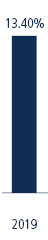
The bar chart and the performance table below illustrate the risks of an investment in the Fund by showing the Fund’s Institutional Shares’ performance for the 2019 calendar year and by showing how
7
the Fund’s Institutional Shares’ and Retail Shares’ average annual total returns for 1 year and since inception compare with those of a broad measure of market performance. Of course, the Fund’s past performance (before and after taxes) does not necessarily indicate how the Fund will perform in the future. Updated performance information is available on the Fund’s website at www.rqsifunds.com or by calling toll-free to 1-844-445-RQSI (1-844-445-7774).
BEST QUARTER |
WORST QUARTER |
8.23% |
0.27% |
(06/30/2019) |
(09/30/2019) |
Average Annual Total Returns for Periods Ended December 31, 2019
This table compares the Fund’s average annual total returns (after applicable sales charges) for the periods ended December 31, 2019 to those of an appropriate broad based index.
After-tax returns are calculated using the historical highest individual federal marginal income tax rates and do not reflect the impact of state and local taxes. Actual after-tax returns will depend on an investor’s tax situation and may differ from those shown. After-tax returns shown are not relevant to investors who hold their Fund shares through tax-deferred arrangements, such as 401(k) plans or individual retirement accounts (“IRAs”). After-tax returns are shown only for Institutional Shares. After-tax returns for Retail Shares will vary.
8
RQSI GAA Systematic Global Macro Fund |
1 Year |
Since |
Fund Returns Before Taxes |
||
Institutional Shares |
13.40% |
5.46% |
Retail Shares |
12.91% |
5.09% |
Fund Returns After Taxes on Distributions |
||
Institutional Shares |
10.50% |
3.96% |
Fund Returns After Taxes on Distributions and Sale of Fund Shares |
||
Institutional Shares |
9.27% |
3.96% |
Societe Generale Prime CTA Index |
6.24% |
2.06% |
Investment Adviser
Ramsey Quantitative Systems, Inc.
Portfolio Manager
Mr. Neil Ramsey, Chief Executive Officer and Chief Investment Officer, has managed the Fund since its inception in 2018.
Purchase and Sale of Fund Shares
To purchase Institutional Shares and Retail Shares of the Fund for the first time, you must invest at least $100,000 and $10,000, respectively. Subsequent investments in Institutional Shares and Retail Shares of the Fund must be made in amounts of at least $10,000 and $5,000, respectively. The Fund may accept investments of smaller amounts in its sole discretion.
If you own your shares directly, you may redeem your shares on any day that the New York Stock Exchange (the “NYSE”) is open for business by contacting the Fund directly by mail at RQSI GAA Systematic Global Macro Fund, P.O. Box 219009, Kansas City, MO 64121-9009 (Express Mail Address: RQSI GAA Systematic Global Macro Fund, c/o DST Systems, Inc., 430 West 7th Street, Kansas City, MO 64105) or telephone at 1-844-445-RQSI (1-844-445-7774).
9
If you own your shares through an account with a broker or other financial intermediary, contact that broker or financial intermediary to redeem your shares. Your broker or financial intermediary may charge a fee for its services in addition to the fees charged by the Fund.
Tax Information
The Fund intends to make distributions that may be taxed as ordinary income or capital gains, unless you are investing through a tax-deferred arrangement, such as a 401(k) plan or individual retirement account (“IRA”), in which case your distributions will be taxed when withdrawn from the tax-deferred account.
Payments to Broker-Dealers and Other Financial Intermediaries
If you purchase shares of the Fund through a broker-dealer or other financial intermediary (such as a bank), the Fund and its related companies may pay the intermediary for the sale of Fund shares and related services. These payments may create a conflict of interest by influencing the broker-dealer or other intermediary and your salesperson to recommend the Fund over another investment. Ask your salesperson or visit your financial intermediary’s web site for more information.
10
RQS-SM-002-0400
Serious News for Serious Traders! Try StreetInsider.com Premium Free!
You May Also Be Interested In
- Prospect Markets Secures CFTC Introducing Broker License, Unlocking U.S. Market Entry
- Standard & Poor’s hæver DLR Kredit A/S’s rating
- Hershey Law Welcomes Simran Grewal as Associate Attorney
Create E-mail Alert Related Categories
SEC FilingsSign up for StreetInsider Free!
Receive full access to all new and archived articles, unlimited portfolio tracking, e-mail alerts, custom newswires and RSS feeds - and more!
