




Why Packaging Capacity Can Become a Hidden Bottleneck During Pharmaceutical Scale-Up

FREE Breaking News Alerts from StreetInsider.com!
StreetInsider.com Top Tickers, 10/15/2026
 Tweet
Tweet Share
Share E-mail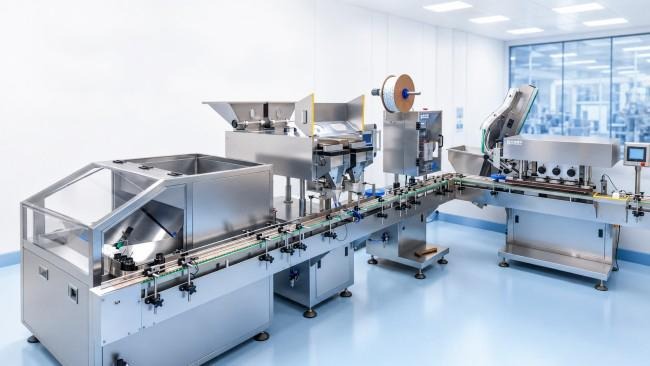
Introduction
Scaling up pharmaceutical production is an important milestone for any pharmaceutical company. As demand for medicines increases, manufacturers must expand their production capacity, improve operational efficiency, and maintain consistent product quality. While much of the attention is often focused on manufacturing equipment, formulation processes, and raw material availability, packaging capacity can become an overlooked challenge.
A pharmaceutical product may be ready for large-scale production, but if the packaging line cannot handle the increased output, the entire operation can slow down. This creates delays, increases costs, and affects the timely delivery of essential medicines. Understanding the relationship between production growth and packaging capacity helps pharmaceutical companies prepare for expansion and maintain a reliable supply chain.
Understanding Pharmaceutical Scale-Up
Pharmaceutical scale-up involves increasing production from laboratory or pilot-scale operations to commercial manufacturing. This process requires careful planning because larger production volumes introduce new operational challenges. Manufacturers must ensure that equipment, facilities, quality systems, and supply networks can support higher demand without compromising safety or consistency.
During this transition, companies often invest in advanced manufacturing equipment to increase output. However, production capacity is only one part of the overall process. Packaging must also be capable of handling the increased volume while meeting regulatory requirements and maintaining product integrity.
When manufacturing expands faster than packaging operations, a gap develops between the number of products being produced and the number that can be prepared for distribution. This imbalance can become a hidden bottleneck that limits the benefits of increased manufacturing capacity.
Why Packaging Capacity Is Often Overlooked
Packaging may appear to be a straightforward final step, but pharmaceutical packaging involves several interconnected activities. These can include filling, sealing, labeling, serialization, inspection, carton packaging, and preparing finished products for shipment.
Each activity has its own processing speed, equipment requirements, and quality checks. If one stage operates more slowly than the others, it can restrict the performance of the entire line.
For example, a manufacturer may increase tablet production significantly, but the blister packaging line may not have enough capacity to handle the additional output. Similarly, liquid medicines may be produced quickly but experience delays during bottle filling, labeling, or secondary packaging.
Companies that focus exclusively on manufacturing output may discover these limitations only after production has already increased. Identifying packaging requirements early allows manufacturers to plan equipment upgrades, staffing, and workflow improvements before capacity problems affect delivery schedules.
The Role of Pharmaceutical Packaging Machinery
Modern pharmaceutical packaging machinery plays an essential role in supporting production growth. Equipment designed for efficient filling, sealing, labeling, inspection, and packaging can help manufacturers process larger quantities while maintaining consistent standards.
However, selecting suitable machinery requires more than comparing advertised production speeds. Manufacturers must consider actual operating conditions, including product changeovers, cleaning requirements, inspection procedures, maintenance schedules, and the time needed to resolve technical issues.
A machine rated for high output may deliver less than its theoretical capacity when operating in a real production environment. Frequent changeovers, packaging material shortages, and equipment downtime can reduce overall efficiency.
For this reason, pharmaceutical companies should evaluate packaging machinery according to their product portfolio, production targets, and future expansion plans. Equipment flexibility is particularly important for facilities handling multiple formulations, package sizes, and labeling requirements.
The right investment can help businesses reduce manual handling, improve production consistency, and create a packaging operation that grows alongside manufacturing demand.
How Packaging Bottlenecks Affect Production Efficiency
Packaging constraints can create problems throughout a pharmaceutical facility. When finished products accumulate before packaging, manufacturers may need additional storage space, more inventory controls, and extra handling procedures.
These activities can increase operating costs and make production planning more complicated. In some cases, manufacturing teams may have to reduce output temporarily because the packaging department cannot process products quickly enough.
Bottlenecks can also affect delivery commitments. Pharmaceutical distributors and healthcare providers depend on reliable product availability, so delays in packaging can disrupt distribution schedules even when the medicine itself has been manufactured successfully.
Another concern is product shelf life. Certain pharmaceutical products have specific storage conditions or limited periods during which they should be packaged or processed. Extended waiting times may therefore require additional monitoring and careful inventory management.
Addressing packaging capacity before these problems develop can improve coordination between manufacturing, quality assurance, warehousing, and distribution teams.
Regulatory Compliance Adds Another Layer of Complexity
Pharmaceutical packaging must meet strict quality and regulatory expectations. Packaging components need to protect products from contamination, moisture, light, and other environmental factors where applicable. Labels must also provide accurate information, while serialization and traceability systems may be required for particular markets.
As production expands, manufacturers must ensure that increased speed does not weaken these controls. Faster packaging operations still need reliable inspection systems, accurate labeling, appropriate documentation, and effective procedures for handling rejected products.
Changes to packaging equipment or processes may also require validation and documented quality assessments. Depending on the change, manufacturers may need to conduct qualification activities or demonstrate that the revised process consistently produces acceptable results.
These requirements make early planning especially valuable. Investing in capacity without considering validation, quality checks, and regulatory obligations can create additional delays after equipment installation.
Strategies for Preventing Packaging Capacity Problems
Pharmaceutical manufacturers can take several practical steps to reduce the risk of packaging becoming a bottleneck during scale-up.
1. Evaluate Capacity Across the Entire Production Line
Companies should assess each packaging stage rather than focusing on a single machine. Measuring actual output, downtime, changeover duration, and rejection rates helps identify where production is being restricted.
This assessment should include both primary packaging, which directly contains the product, and secondary packaging, such as cartons and shipping preparations.
2. Plan Equipment Investments Early
Packaging requirements should be included in scale-up planning from the beginning. Manufacturers need to estimate future demand, assess available floor space, and determine whether existing equipment can support projected volumes.
Investing in suitable pharmaceutical packaging machinery before demand reaches its peak can reduce the risk of emergency upgrades and production interruptions.
3. Improve Changeover and Maintenance Procedures
Frequent product changes can consume valuable production time. Standardized changeover procedures, preventive maintenance, operator training, and readily available spare parts can help reduce avoidable downtime.
Where appropriate, flexible equipment can also make it easier to accommodate different products and package formats.
4. Strengthen Production Planning
Manufacturing and packaging teams should coordinate their schedules and communicate changes in demand. Accurate forecasting can help businesses align production volumes with packaging materials, labor availability, and equipment capacity.
This coordination reduces unnecessary inventory accumulation and supports more predictable delivery schedules.
5. Use Automation and Performance Monitoring
Automation can improve consistency and reduce repetitive manual tasks. Digital monitoring systems can help manufacturers identify recurring stoppages, track equipment performance, and detect capacity constraints before they become serious problems.
Nevertheless, automation should be selected according to operational needs, available resources, and the complexity of the packaging process.
Preparing for Sustainable Pharmaceutical Growth
Successful pharmaceutical scale-up requires a balanced approach to manufacturing and packaging. Increasing production capacity without expanding downstream operations may create delays that undermine the entire investment.
Manufacturers should therefore treat packaging as a strategic part of commercial planning rather than a final step that can be addressed later. By assessing capacity requirements, selecting suitable equipment, maintaining regulatory compliance, and improving coordination between departments, companies can create more resilient production systems.
Conclusion
Packaging capacity can become a hidden bottleneck when pharmaceutical manufacturing expands faster than downstream operations. Limited equipment capacity, lengthy changeovers, quality checks, and regulatory requirements can all restrict the flow of finished products.
Planning packaging requirements early helps pharmaceutical companies avoid unnecessary delays, control operating costs, and maintain reliable distribution. With appropriate equipment investments, effective production planning, and continuous performance monitoring, manufacturers can ensure that packaging operations support commercial growth rather than limit it.
Ultimately, pharmaceutical scale-up succeeds when every stage of the production process works together efficiently. Packaging deserves the same strategic attention as manufacturing because the ability to produce a medicine at scale is only valuable when that medicine can also be packaged safely, consistently, and on time.
COMTEX_494273142/2891/2026-10-15T01:46:47
Serious News for Serious Traders! Try StreetInsider.com Premium Free!
You May Also Be Interested In
- Reallusion's 2026 3D Character Contest - Meet the Winners!
- Virginia Cancer Specialists Celebrates Expansion in New Fauquier Location, Improving Access to Comprehensive Cancer Care and Future Clinical Research Opportunities
- Tebra Customers Surpass 1 Million Clinical Notes Generated with AI Note Assist, Reclaiming Nearly 160,000 Hours from Documentation
Create E-mail Alert Related Categories
Globe PR Wire, Press ReleasesSign up for StreetInsider Free!
Receive full access to all new and archived articles, unlimited portfolio tracking, e-mail alerts, custom newswires and RSS feeds - and more!
