



Who made this car? That's getting harder to answer
 Tweet
Tweet Share
Share E-mail
For years, the economic relationship between
But there is another crucial side to the relationship — cooperation — and sometimes, you can see it most clearly in a single product.
Take cars, for example.
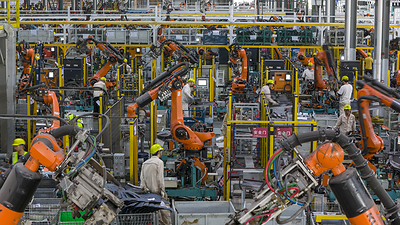
American automaker General Motors and its Chinese partner SAIC Motor recently agreed to extend their joint venture for another 20 years. What makes the partnership notable is that it is no longer simply about selling American cars to Chinese consumers.
According to
Put those pieces together, and the result is not simply a Chinese product or an American product. It is a product developed through cooperation — and potentially sold to the rest of the world.
"The cooperation is not simply about one side entering the other's market. Rather, it is about combining their respective resources and strengths to develop products better suited to the Chinese market, while also contributing to the global supply chain," Liu said.
From "Made in
For decades, the basic model of global trade was relatively simple. One country made the product. Another country bought it.
But supply chains have become much more complicated. Today, the value of a product can come from several countries at the same time — from design and engineering to manufacturing, software, logistics and marketing.
So, cooperation is more of a necessity than a choice, as neither side can provide everything on its own.
The World Economic Forum estimates that trade and financial fragmentation is already costing the global economy up to
The WTO, meanwhile, estimates that trade facilitation has cut global trade costs by between 1%and 4%, helping boost trade by more than
And global value chains can do more than lower costs. They can also help spread technology and knowledge, encourage innovation and improve productivity. That is why businesses look for cooperation.
"Technological collaboration among multinational companies is vital to global resource allocation. If it continues to slow, it could weigh on innovation in sectors such as new energy and smart vehicles, making it harder for new technologies to advance," Liu said.
Why businesses keep connecting
Despite all the restrictions, businesses ultimately look at another calculation: Does cooperation create value?
One way to see that value is through investment. When companies invest across borders, they are not just moving money. They often bring technology, expertise, production capacity, and access to new markets.
And this remains a significant part of the global economy.
According to UN Conference on Trade and Development (UNCTAD), global foreign direct investment rose 6% to
That is the logic behind partnerships like GM and SAIC. The value does not have to come from one side alone. It can come from putting different strengths together — and reaching a bigger market.
And perhaps that is the more practical way to look at China-US economic cooperation. The two countries may compete in some areas. But when their strengths complement each other, cooperation can create value that goes beyond either side alone.
It is not always about who wins.
Sometimes, it is about what we can create together.
 View original content to download multimedia:https://www.prnewswire.com/news-releases/who-made-this-car-thats-getting-harder-to-answer-302889494.html
SOURCE MNA
Serious News for Serious Traders! Try StreetInsider.com Premium Free!
You May Also Be Interested In
- RFU Neuroscientist Awarded $2.3 Million NIH Grant to Fund Ground-Breaking Research on Covid-19's Impact on Adolescent Brains
- U.S. Government's Defense Industrial Base Announces Expansion of BuildFreedom.US
- Helping Animals in Need: Centaurus Knows Giving
Create E-mail Alert Related Categories
PRNewswire, Press ReleasesSign up for StreetInsider Free!
Receive full access to all new and archived articles, unlimited portfolio tracking, e-mail alerts, custom newswires and RSS feeds - and more!
