



Surgeons Address the Urgent Need to Eliminate 'Blood Deserts'
 Tweet
Tweet Share
Share E-mail
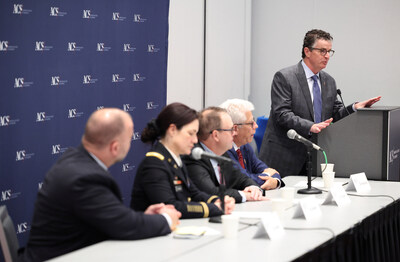
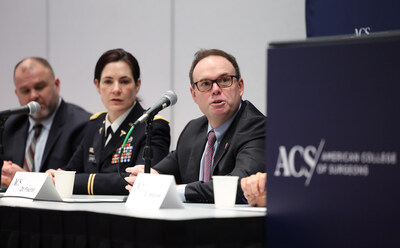
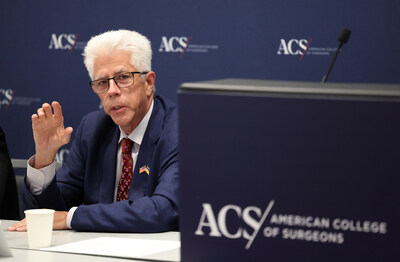
An estimated 10,000 lives could be saved each year with quicker access to blood in the field for injured patients, experts said during an American College of Surgeons news conference
At the news conference, held on
"We have an opportunity to save thousands of lives a year with a single intervention, prehospital blood. Uniform access of blood can have a major impact on outcomes for our trauma patients," said
Bleeding to death is a leading cause of preventable death for people of all ages that can be greatly reduced with quicker access to trauma care,
Unfortunately, very few Emergency Medical Services (EMS) agencies carry blood, explained John
"There's no need to do more studies, the data are very clear: pre-hospital blood absolutely saves lives," Dr. Holcomb said. Despite compelling data on its life-saving potential, only about 1 to 2% of EMS agencies carry blood, he added, and an even smaller fraction of patients in need of blood receive it from EMS agencies.
These "blood deserts" have long-lasting impacts.
Barriers to Care
While the promise of prehospital blood is immense, several barriers prevent its wider adoption.
Dr. Fischer estimated that about 175 EMS ground crews in the
"We need to fix the scope of practice issues that we see throughout the United States…and switch the paradigm such that EMS agencies can get reimbursed for this life-saving issue," Dr. Fischer said.
The situation is even more dire for the estimated 30 to 40 million Americans who live more than an hour away from a major trauma center, said
"Only about 1% of EMS agencies carry blood. In rural areas, that's down to almost zero," he said. "The only way to get prehospital blood is possibly an air flight, which is challenging if you live in a rural community that doesn't always work that way."
"We have to move [access to] blood to where the people are,"
Lessons from the Military
For blood to become more widely available in the pre-hospital setting, logistical and administrative challenges within hospital systems will also need to be addressed.
The wars in
"Our conventional and special operations forces do not go out on missions down range without blood,"
While maintaining a pre-hospital whole blood program outside of the military system will require close coordination between blood banks and local hospital trauma systems, many of these challenges are surmountable with collaboration and information-sharing.
"The transfusion practices are one of the best examples of the reciprocity between military and civilian trauma systems and how we can learn from each other," she said.
Call to Action
Change rarely occurs overnight. For blood to become more widely available to patients before they arrive at a hospital, the panelists described critical steps to move forward:
- Donate blood: The nation is facing a critical shortage of blood supply. More blood is needed for quick access to blood to become a reality.
- Advocate for change: Ask if your local EMS system carries blood. If they don't, contact your local elected officials to advocate for change, the panelists said.
- Share success stories: Stories have the power to move people and help them understand policy issues. Share stories of the people whose lives were saved by having quick access to blood.
"Patients get injured in the field; let's start care in the field and take down some of the barriers that we have so that we can provide this life-saving resource at the point of injury and start it as early as possible,"
Watch the entire panel session online at the ACS YouTube channel.
Additional Resources
- Prehospital Blood Transfusion Initiative Coalition
- Whole Blood in Resuscitating Trauma Patients Is Making a Comeback (ACS Bulletin article,
April 10, 2023 ) and corresponding video
Journalists may email [email protected] to schedule an interview with a trauma care expert.
About the American College of Surgeons
The American College of Surgeons (ACS) is a scientific and educational organization of surgeons that was founded in 1913 to raise the standards of surgical practice and improve the quality of care for all surgical patients. The ACS is dedicated to the ethical and competent practice of surgery. Its achievements have significantly influenced the course of scientific surgery in America and have established it as an important advocate for all surgical patients. The ACS has approximately 90,000 members and is the largest organization of surgeons in the world. "FACS" designates that a surgeon is a Fellow of the ACS.
Follow the ACS on social media: X | Instagram | YouTube | LinkedIn | Facebook
 View original content to download multimedia:https://www.prnewswire.com/news-releases/surgeons-address-the-urgent-need-to-eliminate-blood-deserts-302297959.html
SOURCE American College of Surgeons
Serious News for Serious Traders! Try StreetInsider.com Premium Free!
You May Also Be Interested In
- First WAF crude trade initiated on Argus Open Markets platform
- Form 8.3 - Gamma Communications PLC
- Dr. Achyuta Samanta Conferred Honorary Citizenship by Romanian Town, Receives Multiple International Honours
Create E-mail Alert Related Categories
PRNewswire, Press ReleasesRelated Entities
FDASign up for StreetInsider Free!
Receive full access to all new and archived articles, unlimited portfolio tracking, e-mail alerts, custom newswires and RSS feeds - and more!
