




Study Reveals How Brain Remodeling During Adolescence Shapes Memory

FREE Breaking News Alerts from StreetInsider.com!
StreetInsider.com Top Tickers, 10/20/2026
- Nasdaq climbs as chip and AI-linked stocks bounce back
- U.S. economy is "booming," JPMorgan’s Dimon says
- Musk pledges one share of SpaceX to every U.S. child
- Brent crude edges lower, even after Houthi attacks on Saudi infrastructure
- Prepare to buy the dip as U.S. stock selloff nears its end: Morgan Stanley
 Tweet
Tweet Share
Share E-mail
Mouse study sheds new light on how memory circuits mature

Published today in PLOS Biology, the study found that a key memory region of the mouse brain undergoes an unexpected period of remodeling during late adolescence. As those changes unfold, memories formed earlier in life become temporarily more difficult to retrieve before resurfacing later, often with less precise detail. The findings align with growing evidence that adolescence is a dynamic period of brain maturation and identify a biological mechanism that may help explain how access to memories changes during this stage of development.
Using mouse models, the researchers focused on the retrosplenial cortex (RSP), a brain region that plays an important role in organizing and retrieving long-term memories. They discovered that protective mesh-like structures called perineuronal nets, which help stabilize memory circuits, unexpectedly diminished during late adolescence before rebuilding in adulthood. The changes were confined to the RSP and were not observed in the nearby hippocampus, another brain region essential for memory.
"We've known for years that the brain continues developing through adolescence and young adulthood," said senior author
"Our findings begin to explain what that developmental process looks like in one of the brain's memory circuits and how it can influence the way earlier experiences are recalled."
We do not yet fully understand the consequences of the observed fluctuations of perineuronal nets, but we believe that their reorganization in RSP helps prioritize access to memories formed in adulthood at the expense of those formed in early adolescence. This could help to better adapt to the circumstances and challenges encountered at different life stages.
"Whether remembering early adolescent experiences comes at the cost of adjusting to new ones, is a possibility that we are currently investigating."
The Teenaged Brain Isn't Finished Yet
Previous studies suggested that the memory circuits examined in this study reached maturity during early adolescence. Instead, the researchers found that an important stabilizing system temporarily weakened during late adolescence before recovering in adulthood.
The timing is notable because it corresponds to a period now recognized as one of continued brain maturation in humans. While adolescence was once defined as ending around age 19, neuroscientists increasingly acknowledge that important developmental changes continue well into the 20s. According to the National Institutes of Health, the brain continues developing and maturing into the mid-to-late 20s.
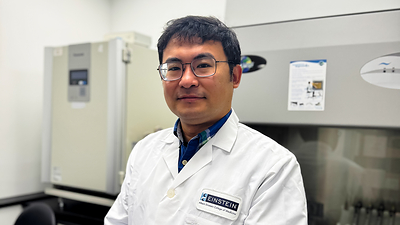
"The behavior matched the biology," said lead author Hui Zhang, Ph.D., a research fellow at Einstein. "The retrosplenial cortex is responsible for older, more established memories. As its stabilizing structures declined, access to memories formed earlier in life became less reliable."
Restoring Memories
To determine how these brain changes affected behavior, the researchers trained mice to associate a specific environment with an unpleasant experience, a mild foot shock. Shortly afterward, the mice remembered the experience and froze when returned to the same chamber. Weeks later, however, many of the mice trained during early adolescence no longer showed that fear response, while mice trained during adulthood retained stable memories over the same period.
When the adolescent mice later experienced another test in a different environment, they once again responded to the original setting, demonstrating that the memories had become temporarily inaccessible rather than erased.
The researchers traced these changes to a decline in key structural proteins that help build and maintain perineuronal nets, along with reduced activity of TGFβ2, a growth factor involved in maintaining those structures. When they reinforced the protective network or restored TGFβ2 activity, the mice regained their ability to retrieve memories formed earlier in life.
By mid-adulthood, many of those memories resurfaced spontaneously, although they had become less precise. Rather than responding only to the original environment, the mice generalized their fear to unfamiliar settings. The researchers note that this pattern resembles the "reminiscence bump," a well-known phenomenon in which adults disproportionately recall memories from adolescence and early adulthood while often remembering the emotional significance of an experience more readily than its specific details. Whether this is due to a random increase of perineuronal nets with advancing age, to their increase in response to similar experiences, or to the replay of past experiences, or some other factors, remains to be established.
The findings may also have implications beyond memory. Schizophrenia and major depression often emerge in humans during late adolescence—the same developmental period in which the researchers observed this extensive remodeling of memory circuits in mice. The authors suggest that, in genetically susceptible individuals, changes in this developmental process could contribute to vulnerability to psychiatric disorders, although additional research will be needed to determine whether similar mechanisms occur in people.
Additional Einstein authors include
The paper, "Retrosplenial Cortical Reorganization During Late Adolescence Introduces Instability of Contextual Memory Circuits" (DOI: 10.1371/journal.pbio.3003908), was supported by NIH grants R01MH108837 and R01MH078064 and the United States-Israel Binational Science Foundation Grant 2019261.
About Albert Einstein College of Medicine
Albert Einstein College of Medicine is one of the nation's premier academic centers for basic science research, clinical investigation, and biomedical education. Located in the Bronx, Einstein is home to nearly 1,000 M.D., Ph.D., and M.D./Ph.D. students and more than 2,000 full-time faculty members. Einstein receives approximately $200M in funding from the National Institutes of Health (NIH) each year and houses six NIH-funded research centers, in cancer, intellectual and developmental disabilities, clinical and translational research, AIDS, and two in diabetes. In partnership with Montefiore Health System, Einstein advances clinical and translational research to accelerate the pace at which new discoveries become the treatments that benefit patients. For more information, please visit einsteinmed.edu, and follow us on Instagram, LinkedIn, Twitter, Facebook, and view us on YouTube.

 View original content to download multimedia:https://www.prnewswire.com/news-releases/study-reveals-how-brain-remodeling-during-adolescence-shapes-memory-302828771.html
SOURCE Albert Einstein College of Medicine
Serious News for Serious Traders! Try StreetInsider.com Premium Free!
You May Also Be Interested In
- Hampton University Museum to Receive Loan of Historic Vessel by Enslaved Ceramicist David Drake from Artist's Descendants
- Form 8.3 - Gamma Communications plc
- Aqua free expands its product portfolio: New Baclyser® neo T Max offers greater capacity and efficiency
Create E-mail Alert Related Categories
PRNewswire, Press ReleasesRelated Entities
TwitterSign up for StreetInsider Free!
Receive full access to all new and archived articles, unlimited portfolio tracking, e-mail alerts, custom newswires and RSS feeds - and more!
