




Sequential Bilateral TMS Protocol Offers Durable Relief for PTSD Patients

FREE Breaking News Alerts from StreetInsider.com!
StreetInsider.com Top Tickers, 10/26/2026
- Equities end higher as Anthropic's IPO filing buoys AI stocks
- Anthropic files for Nasdaq IPO as revenue jumps to $16.3 billion
- Meta reverses losses to rise as investors weigh $35 billion AI funding plan
- Post-election relief ahead for markets, says Morgan Stanley
- Musk says SpaceX raised $40 billion in debt, warns of neocloud collapse
 Tweet
Tweet Share
Share E-mail
Key findings:
- A retrospective study evaluated adults with both PTSD and depression who received a novel sequential bilateral TMS protocol from Family Care Center, which targets both sides of the brain.
- Patients experienced about a 50% reduction in PTSD symptoms across all four core clusters, along with significant improvements in depression, and anxiety.
- These improvements were maintained at six months, suggesting durable, meaningful clinical benefits from bilateral TMS.
- The findings suggest stimulating both sides of the brain with TMS may help more patients achieve recovery, not just symptom improvement.
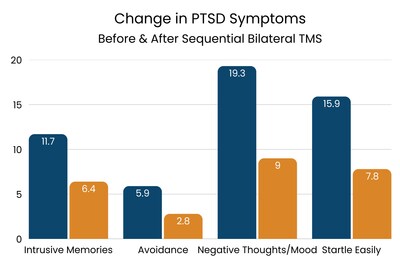
The Family Care Center TMS Center of Excellence retrospectively analyzed a cohort of adult patients with both PTSD and depression, who were often unresponsive to medication and therapy.
How a TMS sequential bilateral protocol improves PTSD symptoms
TMS, or transcranial magnetic stimulation, is an FDA-approved, non-invasive treatment that uses brief magnetic pulses to stimulate areas of the brain involved in mood regulation, including regions linked to depression, anxiety, and PTSD. Treatments are delivered through a coil placed near the scalp, which safely activates nerve cells without surgery or medication.
Traditionally, TMS targets only the left hemisphere of the brain, which has the best evidence for the treatment of depression. By focusing on this area, standard TMS can help improve depressive symptoms in patients who have not responded fully to medication or psychotherapy.
Family Care Center's research explores a sequential bilateral approach, stimulating both the left and right sides of the brain to potentially enhance outcomes for patients with more complex or treatment-resistant conditions. The protocol that's applied to the right side is a patterned type of stimulation that delivers short bursts of pulses referred to as intermittent theta burst (iTBS). It is FDA-approved when applied to the left side. In the study, it was applied to the right side of the brain, in conjunction with treatments to the left side of the brain.
"Our research indicates that this sequential bilateral protocol can produce lasting relief for PTSD, anxiety and depression," said Family Care Center Founder and Chief Medical Officer Dr.
What the study found
The study, Changes in core symptoms of Posttraumatic Stress Disorder associated with a novel sequential bilateral protocol: a case series, found that patients experienced about a 50% reduction in PTSD symptoms across all four core clusters:
- Intrusive Memories: Thought intrusions about the trauma or re-experiencing symptoms
- Avoidance: The avoidance of external reminders and memories associated with the traumatic event
- Negative Thoughts or Mood: Changes in thoughts, mood, and outlook
- Startle Easily: Hyperarousal, irritability, or being easily startled
For each of the four core symptom cluster scores, there was a decrease of approximately 50%, a finding not previously reported with any TMS protocol. Depression and anxiety symptoms also improved significantly, with positive effects sustained at six months.
Supporting evidence from related research
These PTSD results build on a related Family Care Center retrospective study of about 600 adults with depression. That study found that over 80% had significant improvement, with more than half reaching full remission, notably higher than standard TMS remission rates.
Patients with both anxiety and PTSD also showed meaningful improvements, reinforcing the idea that this protocol may help more patients fully recover.
"Both of our TMS studies show that this sequential bilateral TMS protocol may offer more complete recovery for patients who are unresponsive to typical treatments," said Dr.
Why these TMS results matter
PTSD affects up to 30% of trauma survivors and military Veterans (Xue et al., 2015). Medications offer limited benefit, and psychotherapy often yields modest change, leaving many patients inadequately treated.
By demonstrating durable and clinically meaningful improvements, this study highlights this sequential bilateral TMS protocol as a promising alternative for patients who have struggled with traditional treatments.
The study, submitted
About Family Care Center
Family Care Center is a national leader in mental health services, dedicated to positively impacting the well-being of local communities. Their top-rated, multi-specialty clinicians deliver comprehensive, evidence-based care, providing positive outcomes for patients of all ages. In addition to therapy, psychiatry, and IOP, they are at the forefront of transcranial magnetic stimulation (TMS), an innovative treatment for depression, and more. Founded in 2016, Family Care Center is one of the fastest-growing mental health care providers in the

 View original content to download multimedia:https://www.prnewswire.com/news-releases/sequential-bilateral-tms-protocol-offers-durable-relief-for-ptsd-patients-302723631.html
SOURCE Family Care Center
Serious News for Serious Traders! Try StreetInsider.com Premium Free!
You May Also Be Interested In
- ADSQUIRE Named 2026 PPC Agency of the Year by Search Engine Land.
- 30 September 2026 Quarterly Activities Report
- Heron Therapeutics to Report Third Quarter 2026 Financial Results on Monday, November 9, 2026
Create E-mail Alert Related Categories
PRNewswire, Press ReleasesRelated Entities
FDASign up for StreetInsider Free!
Receive full access to all new and archived articles, unlimited portfolio tracking, e-mail alerts, custom newswires and RSS feeds - and more!
