




New Study Identifies Immune Trigger Behind Radiation-Related Lung Damage

FREE Breaking News Alerts from StreetInsider.com!
StreetInsider.com Top Tickers, 10/20/2026
- Wall St set for lower open as oil prices jump, earnings in focus
- Brent hits five-month high as attacks on ships, Saudi sites fuel supply worries
- Loop Capital downgrades Apple, sees no recovery of cut iPhone shipments
- Wells Fargo says S&P 500 buy signal emerges as investors turn excessively bearish
- ByteDance, Alibaba and Tencent order $35 billion of Nvidia chips: Reuters
 Tweet
 Share
 E-mail
Findings from a preclinical investigation point to a possible strategy for reducing a serious side effect of cancer care
LOS ANGELES--(BUSINESS WIRE)-- Researchers at City of Hope®, one of the largest and most advanced cancer research and treatment organizations in the country, have uncovered an immune pathway that may contribute to radiation-related lung damage and have identified a potential strategy to block it. Published today in Nature Communications, the insights from the preclinical study could lead to new treatments that prevent radiation from harming healthy lung tissue and improve patients’ quality of life.
This press release features multimedia. View the full release here: https://www.businesswire.com/news/home/20261020530909/en/
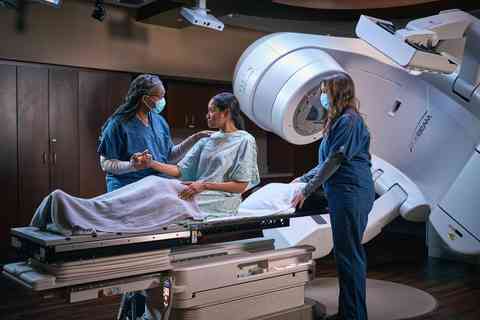
Researchers at City of Hope have uncovered an immune pathway that may contribute to radiation-related lung damage and have identified a potential strategy to block it. Published in Nature Communications, the insights from the preclinical study could lead to new treatments that prevent radiation from harming healthy lung tissue and improve patients’ quality of life. (Photo Credit: City of Hope)
Some 230,000 Americans are diagnosed with lung cancer each year, and up to 70% of people diagnosed with the disease will undergo radiation at some point in their treatment. While radiation is often lifesaving, the therapy can permanently damage healthy lung tissue and limit future cancer treatment options.
When healthy lung tissue is damaged, the effects can be severe and long-lasting. Up to 20% of patients struggle with debilitating breathing difficulties and reduced quality of life, leaving some patients tethered to heavy oxygen tanks.
Radiation Reprograms Rare but Important Immune Cells
“Many researchers in our field study how radiation activates well-known immune cells such as T cells to fight cancer,” said corresponding author Heather McGee, M.D., Ph.D., an assistant professor in the departments of radiation oncology and immuno-oncology at City of Hope. “We are the first group to show that radiation also reprograms rare immune cells called innate lymphoid cells, and that these cells play a key role in driving damage to healthy lung tissue.”
Dr. McGee leads a team of scientists investigating the role innate lymphoid cells play in the response to radiation. To better understand how radiation damages healthy lung tissue, her laboratory developed a mouse model of radiation-induced lung injury.
Using advanced techniques to track radiation's impact on the immune system, her team observed three key findings.
First, radiation provoked a dramatic transformation in innate lymphoid cells (ILCs), causing them to adopt different identities and alter their functions. One type of ILC, called ILC2s, helps protect the lungs from damage. Radiation transformed these cells into another type, called ILC1s, which promotes inflammation that damages healthy lung tissue.
Second, the researchers discovered what drives this transformation. Radiation increased levels of a signaling protein called interferon-beta (IFN-beta), which acted as the switch that pushed protective ILC2 cells to become inflammatory ILC1 cells. Tests on human ILCs showed similar biological changes.
“Much like a player switching teams, radiation-induced IFN-beta can shift these immune cells from a protective role to one that promotes inflammation,” Dr. McGee said. “Our findings shed light on a previously unknown mechanism that leads to radiation-induced lung damage.”
A Potential Strategy to Prevent Lung Damage During Radiation
Third, the researchers tested whether blocking the IFN-beta signaling pathway during radiation could stop the harmful immune cell transformation. In mice, disrupting this pathway reduced inflammation, limited lung injury and decreased the fibrosis that can permanently scar healthy lung tissue.
“Our findings suggest that high levels of IFN-beta contribute to the development of lung damage during radiation and that blocking this signaling pathway could offer a potential treatment to reduce this debilitating side effect,” said Jaeho Kim, M.D., Ph.D., first author of the study and a radiation oncology postdoctoral fellow at City of Hope.
If the team’s approach proves effective in people, it could protect patients from long-term lung damage, expand radiation options for individuals with chronic lung conditions like chronic obstructive pulmonary disease (COPD) and enable more aggressive radiation treatment when needed.
A Leader in Cancer Immunotherapeutics and Tumor Immunology Research
City of Hope is the only institution with four FDA-authorized clinical trials using genetically reprogrammed T cells and is the first center to use reengineered T cell therapy for lymphoma, malignant brain tumors and neuroblastoma in children.
City of Hope pioneered cancer radioimmunotherapy, a therapeutic strategy in which radiation is targeted to tumors using monoclonal antibodies. Its Center for Biomedicine & Genetics empowers researchers to speed the translation of new immunotherapies into clinical trials.
The Nature Communications study, “Type I IFN promotes ILC2-to-ILC1 plasticity in pre-clinical radiation-induced lung injury,” was funded by grants from the National Cancer Institute (R00CA256526, P30CA033572), the National Institutes of Health (K24AI171795), and the Veterans Affairs Office of Research and Development (BX005073).
The content is solely the responsibility of the authors and does not necessarily represent the official views of the National Institutes of Health.
About City of Hope
City of Hope's mission is to make hope a reality for all touched by cancer and diabetes. Founded in 1913, City of Hope has grown into one of the largest and most advanced cancer research and treatment organizations in the United States, and one of the leading research centers for diabetes and other life-threatening illnesses. City of Hope research has been the basis for numerous breakthrough cancer medicines, as well as human synthetic insulin and monoclonal antibodies. With an independent, National Cancer Institute-designated comprehensive cancer center that is ranked among the nation’s top cancer centers by U.S. News & World Report at its core, City of Hope’s uniquely integrated model spans cancer care, research and development, academics and training, and a broad philanthropy program that powers its work. City of Hope’s growing national system includes its Los Angeles campus, Orange County, California, campus, a network of clinical care locations across Southern California and cancer treatment centers and outpatient facilities in the Atlanta, Chicago and Phoenix areas. City of Hope’s affiliated group of organizations includes Translational Genomics Research Institute and AccessHope™. For more information about City of Hope, follow us on Facebook, X, YouTube, Instagram and LinkedIn.
View source version on businesswire.com: https://www.businesswire.com/news/home/20261020530909/en/
Zen Logsdon
626-409-9367
[email protected]
Source: City of Hope
Serious News for Serious Traders! Try StreetInsider.com Premium Free!
You May Also Be Interested In
- Andersen Consulting Adds Collaborating Firm in Uzbekistan
- Doximity and Wolters Kluwer Sign Partnership to Bring UpToDate to Doximity Ask
- Inaugural Future Health Impact Challenge Documentary Released as Expressions of Interest Open for Second Challenge
Create E-mail Alert Related Categories
Business Wire, Press ReleasesRelated Entities
FDASign up for StreetInsider Free!
Receive full access to all new and archived articles, unlimited portfolio tracking, e-mail alerts, custom newswires and RSS feeds - and more!
