



How Modern Cribs Solve Seven Pain Points in Parenting Life?
 Tweet
Tweet Share
Share E-mail
In the world of parenting, the crib is the first station of safety, and we already deeply understand the importance of structural stability and non-toxic finishes. However, for modern parents who struggle with fatigue daily, the value of a crib has long surpassed that of a mere "sleep container." It must be an efficient tool, a "fortress of convenience" that integrates into family life and lightens the burden of daily operations.
In the demanding context of modern parenting, a crib's design must actively work to conserve the parent's energy, time, and peace of mind.
This article will delve into how modern cribs, from unboxing to daily cleaning, maximize user experience and longevity through an ingenious design philosophy.
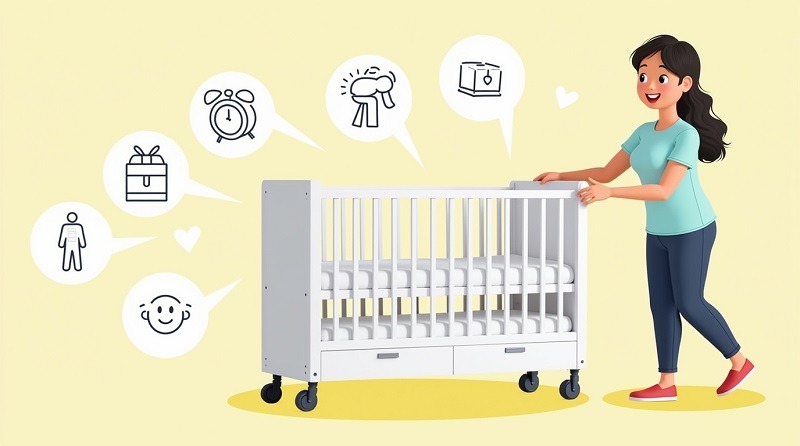
Pain Point 1: The Frustrating Assembly Process
Solution: Modular and Snap-Lock Designs
Modern, high-quality cribs are shifting from traditional all-screw fixation to modular, pre-assembled, and snap-lock connections. For instance, side rails and headboards might use "embedded" or "quick-lock" mechanisms, significantly reducing the number of screws required and ensuring precise component alignment. This not only cuts assembly time in half but, more importantly, reduces the risk of structural instability caused by assembly errors.
This allows major sections, such as the headboard and side rails, to simply click or slot into place before a final, minimal tightening. This not only eases the burden on new parents but also significantly enhances the structural integrity, ensuring that components manufactured thousands of miles apart align with micrometer precision. This level of precision requires sophisticated quality control, a benchmark for all reliable baby furniture suppliers.
Pain Point 2: The Fatigue of Frequent Mattress Height Adjustments
Solution: Tool-less or One-Touch Adjustment
The crib mattress height must be adjusted as the baby grows to ensure safety (from the high newborn setting to the low climbing setting). Older cribs required parents to disassemble and re-install screws at all four corners, which was time-consuming and strenuous. Products from professional baby furniture suppliers utilize innovative sliding track or hook systems, allowing parents to easily lower the bed base to the lowest setting without tools, simply by turning one or two securing handles, perfectly protecting the parents' backs.
The required frequent adjustment of the mattress height--a critical safety step when a baby starts sitting up--used to be a major obstacle. The new tool-less systems are designed with ergonomics in mind. They often utilize spring-loaded pins or heavy-duty metal levers that lock into pre-drilled, reinforced pockets in the crib frame. The design must handle not only the static load of the mattress and baby but also the dynamic forces of a growing, bouncing child. This ingenious mechanism simplifies operation while maintaining load-bearing standards that meet or exceed CPSC and ASTM requirements.
Pain Point 3: The Hassle of Moving a Bulky Crib
Solution: Hidden Casters and Lightweight Materials
Cribs occasionally need to be moved (for cleaning the floor or changing the room layout). High-quality cribs account for this in their design, for example, by incorporating lockable, discreet, industrial-grade casters. These casters are often designed to be hidden on the inside of the legs, maintaining aesthetics while allowing easy movement when needed, and ensuring absolute stability when locked.
Pain Point 4: The Baby Grows Too Fast, the Bed Quickly Becomes Too Small
Solution: All-in-One Convertible System
The mainstream trend for cribs today is 4-in-1 or 8-in-1 convertible designs. With simple conversion kits (often included or available as an add-on), it transforms from:
- Crib
- Toddler Bed: Side rail replaced with a low guardrail for easy access.
- Daybed: Open design, can be used as a resting area.
- Full-Size Bed: Converts to a standard adult bed with extension rails.
This design allows one bed to accompany the child from infancy through adolescence, significantly increasing the return on investment and demonstrating the brand's commitment to sustainability.
The true value proposition of a convertible crib is its lifetime cost of ownership. By consolidating the functions of a crib, a toddler bed, and a full-size bed into one initial investment, families save not just money but also the environmental cost associated with manufacturing and disposing of three separate pieces of furniture. This sustainability factor is increasingly valued by Millennial and Gen Z parents.
The structural challenge for manufacturers is ensuring the core wood and hardware--especially the joints that bear the most stress--remain robust enough to handle the repeated disassembly and reassembly required for conversion over a 15-year period. Only the best China baby crib manufacturers with mastery over kiln-dried solid wood and superior hardware sourcing can guarantee this structural resilience.
Pain Point 5: Limited Space, Traditional Cribs are Too Bulky
Solution: Mini-Cribs and Folding Designs
As urban housing spaces shrink, Mini-Cribs and multi-functional Co-sleepers are becoming increasingly popular. Professional manufacturers have designed:
- Folding Cribs: Utilizing quick-folding hardware, they can be easily stored away when not in use, facilitating storage and moving.
- Co-sleepers: One side can be completely lowered and placed flush against the adult bed, easing night-time feeding and soothing while avoiding the risks of bed-sharing.
This flexible design perfectly adapts to different living environments, reflecting a deep understanding of modern family lifestyles.
To achieve lightness for easy portability and folding, manufacturers must utilize strong yet lighter-weight materials like high-grade aluminum alloys for the frames or carefully selected, lighter solid woods (such as basswood or specific species of pine) known for their high strength-to-weight ratio. The challenge is achieving the required load-bearing capacity while maintaining a slender profile. Co-sleepers, in particular, require specialized hardware for their drop-down side rails and attachment mechanisms to the adult bed, which must be perfectly safe and intuitive to operate, often requiring sophisticated, custom-designed mechanisms.
Pain Point 6: Hard-to-Reach Crevices and Tedious Daily Cleaning
Solution: Minimalist Lines and Easy-to-Clean Finishes
Professional crib design pursues clean, minimalist lines, avoiding excessive decorative grooves or carvings to reduce dust- and dirt-trapping crevices. The non-toxic finishes used must be scrub-resistant and durable, able to withstand daily wiping with a damp cloth and mild detergent.
This goes beyond aesthetics. In the realm of hygiene, flat, smooth, and easily accessible surfaces prevent the accumulation of dust mites and spilled formula. The finish is the crib's primary line of defense. High-quality finishes, such as UV-cured acrylic lacquers or catalyzed varnishes, are used because they chemically bond with the wood, creating a dense, non-porous surface that is highly resistant to moisture, stains, and scratches. These finishes must, of course, be GREENGUARD GOLD certified for low VOC emissions, ensuring the "easy-to-clean" feature doesn't come at the cost of air quality.
Pain Point 7: Worries About Babies Chewing on Crib Rails
Solution: Non-Toxic Teething Rails and Strict Chemical Control
It's inevitable that babies will chew on crib rails during the teething phase. High-quality cribs install non-toxic, BPA-free silicone or polyester teething rail covers on the top of the side rails. Crucially, even the exposed wood parts without covers must use CPSC-certified finishes that are lead- and phthalate-free. This dual assurance demonstrates meticulous care for the infant's oral fixation stage.
The design acknowledges that babies explore the world orally. The teething rail cover is a conscious layer of protection for both the baby (from potential splinters or deep bite marks on the wood) and the crib's finish. The material used is often medical or food-grade silicone or high-density plastic, rigorously tested for BPA, PVC, and Phthalates. This small detail underscores the "heart of a parent" philosophy, recognizing and mitigating an inevitable child behavior through superior material engineering.
Realizing the Supply Chain and Design Vision
All these user-centric designs require robust manufacturing capabilities to be realized. Innovations on a design blueprint can only be transformed into safe products in parents' hands through exquisite supply chain management and stringent quality control.
The Critical Role of the Manufacturing Partner
The transformation of a design philosophy into a tangible product hinges on the capability of the manufacturing partner. For global brands, the quality of their baby furniture suppliers is the ultimate determinant of their market success. A mere factory can produce a crib; a master manufacturer executes a vision. This distinction is paramount, especially when sourcing from a complex international hub.
Mastery over Process: The DNA of Quality
Exceptional China baby crib manufacturers differentiate themselves through their rigorous manufacturing DNA, which includes:
- Raw Material Traceability and Control: Every single batch of wood, adhesive, and paint must be accompanied by a certificate of analysis. This ensures that the structural integrity and non-toxic claims can be traced back to the original source. For wood, this means precise moisture content (MC) testing using industrial meters at every stage of cutting and assembly, preventing future warping or cracking.
- Tooling and Jig Precision: To achieve the tight tolerances required for modular and convertible systems, the manufacturing facility must invest heavily in high-precision CNC machining and custom jigs. These tools ensure that hundreds of units are all identical, guaranteeing easy, "hassle-free" assembly for the end-consumer, which is a key B2C pain point identified by market research.
- Phased Quality Gates: Quality control is not just a final check. It's built into the process with phased "quality gates"--checks after wood cutting, after sanding and finishing, after hardware insertion, and a final pre-shipment assembly audit. This proactive approach prevents defects rather than just correcting them, saving cost and reputation for the B2B client.
- Logistics of Trust: Beyond the factory floor, a professional supplier manages the entire logistics chain. This includes advanced packaging design that protects delicate finishes and complex modular components during long-distance shipping, and comprehensive documentation for global safety and import standards. This end-to-end reliability is what brands purchase when they choose a premium baby furniture supplier--they are buying operational excellence and risk mitigation.
Conclusion
The best crib design is "invisible"--it provides convenience when parents need it, but goes unnoticed in daily use because it solves all potential hassles.
By focusing on easy assembly, tool-less adjustment, sustainable convertibility, and simple daily maintenance, a modern crib is more than just a place for a child to sleep; it's a reliable partner that helps parents enjoy the parenting journey and reduce physical and mental stress.
COMTEX_469597864/2891/2025-10-17T20:38:43
Serious News for Serious Traders! Try StreetInsider.com Premium Free!
You May Also Be Interested In
- Cash Equivalents Under Inflation Pressure: Fitting a Growth Strategy to Idle Capital
- The Champions Collective Celebrates Year One
- Light-up piano keyboards connect note guidance with The ONE Music’s beginner learning tools
Create E-mail Alert Related Categories
Globe PR Wire, Press ReleasesSign up for StreetInsider Free!
Receive full access to all new and archived articles, unlimited portfolio tracking, e-mail alerts, custom newswires and RSS feeds - and more!
