




Discovery Could Make Immune Checkpoint Inhibitors Safer

FREE Breaking News Alerts from StreetInsider.com!
StreetInsider.com Top Tickers, 10/22/2026
- S&P 500, Nasdaq end sharply lower as revived AI doubts ignite tech selloff
- Meta’s new Class C stock to keep Zuckerberg in California, fund AI spending spree
- Oil hits five-month high as Houthi attacks stoke supply fears
- Meta beats Q3 estimates, approves new nonvoting share class as AI spending surges
- Tesla stock up as automotive gross margin improves, free cash flow turns positive
 Tweet
Tweet Share
Share E-mail
Experts at Cincinnati Children's report proof-of-concept results that may sharply reduce the risk of a lethal side effect that has negatively impacted the use of revolutionary cancer immunotherapies
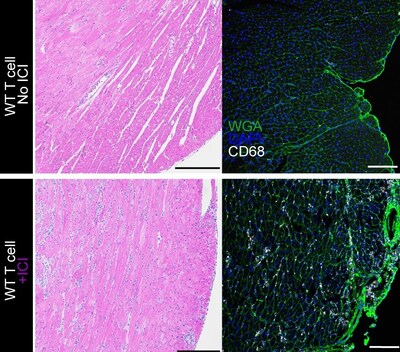
However, for some patients, ICI cancer treatment also can prompt the immune system to attack heart tissue—a potentially lethal side effect.
Now, scientists at Cincinnati Children's report discovering a way to dramatically reduce that risk. Details were published
"This study makes a very important discovery that shows how to uncouple anti-tumor efficacy from cardiac toxicity. These findings have major implications for treating or avoiding immune related adverse events in cancer patients receiving immune check point blockade," says
Pasare served as co-corresponding author on the study, along with
What are ICIs?
Immune checkpoint inhibitors work by cutting off signals from "checkpoint" proteins that cancer cells use to hide from the immune system. This allows the body's T cells to recognize and destroy tumor cells.
Since 2011, when the first drug (Yervoy) was approved in the
However, in about 2% of all cancer patients receiving ICIs, the treatments can cause myocarditis—an inflammation of heart muscle. About half of these patients die from this complication, even if they survive their cancer.
Promising path to prevention
To better understand the complication, the research team engineered a new mouse model that accurately mimics immune checkpoint inhibitor–induced myocarditis. Then, in a series of advanced experiments, the team pinpointed a key driver of the complication: CD8 T cell–derived tumor necrosis factor (TNF).
Importantly, the team found that this complication from checkpoint inhibitors is not caused by tumors exhausting the body's cancer-specific T cells, but rather through causing new production of "autoreactive" T cells that see healthy cardiac muscle cells as targets in addition to cancer cells.
The team went on to show, in mice, that blocking TNF signaling specifically through the TNFR2 gene product prevented the inflammatory cycle from starting in the heart.
"Checkpoint inhibitors allow TNF signaling to trigger CD8 T-cells that are specific to antigens on cardiac myocytes, which in turn leads to life-threatening arrythmias," Molkentin says. "We used a targeted TNF blockade method to prevent this cycle in our mouse models. If these results can be replicated in humans, TNF blockade should prevent cardiac toxicity without compromising the anti-tumor benefits of ICIs."
Next steps
More research is needed to determine if a narrowly focused TNF inhibitor would be safe for human use, and how long a patient might need to take such a drug. TNFR2-specific antibodies remain in development stages. The team also wants to determine whether similar approaches can also prevent immune-related adverse events affecting other organs.
About the Study
Cincinnati Children's co-authors also included Anne
Funding sources included grants from the National Institutes of Health (7R01AI123176, 5R01HL160765, and 5R01HL156852) and the American Heart Association.

 View original content to download multimedia:https://www.prnewswire.com/news-releases/discovery-could-make-immune-checkpoint-inhibitors-safer-302693662.html
SOURCE Cincinnati Children's Hospital Medical Center
Serious News for Serious Traders! Try StreetInsider.com Premium Free!
You May Also Be Interested In
- MSG Rangers and Huron Consulting Group Set to Join S&P SmallCap 600
- FlyersRights Demands DOT Withdraw Rule Exempting Airlines from Responsibility for 10 Causes of Delay, Issued Without Required Public Comment
- FONTAINEBLEAU LAS VEGAS SHIFTS INTO HIGH GEAR FOR 2026 RACE WEEKEND WITH FONTAINEBLEAU RACE CLUB PROGRAMMING
Create E-mail Alert Related Categories
PRNewswire, Press ReleasesSign up for StreetInsider Free!
Receive full access to all new and archived articles, unlimited portfolio tracking, e-mail alerts, custom newswires and RSS feeds - and more!
