



Barcelona and the UX Revolution: Where Design Meets Digital Services
 Tweet
Tweet Share
Share E-mail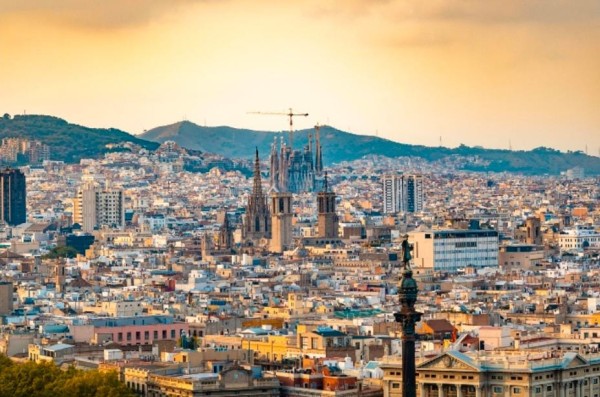
Barcelona has already established a reputation in the fields of art, architecture, and the Mediterranean lifestyle. Still, in recent years, this city has impressively found its niche in a new sphere: digital design. As more and more people access online services and user experience, or UX, is taken into greater consideration, Barcelona is becoming one of the European capitals of digital creativity and purpose-driven design thinking. The city is evolving into the center of visual and usability mashups thanks to a growing community of UX agencies, technology startups, design schools, and tech-savvy labs.
Design heritage or weather is not the only thing that makes Barcelona distinct. It is the capacity to combine creative capability and online business. Good UX is a thing of the past, and in the era of apps, SaaS platforms, online stores, and digital services, it is a must. It has now become a key factor in determining a product's success or failure. Comprising of an inspiring design DNA and entrepreneurial spirit, Barcelona is swiftly becoming the exemplary location where such mergers occur.
An Innovative Heritage Redesigned for the Web
The history of the city of Barcelona has a centuries-old design culture that manifests in everything, including the building architecture of Gaud, as well as the structure of the Gothic Quarter. This intuition of form, space and visual language has transferred itself to the digital media quite readily. Design has shifted to digital materials, but it has also found new forms to shape the vision of people built by local talent in the region, such as site design, mobile UI, motion graphics, and interactive product interfaces.
Design schools, such as ELISAVA or IED Barcelona, are producing a stream of new UX designers with a background not only in typography or color theory but also in user flows, accessibility, and responsive design. These academies have also transformed their curriculum to incorporate real-world work with tech businesses, making their graduates ready to join startup teams, product firms, or design teams worldwide on their first day.
UX in Barcelona is not considered to be an aesthetic one. It is an integral part of product development. It can be a fintech application that simplifies personal finances or a travel app that streamlines last-minute trips. Still, the UX revolution of Barcelona is all about the clarity, speed, and delight of the user experience.
Design-First Minded Startups
The Barcelona startup ecosystem is thriving, particularly in industries that rely on the delivery of digital services. Whether it be health tech and edtech, or mobility and innovative city companies, founders at many of these firms are also viewing UX as a competitive advantage, rather than a secondary consideration. They are aware that user retention, conversion, and satisfaction are directly connected to the perception of their platforms as easy-to-use and pleasant.
Such an attitude can be observed in startups like Typeform, a company born in Barcelona that revolutionized online forms by making them sound conversation-like. Typeform, unlike the standard list of fields, presents its interface in a flow that allows one question at a time, increasing interest and completion. Its story of success is today mentioned around the world as an example of design thinking that leads to digital success.
Other areas, such as online entertainment and gaming platforms, such as some of the trusted platforms on kasinoranking, are also being redesigned in line with the city's overall aesthetic, or using it as an example. As the requirement of the need to have a smooth and immersive online experience continues to grow, sites dedicated to connecting with users and using the interface to convey the desired feeling are finding themselves further reaching into the well of creativity and innovation that can be found in Barcelona to bring their design and useability benchmark to new levels of finesse.
Local Innovation and International Talent
The city of Barcelona has also risen as a destination for UX due to its attraction to international creatives. Enthusiastic designers, game developers, and product managers across Europe, Latin America, and other places come to Barcelona to work and live. They also bring the experience of well-established companies, such as Google, Amazon, and Spotify, introducing a wide range of influences and practices into the local environment.
This international influence is evident in coworking locations such as Pier01 and 22@, where local start-ups coexist with foreign design consultants, digital nomads, and global design labs in the same office. The relatively affordable cost of living in the city compared to other corporate tech hubs in Europe, the existence of a rich culture, and the beachside aesthetic have fostered the best conditions possible in terms of design-led cooperation.
The emerging practices in UX are also being developed within this cultural and ideological smorgasbord. Cross-functional product workshops, design sprints and user testing labs are all the norm. The capability to quickly build a prototype and iterate on it based on feedback, as well as the capacity to ship products that our customers are happy with and look good, is transforming teams based in Barcelona into international ones.
Powering the Bigger Digital Economy
Not all UX revolution in Barcelona belongs to startups and agencies. More extensive organizations and institutions are also embarking on the process of digital transformation, where user-centric design is taking centre stage. Without trying to generalize, everyone knows a telecom giant that has redesigned its mobile app or a government agency that has made its process of accessing services smooth and convenient. In those cases, UX professionals are viewed as an indispensable part of the decision-making process.
An example of this is the tourism industry in Barcelona, which is undergoing a digital facelift. Venues such as hotels and restaurants and cultural facilities include UX best practices in their online interactions to provide the visitor with a better user experience. Examples of the UX innovation that can be seen impacting the sector mainly include booking systems, virtual tours of museums and multilingual chatbots.
Even such classical industries as logistics and production implement UX to make operations interfaces more straightforward and more convenient when training workers and customers and rendering the services and products more desirable. This way, they are acknowledging that excellent UX is no longer a privilege of consumer apps; it is a distinguishing feature of productivity and interaction in every field.
What is apparent though is that Barcelona is no longer merely an actor to the design scene, the scene has now been turned into a goer. The potential to create user experiences that are simple and meaningful in a world that responds to taps and swipes has never been more important than it is now. Barcelona is demonstrating the way of doing it to the world.
COMTEX_467170844/2891/2025-07-09T13:53:37
Serious News for Serious Traders! Try StreetInsider.com Premium Free!
You May Also Be Interested In
- Meta AI agent triggers heavy selloff in banks, insurers, and travel stocks
- THE GARDENS EMPERORS CALLED HOME
- The hardest water cities in America, ranked by verified utility data
Create E-mail Alert Related Categories
Globe PR Wire, Press ReleasesSign up for StreetInsider Free!
Receive full access to all new and archived articles, unlimited portfolio tracking, e-mail alerts, custom newswires and RSS feeds - and more!
