Tweet
Tweet Share
Share E-mail
In the construction industry, having the right equipment is important for completing projects on time and within budget. However, buying construction equipment outright can be expensive, especially for businesses managing their cash flow. Leasing offers an alternative that gives contractors access to essential machinery without the heavy upfront costs of ownership. Here are five key things to consider when leasing construction equipment.
Assess Your Project Needs
Before leasing equipment, it's important to understand your project’s specific needs. This will help ensure you get the right machinery for the job and manage your expenses wisely.
Consider the duration and frequency of your need for equipment. Leasing is often the better choice for short-term projects or seasonal work. For instance, leasing can save you from the full financial commitment of purchasing if you need a crane for a three-month project. On the other hand, buying or evaluating a lease-to-purchase option may make more sense if the equipment is used frequently across multiple projects.
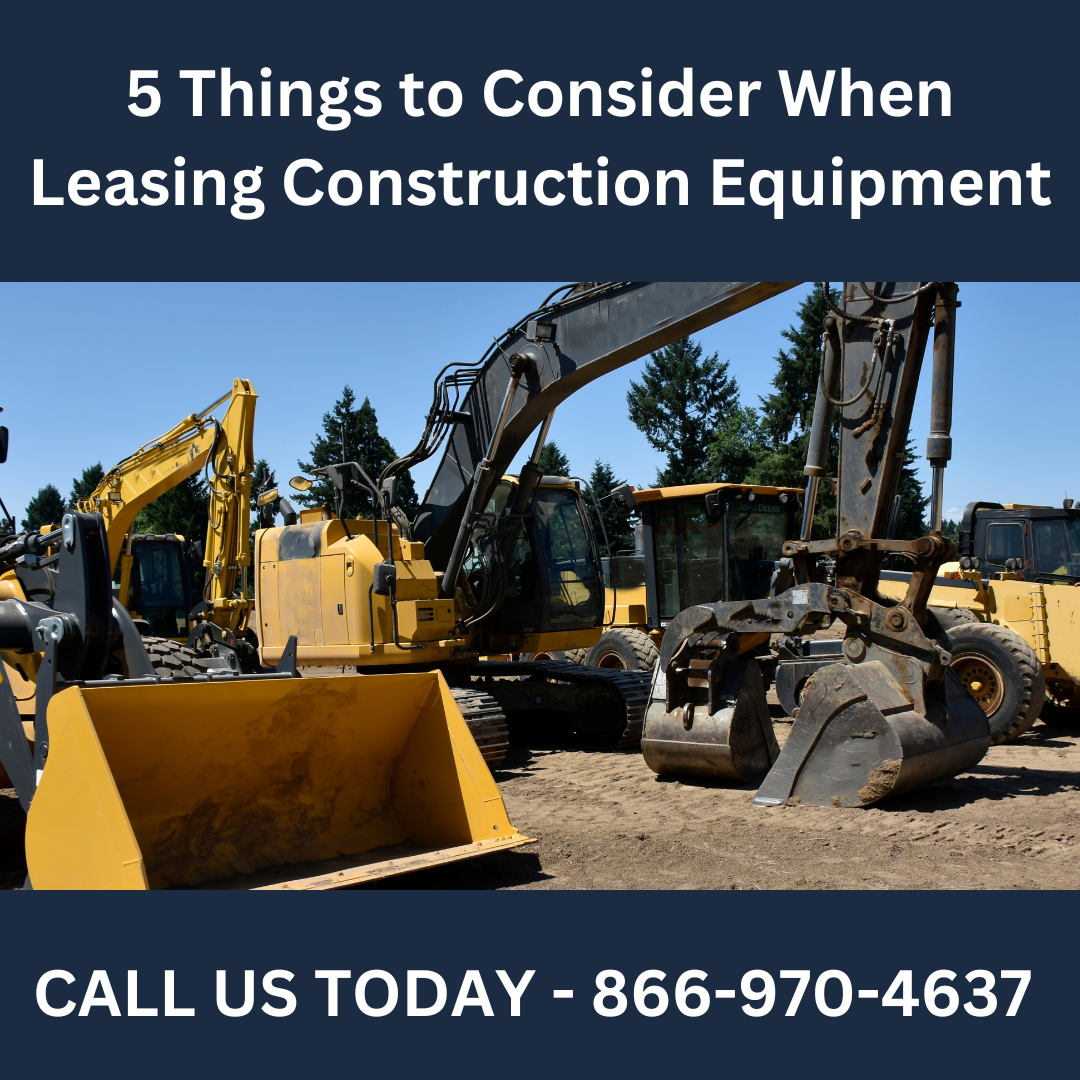
The type of equipment matters, too. Specialized or high-cost machinery like excavators, bulldozers, or backhoes may be better leased if not frequently used. Leasing allows businesses to adapt to specific project demands without being tied to equipment that might sit idle after the job. However, ensure you're clear on the size, power, and other specifications needed for the equipment to match your project requirements.
Understand the Leasing Terms
Before signing any lease agreement, carefully review the terms. Knowing what’s included in the lease (and what isn’t) will help you avoid surprises later.
When financing construction equipment, you’ll encounter leasing and loan options. Leasing tends to have lower monthly payments, which is helpful for businesses working with tight budgets. However, ownership typically isn’t included unless you choose an option to purchase the equipment at the end of the lease. On the other hand, loans allow you to own the equipment outright, which may be better for businesses that need long-term solutions.
Leasing agreements often provide flexibility at the end of the term. Some allow you to purchase the equipment, while others let you trade up to newer models or simply return the machinery. Rental purchase agreements (RPOs) provide an excellent option for businesses unsure of their long-term equipment needs. They offer the flexibility to lease equipment with the possibility of owning it later by applying a portion of the lease payments toward the purchase price.
Evaluate Financing Costs and Affordability
Cost is a major factor in deciding whether to lease equipment. In addition to monthly payments, you should account for fees, interest rates, and how leasing can impact your cash flow.
Interest rates on construction equipment financing vary based on your credit history, the leasing company, and the type of lease. Loan rates often range between 6% and 9%, while some leases may even feature promotional rates as low as 0%. It’s worth comparing offers from various lenders to secure the most favorable terms.
Leasing helps businesses maintain steady cash flow because the upfront costs are significantly lower than purchasing. Predictable monthly payments make budgeting easier and free up capital for other operational needs, such as materials, salaries, or business expansion. This can be a strategic financial advantage for growing companies or those managing multiple projects simultaneously.
Creditworthiness and Application Process
Your credit history and financial stability can influence the leasing terms for which you qualify. Preparing in advance can help you secure better options.
Lenders and leasing companies typically review your credit score and financial track record to determine your eligibility for favorable financing terms. Established businesses with strong credit scores often receive lower rates and fewer restrictions. Meanwhile, newer businesses or those with weaker credit may face higher rates or additional requirements, such as personal guarantees or larger down payments. Improving your credit profile before applying can lead to better opportunities.
When applying for a lease, you’ll need to provide certain financial documents. These usually include tax returns, profit-and-loss statements, and, in some cases, personal guarantees from the business owner. Preparing and organizing these documents ahead of time can speed up the process and demonstrate financial responsibility to potential lenders.
Some companies offer fast approvals, sometimes within hours or even minutes. This means businesses can quickly secure the necessary tools to keep their projects moving forward.
Consider Equipment Maintenance and Depreciation
When leasing, businesses should clearly understand their responsibilities regarding maintenance and how depreciation factors affect their decision-making.
Leasing agreements can vary in terms of who is responsible for maintaining the equipment during the lease period. Some leases include maintenance services, which save businesses significant costs and ensure the equipment stays in good condition. Others place the responsibility fully on the lessee. Be sure to clarify this aspect before signing to avoid unexpected expenses.
One key benefit of leasing is that it eliminates concerns about depreciation. Construction equipment tends to lose value quickly, and owning it means taking on that financial risk. With leasing, businesses can simply return the equipment at the end of the term or trade it for a newer model, avoiding the hassle of dealing with declining resale values.
Making the Right Choice for Your Business Needs
Leasing construction equipment provides businesses with an affordable way to access the tools they need without the financial burden of ownership. It’s a flexible option for contractors who want to manage their budgets while staying competitive. However, making the right decision requires careful consideration of project needs, leasing terms, financing costs, and creditworthiness.
By carefully assessing these factors, businesses can take advantage of construction equipment financing options that suit their specific requirements. Partnering with reliable leasing companies and consulting with financial advisors can also help ensure the best terms and avoid costly mistakes.