




Veterans Find New Home in Volunteer Fire Service

FREE Breaking News Alerts from StreetInsider.com!
StreetInsider.com Top Tickers, 10/31/2026
- Wall Street closes sharply lower as AI cash burn fears spark tech selloff
- Amazon burns cash, Intel flags weak PC demand as AI boom's costs ripple across markets
- Bitcoin, cryptocurrency prices fall after Binance reports security issue
- Higher yields now hurting AI stock bull as bond markets police capex: BofA
- Oil jumps 2%, settles at 6-month highs on fears of escalation in Iran
 Tweet
 Share
 E-mail
Military veterans who followed the path from national service to community service talk to the National Volunteer Fire Council about what it means to be both a vet and a volunteer firefighter
For volunteer fire departments looking to boost their ranks, military veterans are high-value targets. In fact, organizations like Soldier Firefighter and the National Volunteer Fire Council's Make Me A Firefighter campaign actively work to draw veterans into the fire service.
Certainly volunteer departments that bring on firefighters with a military background can expect to get more than impeccably shined boots and the ability to always be on time. And, of course, they do.
Yet what motivates the veteran-turned-volunteer-firefighter, what their mindset is and what skills they bring to the mix is more nuanced and complicated than the cliches. To better understand this, we talked to those who know it best.
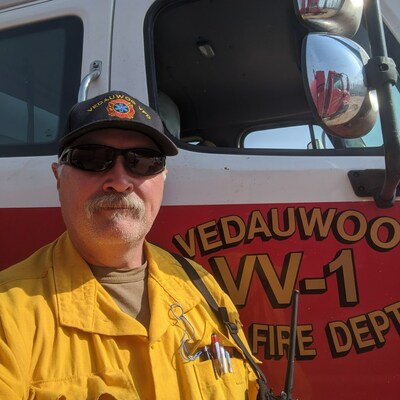
Harry Whitlock served 24 years in the U.S. Army and rose to the rank of major. He has 7 years as a firefighter with the Vedauwoo Volunteer Fire Department in Albany County, located in the southeast corner of Wyoming. He's held board positions and was chief for a year and a half. He says he would have volunteered sooner but wrongly thought his age and travel distance to the fire station would disqualify him.
Whitlock enlisted straight out of high school, and his military career directly prepared him for work as a first responder.
"My first taste of firefighting [was] when our unit was called out to help with wildland fires at
He's very clear on the advantages his military time gave him as he moved into his volunteer firefighting life.
"Understanding command structure, prioritizing missions with limited resources, the importance of training under all conditions and having self-discipline," he says. "Also, knowing sometimes you just have to embrace the suck and endure a challenging situation to accomplish a mission."
That "embracing the suck" sentiment is echoed by U.S. Navy veteran
"Something that people still don't understand is how the more miserable the environment, the happier I seem to be," Coleman says. "One big advantage to having military experience is understanding if you have good training habits that those skills will be there without conscious thought when needed most."
Coleman served in the Navy for 4 years, leaving as Petty Officer Third Class. He was a machinist mate in the submarine service responsible for operating systems from potable water to hydraulics as well as primary damage control response for things like flooding and fire.
"The veteran community blends with the fire service more than people who have not served in both realize," Coleman says. "As a veteran, I was surprised how at home I felt once the new-guy smell wore off."
Like Whitlock, Coleman had no firefighting experience prior to joining the armed forces. Now he serves as captain on the Floyd/Romance Fire Department, located in rural
"A big challenge I've had as a veteran in the fire service is members not understanding how detrimental bad training habits are — and that they won't rise to the occasion, that they will default to those bad habits," Coleman says. "I've been able to overcome this by slowing the training down and taking a military approach (not boot camp), explaining the why's. Then I use the crawl, walk, run system to slowly crank up the speed and intensity of evolutions.
"It has taken some time, but now the members see the results from good training practices and are incredibly engaged in the beginning stages of learning. This has helped build the camaraderie and confidence within the ranks."
Whitlock finds that it is the sense of purpose and family that makes the fire service so appealing to the veteran community.
"Belonging to the fire service has filled the void in my heart left by leaving the military," he says. "Working in a civilian job left me disenchanted, sometimes even disgusted, by the self-serving attitudes of many employees and bosses. I needed 'brothers and sisters in arms,' people with a concern for mixing public service with a little adventure."
Veterans looking to continue their service by helping their community as a volunteer firefighter can contact their local volunteer fire department or go to www.MakeMeAFirefighter.org to find local opportunities.
About The National Volunteer Fire Council
The National Volunteer Fire Council (NVFC) is the leading nonprofit membership association representing the interests of the volunteer fire, emergency medical, and rescue services. The NVFC serves as the voice of the volunteer in the national arena and provides critical advocacy, resources, programs, and education for first responders across the nation. Learn more at www.nvfc.org.
 View original content to download multimedia:https://www.prnewswire.com/news-releases/veterans-find-new-home-in-volunteer-fire-service-301980071.html
SOURCE National Volunteer Fire Council
Serious News for Serious Traders! Try StreetInsider.com Premium Free!
You May Also Be Interested In
- NIDS Co., Ltd. Confirms CES 2027 Participation, Pursues Expansion of Global Supply Chain for Environmental Sensors
- HK tightens oversight of building repair work
- Prader Willi Syndrome Clinical Trial Pipeline: Emerging Therapies and Key Developments Shaping the Treatment Landscape | DelveInsight
Create E-mail Alert Related Categories
PRNewswire, Press ReleasesRelated Entities
ARKSign up for StreetInsider Free!
Receive full access to all new and archived articles, unlimited portfolio tracking, e-mail alerts, custom newswires and RSS feeds - and more!
