




Unnecessary Cervical Cancer Screening Persists in Women Over 65

FREE Breaking News Alerts from StreetInsider.com!
StreetInsider.com Top Tickers, 10/21/2026
- Nasdaq leads Wall Street gains as SpaceX, Super Micro boost AI sentiment
- SpaceX, Tesla shares rise after Musk says committees exploring possible merger
- Brent falls as Iran's president discusses mediation with Pakistani army chief
- Nvidia’s Huang highlights AI benefits in Berlin speech amid wider European tour
- AI bubble about to burst? Not yet, Yardeni says
 Tweet
Tweet Share
Share E-mail
New national data reveals wide state-level variation despite long-standing clinical guidelines
Cervical cancer screening using the Papanicolaou ("Pap") test, and more recently a DNA-based human papillomavirus (HPV) test, dramatically reduced cervical cancer incidence in the
Cervical cancer screening guidelines from leading professional organizations -- including the U.S. Preventive Services Task Force and the American Cancer Society -- recommend discontinuing routine screening after age 65 in women who have had adequate prior screening and no prior abnormal results.
The American College of Obstetricians and Gynecologists advises, "If you are 65 or older, you do not need screening if you have no history of cervical changes and either three negative Pap test results in a row, two negative HPV test results in a row, or two negative co-test [Pap + HPV] results in a row within the past 10 years."
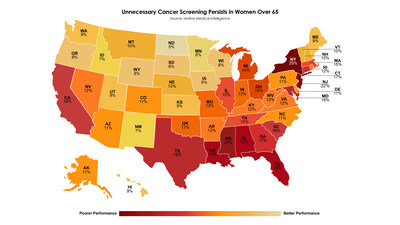
Analyzing national data from more than 100 million patients, Motive found that inappropriate cervical cancer screening among women over age 65 remains widespread. Rates ranged from 5% in
"Unnecessary screening can be harmful. False positive results can lead to unnecessary invasive testing and treatment, which may have side effects and complications," said Rich Klasco, MD, Chief Medical Officer at Motive, a leading healthcare data and analytics company advancing physician-level performance and value-based care. "As well, the emotional stress resulting from false positive results is an often-overlooked psychological consequence of over-screening."
The evidence supporting discontinuation of screening after age 65 is well established. In adequately screened women, the risk of developing new high-grade cervical lesions or cervical cancer is extremely low, while false-positive results become more common. As a result, ongoing screening in this population is considered low-value care and is not recommended by national guidelines.
Motive's analysis highlights meaningful geographic variation in adherence to these recommendations, suggesting differences in local practice patterns, clinician behavior, and health system incentives rather than differences in patient risk. Such variation represents an opportunity for targeted quality improvement and education efforts aimed at reducing unnecessary care.
"These patterns are not simply academic," said
About Motive Medical Intelligence
Motive Medical Intelligence is redefining healthcare performance analytics with an emphasis on transparency, physician trust, and real-world actionability. Motive is the partner of choice for organizations committed to eliminating low-value care and thriving in value-based care models. Through its proprietary Practicing Wisely solution, Motive is helping the industry eliminate the $400 billion in annual waste in the
Media Contact:
Supreme Communications for Motive Medical Intelligence
[email protected]

 View original content to download multimedia:https://www.prnewswire.com/news-releases/unnecessary-cervical-cancer-screening-persists-in-women-over-65-302677620.html
SOURCE Motive Medical Intelligence
Serious News for Serious Traders! Try StreetInsider.com Premium Free!
You May Also Be Interested In
- Denver Arts Week Returns Nov. 6-15
- Vermilion Energy Inc. Confirms Q3 2026 Release Date and Conference Call Details
- Tenaris donates more than $200K in robotic equipment to Arkansas Northeastern College
Create E-mail Alert Related Categories
PRNewswire, Press ReleasesSign up for StreetInsider Free!
Receive full access to all new and archived articles, unlimited portfolio tracking, e-mail alerts, custom newswires and RSS feeds - and more!
