




U.S. Department of Agriculture Proposes Eliminating the Roadless Rule

FREE Breaking News Alerts from StreetInsider.com!
StreetInsider.com Top Tickers, 10/11/2026
- Wall Street posts weekly gains with earnings, inflation data on tap
- Oil prices settle higher as more production shut ahead of hurricane
- Apple cuts iPhone 18 Pro orders due to soft demand, Nikkei Asia reports
- UBS flags level in gold prices where dip buyers will likely emerge
- Telecom stocks tumble on SpaceX spectrum acquisition news
 Tweet
Tweet Share
Share E-mail
National forests would see more road construction, timber harvest
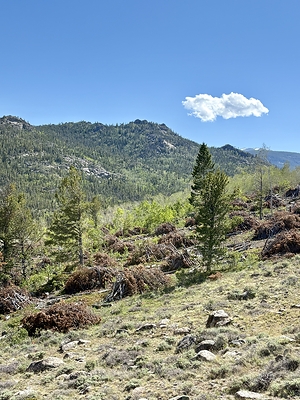
On
However, the findings from the USDA's own draft environmental impact statement (DEIS) indicate that repealing the rule is likely to cause economic and environmental harm to undeveloped backcountry forests, wildlife, water resources, and communities, while delivering little or no wildfire risk reduction and potentially increasing federal road maintenance costs.
To avoid these consequences, the department should reconsider its proposed repeal of the Roadless Rule and instead develop a balanced and lasting approach that conserves the important qualities of roadless areas while addressing evolving management needs.
Roadless Rule conserves forests and protects public safety
The Forest Service manages the 193 million acres that comprise the National Forest System, and it first adopted the Roadless Rule in 2001 to ease fiscal strain associated with road construction in national forests and retain the benefits of undeveloped forests for people and nature. The rule initially covered 58.5 million acres of public lands in 38 states and
Before the rule, about 386,000 miles of roads had been built on National Forest System lands, largely funded with federal timber subsidies intended to support production, leading to habitat loss and degrading water quality for hundreds of downstream communities. Since 2001, however, the rule has helped stem the loss of intact backcountry forests in inventoried roadless areas (IRAs) without hindering actions to protect critical habitat or public health and safety—particularly wildfire mitigation efforts.
The DEIS shows that since the rule took effect, IRAs have been treated to reduce wildfire risk—including through tree cutting, pile burning, chipping, and low-intensity burning—at similar rates as other National Forest System lands, demonstrating that the rule supports conservation alongside active management. Further, the DEIS acknowledges that road building within forests can actually lead to more human-caused fires.
Roadless Rule has broad support
Americans from across the political spectrum have consistently demonstrated support for the Roadless Rule. After the USDA announced in 2025 that it was considering eliminating the rule, the Forest Service received more than 625,000 public and stakeholder comments, 99% of which opposed repeal, and public opinion polling released early this year found strong bipartisan support for conserving intact backcountry forests and, specifically, for retaining the rule. Previous polls showed similarly high levels of public support for the rule.
Additionally, many Tribal Nations have repeatedly weighed in through resolutions opposing repeal, including those passed by the National Congress of American Indians, Affiliated Tribes of Northwest Indians, Rocky Mountain Tribal Leaders Council, and Coalition of Large Tribes. And 12 Southeast Alaska Tribes submitted a joint letter against repeal in the
Further, in early September, a bipartisan group of 164
What's happening now
The DEIS, which the USDA issued alongside its repeal proposal, examined three options: retaining the rule as is, repealing it, or removing 31.7 million acres—71% of the covered acreage—including all IRAs in
Yet despite the rule's flexible management approach, the broad support for it, and the DEIS findings indicating a wide range of potentially harmful effects from repeal—including that it would do little to reduce wildfire risk—the USDA favors eliminating the rule.
Almost no reduction in wildfire risk
A Forest Service review of data from 2014 to 2024 found little relative difference in acreage burned or fire intensity among wilderness areas, inventoried roadless areas, and other National Forest System lands.
The DEIS states that repeal could create more opportunities for projects that remove trees and brush to reduce wildfire fuel, including expanded timber harvest facilitated by roads, but it also observes that steep terrain and high harvesting costs in IRAs would generally limit that work. Furthermore, the DEIS says wildfire ignitions are about four times as common on other National Forest System lands as they are in IRAs and wilderness areas. And because most wildfire ignitions are caused by human activity—and often near roads—repeal is unlikely to change the overall risk of severe wildfire to communities or nature.
Economic Losses
Increased road maintenance costs
National Forest System lands contain more than twice as many road miles as the National Highway System, and the Forest Service already faces a
Moreover, according to the DEIS, gains in timber-sale revenue would not be enough to offset the costs of building and maintaining project-related roads, resulting in a net loss to taxpayers. Repealing the rule would open 44.7 million acres to timber production, but because of steep slopes; long hauling distances; and other technical, economic, and management limitations, annual sawtimber harvest would increase by only an estimated 5% to 10%, adding roughly
Harm to recreation economy
National forests provide many forms of recreation, and those with IRAs account for 76% of annual visits to the National Forest System. Repeal would lead to more roads and timber harvest and, therefore, more development in some backcountry lands. Although road-based recreation and developed campgrounds could increase, hiking, hunting, fishing, backcountry camping, and other forms of dispersed/quiet recreation could decline. Outdoor recreation spending makes up about 2.4% of the
Threats to municipal water supplies
Forests supply drinking water to more than 150 million Americans, and the DEIS anticipates population and water demand growth in many Western communities, including near roadless areas. Roads and logging can send sediment into waterways, degrading water quality and potentially intercepting, concentrating, or diverting natural flows. Municipal water systems in the Southwest are especially vulnerable because many people rely on watersheds that contain roadless areas, while systems in the South and East could experience significant effects because those regions' relatively accessible terrain may allow substantial roadbuilding and timber harvesting.
Wildlife at risk
The DEIS notes that road construction and timber harvest in former IRAs could harm terrestrial and aquatic wildlife through:
- Habitat loss, fragmentation, and degradation.
- Introduction and spread of invasive species.
- Increased barriers to wildlife movement, such as seasonal migrations.
- Increased direct mortality from wildlife-vehicle collisions.
- Decline in species abundance.
In some places where people have suppressed the natural role of wildfire, timber harvest can mimic fire's natural role by, for example, creating openings in forests, but the DEIS concluded that, overall, repeal "may affect, and is likely to adversely affect" 327 threatened and endangered species and 71 critical habitats.
What happens next
Developing a lasting policy solution that meets the twin objectives of conservation and effective management for backcountry IRAs is in the best interest of communities, businesses, and these ecologically important public forest lands. Given the DEIS analysis and the broad public, Tribal, and policymaker support for the rule, the USDA should reject both full repeal and removal of significant acreage from roadless protections, and it should develop and analyze a new option that advances a balanced and durable policy approach for the management of the backcountry forests within IRAs.
The USDA is accepting public comments on the proposal and draft analysis through

 View original content to download multimedia:https://www.prnewswire.com/news-releases/us-department-of-agriculture-proposes-eliminating-the-roadless-rule-302899973.html
SOURCE The Pew Charitable Trusts
Serious News for Serious Traders! Try StreetInsider.com Premium Free!
You May Also Be Interested In
- AnX Robotica Highlights Documented ProScan AI Workflow Performance from Submission to FDA
- Can Replacing a Mailbox Increase a Home’s Curb Appeal and Property Value
- The Cybersecurity Talent Gap Is an Economic Problem. Tolulope Michael Is Betting Non-Technical Workers Are the Answer
Create E-mail Alert Related Categories
PRNewswire, Press ReleasesSign up for StreetInsider Free!
Receive full access to all new and archived articles, unlimited portfolio tracking, e-mail alerts, custom newswires and RSS feeds - and more!
