




Three Scalp Conditions May Point to a Single Syndrome, New Study Finds

FREE Breaking News Alerts from StreetInsider.com!
StreetInsider.com Top Tickers, 10/7/2026
- S&P 500, Nasdaq reach record closing highs as focus pivots to earnings
- Oil prices fall nearly 2% as Middle East supply concerns ease
- U.S. 10-year yield climb revives dotcom-era parallels: UBS weighs in
- Goldman flags 2 key market risks if a climb in yields persists
- Shell CEO says Middle East oil flows reach 80% of prewar levels
 Tweet
Tweet Share
Share E-mail
Three patients shared nape scars, painful scalp inflammation, deep folds and related biopsy findings
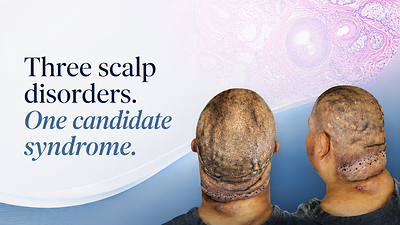
AKN causes inflamed bumps, thick scars or large masses at the back of the scalp. DCS causes painful, boggy or draining scalp lumps and permanent hair loss from scarring. CVG creates deep scalp folds and grooves.
"These conditions can be diagnosed and treated separately, so their relationship may be missed," said lead author
Study findings
Researchers reviewed 12 consecutive men with suspected or confirmed DCS at one
Three men, ages 30 to 40, met predefined criteria: class II or III tumorous AKN, DCS in at least three scalp zones and CVG in at least three zones. All reported nape disease first, followed one to two years later by widespread scalp inflammation and furrowing.
Biopsies supported AKN at the nape and DCS on the scalp. Normal-looking scalp in all three showed PIILIF, a pattern of lymphocytic inflammation and early fibrosis around the upper hair follicle. Samples from AKN, DCS and normal-looking scalp shared a similar immune-cell pattern, with more CD4-positive than CD8-positive T cells and prominent CD117-positive mast cells.
One patient's father showed a similar but unconfirmed clinical pattern: a nape plaque suggestive of AKN, boggy scalp lesions suggestive of DCS, diffuse CVG and a history of severe cystic acne involving the face and body. This father-son pattern raises the possibility of shared susceptibility.
Why it matters
CVG may signal more extensive disease. An earlier 108-patient AKN study identified a candidate AKN-CVG syndrome: CVG occurred in three of seven patients with scalp-wide AKN, compared with one of 101 without scalp-wide disease. In the affected scalp-wide cases, AKN preceded CVG by one to two years. The new study extends that pattern by adding scalp-wide DCS supported by examination and biopsy.
For people with AKN, new scalp folds or widespread boggy, painful or draining lumps should prompt a full-scalp check for DCS. In DCS, clinicians should examine the nape for AKN. Trichoscopy-guided biopsies from several sites can help clarify the diagnosis. Recognizing the pattern may support timely specialist care for those at risk of permanent scarring, scalp remodeling and disfigurement.
A companion DCS study found PIILIF in normal-looking scalp and inactive lesions, while active lesions showed additional pus-forming inflammation. Together, the findings suggest PIILIF may be a scalp-wide process linking AKN and DCS, while secondary CVG may reflect later scarring and remodeling.
About Dr. Sanusi Umar
Sanusi Umar, MD, is a board-certified dermatologist, founder and medical director of Dr. U Hair and Skin Clinic in Manhattan Beach, California, and head of Scalp and Hair Disorders at Harbor-UCLA Medical Center. He specializes in complex and scarring hair loss.
Learn more about PIILIF and when to seek evaluation.
Media Contact
Shelley Buckner
PR Coordinator, Dr. U Hair and Skin Clinic
+1-310-318-1500
[email protected]

 View original content to download multimedia:https://www.prnewswire.com/news-releases/three-scalp-conditions-may-point-to-a-single-syndrome-new-study-finds-302864423.html
SOURCE Dr. U Hair and Skin Clinic
Serious News for Serious Traders! Try StreetInsider.com Premium Free!
You May Also Be Interested In
- ChainIT® Brings "Your Face Is Your Password" to Web3 with Organizational MPC Wallets
- Market Logic's DeepSights MCP scales market insights reach and business impact through enterprise-wide AI workflows
- INBRAIN Neuroelectronics and MINIGRAPH European Consortium Develop Magnetically Guided Robotic Implantation for Ultra-Thin Graphene Brain-Computer Interfaces
Create E-mail Alert Related Categories
PRNewswire, Press ReleasesSign up for StreetInsider Free!
Receive full access to all new and archived articles, unlimited portfolio tracking, e-mail alerts, custom newswires and RSS feeds - and more!
