



Surgeons: Obesity Isn't About Willpower -- It's a Treatable Medical Condition
 Tweet
Tweet Share
Share E-mail
Only about 1% of eligible patients receive bariatric surgery, though research shows it can help many maintain significant long-term weight loss
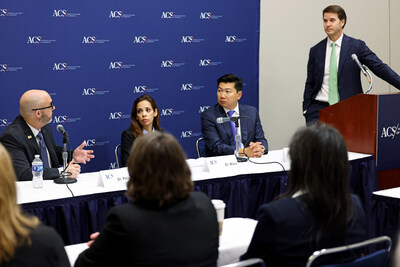
The news conference, held during the ACS Clinical Congress 2025 in
Moderator
"People come to us with the stigma that they have failed because diet and exercise didn't work, and everyone told them their whole life that it should work," Dr. Hutter said. He added that, like cancer care, obesity is a complex disease where treatments need to be tailored to the patient and include multiple options. "We don't blame a patient when a patient's cancer spreads. We do everything we can to treat it."
The U.S. Centers for Disease Control and Prevention defines obesity as having a body mass index (BMI) of 30 or higher, and severe obesity as a BMI of 40 or higher.
Reframing Obesity as a Health Condition
The obesity epidemic is expected to grow rapidly in the next decade to affect almost half of Americans, noted
Obesity is linked to an increased risk of multiple cancers, as well as several other chronic health conditions, including type 2 diabetes, heart disease, high blood pressure, sleep apnea, and reduced fertility in both men and women. Treating obesity as a health condition can reverse or improve these conditions and have a profound effect on helping patients feel seen and heard for the first time.
"We have shown after decades of research that this is a metabolic disease, and it's unfair to put all of this on the patients alone. This is a condition that is effectively treated, and if effectively treated, can help people live longer and healthier lives," he said. "That's the conversation we need to be having with patients."
Deciding Between Surgery and Medication
The best treatment for obesity depends on a patient's specific health conditions and goals, the surgeons said. While lifestyle changes such as diet, exercise, and behavioral support may work for some, others with more severe obesity often need surgery or weight-loss drugs — sometimes combined — to achieve lasting health benefits.
When considering between surgery and weight loss drugs, or when to use both, the surgeons emphasized several factors:
- GLP-1s require long-term commitment: Most patients with obesity must continue taking GLP-1s for the long term to maintain weight loss, which can be challenging or impractical. Research shows that about 1 in 8 U.S. adults report having used a GLP-1 drug in their lifetime, but up to two-thirds of patients stop taking the drugs after a year and regain weight.
- Surgery helps patients maintain greater weight loss: Weight loss drugs can help patients lose about 15% of their total body weight in real-world settings outside of highly supervised clinical trials; bariatric surgery typically results in roughly twice that amount — around 30%. The weight loss benefit may be even greater when GLP-1 drugs are used before or after surgery.
- Surgery usually has some insurance coverage: Insurance coverage for bariatric surgery varies by state and insurance plan, and remains a barrier for many patients. However, bariatric surgery is generally covered by most commercial insurers and by Medicaid when specific medical criteria are met. Insurance coverage for weight loss medications is usually much more variable.
"Obesity is not a failure of willpower — it is a treatable medical condition," said Monali Misra, MD, FACS, FRCSC, associate director of the Cedars-Sinai Marina Weight Management Center and director of the bariatric surgery program at Beverly Hills Physicians. "It is essential, though, for patients to have accurate information when they're making decisions about their care."
For patients with more severe obesity,
Seeking Quality Care for Obesity Treatment
The surgeons emphasized the need for comprehensive education when discussing the benefits, risks, and long-term effects of obesity treatments with patients. Advances in surgery have enabled surgeries such as gastric bypass and sleeve gastrectomy to be performed laparoscopically with smaller incisions, and most bariatric surgeries require shorter hospital stays than in the past. Yet only about 1% of patients who qualify for bariatric surgery based on medical criteria receive it — a gap that underscores the need for broader access and patient education on all available treatment options for obesity, the surgeons said.
The Metabolic and Bariatric Surgery Accreditation and Quality Improvement Program (MBSAQIP) — a joint initiative of the ACS and the American Society for Metabolic and Bariatric Surgery (ASMBS) — accredits bariatric surgery centers across the country, setting national standards to ensure safe, high-quality care for patients undergoing weight-loss surgery.
Accreditation programs such as MBSAQIP support evidence-based care and allow patients with obesity to explore all appropriate options, including surgery, noted
"We must recognize that obesity has proven treatments, yet far too many people are being left behind," he said. "With the use of precision treatment, we need to be talking to patients and customizing the treatment for their disease process."
Watch the full news conference. Patients can use the ACS Find a Hospital tool to locate an accredited MBSAQIP center.
Journalists may email [email protected] to connect with experts on obesity medicine. Additional resources for journalists and the public can be found at www.facs.org/obesityresources.
About the American College of Surgeons
The American College of Surgeons (ACS) is a scientific and educational organization of surgeons that was founded in 1913 to raise the standards of surgical practice and improve the quality of care for all surgical patients. The ACS is dedicated to the ethical and competent practice of surgery. Its achievements have significantly influenced the course of scientific surgery in America and have established it as an important advocate for all surgical patients. The ACS has approximately 90,000 members and is the largest organization of surgeons in the world. "FACS" designates that a surgeon is a Fellow of the ACS.
Follow the ACS on social media: X | Instagram | YouTube | LinkedIn | Facebook

 View original content to download multimedia:https://www.prnewswire.com/news-releases/surgeons-obesity-isnt-about-willpower--its-a-treatable-medical-condition-302591728.html
SOURCE American College of Surgeons
Serious News for Serious Traders! Try StreetInsider.com Premium Free!
You May Also Be Interested In
- Everlight Wins 2026 Madison People's Choice Award
- Definium Therapeutics to Discuss Topline Results from Phase 3 Panorama Study in Generalized Anxiety Disorder on September 14, 2026
- Phase III MAVERICK Trial Supports Brain MRI Surveillance Alone as Standard of Care for Small-Cell Lung Cancer
Create E-mail Alert Related Categories
PRNewswire, Press ReleasesSign up for StreetInsider Free!
Receive full access to all new and archived articles, unlimited portfolio tracking, e-mail alerts, custom newswires and RSS feeds - and more!
