




Strengthening the U.S. Retirement System Requires Recognizing and Addressing Demographic Disparities

FREE Breaking News Alerts from StreetInsider.com!
StreetInsider.com Top Tickers, 10/17/2026
- Wall Street tumbles as worries about AI trade and high oil prices weigh
- Oil touches $110 a barrel for first time since May on Middle East, Russia supply fears
- Stay risk-off as higher real yields and AI volatility threaten stocks: BofA
- Apple’s first foldable iPhone sells out within minutes as preorders begin
- CoreWeave bond rout tests market's math on AI buildout
 Tweet
Tweet Share
Share E-mail
New report examines demographic influences on retirement readiness among Americans
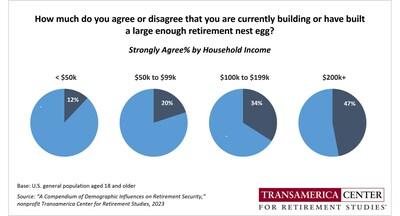
Just 12% of individuals with a household income (HHI) of less than
"Demographic influences can profoundly affect an individual's and family's ability to prepare for a financially secure retirement. A greater understanding of these influences can help policymakers, the retirement industry, and employers to identify opportunities, envision solutions, and inform priorities for strengthening our retirement system," said
As part of TCRS' 23rd Annual Retirement Survey, one of the largest and longest-running surveys of its kind, the Compendium is based on a survey of the
Retirement Readiness Increases Dramatically With Household Income
"A person's ability to financially prepare for retirement is greatly impacted by their household income. Lower income earners have fewer funds available to save and, moreover, they have less access to employer-sponsored benefits that can help them save, invest, and protect their savings. As a result, they often end up relying on Social Security to fund their retirement," said Collinson.
- Fifty-two percent of individuals with an HHI of less than
$50,000 rely or expect to rely primarily on Social Security in retirement, compared with 34% of those with an HHI of$50,000 to$99,999 , 20% with an HHI of$100,000 to$199,999 , and nine percent with an HHI of$200 ,000+. - Retirement savings dramatically increase with household income. Among those not yet retired, individuals with an HHI of less than
$50,000 have saved just$1,000 in total household retirement accounts. In contrast, those with an HHI of$50,000 to$99,999 have saved$36,000 , those with an HHI of$100,000 to$199,999 have saved$156,000 , and those with an HHI of$200 ,000+ have saved$609,000 (estimated medians). - Only 59% of employed workers with an HHI of less than
$50,000 are offered a 401(k) or similar plan by their employer, and 59% of them participate. In comparison, 74% of those with an HHI of$50,000 to$99,999 are offered a plan, and 76% participate. Eighty-four percent with an HHI of$100,000 to$199,999 are offered a plan, and 86% participate. Eighty-four percent of employed workers with an HHI of$200 ,000+ are offered a plan, and 95% participate. - Among those who have not yet retired, 52% percent of individuals with an HHI of less than
$50,000 and 44% of those with an HHI of$50,000 to$99,999 expect to retire at age 70 or older or do not plan to retire, compared with 32% of those with an HHI of$100,000 to$199,000 and 30% with an HHI of$200 ,000+.
The Saver's Credit is an IRS tax credit to promote retirement savings among low- to moderate-income individuals saving in a 401(k) or similar plan or IRA. Fewer than four in 10 Americans who potentially meet the tax credit's income eligibility requirements are aware of it.
Rural Residents Are Getting Left Behind
"Economic activity in the
- Only 17% of rural residents are very confident they will be able to fully retire with a comfortable lifestyle, compared with 20% of suburban and 27% of urban residents.
- Rural residents have lower household incomes than urban and suburban residents (
$50,000 ,$66,000 ,$82,000 , respectively) (estimated medians). - More than four in 10 rural residents (41%) rely or expect to rely on Social Security as their primary source of income in retirement, compared with just 30% of both suburban and urban residents.
- Among those who are not yet retired, rural residents have saved
$7,000 in total household retirement accounts, while urban residents have saved$50,000 and suburban residents have saved$67,000 (estimated medians). - Only 67% of employed rural workers are offered a 401(k) or similar plan by their employer, and 72% of them participate. In comparison, 77% of both suburban and urban workers are offered a plan, and approximately eight in 10 participate (81%, 80%, respectively).
- Almost half of rural residents (48%) who are not yet retired expect to retire at age 70 or older or do not plan to retire, compared with 40% of both suburban and urban residents.
Influences of Race and Ethnicity on Retirement Readiness
"The
- AAPI people report the highest household income at
$99,000 , followed by White ($77,000 ), Hispanic ($56,000 ), and Black people ($50,000 ) (estimated medians). - Black (37%) and White people (34%) are more likely to rely or expect to rely on Social Security as their primary source of retirement income than Hispanic (28%) and AAPI people (19%).
- Among those who are not yet retired, AAPI people have saved
$74,000 in total household retirement accounts while White have saved$60,000 , Hispanic have saved$29,000 , and Black people have saved$17,000 (estimated medians). - Approximately seven in 10 people who are not yet retired share concerns that Social Security will not be there for them when they retire including Hispanic (75%), White (72%), AAPI (70%), and Black people (67%).
- Among employed workers, Black (78%) and White workers (76%) are generally more likely than Hispanic (72%) and AAPI workers (71%) to be offered a 401(k) or similar plan by their employer. However, among those offered a plan, Black workers (74%) are less likely than White (81%), Hispanic (79%), and AAPI workers (82%) to participate in the plan.
- Many people who are not yet retired expect to retire after age 70 or do not plan to retire including Hispanic (43%), White (42%), Black (39%), and AAPI (35%).
Women Face Greater Retirement-Related Risks Than Men
"Women are at greater risk than men of not achieving a secure retirement. For women, the persistency of the gender pay gap, limited access to employer benefits, and time out of the workforce for parenting and caregiving often translates to lower retirement savings and fewer government benefits," said Collinson.
- Women report a total household income of
$59,000 which is substantially less than the$82,000 reported by men (estimated medians). - Fifty-two percent of women are employed or self-employed compared with 67% of men.
- Forty-seven percent of women have trouble making ends meet, compared with 39% of men.
- Almost four in 10 women (38%) rely or expect to rely on Social Security as their primary source of retirement income, compared with 26% of men.
- Women who are not yet retired have saved
$21,000 in total household retirement accounts, an amount which is much less than the$73,000 saved by men (estimated medians). - Among employed workers, women are less likely than men to be offered a 401(k) or similar plan by their employers (71%, 79%, respectively). And, among them, women are less likely than men to participate in it (76%, 82%, respectively).
- Forty-four percent of women and 38% of men expect to retire at age 70 or older or do not plan to retire.
An Improving Retirement Outlook for the LGBTQ+ Community
"Historically, the LGBTQ+ community has been a demographic segment at greater risk of retiring in poverty. In recent decades, however, the LGBTQ+ community has made great progress with the enactment of legal protections and recognition of rights. Importantly, the legalization of same-sex marriage makes same-sex spouses eligible for government and employer-sponsored retirement benefits," said Collinson. "Today's LGBTQ+ community has a more favorable retirement outlook than prior generations, but they still face headwinds."
Many LGBTQ+ people are early in their careers, have more junior-level jobs, and are just getting started with retirement savings. Many experienced employment-related setbacks during the pandemic.
- Survey respondents self-identifying as LGBTQ+ are much younger than non-LGBTQ+ (age 33, age 48, respectively) (medians).
- LGBTQ+ people have a total household income of
$59,000 while non-LGBTQ+ report having$71,000 (estimated medians). LGBTQ+ are less likely than non-LGBTQ+ to be married or living with a partner (38%, 54%, respectively). - Thirty-five percent of the LGBTQ+ and 31% of non-LGBTQ+ people indicate their financial situation has worsened since the pandemic began.
- LGBTQ+ and non-LGBTQ+ people are similarly like to rely or expect to rely on Social Security as their primary source of retirement income (30%, 33%, respectively).
- Among those who are not yet retired, the LGBTQ+ have saved just
$14,000 in total household retirement accounts, an amount which is almost one-third of the$51,000 saved by non-LGBTQ+ (estimated medians). - Employed LGBTQ+ workers are less likely than non-LGBTQ+ workers to be offered a 401(k) or similar plan by their employers (70%, 76%, respectively) in part due to their occupations. Among those who are offered a plan, LGBTQ+ workers are less likely than non-LGBTQ+ workers to participate in the plan (69%, 81%, respectively).
- Forty-seven percent the LGBTQ+ and 40% of non-LGBTQ+ people expect to retire at age 70 or older or do not plan to retire.
"Strengthening the
The Compendium is the fifth report from TCRS' 23rd Annual Retirement Survey with other reports featuring analysis about employer business practices and employee benefit offerings, the multigenerational workforce, pre-retiree expectations and retiree realities, and women and retirement. Visit transamericainstitute.org to view the Compendium and other reports. Follow TCRS on X (formerly Twitter) and Transamerica Institute on LinkedIn, Twitter, and Facebook.
About Transamerica Center for Retirement Studies
Transamerica Center for Retirement Studies® (TCRS) is a division of Transamerica Institute®, a nonprofit, private foundation. Transamerica Institute is funded by contributions from Transamerica Life Insurance Company and its affiliates. TCRS and its representatives cannot give ERISA, tax, investment, or legal advice. This material is provided for informational purposes only and should not be construed as ERISA, tax, investment, or legal advice. Interested parties must consult and rely solely upon their independent advisors regarding their situation and the concepts presented here. For more information, visit www.transamericainstitute.org and follow TCRS on X (formerly Twitter) at @TCRStudies.
About the 23rd Annual Transamerica Retirement Survey
A 22-minute online survey was conducted within the
News
Transamerica Center for Retirement Studies®
Media Contact:
[email protected]
425-753-5719
 View original content to download multimedia:https://www.prnewswire.com/news-releases/strengthening-the-us-retirement-system-requires-recognizing-and-addressing-demographic-disparities-302016356.html
SOURCE Transamerica Center for Retirement Studies
Serious News for Serious Traders! Try StreetInsider.com Premium Free!
You May Also Be Interested In
- AGFUND wins international award for excellence in inclusive banking and social impact
- OMODA & JAECOO Launches Full Lifecycle Carbon Management Service, Releases Sino-European Mutually Recognised LCA Report for JAECOO 7 SHS
- Official Trump Price Prediction: Meme Volatility or Remittix’s Payments Roadmap? The Pre-Launch Choice Comes Into Focus
Create E-mail Alert Related Categories
PRNewswire, Press ReleasesRelated Entities
TwitterSign up for StreetInsider Free!
Receive full access to all new and archived articles, unlimited portfolio tracking, e-mail alerts, custom newswires and RSS feeds - and more!
