




Shapeshifting cancers' masters, unmasked

FREE Breaking News Alerts from StreetInsider.com!
StreetInsider.com Top Tickers, 10/26/2026
- Wall Street closes lower to end rocky week
- Meta's capital-raising plans expose a major weakness in the AI boom
- Oil prices jump $3 on Houthi attacks, oil spill, highest settlement since April
- BofA flags further downside risk for stocks, yields and dollar
- SpaceX cell-site ambitions lift tower stocks and weigh on carriers
 Tweet
Tweet Share
Share E-mail
Recent studies from the Vakoc lab shine a new light on two hard-to-treat carcinomas, revealing vulnerabilities that could "tee up targets for therapy," he says.
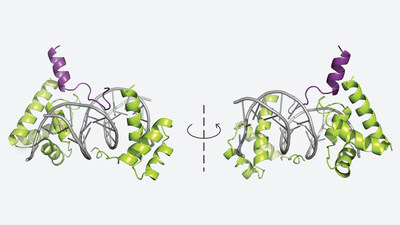
In a study published in Nature Communications, CSHL researchers identify a protein that determines whether pancreatic cancer cells maintain their classical form or begin to look and act more like skin cells. Meanwhile, in Cell Reports, they uncover the crystal structure of another group of proteins that plays a key role in tuft cell lung cancer.
This latest finding represents a full-circle moment for the lab, Vakoc explains. When he and his colleagues discovered tuft cell lung cancer in 2018, they were searching for epigenetic factors that drive tumor growth. In other words, they were looking beyond the genes themselves and into the processes of transcription and gene regulation. Now, in collaboration with CSHL Director of Research
Together, the two new studies continue to build on one of Vakoc's main goals of the last 17 years. "We aim to identify the master regulators of cellular identity," he says. The hope is that these "master regulators" could someday become the targets of new medicines, much like hormone therapies now used against breast and prostate cancers that were once difficult to treat. Of course, there's still a long way to go.
Should the findings eventually lead to new drugs, Vakoc hopes they will be engineered to target the cancer without harming other parts of the patient's body. That ethos is apparent in both of his lab's latest studies. Whether going after mouse models of pancreatic cancer or lung cancer, they see no evidence of toxicity or damage to vital organs. "We're setting a higher bar for specificity when it comes to new cancer targets and treatments," Vakoc says.
They're not just working toward new medicines. They're coming to a deeper understanding of cellular identity, and in so doing, they're helping establish a new and better standard of care.
About Cold Spring Harbor Laboratory
Founded in 1890, Cold Spring Harbor Laboratory has shaped contemporary biomedical research and education with programs in cancer, neuroscience, plant biology and quantitative biology. Home to eight Nobel Prize winners, the private, not-for-profit Laboratory employs 1,000 people including 600 scientists, students and technicians. For more information, visit www.cshl.edu.
 View original content to download multimedia:https://www.prnewswire.com/news-releases/shapeshifting-cancers-masters-unmasked-302623114.html
SOURCE Cold Spring Harbor Laboratory
Serious News for Serious Traders! Try StreetInsider.com Premium Free!
You May Also Be Interested In
- Bitfire Group Reports Q3 Digital Assets Under Management of US$221 Million, Up 60.1%
- CTP launches Serbia's largest industrial and logistics park after securing 10,000 sqm pre-let
- $75K Next? Bitcoin Price Prediction Faces a Hormuz Oil Shock While AlphaPepe Crosses $3.2M in Presale
Create E-mail Alert Related Categories
PRNewswire, Press ReleasesSign up for StreetInsider Free!
Receive full access to all new and archived articles, unlimited portfolio tracking, e-mail alerts, custom newswires and RSS feeds - and more!
