



Peanuts and Peanut Butter Support Women's Health
 Tweet
Tweet Share
Share E-mail
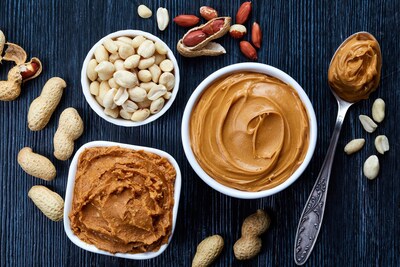
To help women protect their health, The Peanut Institute is sharing information on the benefits that regular consumption of peanuts and peanut butter deliver to females at every stage of life.
"It's essential for women to build their diets around nutrient-dense foods. I routinely suggest incorporating whole grains, spinach, berries, peanuts, beans and lentils because they deliver a variety of vitamins and minerals and they have disease-fighting properties," says Dr.
In fact, for mothers, poor nutrition and lifestyle behaviors can be passed on and may place children at risk for a cognitive impairment, lower resistance to infections and higher rates of disease and death.1
Birth to 24 Months
A child's first two years are referred to as "B24" and are a critical time in the growth and development of the brain and body. The most recent Dietary Guidelines for Americans highlights peanuts as "an important source of iron, zinc, protein, choline and long chain polyunsaturated fatty acids."2
Although many may not recognize the term polyunsaturated fatty acids, they are crucial for supporting the rapid brain development that occurs in a child's first two years. Arginine, also found in peanuts, is an essential nutrient that's associated with higher growth velocity and linear growth.3
When to introduce peanuts is a question many parents have. The American Academy of Pediatrics recommends adding complementary foods (foods other than breast milk or infant formula) to a baby's diet at around six months old.4
Offering baby-friendly peanut foods early on can reduce a child's risk of developing peanut allergies, and studies show pairing vegetables with a preferred taste (like thinned peanut butter) can significantly increase veggie intake.5 It's important to remember that infants should not be fed whole peanuts or sticky foods due to the choking risk. Initially, parents can thin a very small amount of peanut butter or peanut powder with water and mix it into rice cereal.
Youngsters and Teens
These days, children are on the go from early on and throughout their teen years. They're often busy with sports, clubs and other activities and require enough "fuel" to keep growing and going.
At this phase of life, it's important for young girls and teens to establish a pattern of healthy eating, including snacks and meals.
"As a nutrition scientist, I know that eating routines and habits that are set early become engrained and are usually followed for decades to come. Moms and dads should lead by example so their daughters can model smart decision-making around food," says Sterling. "For example, offering healthy snacks like fresh veggies or fruit paired with peanut butter or peanuts is a great option. The combination tastes good and delivers a plant-based protein and important vitamins and minerals that young girls need to recharge."
On the subject of protein, at 7 grams per ounce, peanuts have more protein than any other nut.6. That's especially important for girls who work out since protein helps muscles grow, recover and stay healthy.7 Plus, peanuts are satisfying and an easy, on-the-go snack that can be stowed in a backpack, locker or car.
Adults and Seniors
As an adult, it's important to maintain a healthy weight, remain active and eat smart to set a strong foundation for the golden years.
The Journal of the American Heart Association found that following a plant-based diet with nuts, legumes, fruits and veggies can lower the risk of dying prematurely from multiple causes, including cardiovascular disease, one of the leading causes of death worldwide.8 In addition, phytosterols, like those found in peanuts, may inhibit the growth of cancers that affect millions of women, including lung, stomach, ovarian, colon and breast cancers.9-12
As they age, staying sharp is another concern for women. A 2015 study found that consuming 10 grams of peanut butter, peanuts or tree nuts daily was associated with a 44% reduced risk of death from neurodegenerative diseases.13 An earlier study published in the Journal of Neurology, Neurosurgery & Psychiatry showed that adults 65 and older who consumed more niacin from foods had slower rates of cognitive decline, and a 70% lower risk for Alzheimer's disease.14
This Women's Health Month, The Peanut Institute is encouraging women of all ages to take a moment to evaluate their eating habits and commit to making one or two improvements.
"Change doesn't happen overnight but, if you start small and continue to make smart, healthy choices, your body and brain will benefit," adds Sterling.
For more health news and tasty recipes that include peanuts and peanut butter, visit PeanutInstitute.com or follow Facebook, Twitter, Instagram, LinkedIn and Pinterest.
Based in
Sources:
1.
2. USDA. Dietary Guidelines for Americans. 2020; Available from: https://www.dietaryguidelines.gov/sites/default/files/2020-12/Dietary_Guidelines_for_Americans_2020-2025.pdf.
3.
4. Pediatrics, A.A.o. Infant Food and Feeding. 2021; Available from: https://www.aap.org/en/patient-care/healthy-active-living-for-families/.
5. Johnston, C.A., et al., Increasing vegetable intake in Mexican-American youth: a randomized controlled trial. J Am Diet Assoc, 2011. 111(5): p. 716-20.
6. USDA National Nutrient Database.
7. Kreider RB, Campbell B.Protein for exercise and recovery. Phys Sportsmed. 2009 Jun;37(2):13-21. doi: 10.3810/psm.2009.06.1705. Review. PubMed PMID: 20048505.
8. Kim H, Caulfield LE,
9. Woyengo TA, Ramprasath VR, Jones PJ. Anticancer effects of phytosterols. Eur J Clin Nutr. 2009 Jul;63(7):813-20. doi: 10.1038/ejcn.2009.29. Epub 2009
10. Awad AB, Chan KC, Downie AC, Fink CS. Peanuts as a source of beta-sitosterol, a sterol with anticancer properties. Nutr Cancer. 2000;36(2):238-41. PubMed PMID: 10890036.
11. Awad AB, Fink CS. Phytosterols as anticancer dietary components: evidence and mechanism of action. J Nutr. 2000 Sep;130(9):2127-30. Review. PubMed PMID: 10958802.
12. van den Brandt PA, Nieuwenhuis L. Tree nut, peanut, and peanut butter intake and risk of postmenopausal breast cancer: The Netherlands Cohort Study. Cancer Causes Control. 2018 Jan;29(1):63-75. doi: 10.1007/s10552-017-0979-7. Epub 2017 Nov 22. PubMed PMID: 29168062; PubMed Central PMCID: PMC5752734.
13. van den Brandt PA, Schouten LJ. Relationship of tree nut, peanut and peanut butter intake with total and cause-specific mortality: a cohort study and meta-analysis. Int J Epidemiol. 2015 Jun;44(3):1038-49. doi: 10.1093/ije/dyv039. Epub 2015 Jun 11. PubMed PMID: 26066329.
14. Morris MC, Evans DA, Bienias JL, Scherr PA,
 View original content to download multimedia:https://www.prnewswire.com/news-releases/peanuts-and-peanut-butter-support-womens-health-302139880.html
SOURCE The Peanut Institute
Serious News for Serious Traders! Try StreetInsider.com Premium Free!
You May Also Be Interested In
- Medicare Insurance Expert David Wiley Explains Dental Insurance Waiting Period in HelloNation
- EmployLaw Group LLP Marks One Year of Educating and Protecting California Employers
- Square 9 Highlights 5 Essential Security Practices for Safeguarding Extracted Document Data
Create E-mail Alert Related Categories
PRNewswire, Press ReleasesRelated Entities
Twitter, S1Sign up for StreetInsider Free!
Receive full access to all new and archived articles, unlimited portfolio tracking, e-mail alerts, custom newswires and RSS feeds - and more!
