



NASA's Heliophysics Experiment to Study Sun on European Mission
 Tweet
Tweet Share
Share E-mail
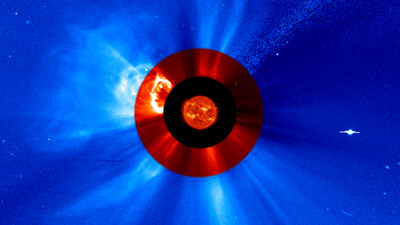
Once integrated aboard the ESA's (European Space Agency's) Vigil space weather mission, JEDI's two telescopes will focus on the middle layer of the solar corona, a region of the Sun's atmosphere that plays a key role in creating the solar wind and the solar eruptions that cause space weather.
The Vigil space mission, planned to launch in 2031, is expected to provide around-the-clock space weather data from a unique position at Sun-Earth Lagrange point 5 – a gravitationally stable point about 60 degrees behind Earth in its orbit. This vantage point will give space weather researchers and forecasters a new angle to study the Sun and its eruptions. NASA's JEDI will be the first instrument to provide a constant view of the Sun from this perspective in extreme ultraviolet light – giving scientists a trove of new data for research, while simultaneously supporting Vigil's ability to monitor space weather.
"JEDI's observations will help us link the features we see on the Sun's surface with what we measure in the solar atmosphere, the corona," said
The project is led by
For more information on NASA heliophysics missions, visit:
https://science.nasa.gov/heliophysics
 View original content to download multimedia:https://www.prnewswire.com/news-releases/nasas-heliophysics-experiment-to-study-sun-on-european-mission-302152007.html
SOURCE NASA
Serious News for Serious Traders! Try StreetInsider.com Premium Free!
You May Also Be Interested In
- Go Hyundai of Renton Brings Hyundai Hope on Wheels Mission Closer to Home
- Lawsuit Filed Against Apple Alleging AirTag Design Enabled Covert Tracking of Louisiana Woman
- Weyerhaeuser to Release Third Quarter Results on October 29
Create E-mail Alert Related Categories
PRNewswire, Press ReleasesSign up for StreetInsider Free!
Receive full access to all new and archived articles, unlimited portfolio tracking, e-mail alerts, custom newswires and RSS feeds - and more!
