



NASA to Cover its 31st SpaceX Resupply Mission Station Departure
 Tweet
Tweet Share
Share E-mail
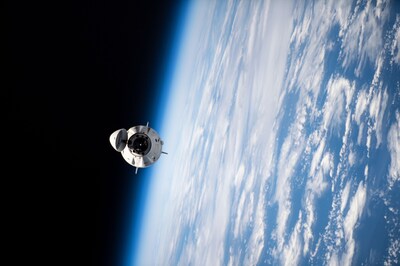
NASA's live coverage of undocking and departure begins at
The Dragon spacecraft will undock from the forward port of the space station's Harmony module at
After re-entering Earth's atmosphere, the spacecraft will splash down off the coast of
Filled with nearly 6,000 pounds of crew supplies, science investigations, and equipment, the spacecraft arrived to the orbiting laboratory
Dragon will carry back to Earth thousands of pounds of supplies and scientific experiments designed to take advantage of the space station's microgravity environment. Splashing down off the coast of
Scientific hardware and samples returning to Earth include GISMOS (Genes in Space Molecular Operations and Sequencing), which successfully conducted in-orbit sequencing of microbial DNA from the space station water system, and marks the first real look at the microbial population of the water system. In addition, SpaceTED (Space Tissue Equivalent Dosimeter) returns to Earth after collecting data on crew radiation exposure and characterizes the space radiation environment. The dosimeter is a student-developed technology demonstration and effectively operated for 11 months on station – six months longer than intended because of its success.
Additionally, two specimens printed with ESA's (European Space Agency) Metal 3D Printer, will go to researchers for post-processing and analysis. Researchers will compare the specimens printed in microgravity with those printed on Earth. The goal is to demonstrate the capability to perform metal deposition, or the layering of metals, in 3D under sustained microgravity conditions and manufacture test specimens. Researchers aim to understand the performance and limitations of the chosen technology and become familiar with crewed and remote operations of the instrument onboard a space habitat.
Also returning on spacecraft is the International Space Art and Poetry Contest, which invited students and educators around the world to submit drawings, paintings, or poems. Winning art submissions were printed on station, photographed in the cupola, and will be returned to their creators on Earth. In addition, Plasmonic Bubbles researchers will observe high-speed video of bubble behavior in microgravity to understand fundamental processes that occur on a heated bubble surface. Results may improve understanding of how molecules are deposited on bubble surfaces and enhance detection methods for health care and environmental industries.
For more than two decades, people have lived and worked continuously aboard the
Get breaking news, images and features from the space station on Instagram, Facebook, and X.
Learn more about the
https://www.nasa.gov/international-space-station/
 View original content to download multimedia:https://www.prnewswire.com/news-releases/nasa-to-cover-its-31st-spacex-resupply-mission-station-departure-302319782.html
SOURCE NASA
Serious News for Serious Traders! Try StreetInsider.com Premium Free!
You May Also Be Interested In
- Why Trauma-Informed Training Matters in the Legal Profession
- Investment and Arbitrage: Different Purposes, Different Tools
- Voters Want Leaders to Plan Ahead as the State Grows
Create E-mail Alert Related Categories
PRNewswire, Press ReleasesSign up for StreetInsider Free!
Receive full access to all new and archived articles, unlimited portfolio tracking, e-mail alerts, custom newswires and RSS feeds - and more!
