




NASA Launches Small Climate Satellite to Study Earth's Poles

FREE Breaking News Alerts from StreetInsider.com!
StreetInsider.com Top Tickers, 10/10/2026
- Wall Street posts weekly gains with earnings, inflation data on tap
- Oil prices settle higher as more production shut ahead of hurricane
- Apple cuts iPhone 18 Pro orders due to soft demand, Nikkei Asia reports
- UBS flags level in gold prices where dip buyers will likely emerge
- Telecom stocks tumble on SpaceX spectrum acquisition news
 Tweet
Tweet Share
Share E-mail
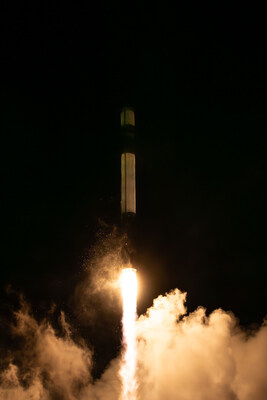
The agency's PREFIRE (Polar Radiant Energy in the Far-InfraRed Experiment) mission consists of two shoebox-size cube satellites, or CubeSats, that will measure the amount of heat Earth radiates into space from two of the coldest, most remote regions on the planet. Data from the PREFIRE mission will help researchers better predict how Earth's ice, seas, and weather will change in a warming world.
"NASA's innovative PREFIRE mission will fill a gap in our understanding of the Earth system – providing our scientists a detailed picture of how Earth's polar regions influence how much energy our planet absorbs and releases," said
Ground controllers successfully established communications with the CubeSat at
At the heart of the PREFIRE mission is Earth's energy budget – the balance between incoming heat energy from the Sun and the outgoing heat given off by the planet. The difference between the two is what determines the planet's temperature and climate. A lot of the heat radiated from
The water vapor content of the atmosphere, along with the presence, structure, and composition of clouds, influences the amount of far-infrared radiation that escapes into space from Earth's poles. Data collected from PREFIRE will give researchers information on where and when far-infrared energy radiates from
"The PREFIRE CubeSats may be small, but they're going to close a big gap in our knowledge about Earth's energy budget," said
The mission's CubeSats each carry an instrument called a thermal infrared spectrometer, which use specially shaped mirrors and sensors to measure infrared wavelengths. Miniaturizing the instruments to fit on CubeSats necessitated downsizing some parts while scaling up other components.
"Our planet is changing quickly, and in places like
NASA's Launch Services Program, based out of the agency's
The PREFIRE mission was jointly developed by NASA and the University of Wisconsin-Madison. NASA JPL manages the mission for the agency's Science Mission Directorate and provided the spectrometers. Blue Canyon Technologies built the CubeSats and the University of Wisconsin-Madison will process the data the instruments collect. The launch services provider is Rocket Lab USA Inc. of
To learn more about PREFIRE, visit:
https://science.nasa.gov/mission/prefire/

 View original content to download multimedia:https://www.prnewswire.com/news-releases/nasa-launches-small-climate-satellite-to-study-earths-poles-302155667.html
SOURCE NASA
Serious News for Serious Traders! Try StreetInsider.com Premium Free!
You May Also Be Interested In
- Southern Company's experienced storm response teams, advanced storm intelligence technologies drive power restoration following Hurricane Isaias
- NARUTO CARD GAME Sets June 2027 Worldwide Launch at New York Comic Con
- Korean Cultural Center New York Presents "Tchah Sup Kim: The Key to a New World," Featuring an Artwork on Loan from MoMA
Create E-mail Alert Related Categories
PRNewswire, Press ReleasesRelated Entities
Definitive AgreementSign up for StreetInsider Free!
Receive full access to all new and archived articles, unlimited portfolio tracking, e-mail alerts, custom newswires and RSS feeds - and more!
