




NASA Awards Expand Research Capabilities at Institutions Nationwide

FREE Breaking News Alerts from StreetInsider.com!
StreetInsider.com Top Tickers, 10/15/2026
- Nasdaq ends sharply lower as hot inflation data stirs rate-hike worries
- Oil prices gain on attacks in Saudi Arabia, Iran's new tactics to target tankers
- U.S. consumer prices rise by 3.7% year-on-year in September
- Bank of America stock falls on earnings miss
- Netflix cuts 1,000 jobs as streaming giant seeks to boost engagement
 Tweet
Tweet Share
Share E-mail
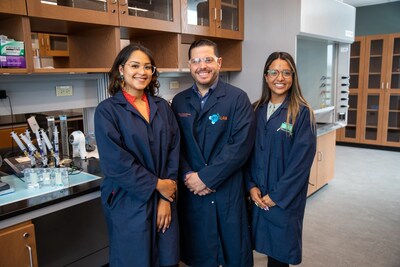
"NASA's Minority University Research and Education Project Institutional Research Opportunity and Established Program to Stimulate Competitive Research awards help institutions raise their technological bar," said
Minority University Research and Education Project Institutional Research Opportunity (MIRO) Awards
Seven minority-serving institutions will receive approximately
- Alaska Pacific University in
Anchorage – Alaska Pacific University Microplastics Research and Education Center - California State University in Fullerton – SpaceIgnite Center for Advanced Research-Education in Combustion
- City University of New York, Hunter College in
New York – NASA-Hunter College Center for Advanced Energy Storage for Space - Florida Agricultural and Mechanical University in Tallahassee – Integrative Space Additive Manufacturing: Opportunities for Workforce-Development in NASA Related Materials Research and Education
- New Jersey Institute of Technology in
Newark – AI Powered Solar Eruption Center of Excellence in Research and Education - University of Houston in
Houston – NASA MIRO Inflatable Deployable Environment and Adaptive Space Systems Center - University of Illinois in
Chicago – Center for In-Space Manufacturing: Recycling and Regolith Processing
NASA's MIRO award was established to strengthen and develop research capacity and infrastructure of minority serving institutions in areas of strategic importance and value to NASA missions and national priorities.
Established Program to Stimulate Competitive Research (EPSCoR) Award
NASA establishes partnerships with government, higher education, and industry to create lasting improvements in research infrastructure and capacity for specific states or regions, while enhancing its national research and development competitiveness. The program is directed at those jurisdictions that have traditionally not participated in competitive aerospace and aerospace-related research activities.
NASA will award 14 institutions up to
- University of Mississippi in University – Development of a Lagrangian Stability Analysis Framework for High-Speed Boundary Layers
- University of Alabama in Huntsville – Testing the functionality and performance of a large area detector for STROBE-X
- Louisiana State University in
Baton Rouge – Colloidal Assembly: Understanding the Electric Field Driven Assembly of Colloids and its Applications (Science Mission Directorate) - West Virginia University in
Morgantown – Science Mission Directorate: Bringing Gravitational-Wave Astronomy into the Space Age: Next-Generation Waveform Modeling of Black-Hole Binary Coalescences for Laser Intererometer Space Antenna Data Analysis - University of Puerto Rico in
San Juan – NASA EPSCoR: Space Technology Mission Directorate/Jet Propulsion Laboratory: Advancing High-Energy, Cycle-Stable Sulfur-Based Batteries for NASA Space Missions: An Integrated Framework of Density Functional Theory, Machine Learning, and Materials Innovation - Desert Research Institute,
Reno, Nevada – NASA's Ames Research Center inSilicon Valley ,California : Prospecting and Pre-Colonization of the Moon and Mars using Autonomous Robots with Human-In-The-Loop - Oklahoma State University in
Stillwater – A.7.4.2 Biosignature Detection of Solar System Ocean Worlds using Science-Guided Machine Learning - Iowa State University in Ames – Johnson Space Center, Ames Research Center: Non-GPS Navigation System Using Dual Star/Planetary Cameras for Lunar and Deep-Space CubeSat Missions
- University of Alaska Fairbanks in
Fairbanks – NASA's Glenn Research Center inCleveland : TheAlaska – Venus analog: synthesizing seismic ground motion and wind noise in extreme environments - University of the
Virgin Islands inCharlotte Amalie –University of the Virgin Islands Etelman Observatory in the Era of Time Domain and MultiMessenger Astronomy: Preparing for a New Era of Science Productivity - University of Hawaii at
Manoa inHonolulu – Cubesats for Climate Change Detection of Transient Greenhouse Gas Emissions - University of Idaho in
Moscow – Science Mission Directorate and Goddard Space Flight Center: Improving Global Dryland Streamflow Modeling by Better Characterizing Vegetation Use of Deep-Water Resources Using NASA's Gravity Recovery and Climate Experiment/Gravity Recovery and Climate Experiment Follow-On, SWOT, and Land Information System - University of Arkansas in
Little Rock – AR- III-Nitride Ultraviolet Laser Diodes for Harsh Environments, Space Based Communications, and Remote Sensing (Space Technology Mission Directorate) - South Dakota School of Mines and Technology in Rapid City – Science Mission Directorate: High Spatial-Temporal Resolution Soil Moisture Retrieval using Deep Learning Fusion of Multimodal Satellite Datastreams
Both awards were made through NASA's Office of STEM engagement solicitations. They promote STEM literacy to enhance and sustain the capability of institutions to perform NASA-related research and education, which directly supports the agency's mission directorates.
For more information about NASA STEM, visit:
 View original content to download multimedia:https://www.prnewswire.com/news-releases/nasa-awards-expand-research-capabilities-at-institutions-nationwide-302142731.html
SOURCE NASA
Serious News for Serious Traders! Try StreetInsider.com Premium Free!
You May Also Be Interested In
- ezW2 2026 Now Available with Built-In W-2 and 1099 E-File Service for the 2027 Tax Season!
- TNT Says Don't Wait Until January to Reset Your Fitness Routine
- KiddeFenwal Signs Lease for Expansive Complex in Preston
Create E-mail Alert Related Categories
PRNewswire, Press ReleasesSign up for StreetInsider Free!
Receive full access to all new and archived articles, unlimited portfolio tracking, e-mail alerts, custom newswires and RSS feeds - and more!
