



NASA Artemis Science, First Intuitive Machines Flight Heads to Moon
 Tweet
Tweet Share
Share E-mail
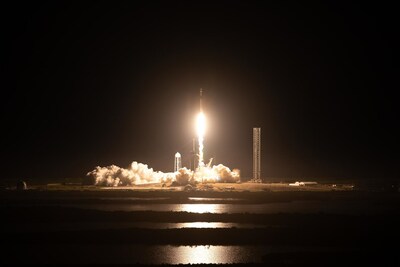
At
These deliveries are part of NASA's CLPS (Commercial Lunar Payload Services) initiative and Artemis campaign, which includes new solar system science to better understand planetary processes and evolution, search for evidence of water and other resources, and support long-term human exploration.
"NASA scientific instruments are on their way to the Moon – a giant leap for humanity as we prepare to return to the lunar surface for the first time in more than half a century," said NASA Administrator
While enroute to the Moon, NASA instruments will measure the quantity of cryogenic engine fuel as it is used, and during descent toward the lunar surface, they will collect data on plume-surface interactions and test precision landing technologies.
Once on the Moon, NASA instruments will focus on investigating space weather/lunar surface interactions and radio astronomy. The Nova-C lander also will carry retroreflectors contributing to a network of location markers on the Moon for communication and navigation for future autonomous navigation technologies.
NASA science aboard the lander includes:
- Lunar Node 1 Navigation Demonstrator: A small, CubeSat-sized experiment that will demonstrate autonomous navigation that could be used by future landers, surface infrastructure, and astronauts, digitally confirming their positions on the Moon relative to other spacecraft, ground stations, or rovers on the move.
- Laser Retroreflector Array: A collection of eight retroreflectors that enable precision laser ranging, which is a measurement of the distance between the orbiting or landing spacecraft to the reflector on the lander. The array is a passive optical instrument and will function as a permanent location marker on the Moon for decades to come.
- Navigation Doppler Lidar for Precise Velocity and Range Sensing: A Lidar-based (Light Detection and Ranging) guidance system for descent and landing. This instrument operates on the same principles of radar but uses pulses from a laser emitted through three optical telescopes. It will measure speed, direction, and altitude with high precision during descent and touchdown.
- Radio Frequency Mass Gauge: A technology demonstration that measures the amount of propellant in spacecraft tanks in a low-gravity space environment. Using sensor technology, the gauge will measure the amount of cryogenic propellant in Nova-C's fuel and oxidizer tanks, providing data that could help predict fuel usage on future missions.
- Radio-wave Observations at the Lunar Surface of the Photoelectron Sheath: The instrument will observe the Moon's surface environment in radio frequencies, to determine how natural and human-generated activity near the surface interacts with and could interfere with science conducted there.
- Stereo Cameras for Lunar Plume-Surface Studies: A suite of four tiny cameras to capture imagery showing how the Moon's surface changes from interactions with the spacecraft's engine plume during and after descent.
Intuitive Machines' Nova-C-class lunar lander, named Odysseus, is scheduled to land on the Moon's
The NASA science aboard will spend approximately seven days gathering valuable scientific data about Earth's nearest neighbor, helping pave the way for the first woman and first person of color to explore the Moon under Artemis.
Learn more about NASA's CLPS initiative at:
 View original content to download multimedia:https://www.prnewswire.com/news-releases/nasa-artemis-science-first-intuitive-machines-flight-heads-to-moon-302063166.html
SOURCE NASA
Serious News for Serious Traders! Try StreetInsider.com Premium Free!
You May Also Be Interested In
- Best Prescription Sunglasses (2026): Quay Featured Among Stylish, Fashion-Forward RX Frames for Everyday Wear and Versatile Personal Style by Consumer365
- How Work Experience and Occupation Choice Can Shape an Australian Visa Application
- Same Vans. Same Crew. New Leadership: Bryant & Jordan Whelan Guide Mr. Handyman serving Greater Jacksonville Forward
Create E-mail Alert Related Categories
PRNewswire, Press ReleasesSign up for StreetInsider Free!
Receive full access to all new and archived articles, unlimited portfolio tracking, e-mail alerts, custom newswires and RSS feeds - and more!
