



MyHealthTeam Now Hosts 11 Communities for People Living with Cancer
 Tweet
Tweet Share
Share E-mail
MyBladderCancerTeam and MyEndometrialCancer Team connect oncology patients with medically reviewed online content and support
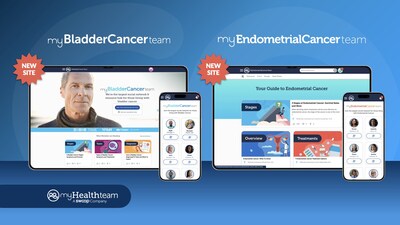
- Visit MyEndometrialCancerTeam at www.myendometrialcancerteam.com
- Visit MyBladderCancerTeam at www.MyBladderCancerTeam.com
No one should face a cancer diagnosis alone
"Our oncology patient communities provide extremely valuable information and support when patients need it most," said
The new sites within the MyHealthTeam portfolio, include:
- Medically approved information about the condition, including symptoms, causes, and treatment and testing options
- Insights and education on treatments and promising new diagnostics and therapies
- Community conversation and support from people with the same diagnosis
- Guidance on managing the disease
Understanding endometrial cancer
Endometrial cancer, a type of uterine cancer, is the most common cancer of the female reproductive system. It is estimated that about 67,000 people in the
Endometrial cancer most commonly develops after menopause between the ages of 50 and 60. Although the disease is slightly more common for white women, Black women have a greater risk of death from endometrial cancer. Symptoms of endometrial cancer may include abnormal vaginal bleeding, pelvic pain, unexplained weight loss, and pain during intercourse.
Endometrial cancer is diagnosed in four stages. Stage 1 endometrial cancer is located only in the uterus. Stage 2 indicates the cancer is in the uterus and the cervix. In stage 3, the cancer has spread outside of the uterus but not beyond the pelvic region, and stage 4 indicates the cancer has spread to the inner surfaces of the bowel, bladder, abdomen, or other organs. Endometrial cancer is generally diagnosed at an early stage and has an 81 percent five-year relative survival rate.
While the main risk factor for many cancers is advanced age, there are multiple additional risk factors for endometrial cancer. These include taking estrogen-only hormone replacement therapy after menopause or having a family history of endometrial cancer in a first-degree relative. They also include being diagnosed with obesity, type 2 diabetes, polycystic ovarian syndrome, or endometrial hyperplasia. The treatment for endometrial cancer can vary depending on stage and subtypes. Treatments include surgical and radiation options, as well as developments in immunotherapy and targeted treatment options, such as pembrolizumab (Keytruda).
Bladder cancer common for men and women in the
It's estimated that there were 83,190 new cases of bladder cancer in the
There are two forms of bladder cancer: non-muscle-invasive bladder cancer (NMIBC) and muscle-invasive bladder cancer (MIBC). NMIBC, sometimes also referred to as superficial bladder cancer, is bladder cancer that has not grown into the muscle wall of the bladder. MIBC is cancer that has grown into the muscle layer of the bladder wall and possibly even deeper. MIBC tends to be more likely to spread and is harder to treat. There are multiple avenues for treating bladder cancer. These include surgery, radiation therapy, chemotherapy, immunotherapy, targeted therapies, and clinical trials.
Symptoms of bladder cancer include blood in the urine, pain or burning during urination, being unable to urinate, lower back pain on one side of the body, stomach pain, bone pain, unexplained weight loss, and fatigue. In addition to these symptoms, comorbidities can be present with bladder cancer. These include bladder birth defects, chronic urinary tract infections, kidney and bladder stones, high blood pressure, type 2 diabetes, and more. A history of smoking tobacco is considered the highest risk factor for this disease, accounting for 50 percent to 60 percent of bladder cancer diagnoses.
About MyHealthTeam, a Swoop Company
MyHealthTeam, a Swoop company, believes that if you are diagnosed with a rare disease or chronic condition, it should be easy to find the people, support, and medically approved information you need to best manage your condition. Each year, 30 million people visit our fast-growing network of over 60 condition-specific communities, such as DiabetesTeam and MyLungCancerTeam, reaching across all therapeutic areas and rare conditions, including Spanish-language communities. Leveraging proprietary zero-party data and advanced patient-targeting capabilities, MyHealthTeam creates precise, relevant, and personalized content that ensures a highly engaged and high-quality audience. Our performance consistently delivers exceptional results for media partners, maximizing impact and ROI. To learn more, email [email protected].

 View original content to download multimedia:https://www.prnewswire.com/news-releases/myhealthteam-now-hosts-11-communities-for-people-living-with-cancer-302512845.html
SOURCE MyHealthTeam
Serious News for Serious Traders! Try StreetInsider.com Premium Free!
You May Also Be Interested In
- Chasing Mulan: Three Encounters with "Mulan"
- Labor and Employment Firm Zakay Law Group APLC Files A Class Action Lawsuit Against Abode Services Alleging Failure to Pay All Wages Due
- TruTrade Introduces a New Era of Automated Trading for Retail Traders
Create E-mail Alert Related Categories
PRNewswire, Press ReleasesSign up for StreetInsider Free!
Receive full access to all new and archived articles, unlimited portfolio tracking, e-mail alerts, custom newswires and RSS feeds - and more!
