




Making Long-Term Memories Requires Nerve-Cell Damage

FREE Breaking News Alerts from StreetInsider.com!
StreetInsider.com Top Tickers, 10/8/2026
- S&P 500, Nasdaq end lower as crude prices jump, chip stocks weigh
- Oil rises 4% on revived Middle East worries, Hurricane Isaias supply disruption
- Chipotle, Starbucks shares volatile after report of potential takeover
- Why Citi says the Fed could be setting up for a dovish surprise
- Alphabet shares rise as Google pushes Gemini deeper into enterprise AI
 Tweet
Tweet Share
Share E-mail
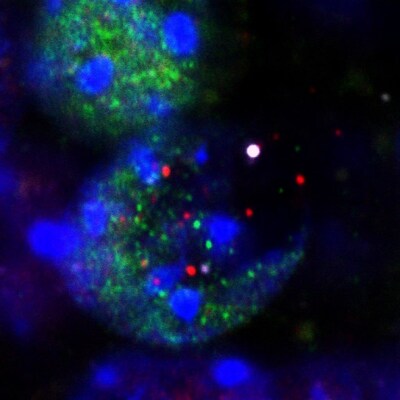
"Inflammation of brain neurons is usually considered to be a bad thing, since it can lead to neurological problems such as Alzheimer's and Parkinson's disease," said study leader
The hippocampus has long been known as the brain's memory center.
From Shocks to Stable Memories
The researchers discovered this memory-forming mechanism by giving mice brief, mild shocks sufficient to form a memory of the shock event (episodic memory). They then analyzed neurons in the hippocampal region and found that genes participating in an important inflammatory signaling pathway had been activated.
"We observed strong activation of genes involved in the Toll-Like Receptor 9 (TLR9) pathway," said
Brain activity routinely induces small breaks in DNA that are repaired within minutes. But in this population of hippocampal neurons, the DNA damage appeared to be more substantial and sustained.
Triggering Inflammation to Make Memories
Further analysis showed that DNA fragments, along with other molecules resulting from the DNA damage, were released from the nucleus, after which the neurons' TLR9 inflammatory pathway was activated; this pathway in turn stimulated DNA repair complexes to form at an unusual location: the centrosomes. These organelles are present in the cytoplasm of most animal cells and are essential for coordinating cell division. But in neurons—which don't divide—the stimulated centrosomes participated in cycles of DNA repair that appeared to organize individual neurons into memory assemblies.
"Cell division and the immune response have been highly conserved in animal life over millions of years, enabling life to continue while providing protection from foreign pathogens,"
Resisting Inputs of Extraneous Information
During the week required to complete the inflammatory process, the mouse memory-encoding neurons were found to have changed in various ways, including becoming more resistant to new or similar environmental stimuli. "This is noteworthy," said
Importantly, the researchers found that blocking the TLR9 inflammatory pathway in hippocampal neurons not only prevented mice from forming long-term memories but also caused profound genomic instability, i.e, a high frequency of DNA damage in these neurons.
"Genomic instability is considered a hallmark of accelerated aging as well as cancer and psychiatric and neurodegenerative disorders such as Alzheimer's,"
The study is titled "Formation of memory assemblies through the DNA-sensing TLR9 pathway." Other Einstein authors are:
About Albert Einstein College of Medicine
Albert Einstein College of Medicine is one of the nation's premier centers for research, medical education and clinical investigation. During the 2023-24 academic year, Einstein is home to 737 M.D. students, 209 Ph.D. students, 124 students in the combined M.D./Ph.D. program, and approximately 239 postdoctoral research fellows. The College of Medicine has more than 2,000 full-time faculty members located on the main campus and at its clinical affiliates. In 2023, Einstein received more than

 View original content to download multimedia:https://www.prnewswire.com/news-releases/making-long-term-memories-requires-nerve-cell-damage-302101308.html
SOURCE Albert Einstein College of Medicine
Serious News for Serious Traders! Try StreetInsider.com Premium Free!
You May Also Be Interested In
- D.Law Opens Its Doors Online With "Our Space," a Photographic Tour of the Pasadena Headquarters
- Ontario International Airport earns Fitch upgrade as S&P affirms credit strength, reinforcing decade of momentum
- Auburn Community Names Guardian Roofing, Gutters & Insulation a Top Roofing Company in 2026 CommunityVotes Awards
Create E-mail Alert Related Categories
PRNewswire, Press ReleasesRelated Entities
TwitterSign up for StreetInsider Free!
Receive full access to all new and archived articles, unlimited portfolio tracking, e-mail alerts, custom newswires and RSS feeds - and more!
