




Libevitug Approved in China as First-in-Class Treatment for Hepatitis D

FREE Breaking News Alerts from StreetInsider.com!
StreetInsider.com Top Tickers, 10/23/2026
- S&P 500, Nasdaq end sharply lower as revived AI doubts ignite tech selloff
- Meta’s new Class C stock to keep Zuckerberg in California, fund AI spending spree
- Oil hits five-month high as Houthi attacks stoke supply fears
- Meta beats Q3 estimates, approves new nonvoting share class as AI spending surges
- Tesla stock up as automotive gross margin improves, free cash flow turns positive
 Tweet
Tweet Share
Share E-mail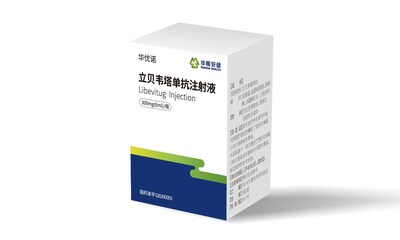
Guidelines from the World Health Organization (WHO) and the European Association for the Study of the Liver (EASL) consistently identify HDV–HBV co-infection as the most severe form of chronic viral hepatitis due to rapid progression towards liver cirrhosis, hepatocellular carcinoma and liver-related death [1] [2]. HDV is a satellite virus that depends on HBV's envelope proteins to complete its life cycle and therefore infects only individuals who are co-infected with HBV. Chronic HDV–HBV co-infection leads to a higher risk of cirrhosis and liver cancer compared to HBV mono-infection, accounting for approximately one in six cases of cirrhosis and one in five cases of liver cancer among people with HBV infection globally [3].
According to WHO, HDV affects nearly 5% (an estimated 12 million) of people who have a chronic infection with HBV. Given the severe consequences of HDV infection, WHO's 2024 Guidelines for the prevention, diagnosis, care and treatment for people with chronic hepatitis B infection recommend that serological testing for anti-HDV antibodies may be performed for all individuals who are HBsAg positive, as the preferred approach to scale up access to HDV diagnosis and linkage to care. In China, with over 75 million patients living with chronic hepatitis B, limited HDV therapies, compounded by inadequate clinical awareness and low testing rates, have left patients with no treatment options, underscoring a pressing unmet medical need.
Clinical development of Libevitug began in 2018. Data from its pivotal registrational study (HH003-204) were presented as a Late-Breaker at the 2025 Annual Meeting of the American Association for the Study of Liver Diseases (AASLD). This international, multicenter, randomized, controlled, open-label Phase IIb clinical trial demonstrated that Libevitug was significantly superior to the control group across primary and secondary efficacy endpoints including combined response rate, virological response, alanine aminotransferase (ALT) normalization, and improvement in liver stiffness. Libevitug also showed favorable tolerability and a satisfactory safety profile. At Week 48, the combined response rate reached 44.1%, along with an HDV virological response rate of 60% and an ALT normalization rate of 70%, and a significant, sustained improvement in liver stiffness.
"Libevitug demonstrates outstanding clinical efficacy and significantly improves liver stiffness, with particularly remarkable efficacy in patients with HBV/HDV-related cirrhosis," stated Professor
The development of Libevitug stems from a scientific breakthrough over a decade in the making. In 2012, a team at the National Institute of Biological Sciences,
Dr.
References:
[1] World Health Organization. Hepatitis D Fact Sheet. https://www.who.int/news-room/fact-sheets/detail/hepatitis-d
[2] European Association for the Study of the Liver. J Hepatol. 2023 Aug; 79(2)433-460.
[3] WHO. Guidelines for the prevention, diagnosis, care and treatment for people with chronic hepatitis B infection. 2024.
About Chronic HDV Infection
HDV is a satellite virus of HBV, relying on HBV's envelope proteins to complete its life cycle. HDV infects hepatocytes by binding to NTCP, a receptor shared with HBV. HDV infection occurs only in individuals with concurrent HBV infection. Compared to HBV mono-infection, co-infection with HBV and HDV significantly increases—often doubling—the risk of developing liver cirrhosis, hepatocellular carcinoma (HCC), requiring liver transplantation, and liver-related mortality, making it the most severe known form of chronic viral hepatitis. According to the WHO, approximately 12 million people worldwide are infected with HDV, affecting nearly 5% of all chronic HBV carriers. WHO recommends screening and testing for hepatitis D in all hepatitis B surface antigen (HBsAg)-positive individuals. Until now, aside from
About Libevitug (HH-003)
Libevitug is a first-in-class, PreS1-targeting neutralizing monoclonal antibody against HBV/HDV, discovered and developed by Huahui Health. The antibody functions by specifically blocking the interaction between the viral PreS1 domain and the host NTCP receptor, preventing viral entry into hepatocytes and reinfection. The early-stage development of Libevitug received support from the National Major Science and Technology Project for Significant New Drugs Development under
About Huahui Health
Founded in
For more information, please visit www.huahuihealth.com.
 View original content to download multimedia:https://www.prnewswire.com/news-releases/libevitug-approved-in-china-as-first-in-class-treatment-for-hepatitis-d-302670981.html
SOURCE Huahui Health Ltd.
Serious News for Serious Traders! Try StreetInsider.com Premium Free!
You May Also Be Interested In
- Amber International Holding Limited Announces Results of the Annual General Meeting on October 23, 2026
- 24-Hour Home Care Arrives in Hixson, TN, as A Better Solution In Home Care Extends Its Reach
- Stephanie Mills to Headline 2026 Pennsylvania Maternal Health Summit, Bringing National Attention to Maternal and Infant Health
Create E-mail Alert Related Categories
PRNewswire, Press ReleasesRelated Entities
FDASign up for StreetInsider Free!
Receive full access to all new and archived articles, unlimited portfolio tracking, e-mail alerts, custom newswires and RSS feeds - and more!
