




Landmarks Illinois Launches Groundbreaking Historic Preservation Guidebook

FREE Breaking News Alerts from StreetInsider.com!
StreetInsider.com Top Tickers, 10/25/2026
- Wall Street closes lower to end rocky week
- Meta's capital-raising plans expose a major weakness in the AI boom
- Oil prices jump $3 on Houthi attacks, oil spill, highest settlement since April
- BofA flags further downside risk for stocks, yields and dollar
- SpaceX cell-site ambitions lift tower stocks and weigh on carriers
 Tweet
Tweet Share
Share E-mail
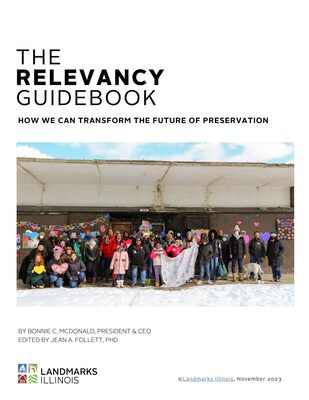
"The Relevancy Guidebook: How We Can Transform the Future of Preservation" features accessible ideas from diverse national innovators to make preservation more inclusive, equitable and effective.

In "The Relevancy Guidebook," McDonald compiles interviews, research findings and an extensive array of resources to create a comprehensive, user-friendly reference manual. It is designed to inspire, inform and guide those who hope to make preservation relevant and beneficial to the greater good in a changing world. Key findings from the project include the need to create a just preservation movement, dismantle preservation's "culture of preciousness," focus on affordable housing, address climate change and expand preservation job opportunities. It also details steps preservation organizations and individuals can take to center communities and underrepresented voices in decision-making and action.
Available to all via a free download at the Landmarks Illinois website, "The Relevancy Guidebook" offers accessible, applicable tools that can help all who are, or want to be, active in historic preservation choose a path forward. McDonald wrote the guidebook as an outgrowth of The Relevancy Project (TRP), an initiative she developed in 2019 to mark Landmarks Illinois' upcoming 50th anniversary in 2021. It received funding from the James Marston Fitch Charitable Foundation in 2020.
Why the Historic Preservation Movement Needs to Change
"Historic places reflect our culture, traditions and achievements. What we choose to save speaks to our values and beliefs. But for too long, preservation has prioritized structures and preciousness over the people and communities using and connected to these historic places,"
Landmarks Illinois President and CEO
"Because of this, the stories and places we have preserved have not fully reflected our diverse society, and the historic places that have been destroyed have often untethered communities. Saving these places can help maintain a vital connection between generations and be a source of recognition, pride and hope to a community. While this is changing, we must help more people save places that matter to them and their communities for preservation to be truly relevant," she continued.
Yet preservationist's efforts to save historic places are continually challenged today. Mainstream preservation practices are often regarded as exclusionary. For that reason, the field's solutions to many of today's pressing problems are often discounted or overlooked and lagging public support leads to insufficient funding," McDonald explained.
"Preservation needs to be examined through the lens of justice, equity, inclusion and relevance," she added. "There is an urgent need for change, and this guidebook provides a wide range of ideas and approaches that can be used to make preservation more applicable and accessible to all."
McDonald's work has been reinforced by two recent studies: a 2019 online survey with over 1,000 respondents, "Challenges and Innovations Occurring in the Preservation Field" conducted by the National Trust for Historic Preservation and a 2020 study with over 2,000 respondents, "Preservation and Change: Survey of Attitudes and Opinions in the Historic Preservation Field" done at the University of Pennsylvania. In both studies, an overwhelming majority of respondents felt that preservation needs to innovate; be more fair, equitable and diverse; cultivate new leadership and partnerships; and pay more attention to intangible heritage such as natural and sacred landscapes and resources below ground level.
How The Relevancy Guidebook Can Spur Change
"
"Does historic preservation have a role to play in social justice work? Does historic preservation support the work of environmental justice and sustainability? Yes, and the findings in "The Relevancy Guidebook," informed by a staggering number of first-hand experience from colleagues across the country, offers data and, importantly, actionable steps for us all. It will have impact across our profession,'
In addressing the challenges historic preservation is facing today, "The Relevancy Guidebook" shows how we can deepen the field's impact and ignite a much-needed conversation about why this work matters to people today and in the future. The guidebook points out that for preservation to survive and be effective in a changing world, it must evolve and become a solution that connects with, and relates to, all people's lives.
To make this happen, the guidebook notes that the historic preservation field must undergo a shift in its prevailing perspective and practices to ensure it becomes inclusive, equitable and aligned with larger community goals. Preservation professionals and advocates must propel these principles and actions. "The Relevancy Guidebook" lays out the possibilities and allows users to choose their own path forward.
A strength of "The Relevancy Guidebook" is its vanguard approach, demonstrated by its comprehensive look at evolving and emerging concerns that are often not considered under a historic preservation lens. The guidebook shows how developing issues don't always receive the attention they deserve in the field; these include using preservation practice to create and retain affordable housing, fight climate change and create jobs. It also sheds light on a budding area of thought: how to enhance people's physical and mental health by preserving places that tell their stories.
"Like education and cultural identity, health is a basic human right. The wellness benefits preservation can yield are still largely unexplored," McDonald noted.
Where Does Historic Preservation Go From Here
"The Relevancy Guidebook" emphasizes the dynamic nature of remaining relevant and calls for ongoing and consistent community engagement in decision-making about which historic places are to be preserved. "This is the only way we will create equity in the work we do to save the places that matter and tell the full story of our nation's past," McDonald said.
With its practical insights, case studies and a wealth of resources to guide readers in their efforts to remake the historic preservation movement, "The Relevancy Guidebook" is a valuable resource for preservation professionals, advocates and organizations interested in achieving the powerful paradigm shift McDonald envisions and proposes.
Landmarks
About Landmarks Illinois: For over 50 years, Landmarks Illinois has been a leading voice statewide for historic preservation, advocating for the protection of significant architectural and cultural landmarks in
MEDIA CONTACT:
Purpose Brand
[email protected]
773-853-4794
 View original content to download multimedia:https://www.prnewswire.com/news-releases/landmarks-illinois-launches-groundbreaking-historic-preservation-guidebook-301991150.html
SOURCE Landmarks Illinois
Serious News for Serious Traders! Try StreetInsider.com Premium Free!
You May Also Be Interested In
- RYBREVANT FASPRO™ (amivantamab and hyaluronidase-lpuj) combination demonstrates 77% overall response rate in first-line treatment of patients with advanced head and neck cancer
- LexisNexis Coplogic Solutions Introduces Field Clarity for LexisNexis® Desk Officer Reporting System (DORS) at IACP 2026
- Come Back to Firefox: Mozilla launches its most ambitious campaign yet to bring people back to the independent alternative to big tech browsers
Create E-mail Alert Related Categories
PRNewswire, Press ReleasesRelated Entities
VanguardSign up for StreetInsider Free!
Receive full access to all new and archived articles, unlimited portfolio tracking, e-mail alerts, custom newswires and RSS feeds - and more!
