




Interlune Awarded $6.9 Million Contract from NASA for Lunar Resource Development

FREE Breaking News Alerts from StreetInsider.com!
StreetInsider.com Top Tickers, 10/11/2026
- Wall Street posts weekly gains with earnings, inflation data on tap
- Oil prices settle higher as more production shut ahead of hurricane
- Apple cuts iPhone 18 Pro orders due to soft demand, Nikkei Asia reports
- UBS flags level in gold prices where dip buyers will likely emerge
- Telecom stocks tumble on SpaceX spectrum acquisition news
 Tweet
Tweet Share
Share E-mail
Project Aims to Be the First to Measure Volatile Gases by Heating Lunar Soil While on the Moon
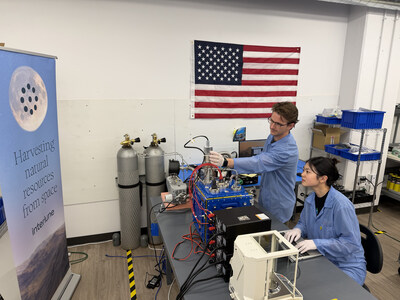
"For the first time ever, we will measure volatile gases by heating lunar regolith while on the Moon, dramatically advancing the scientific community's understanding of its properties," said Interlune chief scientist Dr.
The Interlune payload, which will be ready for launch in 2028, builds on prior work with NASA's Flight Opportunities program and the National Science Foundation (NSF), in which Interlune built and tested payload prototypes on parabolic aircraft flights simulating lunar gravity. It has been designed to fly on one of the commercial robotic landers developed for NASA's Commercial Lunar Payload Services (CLPS) program.
"We're gathering data and advancing technologies that serve multiple purposes across industry and government," said
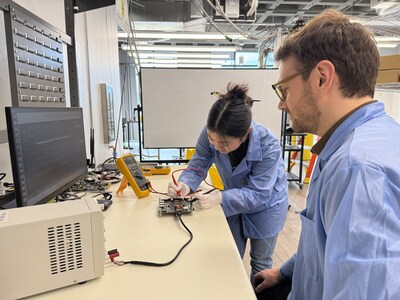
Under the SBIR Phase III contract, Interlune will design, build, and test engineering development units (EDUs) and flight hardware. The payload is designed to collect lunar regolith samples, sort particles by size, extract solar wind volatile gases, and measure their quantities. It includes:
- A robotic arm and scoop,
- a size sorting device,
- devices to extract solar wind gases from regolith via mechanical and thermal processes,
- a multi-spectral camera to collect data that will estimate helium-3 concentrations,
- and a mass spectrometer based on NASA's Mass Spectrometer Observing Lunar Operations (MSOLO), which will measure the concentration of gases released.
Data obtained from the planned mission will provide valuable insights for NASA and the lunar science community on solar wind volatile concentrations and Moon mineralogy. It will also inform the continued development of the Interlune full-scale helium-3 harvesting system, as well as technologies that could support the construction of the Artemis Moon Base.
The Interlune roadmap to harvest lunar helium-3 could support NASA's goals of creating a robust lunar economy and long-term presence on the Moon. Revenue from selling helium-3 to customers on Earth will fund the further development of technologies to harvest other natural resources from the Moon, as well as provide critical lunar infrastructure, like construction and site preparation, thermal control, and systems for returning payloads from the lunar surface.
Interlune has nearly
NASA's Game Changing Development program develops leading-edge technologies that support the agency's lunar exploration efforts.
About Interlune
Interlune is a privately funded natural resources company committed to sustainable, responsible harvesting of resources from space to benefit humanity. Based in
About NASA SBIR/STTR
The NASA Small Business Innovation Research / Small Business Technology Transfer (SBIR/STTR) program is part of America's Seed Fund, the nation's largest source of early-stage non-dilutive funding for innovative technologies. Through this program, entrepreneurs, startups, and small businesses with less than 500 employees can receive funding and non-monetary support to build, mature, and commercialize their technologies, advancing NASA missions and helping solve important challenges facing our country.
Media contact: [email protected]

 View original content to download multimedia:https://www.prnewswire.com/news-releases/interlune-awarded-6-9-million-contract-from-nasa-for-lunar-resource-development-302761420.html
SOURCE Interlune
Serious News for Serious Traders! Try StreetInsider.com Premium Free!
You May Also Be Interested In
- AnX Robotica Highlights Documented ProScan AI Workflow Performance from Submission to FDA
- Solana Price Prediction Targets a $134 Recovery as AlphaPepe Passes $2.94M With Ex-Shibarium Talent Behind Its AI Exchange
- Mediacom Mobilizes Recovery Efforts Following Hurricane Isaias
Create E-mail Alert Related Categories
PRNewswire, Press ReleasesSign up for StreetInsider Free!
Receive full access to all new and archived articles, unlimited portfolio tracking, e-mail alerts, custom newswires and RSS feeds - and more!
