




Improved Light Control Might Help Prevent Eye Problems in Premature Infants

FREE Breaking News Alerts from StreetInsider.com!
StreetInsider.com Top Tickers, 10/22/2026
- Wall Street sinks as Nasdaq falls over 2% on AI cost worries
- Meta’s new Class C stock to keep Zuckerberg in California, fund AI spending spree
- Oil hits five-month high as Houthi attacks stoke supply fears
- Meta beats Q3 estimates, approves new nonvoting share class as AI spending surges
- Tesla stock up as automotive gross margin improves, free cash flow turns positive
 Tweet
Tweet Share
Share E-mail
Study in mice, led by experts at Cincinnati Children's, shows that lighting conditions can change how newborn eyes develop
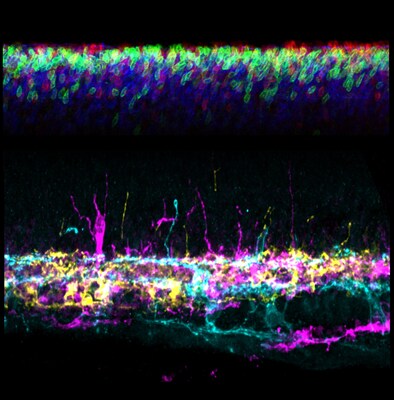
Many of these problems have been linked to a condition called retinopathy of prematurity, in which vision is damaged by excess blood vessel growth within the eye. Now a study—in mice—from the Science of Light Center at Cincinnati Children's reports that preterm birth also can affect eye development through changes in the eye's supply of photoreceptor cells called rods.
Findings were published online
"Our work highlights that the lighting environment is crucial for rod abundance in early postnatal mouse development," says the study's lead author
Rods are tall, cylindrically shaped photoreceptor cells in the retina that help the eye see in low light and at night. Rods are 500 to 1,000 times more sensitive to light than cones, the eye's other major form of light-sensing cell.
For years, scientists believed that differences in cone-rod light sensitivity most likely reflected "hard-wired" genetic variations among individuals. However, this study shows that external lighting conditions play a direct and large role in driving how many rods form as the eye matures. This finding has potentially significant implications for how newborns are cared for in neonatal intensive care units and for future studies involving mice.
"Many intensive care units have lighting standards that vary according to infant age. They can range from no lighting at all, to extremely dim (1 lux), to bright (600 lux)," D'Souza says. "Meanwhile, when a premature infant needs a procedure, they can be exposed to very bright lights that are needed for the caregivers to see. These changes in lighting conditions could affect how many rods the eye develops and this could have long term effects on vision."
"Moving forward, we are looking at ways to prevent rod death in our mouse models by using spectrally tuned lighting," D'Souza says. "If we can implement lighting as an intervention strategy, we could use the lighting systems in our own NICU to potentially reduce the impact on the retinas of premature infants while also providing effective lighting for our clinical teams."
Meanwhile, the new findings suggest that future studies assessing eye development will need to be executed with standardized lighting that satisfies the needs of the rod development pathway.
"This study adds a new dimension to our ever-growing understanding of how the murine eye develops, even prior to the eyelids opening," D'Souza says. "There is immense variation in lighting across institutions and even within institutions, or even within a single rack of cages. Lighting intensity can vary 100-fold between the bottom and the top of a rack. This variability can impact studies of the visual system, so it may be important to begin implementing environmental lighting standards for mouse rooms or cages."
About the study
In addition to D'Souza and Lang, Cincinnati Children's co-authors on this study included
Funding sources for this work included grants from the National Institutes of Health (R01s EY032029, EY032752, EY032566, EY034456, GM15264, R01 EY025555, T32NS007453, R24HD000836, and P30EY003039), the Goldman Chair of the Abrahamson Pediatric Eye Institute at Cincinnati Children's, the Damon Runyon Cancer Research Foundation, the Albert J. Ryan Fellowship, and the Hanna H. Gray Fellows Program.
Read more
Spectral Lighting: Novel Science Leads to Innovative NICU Design
 View original content to download multimedia:https://www.prnewswire.com/news-releases/improved-light-control-might-help-prevent-eye-problems-in-premature-infants-302222757.html
SOURCE Cincinnati Children's Hospital Medical Center
Serious News for Serious Traders! Try StreetInsider.com Premium Free!
You May Also Be Interested In
- PKGD Group Reports 56% Portfolio Volume Growth Through September 2026
- CRFB Report: China-Owned Smithfield and Syngenta Spent $26 Million-Plus on Lobbying and Political Donations
- Replay Sports Cards Opens First Nashville-Area Location, Expanding National Footprint
Create E-mail Alert Related Categories
PRNewswire, Press ReleasesSign up for StreetInsider Free!
Receive full access to all new and archived articles, unlimited portfolio tracking, e-mail alerts, custom newswires and RSS feeds - and more!
