



Holiday Gifts That Help Build Speech and Language Skills in Young Children
 Tweet
Tweet Share
Share E-mail
Children Develop Communication, Pre-Literacy, and Learning Skills Through Play, Says ASHA
ROCKVILLE, Md.,
"We asked ASHA member speech-language pathologists who work with children ages birth to 5 years for the toys they recommend to families," said
Toy Recommendations
These toys rank among the top recommendations provided by speech-language pathologists:
- indestructible board books
- toy food and utensils (plates, cups, spoons, forks, knives, pan)
- toy picnic basket with slots for different shapes
- pretend tea set
- baby doll and accessories (e.g., blanket, bottle, cup, spoon)
- miniature figures and accessories (e.g., car/train, miniature beds)
- a small doll house
- puppets
- barn and farm animals
- doctor or tool kit
- stacking blocks
- puzzles
- a shape sorter that opens and closes
- pop-up toys
- pretend cash register
- magnetic drawing board
- crayons and sidewalk chalk
- bubbles
- basic paint set with brushes and various paint colors
- small cans of Play-Doh® and accessories (e.g., cookie cutters)
When buying toys for young children, ASHA notes that families should pay attention to the age(s) specified by the manufacturer on the packaging related to the prevention of choking and other safety concerns.
Why These Toys?
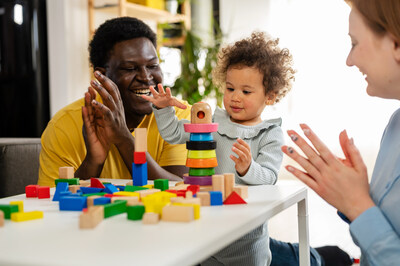
The toys on the list above offer numerous benefits. They all can help a child learn and practice new words; build conversation and social skills; and support pretend play and imagination. Many toys, such as pop-up ones or bubbles, can teach cause and effect. And others, such as a paint set, let children practice sequencing—which is breaking down the activity into individual steps, and then putting those steps into a logical order (e.g., choose paint, brush on paper, dip brush in water, and repeat).
Children get the most benefit when they use toys with adult loved ones.
If a child is learning more than one language, ASHA encourages families to consider giving them books and toys in their languages. These products can support children's multilingual communication skills (see Learning More Than One Language from ASHA).
Everyday Household Items Can Be Even Better
Many experts say no-cost items that are already in your home are just as good—if not better—than any toy you can buy. "I just left the house of a 3.5 year old who is very into pretend play," said
And
- Empty tissue boxes for oversized blocks for building—these can help with prepositions (e.g., "put on"), pretend play, and turn taking.
- Junk mail for playing 'mail carrier'—you can even put letters into a homemade mailbox. This also helps with learning prepositions, numbers, and sequencing when "mailing" letters.
- Sale flyers for "reading" together to learn new vocabulary. You can use takeout menus to pretend to pick meal items for lunch, talk about the foods you see, and point to them.
- They are already found in most homes, so they are inexpensive.
- They can be repurposed from materials that likely would be thrown away, so using them as play materials can be environmentally friendly.
- They are often interesting to kids for longer periods of time as they get older, which leads to wanting and needing fewer toys in your home to store, organize, and maintain.
However, she points to the danger of choking hazards from small parts in household items. "If a parent is unsure if an item is too small, a quick and inexpensive way to check is to put the item in an empty toilet paper tube. If the item fits in the tube, it's too small to give to your child."
For more information about children's communication development, visit www.asha.org/public/developmental-milestones/.
Additional experts consulted for this resource:
Siva priya Santhanam, CCC-SLP
About the American Speech-Language-Hearing Association (ASHA)
ASHA is the national professional, scientific, and credentialing association for 234,000 members and affiliates who are audiologists; speech-language pathologists; speech, language, and hearing scientists; audiology and speech-language pathology assistants; and students. Audiologists specialize in preventing and assessing hearing and balance disorders as well as providing audiologic treatment, including hearing aids. Speech-language pathologists (SLPs) identify, assess, and treat speech, language, and swallowing disorders. www.asha.org
Media Contact:
 View original content to download multimedia:https://www.prnewswire.com/news-releases/holiday-gifts-that-help-build-speech-and-language-skills-in-young-children-302334992.html
SOURCE American Speech-Language-Hearing Association (ASHA)
Serious News for Serious Traders! Try StreetInsider.com Premium Free!
You May Also Be Interested In
- WORQ Receives Frost & Sullivan's 2026 Malaysian Flexible Workspace Competitive Strategy Leadership Recognition for Excellence in Flexible Workspace Strategy
- Kung clinches first Bassmaster Elite Series title at St. Lawrence River
- Samsung Biologics publishes prospectus for PolyPeptide public tender offer
Create E-mail Alert Related Categories
PRNewswire, Press ReleasesSign up for StreetInsider Free!
Receive full access to all new and archived articles, unlimited portfolio tracking, e-mail alerts, custom newswires and RSS feeds - and more!
