




Guardians of an ancient migration

FREE Breaking News Alerts from StreetInsider.com!
StreetInsider.com Top Tickers, 10/8/2026
- Wall St slips as climbing oil, yields amplify inflation fears
- Oil jumps 5%, then pares gains after Trump says no attack on Iran this month
- Chipotle, Starbucks shares volatile after report of potential takeover
- Why Citi says the Fed could be setting up for a dovish surprise
- Alphabet shares rise as Google pushes Gemini deeper into enterprise AI
 Tweet
Tweet Share
Share E-mail
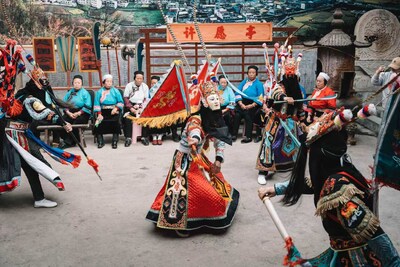
For more than 600 years, the people of the Tunpu, fortified villages of the Ming Dynasty (1368-1644), in Anshun city,
"Our ancestors came here from our hometown 600 years ago at the emperor's order. The way we speak and the clothes we wear all come from that time," says 75-year-old
Wearing a plum-flower crown nestled in her chignon and tied with a black headscarf, Chen walks with friends through the village market in a blue robe, trimmed with colored thread and embroidered neckline.
In Anshun, the Ming Dynasty origins of these customs remain vivid.
Living in Jiuxi village, Chen is proud of her distinctive dress, saying, "Sometimes when we pick up our grandchildren from school, people ask what we are wearing. I tell them I am from Tunpu."
Tunpu, the local pronunciation of Tunbu or Tunbao (literally fortified villages), refers to settlements created when Ming-era soldiers were sent to defend and farm the land in
According to historical records, more than 300 such settlements were formed around Anshun, once home to roughly 200,000 Tunpu people. Their enduring traditions combine Han customs with influences from the surrounding ethnic groups and can still be recognized today in fortress-style architecture, clothing, and dialect.
Ancestral ways persist
In Jichang village, one of the largest Tunpu settlements with more than 4,000 residents, villagers carry an image of the village guardian in a procession each year on the 18th day of the first month of the Chinese calendar.
Villages raise colorful flags and erect ceremonial gates. The ritual, recorded in the Qing Dynasty's (1644-1911) Annals of Anshun, begins with dawn rites at the Wang Gong Temple. Villagers place the image on a decorated sedan chair and parade through the settlement with fireworks,
"This is our faith and our shield. It makes the village more united," says village elder
The procession is now listed as a national-level intangible cultural heritage and has become a key marker of Tunpu identity.
The veneration of Wang Gong traces back to the Tang Dynasty (618-907), when Wang Hua, a local ruler in
"Our ancestors came from Shexian county in
Xiamen University professor
Today, the responsibility for maintaining and transmitting each component of the festival - floats,
Visitors discover roots
As interest in Tunpu culture has grown, these ancient customs now draw visitors from across
The Wang Gong procession attracts particularly large numbers. "You need to book in advance, or you won't be able to get in," Tian says.
Peking University professor Qian Liqun says turning Tunpu research into tourism, education and literary resources is vital. "Tunpu culture was created by local people, and those people should always be the focus of attention and service," he says.
One of the most compelling attractions for visitors is
During the Wang Gong festival and other shows, a village troupe earns several hundred yuan per performance. According to the troupe's deputy head, their performances are especially popular with visitors from
The art of mask carving is also finding new audiences. In Zhouguan village, 53-year-old Qin Fazhong inherited his grandfather's carving knife and now makes the imposing masks.
He has opened a carving museum with an experiential workshop and sells wooden sculptures overseas through social media.
"I opened accounts on Douyin, Kuaishou and other platforms to livestream my carving," Qin says.
His sessions often attract more than 100,000 viewers, and local media report that his works are shipped across
Shared past emerges
While military-settlement policies existed widely across Ming-era
Mao attributes that distinctiveness to Tunpu's setting amid multiethnic communities. Surrounded by different cultures, Tunpu people developed strong cultural self-awareness and a drive to preserve traditions.
The exchange and friction among diverse groups created Tunpu's unique character.
Signs of this interaction with local ethnic groups are visible. "Today's Tunpu costumes are no longer purely in the Ming-era style,"
Embroidered waistbands, coordinated headwear colors and silver jewelry worn by Tunpu women clearly absorb aesthetic elements from the Miao and Bouyei ethnic groups. In food, the widespread use of sour soup, preserved meat and chili peppers shows the influence of local ethnic cuisines.
At the same time, he adds, Tunpu culture brought educational traditions and advanced farming techniques from the Central Plains.
That long history of exchange gives Tunpu broader significance, Mao says. "We live in a time that values cultural diversity. Each group preserving its own culture makes the world richer," he says, adding that Tunpu demonstrates how distinctiveness can coexist with openness.
In 2023, Tunpu culture was designated one of
Qian echoes this caution. "Tunpu is a living culture, and Tunpu people should be its masters. We should be cautious about commercialization," he warns. "It must not be reduced to a purely profit-driven performance."
 View original content to download multimedia:https://www.prnewswire.com/news-releases/guardians-of-an-ancient-migration-302626322.html
SOURCE chinadaily.com.cn
Serious News for Serious Traders! Try StreetInsider.com Premium Free!
You May Also Be Interested In
- OCUDU Ecosystem Foundation Announces OCUDU 26.10, Bringing Satellite Connectivity and New 5G Capabilities to Open Source RAN
- WallachBeth Capital Announces bioAffinity Technologies Approximately $4 Million Registered Direct Financing of Common Stock and Concurrent Private Placement Priced At-The-Market Under Nasdaq Rules
- MERCURY GENERAL CORPORATION TO REPORT THIRD QUARTER RESULTS ON NOVEMBER 3, 2026
Create E-mail Alert Related Categories
PRNewswire, Press ReleasesSign up for StreetInsider Free!
Receive full access to all new and archived articles, unlimited portfolio tracking, e-mail alerts, custom newswires and RSS feeds - and more!
