




Geoengineering may slow Greenland ice sheet loss

FREE Breaking News Alerts from StreetInsider.com!
StreetInsider.com Top Tickers, 10/12/2026
- Wall Street posts weekly gains with earnings, inflation data on tap
- Oil prices settle higher as more production shut ahead of hurricane
- Apple cuts iPhone 18 Pro orders due to soft demand, Nikkei Asia reports
- UBS flags level in gold prices where dip buyers will likely emerge
- Telecom stocks tumble on SpaceX spectrum acquisition news
 Tweet
Tweet Share
Share E-mail
Hokkaido University researchers and colleagues show that stratospheric aerosol injection has the potential to reduce ice sheet loss due to climate change.
There are many proposals to drastically mitigate the effects of climate change, and the most expansive of these involve interventions that will alter aspects of the entire globe—the geoengineering techniques. While they have some promise, we do not understand enough about natural cycles to fully assess how beneficial such interventions will be.
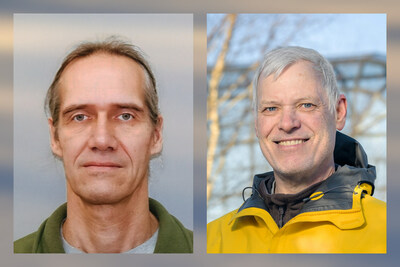
An international team of researchers led by Professor
"Stratospheric aerosol injection, or SAI, would artificially introduce aerosols into the stratosphere by aircraft or high-altitude balloons to create a cooling effect via global dimming and increased albedo—the degree to which Earth reflects sunlight," Moore explains.
Moore, Greve and colleagues used the SICOPOLIS model to simulate the changes in the Greenland Ice Sheet for the period 1990–2090 under three different scenarios: RCP8.5 (worst-case scenario, unabated warming); RCP4.5 (intermediate scenario, possibly achievable under current conditions); and GeoMIP G4 (RCP4.5 plus the injection of 5 million metric tons of sulfur dioxide per year into the stratosphere during 2020–2070).
The simulations showed that SAI of sulfur dioxide would have a clear protective effect on the Greenland Ice Sheet. Under RCP8.5, there would be ice loss equivalent to approximately 90 mm sea-level rise; under RCP4.5, ice loss would be approximately 60.6 mm sea-level rise; but under GeoMIP G4, ice loss would be limited to approximately just 37.6 mm sea-level rise. When these scenarios were tested with a different model, Elmer/Ice, the results were similar. The margins of the ice sheet would benefit the most under GeoMIP G4.
"While this study shows that SAI could contribute to the protection of the Greenland Ice Sheet, and hence, potentially, all other ice cover on Earth, geoengineering is a highly contentious topic," Greve concludes. "The biggest issue is that it addresses only the symptoms of global warming, not the root causes—and may even delay the changes required to address the causes. Furthermore, due to the immense complexity of the natural systems on Earth, it is impossible to predict exactly what positive and negative outcomes could result."
Contacts:
Professor
Institute of Low Temperature Science
Hokkaido University
Tel: +81-11-706-6891
Email: greve[at]lowtem.hokudai.ac.jp
Public Relations & Communications Division
Office of Public Relations and Social Collaboration
Hokkaido University
Tel: +81-11-706-2186
Email: en-press[at]general.hokudai.ac.jp
Paper:
John C. Moore,
DOI: 10.1029/2023JF007112
Funding:
This study was supported by the National Key Research and Development Program of
Press release on Hokkaido University website:
https://www.global.hokudai.ac.jp/blog/geoengineering-may-slow-greenland-ice-sheet-loss/
Photo - https://mma.prnewswire.com/media/2329927/Hokkaido_University_1.jpg
 View original content to download multimedia:https://www.prnewswire.com/news-releases/geoengineering-may-slow-greenland-ice-sheet-loss-302047999.html
SOURCE Hokkaido University
Serious News for Serious Traders! Try StreetInsider.com Premium Free!
You May Also Be Interested In
- On the 12th Edition of Global Patient Week Bristol Myers Squibb and Saudi Schizophrenia Association 'Ehtiwaa' Collaborate to Support People Living with Schizophrenia Through the 'Small Wins' Initiativ
- Mark Your Calendars: Abu Dhabi Unveils Its Spectacular Events Season
- Pikl CEO, Louise Birritteri, named as One to Watch in The LDC Top 50 Most Ambitious Business Leaders for 2026
Create E-mail Alert Related Categories
PRNewswire, Press ReleasesSign up for StreetInsider Free!
Receive full access to all new and archived articles, unlimited portfolio tracking, e-mail alerts, custom newswires and RSS feeds - and more!
