




Every rose has its thorns … or does it?

FREE Breaking News Alerts from StreetInsider.com!
StreetInsider.com Top Tickers, 10/6/2026
- S&P 500, Nasdaq reach record closing highs as focus pivots to earnings
- Oil prices fall nearly 2% as Middle East supply concerns ease
- U.S. 10-year yield climb revives dotcom-era parallels: UBS weighs in
- Goldman flags 2 key market risks if a climb in yields persists
- Shell CEO says Middle East oil flows reach 80% of prewar levels
 Tweet
Tweet Share
Share E-mail
Cold Spring Harbor Laboratory biologists have found a way to remove prickles from plants genetically. Their discovery could change the way we think about evolution in general.
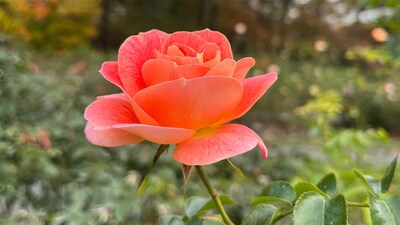
But they aren't the only plants with these dangerous protrusions, technically called prickles. Prickles have evolved independently in species across the plant kingdom. Their main function: warding off herbivores. They're even present in certain eggplant and rice crops. Yet, for years, it's been unclear how the trait pops up so frequently in such unrelated species.
Now, in a breakthrough discovery, Cold Spring Harbor Laboratory (CSHL) has found that the same ancient gene family is responsible for prickles across many plants, despite millions of years of evolutionary separation.
CSHL postdoc
"I noticed many had very prominent prickles. So, I asked, 'What do we know about that? What's going on with this adaptation?' It turns out we knew almost nothing."
With scientists in
The team started combing through prior studies and contacting collaborators around the globe. Satterlee and Lippman worked with the New York Botanical Garden to examine specimens with and without prickles. Collaborators at Cornell University used genome editing to eliminate prickles in desert raisins, a foraged berry native to
Lippman says while this discovery could be used to engineer plants without prickles, it also has big implications for understanding convergent evolution in all life. That is, how completely different species independently develop similar traits. He explains:
"You're really asking about life in general—evolution of traits. How do they emerge? How are they modified? What are the underlying mechanisms? What can we learn about things we take for granted?"
The answer could someday make lesser-known species like desert raisins a new fruit in supermarkets. At the very least, it should make life easier for horticulturalists plucking roses' pesky thorns.
About Cold Spring Harbor Laboratory
Founded in 1890, Cold Spring Harbor Laboratory has shaped contemporary biomedical research and education with programs in cancer, neuroscience, plant biology and quantitative biology. Home to eight Nobel Prize winners, the private, not-for-profit Laboratory employs 1,000 people including 600 scientists, students and technicians. For more information, visit www.cshl.edu
 View original content to download multimedia:https://www.prnewswire.com/news-releases/every-rose-has-its-thorns--or-does-it-302206308.html
SOURCE Cold Spring Harbor Laboratory
Serious News for Serious Traders! Try StreetInsider.com Premium Free!
You May Also Be Interested In
- Oklahoma Aerospace and Defense Continues to Soar
- Skydance Announces Board, Adding Ynon Kreiz, Laurene Powell Jobs and Bobby Kotick as Directors and Tony Blair as Advisor
- Gates Industrial Announces Third Quarter 2026 Earnings Release Date
Create E-mail Alert Related Categories
PRNewswire, Press ReleasesSign up for StreetInsider Free!
Receive full access to all new and archived articles, unlimited portfolio tracking, e-mail alerts, custom newswires and RSS feeds - and more!
