




Disrupting Business Banking: Scott Shay Challenges the Fractional-Reserve Model

FREE Breaking News Alerts from StreetInsider.com!
StreetInsider.com Top Tickers, 10/8/2026
- Wall St slips as climbing oil, yields amplify inflation fears
- Oil jumps 5%, then pares gains after Trump says no attack on Iran this month
- Chipotle, Starbucks shares volatile after report of potential takeover
- Why Citi says the Fed could be setting up for a dovish surprise
- Alphabet shares rise as Google pushes Gemini deeper into enterprise AI
 Tweet
Tweet Share
Share E-mail
On Disruption Interruption,
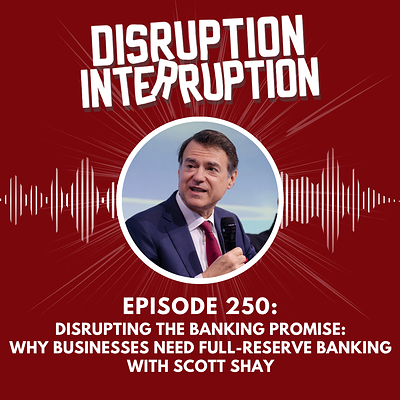
What Businesses Assume About a Bank Deposit
Shay describes fractional-reserve banking as a system in which customer deposits support loans and other bank assets while account holders continue to see a balance available to them. For businesses holding substantial operating cash, he says that creates exposure to decisions they may know little about. "You don't know what they've done," Shay says. "You know they have a balance sheet. You know once a year it is audited, but you basically take your money, put it in a big pile with all sorts of other depositors, and trust that the bank will invest it well."
That risk becomes visible when a bank's assets lose value or become difficult to liquidate. Shay points to the 2008 financial crisis, when long-term mortgage exposure contributed to failures and government intervention across the financial system. He does not argue that lending should disappear. He argues that depositors should know when their capital is being used to support it. "Let's be transparent," Shay says. "Let's be fair to the people who are providing the capital."
Payments create a second concern for businesses moving large sums. Traditional transfers can pass through settlement windows and intermediary banks before funds become final and available to the recipient, leaving working capital tied up during the process. For Shay, the infrastructure itself is overdue for modernization. "I just recognized how so 1970s and '80s our rails are," he says.
Full Reserves Meet Real-Time Settlement
Shay built N3XT around a full-reserve model in which deposits are not lent to borrowers. Instead, he says customer funds are held in cash and short-term
The reserve model is paired with a blockchain-based core designed for real-time business payments. Shay says transfers settle in seconds, making the funds available to the recipient immediately instead of leaving the transaction pending through traditional settlement cycles. "When you move money with us, if I move a million dollars to you, you can spend that million dollars seconds later," he says. "As soon as it shows up, you can spend it."
Shay points to shipping and logistics because payment often depends on confirming that goods have arrived and the required trade documents are in order. In a typical transaction, he says, one party may have to prepay, accept credit risk, or arrange a letter of credit while the shipment is in transit. N3XT can program the transaction so that once delivery is verified, the payment, bill of lading, certificate of origin, and other approvals move together. For Shay, the broader goal is to make business payments work more directly for the parties completing any transaction. "Money should work for the buyer and the seller, not just for the bank," Shay says.
Links
Disrupting the Banking Promise: Why Businesses Need Full-Reserve Banking with
Disruption Interruption is the podcast where you will hear from today's biggest Industry Disruptors. Learn what motivated them to bring about innovation and how they overcame opposition to adoption.
LinkedIn: https://www.linkedin.com/in/scott-shay
Company Website: https://n3xt.io
About Disruption InterruptionTM
Disruption is happening on an unprecedented scale, impacting all manner of industries — MedTech, Finance, IT, eCommerce, shipping, logistics, and more — and COVID has moved their timelines up a full decade or more. But WHO are these disruptors and when did they say, "THAT'S IT! I'VE HAD IT!"? Time to Disrupt and Interrupt with host Karla Jo "KJ" Helms, veteran communications disruptor. KJ interviews bad asses who are disrupting their industries and altering economic networks that have become antiquated with an establishment resistant to progress. She delves into uncovering secrets from industry rebels and quiet revolutionaries that uncover common traits — and not-so-common — that are changing our economic markets… and lives. Visit the world's key pioneers that persist to success, despite arrows in their backs at www.disruption-interruption.com.
About
About Karla Jo Helms
Karla Jo Helms is the Chief Evangelist and Anti-PR® Strategist for JOTO PR Disruptors™. Karla Jo learned firsthand how unforgiving business can be when millions of dollars are on the line — and how the control of public opinion often determines whether one company is happily chosen, or another is brutally rejected. Being an alumnus of crisis management, Karla Jo has worked with litigation attorneys, private investigators, and the media to help restore companies of goodwill into the good graces of public opinion — Karla Jo operates on the ethic of getting it right the first time, not relying on second chances and doing what it takes to excel. Helms speaks globally on public relations, how the PR industry itself has lost its way, and how, in the right hands, corporations can harness the power of Anti-PR to drive markets and impact market perception.
References
- Federal Deposit Insurance Corporation. (2026). Quarterly Banking Profile: First quarter 2026.
fdic.gov/quarterly-banking-profile/quarterly-banking-profile-first-quarter-2026.pdf - Federal Deposit Insurance Corporation. (n.d.). Deposit insurance basics.
fdic.gov/financial-institution-employees-guide-deposit-insurance/deposit-insurance-basics
Media Inquiries:
Karla Jo Helms
JOTO PR™
727-777-4629
 View original content to download multimedia:https://www.prnewswire.com/news-releases/disrupting-business-banking-scott-shay-challenges-the-fractional-reserve-model-302902476.html
SOURCE Disruption Interruption
Serious News for Serious Traders! Try StreetInsider.com Premium Free!
You May Also Be Interested In
- Gardening & Landscape Expert Eric Schmidt Explains Landscape Design Considerations in HelloNation
- HVAC Expert Neil Bumgardner Explains Annual Furnace Maintenance in HelloNation
- Humane World for Animals offers tips for coexisting with wildlife in colder weather
Create E-mail Alert Related Categories
PRNewswire, Press ReleasesRelated Entities
FDICSign up for StreetInsider Free!
Receive full access to all new and archived articles, unlimited portfolio tracking, e-mail alerts, custom newswires and RSS feeds - and more!
