




Consumers Battle Fatigue Over Food Inflation

FREE Breaking News Alerts from StreetInsider.com!
StreetInsider.com Top Tickers, 10/10/2026
- Wall Street posts weekly gains with earnings, inflation data on tap
- Oil prices settle higher as more production shut ahead of hurricane
- Apple cuts iPhone 18 Pro orders due to soft demand, Nikkei Asia reports
- UBS flags level in gold prices where dip buyers will likely emerge
- Telecom stocks tumble on SpaceX spectrum acquisition news
 Tweet
Tweet Share
Share E-mail
2024 Rabobank BBQ Index
- Inflation has been running hot for a prolonged period and while some relief from the heat is evident, consumers are exhausted from historically high food prices and now exhibiting greater frugality.
- In 2024, hosting a 10-person barbecue on the
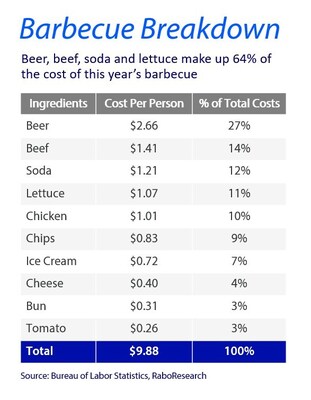
Fourth of July will cost$99 , the highest on record. This year, beer, beef, soda and lettuce make up 64% of the total cost. - Personal balance sheets are in worse shape than a few years ago with mounting debt, waning savings and lower real income resulting in a loss of consumer confidence.
- With food pricing unlikely to reverse course, this might be the last time we'll see a summer cookout for under
$100 .
Over the past five years, a series of macro factors have catapulted prices higher, weighing on their wallets and testing their endurance. These hurdles included geopolitical crisis, severe drought, higher restaurant overhead and wages, rising interest rates and higher inflation throughout the supply chain.
As a result, food inflation jumped 25% from 2019 to the end of 2023. But the additional inflation we have seen in the first half of 2024 on top of that, albeit far more modest, has been the tipping point. Many consumers who stayed the course by continuing to spend in the face of 40-year highs in food prices are now pulling back and reevaluating their budgets.
"The consumer is waving the white flag on food inflation," said
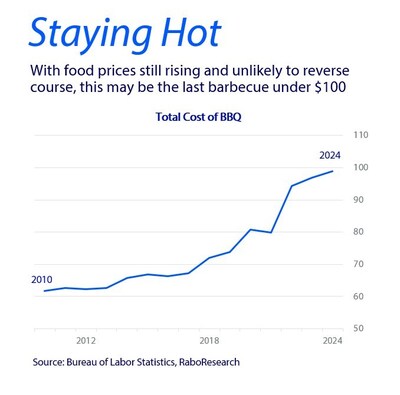
Indeed, while the overall pace of inflation has moderated to more normal levels since last summer, prices are still moving higher. The 2024 Rabobank BBQ Index, which measures the cost of staple ingredients for a 10-person barbecue, shows that it will cost
Not surprisingly, fewer Americans are choosing to eat out as restaurants have passed along higher input costs, wholesale food prices, rent and employee wages to their customers. A reported 68% of people polled by Vericast say they are switching from restaurants—where the tab is up 4.4% annually—to grocery stores, which have seen only a 1.1% price hike. In 2022,
For most people, the sticker shock of going out to eat is difficult to stomach. In 2023, 81% of restaurant operators surveyed reported raising their prices in the prior six months. While that number is trending lower this year, prices continue to rise.
In many ways, the impact of the rising cost of food is emblematic of the broader economic trend in consumption. Retail sales, a vital sign of the health of the
Undoubtedly, the duration of inflation has taken a psychological toll. Consumer sentiment, as measured by the University of Michigan's index, fell to 69.1 in May, marking its lowest level since
Further, excess savings, which soared to an all-time high during Covid, have now sunk to an all-time low as government aid, such as SNAP payments, the child tax credit, increased unemployment benefits and a suspension of student loan payments have ended. To be sure, people under the age of 35 have been hit the hardest. Credit card delinquencies in this demographic are at their highest level since 2011, according to the Federal Reserve. And rent hikes have eroded the savings that some consumers squirreled away during Covid lockdowns.
"Fiscal fitness is now more of a focus," Bailey said. "Saddled with mounting credit card debt, waning savings and lower real income, consumers are spending less."
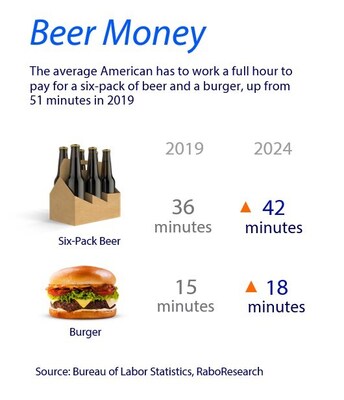
The bottom line: A consumer's dollar is not going as far as it did just a few years ago. Consider that the average American has to work an hour to earn enough money for a six-pack of beer and a burger today, up from 51 minutes in 2019 (see chart: Beer Money). And they'll have to work nine hours to pay for a barbecue this year, up 32% since 2019.
Against this backdrop, families preparing for the time-honored tradition of a backyard barbecue this
Still, millennials remain prone to giving in to their urge to splurge. Their well-documented willingness to travel and attend pricey concerts reflect this reality even as they have become more selective under the prevailing financial constraints. A reported 78% of Gen Y respondents polled said they would rather spend money on an experience than material goods. Perhaps the prospect of student loan forgiveness, the pending wealth transfer from the Baby Boomer generation and a "you only live once" mentality may be boosting their penchant for "experiences over things."
Let's Make a Deal
With many consumers forced to exercise more discipline, savvy shopping will come in handy before firing up the grill. "To find bargains in beef this grilling season, look for featured promotions at your local supermarket or club store," said
Looking to save a few bucks on proteins? Prefer chicken as your barbecue centerpiece? You can trim your budget by trading breast meat for parts, such as drumsticks, wings and thighs. "In tough times, chicken maintains its value," said
Fortunately for consumers, despite suffering from fatigue from the inflation marathon, they can find attractive deals on quality meats and drinks this summer. Recreating a restaurant experience at home is now more palpable as the food industry has made strides in enhancing taste, efficiency and safety.
"The quality of beef available to the consumer has never been better," Zimmerman says. "In the past 20 years, we've seen the availability of USDA prime and choice meat increase 60% as improved cattle management has created more marbling. Those fatty flecks pack a lot of tenderness and flavor while making it easier to grill. Even if you overcook quality meats a little, they won't turn into shoe leather."
Where's the Beef?
The expectation of tighter
In poultry, demand for chicken has improved as consumers seek lower-cost, high-value proteins. Rising beef prices have led many restaurants to offer more chicken options on their menus. Retail stores are also putting more chicken on sale. Breast meat has found its way back to the top of the circular, while lower-cost thigh meat and legs are getting good traction as budget-friendly protein alternatives.
Bloated Inventory
The beer industry is coping with a series of issues including a glut of inventory, an inability to raise prices after 14 years of hikes and a continuing long-term trend of losing market share to spirits and ready-to-drink cocktails. Nearly every beer category, except imports, saw negative growth in 2023. However, for the diehards, no barbecue would be complete without a cold beer as evidenced by its 27% share of the total barbecue cost. Non-alcoholic beer has been a surprising new revenue stream for brewers, pacing the 31% rise in sales across non-alcoholic adult beverages in 2023. Look for this newbie to find a place at the barbecue table this year.
Americans Love Their Cheese
Demand for butter remains robust, pulling cream away from ice cream in recent months. Ice cream prices are up from year-ago levels, contributing to the increase in the total index. Consumption is not as high as it once was as competition among desserts continues to intensify, with some consumers shying away from ice cream in pursuit of a healthier diet. Still, a recent International Dairy Foods Association survey showed that more than 97% of Americans enjoy ice cream, with vanilla as the most popular flavor.
Flat Is the New Up
Soda prices have held up well with increases still sitting above inflation. Sales volumes are flat, which is fairly solid performance given above-inflation pricing and tough economic conditions. Soda has benefitted from flavor innovation, tailored sizes and package types and a focus on gut health—a notable source of growth. Meanwhile, energy drinks and sports drinks have been the standouts among non-alcoholic beverages, powered by strong innovation and newer entrants taking market share.
A Mixed Bag
Last year, we saw elevated inflation across the board and fresh produce was no exception.
Separately, tomato prices have moved higher in 2024 as dry weather in
Premium Buns for the Win
Bakery goods have felt the impact of price increases in 2023, resulting in lower sales volumes. It's not that Americans are eating fewer burgers—they eat more than 50 billion every year—but they became more aware of waste and opted for smaller packages. Hamburger and hot dog bun prices have been stable, in line with overall grocery inflation. Recent price hikes have been a boon for private-label bread and premium baked goods, as consumers trading down from eating at restaurants opt for differentiated products at home. Don't be surprised if you see a pretzel bun at this year's
Rationale and Methodology
The Rabobank Barbecue Index assumes an average American BBQ situation—a mix of family and friends—on
About Rabobank
Rabobank Group is a global financial services leader providing wholesale and retail banking, leasing, and real estate services in more than 38 countries worldwide. Founded over a century ago, Rabobank today is one of the world's largest banks with over
Rabo AgriFinance, a subsidiary of Rabobank, is a leading financial services provider for farmers, ranchers and agribusinesses in
MEDIA CONTACTS
Melanie Bernds
Public Relations, Rabobank
[email protected]
Marketing & Communications, Rabobank
[email protected]

 View original content to download multimedia:https://www.prnewswire.com/news-releases/consumers-battle-fatigue-over-food-inflation-302183525.html
SOURCE Rabobank
Serious News for Serious Traders! Try StreetInsider.com Premium Free!
You May Also Be Interested In
- Solvely.ai Makes the Case for AI That Builds Human Capability
- STARMUS VIII Announces Two Young Changemakers as Junior Medal Winners
- Bitcoin Price Prediction: Bulls Target $90K as AlphaPepe Combines the Next-PEPE Dream With an AI Exchange Buyers Can Try
Create E-mail Alert Related Categories
PRNewswire, Press ReleasesRelated Entities
Raising PricesSign up for StreetInsider Free!
Receive full access to all new and archived articles, unlimited portfolio tracking, e-mail alerts, custom newswires and RSS feeds - and more!
