




Colossal Biosciences Expands De-extinction Portfolio with Iconic Bluebuck

FREE Breaking News Alerts from StreetInsider.com!
StreetInsider.com Top Tickers, 10/14/2026
- Wall St slides as hot CPI data fuels rate-hike bets; chips, banks weigh
- Oil prices steady after gains on Iran's new tactics to target tankers
- U.S. consumer prices rise by 3.7% year-on-year in September
- Bank of America stock falls on earnings miss
- Netflix cuts 1,000 jobs as streaming giant seeks to boost engagement
 Tweet
Tweet Share
Share E-mail
The project, actively in progress, is powered by world-first breakthroughs in antelope reproduction and stem cell science; supported by local South African conservation organizations to support thoughtful rewilding efforts; and provides new technologies positioned to reverse centuries of decline across threatened antelope species

Antelopes are increasingly at risk, with many species facing a high likelihood of extinction due to habitat loss, poaching, and the impacts of climate change. Data from the International Union for Conservation of Nature (IUCN) highlight the urgency of the crisis: of the world's 90 antelope species, 29 are currently threatened with extinction, and populations are declining in 62% of antelope species. Five species—the addax, hirola, Ader's duiker, dama gazelle, and saiga—are now classified as Critically Endangered, underscoring the need for immediate conservation action.
"The bluebuck represents a pivotal step forward for Colossal and conservation, marking our first major focus on antelope conservation—one we can now pursue because of major developments with the necessary technologies," said
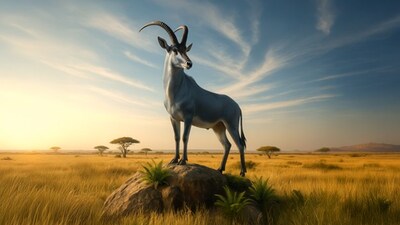
The bluebuck, once native to southern
"African antelopes have long been neglected in global conservation," said Dr.
Colossal's bluebuck project has been underway since 2024 and the team has already delivered major scientific and technological breakthroughs. The project combines cutting-edge de-extinction science with an innovative conservation technology platform for bovids—a diverse family of more than 140 species of cloven-hoofed, hollow-horned herbivores, including cattle, sheep, goats, buffalo, bison, and antelopes. Significant technological advances already achieved include:
- Paleogenome and Computational Analysis: Generated the world's first high coverage 40-fold genome of a historical bluebuck to confirm the phylogenetic affinities between bluebucks and related antelopes, and identified genetic variants linked to the bluebuck's key traits,
- Advanced cellular engineering: Generated the world's first induced pluripotent stem cells (iPSCs) from roan antelope
- Genome editing: The team are now in the editing phase, using several approaches to engineer bluebuck variants into the roan iPSCs
- Reproductive technologies: Achieved the world's first successful ovum pick-up (OPU) procedures in two antelope species—a historic breakthrough that fundamentally transforms what is possible in assisted reproduction for endangered antelope and opens a direct pathway from biobanked genetics to living animals
- Global biobanking infrastructure: Launched a global biobanking initiative to capture and preserve genetic diversity across threatened antelope species worldwide, building the biological safety net that will underpin antelope conservation for generations to come
- On-the-ground conservation and rewilding: Collaborating with the Endangered Wildlife Trust (EWT), a leading South African conservation organization, on conservation planning, habitat restoration, and rewilding readiness; and Advanced Conservation Strategies (ACS) as an independent, third-party environmental consultant supporting reintroduction planning, site selection, and regulatory assessments.
PIONEERING SCIENTIFIC BREAKTHROUGHS
BLUEBUCK PALEOGENOME AND GENOME ENGINEERING
Colossal scientists, in collaboration with academic partners, generated a 40-fold coverage nuclear genome from a historical bluebuck specimen housed in the Swedish Museum of Natural History, producing one of the highest-quality paleogenomes ever assembled for an extinct species. This work, which was led by Colossal Scientific Advisory Board member Dr.
Genomic analyses confirmed that the bluebuck's closest living relatives are the sable and roan antelope, establishing the roan as the primary genomic reference and cellular surrogate for the de-extinction program. The team also reconstructed the bluebuck's long-term population history, revealing that the species maintained low but stable genomic diversity for at least 400,000 years prior to its extinction, with no signs of inbreeding, suggesting the bluebuck had adapted to life at small population sizes over evolutionary timescales. This finding reframes the bluebuck's extinction as a consequence of rapid colonial-era disturbance rather than genomic vulnerability, underscoring that the species was biologically resilient until European hunting and landscape transformation in the 18th century eliminated it within 150 years.
"Our initial genomic work with Colossal scientists on bluebuck specimens two years ago demonstrated that viable DNA could be recovered from this extinct species and placed it within the evolutionary context of other African antelopes," said
Building on these genomic data, the bluebuck project is advancing genomic data analysis, cell line isolation, genotype-to-phenotype mapping, and genome engineering approaches. Colossal generated chromosome-scale reference genomes from the two closest living relatives of the bluebuck—the roan and sable antelopes—and used these to identify the key genetic differences that defined all three antelopes. For the bluebuck, the team identified genetic changes that underlie its smaller body size, bluish-gray coat coloration, and characteristic white facial pattern, and are targeting both coding and regulatory regions associated with these traits for engineering.
ROAN iPSCs
Colossal announced a major breakthrough in generating the world's first induced pluripotent stem cells (iPSCs) from roan antelope. iPSCs are reprogrammed adult cells that have been returned to a stem-cell-like state, giving them the ability to differentiate into virtually any tissue type in the body. This flexibility makes them a powerful platform for de-extinction science: by introducing bluebuck-specific genetic variants into roan iPSCs and then differentiating those edited cells into relevant tissue types, such as skin, muscle, or pigment-producing melanocytes, Colossal scientists can test hypotheses about how specific genomic changes affect biology and development without needing to produce a living animal.
Beyond their role in de-extinction, roan iPSCs can also be used to generate artificial gametes, supporting assisted reproduction efforts for living antelope populations that are difficult to breed through conventional means. The roan iPSC platform thus serves as both the genomic surrogate for the bluebuck de-extinction program and a durable conservation tool for bovid species more broadly.
"iPSCs from roan antelope are valuable far beyond the bluebuck project," said Shapiro. "Once you have a pluripotent cell line, you can differentiate it into virtually any tissue type, which means you can test how genetic changes affect biology without needing a living animal. That matters enormously for species where every individual counts. We're building this platform for bluebuck, but the conservation applications for living antelope species, including generating gametes from biobanked material, are just as significant as the de-extinction work itself."
OVUM PICK UP
Colossal scientists developed breakthrough ovum pickup (OPU) techniques purpose-built for antelope species, enabling minimally invasive, scalable collection of oocytes from live animals. The Colossal team engineered novel ultrasonographic equipment, optimized hormone stimulation protocols from the ground up, and achieved world-first successes in OPU with two antelope species, the roan antelope and scimitar-horned oryx. These techniques mark a decisive turning point in reproductive technologies for bovid conservation and are detailed in a scientific preprint on biorxiv.
With OPU now proven across two of the bluebuck's closest living relatives, Colossal is rapidly scaling this technology across additional antelope species—building the assisted reproduction infrastructure that will allow biobanked genetic material from endangered populations to become viable embryos, and ultimately, living animals capable of restoring species on the brink.
"The specialized ovum pickup protocols we've developed for antelopes are game-changers for conservation breeding," explained
BIOBANKING
The Colossal Foundation, the nonprofit arm of Colossal Biosciences that focuses on endangered species conservation initiatives, is leading an ambitious, globally-scaled BioVault initiative with an immediate priority focus on threatened antelope species—creating a living genetic library that will serve as the foundation for antelope conservation for generations to come. This program encompasses the collection, processing, and long-term preservation of genetic material from diverse populations of threatened bovids across
The reproductive breakthroughs unlocked by the bluebuck de-extinction program create a direct pipeline from biobank to recovery: genetic material collected today can be transformed into viable embryos tomorrow, giving conservation programs a biological safety net that didn't previously exist. The initiative is designed to operate at scale with field-optimized collection protocols for remote habitats, specialized preservation techniques tailored to the unique cellular biology of bovid species, the establishment of regional biobanking facilities, and investment in building the capacity of local partners across
CONSERVATION AND REWILDING EFFORTS
The Colossal Foundation is engaging with the Endangered Wildlife Trust (EWT), one of southern
The bluebuck's restoration will be leveraged as a catalyst for landscape-scale ecological recovery across its historic range. The species once roamed the open grassland ecosystems of
"The Endangered Wildlife Trust is committed to ensuring that any efforts to restore extinct species in e a responsible pathway for the potential return of the Bluebuck."
In parallel, Colossal has formed a strategic collaboration with Advanced Conservation Strategies (ACS), led by renowned conservation ecologist Dr.
"Our partnership with Colossal is grounded in science and guided by conservation best practices," said
Colossal emphasizes that all aspects of this project will operate within established international frameworks governing genetic engineering, animal welfare, and wildlife management. The next phase will include identifying additional partners across government agencies, conservation organizations, and academic institutions to ensure appropriate oversight and expertise.
"We recognize that bringing back the bluebuck is just the first step in a much longer, strategic journey," explained
For Colossal and its partners, this effort is about more than scientific achievement. By grounding the work in local collaboration and respect for the history of the land and the communities connected to it, the project is positioned to deliver conservation benefits well beyond the return of the iconic bluebuck itself.
Dr. Yoshan Moodley, Professor of Zoology at the University of Venda in
EXPANDED CONSERVATION IMPACT
The bluebuck de-extinction project is not just bringing back one species, it is building a conservation revolution for antelopes worldwide. Every technology Colossal develops, every protocol optimized, and every genome sequenced through this program becomes a force multiplier for the 29 antelope species currently fighting for survival.
Colossal's antelope biobanking program, built on the reproductive and genomic breakthroughs pioneered through this project, will create the most comprehensive genetic safety net ever assembled for bovid species—a living, deployable archive of biodiversity that gives conservationists the tools to intervene decisively before a species reaches the point of no return. For the first time, the field of antelope conservation will have access to the same caliber of advanced reproductive science, genomic infrastructure, and cellular engineering that has long been available to other flagship species.
The platform being developed through the bluebuck project—iPSC technology, optimized OPU protocols, chromosome-scale reference genomes, and field-ready biobanking capabilities—is explicitly designed to scale. Solutions proven in the lab today will be deployable across African landscapes tomorrow, giving wildlife managers, breeding programs, and conservation organizations capabilities that simply did not exist before. This is precision conservation at a scale the field has never seen.
"For too long, antelope conservation has lacked the biotechnology infrastructure that other species take for granted," said
COLOSSAL'S GROWING PORTFOLIO OF ECOLOGICAL RESTORATION
With the addition of the bluebuck, Colossal expands its de-extinction portfolio to include species from diverse taxonomic lineages (mammals across multiple orders), extinctions spanning different time periods (from ancient to recent), various extinction causes, and different geographical regions and ecosystems.
"Each species we work on presents unique scientific opportunities," noted Dr. George Church, Co-Founder of Colossal and Professor of Genetics at Harvard Medical School. "The bluebuck project allows us to refine our genetic rescue toolkit while addressing a recent extinction where human accountability is clear and ecological niches for reintroduction and migration corridors are committed to growing by millions of square kilometers in
About Colossal Biosciences
Colossal was founded by emerging technology and software entrepreneur Ben Lamm and world-renowned geneticist and serial biotech entrepreneur George Church, Ph.D., and is the first to apply CRISPR technology for the purposes of species de-extinction. Colossal creates innovative technologies for species restoration, critically endangered species protection and the repopulation of critical ecosystems that support the continuation of life on Earth. Colossal is accepting humanity's duty to restore Earth to a healthier state, while also solving for the future economies and biological necessities of the human condition through cutting-edge science and technologies. To follow along, please visit: www.colossal.com.
About Endangered Wildlife Trust (EWT)
Founded in 1973, the Endangered Wildlife Trust is dedicated to conserving threatened species and ecosystems in southern and
About Advanced Conservation Strategies
Founded in 2006, Advanced Conservation Strategies is a registered 501c3 non-profit organization in
WEBSITE & SOCIALS
Websites: www.colossal.com
Instagram: https://www.instagram.com/colossal/
YouTube: https://www.youtube.com/@colossal
Twitter: https://x.com/colossal
LinkedIn: https://www.linkedin.com/company/colossal/
Facebook: https://www.facebook.com/itiscolossal
TikTok: https://www.tiktok.com/@colossal
BlueSky: https://bsky.app/profile/itiscolossal.bsky.social
 View original content to download multimedia:https://www.prnewswire.com/news-releases/colossal-biosciences-expands-de-extinction-portfolio-with-iconic-bluebuck-302759083.html
SOURCE Colossal Biosciences Inc.
Serious News for Serious Traders! Try StreetInsider.com Premium Free!
You May Also Be Interested In
- K-POP SENSATION LE SSERAFIM HEADLINES NEW BRAND CAMPAIGN FOR ASIAN ENTERTAINMENT STREAMER, RAKUTEN VIKI
- Century Communities Announces Hayden Brook Grand Opening, Offering New Homes in Cumming, GA
- As Personal AI Agents Take Off, DeepLumen Helps Merchants Turn AI into a New Sales Channel
Create E-mail Alert Related Categories
PRNewswire, Press ReleasesSign up for StreetInsider Free!
Receive full access to all new and archived articles, unlimited portfolio tracking, e-mail alerts, custom newswires and RSS feeds - and more!
