




Beyond The Classroom: Immersive Experiences at Holocaust Sites Shape Future Medical Professionals

FREE Breaking News Alerts from StreetInsider.com!
StreetInsider.com Top Tickers, 10/15/2026
- S&P 500 ends higher as traders shift from AI to healthcare
- U.S. producer prices rise by 1.3% month-on-month in September
- Brent steady as US weighs easing sanctions on global 'shadow fleet'
- UBS now expects a third Fed rate hike after hot September inflation print
- Tesla-SpaceX Merger could be announced before December, Barclays says
 Tweet
Tweet Share
Share E-mail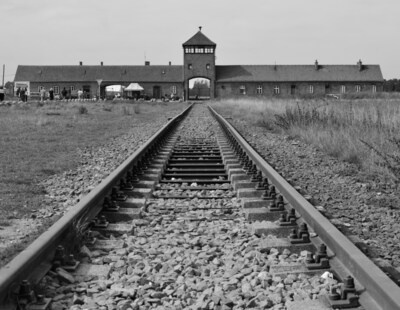
They walked down the stark white corridor as the names of 1.1 million people were quietly read over a loudspeaker.
Each name a person, a story, a life cut short by a methodical plan to eradicate an entire people. A vast, mechanized conspiracy that not only included military and political leaders but doctors, nurses and those once committed to preserving life.
Over four days in
This was not a typical medical conference.
Medical Review Auschwitz: Medicine Behind the Barbed Wire is more of an experience, one requiring early career medical professionals to grapple with how doctors were swept up in
"One of the statistics that consistently surprises people is that more than fifty percent of German doctors willingly became members of the Nazi Party. That's double the proportion of nearly all other professional groups," explained
Six fellows from CU Anschutz joined colleagues from Harvard Medical School and Technion Medical School in
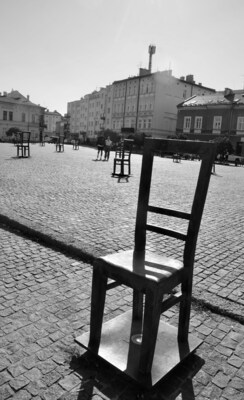
They visited the ghetto in
"Being here and witnessing the places where people were tortured under the guise of medical science, coupled with the microhistories of the victims, has been transformative," said
The day ended with a visit to Plaszow concentration camp, a site featured prominently in the film 'Schindler's List.' A path winds through what is now a park, marked by memorials for mass graves, ending at an execution pit. Towering stone figures representing the five countries of Plaszow's victims bow beneath the weight of a heavy block, their chests cracked, symbolizing lives cut short. Near the base, an obelisk bears the inscription, "In memory of those murdered, (whose) final screams of anguish is the silence of this Plaszow graveyard."
"This tour lays the groundwork for what everyone will experience in the days ahead," Wynia said.
The next day began with a visit to Auschwitz-Birkenau, about 43 miles from
Silence enveloped the camp despite throngs of visitors. The group reached the infamous Block 10 where some of the most horrific Nazi medical experiments took place.
"My grandfather came here with his mother and sisters. His older sister was immediately sent to the gas chamber while he and the others were taken for experimentation. He remembers his mother screaming his name as he was dragged away," Ezri said. "He endured painful procedures including forehead injections, skin biopsies and painful eyedrops containing unknown chemicals. He survived but we still don't know what happened to his twin, Marta. As a twin myself sharing his story here is profoundly important."
Several attendees wiped away tears. They entered Block 10 in the main Auschwitz camp. A single wooden "operating slab" stood in a small room, a grim reminder of the experiments conducted there, many targeting women in painful sterilization trials. More than 400 people were housed in two large rooms on the building's second floor. A dank gas chamber stood nearby. Piles of hair, shorn from victims for use as rope, socks and mattress stuffing, nearly reached the ceiling in another block building nearby. Separate rooms held the remnants of luggage carried in but never carried out. Some still bore the names of the owners -
"I had visceral reactions to everything. Seeing where individuals slept, walking the same path toward the gas chambers and seeing their belongings," said
From Auschwitz, they went to Birkenau. Standing on the tracks leading to the entrance, an overwhelming sense of dread settled in. For hundreds of thousands of Jews, this was the last thing they would see before being separated from their families and murdered. Birkenau was a true death camp. A place where physicians made life-and-death decisions within moments of arrival. Children and the elderly were nearly always killed.
"Experiencing this history is vital for medical professionals. At some point we all face challenging ethical dilemmas whether we're in the ICU or a clinic. The historical context reminds us of the weight those decisions carry," Polsinelli said.
The day ended at St. Maximilian Kolbe Franciscan Church in Harmeze, where participants viewed an art exhibit Negatives of Memory: Labyrinths by Marian Kołodziej, a former prisoner at Auschwitz. His haunting images vividly illustrate the horrors experienced there.
Kolodziej, a Catholic, was on the first transport to Auschwitz. He never spoke of his experience until suffering a stroke in the early 1990s which seemed to unlock his memories. Using paper and pencil he made detailed sketches of the horrors, tortures and occasional heroes he met while in Auschwitz.
"It's a challenging four days," Wynia acknowledged "After these emotionally taxing experiences we take a step back to reflect academically and personally through presentations and workshops. The conference provides the necessary distance for contemplation on how these lessons will influence the future of medicine."
The group heard from Holocaust experts and survivors worldwide who shared their stories, research and ongoing investigations. Wynia and colleagues from Technion and Harvard discussed how this dark past could serve as a moral compass for decisions made today. In workshops, fellows discussed how to integrate this newfound knowledge into their practice.
"Hearing different people's viewpoints was surprising, along with learning how professionals practice and think differently in other parts of the world. To hear the Israelis discuss issues they encounter in the hospital is a lot different than in
As the conference ended, the group shared final thoughts on the experience and how best to use it personally and professionally.
"What we've learned here will shape how I process my own trauma and help my patients. It gives me courage to see things and teach others" Mendoza said. "As one of the chief residents for our program I will also ensure that those coming into this profession equally keep these things in mind as they continue their careers."
Wynia offered a final thought, one surprisingly optimistic.
"There is a message of hope here. During World War II, some individuals acted heroically, others were sometimes heroic, and some were outright collaborators," he said. "Witnessing the stories from across that whole spectrum compels those attending this conference to think about how they are going to shape the future of medicine, and what decisions they will make to prevent such atrocities from happening again on any level."
About the
The University of Colorado Anschutz Medical Campus is a world-class medical destination at the forefront of transformative science, medicine, education and patient care. The campus encompasses the University of Colorado health professional schools, more than 60 centers and institutes and two nationally ranked independent hospitals - UCHealth University of Colorado Hospital and Children's Hospital Colorado – which see more than two million adult and pediatric patient visits yearly. Innovative, interconnected and highly collaborative, the CU Anschutz Medical Campus delivers life-changing treatments, patient care and professional training and conducts world-renowned research fueled by $910 million in annual research funding, including
Media Contact:
[email protected]
 View original content to download multimedia:https://www.prnewswire.com/news-releases/beyond-the-classroom-immersive-experiences-at-holocaust-sites-shape-future-medical-professionals-302356744.html
SOURCE
Serious News for Serious Traders! Try StreetInsider.com Premium Free!
You May Also Be Interested In
- Lucid Poker Launches Cardle, Doug Polk's Free Daily Poker Quiz, on the Web
- Club Offers for Travel Enthusiasts in the U.S.
- Bluerock High Income Institutional Credit Fund Announces Q3 2026 Distribution at an 8.1% Current Annualized Rate
Create E-mail Alert Related Categories
PRNewswire, Press ReleasesSign up for StreetInsider Free!
Receive full access to all new and archived articles, unlimited portfolio tracking, e-mail alerts, custom newswires and RSS feeds - and more!
