



700,000 Canadian Homes Still Carry Plumbing Removed Since 2005, PatchBoyz Analysis Finds
 Tweet
Tweet Share
Share E-mail
As many as 700,000 homes affected —
The company's analysis found that homeowners with Poly-B plumbing may still obtain insurance coverage in 2026, but insurer requirements vary significantly, ranging from premium surcharges to full coverage denial depending on the property's condition and the insurer's underwriting policies.
PatchBoyz analyzed publicly available data from
Key Findings
- As many as 700,000 Canadian homes still contain Poly-B plumbing, according to
Square One Insurance . - Poly-B was removed from the Canadian plumbing code in 2005 because of documented concerns regarding leaks and pipe failures as systems age.
- Insurers may respond to Poly-B plumbing by adding premium surcharges, requiring replacement within a specified timeframe, excluding water-damage coverage, or denying coverage altogether.
- More than 320,000
U.S . homes were repaired through a$1.14 billion class-action settlement related to Polybutylene plumbing systems. Ottawa -area Poly-B replacement projects typically range from$9,000 to$15,000 for plumbing work alone, according to PatchBoyz project observations.
Insurers Have Not Adopted a Single Standard for Poly-B Plumbing
One of the clearest findings from the analysis is that there is no universal insurance industry approach to Poly-B plumbing in
This means two homeowners with similar properties may receive different insurance outcomes depending on the insurer, the age of the plumbing system, documented maintenance history, and whether replacement plans are already underway.
In markets such as Poly B plumbing
Insurer responses are also influenced by broader underwriting trends in water-damage risk management across
In some cases, insurers may also reassess coverage when homes have not undergone recent plumbing inspections or when renovation records are incomplete. This has made documentation and preventative replacement planning increasingly important for homeowners seeking consistent coverage outcomes in properties built during the Poly-B installation era.
"Many homeowners assume Poly-B automatically makes a property uninsurable, but insurer requirements vary considerably," said Jud Menshal, Founder of PatchBoyz. "The common thread is that insurers want to understand the condition of the system and whether replacement plans are in place."
The national Poly-B housing exposure indicators are as follows: According to
Why Insurance Companies Continue to Scrutinize Poly-B
Poly-B, also known as Polybutylene piping, was widely installed in North American homes between 1978 and the mid-1990s because it was inexpensive, flexible, and easy to install.
InterNACHI (ongoing, continuously maintained) estimates that up to 10 million
Insurance companies pay close attention to the material because aging Poly-B systems have historically been associated with leaks and water-damage claims. While many systems continue functioning without issues, underwriting departments often view the material as a higher-risk component compared with modern plumbing alternatives.
Poly-B plumbing becomes a documented consideration across several key stages of a real estate transaction. During the home inspection phase, the material is identified and formally documented, after which buyers conduct due diligence to evaluate the overall condition of the plumbing infrastructure. Insurance reviewers similarly assess the plumbing material as part of their underwriting process.
As negotiations progress, the anticipated costs of future replacement are factored into offer discussions, while property comparisons are drawn between homes with Poly-B systems and those with modernized plumbing. Finally, at the ownership planning stage, capital maintenance budgeting is reviewed to account for the long-term implications of the existing system.
Poly-B Was Removed From the Canadian Plumbing Code in 2005
Westland Insurance reports in its
The code change did not require homeowners to replace existing systems. Homes containing Poly-B remained legal residential properties and continue to be bought, sold, and insured throughout
However, the removal created a distinction between current code-approved plumbing materials and legacy systems installed during earlier construction periods. That distinction remains relevant during inspections and insurance reviews today.
While removal from the code did not require immediate replacement, many municipalities and inspectors now treat Poly-B as a legacy system when assessing long-term maintenance risk. This classification has gradually influenced buyer expectations, particularly in older suburban housing stock where original plumbing may still be present without documented upgrades.
The Historical Scale of Poly-B Claims Remains Significant
The analysis also reviewed historical litigation records involving Polybutylene plumbing systems in
Canadian insurance practices differ from those in
What Insurers Commonly Require Before Approving Coverage
While requirements vary by provider, insurers commonly seek information that helps them evaluate the condition of the plumbing system. Historical liability exposure from Polybutylene plumbing has been substantial, with class-action settlement and remediation costs exceeding
- Details about the age and condition of the Poly-B system
- Documentation of previous repairs or leak history
- Professional inspection reports
- Evidence that replacement work has been completed or scheduled
- Information regarding modernization projects affecting plumbing infrastructure
Since underwriting standards differ among carriers, obtaining multiple insurance quotes is often necessary for homeowners with original Poly-B plumbing.
PatchBoyz project observations indicate that Poly-B replacement projects in the
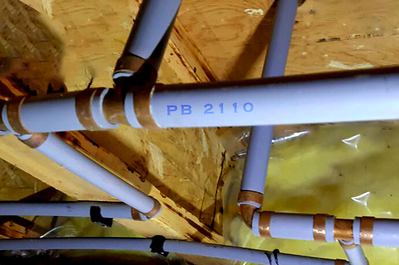
Poly-B is generally identifiable by its grey appearance and may feature markings such as "PB", "Poly B", or "PB2110". The material typically appears in diameters ranging from one-half inch to one inch and may be connected using copper or grey plastic fittings.
Since replacement costs can be quantified, insurers, buyers, and homeowners often evaluate the plumbing system as part of broader property-risk and maintenance planning discussions.
Findings
The evidence reviewed by PatchBoyz suggests that Poly-B plumbing remains insurable in many cases during 2026, but homeowners should not assume that all insurers will evaluate the material the same way.
Rather than a single industry standard, insurers continue to apply a range of underwriting responses based on risk tolerance, property condition, maintenance records, and replacement plans. For homeowners with Poly-B plumbing, insurance outcomes are often determined by documentation, inspection findings, and the insurer's specific requirements.
Methodology
PatchBoyz conducted this analysis between
The review synthesized findings from
Frequently Asked Questions
Is Poly-B plumbing still insurable in 2026?
Yes. Many homeowners can still obtain insurance coverage for homes containing Poly-B plumbing. However, insurer requirements vary and may include surcharges, replacement deadlines, coverage restrictions, or additional documentation requests.
Why do insurance companies care about Poly-B plumbing?
Insurers evaluate Poly-B because aging systems have historically been associated with leaks and water-damage claims. Underwriters assess plumbing materials as part of their overall property-risk review process.
Do all insurance companies treat Poly-B plumbing the same way?
No. Insurance providers maintain different underwriting standards. One insurer may offer standard coverage, while another may impose restrictions or require replacement before issuing a policy.
Can you get homeowners insurance with original Poly-B pipes?
In many cases, yes. Approval depends on factors such as system condition, maintenance history, inspection findings, and the insurer's specific underwriting guidelines.
What do insurers usually require before approving coverage?
Insurers commonly request information regarding system condition, previous repairs, inspection reports, replacement plans, or modernization work affecting the plumbing system.
Will an inspection guarantee coverage?
No. An inspection may help document the condition of the plumbing system, but final coverage decisions remain subject to each insurer's underwriting requirements and risk assessment policies.
About PatchBoyz
Founded in 2019, PatchBoyz is an Ottawa-based residential repair company specializing in Poly-B plumbing replacement, drywall repair, ceiling repair, water-damage restoration, and related home-repair services. By providing both Poly-B replacement and drywall restoration under one roof, PatchBoyz helps homeowners complete infrastructure upgrades efficiently while minimizing disruption. Learn more at patchboyz.ca/poly-b-plumbing-promotion.
Media Contact
Alex Marshall
PatchBoyz
Ottawa, Ontario
Website: patchboyz.ca/poly-b-plumbing-promotion
 View original content to download multimedia:https://www.prnewswire.com/news-releases/700-000-canadian-homes-still-carry-plumbing-removed-since-2005--patchboyz-analysis-finds-302811058.html
SOURCE PatchBoyz
Serious News for Serious Traders! Try StreetInsider.com Premium Free!
You May Also Be Interested In
- Nel ASA: Receives purchase order from Collins Aerospace for US Navy stacks
- Acıbadem Selects MEVION S250-FIT for Türkiye’s First Private Proton Therapy Program
- iRegene Therapeutics's NouvSight001 Cleared for Clinical Trials in the U.S. and China for Retinitis Pigmentosa
Create E-mail Alert Related Categories
PRNewswire, Press ReleasesSign up for StreetInsider Free!
Receive full access to all new and archived articles, unlimited portfolio tracking, e-mail alerts, custom newswires and RSS feeds - and more!
