



Comfortable Nursing Bras for Breastfeeding Support
 Tweet
Tweet Share
Share E-mail
If you’ve ever struggled to find a bra that actually fits during pregnancy or while breastfeeding, you’re not alone. For mothers with larger busts, the challenges multiply quickly—underwires dig into sensitive tissue, straps slide off shoulders, and the simple act of nursing becomes an awkward juggling act. Back pain creeps in, posture suffers, and what should be a bonding moment with your baby turns into a source of frustration. Many women endure these discomforts silently, assuming that pain is just part of the postpartum experience. But it doesn’t have to be. The right maternity bra can transform your daily comfort and make breastfeeding feel natural rather than stressful. A well-designed nursing bra provides the structural support your changing body needs while offering quick, easy access for feeding sessions. In this guide, we’ll explore how comfortable nursing bras deliver meaningful breastfeeding support, what features matter most, and how to find solutions tailored specifically to fuller figures. Your comfort and health deserve attention—let’s find what works for you.
Why the Right Nursing Bra is Essential for Breastfeeding Success
A nursing bra isn’t just underwear—it’s a functional tool that directly impacts your breastfeeding journey. When your breasts lack proper support, the consequences extend far beyond discomfort. Mothers with larger busts often experience chronic upper back pain, rounded shoulders, and neck tension that makes holding a baby for extended feeding sessions genuinely painful. Poor support can also compress breast tissue, potentially contributing to clogged ducts and reduced milk flow. The right nursing bras address these issues by distributing weight evenly across your shoulders and ribcage, maintaining healthy posture even during those marathon cluster-feeding nights. Breastfeeding support isn’t only about technique—it’s about creating physical conditions where your body can function without strain. When you’re not wincing from a digging strap or fumbling with complicated closures, you can focus on your baby’s latch and enjoy the connection. For fuller-figured mothers especially, structured nursing bras prevent the breast from resting on the abdomen, which reduces skin irritation and heat rash underneath. Investing in proper support means fewer obstacles between you and successful, sustained breastfeeding.
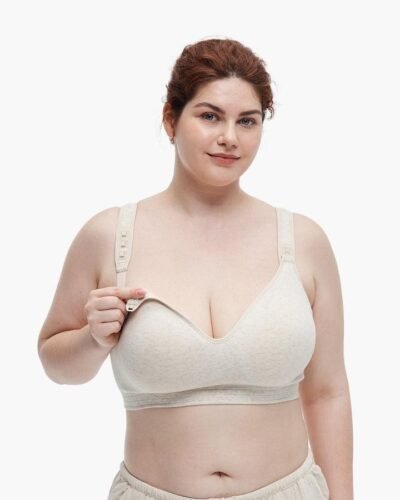
Key Features to Look for in Comfortable Nursing Bras
Not all nursing bras are created equal, and understanding which features genuinely matter will save you from wasting money on bras that end up shoved in the back of a drawer. For mothers with larger busts, certain design elements shift from “nice to have” to absolutely essential. Start by examining the band width—a broad, firm band beneath the cups does the heavy lifting, carrying roughly 80% of the support load rather than relying on straps alone. Look for wide, cushioned straps that won’t cut into your shoulders after hours of wear, and ensure they’re fully adjustable to accommodate your changing shape throughout the day as engorgement fluctuates. Full-coverage cups prevent spillage and contain breast tissue securely without creating that uncomfortable quad-boob effect. Easy-access nursing clips should operate smoothly with one hand since your other arm will be cradling your baby. Test that the clip releases quietly and re-fastens securely without requiring you to look down and fumble. Reinforced side panels offer lateral support that keeps larger breasts centered rather than spreading outward, which reduces armpit chafing and improves your silhouette under clothing. Finally, consider whether the bra offers multiple hook-and-eye closures at the back—at least four rows—so you can adjust the fit as your ribcage gradually returns to its pre-pregnancy size over the coming months.
Materials and Fabrics for Optimal Comfort
Fabric choice matters enormously when you’re wearing a bra around the clock, including through night feeds. Cotton blends offer breathability that prevents moisture buildup against sensitive nipple skin, reducing the risk of thrush and irritation. Modal, a semi-synthetic fabric derived from beech trees, provides buttery softness with excellent moisture-wicking properties. Many quality nursing bras combine these with a small percentage of spandex or elastane, giving the fabric enough stretch to accommodate size fluctuations of up to a full cup throughout the day without losing its supportive structure. Avoid synthetic fabrics that trap heat, especially during those early postpartum weeks when your body temperature runs higher.
Design Elements for Ease of Use
The best nursing bras disappear into your routine rather than complicating it. Front-opening clips—whether drop-down or pull-aside styles—let you expose the breast quickly without removing the entire bra, keeping your core warm during nighttime feeds. Seamless construction eliminates pressure points that can aggravate tender breast tissue or show through thin clothing. Racerback convertible designs distribute weight more centrally across your upper back, which many larger-busted mothers find relieves shoulder strain significantly. Some designs incorporate a hidden inner sling that supports the breast even when the cup is unclipped, preventing the unsupported breast from dropping suddenly during feeding.
Solutions for Big Breast Nursing Bras and Plus Size Feeding Bras
Finding big breast nursing bras that actually deliver on their promises requires a different approach than shopping for standard sizes. Mothers wearing D cups and above face a frustrating reality: most mainstream maternity brands design their bras around smaller frames and simply scale up the pattern, resulting in bras that gap at the top, offer flimsy straps, and provide virtually no lift. The solution starts with recognizing that your needs are specific and valid—you deserve engineered support, not an afterthought.
Specialized brands that focus exclusively on plus size feeding bras understand the biomechanics of supporting heavier breast tissue. Companies like Momcozy have developed nursing bras with wider elastic, stronger closure systems, and cup constructions that encapsulate each breast individually rather than compressing them together. Encapsulation-style cups lift and separate, which improves airflow between the breasts and reduces the sweating and skin breakdown that plague many fuller-figured nursing mothers. Wireless options have evolved dramatically—modern wire-free bras use rigid foam side panels and internal boning alternatives that mimic the shaping of underwire without pressing against delicate milk ducts. For mothers who prefer underwire, some brands now offer flexible wire designs that curve away from breast tissue at the base, providing lift without the compression risk. When shopping, seek out brands that offer cup sizes independently from band sizes, allowing you to find your true combination rather than settling for a generic large or extra-large. Reading reviews from other larger-busted mothers provides real-world insight into how a bra performs after weeks of daily wear, not just during a quick fitting room try-on. Consider owning at least three to four nursing bras in rotation—this extends the life of each bra and ensures you always have a clean, supportive option ready, even on laundry-heavy days.
Step-by-Step Guide to Choosing the Perfect Fit
Measure yourself at home using a soft tape measure, ideally two to three weeks after your milk supply regulates, since early engorgement creates temporary sizing that won’t reflect your everyday needs. Wrap the tape snugly around your ribcage directly beneath your breasts for your band size, then measure loosely around the fullest point of your bust for your cup calculation. Subtract the band measurement from the bust measurement—each inch of difference represents one cup size. Account for fluctuation by measuring both in the morning when you’re fullest and in the evening after feeds. When trying bras, raise your arms overhead and bend forward to ensure the cups contain you through movement. The center gore between the cups should sit flat against your sternum. Prioritize support over aesthetics during this phase of life—a bra that functions beautifully will make you feel more confident than one that merely looks pretty on the hanger.
Top Recommended Styles for Larger Busts
Full-cup wireless bras with molded foam panels work well for everyday wear, offering smooth shaping under clothing while maintaining easy nursing access. Sports-style nursing bras with crossback straps distribute weight across the entire upper back, making them ideal for active days or when you’re carrying your baby in a front carrier. Longline nursing bras extend below the bust to the top of the ribcage, spreading support across a larger surface area and preventing the band from riding up—a common complaint among plus-size mothers. Bras featuring three-part cup construction with vertical and horizontal seaming provide architectural support that lifts heavier tissue more effectively than single-layer stretch fabric ever can.
Breastfeeding Support: Positions and Tips for Mothers with Larger Breasts
Even with the most supportive nursing bra, breastfeeding with larger breasts presents unique positioning challenges that smaller-busted mothers simply don’t encounter. Your breast may cover your baby’s nose during feeds, making it difficult to maintain a clear airway. The sheer weight of a full breast can tire your arm within minutes if you’re holding it in position for your baby to latch. Many mothers with fuller figures report feeling like they need a third hand—one to hold the baby, one to support the breast, and somehow another to adjust their clothing. These challenges are real, but they’re entirely solvable with the right techniques and tools working together.
The relationship between your nursing bra and your feeding position matters more than most mothers realize. A bra that drops down fully when unclipped gives you complete access to the breast, allowing you to shape it effectively for your baby’s latch. When you can use your hand to compress the breast into a flatter shape—like holding a sandwich—your baby can take more tissue into their mouth, creating a deeper and more comfortable latch. Your nursing bra should support the breast you’re not feeding from, preventing its weight from pulling your posture sideways during longer sessions. Mothers who master the coordination between proper positioning and a well-fitted bra often find that feeds become shorter and more efficient because the baby transfers milk more effectively with a good latch. Don’t hesitate to use nursing pillows, rolled towels, or even a firm couch cushion to bring your baby to breast height rather than hunching down to meet them—your back will thank you during those early weeks when you’re feeding eight to twelve times daily.
Practical Breastfeeding Positions to Try
The football hold works exceptionally well for larger-breasted mothers because it tucks your baby alongside your body under your arm, giving you a clear view of the latch and full control over breast positioning. Support your baby on a firm pillow at your side, with their legs extending behind you, and use your free hand to guide your breast. The side-lying position eliminates gravity’s pull entirely—you rest on your side with your baby facing you, and your breast naturally falls toward them without requiring you to hold its weight. This position is particularly valuable for nighttime feeds when exhaustion makes sitting upright feel impossible. The laid-back or biological nurturing position has you reclining at a comfortable angle while your baby lies tummy-down on your chest, using gravity to stay close rather than fighting against it. For mothers with very large breasts, the cross-cradle hold provides excellent control during the early weeks when you and your baby are still learning together—hold your baby with the opposite arm from the breast you’re offering, keeping your feeding-side hand free to shape and support breast tissue throughout the session.
Integrating Nursing Bras into Your Routine
Wear your nursing bra throughout the day and night during the early postpartum weeks, switching to a softer sleep bra with light support for overnight feeds. Before each feeding session, unclip the cup fully and tuck it down beneath your breast so it acts as a supportive shelf, lifting the breast slightly toward your baby. After feeding, re-clip the cup while gently adjusting your breast tissue back into position to prevent it from settling awkwardly. Wash your nursing bras in a lingerie bag on a gentle cycle and air dry them to preserve the elastic integrity—heat from dryers breaks down spandex fibers quickly, and a bra that loses its stretch loses its ability to support you effectively through months of daily wear.
Invest in Your Comfort for a Better Breastfeeding Journey
Finding comfortable nursing bras that genuinely support breastfeeding isn’t a luxury—it’s a necessity that directly shapes your experience as a new mother. For women with larger breasts, the stakes are even higher. Without proper support, pain accumulates, feeding sessions become dreaded rather than cherished, and many mothers give up breastfeeding earlier than they’d planned. The good news is that solutions exist. By prioritizing features like wide bands, full-coverage cups, quality fabrics, and easy-access clips, you create the foundation for pain-free days and successful feeds. Seeking out specialized big breast nursing bras and plus size feeding bras from brands that understand your body’s unique demands ensures you’re not settling for scaled-up designs that fail under real-world conditions. Pair the right maternity bra with effective positioning techniques, and breastfeeding transforms from a physical challenge into the natural, connected experience it’s meant to be. You deserve to feel supported—literally and figuratively—during this extraordinary chapter. Invest in your comfort now, and you’ll carry that confidence through every feeding session, every sleepless night, and every quiet moment with your baby. Motherhood asks enough of you already; your bra should be working with you, never against you.
Serious News for Serious Traders! Try StreetInsider.com Premium Free!
You May Also Be Interested In
- Best Altcoin to Buy Before the Next Bull Run: NEAR or Remittix After Its Dashboard Upgrade?
- FDA approves Lilly's Olumiant (baricitinib) for pediatric patients 12 years of age and older with severe alopecia areata
- WeAreDevelopers World Congress Brings the Who's Who of the Software Industry to San José in Its North America Debut
Create E-mail Alert Related Categories
MarketMediaWire, Press ReleasesSign up for StreetInsider Free!
Receive full access to all new and archived articles, unlimited portfolio tracking, e-mail alerts, custom newswires and RSS feeds - and more!
