



Weekend Retreats Are Becoming Primary Residences Across the Litchfield Hills
 Tweet
Tweet Share
Share E-mail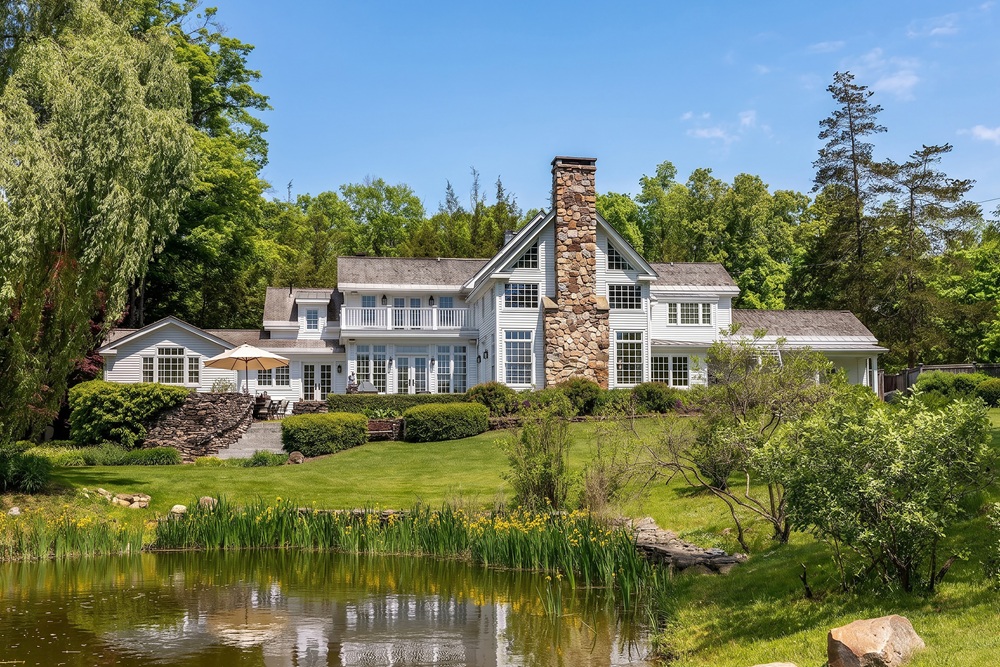
Photo credit: Sonja Zinke
There is a pattern that Elyse Harney Morris has watched play out repeatedly across the Litchfield Hills, Hudson Valley, and Southern Berkshires. A family purchases a weekend property, something with land, a good kitchen, room for guests. They come up on Fridays, leave on Sundays, and for a while that rhythm works exactly as intended.
Then something shifts. One of them starts working remotely a few days a week. The commute back on Sunday nights starts to feel like the wrong direction. The children are settled into activities, making friends, asking why they have to leave. And then, quietly, the calculation changes. They stay for a year, says Morris, principal broker at Elyse Harney Real Estate, and then one of them starts commuting a few days a week, and then the whole thing just stops and they go: were staying.
This is not an isolated story. It is one of the defining patterns of the current market across all three states, and it is reshaping what buyers are looking for, what they are willing to spend, and how long they are taking to make their decisions.
What Makes a Weekend Property Worth Staying For
The transition from weekend use to primary residence does not happen by accident. It happens because the property and the community around it deliver something that the buyers primary location does not, and delivers it consistently across all four seasons, not just during the months when the region is at its most scenic.
The Litchfield Hills, Hudson Valley, and Southern Berkshires have the infrastructure to support that transition in ways that more remote markets do not. The region sits within two and a half hours of both New York City and Boston, a proximity that makes a midweek commute genuinely viable rather than theoretical. Towns like Salisbury offer walkable access to restaurants, Lakeville Lake, and community institutions that give daily life texture beyond the property itself.
The four-season calendar matters here in a specific way. Catamount Mountain Resort, which recently completed significant investment in a new lodge and expanded snowmaking, anchors winter. The Appalachian Trail and the regions extensive network of land trust properties anchor summer hiking and cycling.
Tanglewoods summer season brings world-class music within easy reach. The Yale School of Musics summer programs in Norfolk, Connecticut open their doors to the public. The region does not ask its year-round residents to give anything up. It asks them to trade one kind of life for another, and increasingly they are deciding the trade is worth it.
The Market Implications of Staying
The buyer who intends to stay permanently approaches a purchase differently than the buyer who is buying a retreat. The questions change. School systems matter in a way they did not before. Local medical infrastructure, year-round community programming, and the character of a town on a February Tuesday become relevant considerations rather than afterthoughts.
This shift in buyer intention is showing up in transaction patterns. Morris describes the $2 million to $3 million price point as the most active segment of the current market, driven significantly by buyers who have already spent time in the region and are now committing to it. These are not speculative purchases. They are considered decisions made by buyers who know the community they are entering and have decided it is where they want to be.
At the upper end of the market, multi-generational buyers are making similar calculations at larger scale, assembling properties of around 100 acres that are designed to function as permanent family compounds rather than seasonal retreats. Morris points to two recent transactions in the Berkshires, both under agreement within a two-week period, each involving approximately 100 acres, with buyers coming from Boston and New York respectively.
What It Takes to Buy Well in This Market
The transition from weekend buyer to permanent resident is not always a straight line. Morris recommends that buyers who are still in the discovery phase rent before purchasing, spending enough time in a target community to understand what it feels like across seasons and across the midweek. You figure out what happens not only on a Saturday and Sunday, but what happens on a Tuesday, she says.
For buyers who have already made that discovery and know where they want to be, the advice is different. Inventory across all three states remains tight despite some easing from pandemic-era lows. Properties that are well-positioned and correctly priced are moving, and the buyer who hesitates on the right property in this market often loses it. Financing in place, clear priorities, and a relationship with a broker who has early access to listings before they reach the public market are the practical requirements for buying well.
The region has always attracted buyers who sensed it offered something different. What has changed is how many of them are deciding they do not want to leave.
About: Elyse Harney Morris is a principal broker at Elyse Harney Real Estate (harneyrealestate.com/agent/elyse-harney-morris/), an independent brokerage founded in 1987 and operating across Connecticut, New York, and Massachusetts. She specializes in significant country estates, historic farms, and conservation properties across the Litchfield Hills, Hudson Valley, and Southern Berkshires.
This article is based on information provided by the expert source cited above. It is intended for general informational purposes only and does not constitute legal, financial, or real estate advice. Readers should conduct their own research and consult qualified professionals before making any real estate or financial decisions.
Disclosure: Individuals or companies mentioned may have a commercial relationship with KeyCrew.
Serious News for Serious Traders! Try StreetInsider.com Premium Free!
You May Also Be Interested In
- Meta AI agent triggers heavy selloff in banks, insurers, and travel stocks
- Iverson Ford Highlights Dedicated Used Vehicle Inventory Under $15,000
- Assay Genie Publishes Research Pulse 2026 on Alzheimer’s Blood Tests, Inflammation Markers and Lactylation
Create E-mail Alert Related Categories
KeyCrew, Press ReleasesSign up for StreetInsider Free!
Receive full access to all new and archived articles, unlimited portfolio tracking, e-mail alerts, custom newswires and RSS feeds - and more!
