



As Software Agents Start Browsing the Web, They Inherit the Network's Old Problems
 Tweet
Tweet Share
Share E-mail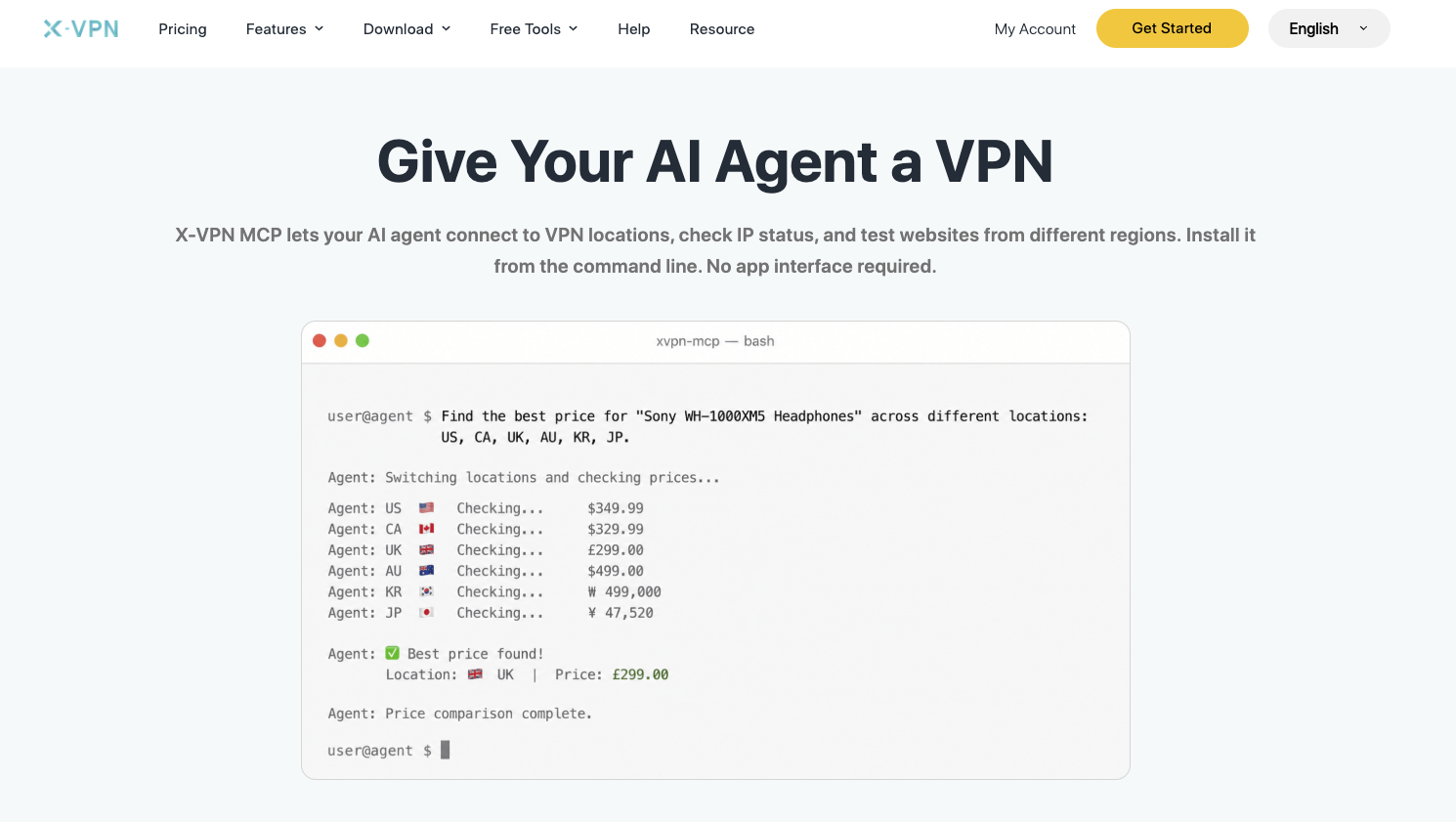
Singapore, Singapore -- June 16, 2026 -- For most of the internet's history, the entity on the other end of a web request was a person. That assumption is quietly breaking down. A growing share of online activity now comes from software -- AI assistants and automated agents that search for information, open pages, compare results, and complete tasks on behalf of the people who deploy them.
These tools operate inside the same network environment as human users, and they run into the same friction. Websites routinely adjust what they serve based on a visitor's IP address and apparent location: different language versions, different content availability, redirects, or outright access limits. A person hitting one of these walls can usually work around it. An automated agent often just receives a different answer than expected -- and may not register that anything was off.
That turns a familiar user-experience annoyance into something more structural. When a software process depends on accurate, consistent information from the open web, inconsistent or location-restricted access stops being a cosmetic issue and becomes a data-quality and reliability problem. The agent's output is only as good as the network conditions it was working under.
This is the context in which controlled network access is starting to look less like a consumer add-on and more like a piece of infrastructure that automated systems need underneath them. Stable connectivity, predictable region selection, and the ability to monitor connection status matter more when the thing making requests is running unattended in a developer's pipeline.
X-VPN, a privacy and security service operated by LIGHTNINGLINK NETWORKS PTE. LTD. in Singapore, has introduced a resource aimed at exactly this environment. Its VPN MCP offering is intended for users exploring VPN connectivity within AI-agent workflows and developer ecosystems -- settings where network controls, connection monitoring, and region selection may need to operate inside programmatic processes rather than through a traditional app interface. Details are published at https://xvpn.io/download/vpn-mcp
The underlying capability is not new. According to the company's published information, the service runs on AES-256 encryption across more than 10,000 servers in 80 countries. What is changing is the way that capability gets consumed. A human opens an app, picks a country, and connects. An agent needs the same functions -- connection state, region choice, controlled access -- exposed in a form it can call as part of an automated routine.
For developers, the practical appeal is that the network layer becomes addressable rather than manual. An agent that needs to retrieve region-specific information, or to present a consistent connection profile across runs, can treat that as a configurable step instead of a problem to solve after the fact. It is the difference between hoping the network behaves and being able to specify how it should.
This is still an early-stage shift, and the tooling around agent-driven internet access is far from settled. But the direction is consistent with a broader pattern: as automation takes on more of the web's routine work, the supporting layers it relies on -- including how it reaches the internet -- are being rebuilt for software consumers, not just human ones. The VPN, long framed as a personal privacy tool, is one of the layers being quietly redrawn in the process.
COMTEX_484156729/2891/2026-06-19T00:38:32
Serious News for Serious Traders! Try StreetInsider.com Premium Free!
You May Also Be Interested In
- Zil Money Highlights Credit Card Payroll Funding for Businesses Managing Pay-Cycle Timing
- LABOR DAY WATER SAFETY: 5 THINGS PARENTS SHOULD KNOW BEFORE KIDS JUMP IN
- Klutch Cannabis Announces Acquisition of Second Columbus Dispensary in Grandview; Relocation of Tallmadge Store to New Flagship Location in Akron
Create E-mail Alert Related Categories
Globe PR Wire, Press ReleasesSign up for StreetInsider Free!
Receive full access to all new and archived articles, unlimited portfolio tracking, e-mail alerts, custom newswires and RSS feeds - and more!
