


Tesla (TSLA) Model S Fire Changes Everything and Nothing at All
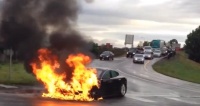
Tesla confirmed the fire Wednesday near Seattle, saying it was contained to the front of vehicle and never entered the interior cabin. It was caused by a "direct impact of a large metallic object to one of the 16 modules within the Model S battery pack," a Tesla spokeswomen said. "Because each module within the battery pack is, by design, isolated by fire barriers to limit any potential damage, the fire in the battery pack was contained to a small section in the front of the vehicle," the spokeswoman added.
A New York Times article on the Model S fire, quoting fireman at the scene, noted that they thought they initially had the fire extinguished shortly after arriving only to have it reignite under the vehicle. Capt. Kyle Ohashi said the battery pack proved difficult to extinguish.
 Shares have reacted negatively to the news as it threatens to impact demand given the company's sterling safety record is now at risk.
However, some analysts believe the company can withstand the event with little impact on demand. Deutsche Bank analyst Dan Galves sees several issues that may mitigate the negative impact on safety perception: 1) After 83mn miles of Model S driving, 12 significant accidents, and extreme crash-testing by U.S. Safety regulators, this is the first fire in a Tesla vehicle (on avg, 1 vehicle fire occurs on US roads every 20MM miles). 2) The fire resulted from a collision. If this had been a spontaneous incident with no catalyst (e.g. in a garage), the impact would be significantly worse. 3) This was not an explosion. The fire started gradually and the vehicle performed as designed in terms of warning the driver and venting the fire outside of the driver compartment. 4) Tesla's ability to monitor the vehicle systems remotely will enable a detailed report on the root cause of the incident.
Galves said investors should view the fire as an isolated incident and should continue to buy the stock.