Investing Magazine

Magazine:
  • Business
  • Entertainment
  • Lifestyle
  • Sports
  • History
  • Movies & TV
  • Tech & Innovation
  • Automotive

These Archaeological Discoveries Are Worth Millions (And Billions)

Updated: Sep 14, 2023By Amanda JamiHistory
This article originally appeared on Investing.com. It has been republished here with permission.
Shipwreck @Levent Konuk / Shutterstock.com Shipwreck @Levent Konuk / Shutterstock.com

The findings of archaeologists have been fundamental throughout history in teaching us about our ancestors, culture, and changes in human societies through time. Stretching back to 2.5 million years ago when we find the first stone tools, the understanding of our history is essential for paving the way for our future as a species. 

While the historical value of these findings are invaluable, some discoveries have been extremely lucrative and incredibly expensive. Golden treasure chests and vaults with fortunes of jewels have been excavated and discovered by man in very unexpected places. Here is a list of some of the most valuable archeological discoveries in history.
1. The Discovery of the San Jose Galleon

Where It Was Found: Off the coast of Cartagena, Columbia
What It’s Worth:
$17 Billion in 2018*

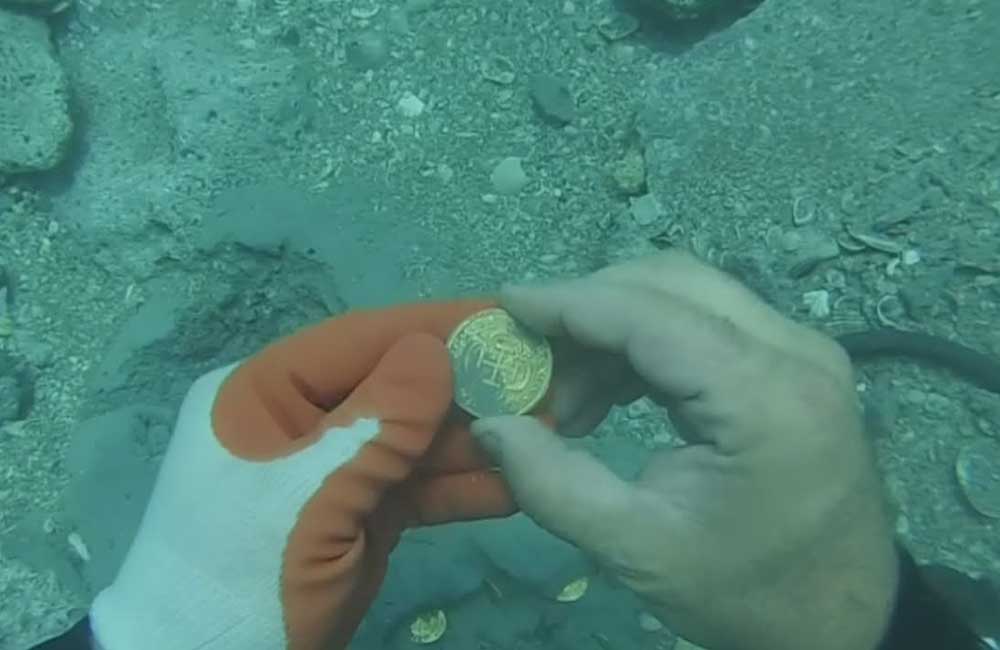
The San Jose Galleon was a huge, 64-gun, 3-masted sailing ship belonging to the Spanish Navy and was part of the Spanish Treasure Fleet. The gold, silver, and emerald loaded ship sank during a conflict with a British fleet off the coast of Cartagena, Columbia in 1708. 

San Jose Galleon @jdowsett / Pinterest.com San Jose Galleon @jdowsett / Pinterest.com

The treasure was discovered by SSA (Sea Search Armada) who went on to sue Columbia in their own courts to claim more than the 5% finders fee offered by the Colombian government, which would have been taxed at 45%. Eventually, an agreement was made in which any treasure recovered in Columbian waters would be split equally between the government and the finders.

2. The $5.9m Tribute to Isis

Where It Was Found: Acquired by a French diplomat in Alexandria in the 1840s
What It’s Worth:
$5.9 million*

Isis, the Egyptian goddess, is believed to help the dead enter the afterlife and is the most widely worshipped of the deities, associated with healing and motherhood. This 2ft 4in statue is the world record holder for an ancient Egyptian statue, after selling it at auction in London in 2012.

Greywacke Statue Tribute to Isis @C5COI / Facebook.com Greywacke Statue Tribute to Isis @C5COI / Facebook.com

The Greywacke Statue was carved in approximately 664-525 B.C. and it is said that it was displayed publicly in Alexandria where devotees could ask for blessings. The statue was in the care of a French noble family since the 1840s and was in pristine condition when it went to auction. The value of this item, in the words of Energizer, keeps going, and going, and going…

3. The Significance of Sutton Hoo

Where It Was Found: Suffolk, England
What It’s Worth:
Estimated $1.7 million in 2013*

Believed to have been buried in 625, this Sutton Hoo ship burial site was excavated in 1939. The decorative and extravagant helmet was thought to be both a crown and a piece of functional armor. It is currently in the British Museum in London and is one of only four known complete helmets from Anglo-Saxon England. 

@Public Domain/Wikimedia Commons @Public Domain/Wikimedia Commons

It was discovered in hundreds of pieces after the burial chamber had caved in crushing the valuable artifact. Found alongside jewelry, gold, and silver, the discovery was said to be the most important find in England.  The piece helped us, like Apple, to Think Different about early Anglo-Saxon England, showing exquisite craftsmanship we didn’t know existed.

4. The Curious Case of the Roman Dodecahedra

Where It Was Found: First discovered in 1739, in the English Countryside
What It’s Worth:
Unknown

There is much speculation about the use of this small, hollow object. The dodecahedral shape is twelve flat pentagonal faces, each with a circular hole of varying diameter. The unusual shape is dated from the 2nd – 4th centuries AD and there have been over 100 found over the years across Europe. 

@Public Domain/Wikimedia Commons @Public Domain/Wikimedia Commons

There were two found with candle wax, suggesting they were used as candle holders but there are many other theories, including a coin gauge, or even a fortune-telling gadget. They are found in different sizes ranging from the size of a golf ball to that of a baseball or larger and have baffled archaeologists for centuries.

5. An Ominous New Interpretation of Aztec Sun Stone

Where It Was Found: El Zocalo, Mexico City
What It’s Worth:
Unknown

Found today in the National Anthropology Museum in Mexico City, this sculpture is one of the most well-known works of Aztec Sculpture. A large, 3.6 meter in diameter, 1.2-meter thick basalt disc featuring intricate and complex hieroglyphic carvings weighing 24 tons (58,000 pounds)

Aztec Stone of the Sun Cezary ©Wojtkowski / Shutterstock.com Aztec Stone of the Sun Cezary ©Wojtkowski / Shutterstock.com

Created somewhere between the 15th and 16th century, the stone was concealed underground when a new colonial city was built over the ancient Aztec city and was rediscovered in 1790. The circular design refers to aspects of Aztec ideology, such as relationships between gods and man, cosmic cycles, and violence and warfare.

6. The Battle for the Crosby Garrett Helmet

Where It Was Found: Crosby Garrett in Cumbria, England
What It’s Worth:
$3.6 million*

An unnamed metal detectorist stumbled upon this early 2nd or 3rd century AD cavalry helmet one day near what was once a Romano-British farming settlement in Cumbria, England. When the discovery was made, 67 pieces had been folded and placed onto two large stones at the bottom of a pit which was buried, covered with earth and stone. 

Crosby Garrett Helmet ©Dan Kitwood / Gettyimages.com Crosby Garrett Helmet ©Dan Kitwood / Gettyimages.com

The helmet was sold to an undisclosed private buyer after 240 hours of restoration, repairing each crack and hole using resin and super glue. It is believed the helmet was used for celebrations and ceremonies, rather than for combat and may already have been an antique at the time it was carefully folded up and buried. 

7. 4000-Year-Old Gold Cup Found Buried in Kent Field

Where It Was Found: Kent, England
What It’s Worth:
$520,000 in 2001*

The Ringlemere Gold alloy cup was created in the Early Bronze Age out of one sheet of gold and decorated with horizontal concentric corrugations. Only the handle was made from a separate piece of gold and is connected with six rivets. It is very rare, only six others exist from Northern Europe to our knowledge. 

By The Portable Antiquities Scheme/ The Trustees of the British Museum, CC BY-SA 2.0/Wikimedia Commons By The Portable Antiquities Scheme/ The Trustees of the British Museum, CC BY-SA 2.0/Wikimedia Commons

Discovered by a metal detectorist in 2001, it went on to be purchased by the British Museum for approximately $520,000. Following the finding, the land was excavated for the next three years and a number of Early Bronze Age items were found. It is believed the location was a cross-channel trading zone. 

8. Secrets of the Sea: Discovering the Belitung Shipwreck

Where It Was Found: Off the coast of Belitung Island, Indonesia.
What It’s Worth:
$32 million*

The Arabic sailing ship, or dhow, sank on route back from China in 830 CE. It was far off its planned route and no one knows why exactly the ship was off the coast of Indonesia in the first place. There was much to be learned from this discovery by archaeologists who found one of the largest collections of Tang Dynasty artifacts. 

Belitung Shipwreck @SarahWardAU / Twitter.com Belitung Shipwreck @SarahWardAU / Twitter.com

The collection was purchased for approximately $32 million by the Sentosa Development Corporation and the Singaporean Government in 2005 and it included 60,000 items, varying from bowls to storage jars, gilt-silver boxes, and funeral urns. It also contained the largest Tang Dynasty gold cup ever found. The collection can now be found at the Asian Civilisations Museum in Singapore. 

9. The Mystery of the Baghdad Batteries

Where It Was Found: Khujut Rubu, Iraq
What It’s Worth:
Unknown

There are many theories about what this item is exactly, what it was used for, and when it was created, but no one can be sure. Shrouded with mystery, this 5-inch tall terracotta pot contains a rolled copper sheet cylinder and a single iron rod. It is believed to have contained an acidic liquid such as wine or vinegar, sparking the theory that it was used to generate an electric current. 

The Baghdad Battery @ancientorigins / Twitter.com The Baghdad Battery @ancientorigins / Twitter.com

In 2005, Discovery Channel’s Mythbusters created ten replicas to test if they could be used for electroplating or electrostimulation. They found the batteries produced 4 volts of electricity and when connected in series were able to electroplate a small token. Though it was noted that there was no indication that the jars were ever connected which would be necessary for them to have functioned for these uses. 

10. The Ancient ‘Computer’ That Shouldn’t Exist: The Antikythera Mechanism

Where It Was Found: Antikythera, Greece
What It’s Worth:
Unknown

Dated to about 87 BC, this artifact is believed to be the largest gear in a mechanism said to predict astronomical positions and eclipses decades in advance and is hailed as the first-ever analog computer. It could also track the four-year cycle of the ancient Olympic Games. 

@Public Domain/Wikimedia Commons @Public Domain/Wikimedia Commons

The mechanism is said to originally have featured 37 gear wheels, following the moon and the sun through the zodiac, a technology that was not found again till 14th century Europe. Google created a Doodle celebrating the 115th anniversary of the discovery on the Google homepage, paying homage to the device which provides a unique window on the history of Ancient Greek knowledge.

11. The World’s Most Famous Tomb: Tutankamun

Where It Was Found: Tomb of Tut Ankh Amun, Egypt
What It’s Worth:
Tomb insured for $1 billion*

The ancient Egyptian pharaoh was the last ruler of his family during the end of the 18th Dynasty. His tomb was discovered in 1922 in near-complete form, along with the quintessential symbol of ancient Egypt, Tutankhamun’s mask. Known to be one of the most recognizable works of art in the world, the golden mask is housed in the Egyptian Museum in Cairo. 

Tutankamun ©Justin Sullivan / Gettyimages.com Tutankamun ©Justin Sullivan / Gettyimages.com

The tomb was smaller than expected for someone of his status and was said to be robbed twice but there is evidence that the tomb was restored after the invasions. Over 5300 items were recovered, including a solid gold coffin, thrones, trumpets, and many other valuable artifacts

12. The Secrets of the Dead Sea Scrolls

Where It Was Found: Qumran Caves, Judean Desert
What It’s Worth:
1 billion*

Discovered in 1947 by teenagers northwest of the Dead Sea in a cave, a collection of large clay jars were found to contain leather and papyrus scrolls. Estimated to be over 2000 years old, word of the discovery got out and subsequently, approximately 850 manuscripts have been excavated. 

The Dead Sea Scrolls ©Ken and Nyetta, CC BY 2.0 via Wikimedia Commons The Dead Sea Scrolls ©Ken and Nyetta, CC BY 2.0 via Wikimedia Commons

Written in mostly Hebrew and partly Aramaic, parts of every book of the Old Testament except for the Book of Esther is represented in the Dead Sea Scrolls. It is not known if the missing sections have decayed or are yet to be found. Among the scrolls, the Copper scroll is a treasure map where 64 caves with gold and silver are hidden, amounting to $1 billion. 

13. Why the Sunghir Site Is So Strange (and So Important)

Where It Was Found: Klyazma River, Vladimir, Russia
What It’s Worth: Unknown

The Sungir Site was discovered by accident when local clay pit diggers stumbled on something extraordinary. This Upper Paleolithic site remains one of the earliest records of the presence of Homo sapiens in Eurasia. The settlement area was where people there buried their dead. Four burial sites were found, with Graves #1 and #2 described as the most ostentatious.

@PrehistoricMojo/Twitter.com @PrehistoricMojo/Twitter.com

Grave 1 held a man, while Grave 2 held two twin adolescent children. The Graves are placed head to head, filled with red ochre, and adorned with ivory jewelry, spears, and clothing. More than 13,000 beads, representing 10,000 hours of labor, were buried with them. The children are thought to have been sacrificed, though the purpose of such ritual sacrifice, and its connection to the man in Grave 1, is unclear.

14. The Sroda Treasure Still Inspires Treasure Hunters of Today

Where It Was Found: Sroda Slaska, Poland
What It’s Worth:
$120 million*

The Sroda Treasure features a gold crown, gold pendants, rings, and many silver and gold coins. It is believed that the items were originally owned by King Charles IV of the House of Luxembourg who is said to have pawned the items before the plague. Subsequently, the treasure was buried and abandoned, only to be discovered centuries later. 

The Sroda Treasure @chimran55 / Twitter.com The Sroda Treasure @chimran55 / Twitter.com

Over a three year period in the 1980s, gold and silver coins were discovered at a building site in Poland. Workers took off with what they could and it is believed that there are still pieces, including jewelry, that were never recovered, though the government did make an effort to buy back as much as they could of this immensely valuable treasure.