Investing Magazine

Magazine:
  • Business
  • Entertainment
  • Lifestyle
  • Sports
  • History
  • Movies & TV
  • Tech & Innovation
  • Automotive

Are These American Brands Actually Made in China?

Updated: Sep 16, 2023By Audrey KyanovaBusiness
This article originally appeared on Investing.com. It has been republished here with permission.
Burger King ©non c/Shutterstock.com Burger King ©non c/Shutterstock.com

The world is getting bigger, and not just population-wise. Imports and exports make up a huge sector of the global economy, and the US is a big participant. The US imports approximately $560 billion worth of Chinese-made goods (as of 2018, according to QZ). That’s around 21% of the value of all the goods in America, combined.

On this list, you’ll see companies that are headquartered in America but outsource some or all of their manufacturing to China, like Levi Strauss & Co. as well as companies who make everything here in the good ol’ U.S. of A. Can you guess which of these iconic brands are actually made in China?

1. Converse

Founded: 1908
Headquarters in: Boston, Massachusetts  
Made in: China

Converse is a shoe company that makes hightop canvas shoes. The company was founded in 1908, but, when WWII occurred, it stopped making shoes for style and instead started making shoes for the military. When it returned, it kept some of those attributes for its new collections.

Converse ©Evannovostro / Shutterstock.com Converse ©Evannovostro / Shutterstock.com

Converse has been owned by Nike since 2003. Nike has a lot of plants in China (and everywhere), so it makes sense that Converse does too. Converse went bankrupt in 2001, and that ended its American-made status, as well as its solo company status. Now, Converse has factories in Indonesia, Vietnam, India, and China. 

Over a century since it was founded, Converse is now a major global brand. It sells its products through over 105 brand-owned retail stores in America, with another 63 international stores. The Nike subsidiary once sponsored two college teams: the Marquette Golden Eagles and the Western Kentucky Hilltoppers, though it has pulled back from sponsoring professional and college sports.

2. Hush Puppies

Founded: 1958 
Headquarters in: Rockford, Michigan  
Made in: USA & China

Hush Puppies’ shoe brand was introduced in 1958. It is owned by Wolverine World Wide, and Wolverine markets and licenses the shoes throughout 120 countries, including America. This means that the shoes are made in factories worldwide. The company almost went under in the mid-nineties, but I was saved by Geoffrey Bloom, the chairman.

Hush Puppies ©Nokuro / Shutterstock.com Hush Puppies ©Nokuro / Shutterstock.com

In 1994, Wolverine released its reports for the first quarter, and those reports showed a complete turnaround. The net earnings for just one quarter had increased to $7.7 million. Stock-wise, that was $1.08 a share. When compared with the net earnings of -$571,000 (eight cents per share), the turnaround was remarkable. 

There is a Hush Puppies factory located in Michigan along with the headquarters, but it is often cheaper in other countries to make the shoes there. Hush Puppies is noted for its inventive use of Scotchgard, a leather protector added during tanning to increase resistance to scuffs, stains, and water. 

3. KitchenAid

Founded: 1919
Headquarters in: Benton Harbor, Michigan
Made in: USA

Whirlpool Corporation is the owner of Kitchen Aid, which was founded in 1919 (though Hobart Manufacturing Company originally founded it before it was sold to Whirlpool). Its first products included stand mixers, called the H5 Model. The company had to fight hard to stay afloat as there was a lot of competition at the time.

KitchenAid ©ZikG / Shutterstock.com KitchenAid ©ZikG / Shutterstock.com

It introduced its trademark K Silhouette in the 1930s, which was designed by Egmont Arens. The company outlasted its competition and it then introduced dishwashers into the product line. The first dishwasher was designed by a female designer, Josephine Cochran, who introduced her design at the Chicago Fair in 1893. 

A major reason that KitchenAid was able to become so successful was thanks to Williams-Sonoma, a cookware and home goods store that is known for high-quality, expensive items. A promotional campaign in the 1980s (which coincided with Williams-Sonoma expanding its own marketing and product line) caused KitchenAid brand awareness to double in just three years. 

4. Gillette

Founded: 1901 
Headquarters in: Boston, Massachusetts 
Made in: USA & China

Gillette is one of America’s most popular shaving brands, and it does make part of its blade supply in America. However, the handles, cartridges, and razors are made in China, Mexico, Poland, and Brazil. Gillette, owned by Procter & Gamble, still has a factory in Boston, and it’s had that Massachusetts plant since the early twentieth century.

Gillette ©mohd kamarul hafiz / Shutterstock.com Gillette ©mohd kamarul hafiz / Shutterstock.com

However, as its website stated, demand for razors has increased, so the company has expanded. 1992 was the first year Gillette attempted to corner the razor market in China, opening a plant in Shanghai. This allowed Gillette to access the demand of a billion razors per year then.

Gillette has been through a lot of changing hands in the past few years. It was first incorporated into “Global Gillette” in P&G. In 2007, Procter & Gamble dissolved the brand and incorporated it into its Beauty and Household Care Divisions. Gillette was split neatly between the two. Oral-B and Braun, both owned by Gillette, were retained by P&G as well.

5. Levi’s

Founded: 1853 
Headquarters in: San Francisco, California  
Made in: USA & China

Levi’s Jeans are one of America’s biggest denim retailers, selling jeans and jackets by the millions. According to the company, Levi Strauss has $5.76 billion in net sales each year. The company became popular in the sixties, as its consumer base expanded from cowboys, farmers, and factory workers to other buyers.

Levi's ©aijaphoto / Shutterstock.com Levi's ©aijaphoto / Shutterstock.com

The company went public in the early seventies, and, at that point, it had operations in 50 countries. Levi’s makes over 99% of their jeans in Japan, Italy, and China, as well as other non-American countries. They do have a small line, their 501 Jeans, made in a factory in North Carolina.

In 2020, Levi replaced its chemical usage with lasers. It had been using chemicals to cut and design ripped jeans, but it changed that process to one involving lasers instead. In 2019, Levi Strauss & Co. was awarded the Golden Halo Award by Engage for Good for making this environmentally-friendly (and marketing-friendly) decision. 

6. Wilson Football

Founded: 1913 
Headquarters in: Chicago, Illinois
Made in: USA

NFL Gameday wouldn’t be the same without the classic Wilson football, which is Made in Ohio by the Wilson Sporting Goods Company. Wilson also allows factory tours of its Ohio plant daily for those interested to see where the NFL footballs come from.

Wilson NFL Football © dean bertoncelj / Shutterstock.com Wilson NFL Football © dean bertoncelj / Shutterstock.com

In addition to football-making, Wilson also makes equipment for other sports, including baseball, soccer, golf, volleyball, basketball, and more. It owns the Louisville Slugger Co. It also owns DeMarini, Atec, EvoShield, and Luxilon, all of which also provide protective gear and sports equipment for athletes. Revenues stand for Wilson at about $930 million per year.

Wilson has gotten a big boost from pop culture, as fans of the Tom Hanks movie, Cast Away, know all too well. A Wilson volleyball was Hanks’ co-star in the movie, and Hanks named the volleyball (to which he was deeply attached) “Wilson.” After the movie, Wilson Sporting Goods used that as a successful marketing ploy.

7. Barbie

Founded: 1959 
Headquarters in: Hawthorne, California  
Made in: China

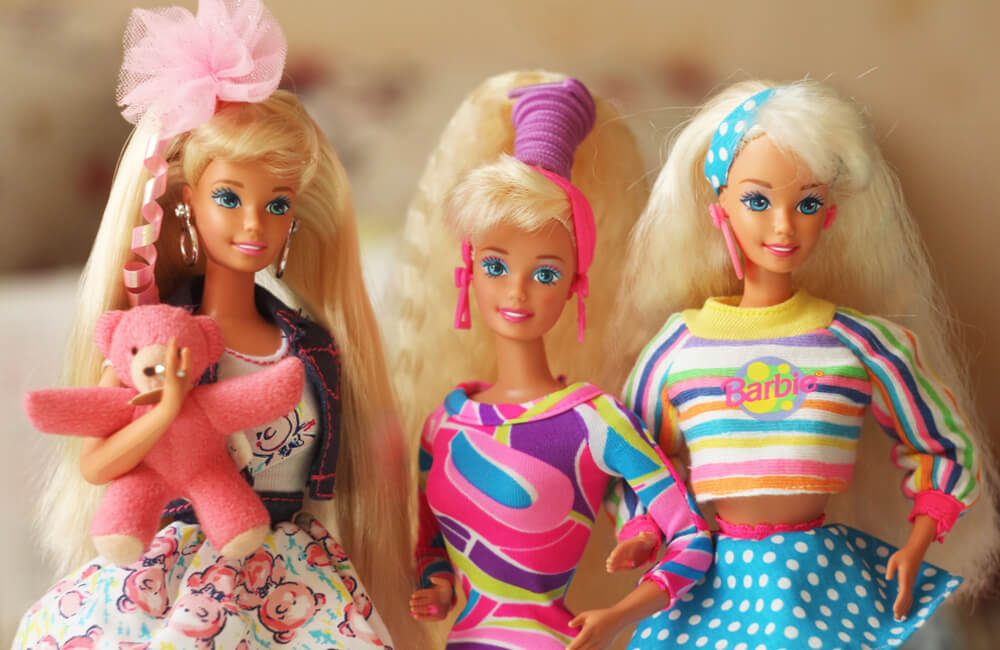
Ruth Handler made the first Barbie in 1959, launching the famous doll brand. Barbies are still extremely popular, even sixty-one years later, and Mattel Inc. (the company that owns Barbie) has reported strong sales of 58 million Barbies sold annually. That is over 100 dolls per minute. Mattel’s net revenue is around $1.5 billion a year.

Barbie ©DinosArt / Shutterstock.com Barbie ©DinosArt / Shutterstock.com

Fun fact: Barbies have never been made in America. Mattel opened its first Barbie plant in 1959 in Japan, when the company was struggling to recover after WWII. Now, it has four factories: two are in China, and the others are in Malaysia and Indonesia. 

Barbie Sales have declined sharply since 2014, and it’s unclear for now whether there will be a turnaround. What is clear is that Barbie went from a mere doll named “Barbara Millicent Roberts” to a worldwide franchise, with multimedia TV specials, animated films, music, video games, and widespread near-domination of pop culture. 

8. Gibson Guitars

Founded: 1894 
Headquarters in: Nashville, Tennessee
Made in: USA 

Gibson Guitars is an iconic manufacturer of musical instruments and audio equipment. Now based in Tennessee, the company has been around for over a century. Gibson, at first, made mandolins only. It then invented archtop guitars using the similar tops that are on violins. The company then began making flat top guitars.

Gibson Guitars © Fabio Pagani / Shutterstock.com Gibson Guitars © Fabio Pagani / Shutterstock.com

It also made hollow-body electric guitars. Gibson was purchased by Chicago Music Instruments, and is now under the leadership of KKR. It now sells a variety of its own brand names, including the Gibson Les Paul. It has made guitars for some of the most popular musicians in the world, including Jimi Hendrix.

Hendrix is far from the only legendary artist to play a Gibson. BB King, Elvis Presley, Angus Young, Billie Joe Armstrong, Slash, and Jimmy Page, among others, have also been fans of the brand. Page used a Gibson double-neck guitar during live performances of the rock ballad “Stairway to Heaven.” 

9. Fisher-Price

Founded: 1930 
Headquarters in: East Aurora, NY  
Made in: China 

Fisher-Price is a toy-making company that has been around since 1930. Though it has its headquarters in America, the company has a series of contracts with outside vendors. It has eleven factories in China. In 2007, Fisher-Price (via its parent company, Mattel which bought Fisher-Price back in 1993) made headlines when it recalled one million of its toys, which were made in China.

Fisher-Price ©TY Lim / Shutterstock.com Fisher-Price ©TY Lim / Shutterstock.com

The reason for the massive recall was that these factories had made the toys with excessive amounts of lead in them, something that can be dangerous to children, especially the young age groups that play with the company’s toys.

Another major recall that has plagued Fisher-Price occurred on April 12, 2019. Fisher-Price recalled its Rock ‘n Play sleeper, which held babies in inclined positions. Despite the bumpy road and recalls, Fisher-Price is still a very popular infant’s and children’s brand. Its Imaginext, Little People, Mega Bloks, and Power Wheels are among its most popular.

10. Huffy

Founded: 1892
Headquarters in: Dayton, Ohio 
Made in: China

Huffy was founded more than a century ago in Dayton, Ohio. The company is a bicycle supplier, and it owns tons of subsidiaries, including Royce Union, American Sports Design Co., Gen-X Sports, and Huffy Bicycle Co. This athletic brand was founded by George Huffman, who used an old nickname as the company’s title.

Huffy @LogikCycle / Twitter.com Huffy @LogikCycle / Twitter.com

In late 1999, Huffy closed down its two U.S. bicycle plants in favor of cheaper manufacturing overseas. The company has outsourced production to six plants in China, in addition to one in Mexico and one in Taiwan. Before outsourcing, it had plants in Celina, Ohio. 

Huffy, though it has been around for a long time, has had its share of financial difficulties. For example, it announced in 2004 that it had “accounting irregularities” in its financial statements. In just one day, the stock price dropped 40%. Huffy has since turned it around, though the government runs the company’s pension program. 

11. Harley-Davidson

Founded: 1903 
Headquarters in: Milwaukee, Wisconsin
Made in: USA

Harley-Davidson is one of the largest motorcycle manufacturers in the world, and its brand has a super-loyal following in part because it manufactures in America. It also has its own string of museums and owner clubs across the country. Harley has its own unique customization style, which caused the boom in popularity of the chopper motorcycle.

Harley-Davidson Andrey © Armyagov / Shutterstock.com Harley-Davidson Andrey © Armyagov / Shutterstock.com

The trademark heavyweight bike style of Harley has been around for 116 years. Though made in America, the company also does international business in Brazil and Thailand. Revenues are around $5.65 billion, with approximately 241,498 units sold each year and 5,800 employees.

Harley Davidson is yet another company on this list that has benefitted from pop culture. In 2016, the origins of the company were dramatized in Harley & the Davidsons. The miniseries starred Robert Aramayo as founder William Harley. Michiel Huisman and Bug Hall co-starred on the three-night Discovery Channel special.

12. Yeti Coolers

Founded: 2006
Headquarters in: Austin, Texas, USA

Made in: China

Yeti Coolers ©K.A/stock.adobe.com Yeti Coolers ©K.A/stock.adobe.com

Yeti Coolers is an American outdoor products company known for manufacturing premium ice chests, drinkware, soft coolers, and related accessories. Established in 2006 by brothers Roy and Ryan Seiders in Austin, Texas, the brand was born from their personal dissatisfaction with the quality of coolers available in the market, prompting them to design a cooler they’d use every day if it existed.

Yeti products have gained popularity for their outstanding durability and impressive insulation capabilities. Their coolers are marketed towards serious outdoor enthusiasts – those who need products capable of withstanding harsh environments while maintaining their functionality. Yeti coolers are often used for activities like camping, fishing, hunting, boating, and barbecuing.

13. Ray-Ban

Founded: 1936 
Headquarters in: Rochester, New York  
Made in: China 

Ray-Ban was founded years ago in California, but the company has since been bought by Luxottica, an Italian company. Ray-Ban produces its famous shades in Italy, and it also has a lot of manufacturing plants in China. Luxottica has been candid and upfront when responding to criticism that the Chinese-made glasses might be different.

Ray Ban ©Nor Gal / Shutterstock.com Ray Ban ©Nor Gal / Shutterstock.com

Luxottica told Frames Direct that the quality is the same, and the glasses are made with the same machines and materials. The only difference is the labor is cheaper. Currently, thirteen Ray-Ban models are made in China. The models made in China have either numbers 3, 8, or F in the designation.

Ray-Ban has gotten a boost from famous faces wearing them. When Peter Fonda starred in the movie Easy Rider in the late 1960s, he wore the Olympian line – and as a result, the brand skyrocketed in popularity almost immediately after the movie came out. The aviators that General MacArthur wore before that, during WWII, were one of the most popular models. 

14. New Balance

Founded: 1906 
Headquarters in: Boston, Massachusetts
Made in: USA

New Balance Athletics is a privately-held company that specializes in arch support footwear. It was founded in 1906, and it still has its business in Boston, Massachusetts. It is the official parent company of Warrior Sports and PF Flyers. New Balance has a revenue of $4.5 billion per year, and it has nearly 5,500 employees across the world.

New Balance ©2p2play / Shutterstock.com New Balance ©2p2play / Shutterstock.com

New Balance, in addition to making its famously-supportive shoes, also manufactures apparel. Its original name was New Balance Arch Support Company. In addition to its American-made business, it has factories in the UK for the European market. In the UK, the 990 is its most popular model. 

When compared to its competitors’ shoes, New Balances tend to be more expensive. New Balance hasn’t tried to cut costs, but they have claimed that their products differ from their competitors in important ways. New Balance says that the blended gel inserts, greater size selection, and heel counters are unique features that drive up the price.